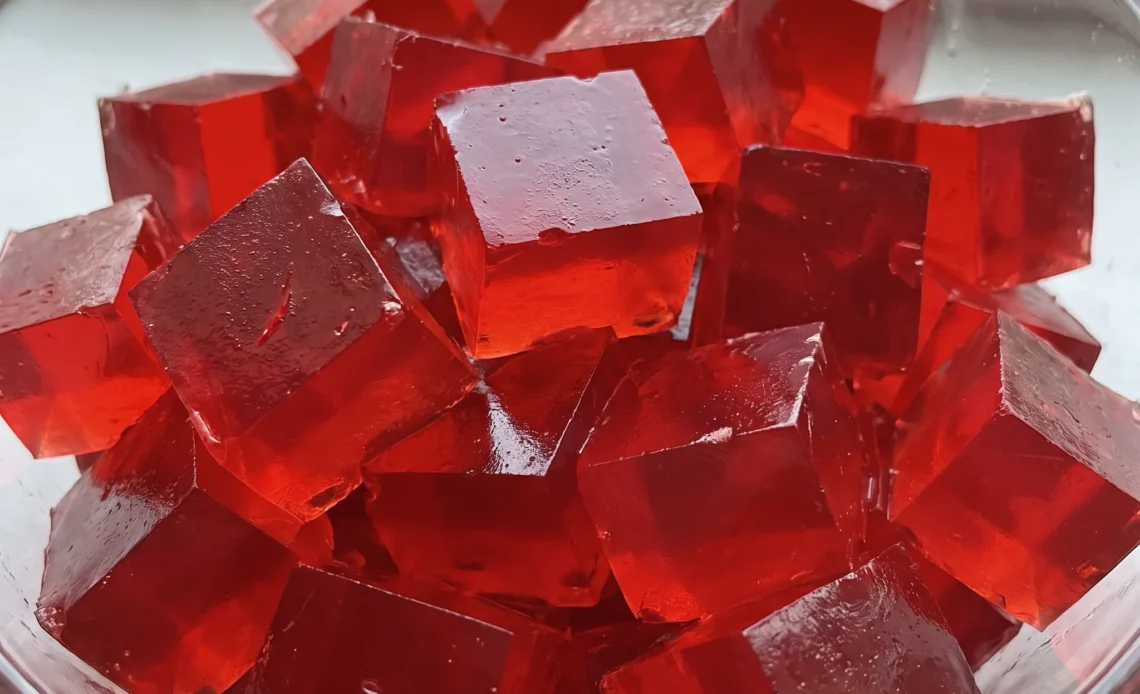
This isn’t a protein shake you have to drink fast. It’s a sugar-free protein gelatin cup, and the whole trick sits in how the powder meets the warm liquid.
Whey isolate is the only powder that disappears into gelatin without leaving a chalky film, and it has to hit the bowl as a slow stream, not a dump. Get that wrong and you’ll feel rubbery pockets suspended in the set. The margin is real: a bowl that looks uniform when you portion it is the only one that chills into a clean, clear cup.
Everything else is waiting. What you pull from the fridge is firm enough to tilt, cuts with a spoon, and tastes like the flavor on the box rather than a shake.
Whey protein isolate is a globular protein that unfolds and clumps when it hits warm water or is introduced faster than it can be dispersed. The recipe’s two-part mixing, first dissolving the protein completely in cold water, then pouring that cold slurry into the warm gelatin while whisking constantly, keeps the protein cold and diluted until it is evenly distributed, so it never has a chance to seize into lumps. Without this gradual, agitated incorporation, the protein would form visible grains and the final gelatin would set with a cloudy, uneven texture.
Why does whey protein isolate make a clearer gelatin?
Most protein powders leave a haze or a sandy layer at the bottom. Whey isolate is filtered further than concentrate, so it dissolves into water with almost no cloud. What you see is a gelatin that stays translucent, and what you taste is only the flavor from the mix.
Concentrate and plant proteins carry extra fats and fibers that sit on the tongue like fine grit. Isolate doesn’t.
It also stays neutral, so a strawberry mix tastes like strawberry, not like a protein shake. You still have to get it wet before it meets the warm gelatin. Drop dry powder straight into the bowl and it clumps on contact, and those clumps never fully smooth out.
Whisking it into the cold water first is the difference between a clean cup and one with tiny pale specks suspended in it. The result is a firm, even gel that doesn’t distract from the flavor you chose.
The pour that makes or breaks a smooth set
You’ve got a bowl of warm, dissolved gelatin and a jug of cold protein water. Tip the whole jug in at once and the protein hits the warm liquid in a single blob.
It seizes into stringy bits before you can stir them out. Those bits feel like tiny rubbery pockets once the gelatin sets.
Pour in a slow, steady stream instead, and keep the whisk moving the whole time. The warm liquid stays below the point where protein tightens up, and each addition disappears before the next one lands.
What you’re after is a bowl that looks completely uniform, no faint streaks, no floating specks. If you see any, stop pouring and whisk until they’re gone.
That smooth liquid is what sets into a clean, even cup. A lumpy one never fully recovers, no matter how long it chills. I check the whisk itself too: any protein stuck in the tines means the mix isn’t as smooth as it looks.
Two hours in the fridge is not a suggestion
Gelatin needs time at cold temperature to do its work. The liquid might look thick after twenty minutes, but the structure inside is still forming. Pull a cup out early and you’ll get a soft, weepy center that slumps off the spoon.
The protein hasn’t fully settled into the gel either. It can drift and separate, leaving a watery layer at the bottom and a denser one on top. The full two hours gives the gelatin strands time to link up completely and lock the protein in place.
What you’re waiting for is a cup that holds its shape when you tilt it and releases cleanly from the ramekin. The surface should look dry and glossy, not wet or tacky. If it still looks wet, it needs more time.
Once set, the texture is firm but not tough, and it cuts with the side of a spoon. That’s your cue to serve.
How boiling and cold water work together
Gelatin granules won’t dissolve in cold water. They just swell and stay grainy. Boiling water is what breaks them down and lets them disperse, so the first cup has to be at a full roll when you pour it in.
Skip that and you’ll find sandy bits at the bottom of the bowl no matter how long you stir. But you also can’t use all boiling water.
The second cup of cold water does two jobs: it brings the temperature down so the protein doesn’t cook or clump when it goes in, and it adds volume without weakening the set. Get the balance wrong on the cold side and the gelatin ends up too soft to unmold.
Too little boiling water and the gelatin never fully dissolves. The mix should feel barely warm on your wrist before the protein goes in. That’s the window you’re aiming for, and it’s why the two cups are added separately, not together.

Two ingredients decide whether these cups set clear or cloudy
Sugar-free gelatin mix: Any flavor works, but the box has to be the 0.3 oz size, since larger boxes throw off the water ratio and leave the cups soft.
Unflavored whey protein isolate: Isolate, not concentrate or plant protein, because those carry fats and fibers that cloud the gel and taste faintly gritty.
Water: Tap water is fine, though very hard water can read as slightly cloudy in an otherwise clear cup.
How to judge the set, the texture, and the protein before it’s too late
Deciding when the gelatin has fully dissolved
Boiling water goes in and the grains start to melt. Stir for the full 2 minutes, but don’t count the clock as proof. Lift the spoon and look at the liquid running off.
Any speck that feels sandy to the touch means undissolved gelatin, and those bits will sink and stay grainy in the finished cup. Keep stirring until the liquid is completely clear, no shimmer of grains at the bottom.
If the water wasn’t at a full boil, you’ll need longer, not more water.
The moment the protein water hits the warm gelatin
You’re pouring cold protein water into a bowl that should feel barely warm on your wrist. Too warm and the protein tightens into stringy bits the second it lands.
Too cold and it just sits there, refusing to blend. Pour in a slow, steady stream and whisk constantly.
Stop the pour if you see any faint streaks or floating specks. Those are protein that has already set.
Whisk until the bowl looks completely uniform, then portion. A lumpy mix never fully recovers, no matter how long it chills.
Reading the surface after two hours
At the two-hour mark, tilt a cup. It should hold its shape without slumping, and the surface should look dry and glossy, not wet or tacky.
A wet sheen means the gel hasn’t finished linking up; give it more time. If a watery layer has formed at the bottom, the protein separated, likely because the mix was too warm when it went in or it wasn’t whisked enough. The texture you want is firm but not tough, one that cuts cleanly with the side of a spoon.
Knowing when to stop whisking the protein into the cold water
Protein powder clumps the moment it touches liquid, so whisk it into the cold water before it ever meets the gelatin. Stop when the water looks uniform, with no dry pockets and no froth on top. Froth means you’ve whipped air in, and those bubbles will show as tiny holes in the set gel.
A few small lumps left now will become pale specks suspended in the cup. If you see any, keep whisking, but gently, just until smooth.

Sugar-Free Protein Gelatin Cups
Ingredients
Method
- Dissolve gelatin: Empty the sugar-free gelatin mix into a medium mixing bowl. Pour in 1 cup boiling water and stir for 2 minutes until fully dissolved.
- Mix protein: In a separate container, whisk the 2 scoops unflavored protein powder into 1 cup cold water until no lumps remain.
- Combine: Gradually pour the cold protein-water mixture into the warm gelatin bowl, whisking continuously to ensure a smooth, clear consistency.
- Portion: Divide the mixture among 4 individual 4-oz ramekins or small plastic cups.
- Chill: Refrigerate for at least 2 hours or until the gelatin is firm and set.
What you can change here, and the two swaps that will wreck the set
3 oz box. Cherry, lime, orange, whatever’s on the shelf. Don’t grab a larger box thinking more is better and don’t stretch a small one across more water.
Flavor is the only thing that changes. Set stays the same because the box size is what carries the gelatin. A bigger box in the same 2 cups water gives you a softer cup that may not release from the ramekin, and adding water to compensate dilutes the flavor past the point where you taste it.
If you want the flavor louder without touching the ratios, stir a few drops of matching extract into the cold protein water before it goes in.
Unflavored whey protein isolate: Stick with isolate. Concentrate, casein, and any plant protein are the swaps that break this dish, and it’s worth knowing why before you try. Concentrate and plant powders carry fats and fibers that don’t dissolve.
They hang in the liquid as a haze you can see through the side of the cup, and they settle as a fine layer at the bottom before the gelatin firms. The taste turns chalky and the texture goes slightly sandy against the roof of your mouth. If isolate is all you have, keep it.
If you’re out and only have concentrate, expect a cloudy, softer cup and use it anyway, but don’t promise anyone a clear one.
Water: Tap water works. If your tap runs very hard or smells of chlorine, use bottled or filtered for the cold cup. Hard water can read as faintly cloudy in a cup that should be glass-clear, and chlorine comes through more in a mild flavor like lemon than in a strong one like cherry.
Filtered water fixes both without changing the set. Don’t swap sparkling water or any flavored soda for either cup.
The bubbles turn into holes in the gel and the sugar or acid throws off how firmly it sets.
The 2 cups water, split boiling and cold: No swap here, and this is the one to leave alone. The split isn’t a suggestion you can shuffle. All boiling water and the protein tightens into strings the moment it hits the bowl.
All cold water and the gelatin never dissolves, leaving sandy bits at the bottom no matter how long you stir. Keep 1 cup at a full boil for the mix and 1 cup cold for the protein, and the cups set clean every time.
How to store the cups, and when to eat them
These cups are at their best within the first day. Eat them the same day you make them, or the next at the latest.
The set is firmest then, with a clean snap when the spoon goes in. Past that, the gel keeps releasing water. You’ll see a thin pool form in the bottom of the ramekin, and the surface turns slick instead of dry.
The texture softens too, going from a clean cut to something looser that slumps. Flavor fades as the liquid weeps out, so the cup tastes weaker the longer it sits.
Keep them covered in the fridge, plastic wrap pressed right onto the surface or a lid on each cup, for up to two days. Don’t freeze them. Gelatin that thaws loses its structure and releases even more water, leaving a spongy, leaking cup.
Serve them cold, straight from the fridge. There’s no finishing step to add at the end, no topping or garnish that goes on later.
What’s in the cup when it sets is what you eat.
Tips
- Taste the cold protein-water mixture before it goes anywhere near the gelatin. A sip tells you two things at once: whether the powder has fully dissolved and whether the flavor is where you want it. Any graininess on your tongue means lumps are still there, and those lumps will show as pale specks in the set cups. If you want more flavor, this is the last moment to add a few drops of extract, since stirring anything in after the gelatin is set just breaks the gel.
- Pour the protein water through a fine-mesh strainer if you have any doubt about lumps. A strainer catches the clumps that whisking missed and leaves you with a completely uniform liquid, which is what sets clear. The catch is that the strainer also traps some of the protein, so the cups end up slightly softer than the recipe intends. Use it as a rescue, not a habit, and only when you’ve already seen specks you can’t whisk out.
Frequently Asked Questions
Can I make these sugar-free protein gelatin cups ahead of time?
Yes, but a day is the real limit, not a week. The set is firmest on day one, with a clean snap when the spoon goes in; by day two you’ll see a thin pool of water in the ramekin and a slick surface instead of a dry one. Cover each cup with a lid or plastic wrap pressed onto the surface and keep them in the fridge.
Past two days the flavor fades along with the texture, so make them the day before you plan to eat them, not earlier.
Why did my protein gelatin cups turn out rubbery?
Check the water first. If the cold cup was short or you skipped it, the gelatin sets with too little liquid and firms up past the clean, spoonable texture into something that resists the spoon. The other likely cause is the pour: protein that hit the warm gelatin too fast seizes into stringy pockets, and those read as tough, rubbery patches once the cups chill.
Look at the surface before it sets, uniform and free of streaks, and you’ll know the texture will be even. If you still have a batch that set too firm, a short sit at room temperature softens the bite, though it won’t undo pockets that already formed.
How long do these gelatin cups last in the fridge?
Two days, covered, and they’re at their best within the first. The gel keeps releasing water as it sits, so by the second day you’ll see a thin pool at the bottom of the ramekin and the flavor tastes weaker than it did on day one.
Press plastic wrap right onto the surface or lid each cup so the top doesn’t dry out or pick up fridge smells. Don’t freeze them; thawed gelatin loses its structure and leaks, leaving a spongy cup.
Serve them cold, straight from the fridge.
What’s the difference between this and regular Jell-O cups?
Protein, mostly. A standard cup is gelatin, water, sugar, and flavor, and that’s it.
Here, two scoops of unflavored whey isolate go into the cold water, so each serving lands around 60 calories with the protein built in rather than eaten alongside. The texture is firmer and cuts more cleanly than the soft, jiggly set of a store cup, and because the mix is sugar-free, the sweetness is lighter and the flavor comes through without the syrupy edge. You also control what goes in, which matters if you’re watching sugar or chasing a protein number.
