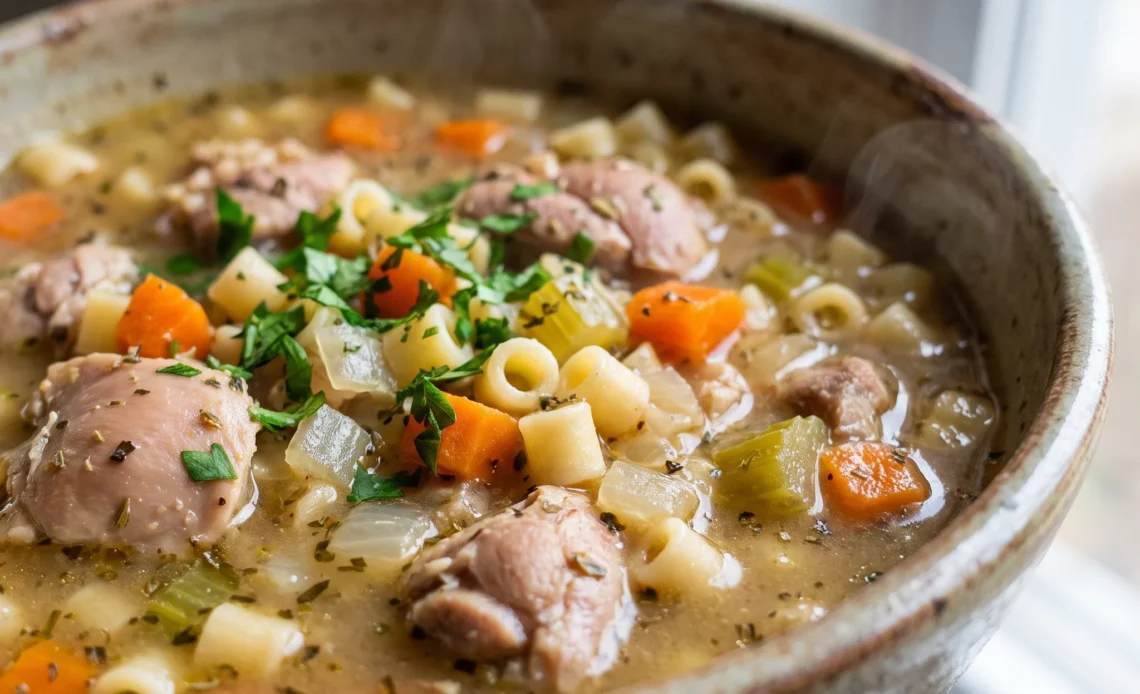
Parsley and lemon hit your nose before the spoon does. What arrives in the bowl looks like a plain pot of chicken and vegetables, which is exactly why the timing catches people off guard. The chicken goes in raw and gets a head start browning before any liquid shows up, and that step is where most cooks either rush or overshoot.
Pieces that go fully opaque in the pot turn stringy after the simmer. Small pasta brings its own clock, too.
It crosses from tender to pasty faster than the chicken ever will, and leftovers keep drinking what’s left of the broth overnight. Nothing here is hard, but the pot asks you to pay attention in two or three places. Make it once and the italian chicken pasta soup stops needing the recipe at all.
Lemon Brightens Every Bowl
A squeeze of lemon at the end does more than add sourness. It cuts through the richness of chicken thighs and olive oil, so the broth tastes lively rather than heavy. You want that brightness to hit first, then the savory depth of the herbs and chicken to follow.
If you add the juice while the soup simmers, the heat dulls its edge and you lose that wake-up effect. So wait until the pasta is tender and the pot is off the heat.
Start with the juice of half a lemon, stir it in, and taste. Some cooks want more, some less.
Adjust with the second half if the broth still feels flat. The parsley and Parmesan go on after, adding freshness and a salty bite.
A final taste before serving tells you if the seasoning is right.
Small Pasta, Big Difference
Ditalini, orzo, and small shells aren’t just for looks. Their tiny size means they cook fast, often in the time it takes to warm the broth through.
That keeps the pasta from turning soggy while the soup simmers. More importantly, they fit on a spoon alongside the vegetables and chicken, so every bite has a bit of everything. Larger shapes like penne or rigatoni would dominate the bowl and require longer cooking, which can overcook the chicken.
There’s also the matter of leftovers. Small pasta continues to drink broth as the soup sits, so if you’re not serving it all at once, the soup will thicken.
That’s not a flaw; just know that you might need to add a splash of broth when reheating. The result is a soup that eats like a meal, with pasta that belongs in every spoonful.
Building Flavor from the Start
Good soup starts with a hot pot and a little patience. When you sauté the onion, carrot, and celery until they soften, their natural sugars come out and sweeten the base. Skipping that step leaves the vegetables tasting raw and the broth thin.
Next, browning the chicken pieces does two things: it gives the meat a head start and leaves behind browned bits that dissolve into the broth, adding a savory depth you can’t get otherwise. The dried oregano, thyme, and a pinch of red pepper flakes echo the flavors of classic Italian cooking.
Oregano brings a minty, slightly bitter note, thyme adds earthiness, and the pepper flakes contribute a gentle heat. Together they season the broth without overpowering the chicken. Once the liquid goes in, the simmering melds everything.
What you end up with is a soup that tastes like it cooked all day, even though it didn’t.
A Complete Meal in a Bowl
This soup isn’t a starter. With chicken, pasta, and a trio of vegetables, it’s a full meal. Each serving has 350 calories, enough to satisfy without weighing you down.
The chicken provides protein, the pasta gives you starch, and the carrots, celery, and onion add sweetness and texture. You get soft vegetables, tender chicken, and chewy pasta all in one spoonful.
The broth ties it together, and the optional parsley and Parmesan on top add a fresh, salty finish. Some people might think of soup as a light lunch, but this one eats like dinner. A bowl of it, with a piece of crusty bread on the side, is all you need.
The lemon juice at the end keeps it from feeling too heavy, so you can finish the whole bowl and feel satisfied, not stuffed.
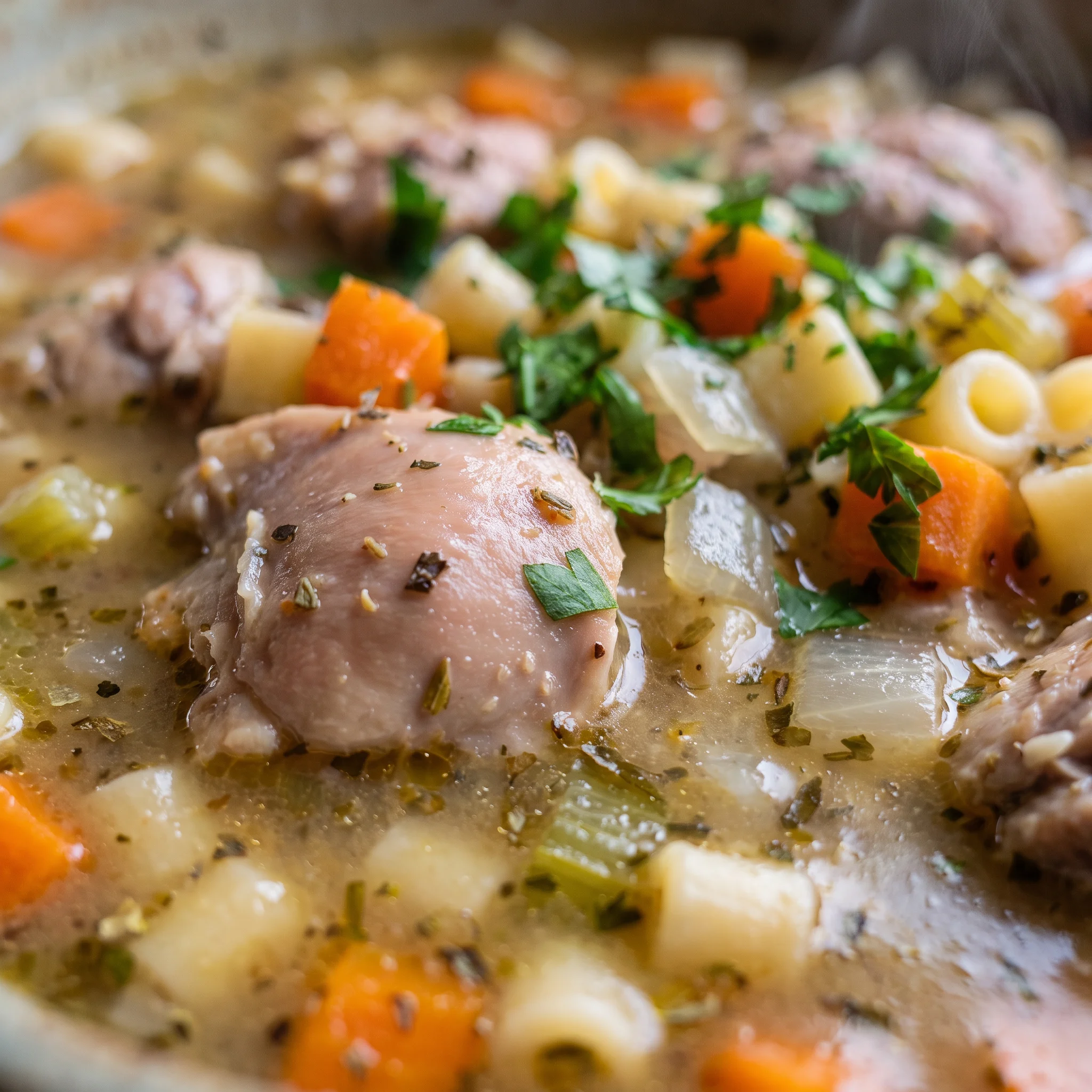
What to buy, chop, and watch
Yellow onion: Finely chopped so it disappears into the broth; pieces the size of a pea are right, bigger chunks stay crunchy.
Carrots and celery: Peel the carrots and cut both into pieces no larger than the onion, so they soften in the same 8 to 10 minutes.
Fresh ginger: Grate it on a Microplane; the fibrous strings in sliced ginger never soften and end up like twine in the spoon.
Chicken thighs or breasts: Thighs stay juicy through the simmer; breasts work but turn dry if they spend more than 20 minutes in the pot.
Low-sodium chicken broth: The low-sodium kind lets you season at the end; regular broth plus the Parmesan can push the whole pot over.
Small pasta: Ditalini, orzo, or small shells only; check the package for a cook time under 10 minutes, or the pasta outlasts the chicken.
Small pasta shapes like ditalini or orzo have a high surface-area-to-volume ratio, so their starch gelatinizes quickly and keeps absorbing broth as long as they sit in it. Once the pasta is fully hydrated, further absorption causes the granules to swell past their structural limit, turning the pieces soft and cloudy while the broth disappears into them. The recipe adds the pasta only at the end and cooks it just to al dente, which limits the initial hydration, but any holding time after that still drives the same absorption.
Reading the Pot: Where This Soup Can Go Right or Wrong
When the vegetables are ready for the next addition
After 8 to 10 minutes, the onion, carrot, and celery should look glossy and slightly shrunken, and a piece of carrot should give way when pressed with the back of a spoon. If they still look opaque and firm, they need more time; rushing now means they’ll stay crunchy in the finished soup.
If they start to brown, the heat is too high. Lower it and add a splash of water to keep them softening without color.
Knowing when the chicken is browned enough
The chicken pieces should lose their raw pink color and pick up a few golden spots, but they don’t need to cook through. After 3 to 5 minutes, cut one piece open: it should be opaque at the edges and still slightly pink in the center. If it’s fully white, you’ve gone too far and the meat will be dry after simmering.
If it’s still raw all the way through, give it another minute. The browned bits stuck to the pot are what you want.
Judging the simmer during the covered cook
Once the pot is covered and the heat is low, you should see lazy bubbles breaking the surface every second or two, not a rolling boil. A hard boil will toughen the chicken and cloud the broth.
Listen: a gentle simmer sounds like a soft hum, while a boil sounds like a rush of water. If it’s boiling, nudge the heat down. After 20 minutes, the chicken should shred easily with a fork.
Tasting the pasta for doneness before it goes soft
Small pasta can go from al dente to pasty in a minute. Start checking a minute before the package time.
Fish out a piece and bite it: it should be tender but still offer a slight resistance in the center. If it’s already soft, pull the pot off the heat immediately; the residual heat will keep cooking it. Overcooked pasta will keep drinking broth and swell, leaving you with a thick, starchy soup.
Balancing the lemon and salt at the end
After adding the juice of half a lemon, taste. The broth should wake up your mouth without tasting sour.
If it still feels flat, add more lemon, but stop before it tastes like lemonade. Then check salt: the broth should taste savory but not salty.
If it’s slightly salty, a squeeze more lemon can distract from that. If it’s bland, salt in small pinches, stirring and tasting after each.
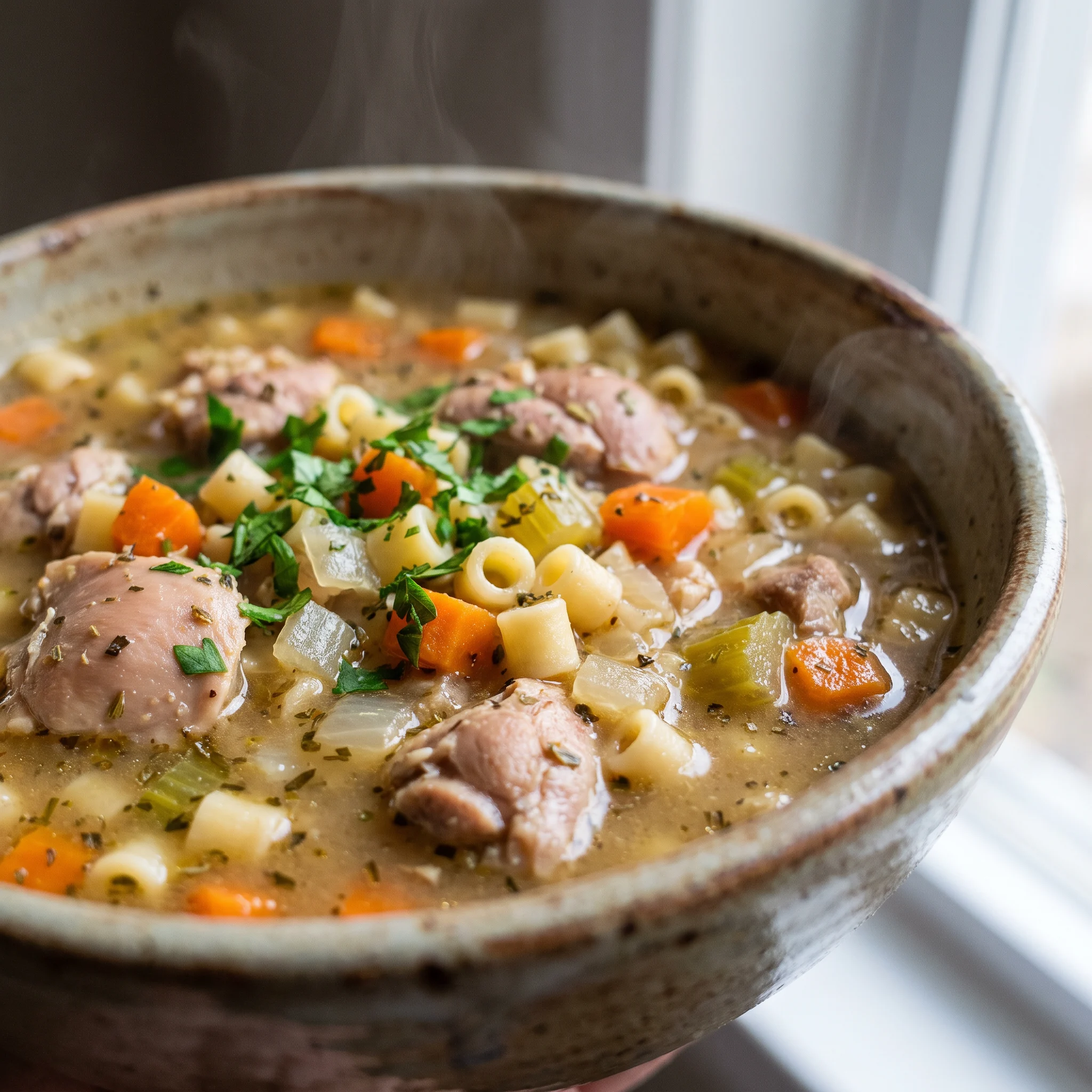
Italian Chicken Pasta Soup with Lemon
Ingredients
Method
- Warm the olive oil in a large pot or Dutch oven over medium heat. Introduce the chopped onion, carrots, and celery. Cook, stirring occasionally, until the vegetables have softened, about 8-10 minutes.
- Stir the minced garlic and grated ginger into the pot. Continue cooking for another minute until aromatic.
- Place the chicken pieces into the pot and sprinkle with a pinch of salt and pepper. Cook, stirring, until the chicken is lightly browned on all sides, about 3-5 minutes.
- Add the chicken broth and water. Incorporate the dried oregano, thyme, and red pepper flakes (if using). Bring to a simmer, then lower heat to low, cover, and cook for at least 20 minutes.
- Add the small pasta. Raise heat to medium and cook according to package directions until al dente.
- Mix in lemon juice, beginning with half a lemon. Taste and add more if desired.
- Adjust seasoning with salt and pepper.
- Ladle into bowls, garnish with parsley and Parmesan if using.
How to Swap Without Losing the Broth’s Balance
Small pasta (ditalini, orzo, or small shells): Gluten-free small pasta. Gluten-free pasta often softens faster and releases more starch, so the broth can turn cloudy and thicken quickly. Start checking for doneness a minute or two before the package time.
If you’re not serving all six bowls at once, cook the pasta separately and add it to each bowl; that keeps leftovers from turning into a starchy porridge.
Small pasta (ditalini, orzo, or small shells): Rinsed canned white beans. Beans add a creamy texture and earthy flavor but won’t give you the same chewy bite. Use about 1 1/2 cups of rinsed beans, add them when you would the pasta, and simmer just until heated through, about 5 minutes.
The broth will stay clearer and the soup will be less starchy.
Boneless, skinless chicken thighs or breasts: Bone-in chicken thighs. Bone-in thighs need a longer simmer to cook through and shred.
Add them after browning, simmer covered for 40 to 45 minutes, then remove, shred the meat, discard bones and skin, and return the meat to the pot. The broth gains extra richness from the bones, but you’ll need to skim off some fat if you want a cleaner taste.
Dried oregano, dried thyme, and lemon juice: Leave as written. These three are the backbone of the soup’s flavor.
Oregano and thyme build the herbal base, and lemon juice at the end lifts the whole pot. Swapping them out would change the character of the dish, and there’s no easy one-to-one replacement that works as well. If you must, fresh herbs can stand in for dried, but use three times as much and add them near the end so their flavor doesn’t cook away.
Storing the Soup Without Losing the Broth
The pasta keeps drinking broth, so the pot you ate from last night is not the pot you reheat today. Store the soup and any cooked pasta in separate containers if you can, or cook a fresh handful for each serving. Left in the soup, ditalini or orzo swells and turns soft within a day and thickens the broth into something closer to a stew.
Without pasta in it, the soup holds in the fridge for three to four days and freezes well for up to three months; the pasta does not freeze well, so leave it out and cook it when you reheat. Reheat gently on the stove, not a hard boil, with a splash of broth or water to loosen it back to a spoonable consistency.
Add the lemon, parsley, and Parmesan after reheating, never before storing, since heat and time dull the lemon and wilt the parsley. Eat within two days for the best texture.
Tips
- Chicken thighs and breasts finish at different rates in the same pot. Pull one piece, cut it open, and look for opaque meat that separates into shreds under light pressure from a fork. If the center is still pink or the fibers hold firm, give it another 3 to 5 minutes covered. If you used breasts and they shred easily at 20 minutes, pull them out with a slotted spoon and set them aside, then return them right before the pasta goes in so they don’t dry out during the extra cooking.
- The 20-minute covered simmer is a minimum, not a finish line. If the chicken passes the cut test but the broth tastes thin, simmer uncovered for 5 to 10 more minutes to reduce it slightly and concentrate the herbs. Keep the heat low enough that the surface barely moves, and if you go past 30 minutes total, add a splash of broth before the pasta so the noodles have liquid to cook in.
Frequently Asked Questions
Can I make this Italian chicken pasta soup ahead of time?
Cook the soup base up to three days ahead, then keep the pasta in a separate container. Ditalini and orzo keep drinking broth, so a batch stored with the pasta in it tightens into something closer to a stew by the next day.
Without the pasta, the pot holds four days in the fridge and freezes up to three months. Reheat gently with a splash of broth, and add the lemon, parsley, and Parmesan only after the soup is hot.
How do I keep the pasta from getting mushy in the soup?
Start tasting a minute before the package time, because small shapes cross from tender to pasty fast. You want a piece that gives slightly when you bite the center, still with a little resistance. If it’s already soft, pull the pot off the heat right away; the residual warmth keeps cooking it.
And if you’re not serving all six bowls at once, store the pasta separately so it can’t swell overnight.
What makes this soup different from classic Italian chicken soup?
Ginger is the giveaway. A teaspoon grated into the garlic, cooked just until you smell it, sits under the oregano and thyme without announcing itself, and it’s not something you’d find in the standard chicken-and-pasta pot. The lemon at the end pushes the broth in the same direction, keeping it bright instead of heavy.
Then there’s the build: browning the chicken first leaves bits on the pot bottom that dissolve into the broth, so the base tastes deeper than a plain simmered chicken soup.
Is this soup spicy? Can I adjust the heat?
Not spicy as written. The quarter teaspoon of red pepper flakes is optional and reads as a faint warmth in the background rather than anything that lingers.
Leave them out entirely and you lose nothing structural; the oregano, thyme, and lemon still carry the broth. If you want actual heat, add more flakes with the dried herbs so they have the full simmer to open up, and taste before serving.
