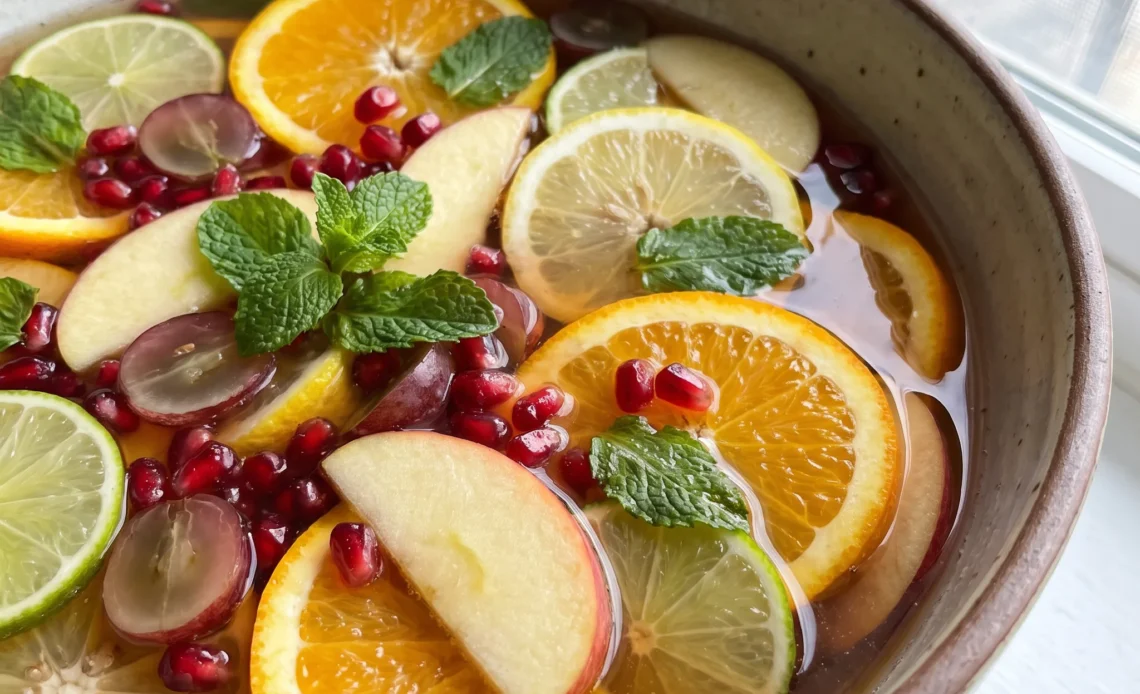
Sparkling cider sangria tastes best when the fizz still prickles and the citrus reads as part of the liquid instead of sitting in it. Because there’s no wine here, the cider and juices carry the whole drink, and there’s nowhere to hide if the balance drifts.
The margin for error is real: add the cider too early and you stir the life out of it, leave the fruit in too long and the pith sharpens everything. Work with cold liquid and taste before you pour.
Get it right and you have something you can hand to anyone at the table, no proof point needed. What separates a good pitcher from a flat one is timing and restraint, not the fruit list.
Add the Sparkling Cider When It Counts
You’re pouring cider that’s already bubbly, so how you handle it decides the texture of the whole pitcher. Sparkling cider holds its fizz best when it’s the last liquid in, after the juices and fruit. If you combine it first and then stir in the orange juice and lemon juice, you knock out carbonation with every stroke.
Those two juices dilute the mixture and lower the overall sparkle; they bring acidity and sweetness, but they also thin the cider’s natural lift. Stir gently once everything’s in, just enough to blend. Then chill: cold liquid holds dissolved gas better than warm, so the rest in the fridge actually protects the bubbles you’ve got.
When you pour, you want a light prickle on the tongue, not a flat fruit punch. If it tastes soft, the cider went in too early or got agitated.
The fix is a fresh splash at serving, but the cleanest result comes from adding it late and leaving it alone.
Cut the Fruit So It Gives, Not Just Sits
The fruit in this pitcher does two jobs: it looks like a celebration and it seasons the liquid. Thin rounds of orange, lemon, and lime release their oils and juice through the cut faces; a thick wedge mostly perfumes the rind and leaves the flesh locked up. Apple wedges and halved grapes work the same way.
Halve grapes so their interior is exposed; a whole grape stays a watery marble. Pomegranate seeds are different.
They won’t break down, and that’s useful, because they stay bright and pop between your teeth without clouding the drink. Mint leaves should go in as a garnish at the end, not muddled with the fruit.
Crushed mint turns bitter and takes over. Whole leaves laid on top give a cool sniff without steeping into the cider. When you pull the pitcher from the fridge, the citrus slices should look slightly spent and the apple wedges a little translucent.
That’s how you know the fruit has given what it has.
A Lighter Base Changes the Balance
Without wine, there’s no alcoholic weight or tannin to carry the fruit, so the cider and juices have to do more work. Sparkling apple cider brings its own sweet-tart character and a little body from the apple, while orange juice adds roundness and lemon juice keeps it from cloying.
The result is a drink that tastes clean and bright, not heavy. Serve it over plenty of ice. Ice does two things here: it chills each glass fast and it melts slowly, adding a little dilution that keeps the sweetness in check.
Without alcohol, the mixture can taste syrupy if it’s warm, so cold is not optional. You’ll see the difference in how it coats your mouth: a good glass feels crisp and quenching, not thick. If it tastes flat or too sweet, add a squeeze of lemon and more ice.
The goal is a refreshing, adult-tasting drink that doesn’t need a proof point to feel festive.
Why That Two-Hour Rest Matters
Two hours in the fridge is not just about getting cold. It’s the window where the cut fruit and the liquid trade places. The juices from the orange, lemon, and lime slices seep into the cider, and the cider pulls some of the fruit’s aroma back into itself.
Pomegranate seeds stay intact but their flavor lightly perfumes the mix. Apple and grape pieces soften just enough to taste like they belong.
If you pour right after mixing, the cider, juice, and fruit all sit on top of each other, and each sip tastes jagged: sweet here, tart there, no cohesion. The chill also lets the carbonation settle into the liquid instead of escaping in a rush.
When you taste it after the rest, it should be smooth, with the fruit and cider tasting like one thing. That’s the sign the rest did its job.
Serve it too soon and you’ll wonder why it tastes like watered-down juice.
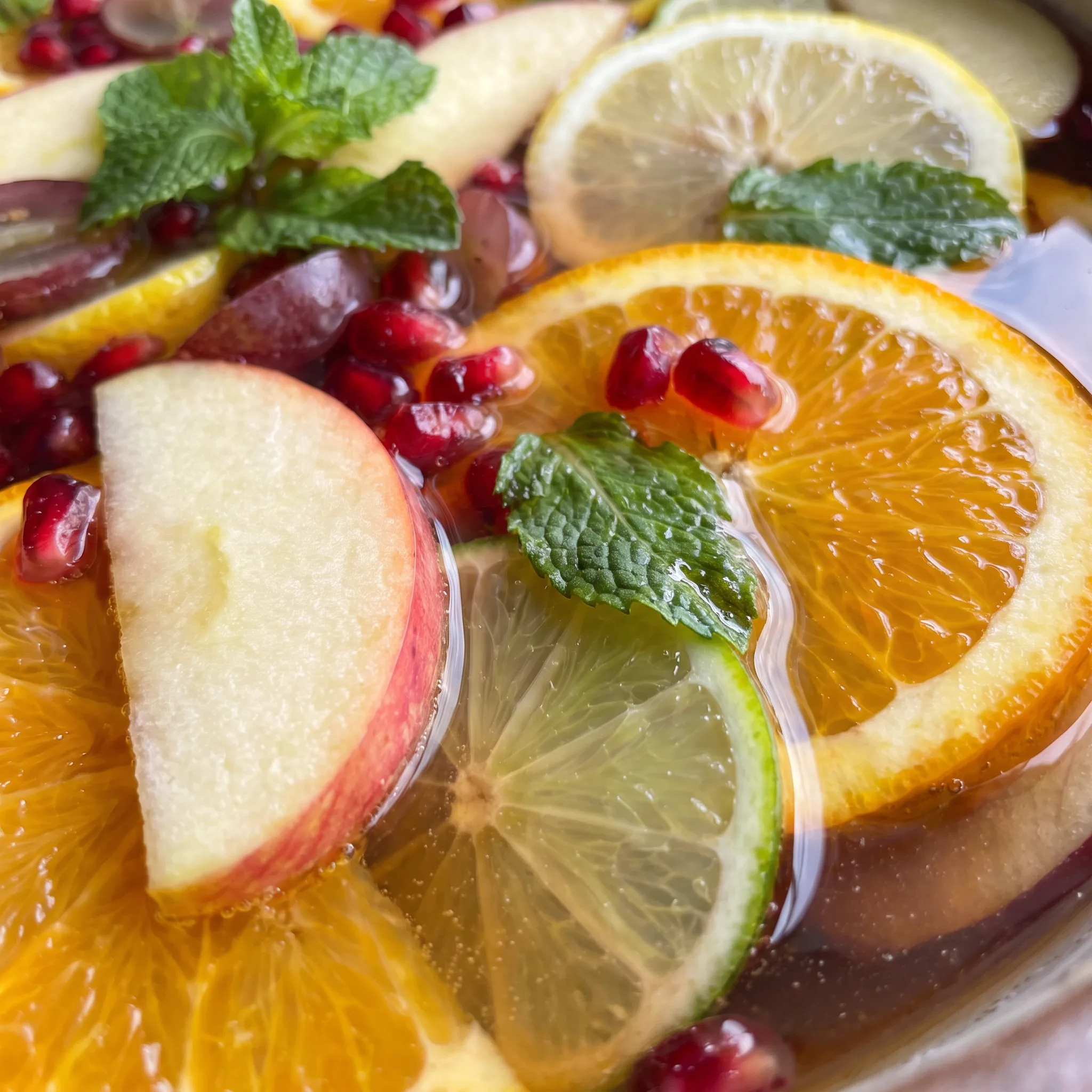
Pick Ingredients That Hold Up in the Pitcher
Sparkling apple cider: Buy the refrigerated, genuinely carbonated kind, not shelf-stable cider that’s already gone flat in the bottle.
Pomegranate seeds: Fresh seeds from a whole fruit beat the packaged cup, which is often soft and leaking juice before it hits the pitcher.
Apple: A crisp, firm variety like Honeycrisp or Pink Lady holds its wedge shape; a mealy apple collapses and clouds the liquid.
Mint leaves: Leaves should be dry and unbruised, since wet or blackened mint smells like cut grass rather than cool herbs.
The most common mistake is treating sparkling apple cider like still liquid: pouring it in first and then stirring the fruit and juices vigorously. That agitation, plus the time the mixture spends in the refrigerator, gives the dissolved carbon dioxide countless nucleation sites and chances to escape, so the sangria reaches the glass with almost no effervescence. The other liquids also dilute the cider’s carbonation, lowering the total gas that can be retained.
How to Tell When It’s Ready, Not Just Mixed
Judging the fizz before you stir
As soon as the cider hits the pitcher, listen. A sharp, active hiss means you’ve kept most of the gas.
If you stir too hard or too long, that hiss fades to a whisper and the liquid tastes flat. You want a light prickle on your tongue, not a punch.
Once the fizz is gone, you can’t get it back without adding more cider, so treat every stir as a chance to lose it.
Reading the fruit for signs it has given up its flavor
After the two-hour chill, pull the pitcher out and look at the citrus slices. They should look tired: the white pith turning translucent, the edges softening, the flesh no longer bright. Apple wedges should be slightly see-through at the edges.
That’s when the liquid has pulled what it needs. If they still look crisp and opaque, the fruit hasn’t given enough, and the drink will taste thin and disjointed.
Tasting for balance before you pour
Take a small sip straight from the pitcher, without ice. It should taste bright and clean, with the cider and juices reading as one thing. If it’s too sweet, a squeeze of lemon helps.
If it’s too tart, a splash more cider. If it tastes watery, you’ve diluted it too much or the fruit was underripe. Better to adjust now than after you’ve filled the glasses.
Knowing when the fruit has soaked enough but not too much
Two hours is the window where fruit and liquid trade places. Past that, the apple and grapes start to lose their texture and the citrus pith can turn bitter. You want the fruit to taste like it belongs in the drink, not like soggy leftovers.
If you’re not serving right away, fish out the citrus slices after two hours to keep the drink from turning sharp.
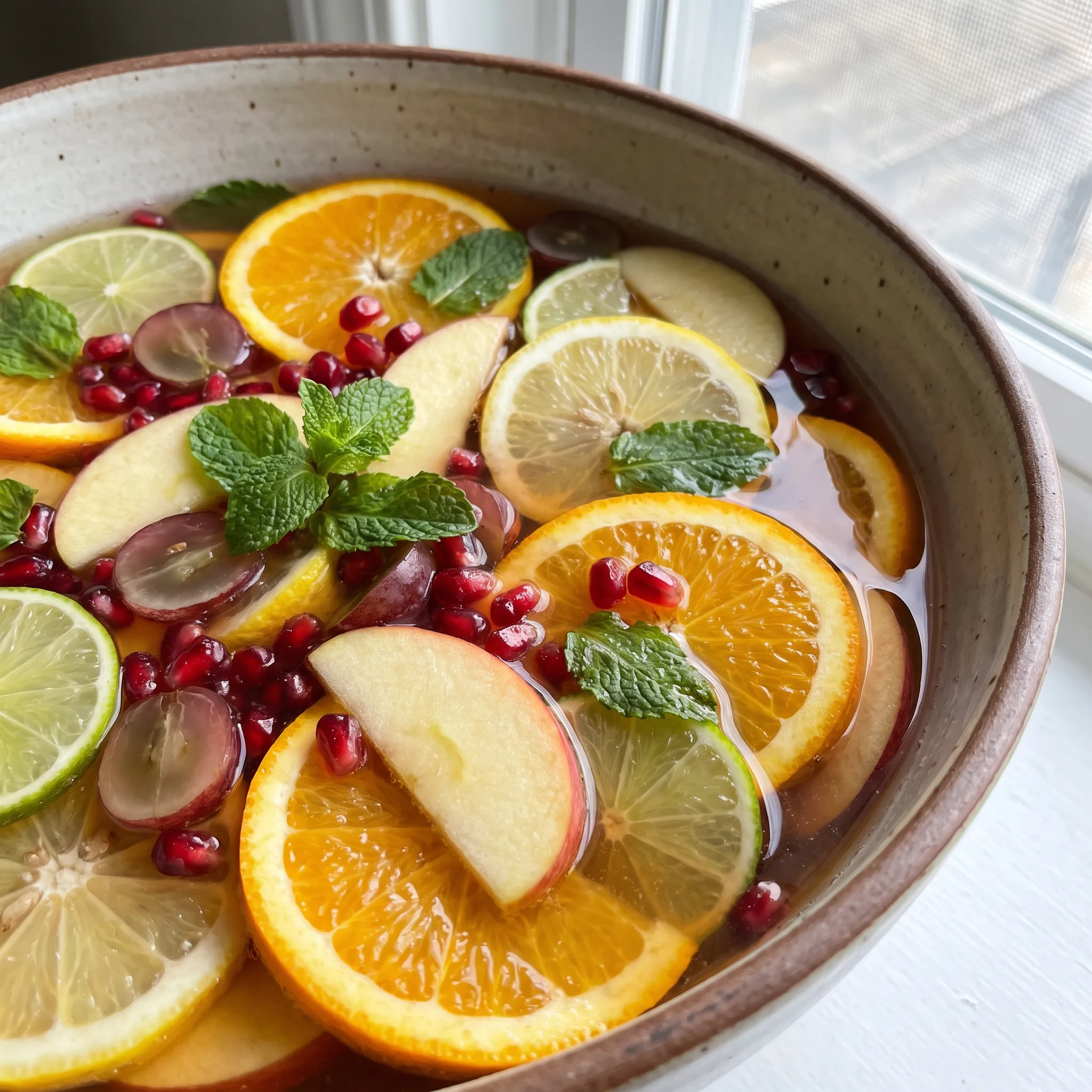
Sparkling Apple Cider Sangria with Fresh Fruit
Ingredients
Method
- In a large pitcher, combine the sparkling apple cider, orange juice, and lemon juice.
- Add the pomegranate seeds, sliced orange, lemon, lime, apple wedges, and grape halves; stir to incorporate.
- Refrigerate the pitcher for at least 2 hours to let the flavors meld.
- Pour the sangria over ice, ensuring each glass gets a good mix of fruit, and garnish with fresh mint leaves.
How Long It Holds Its Fizz and Fruit
Drink this the day you build it. The two-hour chill gets it ready, but the sparkling cider keeps its carbonation for only a few hours past that, and every hour in the fridge after the first two softens the fruit further.
The citrus rounds go limp and the apple wedges turn translucent first, usually within a day, and that’s your cue the drink’s character has shifted from bright and prickly to something flatter and heavier. Leftovers hold in a covered pitcher, refrigerated, for up to 24 hours. They won’t spoil, but they’ll taste like juice rather than sangria.
To serve a stored portion, pour it over fresh ice and top each glass with a splash of cold cider to bring back the lift. The mint goes on at the moment you pour, never before, since whole leaves laid on top give a cool sniff without steeping bitter. Fish out the citrus slices before storing if you know you won’t finish it all that day.
Swaps That Keep the Fizz and the Fruit Intact
Sparkling apple cider: Try sparkling pear juice or a dry sparkling white grape juice. Pear cider is softer and less tart, so the drink will taste rounder; you might want an extra squeeze of lemon to bring back the edge. White grape juice is sweeter, so cut the orange juice by a quarter cup to keep it from cloying.
Either way, add it last and stir gently, or you lose the bubbles.
Orange juice: Use fresh grapefruit juice or pineapple juice instead. Grapefruit brings a bitter edge that can clash with the cider’s sweetness, so start with half the amount and taste after the two-hour chill.
Pineapple juice adds a tropical note and more sugar, so reduce the lemon juice to two tablespoons to avoid a tart, thin drink. Both will change the color and the aroma, but the structure holds.
Pomegranate seeds: Replace with halved raspberries or small diced strawberries. Raspberries break down faster and will tint the liquid pink; they also add more acidity, so you might not need the full lemon juice.
Strawberries are softer and sweeter, and they’ll lose their shape after two hours, making the drink look muddier. If you want the pop that pomegranate gives, stick with seeds or use fresh cranberries cut in half.
Lemon juice: Don’t swap this one. It’s the acidity that keeps the whole pitcher from tasting like fruit punch. If you’re out of lemons, use the same amount of lime juice, but expect a sharper, more floral edge.
Bottled lemon juice works in a pinch, but it tastes flatter and can leave a metallic finish. Adjust after the chill, not before.
Tips
- Taste the cider and the orange juice on their own before they go in the pitcher. Ciders range from bone dry to syrupy, and orange juice varies the same way, so the 1/4 cup lemon juice is a starting point, not a fixed rule. If both taste sweet, add the lemon juice and taste again before the two-hour chill. If the cider is already tart, hold the lemon back and add it after the fruit has rested, since the citrus slices will have contributed acidity of their own by then.
Frequently Asked Questions
Can I make this sparkling apple cider sangria ahead of time?
You can build the base up to a day ahead, but hold the cider back. Combine the juices, pomegranate seeds, and sliced fruit in the pitcher and refrigerate; the fruit steeps into that liquid overnight without any carbonation to lose. Add the sparkling cider right before you serve, stir once, and pour.
If you mix the full pitcher ahead, the bubbles are gone by the time guests arrive and you’re serving flat juice over ice.
How do I keep the sangria from getting too watery from the ice?
Chill everything hard first, then pour over fewer, larger cubes. The pitcher already sits in the fridge for its rest, so the liquid going into the glass is cold and the ice has less work to do.
Big cubes melt slower than a scoop of small ones because there’s less surface touching the drink. If you want the fruit without extra dilution, spoon some into the glass before the ice and pour around it.
What is the difference between this and traditional sangria?
Traditional sangria leans on wine for its backbone, and this one leans on sparkling cider. That means no tannin, no alcoholic weight, and a lighter, more apple-forward drink that reads closer to a fruit punch with a prickle. The fruit lineup here is citrus-heavy with pomegranate and grapes, which gives you tartness and pop rather than the softer stone fruit you’d often find in a wine version.
Serve it colder than you would a wine sangria, since there’s nothing heavy to carry warmth.
Why did my sangria lose its fizz?
Most likely the cider went in too early and got stirred hard, which knocks the gas out with every pass. Sparkling cider needs to be the last liquid in and barely agitated, just enough to blend with the juices.
A second cause is a warm pitcher: cold liquid holds its bubbles, warm liquid releases them, so if the fruit and juices sat out before the cider hit them, you lose carbonation fast. The fix at serving is a fresh splash of cold cider in each glass.
How long can I leave the fruit in the sangria before it gets mushy?
Pull the citrus slices after the two-hour rest if you’re not drinking it that day; the pith turns bitter past that window and starts to sharpen the whole pitcher. The apple wedges and grapes soften first, usually going translucent within a day, and that’s when the drink shifts from bright to flat and heavy. Pomegranate seeds hold their shape and can stay.
If you’re storing leftovers, fish out the citrus before you cover the pitcher.
