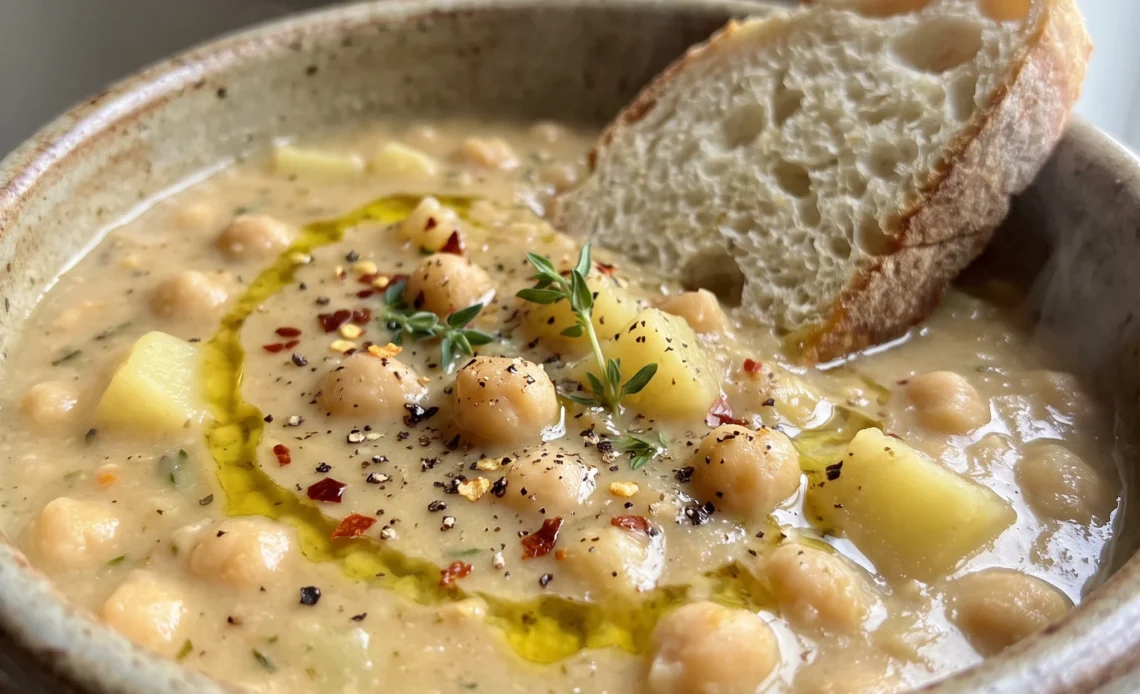
It coats the spoon like heavy cream, then a whole chickpea interrupts the smoothness with a firm little pop. Two cans and a single diced potato get you there, which is the real draw of this vegan garlic chickpea soup on a weeknight.
The trick is texture in two registers, and getting it right depends on where the potato lands. Push the simmer and the cubes crumble into the broth, leaving you with something closer to porridge than soup.
Pull it early and they stay chalky, no matter how long the pot sits. Waxy potatoes give you more room to work than starchy ones, which is worth knowing before you start dicing. Garlic is the other narrow window.
Miss it by half a minute and the whole pot carries that burnt edge to the last spoonful. Get both right and dinner tastes like it took far longer than it did.
Why blend one can of chickpeas?
That liquid in the can, often called aquafaba, does more than keep the chickpeas wet. Whirl one can, liquid and all, until it’s completely smooth, and you get a base that feels like cream but tastes like chickpeas.
The starch and protein in that liquid trap air and fat, so the soup thickens without dairy or a roux. What you see is a purée that coats a spoon and doesn’t separate when it hits the broth.
The second can goes in whole, after draining. Those intact chickpeas give you something to bite, a contrast that keeps every spoonful from being uniform. Without them, the soup would be one-note soft.
With them, you get a little pop against the silky background.
Mouthfeel lands somewhere between a puréed vegetable soup and a chunky stew. The blended portion carries the body, the whole chickpeas carry the texture, and the two together make each bowl feel substantial. It’s a simple trick that makes a vegan soup taste rich without any added fat beyond the olive oil.
Does garlic need to cook before the broth goes in?
Garlic straight from the press is sharp, almost hot. A minute in warm oil tames that bite while keeping the pungent aroma that makes garlic worth using. The oil does the work: it pulls the flavor out of the garlic and holds it, so when the broth and chickpeas go in, that savory note spreads through the whole pot.
Push it past a minute, though, or crank the heat, and garlic turns bitter and acrid. You’ll smell it before you see it: a sharp, burnt edge that no amount of simmering will fix. The window is narrow, which is why medium heat and constant attention matter.
Once the garlic smells sweet and nutty, you’re ready for the next step. That’s the foundation: olive oil, garlic, and a few seconds of patience. Everything else builds on it.
What do paprika, rosemary, and thyme bring to chickpea soup?
Paprika gives a sweet, smoky base that rounds out the chickpeas’ earthiness. Rosemary and thyme add a piney, herbal depth, the kind that makes a simple pot of beans taste like it simmered for hours. Chili flakes bring a gentle heat that lingers in the back of your throat, enough to notice but not enough to distract.
Adding them before the broth lets them bloom in the oil and garlic. That brief contact with heat wakes up their oils, so their flavors spread evenly instead of sitting on top. Skip that step and the spices taste flat, like they were stirred in at the end.
The amounts here are modest on purpose. Chickpeas have a mild flavor, and the goal is to season them, not bury them.
You want each spoonful to taste like chickpea first, with the spices as a warm background. Adjust after the simmer if you want more punch, but start with this balance.
How does potato thicken the soup?
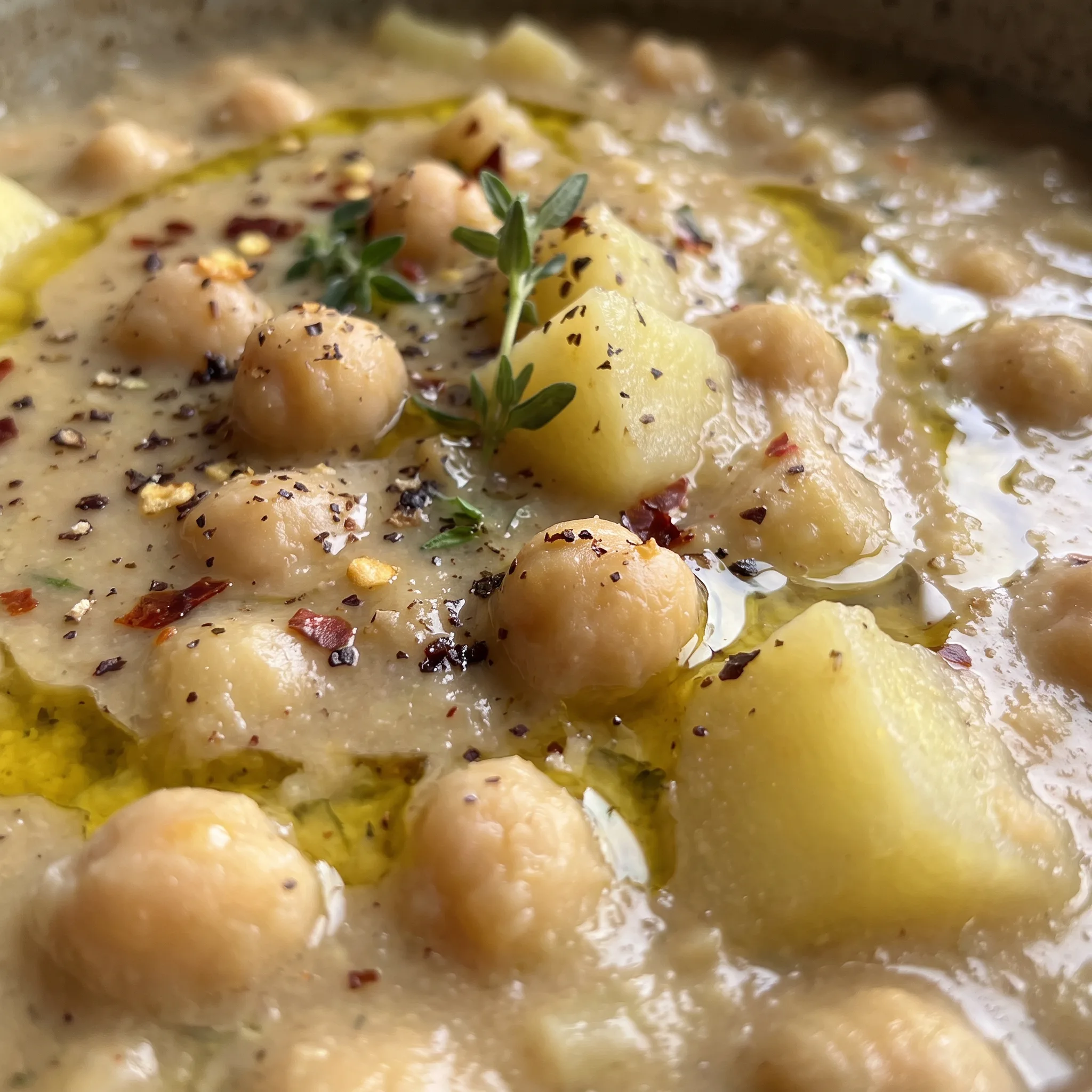
A diced potato does two jobs at once. As it cooks, its starch leaches into the broth, giving the soup a silky body without flour or cream.
At the same time, the cubes hold their shape, so you get soft, hearty pieces that contrast with the chickpeas. That’s why you dice rather than mash: mashed potato would disappear into the liquid, and you’d lose the textural contrast.
Uniform pieces matter for even cooking. If some are twice the size of others, the small ones dissolve while the large ones stay firm. Aim for cubes about the size of a chickpea, so everything finishes at the same time.
By the end of the simmer, the potato should be tender enough to crush against the roof of your mouth but still intact in the bowl. The broth will have thickened slightly, enough to coat a spoon. That’s the sign the starch has done its work.
Why simmer instead of boil?
A rolling boil breaks up the potato and chickpeas, turning the soup into a rough mash. A gentle simmer keeps everything intact while letting the flavors come together.
You’ll see small bubbles rising steadily, not a violent churn. That steady heat softens the potato, warms the spices, and marries the puréed base with the whole chickpeas.
The lid traps moisture and heat, so the soup cooks evenly without reducing too much. Every ten minutes or so, give it a stir, scraping the bottom. That motion keeps the potato from sticking and distributes the heat so nothing scorches.
After about 25 minutes, the broth will have thickened a little and the chickpeas will taste seasoned all the way through. If it looks too thick, a splash of broth or water loosens it. You’re after a consistency that’s spoonable but not watery.
Taste and adjust salt, then ladle it up.
What to buy and prep for this soup
Chickpeas: Use two 15-ounce cans; one goes in with its liquid for blending, the other drained for whole bites.
Garlic: Three large cloves, minced or pressed; bigger cloves give more sweet pungency and less papery skin to deal with.
Potato: One large 6-ounce potato, diced; waxy varieties hold their shape better than starchy russets in the simmer.
Vegetable broth: Two cups low-sodium; regular broth can make the soup too salty before the chickpeas even soften.
Paprika: One teaspoon; sweet paprika adds warmth, while hot or smoked kinds will change the soup’s character.
Minced garlic in medium oil goes from raw and pungent to toasted and sweet to burnt and acrid in a very narrow window. The first signal is a sharp, raw smell turning nutty and fragrant; the second is a faint golden tint at the edges of the pieces. If the garlic darkens past pale gold or the aroma turns bitter and sharp, the oil is already tainted and the soup will carry that bitterness through every later step.
How to tell when each part of this soup is where it should be
Garlic is ready the second it smells sweet, not sharp
The difference between garlic that seasons the pot and garlic that ruins it comes down to about twenty seconds. At medium heat, minced garlic starts sizzling and within a minute it turns fragrant and slightly golden.
The instant that sharp raw edge disappears from the smell, pull it off the heat or add the next ingredients. If it darkens past pale gold, it’ll taste bitter and there’s no fixing it. Better to undercook than push it.
The potato is done when a piece yields to gentle pressure but doesn’t collapse
You want cubes that hold their shape in the bowl but give way easily when you press one against the side of the pot with a spoon. If a fork slides in with no resistance and the cube starts to break apart, you’ve gone too far and the soup will turn thick and starchy. Start checking around twenty minutes.
If they’re still firm at twenty-five, give it a few more minutes, but keep an eye on it.
The soup is ready when the broth coats a spoon but still flows
After the simmer, the pureed chickpeas and potato starch will have thickened the liquid. You’re looking for a consistency that clings lightly to a spoon, like heavy cream, not a paste.
If it’s too thick, stir in a splash of broth or water until it loosens. If it’s still thin, simmer uncovered for a few more minutes, but don’t let the potato break down further.
This is also when you taste for salt.
Seasoning is right when the chickpeas taste seasoned all the way through
Salt in the broth takes time to penetrate the chickpeas. After twenty-five minutes, bite into one: it should taste seasoned, not just salty on the outside. If it still tastes flat, add a pinch more salt and simmer another minute or two.
Remember that low-sodium broth varies, so start with a quarter teaspoon and adjust from there. Too much salt at this point can’t be undone, so go slow.
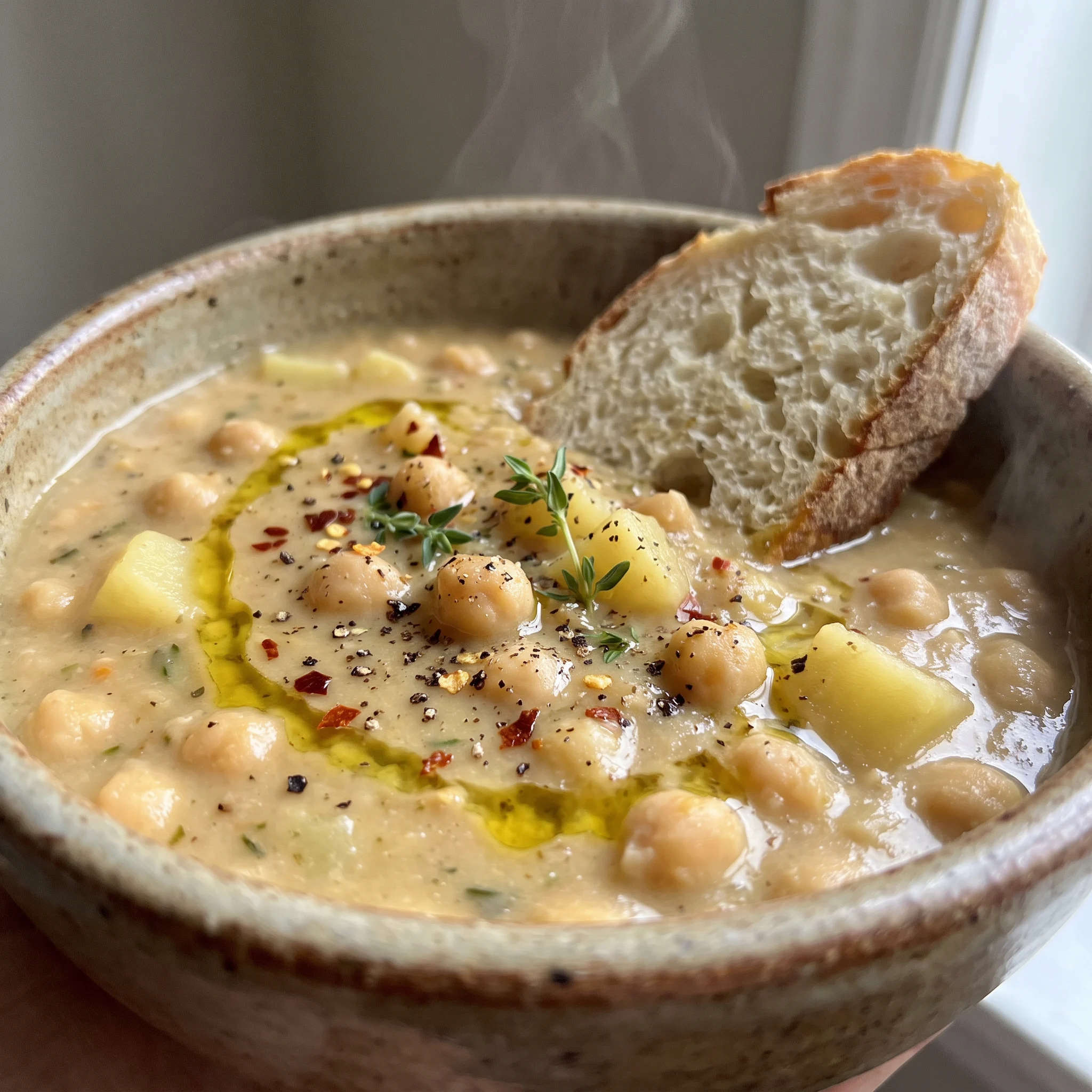
Vegan Garlic Chickpea Soup with Potato
Ingredients
Method
- Empty one can of chickpeas, along with its liquid, into a blender and blend until completely smooth.
- In a pot, warm the olive oil over medium heat, then add the garlic and cook for about 1 minute, until aromatic.
- Introduce the puréed chickpeas, the drained contents of the second can, the diced potato, paprika, rosemary, thyme, chili flakes, and freshly cracked pepper; mix thoroughly. Pour in the broth and stir once more.
- Put a lid on the pot, raise heat to medium-high, and let it come to a boil. After boiling, lower heat to medium-low and maintain a simmer for 25 minutes, stirring from time to time.
- Check the seasoning and adjust as needed (this depends on how salty your broth is; roughly 1/4 tsp salt was used).
- Ladle into bowls while hot, topping with freshly ground pepper and a drizzle of olive oil if you like, and offer crusty bread for dipping.
If You Swap the Chickpeas, Keep the Two-Texture Trick
Canned chickpeas: Cooked dried chickpeas (about 3 cups total; blend 1½ cups with enough cooking liquid or water to get the blender moving, and add the rest whole). The split still works: one batch puréed for body, one left whole for bite.
Home-cooked chickpeas taste cleaner and less salty than canned, so taste before you add the final pinch. If your cooked chickpeas are very soft, the whole ones will break down faster in the simmer, and the soup will be thicker and less chunky. Firm-cooked chickpeas hold up best.
Canned chickpeas: Canned white beans, such as cannellini or great northern (same two 15-ounce cans, same treatment: blend one with its liquid, drain the other). The soup gets creamier and milder.
White beans have a softer texture than chickpeas, so the whole beans won’t give that distinct pop; they’ll be more yielding. The flavor drifts away from the earthy chickpea note and toward a softer, beanier backdrop. It still eats well, but it’s a different soup.
If you want to keep some bite, add the whole beans in the last 10 minutes of the simmer rather than at the start.
Vegetable broth: Chicken broth (same 2 cups, low-sodium). The soup stops being vegan, but the savory backbone gets deeper and rounder. Use low-sodium here too, because full-salt chicken broth will push the seasoning past where the chickpeas can absorb it.
The final salt adjustment will be smaller. If you keep it vegetarian, a mushroom or roasted-vegetable broth adds a darker, meatier note than plain vegetable broth.
Dried rosemary and thyme: Fresh rosemary and thyme, using about three times the volume of the dried amounts called for. Fresh herbs taste brighter and more piney, but they need to go in with the broth, not the garlic, so they have time to soften.
Dried herbs dissolve their flavor into the pot; fresh ones release it more slowly and stay a bit leafy. If you add fresh herbs at the end, you’ll get a raw, almost medicinal edge that doesn’t belong here. Stick with the same dried herbs if you want the exact flavor the recipe was built on.
Potato: No good swap. Leave it in. The potato does two jobs at once: it breaks down just enough to thicken the broth, and it holds its shape for a soft contrast against the chickpeas.
Swap it for another starch, like pasta or rice, and the broth stays thin, and the texture turns either gluey or mushy depending on the starch. If you must skip potato for dietary reasons, add an extra half-can of blended chickpeas to keep some body, but expect a thinner soup and a different bite.
Paprika and chili flakes: Don’t. These are the backbone of the soup’s warmth. Paprika gives a sweet, smoky base that rounds out the chickpeas, and chili flakes bring a gentle heat that lingers.
Change the paprika to smoked and the soup turns campfire-heavy, which fights the rosemary. Drop the chili flakes and you lose the subtle warmth that makes each spoonful interesting.
If you want less heat, cut the chili flakes to a pinch, but keep the paprika as written.
Tips
- Taste for salt only after the 25-minute simmer, not before. Both cans of chickpeas and the 2 cups of broth carry sodium, and as the soup reduces those two sources concentrate together, so a pot that tastes flat at the start can taste properly seasoned, or too salty, once the liquid cooks down. Stir, let a spoonful cool a few seconds, then decide whether that roughly 1/4 tsp of salt is needed at all.
Storage, Reheating, and How Soon to Eat It
This soup thickens hard as it cools. The potato starch and the puréed chickpeas keep pulling liquid out of the broth, so a pot that looked spoonable at dinner turns closer to a paste by morning.
That’s not spoilage, it’s chemistry, and it’s why leftovers need a splash of broth or water in the saucepan before they loosen back up. Reheat gently on the stove, stirring, and stop as soon as it flows again.
Eat it within three days from the fridge. Past that, the potato starts breaking down and the texture goes grainy. Freeze portions in airtight containers for up to three months; thaw overnight in the fridge, then reheat with extra broth, since frozen and thawed soup needs more liquid than fresh.
For the best texture, serve within an hour of the simmer finishing. The olive oil drizzle and cracked pepper go on in the bowl, right before eating, never into the pot or the storage container.
Frequently Asked Questions
Can I make this vegan garlic chickpea soup ahead of time?
Yes, and it’s arguably better the next day, once the rosemary, thyme, and paprika have had hours to settle into the chickpeas. The catch is texture: cooled, the potato starch and puréed chickpeas pull the broth tight, so it sets firmer than it looked in the pot. Reheat gently with a splash of broth or water until it flows again.
If you’re cooking for a crowd, keep the olive oil drizzle and cracked pepper for the bowls, not the storage container. Serve within three days.
Why did my soup turn out too thick or too thin?
Thickness usually tracks the potato. Waxy potatoes hold their shape through the simmer; starchy ones break down and release more starch, and you end up with something closer to paste than soup. The other lever is evaporation: a wide pot with the lid ajar loses more liquid than a tight-lidded one, so the same 25 minutes can land in two very different places.
If it’s thick, loosen with a splash of broth or water. If it’s thin, simmer uncovered a few minutes, but stop before the potato cubes collapse.
How does this soup differ from traditional chickpea soup?
Most chickpea soups lean on whole beans in a brothy base, and the texture stays fairly uniform from first spoon to last. Here, one can gets blended with its liquid until completely smooth, so the body comes from the chickpeas themselves rather than from cream or a roux.
The diced potato adds a second thickener and a second texture, breaking down just enough to give the broth weight while the cubes stay intact. The result is a soup that eats richer than its ingredient list suggests, with a distinct pop from the whole chickpeas against the silky purée.
Can I freeze this soup for later?
Portion it into airtight containers and freeze up to three months. Thaw overnight in the fridge, then reheat on the stove with extra broth, since thawed soup needs more liquid than fresh to come back to a spoonable consistency. Expect the potato to soften further through the freeze-thaw cycle, so the texture won’t match day one.
The olive oil drizzle and cracked pepper go on in the bowl, never into the freezer container.
