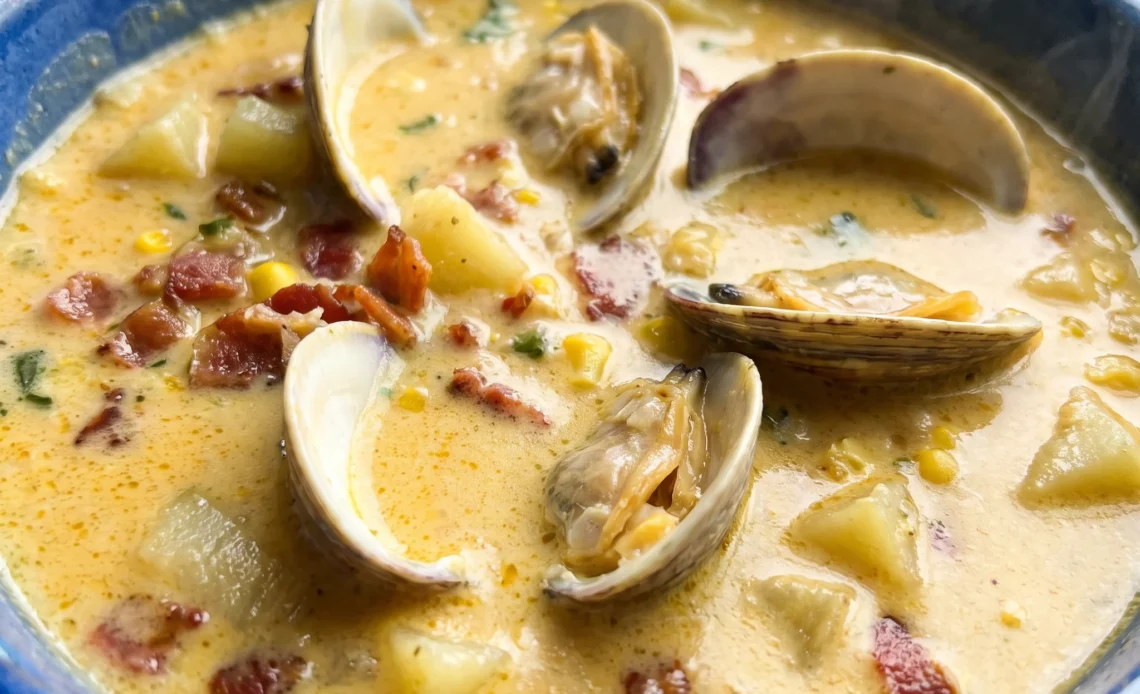
Clam and corn chowder lives or dies on the clams you steam first. Pull that batch before the shells go rubbery and you’re fine; walk away and the chopped meat turns to erasers no amount of cream can hide. The other trap is reading the pot too early.
Corn thickens the base on its own once the cream cooks down, and if the liquid looks loose before it’s puréed, it’ll only tighten further when the potato starch joins in. What you’re after is a bowl that’s silky underneath and full of clams you still have to work out of the shell, one pot doing both jobs at once. It reads like a project on the page.
At the stove it’s mostly waiting and tasting, and the reward is a chowder that tastes like the ocean instead of thickened dairy.
Steam Some Clams for Meat and Broth, Save the Rest for Shells
Two dozen of the three dozen clams go into the pot first, and they do double duty. The meat gets chopped and stirred in near the end, so every spoonful carries tender clam without any chew. The liquid left behind after steaming is the real prize: roughly two cups of briny, clam-forward broth that becomes the backbone of the chowder.
That liquid seasons the cream and corn from the inside, the way a stock does for soup. The last dozen clams stay in their shells until the final covered stretch.
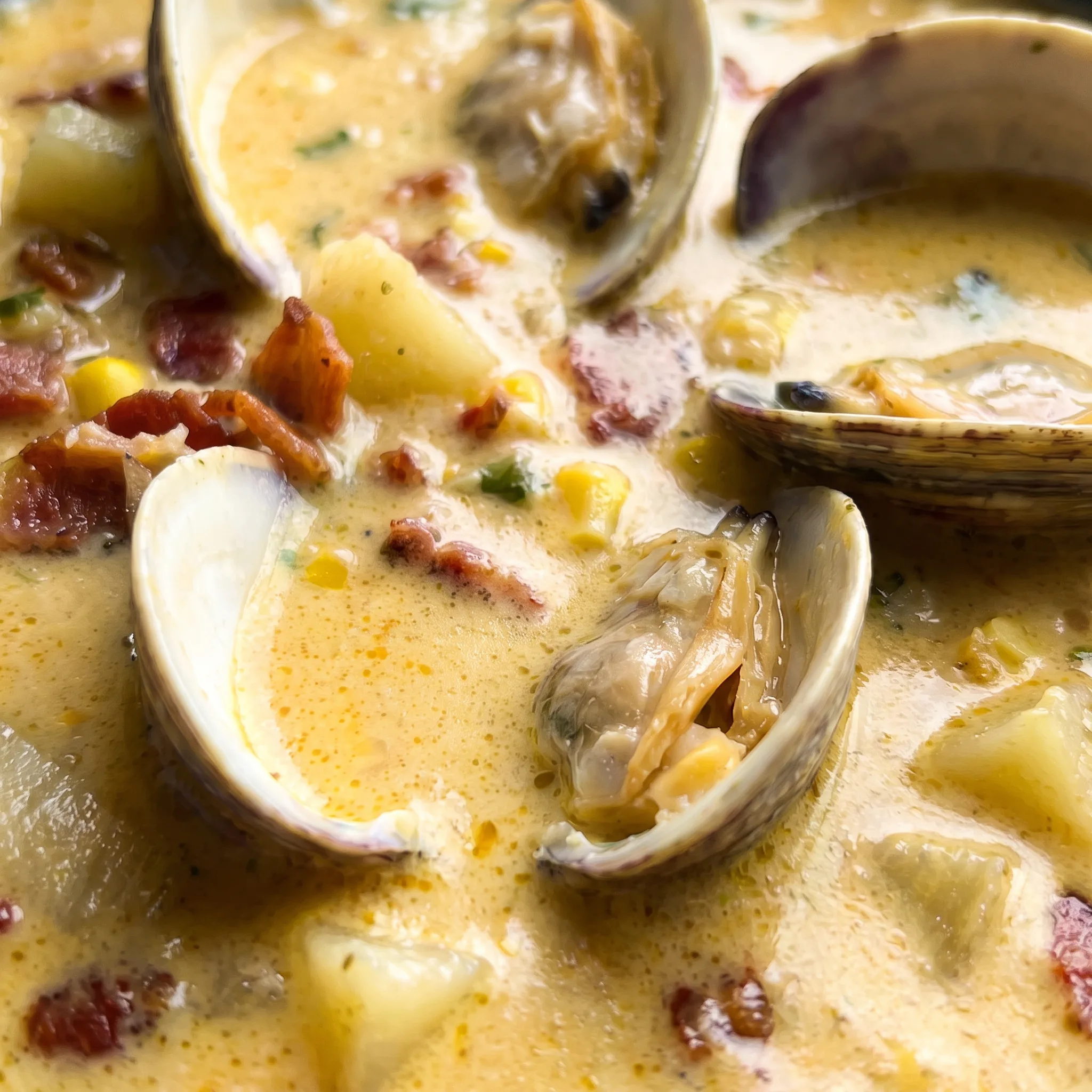
They open right in the pot, and each bowl gets a few. You eat some clams with a fork and find others still hinged, which keeps the bowl from feeling like a uniform purée.
Visually, the open shells announce what kind of chowder this is before anyone takes a bite. The chopped meat and the in-shell clams come from the same batch, but they land differently on the tongue and in the eye.
Purée First, Then Add Potatoes and Clams
Once the cream has reduced and the herb bundle and jalapeño halves come out, the pot holds a smooth, corn-thickened base. Running a blender through it now turns everything into a silky liquid with no stray bits of onion or corn skin. That smoothness is the canvas.
Potatoes go in after, and they stay as distinct half-inch cubes because nothing else will break them down. The clam meat and the in-shell clams follow, adding their own chunky presence. If you puréed after adding potatoes, you’d lose the cubes and end up with a thick, starchy slurry.
Keeping the jalapeño and herb bundle out of the blender matters too: the jalapeño would turn the whole pot grassy-hot, and the herb stems would shred into gritty flecks. What you get is a soup that’s creamy but not uniform, with something to chew in every bowl.
Balance Corn’s Sugar with Cream and Heat
Five cups of corn kernels bring a lot of natural sweetness, and in a savory chowder that can read as one-note. Two teaspoons of sugar sounds counterintuitive, but it rounds out the corn’s flavor rather than piling on more sweet. The cayenne and the halved jalapeño work from the other direction, lending a slow warmth that keeps the cream from tasting flat.
Heavy cream does more than enrich: it thickens the base as it reduces, giving the chowder body without flour or starch. The corn itself contributes plenty of texture, especially after puréeing, when the kernels break down and release their starch into the liquid. That’s why the soup coats a spoon even before the potatoes go in.
Taste a spoonful after the cream has reduced by a third. The heat should sit in the background, the sweetness should feel savory, and the cream should taste like clams, not just dairy.
Build the Base with Bacon, Alliums, and Wine
Bacon goes into the dry pot first, rendering its fat and turning crisp. Those drippings become the cooking medium for the onion, shallot, and garlic, which is where the chowder’s savory depth starts. The bacon itself gets set aside and scattered over the bowls at the end, so it stays crunchy instead of turning soft in the soup.
Three alliums may look like overkill, but they pull in different directions: the Spanish onion gives bulk and sweetness, the shallot brings a sharper edge, and the garlic adds a low, persistent note. Once they’ve softened and browned, a quarter cup of wine goes in.
It hisses, lifts the browned bits off the bottom, and leaves behind a faint acidity that cuts through the cream later. That deglazing step is quick, but it’s what keeps the base from tasting heavy before the corn and dairy even arrive.
Herb Bundle Perfumes the Pot, Then Leaves
Thyme, rosemary, and bay leaf get tied together and dropped in whole. They steep in the simmering cream, releasing their oils without shedding leaves or needles into the liquid.
That matters because the soup gets puréed later; loose herbs would turn into green flecks and a bitter, woody edge. The bundle also makes removal foolproof.
You fish out one parcel instead of chasing individual leaves. Thyme and bay are classic partners for clams, and rosemary has enough resin to stand up to corn’s sweetness without disappearing.
Dried herbs won’t behave the same way here. Their flavor is flatter and dustier, and they’d cloud the chowder rather than infuse it cleanly. When you pull the bundle out, the broth should smell herbal but not perfumed, like the sea with a garden nearby.
That’s the line this trio walks.
What to Look For in the Clams, Corn, and Cream
Littleneck clams: Buy 3 dozen and scrub them well; if any are open before cooking, tap them and discard if they don’t close.
Corn kernels: From 5 ears, these fresh kernels bring natural sweetness and starch that thicken the chowder as they cook down.
Heavy cream: Use 2 cups of true heavy cream with at least 36% fat; lighter creams won’t thicken the same way when reduced.
Russet potato: One large russet, peeled and cut into ½-inch cubes, holds its shape better than waxy potatoes in this creamy base.
Jalapeño: One jalapeño, halved and seeded, gives gentle heat; leaving the seeds in would crank up the spice.
How to Read the Pot at Each Stage of This Chowder
Judging when the first batch of clams is done
After 8 to 10 minutes, most shells should be wide open. If some stay shut, they’re either dead or full of sand, and no amount of cooking will fix that. Shake the pot and give them another minute; if they still refuse, toss them.
The liquid left behind should smell briny and clean. If it smells like low tide, strain it and add a splash of water to dilute before using.
Knowing when the cream has reduced enough
You’re looking for the liquid to drop by about a third, which takes 15 to 20 minutes over medium heat. Watch the surface: it should go from a loose, milky consistency to a light coat on the back of a spoon.
If it’s still watery, keep going; if it’s already thick, pull it off the heat early. Over-reducing makes the soup pasty once the potatoes go in.
Tasting for balance after the cream reduces
Before you purée, taste a spoonful. The corn should taste sweet but savory, the heat from the jalapeño and cayenne should sit in the background, and the cream should carry the clam broth, not just taste like dairy.
If it’s flat, a pinch more salt; if it’s too sweet, a squeeze of lemon or a splash more wine. This is your last easy chance to adjust.
Deciding when the potatoes are almost tender
After 6 to 8 minutes, a potato cube should give slightly when pressed with a spoon but not fall apart. If it’s still hard, give it another minute or two. If it’s already crumbling, you’ve overcooked them; they’ll thicken the chowder and lose their shape.
The residual heat from the clams will finish them, so pull them just shy of done.
Checking the final clams and seasoning
The last dozen clams go in with the chopped meat. After 8 to 10 minutes covered, they should all be open.
Any that stay closed should be discarded. Now taste: the clams have added their own salt, so you might not need more.
The chowder should be briny, creamy, and a little sweet, with a gentle heat. Adjust salt and pepper one last time before serving.
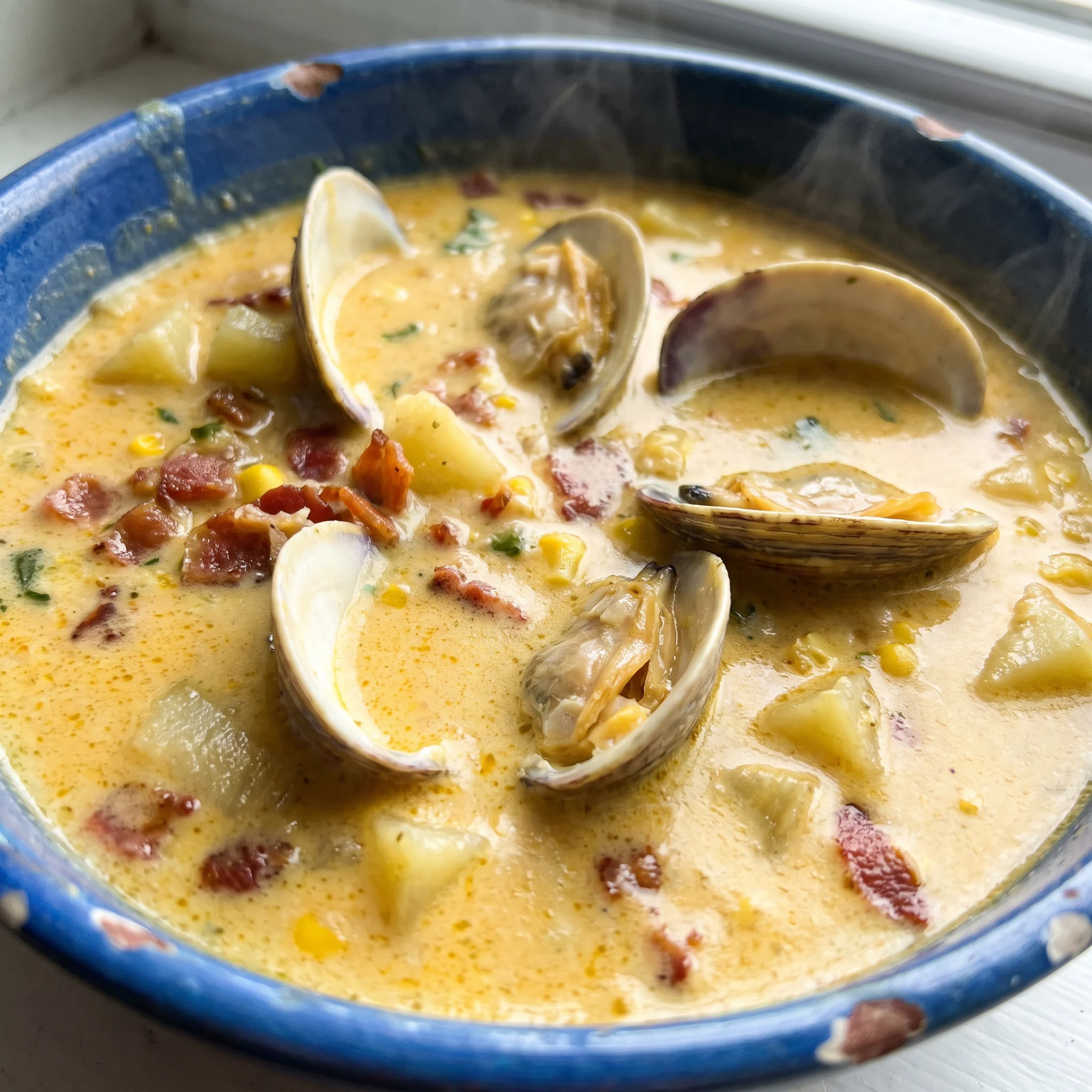
Clam and Corn Chowder with Bacon
Ingredients
Method
- Warm 1 tablespoon of the olive oil in a large pot set over medium-high heat. Once the oil is hot, pour in ¼ cup of the wine and steam 2 dozen of the clams in batches. Cover and cook, shaking the pot often, until the clams open, 8 to 10 minutes. As they open, move them and their juices to a large bowl. Throw away any clams that stay closed. When cool enough to handle, take the meat out of the shells and chop it coarsely. Set aside. Strain the cooking liquid from the pot through a fine mesh strainer into another bowl (you should have about 2 cups; add water if needed). Set aside.
- Wipe the pot clean, add the bacon, and set over medium heat. Cook, stirring frequently, until the fat renders and the bacon turns crisp, 8 to 10 minutes. With a slotted spoon, move the bacon to a paper towel-lined plate to drain. If the pan seems dry, add the remaining 1 tablespoon of olive oil. Add the onions, shallots, and garlic, and season with salt and pepper. Cook, stirring often, until soft and browned, 12 to 15 minutes. Pour in the remaining ¼ cup of wine and lower the heat; cook for 2 to 3 minutes. Add the corn and cook for another 6 to 8 minutes. Add the cream, water, jalapeño, cayenne, sugar, and the reserved clam liquid.
- Tie the thyme, rosemary, and bay leaf together with kitchen twine to form an herb bundle, then put it into the soup. Cook over medium heat until the cream has reduced by a third, 15 to 20 minutes. Take off the heat and remove the jalapeños and herb bundle.
- Using a blender or a hand blender, purée the soup until smooth. Return to low heat, add the potatoes, and cook until almost tender, 6 to 8 minutes. Add the clam meat and the remaining dozen clams in their shells.
- Cover and cook until the clam shells open, 8 to 10 minutes. Once the shells are open, taste and adjust the seasoning.
- Ladle the chowder into bowls and garnish with the parsley, chives, tarragon, reserved bacon, and a drizzle of olive oil before serving.
Storing and Reheating Clam and Corn Chowder
Eat this chowder the day you make it. The base is a cream-and-corn purée holding potato cubes and chopped clam, and both of those are at their best within a few hours of the final simmer, when the potatoes still hold a clean edge and the clam meat is still tender. The herbs and bacon go on at the ladle, right before the bowl hits the table, never in the pot; parsley, chives, and tarragon wilt and go dark within minutes in hot soup, and bacon softens to a chewy strip once it’s wet.
Leftovers keep, covered, in the fridge for two days. Overnight the potato starch keeps leaching into the cream and the cubes go slack, so day two is thicker and softer than day one. Reheat gently in a saucepan over low heat, stirring, just until steam rises.
Boil it and the cream can break, and the clam meat tightens into rubber. Don’t freeze this one; the cream separates on thaw and the potatoes turn grainy.
Re-crisp fresh bacon and cut new herbs for each reheated bowl.
Swap Clams, Corn, Cream, and Wine Without Wrecking the Chowder
Littleneck clams: Use 1½ to 2 pounds of chopped fresh clams from a fish counter, or two 10-ounce cans of whole baby clams, drained and chopped. For the broth, replace the reserved steaming liquid with 2 cups of bottled clam juice, or a mix of clam juice and water. If you use canned clams, skip the steaming step entirely and use the canned liquid as part of the broth.
Fresh chopped clams give you meat that’s already out of the shell, so you lose the in-shell clams in the final bowls. The visual cue disappears, but the briny flavor stays if you use good clam juice.
Canned clams are softer and saltier, so taste before adding extra salt. The final simmer with the chopped meat will still work, but you won’t have shells opening to signal doneness.
Instead, just heat the chopped clams through for a few minutes.
Corn kernels: Frozen corn kernels work fine. Use the same 5 cups, but no need to thaw. Canned corn is a last resort; drain and rinse it if you use it.
If you want a different vegetable, try diced zucchini or yellow squash, but add it with the potatoes so it cooks through. Frozen corn has less starch than fresh, so the chowder won’t thicken quite as much on its own. You might need to reduce the cream a bit longer or add a small potato to help body.
The flavor is still sweet, but a little flatter. Canned corn is softer and sweeter, with a tinny edge that cream can mask but not hide. Zucchini adds water, so the soup will be thinner unless you cook it down first.
Heavy cream: For a dairy-free version, use full-fat coconut milk (2 cups) or unsweetened oat cream. For a lighter dairy option, half-and-half or whole milk can stand in, but you’ll need to thicken the soup another way: whisk in a tablespoon of flour or cornstarch with a little water, or add an extra potato and purée it in.
Coconut milk brings a distinct flavor that reads as tropical, not neutral. It won’t reduce and thicken the same way heavy cream does, so the chowder may stay thinner.
Oat cream is closer in texture but can taste slightly sweet. Half-and-half and whole milk will curdle if boiled, so keep the heat low and stir often. The chowder won’t coat a spoon as heavily, and the clam flavor will be less enveloped.
Dry white wine: Replace the wine with an equal amount of dry vermouth, or use ¼ cup of chicken or vegetable broth mixed with 1 tablespoon of lemon juice or white wine vinegar. For a no-alcohol version, use broth with a splash of vinegar. Vermouth is wine-based and brings a similar acidity, though it has a slightly herbal note.
Broth with vinegar gives the needed tang but lacks wine’s complexity. The wine’s job is to deglaze and add brightness; without it, the chowder can taste flat. If you use broth, you may want an extra squeeze of lemon at the end to wake up the cream.
Tips
- Scrub the clams under cold running water with a stiff brush, then soak them in cold salted water (about 1/3 cup kosher salt per gallon) in the fridge for 1 to 2 hours before steaming. Littlenecks dug from sand hold grit in the hinge and along the siphon, and the 8 to 10 minute steam in step 1 won’t drive it out; the sand sinks into the reserved clam liquid, which becomes the chowder’s backbone, so a dirty batch ruins the whole pot. If you can’t refrigerate the soak, use the coldest water you have and keep the soak under 2 hours, since warm or long soaks kill the clams and they won’t open.
- Discard any clam that won’t close when you tap it on the counter during the soak, and after the steam in step 1, strain the reserved liquid through a fine mesh strainer lined with a damp paper towel or coffee filter rather than the strainer alone. The finer filter catches the last of the sand and shell fragments that a mesh strainer lets through, which matters because that liquid goes into the cream base in step 2 and any grit left in it will be distributed through every bowl.
Clam meat is mostly protein and water; when heated beyond the point where the proteins coagulate, the muscle fibers contract and squeeze out moisture, turning the meat tough and rubbery. The recipe’s two-stage clam treatment, steaming two dozen clams just until they open, then adding the remaining dozen in-shell only at the very end, ensures that the chopped meat is never subjected to a second prolonged simmer. If all the clams were cooked together at the start, the meat would be exposed to the full 85-minute cook time and become inedibly chewy.

Frequently Asked Questions
Can I make clam and corn chowder ahead of time?
Not in a way that improves it. The base is a cream and corn purée holding potato cubes and chopped clam, and both are at their best within a few hours of the final simmer, while the potatoes still hold a clean edge and the clam meat is tender. If you must work ahead, you can steam the clams and strain the broth a day in advance, then refrigerate both separately.
Finish the chowder the day you plan to eat it, and add the herbs and bacon only at the ladle.
Why did my chowder turn out thin?
The cream probably didn’t reduce enough before you puréed. You’re looking for the liquid to drop by about a third, which shows as a light coat on the back of a spoon instead of a loose, milky surface.
If you pulled it early, the soup never gets that body, and the potatoes can’t make up the difference. The other check is your corn: fresh kernels carry starch that thickens the base, and frozen corn has less, so you may need to cook the cream down a bit longer.
How do I know when the clams are cooked properly?
For the first batch, after 8 to 10 minutes most shells should be wide open, and any that stay shut should be tossed. You’ll know they’re done because the meat comes out of the shell easily and chops into tender pieces, not rubbery ones. For the final dozen added in their shells, they’re ready when the shells open, usually in that same window.
If a shell stays closed after that, discard it. The meat should taste briny and clean, never like low tide.
What makes this chowder different from Manhattan clam chowder?
Manhattan clam chowder is tomato-based and brothy, with a red, acidic profile. This one is cream-based, thickened by reducing heavy cream and by the starch from five cups of puréed corn. That gives it a silky body that coats a spoon, and the flavor leans sweet and savory with a gentle heat from jalapeño and cayenne.
The clams appear two ways: chopped meat stirred in and whole clams steamed open in the pot, so you get both tenderness and shells in the bowl.
