
Cream in a simmering pot is a countdown, not an ingredient. Let it come anywhere near a boil and the fat lets go, leaving an oily sheen that no amount of stirring brings back, and the same holds for clams already cooked once. Both wait for the burner to go off.
I’d rather pull the pot early and let the residual heat do the work than gamble on a chowder that looks fine in the ladle and grainy in the bowl. What separates a new england clam chowder worth a second bowl from a thin, floury one comes down to a handful of small decisions: when the flour stops smelling raw, how far the potatoes soften before they start disappearing, and whether you taste the broth for salt before the dairy dulls it.
Get those right and you have a pot that feeds a table in about the time it takes to set it.
Once the clams and heavy cream go into the pot, the chowder is already cooked; any additional high heat will push the cream past its emulsification point and tighten the clam proteins into rubber. The visual signal is a broth that turns from glossy and smooth to dull and slightly speckled, with tiny fat droplets or graininess appearing at the surface. At that point the texture is already damaged, so the correction must happen before the pot ever returns to a boil.
Timing the Clams and Cream
Clams from a can or freshly steamed are already cooked. They’ve given what they have to give. Drop them into a simmering pot and they keep going, tightening into rubber pellets that pop between your teeth.
The chowder waits until the pot is off the heat for both clams and cream. The residual warmth is enough to bring them up to temperature without another round of cooking. Cream behaves the same way.
Boil it and the fat separates, leaving you with a grainy, oily surface that never smooths back out. Stirred in off the heat, it stays glossy and coats the spoon.
Bacon goes in at the end too, or rather most of it does. A handful held back and scattered over each bowl keeps its snap instead of going limp in the liquid. That contrast of crisp against creamy is what makes a bowl worth a second ladle.
You’ll know it’s right when the clams taste tender and the broth looks uniform, not broken.
Flour and Potato Starch
The flour is what stands between a brothy soup and one that clings to the spoon. One third of a cup gives a medium body, thick enough to feel substantial but still loose enough to flow. Double it and you’re in stew territory, where the spoon stands up on its own.
Either is correct depending on what you want. But raw flour tastes like paste.
It needs a minute in the hot fat to lose that chalky edge before any liquid goes in. Skip that step and the whole pot carries a dull, floury note no amount of clam juice covers. Potatoes do quieter work.
As they simmer and their edges soften, they shed starch into the broth. That starch thickens alongside the flour, and it’s why chowder often tightens up overnight in the fridge. If you’re reheating the next day, expect to loosen it with a splash of water or stock.
The finished texture should be silky, not gluey. If it ropes off the spoon, thin it.
The Source of Clam Juice
Four cups of clam juice is the backbone here. Bottled works, and it’s what most cooks reach for. But fresh juice from steaming a batch of clams is a different animal.
It carries a brininess and depth that bottled versions rarely match, and it often tastes saltier straight from the pot. That matters when you season.
If your juice came from fresh clams, hold off on the kosher salt until the very end, after the cream is in. The cream will mute the salt slightly, so taste then. With bottled, check the label.
Many brands add salt, and some are saltier than others. Pour a little into a spoon and taste it before it goes into the pot. The chowder should taste of the sea first, dairy second.
If the clam flavor feels thin, a splash of the steaming liquid or a few extra chopped clams can bring it back. Adjust before you serve, not after.
What Makes It New England
Cream and no tomatoes. That’s the line. Heavy cream goes in at the end, giving the broth its pale, opaque look and a richness that coats the tongue.
Tomatoes would turn it pink and sharp, which is a different soup entirely. Thickening comes from flour and potatoes, not from a tomato base that reduces and concentrates.
The result is a chowder that tastes of clams and dairy, with the vegetables and bacon playing supporting roles. Salt pork is the older choice, and it brings a deeper, porkier note than bacon. Bacon is what most people have on hand, and it works, though it adds a smokiness salt pork doesn’t.
Both are acceptable. The bowl should be creamy but not heavy, seasoned but not salty, with distinct pieces of potato and clam rather than a uniform puree. If it tastes flat, a pinch of salt and a crack of pepper will usually wake it up.
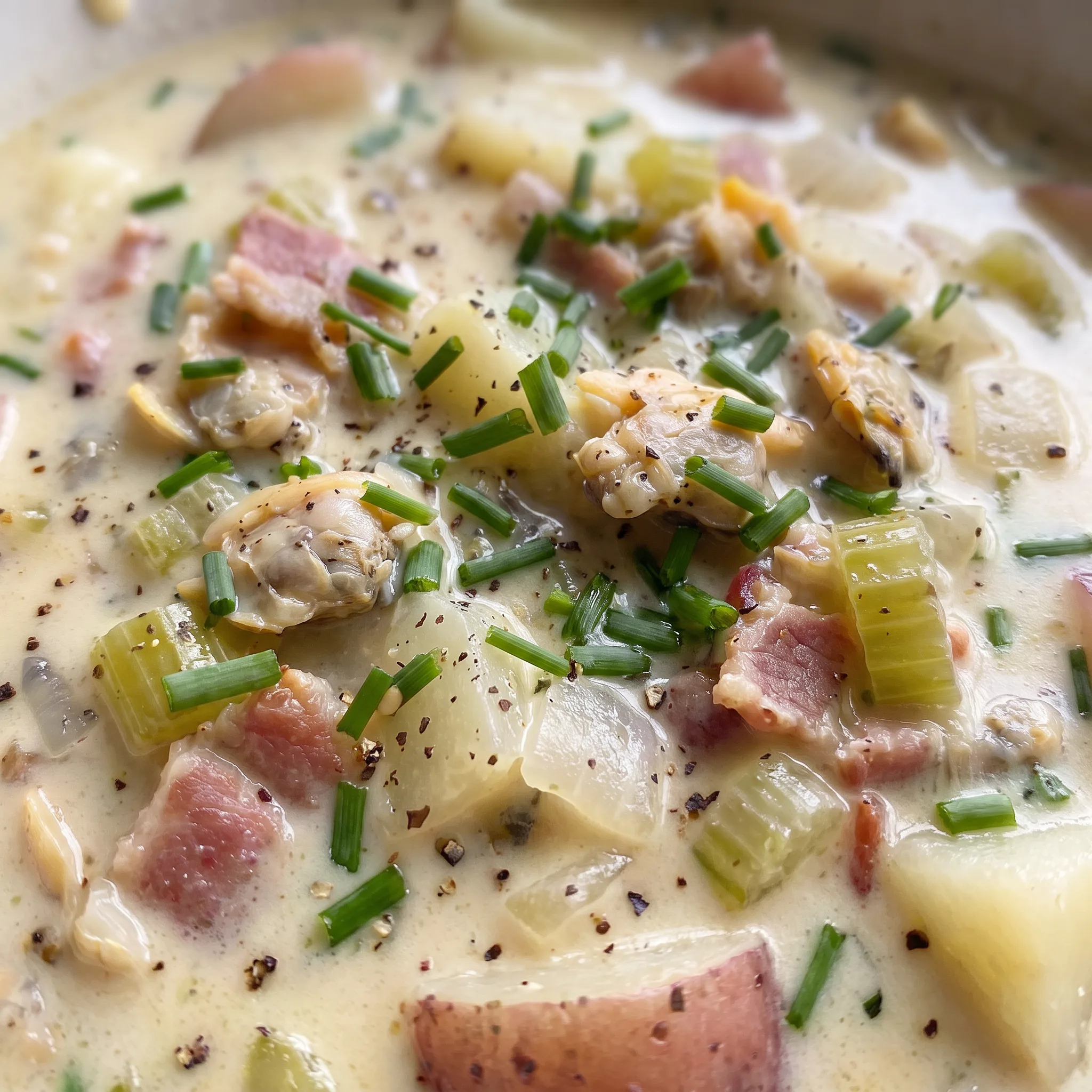
Four Ingredients That Decide This Chowder
Bacon: Six ounces cut small renders better than thick slabs, and salt pork gives the older, porkier base some cooks still prefer.
Clam juice: Four cups from fresh steaming carries more brine and depth than bottled, which varies by brand and often hides added salt.
Red skin potatoes: Two pounds cubed with the skins on hold their shape through twenty minutes of simmering and shed just enough starch to thicken.
Heavy cream: Two cups of real heavy cream, not half and half, is what keeps the broth opaque and glossy instead of thin and gray.
Reading the Pot at Four Points Where Chowder Turns
When the bacon fat is ready for the vegetables
Bacon gives up its fat slowly, and the cubes go from limp to crisp somewhere around the ten minute mark. Pull them too early and they keep rendering in the pot, leaving you with greasy vegetables and no crunch for the top. Leave about a tablespoon behind.
More than that and the flour can’t absorb it all, so the chowder turns slick on the lips instead of coating the spoon.
Judging whether the flour has cooked past raw
A minute over the vegetables is enough for the flour to lose its chalky smell and pick up a little color. Stand over the pot and breathe in. If it smells like wet paste, it needs another thirty seconds.
That raw note doesn’t cook out later in the liquid, it just sits in the finished bowl tasting flat and dull. Once the flour smells toasted and nutty, the liquid goes in.
Knowing when the potatoes are done enough to stop
A fork should slide into a cube with almost no resistance, but the cube should still hold its shape on the way out. Twenty minutes is the guide, not the rule. Potatoes cut small finish sooner, and cubes that go past tender start breaking down into the broth.
Some softening at the edges is what thickens the chowder. A pot of disintegrating potato is a different problem, one you can’t undo. Check at fifteen minutes and every few after.
Tasting before the cream goes in, not after
Salt perception changes once two cups of cream hit the pot. What tastes properly seasoned in the broth may taste flat ten seconds later, and what tastes slightly under-seasoned now will land right. Taste the broth at this point, while it’s still dark and clam-forward, and adjust.
If your clam juice came from fresh clams, it’s already salty. Bottled varies by brand.
Season to the broth you have, then stir in the cream and taste once more.

New England Creamy Clam Chowder with Bacon
Ingredients
Method
- In a large pot or Dutch oven over medium-high heat, cook the bacon for about 10 minutes until done and crispy.
- Using a slotted spoon, transfer the bacon to a plate. Discard most of the fat, leaving about 1 tablespoon in the pot.
- Add the chopped onions and celery and cook for 8 minutes until translucent. Add the garlic and cook for 2 more minutes.
- Stir in the flour for an additional minute. For a thicker chowder, double the amount of flour at this step.
- Add the clam juice, water, thyme, bay leaf, and potatoes.
- Bring the mixture to a boil, then reduce to a simmer. Season with black pepper, cover, and cook for 20 minutes or until the potatoes are fork tender.
- Remove from the heat, then stir in the clams, bacon (reserve a little on the side for garnish), heavy cream, and chives or parsley.
- Discard the bay leaves and thyme sprig if desired, then taste and adjust seasoning as needed.
- Ladle into bowls and garnish with reserved bacon and more fresh herbs if desired. Serve hot with crusty bread on the side.
- Choose cherrystone or littleneck clams that smell fresh (not fishy) and are tightly closed.
- Scrub them very well to remove as much sand as possible. You can also opt to purge the clams in water with a sprinkle of flour or cornstarch.
- Bring 2 cups of water (or a combination of water and white wine) up to a boil in a large pot.
- Add the clams and cover. After about 5 minutes, carefully remove the lid and use tongs or a slotted spoon to transfer any open clams to a bowl so they don’t overcook.
- Continue cooking until all the clams have opened, and discard any that do not. Some clams may be stubborn and need several more minutes to open – give them some time and they will usually open.
- Once cool, remove the clams from their shells and finely chop.
- Strain the remaining liquid to remove any sediment and reserve for the chowder. You will need four cups of clam juice. If there isn’t enough, supplement with bottled clam juice, water, or chicken stock.
The Swaps That Hold This Chowder Together and the Ones That Don’t
Bacon or salt pork: For a more traditional flavor, use an equal weight of salt pork (6 ounces). If you’re avoiding pork, skip both and add 2 tablespoons of butter or olive oil to cook the vegetables.
Salt pork doesn’t crisp like bacon; it renders into soft, salty bits that melt into the broth, giving a deeper pork flavor without smokiness. You’ll lose the crispy garnish, so if you want that contrast, crisp a little bacon separately and sprinkle it on. With butter or oil, the chowder tastes lighter and less savory; you may want an extra pinch of salt.
5-ounce cans or about 6 pounds of fresh clams in the shell. You can use either interchangeably, but if using fresh, you’ll also get the clam juice from steaming them. Canned clams are already cooked and tender, so they just need to heat through.
Fresh clams, once steamed and chopped, have a brinier, more delicate flavor and a slightly firmer texture. They also give you fresh clam juice, which is more flavorful than bottled.
If you use canned, the chowder will still be good, but the clam taste won’t be as bright. Adjust salt carefully because canned clams can be salty.
Clam juice: If you run short on clam juice, supplement with chicken stock or water. Use the same volume: for every cup of clam juice you’re missing, use a cup of stock or water.
Chicken stock adds a savory note but no clam flavor, so the chowder will taste less of the sea. Water just dilutes it. If you’re using water, you may want to add a few extra chopped clams or a splash of the steaming liquid from fresh clams to boost the flavor.
Bottled clam juice varies in saltiness, so taste before adding salt.
Heavy cream: For a dairy-free version, substitute full-fat coconut milk for the heavy cream, using the same amount (2 cups). For a lighter but still creamy option, half-and-half can work, but it may curdle if boiled, so add it off the heat and don’t let it come to a boil.
Coconut milk will give a distinct coconut flavor that competes with the clams, and the chowder will be slightly thinner. Half-and-half won’t thicken as well and can separate if overheated, so the broth may look less opaque and feel less rich. If you use half-and-half, consider adding an extra tablespoon of flour at the start to help thicken.
Storing and Reheating Clam Chowder
Clam chowder is best eaten the day it’s made, within a couple of hours of cooking. The texture is at its peak: the potatoes are intact, the clams are tender, and the cream is silky. If you’re making it ahead, cool it quickly and refrigerate it.
The flavor actually improves overnight as the ingredients get acquainted, but the starch from the potatoes and flour will thicken it further in the fridge. You’ll likely need to loosen it with a splash of water, clam juice, or stock when reheating. Reheat gently over low heat, stirring often.
Boiling will cause the dairy to separate and turn grainy. The chowder keeps in the refrigerator for up to 3 days. Freezing isn’t recommended; the cream will separate and the potatoes will become mealy.
If you must freeze, do so before adding the cream, then thaw and stir in the cream when reheating. As for the finishing touch, the reserved crispy bacon and fresh herbs go on right before serving, after reheating. That way they stay crisp and bright.
Serve hot with crusty bread.
Tips
- Purging works on a clock, not a soak. Clams are alive and filtering, so 30 to 60 minutes in salted water (about 1/3 cup kosher salt per gallon) with a sprinkle of cornstarch or flour is enough for them to spit out sand and the grit in their siphons. Leave them overnight and they use up the oxygen in the water, go sluggish, and stop filtering, so the sand stays in. The cornstarch irritates the shells and gets them working harder. Drain and rinse before steaming, and don’t pour that purge water into the pot.
- The sand sinks, so don’t pour the steaming liquid off the top. After the clams open, let the pot sit off the heat for a few minutes so the sediment settles, then ladle or siphon the juice from the surface instead of tipping the pot. If you pour, the last cup carries the sand straight into your four cups of clam juice, and no strainer mesh fine enough to catch it will leave the broth clear. Line a fine strainer with a damp paper towel and pour through that if you need to move fast.

Frequently Asked Questions
Can I make clam chowder ahead of time and reheat it?
Yes, and it often tastes better the next day. The starch from the potatoes and flour will thicken it further in the fridge, so you’ll likely need to loosen it with a splash of water, clam juice, or stock when reheating.
Reheat gently over low heat, stirring often, and don’t let it boil. The chowder keeps in the refrigerator for up to 3 days.
Why did my clam chowder curdle?
The cream was almost certainly overheated, either during the initial cook or during reheating. Heavy cream stirred in off the heat stays glossy; if the pot is still simmering or you bring it back to a boil later, the fat separates and the broth turns grainy and oily. If you used half-and-half instead of heavy cream, it’s even more prone to breaking because it has less fat to stabilize it.
To avoid it next time, add the cream only after the pot is off the heat, and reheat gently over low heat, stirring often.
How do I keep the potatoes from getting mushy in clam chowder?
Start checking them at 15 minutes and every few minutes after. You want a fork to slide in with almost no resistance, but the cube should still hold its shape on the way out. Red skin potatoes help because they hold up well, but even they will break down if left past tender.
Some softening at the edges is fine and actually thickens the broth, but once they start disintegrating you can’t undo it. If you’re planning to reheat leftovers, keep in mind that the potatoes will soften further overnight.
What’s the difference between New England and Manhattan clam chowder?
New England clam chowder is cream-based and has no tomatoes. Heavy cream goes in at the end, giving the broth a pale, opaque look and a richness that coats the tongue. Manhattan clam chowder has a tomato base, which makes it red, tangy, and thinner.
The thickening in New England comes from flour and potatoes, not from a tomato base that reduces and concentrates. So if you see a pink or red broth, you’re looking at Manhattan style.
