
A party cheese ball is not a dish you serve to impress anyone. This one might. Smoked salmon goes in twice, some of it pureed until it disappears into goat cheese and cream cheese, the rest folded in by hand so you can still see the flakes when you cut in.
Everything Bagel Seasoning does the crust, and it’s the coating that decides whether this smoked salmon cheese ball reads as a throwback or something smarter. There’s a margin problem here that the retro version never had.
The salt on the outside hits your tongue before the cheese does, so a heavy blend can bury the fish entirely, and the crust only stays crisp if the ball underneath is properly cold. Get the chill right and it works.
Get it wrong and you’ll watch the whole thing slump on the platter.
The recipe’s hard step is achieving a firm, sliceable texture after blending. Using a 5:4 ratio of goat cheese to cream cheese, both at room temperature, allows the food processor to create a smooth, lump-free base; however, the mixture only firms up after at least 2 hours of chilling. If the ratio is off or the chilling is rushed, the cheese ball remains too soft, and the coating absorbs moisture, losing its crunch.
Why the Cheese Blend Holds Its Shape
Goat cheese and cream cheese do different jobs here. Goat cheese brings structure and a clean tang that keeps the ball firm enough to coat and slice.
Cream cheese adds smoothness, a softer spread that makes each bite feel rich rather than crumbly. The ratio in the recipe, 5 ounces goat to 4 ounces cream, is deliberate.
Push the cream cheese higher and the mixture turns slack; it will still taste fine but won’t hold a round shape after chilling, and the coating will slide off. Both cheeses need to sit at room temperature before you start, otherwise they won’t blend into a uniform base and you’ll chase lumps across the bowl. Even fully softened, though, the mixture stays soft until it spends time in the fridge.
That rest is what turns a loose, sticky mass into something you can handle and coat without leaving half of it on your palms.
Two Textures from One Fish
All of the smoked salmon goes in, but not in the same form. Half of it gets pulsed with the cheese until no distinct flakes remain, creating a uniform pink base that carries savory depth through every bite. The rest is minced by hand and stirred in at the end.
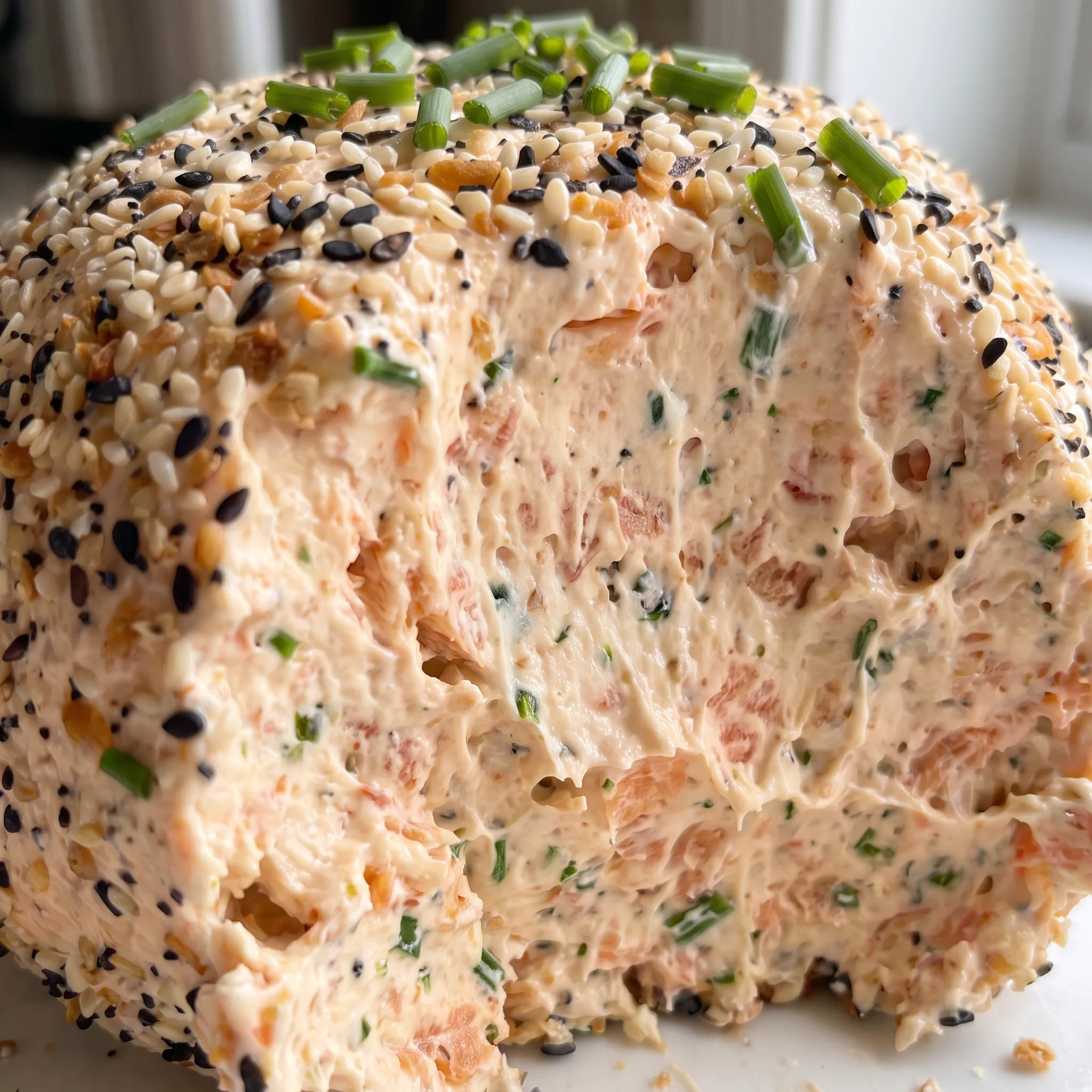
Those hand-cut pieces stay visible, so when you slice the finished ball you see actual salmon, not a smooth paste. That visual cue matters if you’re serving this to guests; a completely uniform mixture can read as purchased or processed, while the flecks suggest you made it yourself.
The folded-in salmon also gives your teeth something to find, a small resistance against the creamy cheese. Keep the minced pieces small enough to cling to a cracker but large enough to recognize.
If they’re too fine, they disappear into the base and you lose the contrast that makes this worth doing.
The Crust That Makes the Ball
Everything Bagel Seasoning is not just a garnish. Its garlic, onion, sesame, and poppy seeds form a crunchy, savory crust that balances the richness underneath.
That contrast is why the coating goes on after the cheese has chilled firm. Apply it too early and the seeds and dried flakes pull moisture from the surface, turning soft and pasty instead of crisp.
A low-sodium brand is worth seeking out because the coating sits undiluted on the outside, where every bit hits your tongue directly. A salty blend can swamp the smoked salmon and leave you tasting nothing else. When you’re ready, the chilled ball should feel firm enough to handle without denting.
Roll it through the seasoning with a light hand, pressing gently so the mixture adheres in an even layer. You want full coverage, but not so much that the crust falls off in clumps when someone cuts in.
The Small Spoonfuls You Barely Notice
One tablespoon of prepared horseradish and one teaspoon of Worcestershire sauce look like afterthoughts in the ingredient list. They aren’t. The horseradish brings a subtle sharpness that cuts through the combined weight of goat cheese and cream cheese.
Without it, the ball can taste flat and heavy after a few bites. Worcestershire adds a savory depth that reads as meaty and complex, though nobody will pick it out by name.
It also rounds out the smoke from the salmon without making the mixture taste fishy or overly salty. Both are measured small on purpose. More horseradish and the heat climbs into the foreground, distracting from the fish.
More Worcestershire and the whole thing starts tasting like a Bloody Mary. Stir them in thoroughly so no pocket of either lands in one bite.
The goal is a background hum, not a solo.
What to Buy and How to Prep It
Goat cheese: Buy the soft, fresh log style rather than pre-crumbled, which is drier and blends into a grainy base.
Cream cheese: Full-fat block cream cheese, not the whipped tub kind, gives the body this ball needs after chilling.
Prepared horseradish: Refrigerated jarred horseradish, not the creamy sauce style, delivers the clean sharp bite that cuts the cheese.
Smoked salmon: Cold-smoked slices, not hot-smoked or lox packed in heavy brine, keep the texture supple enough to mince.
Everything Bagel Seasoning: A low-sodium blend matters here since the coating sits undiluted on the outside and hits your tongue first.
How to Tell the Cheese Ball Is Right at Each Stage
When the pureed salmon has vanished into the cheese
After pulsing half the salmon, the mixture should be an even pale pink with no orange or gray flakes left. Stop the moment that happens.
A few extra pulses won’t ruin it, but once the processor runs for a minute straight, the friction warms the cheese and you’ll get a slack, sticky paste that never firms up properly. If that happens, chill the bowl for 20 minutes before folding in the rest.
Judging the fold-in salmon and chives
The minced salmon and chives go in by hand, not in the processor. Stir just until they’re distributed. Overworking at this stage crushes the salmon into the base, and you lose the visible flecks that tell you it’s homemade.
You want distinct pieces, roughly a quarter-inch, scattered evenly. If the mix looks uniform, you’ve gone too far, but it will still taste fine; just don’t expect the texture contrast.
Reading the firmness after the two-hour chill
Two hours in the fridge is the minimum for the ball to set. Test it by pressing gently with a fingertip: it should feel firm and resist denting, not springy or soft.
If it still gives, give it more time, up to overnight. Under-chilled, it will slump when you lift the plastic and the coating won’t stick.
Over-chilled is fine; just let it sit a few minutes before coating so it’s not rock-hard.
Knowing when the coating is pressed on enough
Roll the chilled ball through the Everything Bagel Seasoning with a light hand. You’re looking for an even layer that clings without being packed down. Press too hard and the seeds embed into the cheese, turning pasty; too little and bare spots show.
If the coating falls off in clumps when you lift the ball, it’s too cold or you’ve used too much pressure. Let it warm slightly and press again.
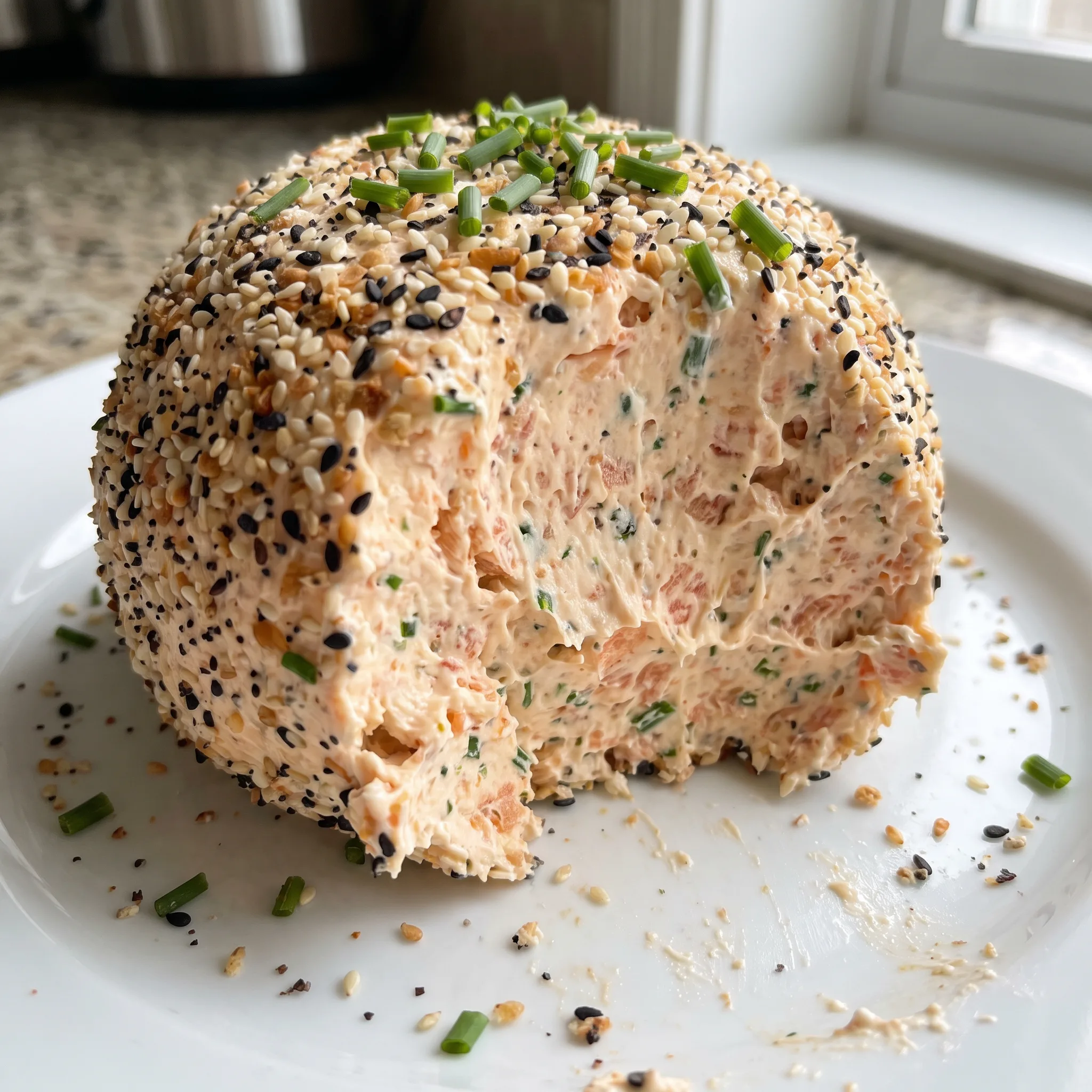
Smoked Salmon Cheese Ball with Everything Bagel Seasoning
Ingredients
Method
- In a mini food processor, pulse the goat cheese and cream cheese until combined and very smooth and creamy.
- Add the lemon zest, horseradish, and Worcestershire sauce; pulse several times until well incorporated.
- Add about half of the smoked salmon to the cheese mixture; pulse until smooth and creamy with no lumps of salmon.
- Transfer the salmon mixture to a small bowl. Mince the chives and add to the bowl. Mince the remaining salmon and add to the bowl; stir until evenly combined.
- Line a small 1-cup bowl (shaped as desired for the cheese ball) with plastic wrap, leaving overhang. Transfer the cheese mixture to the bowl and gently wrap the plastic over the top. Refrigerate for at least 2 hours and up to 24 hours.
- Spread the Everything Bagel Seasoning in an even layer in a bowl. Remove the plastic wrap from the chilled cheese ball and rest it in the seasoning.
- Carefully turn it over until well coated. Transfer the smoked salmon cheese ball to a serving platter and sprinkle with extra chopped chives for garnish, if desired.
- Serve with bagel chips, crackers, or crudité.
Storing Leftovers and Serving the Cheese Ball
This cheese ball is at its best within 2 hours of coating. The Everything Bagel Seasoning starts crisp, but the cheese’s moisture softens it within a day. Eat it the day you coat it for the contrast that makes it worth making.
Leftovers keep in the fridge for up to 24 hours from the initial chill. Wrap tightly or park it in an airtight container; the coating will lose its crunch, but the flavor holds.
After 24 hours, the texture dulls and the salmon can taste flat. Don’t freeze the assembled ball; the dairy separates and the coating turns soggy.
To serve a chilled ball, let it sit 15 minutes so it spreads without tearing crackers. Any final garnish, like extra chives, goes on just before serving, or it wilts. If you’ve stored it, press on fresh seasoning to revive some texture.
Tips
- Press the plastic wrap flat against the surface of the cheese mixture before chilling, not just over the rim of the bowl. Any air gap lets a dry skin form on the top, and that skin becomes a visible dull patch on the finished ball once you unmold it and roll it in seasoning.
- Use a 1-cup bowl that is slightly deeper than it is wide, and leave at least two inches of plastic overhang on all sides. The overhang gives you something to grip when you lift the chilled ball out, so you can pull it free in one motion instead of digging at the edges with a spatula and denting the shape you just set.
Swaps That Keep the Ball Firm and the Crust Crisp
Goat cheese: Use an equal amount of full-fat cream cheese or a soft, fresh chèvre-style cheese from another milk (cow, sheep). Avoid feta or any crumbly cheese. Goat cheese gives the ball its tang and firmness.
Cream cheese alone will make it softer and less tangy; you may need to chill it longer to hold shape. Crumbly cheeses won’t blend smooth and leave a grainy texture.
Cream cheese: Swap in an equal amount of full-fat Greek yogurt or mascarpone, but strain the yogurt for 30 minutes first. These bring richness but also more water. The mixture will be looser and may not firm up enough to coat neatly.
If you try it, expect a softer set and consider freezing briefly before coating.
Smoked salmon: Use an equal amount of hot-smoked salmon or smoked trout, flaked and checked for bones. Hot-smoked fish is firmer and drier, so the pureed half won’t blend as smoothly; you may need an extra pulse or two.
The flavor is smokier and less delicate, which can overpower the cheese. Smoked trout is milder and works if you like a subtler fish note.
Everything Bagel Seasoning: Make your own with equal parts sesame seeds, poppy seeds, dried garlic, and dried onion, plus a pinch of salt. Or use a plain seed blend and add salt separately. Homemade mixes vary in salt and potency.
Start with the same 1/4 cup the recipe calls for, then adjust after tasting a pinch. A salt-free blend will need a light sprinkle of flaky salt on the finished ball.
Store-bought low-sodium is still the safest bet for balanced flavor.

Frequently Asked Questions
How far in advance can I make this smoked salmon cheese ball?
The shaped ball can sit in the fridge for up to 24 hours before you coat it. The coating is the clock: Everything Bagel Seasoning loses its crunch once it touches the cheese, so it goes on the day you serve. If you’re planning ahead, prep the uncoated ball the night before, then coat it within a couple hours of guests arriving.
Why did my cheese ball turn out too soft or greasy?
Overworked cheese is the usual culprit. Running the processor past the point where the pureed salmon disappears warms the mixture, and warm cheese never firms up the way it should.
If yours is already slack, chill it longer before coating; the cold will pull it back together. A second check: cream cheese straight from the fridge or a whipped tub variety blends unevenly and stays loose.
Can I use hot-smoked salmon instead of cold-smoked?
Yes, but expect a different ball. Hot-smoked salmon is firmer and drier, so the pureed half won’t blend as smoothly and you may need an extra pulse or two. The flavor is smokier and more assertive, which can push the goat cheese and horseradish into the background.
If you like a bolder fish note, it works; if you want the delicate balance the recipe aims for, stick with cold-smoked.
What should I serve with a smoked salmon cheese ball?
Bagel chips, plain crackers, or sturdy crudité all give the coating something to cling to. Thin, flaky crackers tend to snap under the weight of a scoop, so go for a hearty base. If you’re setting out a spread, something acidic like cornichons or a dry white wine cuts the richness of the cheese.
How is this different from a classic cheese ball?
Classic versions lean on cheddar or cream cheese with Worcestershire and a nut coating. This one swaps in goat cheese for tang and structure, folds in smoked salmon two ways for visible flecks, and uses Everything Bagel Seasoning for a savory, crunchy crust. The result is lighter and more savory than the old-school version, with a texture that reads as made-in-house rather than purchased.
