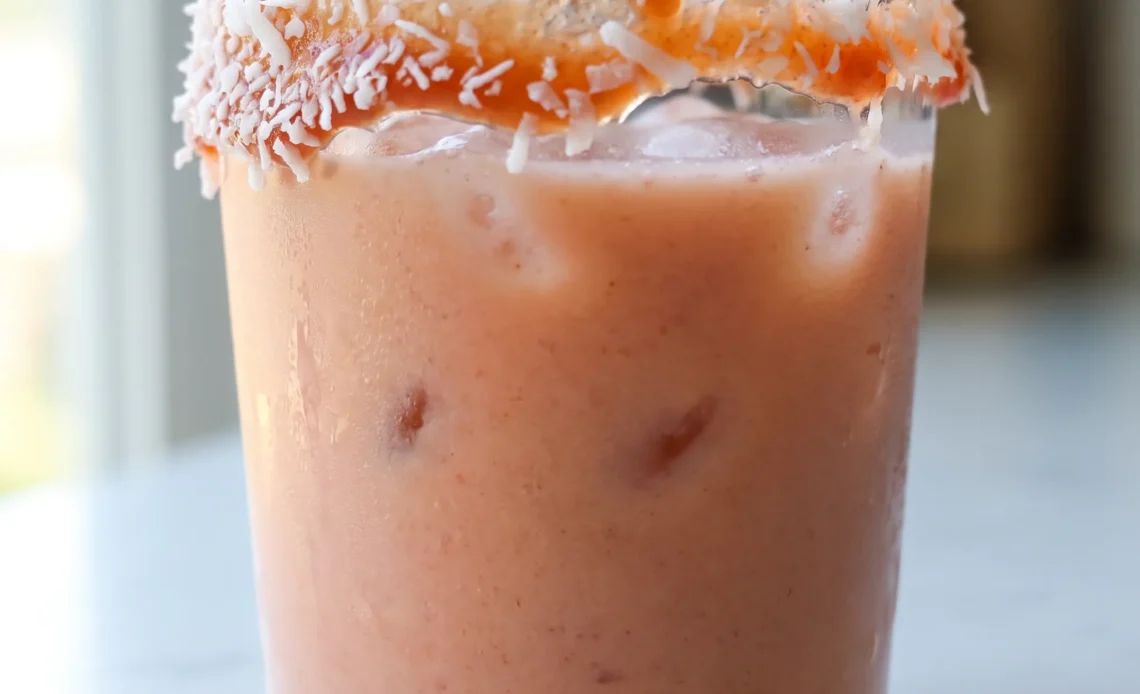
Two hours in the cold is the real work here, not the blending, and that wait is what separates a guava coquito that tastes assembled from one that tastes whole. Blending takes minutes; the fridge does the rest, and the difference between a quick chill and a long one is texture you can feel on your tongue. What catches cooks off guard is the marmalade.
Guava is dense and sticky, and it resists breaking down, so if it goes in cold and fast, you get streaks and a grainy sweetness that settles at the bottom of the glass. Warm it loose with a little of the rum first and it disperses clean. The reward is a drink that pours pink and drinks creamy, with the guava up front and the coconut underneath.
Go easy on the blender speed too, or you’ll pour foam.
Blend on low speed
Low speed keeps the mixture from foaming. Running a blender hard whips air into the dairy and coconut, and once that froth forms, it sits on top like sea foam and never quite disappears. You end up pouring a drink with a head on it, and the texture turns light and airy instead of rich and smooth.
The goal is a pourable liquid that coats a glass evenly, not a mousse. At low speed, everything combines, the guava marmalade breaks up, and the spices distribute, but the blades never get fast enough to trap air. You can see the difference: a low blend looks glossy and still, while a high blend looks cloudy and bubbly.
Stick with low, and the coquito stays silky. When you pour it later, it should run off a spoon in a steady stream, not plop.
That’s your cue that you blended it right.
The chill does more than cool
Two hours in the fridge isn’t just about serving it cold. That time lets the guava marmalade hydrate fully, so any tiny bits soften and disperse. Skip it, and you might feel a slight grain on your tongue.
The cold also brings the cinnamon, nutmeg, and rum together with the coconut base, smoothing out the sharp edges. After a couple of hours, the drink tastes more unified, each sip echoing the last.
Leave it overnight and the change is even clearer: the guava deepens, the spice settles into the background, and the rum loses its alcoholic bite. You’ll notice the difference in how it coats your mouth: a longer chill makes it rounder and more cohesive. So give it at least the two hours, but if you can plan ahead, overnight is better.
The wait is part of the recipe.
Season with salt and vanilla
A pinch of salt and a splash of vanilla might seem minor, but they do heavy lifting. Without salt, the sweetness from the cream of coconut and guava marmalade can taste flat and cloying.
Salt doesn’t make the drink salty; it suppresses bitterness and makes the coconut and guava pop. Vanilla adds a warm, soft background that rounds off the rum’s harsh edges. Together, they bring balance.
If you leave them out, the coquito tastes one-dimensional, overly sweet, and a bit dull. You don’t need much, just enough to notice the difference. When you taste it after chilling, the flavors should feel complete and lively, not just sugary.
That’s how you know the seasoning is right. So don’t skip these small amounts; they make the drink taste finished.
Choose aged Puerto Rican rum
Aged rum like Don Q brings more than just alcohol. Its time in barrels gives it notes of vanilla, caramel, and oak that slip right into the coconut and guava without fighting them. That smoothness matters because the base is already rich and sweet; a harsh, unaged rum would cut through and leave a burn.
The rum’s strength also balances the cream of coconut and evaporated milk, keeping the drink from tasting like a dessert soup. And using Puerto Rican rum is traditional.
Coquito is a Puerto Rican holiday drink, and the local rum is part of its identity. You can taste the difference: a good aged rum adds depth, a gentle warmth that lingers. When you sip, the rum should be present but not dominant, a supporting player.
That’s what makes it coquito and not just a coconut shake.
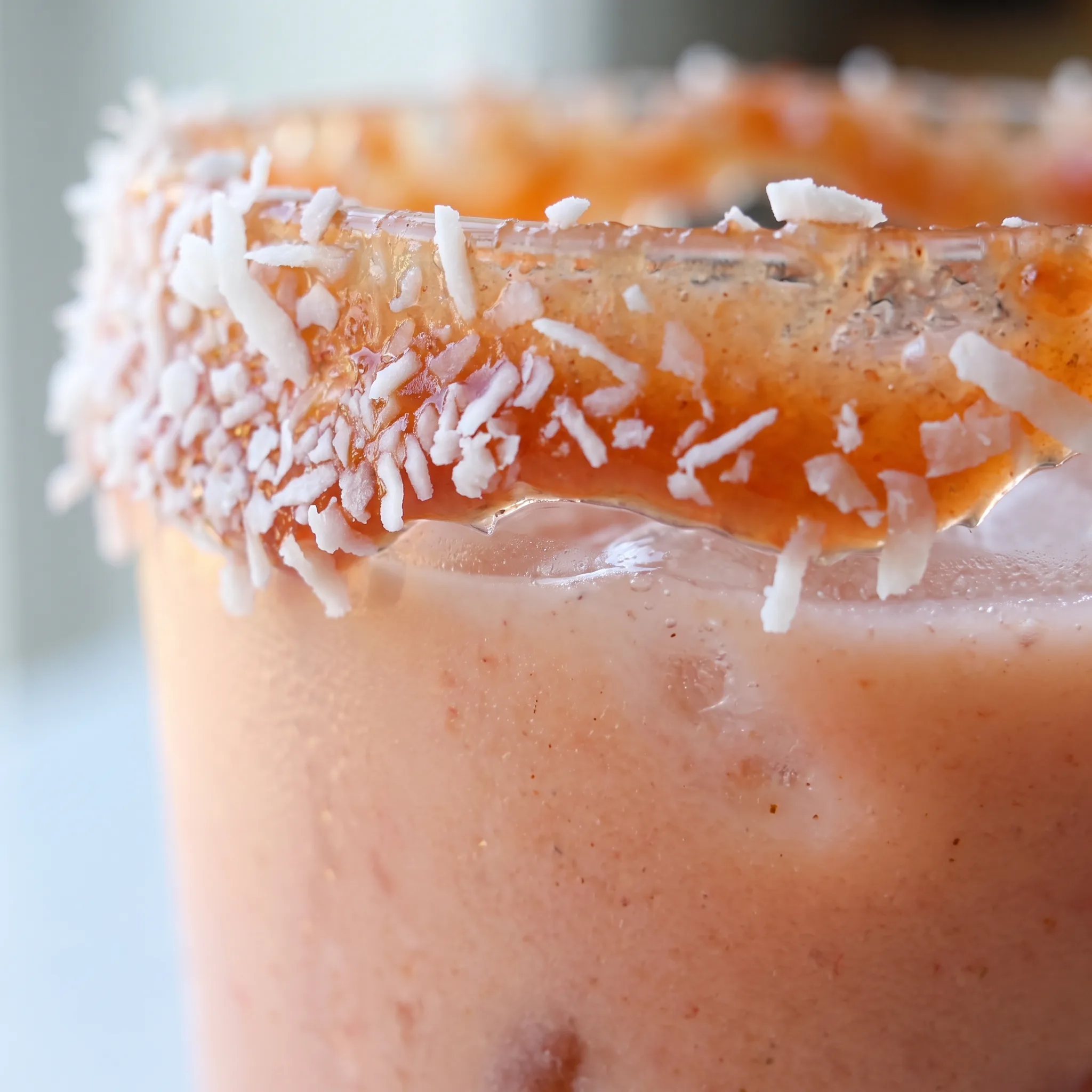
The ingredients that make or break your coquito
Cream of coconut: Buy the canned sweetened kind like Coco Lopez, not coconut cream, which is unsweetened and will leave your drink flat.
Guava marmalade: Choose a smooth, seedless marmalade so it blends cleanly and doesn’t leave gritty bits in the drink.
Full-fat coconut milk: Use full-fat coconut milk, not light, because the extra richness keeps the coquito thick and creamy after chilling.
Puerto Rican aged rum: Pick a gold or aged rum like Don Q Añejo for its vanilla and caramel notes that complement the guava and coconut.
At the blending stage, the mixture should look uniformly opaque and feel slightly thick but still pourable; if it appears lightened, glossy with visible bubbles, or holds a soft peak on the surface, air has been incorporated and the silky texture is already compromised. After chilling, the liquid should be homogeneous with no clear layer at the bottom or solid bits of marmalade; a gritty mouthfeel or a watery separation means the marmalade did not fully hydrate and the emulsion never stabilized. Once the drink is whipped or left under-chilled, the foam and grain cannot be reversed by stirring, so the only fix is to blend on low speed and allow the full two-hour rest.
Judging the blend, the set, and the balance
When the marmalade has fully broken down
Guava marmalade is dense and sticky, and it can sit at the bottom of the blender in a lump if you rush the blend. After 2 to 3 minutes on low, the mixture should look uniform, with no streaks or beads of jelly. Rub a drop to the touch: if you feel any grain or stickiness, keep blending.
A half-incorporated marmalade will settle in the fridge and leave a sweet, grainy layer at the bottom of the glass.
Reading the thickness before chilling
The liquid should be pourable but not watery. It should coat a spoon and fall in a steady stream, not plop. If it’s too thin, the drink will taste weak and the coconut will separate.
If it’s too thick, it will clump when cold. Adjust by blending in a little more evaporated milk, one tablespoon at a time, until it runs like heavy cream. That’s your target before it goes into the fridge.
Knowing when the chill has done its work
Two hours is the minimum, but the coquito is ready when it’s thoroughly cold and the flavors have knitted together. Taste a spoonful: it should feel smooth on the tongue, with no raw alcohol burn and no sharp edge from the spices.
If it still tastes thin or separated, give it more time. Overnight deepens the guava and softens the rum, but don’t let it sit more than two days or the cinnamon can turn bitter.
Shaking before every pour
Even after blending, the coconut cream and milk will separate as it sits. The top may look thicker and the bottom watery. Shake the container hard for 10 to 15 seconds until the liquid is uniform again.
If you skip this, the first glass will be thin and the last will be sludge. A quick shake restores the texture and makes every serving taste the same.
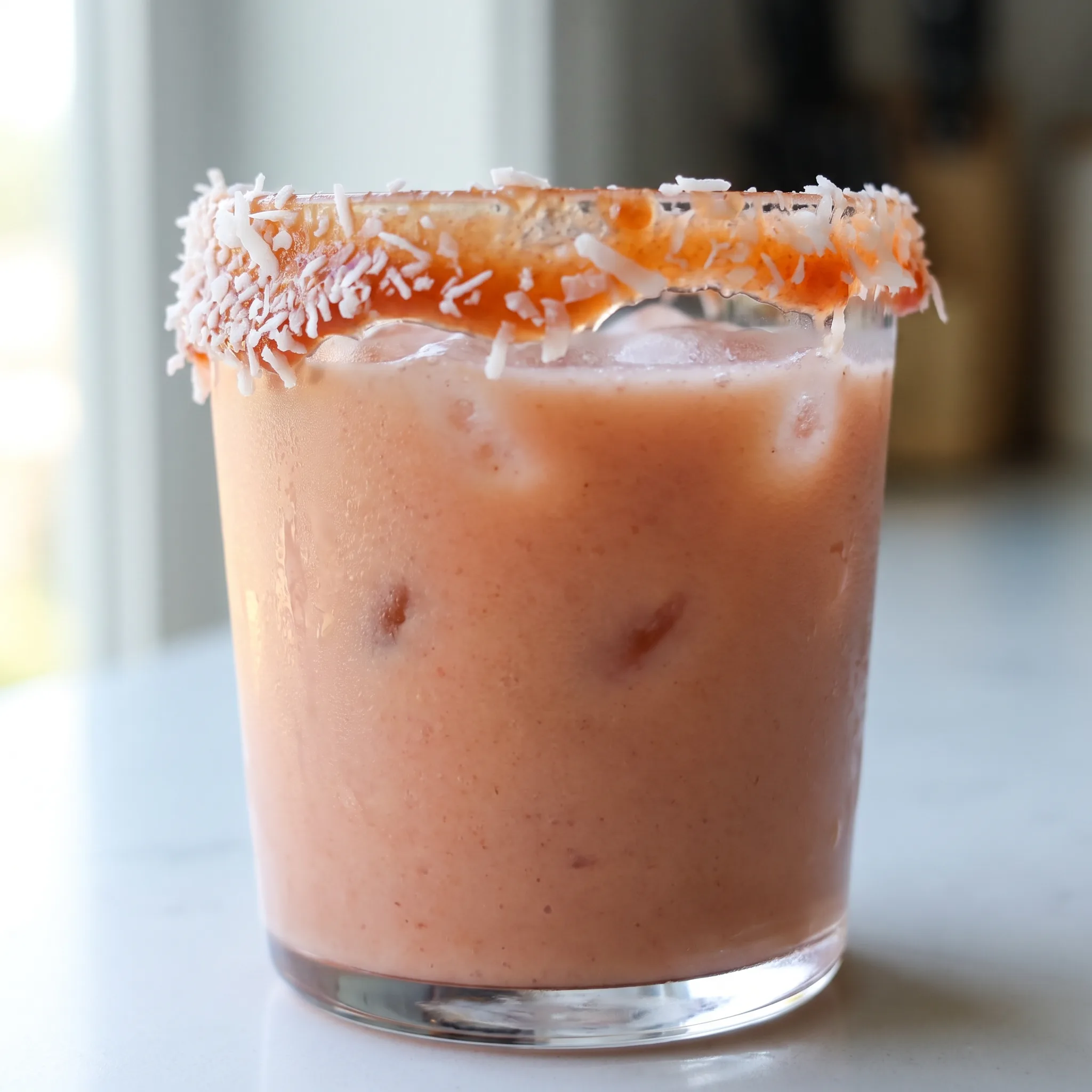
Guava Coquito with Coconut and Rum
Ingredients
Method
- In a large blender, place cream of coconut, evaporated milk, coconut milk, guava marmalade, cinnamon, nutmeg, salt, vanilla extract, and rum.
- Blend on low speed for 2 to 3 minutes.
- Move the guava coquito into a glass container for storage.
- Chill in the refrigerator for at least 2 hours; a longer rest overnight gives superior taste.
- Shake the container thoroughly prior to pouring.
- For serving, decorate the glass with guava marmalade and shredded coconut.
What You Can Swap Without Losing the Guava, and What Will Sink It
Cream of coconut: Coconut cream (the unsweetened kind) plus 3/4 cup granulated sugar, blended in until dissolved. Or, for a lighter but still creamy drink, use full-fat coconut milk and add 1/2 cup sugar. Cream of coconut is the sweet, thick backbone that makes coquito taste like coquito.
Swap in unsweetened coconut cream without adding sugar and the drink turns flat and dull, no matter how much guava you stir in. Adding sugar back gets you close, but the texture is slightly less silky because cream of coconut also carries stabilizers that keep everything from separating.
The lighter swap with full-fat coconut milk and extra sugar works in a pinch, but the finished drink will be thinner and the coconut flavor less pronounced. If you must go lighter, start with the same amount the recipe calls for and add sugar a tablespoon at a time, tasting after each addition, until it hits the sweetness you want.
Guava marmalade: Guava paste, chopped and melted into the evaporated milk first. Or guava jelly, if you can find it. For a different fruit, try apricot or mango preserves, but only if you’re okay with a coquito that no longer tastes like guava.
Guava marmalade is the signature flavor here, and its thick, slightly seedy texture helps give the drink body. Guava paste is denser and less sweet, so you’ll need to warm it with a little of the evaporated milk until it loosens, otherwise it won’t blend and you’ll end up with sticky lumps. Guava jelly is smoother and sweeter, so the drink will be a touch thinner and more candy-like.
Swapping in apricot or mango preserves changes the whole point of the drink: you’ll get a pleasant coconut-rum cooler, but the guava character is gone. If you use a different preserve, start with the same 1 1/2 cups the recipe calls for, then adjust after chilling and tasting.
Full-fat coconut milk: Light coconut milk. Same volume, but expect a noticeably thinner drink.
Full-fat coconut milk is what gives the coquito its rich, coating texture after chilling. Light coconut milk is mostly water, so the finished drink will be watery and the coconut flavor will fade behind the guava and rum. You can compensate by using a little less evaporated milk, but the body still won’t be the same.
5-ounce can and reduce the evaporated milk by a few tablespoons, then blend and check the thickness before chilling. It won’t be as creamy, but it’ll still be drinkable.
Puerto Rican aged rum: Another aged rum, like a gold Jamaican or Barbadian rum, or a dark rum. For a non-alcoholic version, replace the rum with 1 1/2 cups coconut water plus 1/2 cup pineapple juice, and add 1 teaspoon rum extract. Aged rum brings vanilla, caramel, and oak that blend into the coconut and guava, and it also cuts the sweetness.
Swapping in a different aged rum works fine; you’ll just shift the background notes slightly. A dark rum like Myers’s will add more molasses, which can overpower the guava if you’re not careful. For a non-alcoholic coquito, the coconut water and pineapple juice mixture adds sweetness and acidity but no alcohol burn.
The drink will taste fruitier and less complex, and it won’t have the same warming finish. Start with the same 2 cups the recipe calls for, then adjust with more juice or extract after chilling.
Storing and serving
The coquito is best within three days. The first day it’s bright, the guava forward, the spice distinct.
By day two the flavors have knit and the texture is roundest. After that, cinnamon can turn slightly bitter and the coconut cream thickens in the cold, so the drink pours heavy.
Keep it in a glass jar with a tight lid in the coldest part of the fridge, not the door. It will separate as it sits: a dense coconut layer on top, a thinner guava base below.
Shake hard for 10 to 15 seconds before every pour, until it runs uniform. Do not freeze the assembled drink; the dairy and coconut will break and never come back smooth. For serving, pour into chilled glasses and only then add the guava marmalade and shredded coconut garnish.
That final touch goes on right before the glass hits the table, never ahead, or the coconut softens and the marmalade streaks the side.
Tips
- Stir the 1 1/2 cups guava marmalade with a few tablespoons of the 2 cups rum in a small bowl until it loosens to a pourable syrup before it goes into the blender. The rum thins the pectin enough that the marmalade disperses in seconds instead of wrapping around the blades, which is what leaves those translucent jelly streaks in an otherwise blended coquito.
- If your blender jar is narrow, add the liquids first and spoon the marmalade on top rather than the reverse. Marmalade dropped in first sits under the dairy and coconut where the blades can’t reach it, so you end up scraping the bottom of the jar mid-blend while the top half already looks done.
Frequently Asked Questions
Can I make guava coquito ahead of time, and how long does it last in the fridge?
Make it up to three days before you plan to serve it. Day one tastes bright and guava forward; by day two the coconut, spice, and rum have settled into each other and the texture is at its roundest.
Past that mark the cinnamon can read slightly bitter and the chilled coconut cream thickens, so it pours heavy. Keep it in a glass jar with a tight lid in the coldest part of the fridge, not the door, and shake hard before each pour.
Why did my coquito separate or look curdled after chilling?
Separation in the cold is normal here, not a flaw. Coconut cream and evaporated milk don’t stay married once the temperature drops, so a dense layer rises and a thinner guava base settles underneath.
Shake the container hard for 10 to 15 seconds and it comes back together, uniform and pourable. If it still looks broken after a good shake, check whether the guava marmalade went in fully blended; unincorporated jelly drops out as a grainy sweet layer at the bottom of the glass.
How is guava coquito different from traditional coquito?
Guava marmalade replaces the plain coconut-and-spice profile with a fruit base, and it brings its own body and sweetness to the drink. Traditional coquito leans entirely on cream of coconut, evaporated milk, and cinnamon for its character; here the guava sits forward on the first day and softens into the background as it chills. The color gives it away too, a warm pink instead of ivory.
Everything else, the aged Puerto Rican rum and the coconut backbone, stays the same.
