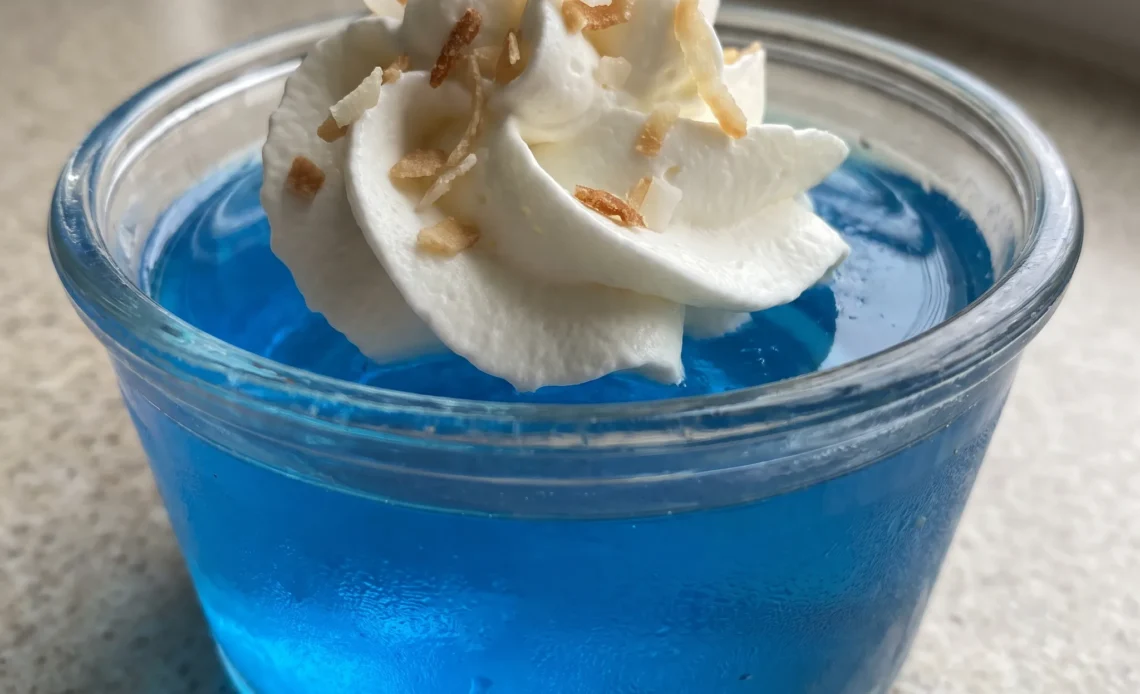
Most people wreck blue jello shots before the cups ever see the fridge, and it happens at the very first pour: cold rum and liqueur hitting gelatin that hasn’t fully opened yet. The result is a slick film, a set that never tightens, liquid pooling at the bottom. The Jack Frost version sidesteps that by letting boiling water do its work alone, then bringing every other liquid in cold.
Timing matters here too. Garnish too early and the cream weeps down the side, so the white cap goes on just before the tray leaves the kitchen.
What you’re after is a frosty-looking shot that’s actually spoonable, bright blue under a peak of cream and toasted coconut, built for a crowd and made entirely ahead.
Gelatin must first fully dissolve in boiling water to unfold its protein chains and form a clear sol. If alcohol is added at that stage, the heat volatilizes the ethanol and the solvent shift can keep some gelatin granules from hydrating, so the final matrix sets unevenly or stays soft. Chilling the alcohol and juice before they go in lowers the mixture temperature immediately, protecting both the alcohol content and the gelatin’s ability to set cleanly.
Why the Booze Goes In Last
Hot gelatin and alcohol are not natural allies. Pour rum into a bowl of just-dissolved powder and water before the grains have fully opened, and you can see the trouble: a slick film on the surface, a mixture that never quite comes together, a set that turns out grainy or weeping liquid at the bottom of the cup.
The order here sidesteps that. Boiling water does the dissolving work first, alone, while the mixture is still hot enough to do it.
Only then do the chilled liquids go in.
That chilled pineapple juice, coconut rum, white rum, and Blue Curaçao all arrive cold, which pulls the temperature down fast before anything gets poured. The volume matters too.
One cup of water plus a cup and a quarter of cold liquid fills twelve plastic cups nearly to the rim with a little headroom for the garnish. Go heavier on the alcohol and you get cups that never firm up.
The blend as written sets clean and spoonable.
Keeping the Blue Honest
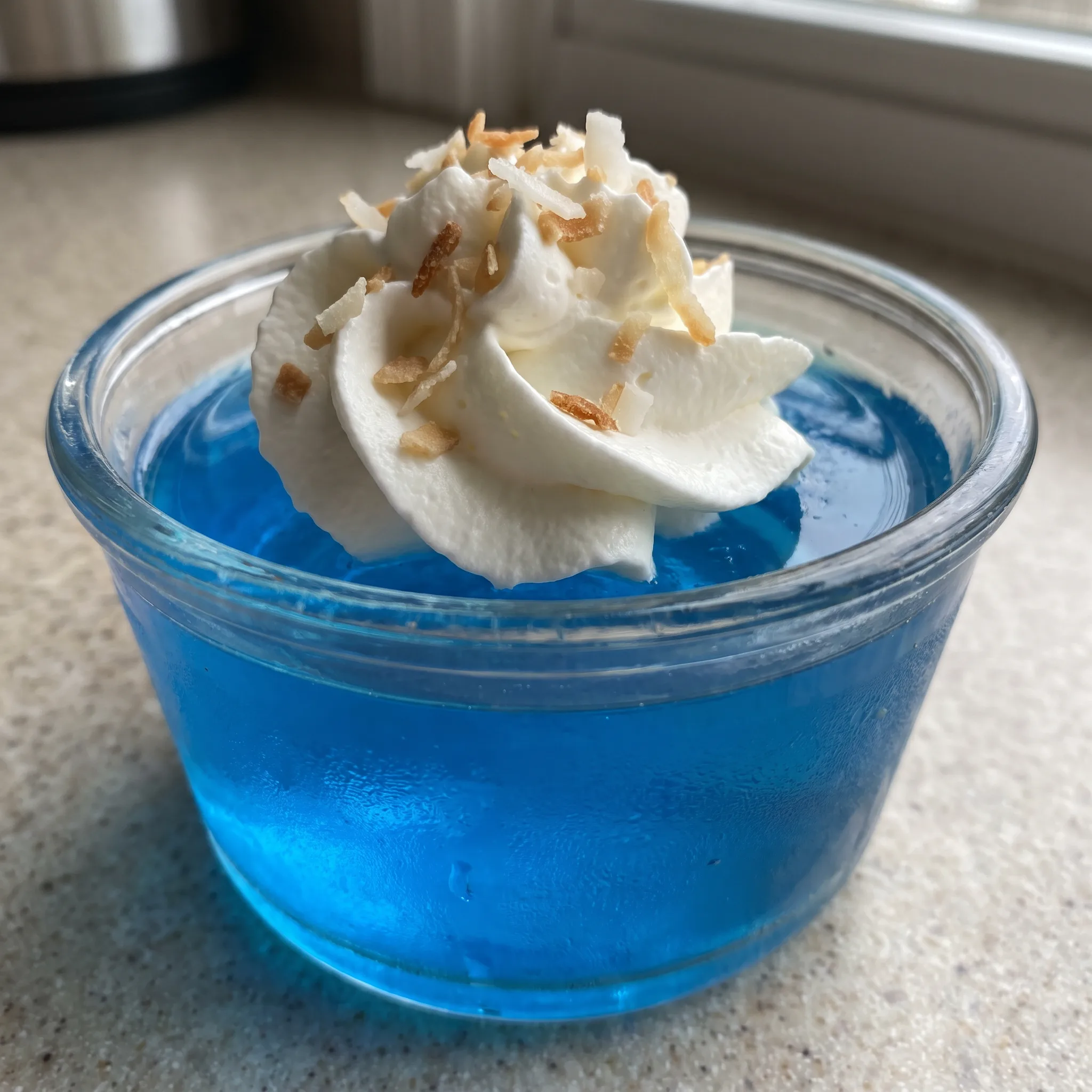
Blue is the whole visual trick here, and it’s easy to lose. Berry blue Jell-O sets the base hue; Blue Curaçao backs it up, deepening the shade while adding its own orange edge. The rest of the liquid is clear or barely tinted, so pineapple juice and both rums thin the color without dragging it toward grey.
What you’re after is a bright, translucent blue you can see through, like colored glass. Cloudiness is the warning sign. If the mixture looks milky before it goes into the cups, something has gone in that shouldn’t have.
Once set, hold a cup to a window: the blue should stay vivid and clean, not washed out or dingy.
The white garnish sits on top as a separate cap, which is exactly why it waits until serving. Stir cream into the blue and you’ve got a pale, muddy shot with none of the contrast that makes the whole thing read as frost.
Build the Frost at the Last Minute
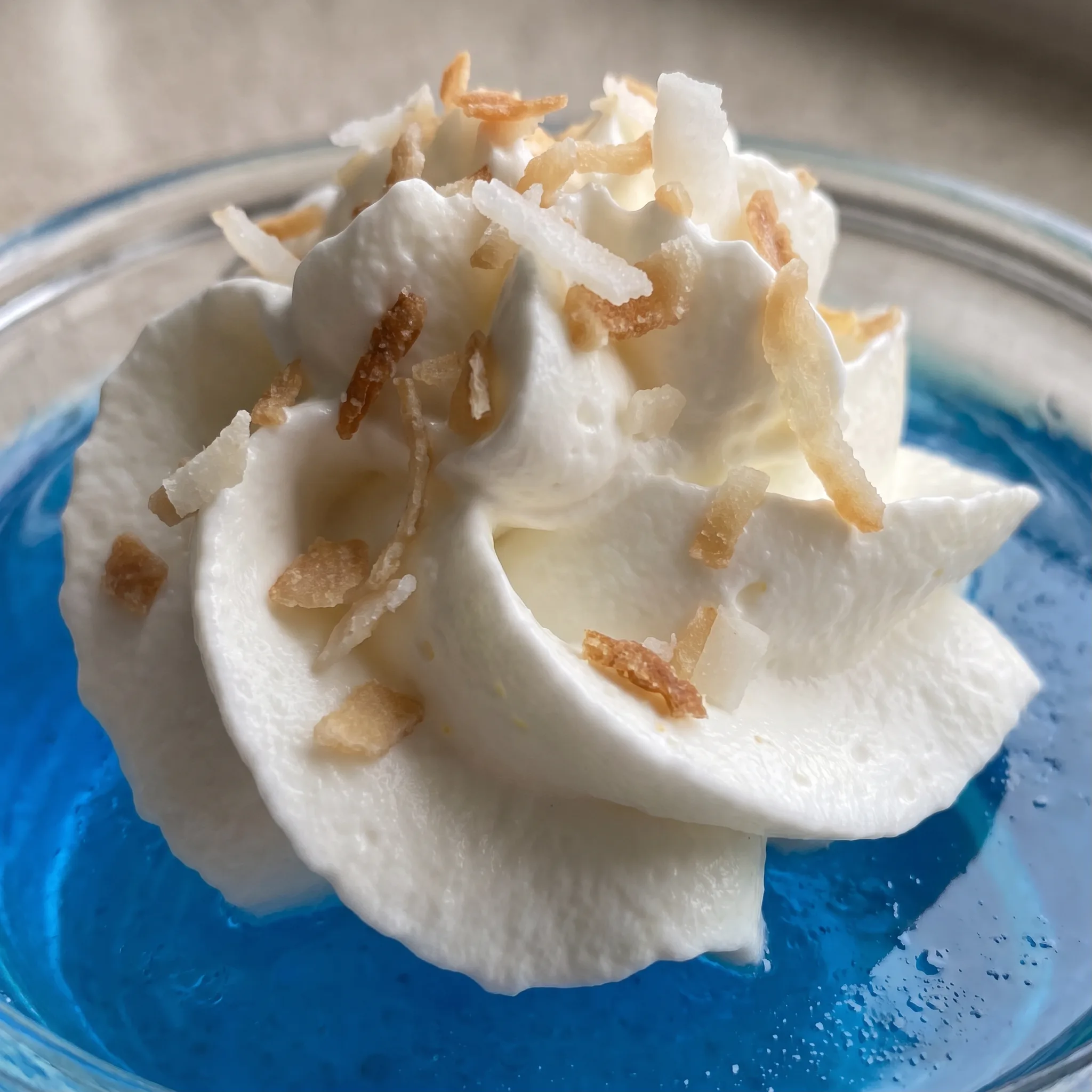
A neat piped cap of whipped cream does more than look tidy. Spooned on, it slumps and smears across the surface; piped, it holds a small peak that reads as snow. Toasted coconut flakes scattered over that cap add the second white element and a crisp bite against the firm, cold gelatin underneath.
Both garnishes are optional, but skip them and you’ve got a plain blue shot. With them, the cup looks like a wintry dessert bite worth handing to someone.
Timing is what keeps it working. Cream sitting on set gelatin for an hour starts to weep, and a bead of liquid sliding down the side of the cup undoes the effect.
Add the garnish right before the tray goes out. The cream stays stiff, the coconut stays crunchy, and the blue stays visible beneath the white cap. That contrast is what you’re serving.
Two Rums and a Liqueur, Balanced
Coconut rum and white rum together build a tropical, lightly sweet base that sits well against berry blue. Neither one dominates. Blue Curaçao layers in orange notes and reinforces the color, so the flavor and the look point the same direction instead of pulling apart.
The real work is proportion. Alcohol is a solvent for gelatin, and past a certain ratio the set never tightens, no matter how long it chills.
Here the spirits stay in balance with the cup of water and three quarters cup of juice, so the gelatin firms properly. What you get is a soft, spoonable shot that holds its shape on the spoon and gives way with barely any resistance, the texture of a firm jelly rather than a rubbery cube or a soupy cup.
Taste one cold, straight from the fridge. The alcohol should read as a warm background note, not a burn that flattens the berry flavor underneath. That balance is the whole measure of whether the batch worked.
The Ingredients That Make or Break the Blue
berry blue Jell-O gelatin: The 3 oz box is the only one that gives that electric blue base, so don’t grab a different flavor or a larger size.
pineapple juice: Chilled is key here; it also brings a mild acidity that keeps the blue from tasting flat.
coconut rum: Use a brand you’d sip, because the coconut note carries straight through to the finished shot.
white rum: A clean, unaged white rum keeps the flavor light and lets the berry blue stay forward.
Blue Curaçao liqueur: The 3 tbsp deepen the color and add a faint orange edge, so pick a brand with real orange flavor.
toasted coconut flakes: Toast them yourself or buy them already toasted, but avoid sweetened shredded coconut that clumps and tastes candy-like.
How to Know the Jack Frost Jello Shots Are Setting Right
Reading the Dissolve Before the Cold Goes In
The boiling water has to take the powder all the way down before anything chilled touches it. Whisk and watch: the liquid should go clear and uniform, no sandy texture at the bottom, no faint cloud hanging in it. If grains still catch on the whisk or the bowl feels gritty, keep going.
Miss this and the set turns out grainy or weeping, and no amount of chilling fixes it.
Pouring Without Clouds
As the cold liquids go in, the mixture should stay a bright, translucent blue. Cloudiness is the tell that something warm met something cold too fast or that the gelatin is starting to seize. If it looks milky before it hits the cups, you can sometimes save it by whisking gently over a bowl of warm water just until it clears again, but don’t let it get hot.
Once poured, a cloudy mix stays cloudy.
Judging the Set at Four Hours
At four hours, tip a cup. The surface should hold flat and not ripple, and a gentle press with a fingertip should feel firm with a little give, like a set jelly, not rubbery and not liquid underneath.
If it still sloshes, give it more time; the alcohol ratio is fixed, so extra chilling only helps if the mix was right. A set that never firms means too much alcohol or not enough dissolve.
The Spoon Test for Texture
Slide a tasting spoon down the side of a chilled cup and lift. The shot should come away in a clean, soft mound that holds its shape on the spoon and gives way with barely any resistance. If it slides off in a soupy sheet, it’s under-set.
If it resists and snaps, it’s over-set, which usually means too little liquid or too long in the cold. The right texture is firm but yielding.
Blue Jello Shots with Rums and Coconut
Ingredients
Method
- Place the plastic jello shot cups on a sheet pan without lids; set aside.
- Put the powdered Jell-O into a mixing bowl, add the boiling water, and whisk until the gelatin is fully dissolved.
- Whisk in the chilled pineapple juice, coconut rum, white rum, and Blue Curaçao until incorporated.
- Slowly pour the gelatin mixture into each plastic cup, filling until nearly full.
- Move the sheet pan of jello shots to the refrigerator and chill for at least 4 hours, or until completely set. Attach lids to the cups and keep refrigerated until serving time.
- Just before serving, pipe a small amount of fresh whipped cream on top and scatter with toasted coconut flakes.
- Serve with tasting spoons and enjoy!
Storage and Serving: Keep Them Cold, Garnish at the Last Minute
Once the gelatin has set, snap on the lids and keep the cups refrigerated. The four-hour chill is a minimum, not the finish line.
After that, the shots hold their set for about two days. Past that, they start to sweat, and the blue turns dull as the surface releases moisture. The texture stays firm, but the clean look fades.
So plan to eat them within forty-eight hours.
Don’t freeze them. The gelatin will ice up and turn weepy when it thaws, and the alcohol won’t help. There’s no saving that texture.
The whipped cream and toasted coconut go on right before serving. Cream piped onto set gelatin for more than fifteen minutes starts to weep and slide, leaving a puddle that ruins the frost effect.
The coconut softens as it sits. So garnish the tray just as it goes out. For the best contrast, serve within ten minutes of garnishing.
Leftover garnished shots won’t keep; if you have extras, store them plain and garnish each one just before it’s eaten.
When a Swap Costs You the Blue
berry blue Jell-O gelatin: Any other blue gelatin powder, or a different flavor. Berry blue is the electric base. Swap in another brand and you may lose that clean hue; use a different flavor and the whole drink shifts.
Also skip sugar-free boxes if you can: they set firmer and can taste metallic, and the texture won’t be as soft and spoonable. If you must use sugar-free, start with the same 3 oz box and expect a tighter set.
pineapple juice: White grape juice or apple juice. Both are clear and mild, so the blue stays bright and the flavor stays light. Start with 3/4 cup, same as the recipe, and taste after chilling.
Avoid orange juice or anything pulpy: the color turns murky and the texture can go grainy.
coconut rum: Another clear spirit, like white rum or vodka. You’ll lose the coconut note but keep the clear look and the boozy kick. Use the same 1/4 cup.
Dark rum or spiced rum will tint the blue and can taste heavy against the berry.
white rum: Vodka or silver tequila. Both are clear and neutral, so the blue and berry stay forward.
Measure the same 1/4 cup. Aged or dark spirits add color and flavor that fight the blue.
Blue Curaçao liqueur: Triple sec or another orange liqueur. You’ll keep the orange edge but lose the color boost, so the shots come out a paler blue. Use the same 3 tbsp.
If you want the deeper hue, add a drop of blue food coloring, but go easy: too much and it tastes bitter.
whipped cream and toasted coconut flakes: Leave them off, or use dairy-free whipped topping. The garnishes are optional, but they’re what make the shot read as frost. Skip them and you’ve got a plain blue shot.
If you need dairy-free, coconut whipped cream works; it holds a pipe but may weep a little faster, so add it right before serving.
Tips
- Smell and taste the Blue Curaçao and both rums before you measure them. Blue Curaçao loses its orange edge and can turn faintly soapy once the bottle has sat open for months, and a harsh, gasoline-edged white rum reads as burn rather than warmth at 1/4 cup. Since the shot has only five liquids, a tired bottle has nowhere to hide, and no amount of chilling or garnish covers it. Pour a spoonful of each, taste, and if the Curaçao is flat, replace it or bump the orange with a fresh bottle rather than adding more of the old one, which only deepens the off note.
Frequently Asked Questions
Can I make these Jack Frost Jello Shots ahead of time?
You can, and the set needs that four-hour chill to firm up. The trick is to stop there: once they’re set, keep them plain in the fridge for up to two days.
Garnish with whipped cream and coconut only when you’re ready to serve, since the cream will weep and the coconut will soften if it sits. If you have extras, leave them ungarnished and add the toppings just before eating.
Why are my Jello shots too soft or not setting?
Most often, the alcohol ratio is off. This recipe balances one cup of water with three quarters cup of juice and three quarters cup of spirits; add more booze and the gelatin can’t firm up no matter how long it chills. Another common cause is undissolved powder: if the mixture looked sandy or cloudy before it went into the cups, the set will be grainy or weak.
Check that the boiling water fully dissolved the Jell-O first. If you followed the ratios and it’s still soft after four hours, give it more time, but know that too much alcohol is the usual culprit.
How do these differ from classic Jello shots?
Classic shots are often just gelatin, water, and vodka, which gives a plain, sometimes harsh bite. Here, the blend of coconut rum, white rum, and Blue Curaçao adds a tropical, lightly sweet base with an orange edge that backs up the berry blue color.
The pineapple juice brings a mild acidity so the blue doesn’t taste flat, and the texture is softer and more spoonable than a rubbery cube. The garnish of whipped cream and toasted coconut turns each cup into a wintry dessert bite rather than a plain shot.
