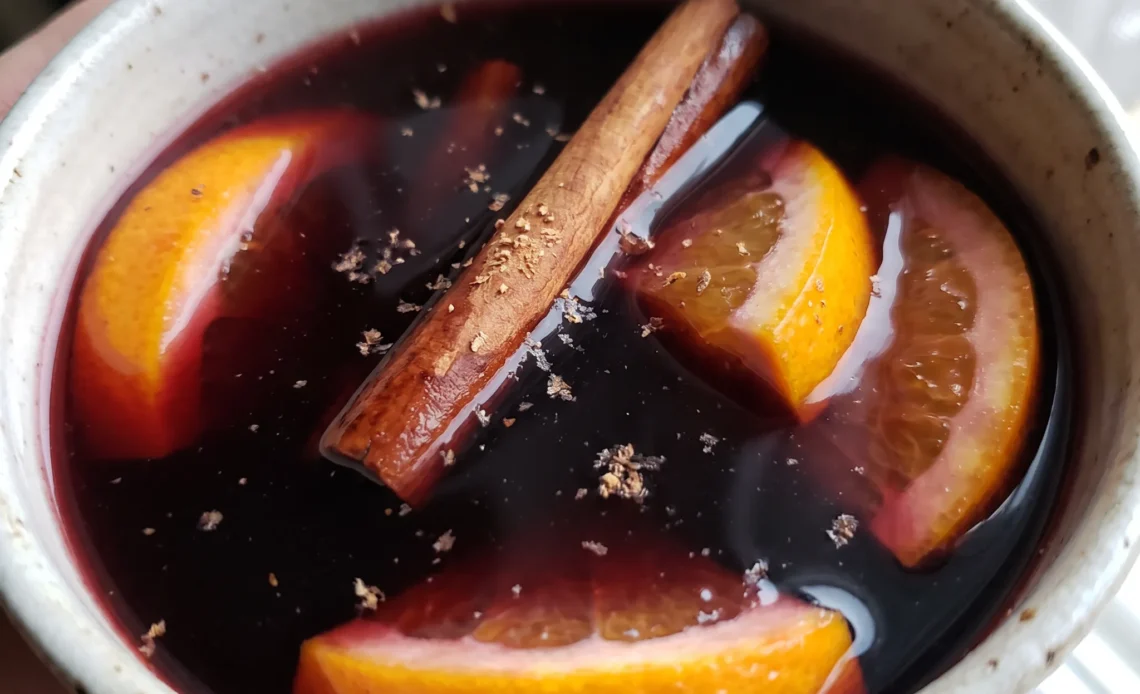
Mulled wine with orange isn’t something you drink the day you make it, at least not this one. The pot comes off the stove sharp and disjointed, wine and juice still sitting apart, and the fix is time in the fridge rather than anything you do over heat. The hard part is leaving it alone.
Five days in a sealed jug does work no simmer can: the tannins soften, the citrus oils spread out, and a brew that tasted medicinal on day one turns round and settled. Cooks who rush this end up with hot wine and juice that never quite becomes one drink.
Get the pan reading right during the simmer, then let the clock handle the rest. The wait feels long. The glass is worth it.
Why Does Mulled Wine Need to Sit for Days?
That first simmer brings everything together on the surface. The wine still tastes sharp, the juices separate, and the whole thing feels disjointed. You can drink it now, but it won’t be mulled wine.
Resting the jug for five days changes that. Oxidation softens the wine’s tannins, and the citrus oils spread out evenly, so no single note jumps ahead of the others. The fruit acids mellow, the spice settles, and what was hot wine with juice becomes something cohesive.
Wait the full five days. The difference isn’t subtle. The brew goes from harsh and medicinal to round and mellow.
There’s no shortcut that gets you there faster, and the clock is the only tool that does the work. When you finally pour a glass, the wine and fruit move together instead of fighting.
Choose the Right Red Wine for Mulling
The bottle you start with has to carry the additions. This recipe pours in 1/4 cup brown sugar and 1 1/2 cups citrus juice, which sweetens and stretches the wine.
A dry, fruit-forward red like Cabernet Sauvignon or Zinfandel has the tannin and structure to stay in balance. Those tannins also give the finished drink a grip that keeps it from tasting thin.
Heavily oaked wines turn muddy after the long rest, and very sweet wines become cloying once the sugar and juice hit. You want a wine that tastes good on its own but isn’t so precious you mind simmering it. A bold, dry bottle holds its shape through the heat and the wait.
Pick one with enough backbone, and the mulled wine will taste like wine, not syrup.
What Happens When Sugar Meets Wine
Melting the sugar with the cinnamon and nutmeg first does two things. It builds a spiced syrup that coats the pan, and that coating keeps the wine from scorching when it hits the heat. Once the sugar liquefies, you pour in the wine.
The sugar seizes into a solid mass almost immediately. That’s expected. Scrape the spoon along the bottom to lift the hardened sugar, and it dissolves back into the wine, carrying those caramel notes with it.
Skip this order, and you’d be heating wine with raw sugar, which can burn before it sweetens. The result you’re after is a smooth, integrated base where the sugar has fully let go of the pan.
When you taste it at this stage, the wine should feel rounder, with a faint caramel edge and no grit left behind.
Why Orange and Grapefruit Juices Work Together
Orange juice brings a soft, sweet citrus note that most people expect from mulled wine. Grapefruit juice adds a bitter, tart edge.
That bitterness cuts through the wine’s tannins and keeps the drink from tasting flat. Together, the two juices create an acidity that holds up through the five-day rest. Without the grapefruit, the orange alone would fade into the background, leaving a one-dimensional sweetness.
The grapefruit keeps the finish clean and refreshing. When you sip the finished wine, you should notice the orange first, then a gentle bitter pull from the grapefruit that makes you want another sip. The balance between sweet and tart is what makes this recipe work after the long wait.
Trust the combination and let the juices do their job.
What to Look For Before You Pour
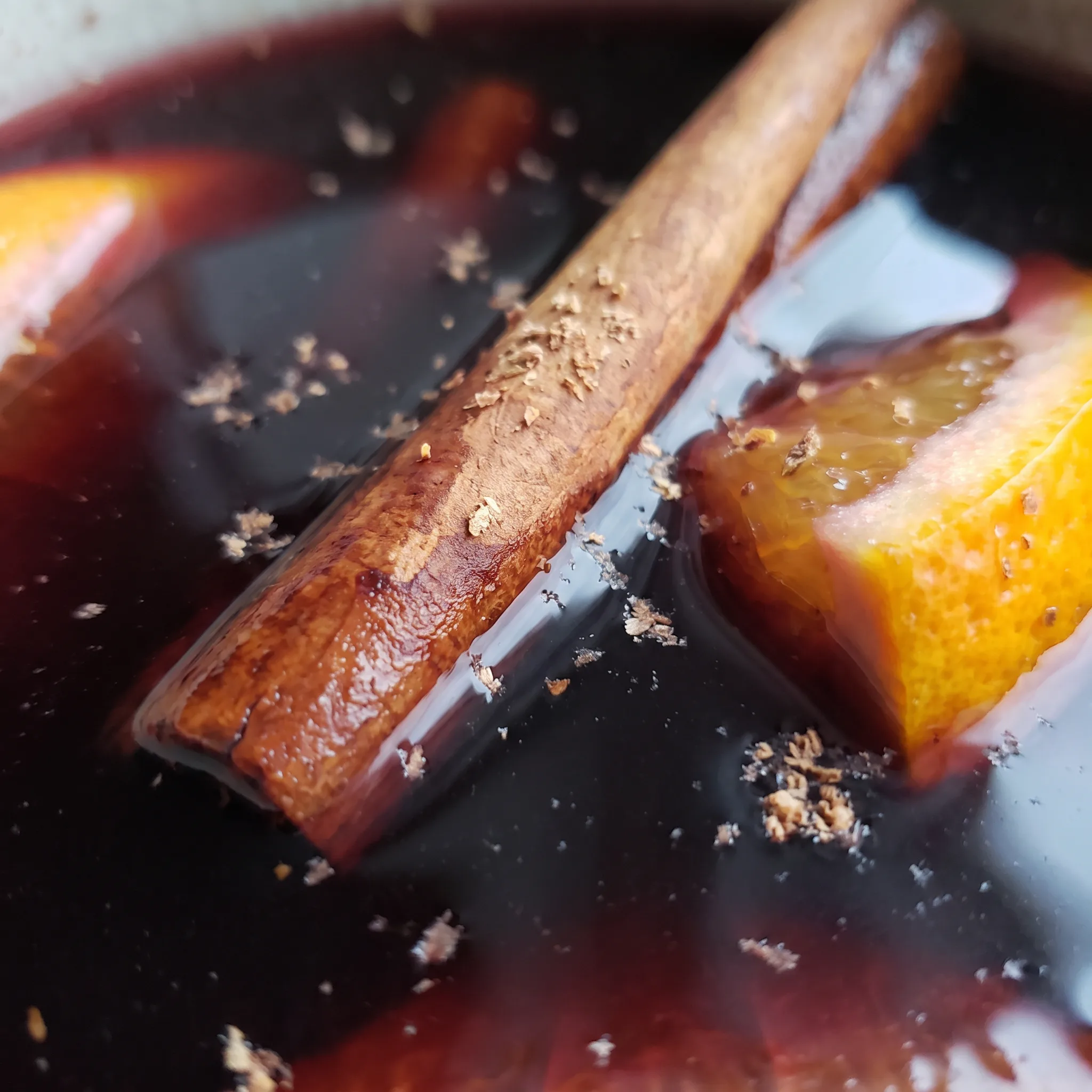
Red wine: A dry, fruit-forward bottle like Cabernet or Zinfandel has the tannin to hold up through the sugar and juice.
Brown sugar: Dark or light both melt into the pan the same way, so pick based on the depth you want in the glass.
Grated nutmeg: Whole nutmeg you grate yourself smells sharper and brighter than the pre-ground jar sitting in the back of the cabinet.
Grapefruit juice: Fresh-squeezed keeps its bitter edge, while bottled juice tastes flat and sweet by the time the five days are up.
Orange: A thin-skinned navel slices into clean rounds without the pith turning the jug bitter over five days.
The brown sugar is heated alone with the spices, so it liquefies and then caramelizes in a narrow window: it will smell nutty and look like a clear, fluid syrup when ready, but the first acrid, sharp note in the air means the sugar has already begun to burn. At that point the bitter compounds are set, and no amount of wine or juice will undo them.
How to Read the Pan at Each Stage
Judging when the sugar has fully let go of the pan
After the wine hits the seized sugar, the bottom of the pan feels rough under the spoon. Keep scraping until that roughness disappears and the liquid runs smooth across the base. Any hardened sugar left behind will scorch during the 20-minute simmer and turn the batch bitter.
If you still feel grit after a few minutes, add a splash of the wine or juice and keep scraping over medium-low heat until it clears.
Holding the simmer below a bubble
The wine should steam and shiver, never break into a rolling boil. Watch the surface: a few lazy bubbles at the edge are fine, but a full boil drives off the alcohol and the fruit oils you need for the five-day rest.
If it starts to bubble hard, slide the pan half off the burner or drop the heat. You can’t put those aromatics back once they’ve cooked off.
Reading the color and smell at the end of the 20 minutes
The liquid should deepen to a darker red and smell of orange oil and warm spice, not sharp raw wine. Taste a cooled spoonful: the citrus should be present but not screaming, the sugar dissolved, the whole thing a little rough around the edges. That roughness is what the five days will smooth out.
If it already tastes flat or syrupy, you’ve simmered too long or too hard.
Deciding what goes back into the jug
The orange slices have given up most of their oils by now and taste bland and wine-soaked. Returning them adds a fresh citrus look but also a soft, slightly bitter pulp that will sit in the jug for five days.
If you want a cleaner pour, leave them out. If you like the look, press them gently against the strainer to drain before adding them back.
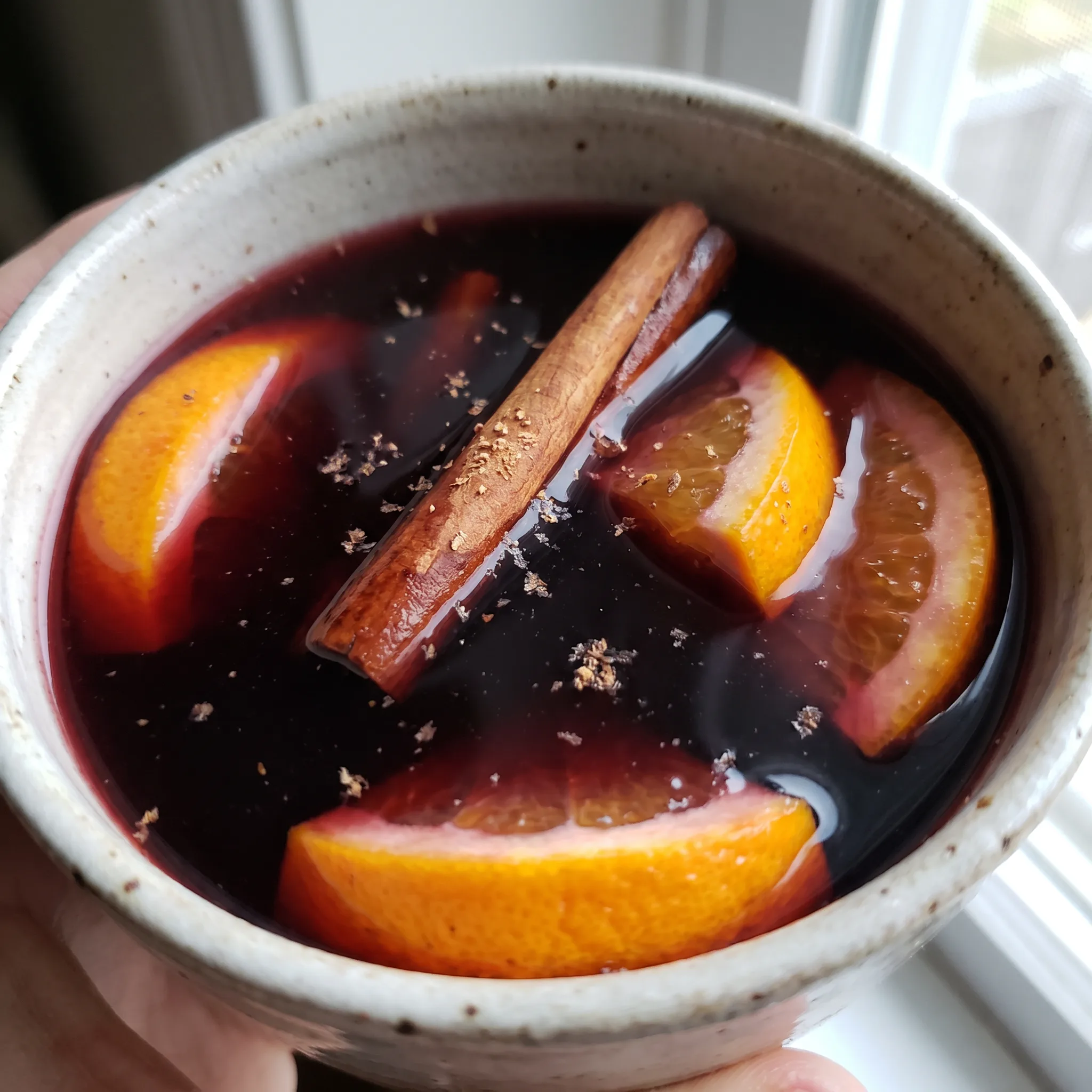
Mulled Wine with Orange and Grapefruit
Ingredients
Method
- In a large saucepan, combine the brown sugar, cinnamon stick, and grated nutmeg. Set over medium-low heat. Keep an eye on the pan until the sugar starts to liquefy, roughly 5 minutes. Then use a metal spoon to stir so the sugar melts uniformly.
- Once the sugar has completely melted, introduce the red wine. The sugar will solidify, but that’s okay. Keep stirring, scraping the spoon along the pan’s bottom to dislodge the hardened sugar.
- After all the sugar has lifted from the pan’s bottom, incorporate the orange juice, grapefruit juice, and orange slices into the saucepan. Maintain medium-low heat for another 20 minutes so the flavors intensify and the sugar dissolves.
- Filter the mulled wine into a jug (optional: return the orange slices to the jug) and let it cool to room temperature. Once cooled, seal the jug’s opening with plastic wrap and let it sit for 5 days before serving.
Storage and Serving After the Five-Day Rest
Once those five days are up, pour the wine into a sealed jug and keep it in the fridge. It holds about a week there. The citrus oils fade first, then the spice, so a glass poured on day six tastes brighter than one on day twelve.
Freezing isn’t worth it here. The alcohol and juices separate as they thaw, and the wine comes back thin and flat.
Serve it gently warmed, never boiled. Heat it in a saucepan over low until steam rises and the edge shivers, then pull it off. A hard boil drives off the alcohol and the orange oil, and you end up with hot juice.
Warm it only as much as you plan to drink, because reheating the same batch twice costs you more aroma each time.
Taste a spoonful before you pour. If the citrus has gone quiet, a fresh orange slice in the glass brings it back. Drink within a day of warming.
Tips
- Taste the mulled wine once it has cooled to room temperature, before you cover the jug, and if it reads sweet, stir in a splash of the same dry red you cooked with, up to about 1/2 cup. The 1/4 cup brown sugar and 1 cup orange juice are at their loudest right now, and the five-day rest will let the citrus oils spread and the fruit acids soften, so a batch that tastes balanced today will taste sweeter on day five.
- If you are working with a lighter red like Pinot Noir, cut the brown sugar to 3 tablespoons and add the last tablespoon only after tasting the cooled wine. A thin wine has less tannin to push back against the sugar and juice, and the five-day rest will round off what sharpness remains, so the smaller amount keeps the finished jug from leaning sweet.
Swaps That Work With the Five-Day Rest (and One That Doesn’t)
Red wine: Any dry, bold red you’d drink on its own: Cabernet Sauvignon, Zinfandel, Syrah, or a dry Malbec. Skip sweet wines (Port, Lambrusco, white Zinfandel) and anything heavily oaked, like a big oaky Chardonnay or an over-oaked Cab. If you only have a lighter red like Pinot Noir, it’ll work but the finished drink will taste thinner and less structured after the rest.
The wine has to carry 1/4 cup sugar and 1 1/2 cups juice through a five-day rest. A dry, tannic red keeps its shape and gives the mulled wine a grip; a sweet wine turns syrupy once the sugar and juice hit, and heavy oak goes muddy after the long wait. You want a bottle that tastes good but isn’t so precious you mind simmering it.
Brown sugar: Dark brown sugar for light, or light for dark. Same 1/4 cup either way.
If you want a deeper molasses pull in the glass, go dark; if you want the citrus and spice to stay forward, stay light. Don’t swap in white sugar unless you have to; it melts the same but leaves the drink tasting flatter.
Dark brown sugar brings more molasses, which reads as a rounder, slightly heavier finish after the five days. Light brown keeps things brighter. Either melts into the pan the same way, so the only difference is what you taste at the end.
Orange juice: Fresh-squeezed from 3 to 4 navel oranges, or a good not-from-concentrate bottle in a pinch. Avoid bottled juice with added sugar or preservatives. If you’re out of oranges, 1 cup of fresh grapefruit juice will work, but the drink will lean bitter and you’ll want to taste before serving.
Fresh juice carries the oils and brightness that survive the rest; bottled juice tastes flat and sweet by day five, and the orange note fades into the background. The grapefruit’s bitter edge is what keeps the finish clean, so don’t skip it.
Grapefruit juice: Fresh-squeezed from 1 large ruby red or pink grapefruit. Bottled grapefruit juice is sweetened and dull, and it won’t hold its bitter pull through the rest. If you can’t find grapefruit, add 1/2 cup fresh orange juice plus a squeeze of lemon, but expect a softer, less interesting finish.
That bitterness cuts the wine’s tannins and keeps the drink from tasting flat. Without it, the orange alone fades and you’re left with one-dimensional sweetness. Fresh juice keeps the edge; bottled loses it.
Frequently Asked Questions
Can I drink mulled wine right after making it, or does it really need to sit for 5 days?
You can pour a glass as soon as it cools, but you won’t be drinking what the recipe is aiming for. Right off the stove it tastes sharp and disjointed, the juice and wine still sitting apart instead of together. Those five days are what turn hot wine with juice into something cohesive, and there’s no shortcut that gets you there faster.
If you want to taste where it’s headed, take a small spoonful now and leave the jug alone. What you pour on day five is a different drink.
My mulled wine turned out bitter. What could have caused that?
Scorched sugar is the usual culprit. If any hardened sugar stayed stuck to the pan bottom through the 20-minute simmer, it burns and drags a harsh, acrid bitterness through the whole batch.
Check the second cause too: grapefruit juice that sat too long or came from a dull bottled source can tip the balance from a clean bitter pull into something astringent. Pith left on thick-skinned orange slices does the same over five days. If the bitterness is burnt-sugar sharp rather than citrusy, there’s no fixing it, so scrape the pan clean next time.
How should I store mulled wine during the 5-day rest?
Sealed jug in the fridge, and keep it there once the five days are up. It holds about a week, though the citrus oils fade first and the spice follows, so a glass poured on day six tastes brighter than one on day twelve.
Freezing doesn’t work here, since the alcohol and juices separate as they thaw and the wine comes back thin. Warm only as much as you plan to drink, because reheating the same batch twice costs you aroma each time. Taste a spoonful before pouring, and drop a fresh orange slice in the glass if the citrus has gone quiet.
What is the difference between this mulled wine and traditional Glühwein?
Traditional Glühwein leans on orange and lemon with a heavy hand of clove and cinnamon, and it’s usually drunk within hours of heating. This version trades the lemon for grapefruit juice, which brings a bitter edge that cuts the wine’s tannins instead of letting sweetness take over.
The bigger difference is the five-day rest. Glühwein is built to be ready straight off the stove, while this recipe is built to sit, so the fruit acids mellow and the spice settles into the wine. Skip the wait and you get something closer to a quick Glühwein, good but not the same drink.
