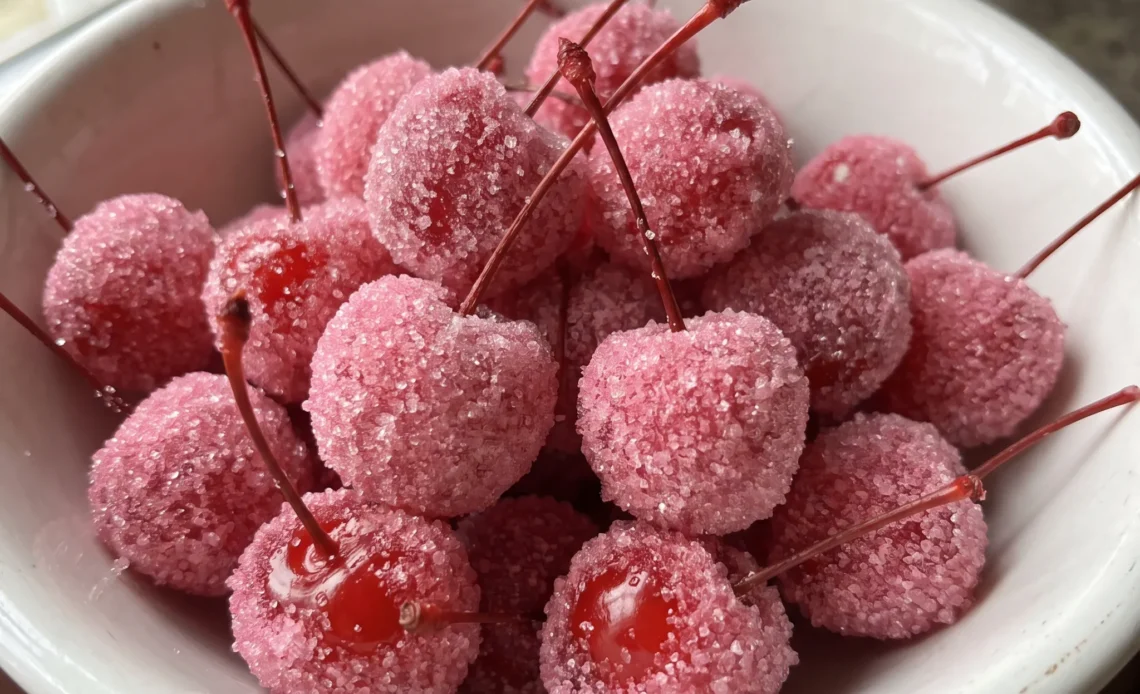
Candy-shop looks and a home-kitchen reality, and the gap between them shows up in the first dip. The cherries have to be bone-dry before anything touches them, and any leftover packing syrup means the coating slides off instead of clinging. Pink sugared cherries come down to that surface, plus a syrup that’s tacky enough to hold the sugar without dragging.
The rest is mostly decoration: a color you tint yourself, a short sit on parchment, and a shell that should crackle, not smudge. It’s not fussy work, but it is unforgiving about wet fruit.
Make them the day you plan to serve them.
Dry Fruit, Clinging Sugar
Any drop of liquid left on a cherry is a landing pad for trouble. The corn syrup you’ll use later needs a dry surface to grab onto; if the fruit is slick with its own packing liquid, the syrup slides instead of sticking, and the sugar you press on will flake off in a day.
Patting each cherry with paper towels, stem still attached, gets rid of that film. Hold the stem gently between two fingers so you don’t tear it. The towel should come away clean, not pink.
If you see a sheen on the fruit, go over it again. Once every cherry feels matte, you’re set. Skipping this means watching your work drop off in the bowl.
Take the extra five minutes; the payoff is a coating that stays put.
Syrup That Makes Sugar Stay
Corn syrup does the heavy lifting in this mix. It’s thick and tacky, so when a cherry gets dunked, the syrup leaves behind a thin, sticky film that grabs the sugar grains. Water thins it just enough so you can coat the fruit without dragging out long strings.
Without water, the syrup would clump and pull; without syrup, water would evaporate and leave nothing behind. Vanilla goes in for a soft background note that rounds out the cherry’s sharp sweetness. Whisk the three together until they look like a single liquid, no oily streaks or pools.
Dip a cherry and you’ll feel the difference: the coating should be even and light, not gloppy. If it drips heavily, the balance is off. This is the layer everything else hangs on.
Even Pink, No Streaks
Coloring sugar directly gives you control that a liquid dye can’t. Start with a few drops of pink into the granulated sugar in a shallow bowl, then work it in with a fork, pressing and stirring until no white specks remain. Add more coloring a drop at a time until the shade matches what you want.
If you dump in too much at once, you’ll get damp clumps and uneven patches, and those will show up as blotches on the finished cherries. The sugar needs to be completely tinted before any cherry touches it. A uniform color means every bite looks the same, no pale spots or dark streaks.
Once the sugar is ready, set the bowl next to your syrup station. The fork is your tool here, not a whisk, which would just push the dye around.
Twenty Minutes to Set
After the cherries are coated, they need a short rest on parchment. During that time, the thin syrup film dries and firms up, locking the sugar crystals in place. If you skip this, the coating stays wet and slides off the moment you pick one up.
Room temperature is all you need; refrigeration would introduce moisture and undo the work. Set a timer for 20 minutes and leave them alone.
When they’re ready, the sugar looks dry to the touch and the cherries lift cleanly from the paper. Arrange them stem up on a plate and serve. The coating should crackle slightly when bitten, not smudge.
That’s your sign the rest did its job. If they still feel tacky, give them a few more minutes.
What Matters in the Bag and the Bottle
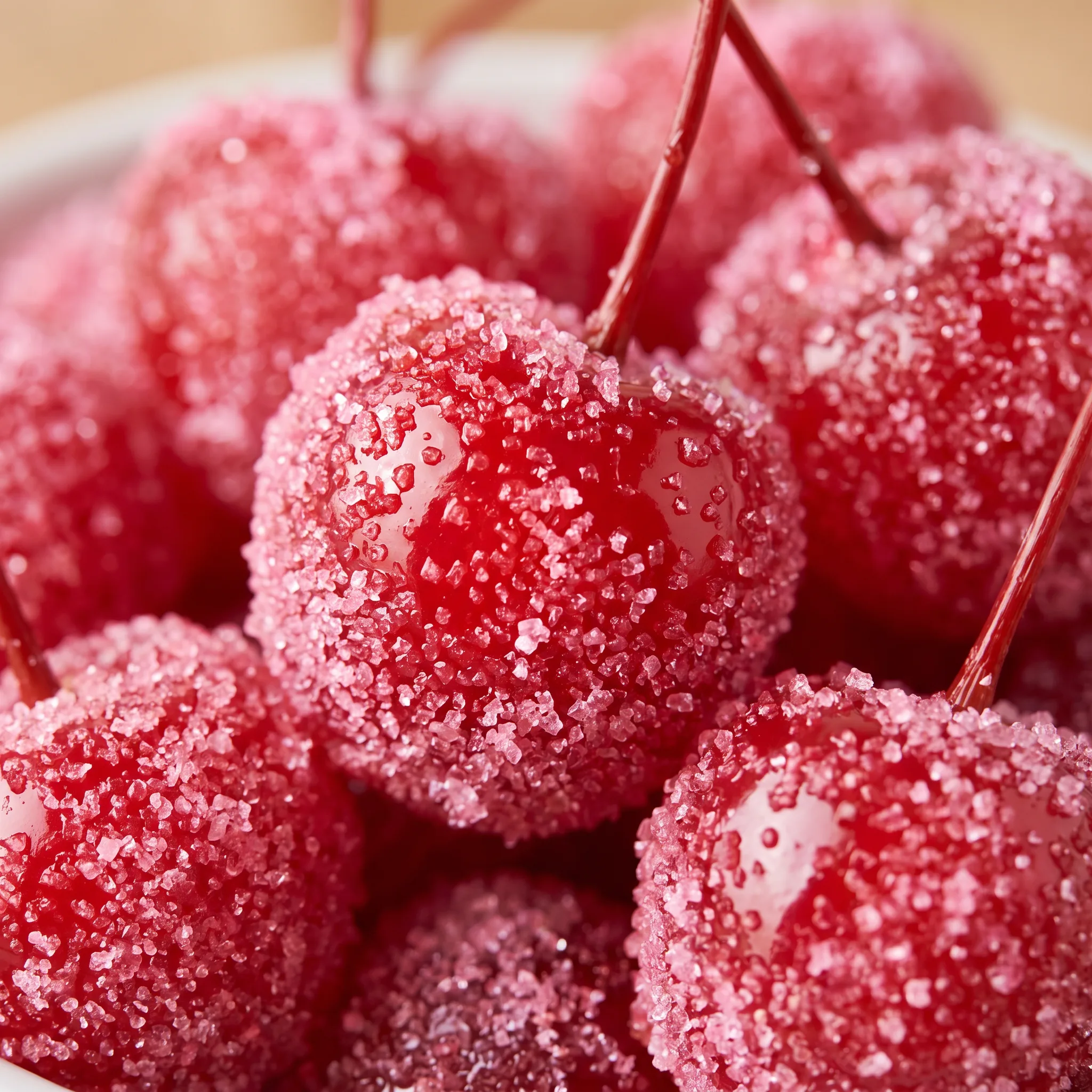
Maraschino cherries: Buy the stem-on kind packed in syrup, since the stem is your only handle for dipping and the fruit needs to stay intact.
Granulated sugar: Plain white granulated, not coarse sanding sugar or superfine, because the grains need to be small enough to cling but heavy enough to stay.
Pink food coloring: Gel or liquid both tint the sugar, but gel gives a deeper pink without adding enough liquid to make the sugar damp.
Light corn syrup: Light, not dark, since dark corn syrup brings a molasses taste that fights the cherry and tints the coating brown.
Vanilla extract: Real extract, not imitation, because the small amount here is the only thing softening the cherry’s sharp sweetness.
When cherries are not completely dry, water on the surface dilutes the corn syrup and creates a barrier that stops the sugar from sticking. The moisture can also cause the sugar to dissolve, leading to a wet, patchy coating that slides off instead of forming a crisp shell.
Judging the Coating, Not Just Following Steps
When a cherry is dry enough to dip
After patting, the fruit should feel matte, with no slickness or sheen. Touch one to a paper towel; if it leaves a pink mark, keep blotting.
Any dampness and the syrup won’t cling, so the sugar will slide off in the bowl. Once dry, work quickly, because handling can bring back moisture. If you feel any tackiness, re-blot that cherry.
Knowing if the syrup is too thick or too thin
The syrup should flow like warm honey: thick enough to leave a film on the cherry, thin enough to drip off in a thin stream, not in heavy globs. If it pours like water, add a touch more corn syrup; if it clumps, a few drops of water.
Dip a cherry and watch: the coating should be even and light. If it drips excessively, adjust before continuing.
When the sugar color is truly uniform
After mixing with a fork, look for any white specks. They’ll show as pale spots on the finished cherries. Add coloring a drop at a time, pressing and stirring until the color is even.
If you see clumps, you’ve added too much dye; work them out with the fork. The sugar should be completely tinted before any cherry touches it.
Judging when the coating has set
After 20 minutes, the sugar should look dry and feel firm to a gentle touch. If it still feels tacky or leaves a mark when you lift a cherry, give it more time. Refrigeration would introduce moisture and undo the setting.
The cherries should lift cleanly from the parchment; if they stick, they need longer. The coating should crackle slightly when bitten, not smudge.
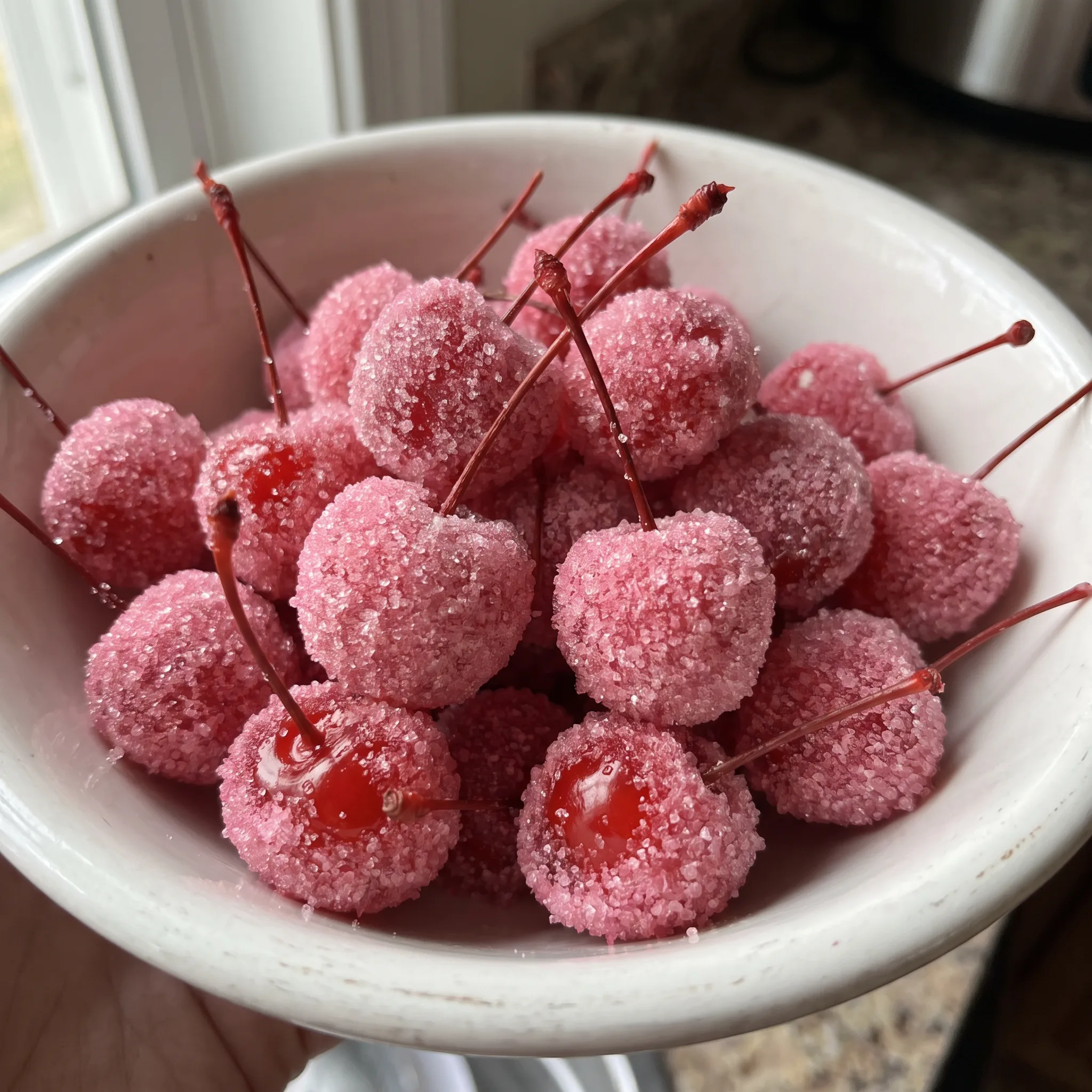
Pink Sugared Cherries with Maraschino Stems
Ingredients
Method
- Drain the maraschino cherries, keeping the stems intact. Pat them completely dry with paper towels, being careful not to remove the stems; any moisture will prevent the sugar from adhering properly.
- Place the granulated sugar in a shallow bowl. Add a few drops of pink food coloring and mix thoroughly with a fork until the sugar is uniformly colored. Add more coloring gradually until you achieve your desired shade of pink.
- In a small bowl, combine the light corn syrup, water, and vanilla extract. Whisk until well blended; this mixture will help the sugar adhere to the cherries.
- Holding each cherry by its stem, dip it into the syrup mixture, ensuring it is completely coated but not dripping excessively. Let any excess syrup drip off for a few seconds.
- Immediately roll the coated cherry in the pink sugar, turning to coat all sides completely. Gently shake off any excess sugar and place the cherry on a parchment-lined tray.
- Allow the sugared cherries to set at room temperature for about 20 minutes. Arrange them on a serving plate, making sure the stems are pointing upward for an attractive presentation.
Storage and Serving: The Sugar Weeps Within Hours
Serve these the same day you coat them, ideally within two to three hours. The corn syrup film you set at room temperature is hygroscopic, meaning it pulls moisture from the air, and once it does, the sugar grains dissolve into a sticky sheen. You’ll see it first as a dull look on the coating, then a tacky feel when you pick one up by the stem.
The 20-minute rest is a set, not a shelf life. Past four hours, the pink sugar starts to weep and the cherries lose their crackle. Keep them on the parchment-lined tray at room temperature, uncovered, until you plate them stem up.
Refrigeration is worse, not better: the cold condenses moisture and the coating slumps in minutes once it comes out. For leftovers, layer them in a single row in a paper-towel-lined container, lid cracked, and eat within a day.
If the sugar turns wet, blot the cherries and re-roll them in fresh pink sugar just before serving. The stems stay upright only if you don’t pile them; gravity and moisture flatten the presentation fast.
Freezing isn’t worth it here, since the coating thaws into syrup.
Tips
- Dry the stem too, not just the fruit. A wet stem wicks syrup down onto your fingers when you pick the cherry up, and that transferred moisture softens the sugar where you grip it. Blot each stem with the same paper towel before dipping.
- Set each coated cherry down with the stem leaning slightly away from the fruit, not straight up. A stem laid against the wet sugar presses a flat, sugarless patch into the coating while it sets, and that bare spot is where the shell breaks first.
Swaps That Hold the Coating, and One That Won’t
Maraschino cherries: Stem-on jarred cocktail cherries or any drained cherry in heavy syrup. The stem is your handle for dipping, so stemless fruit means you’ll need a skewer or your fingers, which can smudge the coating. If you swap in a different cherry, it must be drained and patted bone-dry; any packing syrup left on the surface makes the corn syrup mixture slide and the sugar flake off.
With the same amount, 24 cherries, the yield stays the same, but the fruit’s sweetness can vary. If your cherries are less sweet, the pink sugar coating will taste even more prominent, so you might want a lighter hand with the sugar or a smaller batch.
Light corn syrup: Honey or agave nectar, same amount. Honey and agave are thinner than corn syrup, so the coating won’t build up as thickly and the sugar may not cling as evenly. They also bring their own flavor: honey adds a floral note, agave a neutral sweetness.
You may need to dip twice or add a little more sugar to compensate. The set time might stretch beyond 20 minutes because these syrups stay tacky longer. If you use honey, expect a slightly softer coating that can feel sticky in humid weather.
Vanilla extract: Clear vanilla extract or almond extract, same amount. Clear vanilla keeps the coating from picking up a brown tint, which matters if you want a pure pink. Almond extract is stronger, so start with half the amount (1/2 teaspoon) and taste the syrup before dipping; too much can taste like bitter almond and overpower the cherry.
Both swaps change the background note, but the syrup’s sticking power stays the same.
Pink food coloring: Any food coloring you have, or none at all. The coloring only affects the sugar’s hue, not how it adheres.
If you skip it, you’ll have white sugared cherries, which is fine but not pink. If you use a liquid coloring instead of gel, add it a drop at a time because too much liquid will make the sugar damp and clumpy.
The recipe’s method for mixing still applies: work it in with a fork until no white specks remain.
Frequently Asked Questions
Can I make pink sugared cherries ahead of time?
No, the sugar coating is at its best within a few hours of making them. The corn syrup film pulls moisture from the air, and once it does, the sugar grains dissolve into a sticky sheen. If you coat them early in the day, they’ll be tacky by the time you serve.
For a party, plan to make them no more than two or three hours ahead. That said, if you must, you can re-roll them in fresh pink sugar just before serving, but the initial crunch won’t be the same.
Why is my sugar not sticking to the cherries?
The most likely culprit is moisture on the cherries. Even a tiny amount of packing liquid left on the surface will keep the corn syrup from gripping, so the sugar slides off. After patting, touch a cherry to a paper towel; if it leaves a pink mark, keep blotting.
Another possibility is that your syrup mixture is too thin, so it doesn’t leave enough sticky film. If it drips off like water, whisk in a touch more corn syrup. Finally, work quickly once the cherries are dry, because handling can bring back moisture.
How do I store pink sugared cherries after making them?
Keep them at room temperature, uncovered, on the parchment-lined tray until you plate them. Refrigeration is worse, not better, because the cold condenses moisture and the coating slumps in minutes. For leftovers, layer them in a single row in a paper-towel-lined container with the lid cracked, and eat within a day.
If the sugar turns wet, blot the cherries and re-roll them in fresh pink sugar just before serving.
What is the difference between these and classic maraschino cherries?
Classic maraschino cherries are the starting point here, but they’re naked and syrupy straight from the jar. These get a coating of pink-tinted sugar that adds a crackly shell and a burst of sweetness.
The corn syrup dip also brings a hint of vanilla that softens the cherry’s sharpness. Texture is the big difference: classic ones are soft and wet, while these have a dry, sugary crunch.
And of course, the pink color makes them a decorative touch rather than just a garnish.
Can I use frozen cherries for this recipe?
Frozen cherries won’t work because they release too much moisture as they thaw, and that moisture will prevent the syrup from adhering. Even after blotting, frozen fruit tends to stay damp and the sugar will slide off.
You also lose the stem, which is your handle for dipping. Stick with jarred maraschino cherries with stems for the best results.
