
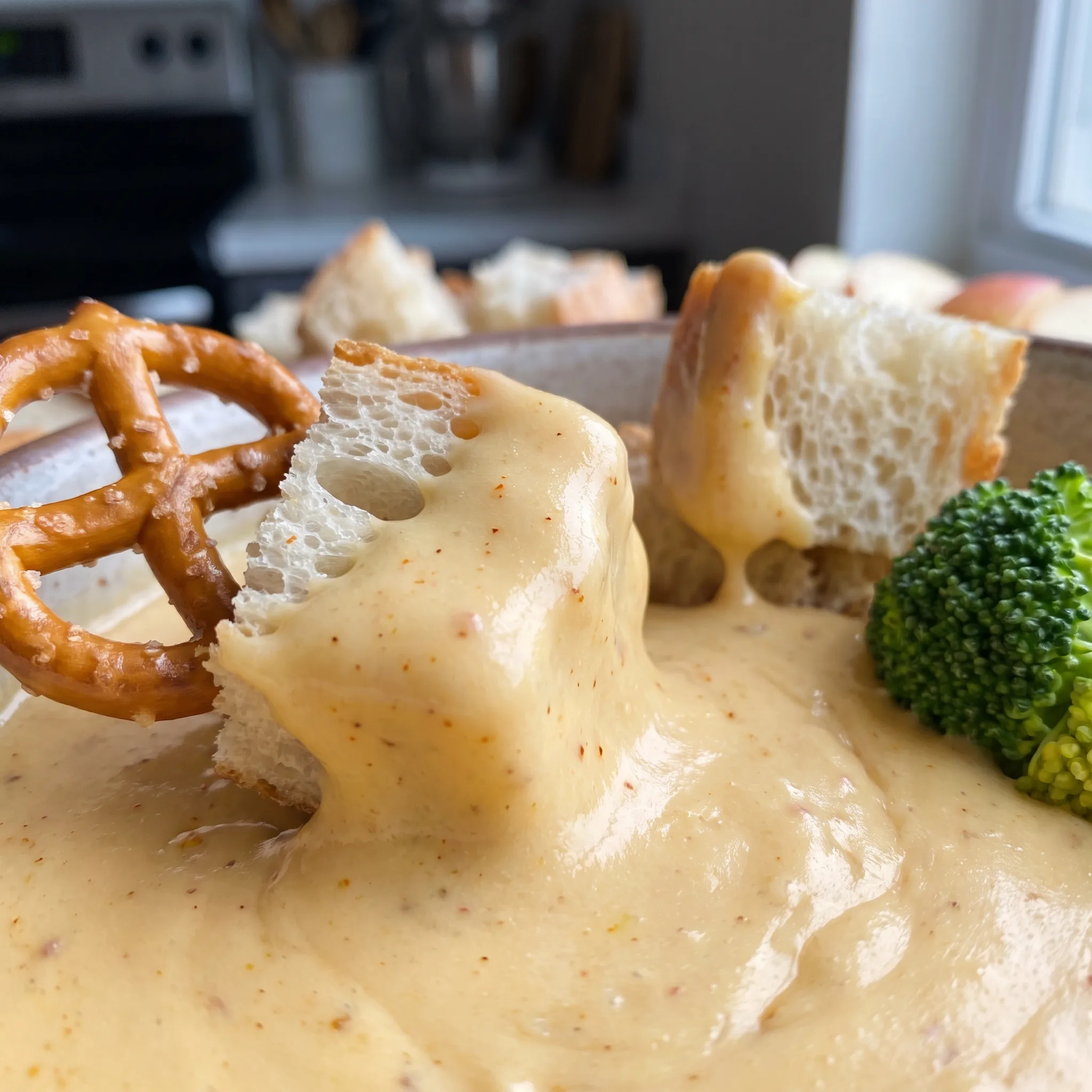
It smells like a bar snack and a Swiss pot had a fight, and the beer won. That first dunk tells you plenty: a good beer cheese fondue flows off the bread in a slow ribbon, glossy rather than slick, with a bite of hops riding over the cheddar. It’s the kind of thing that looks and isn’t quite.
Cheese has an opinion about heat, and the window between silky and broken is narrow, which is why a pot left alone on a hot burner can go from flowing to oily before anyone’s had a second pretzel. Get it right and a handful of fridge staples turn into a board for six in about fifteen minutes. The trick isn’t in the melting.
It’s in what happens before and after.
The most common mistake is reaching for a bag of pre-shredded cheese and dumping it straight into the simmering beer. Pre-shredded cheese is coated with cellulose or potato starch to keep the shreds from sticking, and those anti-caking agents prevent the cheese from melting into a smooth, cohesive sauce. Even freshly shredded cheese will seize into rubbery clumps and leak fat if the shreds are not first tossed with cornstarch, because the starch coats each piece and keeps the milk proteins from tangling together as they heat.
The Cornstarch Coating That Keeps Fondue Smooth
Shredding your own cheese is the first line of defense against a grainy fondue. Pre-shredded bags contain anti-caking agents, usually potato starch or cellulose, that interfere with how the cheese melts.
They keep shreds from sticking in the bag, but in the pot they can leave you with a broken sauce. When you shred cheddar and gouda yourself, you control what’s in the mix.
Tossing that shredded cheese with cornstarch might look like an unnecessary step, but it’s what separates a glossy fondue from a greasy, stringy one. Each shred gets a thin coat of starch. As the cheese hits the simmering beer, that coating acts as a barrier.
It slows down how fast the proteins unwind and clump together, and it gives the fat something to hold onto instead of pooling on the surface. The result is a smooth, dippable sauce that stays together from the first dunk to the last.
Why Beer and Dijon Make This Fondue Sharp, Not Flat
Beer does more than just provide liquid. Its malt and hop bitterness cut through the richness of cheddar and gouda, giving the fondue a tangy backbone that wine might not match.
Wine can work, but beer brings a savory edge that plays well with the sharpness of the cheese. The carbonation also helps lighten the mixture slightly as it simmers.
Dijon mustard is another quiet workhorse. It contains emulsifiers that help keep the fat and liquid from separating, so the fondue stays cohesive. And its sharp tang balances the cheese’s heaviness, so each bite doesn’t taste flat.
A little goes a long way.
Cayenne, even in a small amount, adds more than heat. It brings a subtle warmth that lingers in the background, keeping the fondue from tasting one-dimensionally rich. Without it, the flavor can feel heavy.
With it, there’s a gentle buzz that makes you reach for another dip. The combination of beer, mustard, and cayenne gives this fondue a complexity that plain melted cheese lacks.
Cheddar and Gouda: A Balanced Pairing for Melting
Cheddar brings bold, tangy flavor to the pot. It’s the backbone, the reason each bite tastes like something.
But cheddar alone can turn grainy or oily when melted, especially if it’s aged. That’s where gouda comes in. Gouda melts smoothly thanks to its lower acidity and higher fat content, giving the fondue a creamy texture that cheddar can’t achieve on its own.
The ratio matters: equal parts cheddar to gouda. Too much cheddar and the fondue risks breaking or feeling greasy. Too much gouda and the flavor becomes too mild, almost lost.
A 1:1 blend hits the sweet spot, where the sharpness of cheddar is rounded out by gouda’s buttery notes. The two cheeses also melt at similar rates, so they combine evenly without one turning stringy before the other softens. That balance is what makes this fondue taste rich but not overwhelming, with a texture that clings to bread without turning rubbery.
Choosing Dippers That Complement the Cheese
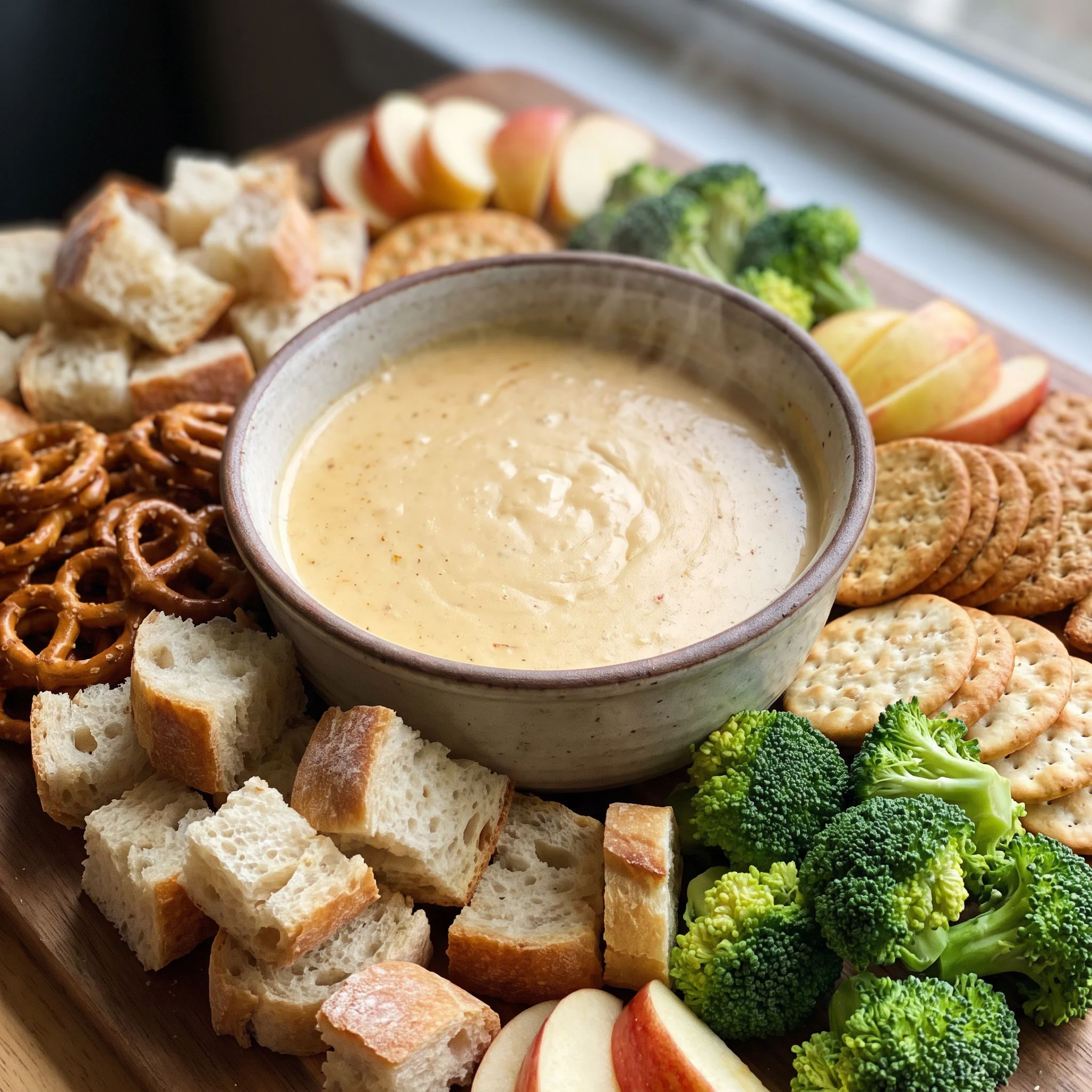
Crusty bread and pretzels are the classic choice for a reason. Their chew and saltiness stand up to the creamy, tangy cheese.
A piece of baguette with a sturdy crust holds its shape when dipped, and pretzels add a hit of salt that sharpens the fondue’s flavor. Both offer a satisfying contrast in texture.
Broccoli florets bring a fresh, crisp bite that resets your palate between richer dips. The slight bitterness of broccoli cuts through the cheese’s fat, making each subsequent dip taste as good as the first.
Apple slices, with their sweet-tart crunch, do something similar but from a different angle. The natural sugars balance the savory cheese, while the acidity keeps things from feeling too heavy. A crisp apple like Honeycrisp or Granny Smith works best.
Together, these dippers turn a pot of melted cheese into a well-rounded spread, where each option adds its own character to the experience.
What to Buy for a Fondue That Stays Smooth
Cheddar: Buy a block and shred it yourself, since pre-shredded bags are dusted with starch that keeps the cheese from melting cleanly.
Gouda: Young gouda, not aged, melts without the graininess that older wheels bring to a pot.
Cornstarch: The 2 tbsp coats every shred, so use it all even if it looks like more than you’d expect.
Beer: Pick something you’d drink, not a light lager, because the malt and hops carry the tang that cuts the cheese.
Cayenne: The 1/4 tsp is optional, but without it the fondue tastes flat and heavier than it needs to.
Reading the Pot: When to Stir, When to Stop, and How to Pull It Back
Judging the beer’s simmer before the cheese goes in
Small bubbles should break the surface, not a rolling boil. Too hot and the cheese will seize into strings the moment it lands; too cool and it’ll clump into a sluggish mass.
If it’s boiling, pull the pot off the heat for a minute. You want to see gentle movement, like a pot of water just before it starts to bubble.
Reading the melt: when to stir and when to leave it alone
Add the cheese in handfuls, letting each one mostly disappear before the next. Stir slowly, like you’re folding, not whipping.
If you stir hard, the cheese will tighten and turn stringy. The fondue is ready when a spoon dragged through leaves a clean line that fills in slowly. If it looks oily, you’ve gone too hot.
Drop the heat and stir in a splash of beer.
Knowing when the fondue is smooth enough to stop
Lumps mean the cheese hasn’t fully melted, but over-stirring can make it grainy. After the last addition, stir just until the surface looks glossy and a dip of bread comes out coated evenly. If you see tiny specks of cheese, keep going for another 30 seconds.
If it’s already glossy, stop. The mustard and cayenne go in now, off the heat, so they don’t cook.
Rescuing a fondue that’s broken or greasy
A slick of oil on top or a texture like cottage cheese means the emulsion has split, usually from heat that was too high. Take the pot off the burner. Let it sit for a minute, then stir in a tablespoon of beer or a squeeze of lemon.
If that doesn’t pull it back, a teaspoon of cornstarch slurry, stirred in off the heat, will often bring it together. Serve it from a warm pot, not a hot one.
Beer Cheese Fondue with Cheddar and Gouda
Ingredients
Method
- Into a medium bowl, shred the cheddar and gouda cheeses.
- Toss the cornstarch with the cheeses until each shred is coated uniformly.
- In a large saucepan or electric fondue pot over medium-low heat, bring the beer and minced garlic to a simmer.
- After it simmers, incorporate the cheese mixture and stir gently until completely melted and smooth.
- Mix in the Dijon mustard and cayenne until evenly distributed.
- Move to a fondue pot and present on a board alongside the desired dippers.
Notes
The Beer Swaps Cleanly, But the Cheese Blend Is Where Fondues Fall Apart
Beer: A light lager, a non-alcoholic beer, or a dry hard cider. The malt backbone still comes through in a light lager, just softer and less bitter. Non-alcoholic beer works the same way because the malt is still there; you lose a little of the hop bite but not the structure.
Hard cider brings apple sweetness that reads more like a wine fondue, so cut the cayenne if you go that route. Start with the same 1 cup the recipe uses and adjust after tasting.
Cheddar and gouda blend: All cheddar, all gouda, or pre-shredded bags of either. This is the swap that ruins the pot.
All cheddar turns grainy and pools oil, because cheddar alone has neither the fat nor the low acidity to hold the sauce. All gouda goes slack and bland, missing the sharpness that makes each bite taste like something. Pre-shredded cheese carries anti-caking starch that keeps the shreds from melting into each other, so you end up with a broken, slick sauce no amount of stirring fixes.
If you must change the blend, keep it close to equal parts and shred it yourself.
Cornstarch: An equal amount of arrowroot starch or tapioca starch. Both coat the shreds the same way and keep the fondue glossy. Arrowroot thickens at a slightly lower temperature, so watch the simmer and pull the pot off the heat a touch sooner if it starts to look tight.
Tapioca can turn stringy if the pot runs hot, so keep the heat at medium-low and stir gently. Measure the same 2 tablespoons the recipe calls for.
Dijon mustard: A teaspoon of yellow mustard or a pinch of dry mustard powder. Yellow mustard is milder, so the tang that balances the cheese gets quieter; you may want a little extra. Dry mustard powder dissolves into the fondue and brings a sharper heat, but it clumps if you dump it in, so whisk it into a spoonful of the beer first.
The emulsifying job still gets done either way.
Tips
- Keep the pot at medium-low and stir in a figure-eight through the cheese rather than a fast circle. The motion drags each shred through the beer and folds it under, so the cornstarch coating hydrates gradually instead of shearing the curds apart. Fast circular stirring at a higher setting is what pulls the proteins into strings.
- If your burner runs hot even on its lowest setting, set the saucepan on a cast-iron skillet or a folded dish towel over the grate to buffer the heat. Beer simmers at a lower temperature than water, so a flame that looks gentle can still push the pot past the point where the emulsion holds.
Serving Window and Storage for Beer Cheese Fondue
This fondue is at its best within 30 minutes of melting. Past that, the cheese tightens and the fat starts to separate, so plan to eat it while it’s still flowing. Hold it over low heat and stir now and then.
Leftovers keep in the fridge for 2 days; beyond that, the texture turns grainy and the beer flavor goes flat. Reheat gently on the stovetop or in a fondue pot over low heat, stirring in a splash of beer to loosen it. Skip the microwave, which heats unevenly and can break the emulsion.
The fondue won’t freeze well because the dairy separates and turns watery when thawed. For serving, present the dippers on a board alongside the pot. Add the Dijon and cayenne off the heat after the cheese melts, and serve within 30 minutes for the best texture.

Frequently Asked Questions
Can I make beer cheese fondue ahead of time and reheat it?
You can make it ahead, but the texture suffers. The fondue is best within 30 minutes of melting, and leftovers keep in the fridge for 2 days. Reheat gently on the stovetop or in a fondue pot over low heat, stirring in a splash of beer to loosen it.
Skip the microwave, which heats unevenly and can break the emulsion. It won’t freeze well because the dairy separates and turns watery when thawed.
Why did my beer cheese fondue turn grainy or stringy?
The most likely culprit is heat that was too high. If the beer was boiling when the cheese went in, the cheese seizes into strings; if the pot stayed too hot during melting, the sauce turns grainy and pools oil. Another check: pre-shredded cheese carries anti-caking starch that keeps the shreds from melting into each other, so you end up with a broken sauce.
If it’s already grainy, take the pot off the heat and stir in a splash of beer; a cornstarch slurry can also pull it back. Serve from a warm pot, not a hot one.
What is the difference between beer cheese fondue and traditional Swiss fondue?
The liquid and the cheese set them apart. Traditional Swiss fondue uses wine and aged alpine cheeses like Gruyère and Emmental, while this one simmers beer with cheddar and gouda. Beer brings malt and hop bitterness that cuts the richness, and the cheddar gives a sharper, tangier backbone than the nutty Swiss blend.
The result is a bolder, more savory fondue that pairs with pretzels and apples as readily as bread.
How do I keep beer cheese fondue smooth and dippable while serving?
Hold it over low heat and stir now and then. The fondue is at its best within 30 minutes of melting; past that, the cheese tightens and the fat starts to separate. If it looks oily, you’ve gone too hot.
Drop the heat and stir in a splash of beer. Present the dippers on a board alongside the pot and keep the fondue warm, not hot.
