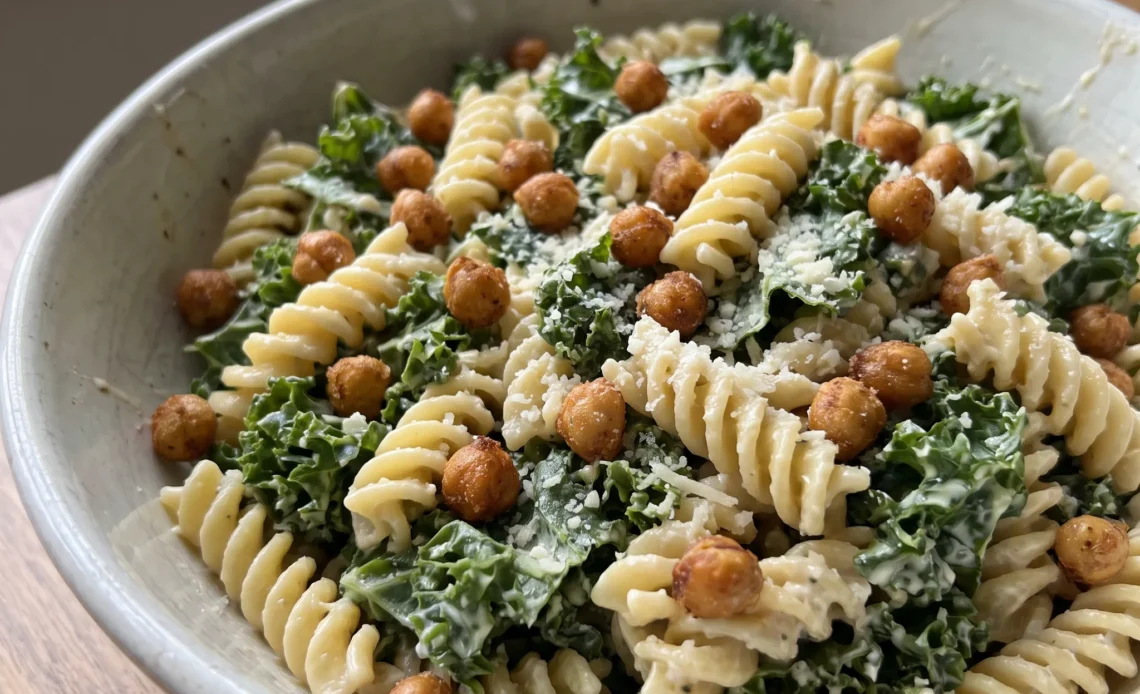
Twenty minutes of the fifty goes to kale, and the work is in your hands. Nobody warns you that the leaves need pressing until they surrender before they’ll behave in a bowl, and if you skip it the salad turns into two separate dishes fighting each other.
Caesar dressing made with mayonnaise and Greek yogurt is forgiving, closer to a vinaigrette’s looseness than the thick coating you’d expect, so it soaks into leaves instead of sitting on top of them. The real tension here is temperature and texture: cold pasta, room-temperature greens, and chickpeas that just left the oven. That contrast is what makes this kale caesar pasta salad eat like dinner rather than a side, and it’s also the thing that fades fastest once everything is tossed together.
Knowing which parts to hold back is most of the cooking.
Why Does Massaging Kale Make It Tender Enough for a Pasta Salad?
Kale leaves are built to withstand weather, not teeth. The cells are packed tight, and the fibers run in tough bands, so a raw leaf chews like a rubber mat. In a pasta salad, that stiffness is fatal.
The kale won’t fold around the noodles or chickpeas; it sits there, separate and bitter.
Massaging changes that. Pressing and rubbing the leaves breaks down the structure, not into paste but into something pliable. The color deepens and the volume drops by half.
Bitterness fades because the same pressure that softens the walls releases the compounds that taste sharp. You can feel the leaves go from crisp to limp, like a cooked green without the heat.
The dressing finishes the job. Acid and salt pull more water out, and the leaves relax further as the salad sits. After ten minutes, the kale tastes seasoned, not raw.
It wraps around the pasta and chickpeas instead of pushing them away. That’s when you know it’s ready.
The Case for Roasted Chickpeas
A can of chickpeas is already cooked, but it’s soft and watery straight from the can. That texture disappears against pasta and dressing.
You need something that crackles when you bite down, a contrast to the creamy sauce and chewy noodles. Roasting gives you that.
The oven drives off surface moisture, and the skins tighten and crisp. They turn golden, some darker at the edges, and they rattle when you shake the pan.
Drying them well before they go in matters more than any spice. If they’re wet, they steam in their own moisture and never crisp; they just get hot and mealy. Spread them on a towel and rub until the paper comes away barely damp.
Any skins that slip off are fine to discard; they burn before the chickpeas do.
When they come out, they’re light and crunchy, almost hollow. Tossed with the salad, they stay crisp for a while, then soften slightly as they sit.
Eat it soon after mixing for the best contrast. The crunch cuts through the rich dressing and keeps each bite from feeling heavy.
What Makes This Caesar Dressing Different?
Traditional Caesar dressing relies on raw egg and a slow stream of oil to emulsify. This version skips that.
Mayonnaise is already an emulsion, stable and rich, so it brings body without the risk of raw eggs. Greek yogurt adds a clean tang and loosens the mixture just enough to coat every leaf and noodle.
It’s thinner than mayo alone, but not watery.
Dijon mustard does double duty. It helps hold the dressing together, so it doesn’t separate as you toss, and it adds a sharp background note that cuts through the richness. Lemon juice and garlic supply the classic Caesar bite.
The lemon brightens, the garlic lingers, and together they mimic the flavor of anchovy and egg without either.
You’ll notice the dressing is tangier than a typical Caesar, with a lighter finish. It clings to the pasta and kale instead of pooling at the bottom. That’s what you want: every bite seasoned, not just the top layer.
How Gluten-Free Pasta Behaves in a Cold Salad
Gluten-free pasta is a different animal. Without wheat’s elastic gluten, the strands are more fragile and tend to soften faster in the water.
They can also turn gummy if overcooked. Cook them just to the point where the center still has a little resistance, then drain immediately. That firmness survives the cooling and tossing.
Cooling the pasta before it meets the kale is important. Warm pasta steams the leaves and turns the dressing thin.
Spread it on a sheet pan or rinse under cold water to stop the cooking. Rinsing also washes away excess surface starch, which can make the salad gluey.
Some brands benefit from a quick rinse, others don’t; if the pasta feels slimy after draining, give it a rinse and drain well again.
Once cool, the pasta holds the dressing without drinking it all up. The result is a salad where each piece stays distinct, not a starchy clump. You can feel the difference when you toss: the pasta slides instead of sticking.

What to Look For Before You Toss This Salad
Kale: Choose compact, dark green bunches with no yellowing; smaller leaves are more tender and bitter than large, older ones.
Chickpeas: A 15-ounce can of chickpeas works best when firm and intact, so check for dented or split legumes before rinsing.
Gluten-free pasta: Pick a short, sturdy shape like penne or fusilli, because long, thin strands break apart when tossed with the chickpeas.
Parmesan cheese: Buy a wedge and grate it yourself; pre-shredded cheese is coated with starch that keeps it from clinging to the dressing.
Gluten-free pasta lacks the gluten network that keeps wheat pasta firm, so its starch granules keep absorbing liquid and rupturing even after draining. Cooking it past al dente or cooling it while wet accelerates this, making the pasta disintegrate and turn gummy when it meets the dressing. The salad then loses the firm bite that should contrast the creamy dressing and crispy chickpeas.
Judging the Moments That Decide This Salad
When the chickpeas are dry enough to roast
After rubbing them between towels, the paper should come away barely damp. Any skins that slip off are fine to discard; they burn before the chickpeas do. If you skip this and they still feel wet, they’ll steam in the oven and never crisp.
They’ll just get hot and mealy. Spread them on a towel and keep rubbing until the surface feels dry to the touch.
Knowing when the chickpeas have crisped
At 30 minutes, they should be golden and rattle when you shake the pan. Bite one: it should crackle, not squish.
If the center is still soft, give them a few more minutes, but watch closely because they can go from crisp to burnt quickly. The skins may darken; that’s fine.
When they’re done, they’ll feel light and almost hollow.
Feeling the kale go from stiff to pliable
As you massage, the leaves will darken and shrink by about half. They should feel limp and soft, like a cooked green without the heat. If they still snap when you bend a stem, keep going.
The bitterness fades as the leaves relax. Stop when they’re pliable but not paste. Over-massaging makes them mushy, and they’ll lose their texture in the salad.
Tasting the dressing for balance
Before you toss, dip a leaf or a piece of pasta into the dressing. It should taste tangy from the lemon and yogurt, with a sharp bite from the garlic and mustard. If it’s too thick, add a teaspoon of water.
If it’s too sharp, a pinch more Parmesan. The dressing should cling, not pool. Adjust now because once it’s tossed, you can’t fix it.
Stopping the pasta before it turns gummy
Gluten-free pasta softens fast. Pull a strand at the low end of the package time and bite it.
The center should still have a little resistance, not a chalky crunch and not soft all the way through. If it’s already soft, drain it immediately and rinse under cold water to stop the cooking. Overcooked, it will clump and turn gluey in the salad.

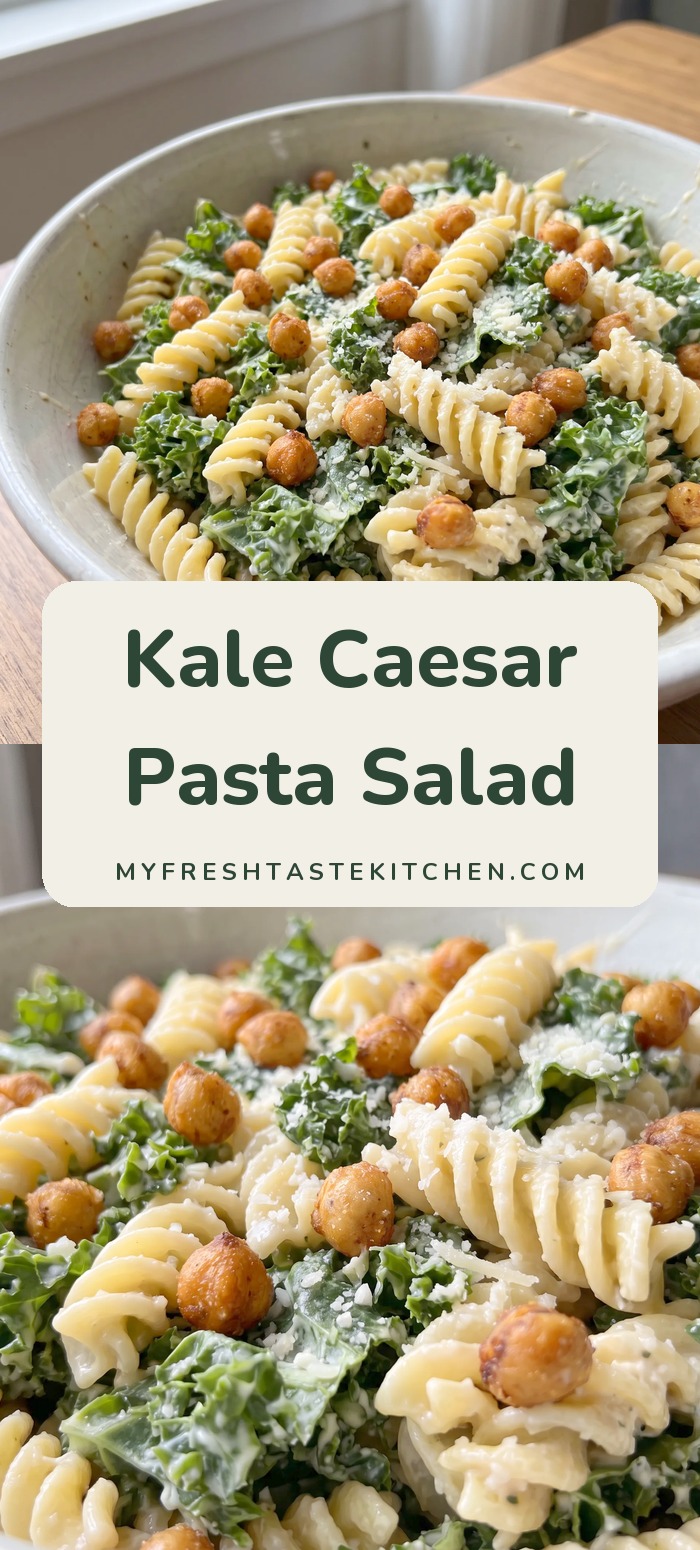
Kale Caesar Pasta Salad with Crispy Chickpeas
Ingredients
Method
- In a large pot, bring salted water to a boil, then cook the pasta as directed on the package. Set it aside to cool.
- Set the oven to 400°F (205°C).
- Rinse and drain the chickpeas, then place them on a dish towel or paper towel. Rub them between two towels or paper towels to remove moisture and any skins. Throw away the skins.
- Put the chickpeas in a bowl and mix with the oil, followed by the spices and salt.
- Spread them on a baking sheet lined with parchment paper and bake for about 30 minutes, until golden and crispy.
- In the meantime, strip the stems from the kale and cut it into small pieces. Rinse it under water in a strainer and massage with your hands to soften it slightly.
- Pat the kale dry, then put it in a large salad bowl.
- Whisk all dressing ingredients together.
- Once the pasta and chickpeas are ready, add them to the bowl with the kale, then add the Parmesan and toss with the dressing. Enjoy!
How to Store Kale Caesar Pasta Salad So the Chickpeas Stay Crisp
Keep the roasted chickpeas out of the salad bowl. They lose their crackle within an hour of meeting the dressing, and no amount of reheating brings it back. Store them in a loosely covered container at room temperature for up to a day, or in the fridge if the room runs warm, and accept that they soften anyway.
Add them right before you serve.
The dressed kale and pasta need the opposite treatment. Acid and salt keep breaking down the kale’s structure, so it drinks up the Caesar dressing and turns silkier overnight.
Eat it within the first hour for a chewier leaf, or chill it and let the kale relax further. It holds in a sealed container in the fridge for three days, though the pasta keeps softening.
The dressing carries raw garlic, Greek yogurt, and mayonnaise, so it doesn’t keep long past that. Freezing doesn’t work here: the yogurt and mayo separate, and the kale goes limp and watery. To revive a chilled portion, let it sit out fifteen minutes, toss with a spoon of yogurt or lemon juice if it looks dry, and scatter fresh chickpeas on top.
Swapping the Creamy Base Without Losing the Caesar
Mayonnaise: Vegan mayonnaise, same 1/4 cup the recipe uses. The dressing stays thick, but vegan mayo often tastes sweeter and less eggy. Since the Dijon, lemon, and garlic shouldn’t change, that sweetness has nowhere to hide.
Start with the full 1/4 cup, then taste after whisking and add a squeeze more lemon if it reads flat.
Plain Greek yogurt: Plant-based yogurt, preferably unsweetened and thick like coconut or soy. Use 1/4 cup to match the recipe.
Thin plant yogurts will slacken the dressing so it pools under the kale instead of clinging. If yours looks watery, spoon it into a strainer for a few minutes before measuring, or cut back by a tablespoon and add lemon juice to loosen. The tang will be milder, so the mustard and garlic carry more weight.
Parmesan cheese: Nutritional yeast or a hard aged vegan cheese, grated fine. The recipe calls for 1/4 cup for the salad and 3 tablespoons for the dressing.
Nutritional yeast gives a savory, slightly nutty note but no melting or salty punch, so the dressing may taste flat. Add a pinch more salt after whisking. A vegan grating cheese gets you closer in texture but can be gummy if it’s soft; grate it on the small holes so it disappears into the dressing rather than clumping.
Gluten-free pasta: Any short pasta you tolerate, including regular wheat penne or fusilli. Wheat pasta holds up better and won’t turn gummy as fast, so you can cook it to the package time without watching.
But it drinks more dressing as it sits, so the salad may need a splash of lemon juice or water before serving. Keep the shape short and sturdy; long strands break when you toss in the chickpeas.
Tips
- Pull the chickpeas from the oven while they still have a faint give at the center, not when they are crunchy all the way through. They keep crisping on the hot pan for a few minutes, and fully crisped chickpeas turn hard and jaw-aching once they sit against the wet dressing and kale.
- Reserve about a quarter cup of the cooked pasta water before draining, then whisk it into the dressing a teaspoon at a time if the mixture looks tight. Mayonnaise and Greek yogurt thicken as they chill, and that starchy water loosens the dressing without thinning its flavor the way plain water does.
Frequently Asked Questions
Can I make this kale Caesar pasta salad ahead of time?
Yes, and the kale actually improves if you do part of it early. Dress the kale and pasta and chill them together: the acid and salt keep relaxing the leaves, so a few hours in the fridge gives you a silkier texture than serving it straight away.
Keep the roasted chickpeas in their own container and scatter them on right before you eat, since they lose their crackle once they hit the dressing. Add the Parmesan at the same time, so it stays distinct instead of dissolving into the sauce.
Why did my chickpeas turn out soft instead of crispy?
They steamed instead of roasted, and the usual culprit is surface moisture. If the towel comes away damp after you rub them, they need more drying; wet skins trap steam and the chickpeas come out hot and mealy rather than crunchy. Crowding the baking sheet does the same thing, so give them room to sit in a single layer with gaps between them.
A third check is timing: pull one and bite it, and if the center squishes rather than crackles, they need longer in the oven. Undercooked at the center is the giveaway that they came out too early.
How is this different from a classic Caesar salad?
The base is pasta and kale instead of romaine and croutons, so you get chew from the noodles and a roasted crunch from the chickpeas rather than bread. The dressing swaps the raw egg and slow oil stream for mayonnaise and Greek yogurt, which means no emulsifying and a tangier, lighter finish that clings instead of coating heavily. There’s no anchovy either; the lemon, garlic, and Dijon carry that savory edge on their own.
It eats like a full cold pasta dish rather than a side salad, which is why a serving lands at 390 calories.
How long will leftovers last in the fridge?
Three days in a sealed container, and no longer, because the dressing carries raw garlic, Greek yogurt, and mayonnaise. The kale softens further each day and the pasta keeps drinking the dressing, so a portion on day three tastes milder and looks drier than it did on day one. Keep the chickpeas separate if you can; stored in the salad they go soft within an hour, and there’s no bringing the crunch back.
Freezing doesn’t work here, since the yogurt and mayo separate and the kale goes limp and watery. To wake up a chilled portion, let it sit out fifteen minutes and toss with a spoon of yogurt or lemon juice if it looks dry.
