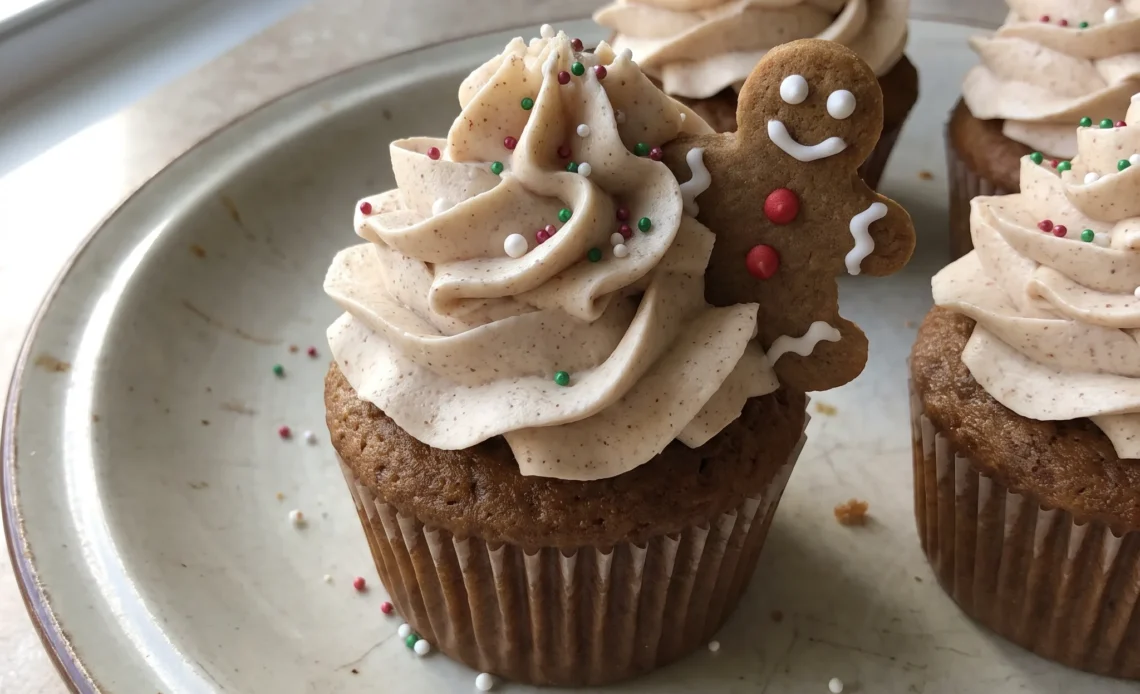
Three kinds of gingerbread in one dessert, and the timing between them decides whether it works. The cake itself is forgiving: molasses and brown sugar keep the crumb dark and plush, and the batter comes together in one bowl without much drama. What trips people up is assembly.
A crisp cookie pressed into soft frosting goes slack fast, so the snap you want at the table only exists in a narrow window, and a buttercream that looks ready can still slide off a swirl if the butter ran warm. Bakers who plan around that window end up with gingerbread cupcakes that eat the way they look: tender cake, cool spice, a firm bite on top.
Get the order of operations right and the rest follows.
Cinnamon Frosting Isn’t Just a Flavor Note
Molasses brings a deep, almost bitter edge to the crumb. Without a sharp spice to meet it, that darkness can read as flat or just plain sweet.
Cinnamon does that job in the frosting. It cuts through the butter and powdered sugar, so each bite lands warm instead of cloying. The heavy cream adds enough richness to sit against the tender cake without soaking in.
And the ratio matters: two teaspoons of cinnamon to three cups of powdered sugar keeps the spice present without turning gritty or overwhelming. You taste the warmth first, then the molasses underneath.
That back-and-forth is what keeps you reaching for a second one.
Why a Crisp Cookie on Top
A soft cupcake needs a counterpoint. The gingerbread cookie delivers it: firm and snappy where the cake is tender, creamy frosting in between.
It’s baked separately and slid into the frosting after the cupcakes cool, so it stays crisp instead of softening overnight. The shape alone tells you what you’re about to eat, and the piped icing adds height, a little festive signal before you even peel back the liner.
Its spice blend (ginger, nutmeg, allspice) echoes the cupcakes, so nothing clashes. When you bite through, you get three textures at once, and the cookie holds its own without stealing the show.
Two Leaveners for a Reason
Molasses is acidic, and that acidity needs a base to react with. Baking soda does that work here, neutralizes the tang, and helps the crust brown. But a quarter teaspoon is all it takes; any more and you’d taste soap.
Baking powder picks up the slack, giving the batter extra lift to carry the butter, eggs, and sour cream without turning heavy. Together they build a domed top and a crumb that’s moist but not dense.
You’ll see it when you pull the pan from the oven: the centers spring back, the edges pull slightly from the liners. That’s the balance working, not just one leavener doing all the heavy lifting.
Sour Cream and Milk for Tenderness
Sour cream brings acidity that tenderizes as it mixes, plus a richness that doesn’t thin the batter. Whole milk adds the liquid needed to hydrate the flour and create a fine, even crumb. Both dairy ingredients carry fat that coats flour proteins, limiting gluten development for a softer bite.
That’s why these cupcakes stay moist for days rather than turning greasy the way oil-based recipes sometimes do. You’ll notice it in the texture: a close, plush crumb that gives under your thumb. Nothing about it feels heavy.
The dairy is doing quiet work, and you taste the result in every bite.

What to Buy Before You Start Baking
Molasses: Buy unsulphured molasses, not blackstrap, which is bitter enough to wreck both the cookie dough and the cupcake batter.
Ground ginger: Check the jar date: ground ginger fades fast, and 1 1/2 teaspoons of stale powder barely registers against all that molasses.
Sour cream: Full-fat sour cream only, since the reduced-fat kind is thinner and won’t bring the same richness to the crumb.
Gel food coloring: Gel paste, not liquid drops, because liquid thins the royal icing and the red won’t come through clean.
Royal-style icing sets because whipping egg whites with cream of tartar and powdered sugar builds a foam of fine air bubbles stabilized by denatured egg proteins, and the sugar dissolves into the water phase to form a glassy matrix as it dries. If the mixture is stopped before stiff peaks, the protein network is incomplete and the sugar-to-water ratio stays too dilute, so the icing remains tacky and slowly slumps or bleeds instead of holding a sharp edge. On a cookie, that unstable icing also pulls moisture from the crumb and turns gummy rather than crisp.
Reading the Dough and the Crumb Before They Set
When the cookie dough is rolled thin enough
A quarter inch sounds exact, but flour on the counter and a warm kitchen stretch that number. Press a ruler into the edge of the rolled sheet. If the dough springs back and thins as you lift the pin, it’s too warm; slide it onto parchment and chill ten minutes.
Too thin and the gingerbread men bake to brittle shards before the centers set. You want an even sheet with no see-through patches, edges tidy enough to cut clean shapes.
Judging the icing at stiff peak
Egg whites, cream of tartar, and powdered sugar go from glossy ribbon to something that holds a peak fast, and the window is narrow. Stop when the beaters lift a peak that stands without curling. Underbeaten, the icing slumps off the cookie and the red bleeds into white.
Overbeaten, it turns dull and grainy and won’t pipe a clean line. If it tightens too far, a few drops of water bring it back.
The moment the cupcake centers stop jiggling
Twenty-one minutes is a guide, not a verdict. At that mark, open the oven and look: the domes should be set, the edges just pulling from the liners, and a toothpick in the middle should come out with a crumb or two, not wet batter. If the centers still wobble when you nudge the pan, give them three more minutes.
Pull them early and the crumb caves; leave them long and the molasses turns the edges dry and dark.
Frosting that pipes instead of sliding
Butter, powdered sugar, cinnamon, cream, and vanilla can look fluffy and still be too soft to hold a star tip. Lift a spoonful: if it slumps off in a slow curl, it’s right. If it spreads flat the second it hits the cupcake, the butter was too warm.
Fifteen minutes in the fridge firms it without setting it hard. Stiff peaks mean the frosting holds its shape on the swirl and the cookie stays upright where you push it in.

Gingerbread Cupcakes with Cinnamon Frosting
Ingredients
Method
- Set oven to 350°F (175°C) and prepare a baking sheet with parchment paper.
- Beat the butter, sugar, and molasses until creamy.
- Incorporate the water.
- In a separate bowl, combine the flour and spices with a whisk.
- Add the dry mixture to the wet in 1/3 portions, stirring after each addition.
- Transfer dough onto a floured surface and roll out to 1/4 inch thickness.
- Use cutters to form gingerbread man shapes.
- Bake for 10 minutes.
- Let cookies cool fully before applying icing.
- To make the icing, beat egg whites, cream of tartar, vanilla, and powdered sugar until stiff peaks form.
- Divide the icing between 2 bowls.
- Stir a few drops of red food coloring into one bowl until uniform.
- Keep the second bowl without color.
- Transfer about 1/4 cup of each icing color into decorating bags.
- Decorate each cookie as desired.
- Let cookies dry for about an hour.
- Set oven to 350°F (175°C) and put liners in the cupcake pan.
- In a large bowl, whisk the dry ingredients together.
- Beat the butter, egg, egg white, vanilla, molasses, sour cream, and whole milk until creamy.
- Add the dry ingredients in small portions and mix until just combined.
- Divide batter among cupcake liners, filling each about 2/3 full.
- Bake for 21 minutes or until a toothpick inserted in the center comes out clean.
- Let cupcakes cool completely before adding frosting.
- For the frosting, place all ingredients in a bowl and beat until stiff peaks form.
- Transfer frosting to a decorating bag fitted with a star tip.
- Frost each cooled cupcake and scatter Christmas sprinkles over the top.
- Insert a gingerbread cookie into the frosting on the side of each cupcake.
- Enjoy!
When a Swap Still Bakes Up Gingerbread
Unsalted butter (in all three components): Salted butter, but pull back on added salt elsewhere. For the cupcakes, use 3/4 cup (170 g) salted butter and skip any salt you might otherwise add. The frosting can take salted butter without adjustment if you like a salty edge against the sugar.
Salted butter brings water and salt that unsalted doesn’t. In the cupcake batter, that extra liquid can loosen things just enough to make the crumb slightly less tender, though you may not notice unless you’re looking. The bigger risk is total salt: use salted butter in both the cake and frosting and the whole bite can taste seasoned rather than sweet.
The cookies tolerate salted butter best because their spice blend already leans savory.
Molasses: Dark corn syrup or honey, same 1/2 cup (170 g) in the cupcakes and same 1/2 cup (170 g) in the cookies. Honey is sweeter and thinner, so the cupcakes brown faster and the crumb turns a little softer, almost sticky at the edges. Dark corn syrup keeps the moisture but loses the bitter backbone that makes gingerbread taste like gingerbread.
You’ll still get a spice cake, just a flatter one. Blackstrap molasses is the one to avoid: it’s twice as bitter and will make both the cookies and the cupcakes taste almost medicinal.
Sour cream: Full-fat plain Greek yogurt, same 1/4 cup (60 g). Greek yogurt brings the same acidity and a similar fat content, so the crumb stays tender and the rise is nearly identical.
The only difference you might catch is a faint tang in the background, which the molasses and spice mostly cover. Low-fat or nonfat sour cream is the swap that actually hurts: it’s thinner, so the batter is looser and the baked cupcakes can turn rubbery at the edges.
Whole milk: Oat milk or whole-fat canned coconut milk, same 1/2 cup (120 ml). Oat milk has enough fat and body to keep the crumb fine and even, though it adds a slightly oaty sweetness that reads as extra sugar. Canned coconut milk makes the cupcakes richer and a touch denser, with a coconut flavor that fights the ginger and cloves.
Skim milk or water will leave you with a drier, tighter crumb; the fat in whole milk is doing real work here. For a dairy-free version, use oat milk and swap the butter for a plant butter that’s sold in sticks, not tubs, since the tub kind carries too much water and the frosting won’t hold a peak.
Storage and Serving: Timing the Crisp, the Cream, and the Crumb
Eat these the day they’re assembled. That’s the serving window, and it’s set by the cookie, not the cake.
The gingerbread man is pushed into the frosting after the cupcakes cool, and its snap is gone within hours once it sits against the buttercream. Frost first, add the cookie, then serve within about four hours. Frosted cupcakes hold in the fridge three days in an airtight container; the cake stays plush because the sour cream and milk do their work, but the frosting firms and dulls.
Let them sit out twenty minutes before eating. Bring leftover frosting to room temperature and rebeat, since fridge-cold buttercream won’t pipe.
Freeze only the unfrosted cupcakes, well wrapped, up to two months; thaw at room temperature. Frosting and cookies don’t freeze well, and a frozen-then-thawed cookie goes soft.
If you’re making ahead, bake the cake, freeze it plain, and frost the day you serve.
Tips
- Roll the cookie dough between two sheets of parchment, then slide it onto a baking sheet and chill it for 15 minutes before cutting. The dough firms up just enough that the gingerbread man arms and legs lift cleanly with the cutter instead of stretching, and the cold sheet goes straight into the 350°F oven, where the shapes hold their edges through the 10-minute bake rather than spreading into blobs.

Frequently Asked Questions
Can I make the gingerbread cupcakes ahead of time?
Bake the cupcakes, cool them completely, and freeze them unfrosted, well wrapped, up to two months. Thaw at room temperature, then frost the day you plan to serve.
The frosting and the cookies don’t freeze well, and a frozen-then-thawed cookie goes soft. If you’re assembling the same day, frost first, add the cookie, and serve within about four hours.
Why did my cinnamon frosting turn out runny?
The butter was probably too warm. When butter gets soft enough to slump, the frosting will look fluffy but won’t hold a star tip, and it spreads flat the second it hits the cupcake. Fifteen minutes in the fridge firms it without setting it hard.
If it’s still too loose after chilling, you may have underbeaten it, so check the texture: it should hold a peak that stands without curling.
How do I keep the gingerbread cookies from getting soft on the cupcakes?
Push the cookie into the frosting right before serving, not hours ahead. The snap is gone within hours once it sits against the buttercream. Frost first, add the cookie, then serve within about four hours.
If you need to hold them longer, keep the cookies separate and insert them at the last minute.
What makes these gingerbread cupcakes different from a classic gingerbread cake?
These are built as individual cupcakes with a crown of cinnamon frosting and a gingerbread cookie pressed into the side. That means you get three textures in one bite: a tender crumb, creamy frosting, and a crisp cookie.
The frosting carries cinnamon to meet the molasses, and the cookie echoes the spice blend of the cake. A classic gingerbread cake is usually served plain or with a light glaze, so the contrast isn’t there.
