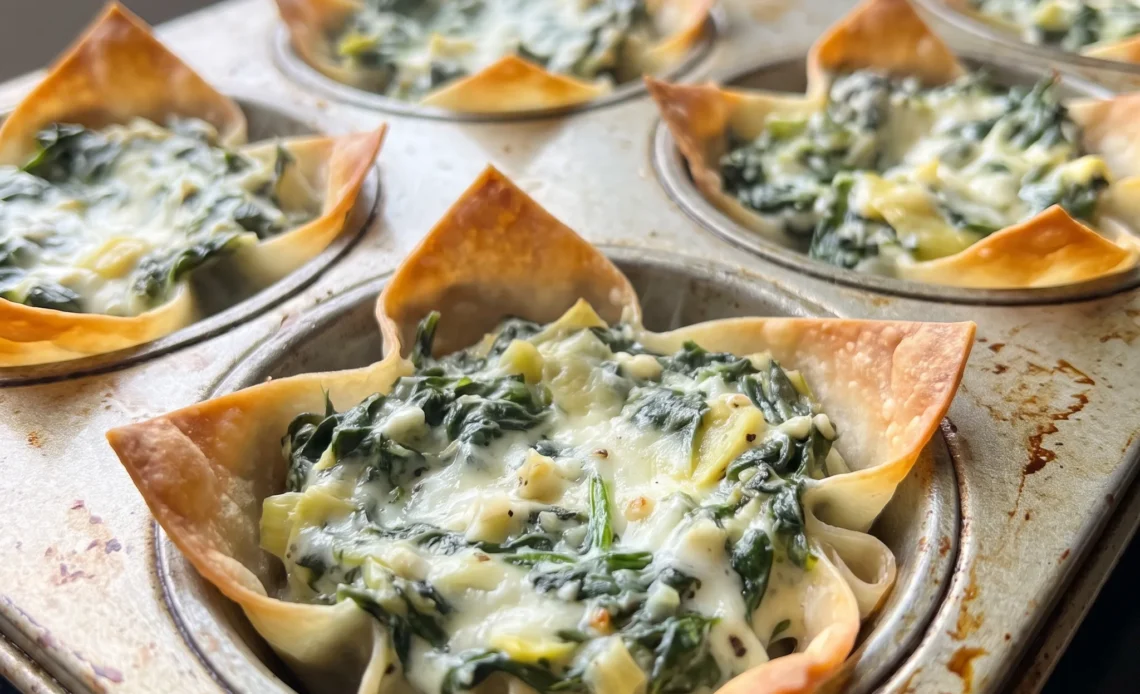
Twenty minutes of draining decides whether these cups snap or slump. Spinach and artichoke hold more water than the filling can absorb, so the squeeze before mixing matters more than the mixing itself.
The spinach goes into a towel and gets wrung until it clumps; artichokes get patted dry and chopped small. Leave them wet and the filling steams the wrapper from the inside, and the crisp shell turns soft at the base. Baked in a muffin tin, the wonton wrapper gives each portion its own shell, which is why these spinach artichoke wonton cups eat clean off a plate instead of dragging a chip through a bowl.
The filling itself is forgiving. The vegetables are not.
Get them dry and the rest follows, warm and creamy against a shell that cracks when you bite.
Wonton Wrappers Make the Right Vessel
A creamy spinach and artichoke filling needs a delivery system that won’t buckle. Wonton wrappers, thin and neutral, bake into a shatteringly crisp shell that contrasts the rich dip inside.
Pressed into a muffin tin, each wrapper forms a sealed cup that holds the filling in place, so it bakes evenly without spreading. The wrapper’s own flavor is barely there, which lets the spinach, artichoke, and cheeses take center stage.
You get a clean snap when you bite in, then the creamy filling, then another snap. That textural back and forth is the reason this format works: the cup stays crisp while the filling stays soft.
The Dairy Base Is Built for Baking
Cream cheese gives the filling body, turning from a soft solid to a smooth, spoonable consistency as it heats. Sour cream and mayonnaise bring tang and richness, but they also thin the cream cheese just enough so the mixture spreads without becoming runny.
Parmesan adds a salty, nutty edge and a touch of binding that helps everything set. Together, these four dairy elements create a filling that bakes up creamy rather than greasy.
The balance matters: too much of any one and you risk a pool of oil or a watery center. This ratio keeps the texture even from the first cup to the last, so each bite delivers the same creamy contrast against the crisp shell.
Draining Is Important
Frozen spinach holds a surprising amount of water. Thaw it and you’ll see a puddle in the bowl; that liquid will seep into the filling and turn the wonton cups soggy. Jarred artichoke hearts, whether packed in brine or oil, carry their own moisture.
Skip proper draining and the filling turns watery, the wrappers lose their crunch, and the flavor dilutes. Squeezing the spinach in a clean towel or pressing it against a fine-mesh strainer removes far more liquid than letting it sit in a colander. The same goes for the artichokes: pat them dry and chop them fine.
Get this step right and the filling stays thick and intense, the shells stay crisp, and every bite delivers the contrast you want.
Why Two Bakes Beat One
Pre-baking the empty wrappers sets their shape and starts the crisping process before any filling goes in. That initial bake gives the cups a head start, so they can hold up under the moist spinach and artichoke mixture.
The second bake finishes the filling and browns the edges without turning the already-crisp shell to charcoal. If you filled the raw wrappers and baked once, the center would turn gummy while the edges overcooked. The brief cool-down after the second bake lets the cups firm up so they release cleanly from the tin.
Skip that rest and you risk tearing the delicate shells. The reward is a cup that shatters when you bite it, with a warm, creamy center that stays put.
Garlic in Two Forms for Depth
Fresh minced garlic brings a sharp, pungent bite that mellows as it bakes, infusing the filling with a savory backbone. Garlic powder, on the other hand, distributes evenly and reinforces that garlic flavor without leaving chunks behind. Together, they layer garlic’s warmth against the creamy base, the tangy artichokes, and the salty Parmesan.
Spinach adds an earthy note that keeps the richness in check. Salt and pepper go in to taste because Parmesan already brings a good amount of salt; you want to season the filling without pushing it over the edge. The result is a garlic-forward bite that still lets the spinach and artichoke come through.
Each cup tastes balanced, never harsh.
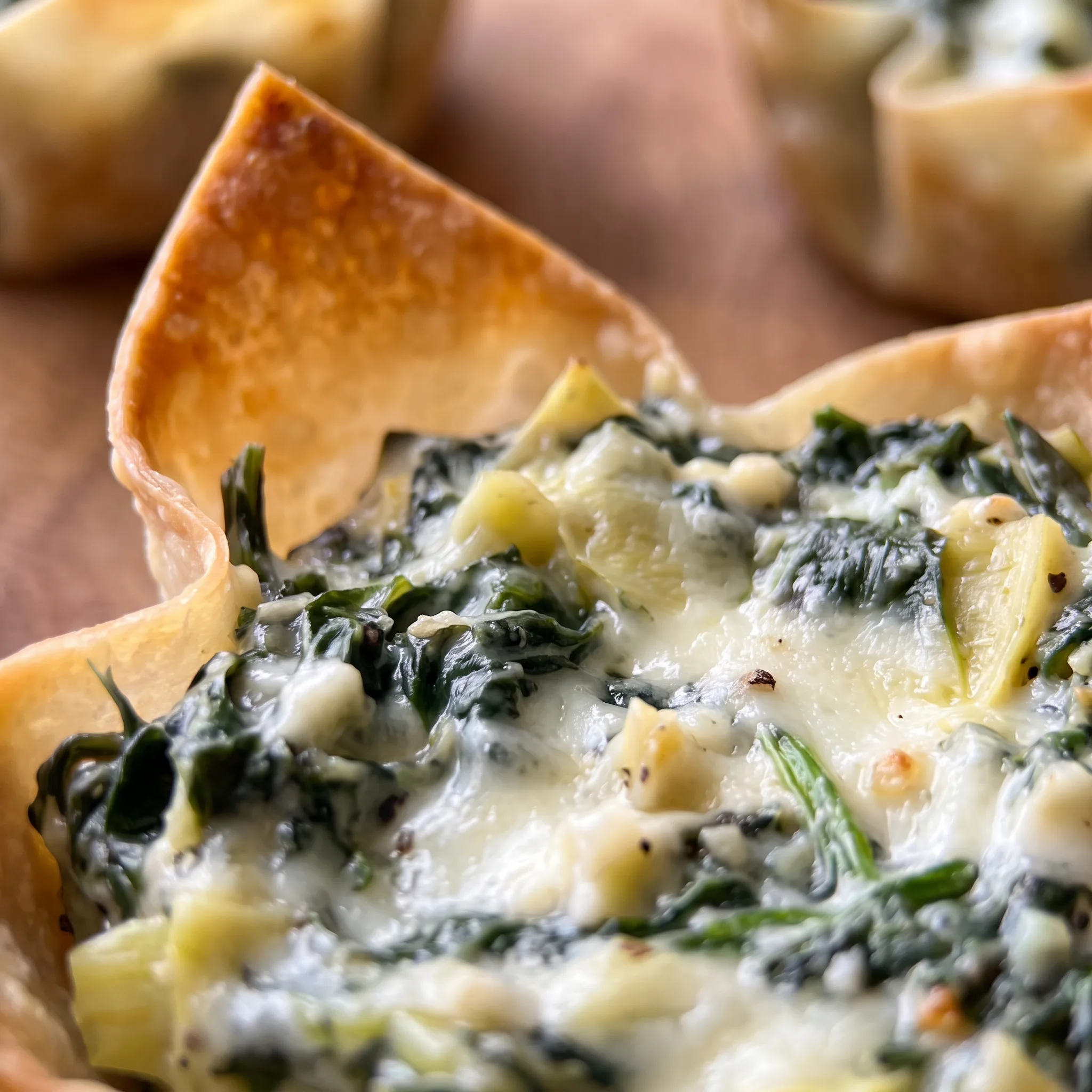
Four Ingredients Where the Wrong Choice Shows Up in the Cup
Frozen spinach: Thawed and drained very well, squeezed until it clumps, because any water left in it ends up in the bottom of the cup.
Jar artichoke hearts: Drained and chopped fine, both for even distribution and because larger pieces drag moisture into the filling.
Cream cheese: Room temperature, so it blends smooth with the mayo and sour cream instead of leaving cold lumps that bake unevenly.
Parmesan cheese: Grate it yourself if you can; the pre-shredded kind is dusted with starch that keeps it from melting into the filling.
Fresh garlic: Three cloves minced fine; chunks that big stay sharp and raw-tasting even after the second bake.
Wonton wrappers: Keep them under a damp towel while you work, since the ones left out dry at the edges and crack when pressed into the tin.
Judging the Cups: What to Look For at Each Turn
The Wrappers Have Set Before the Filling Goes In
After five minutes, the wrappers should look dry and hold their pressed shape. If they still look wet or floppy, they haven’t set; give them another minute or two, but don’t let them brown.
Set wrappers mean the cup won’t collapse when you spoon in the filling. Miss this and the sides slump, the filling spills over, and the edges burn before the center heats through.
The Filling Is Thick Enough to Mound
Stir the spinach, artichokes, and dairy together and watch how it sits on the spoon. It should mound slightly, not spread or drip. If it looks loose, the spinach or artichokes are still holding water.
Press them again in a towel or strainer. A watery filling steams the wontons from the inside, turning the crisp shell soft and the center runny.
The Second Bake: Color and Firmness Tell You When to Pull Them
At ten minutes, the edges of the wontons should be golden brown and the filling set with a slight jiggle. If the edges brown before the filling sets, the oven is running hot; drop the temperature by 25°F and check every two minutes. If the filling still looks wet, give it a few more minutes, but watch closely.
Overbaking makes the shells brittle and the filling dry.
The Rest Before Removing Them
Let the cups sit in the tin for a few minutes after they come out. The shells firm as they cool, and the filling settles.
If you try to lift them while they’re hot, the bottoms may stick or tear. A brief wait means they release cleanly with a gentle twist.
Serve them warm; as they cool further, the shells lose their snap.
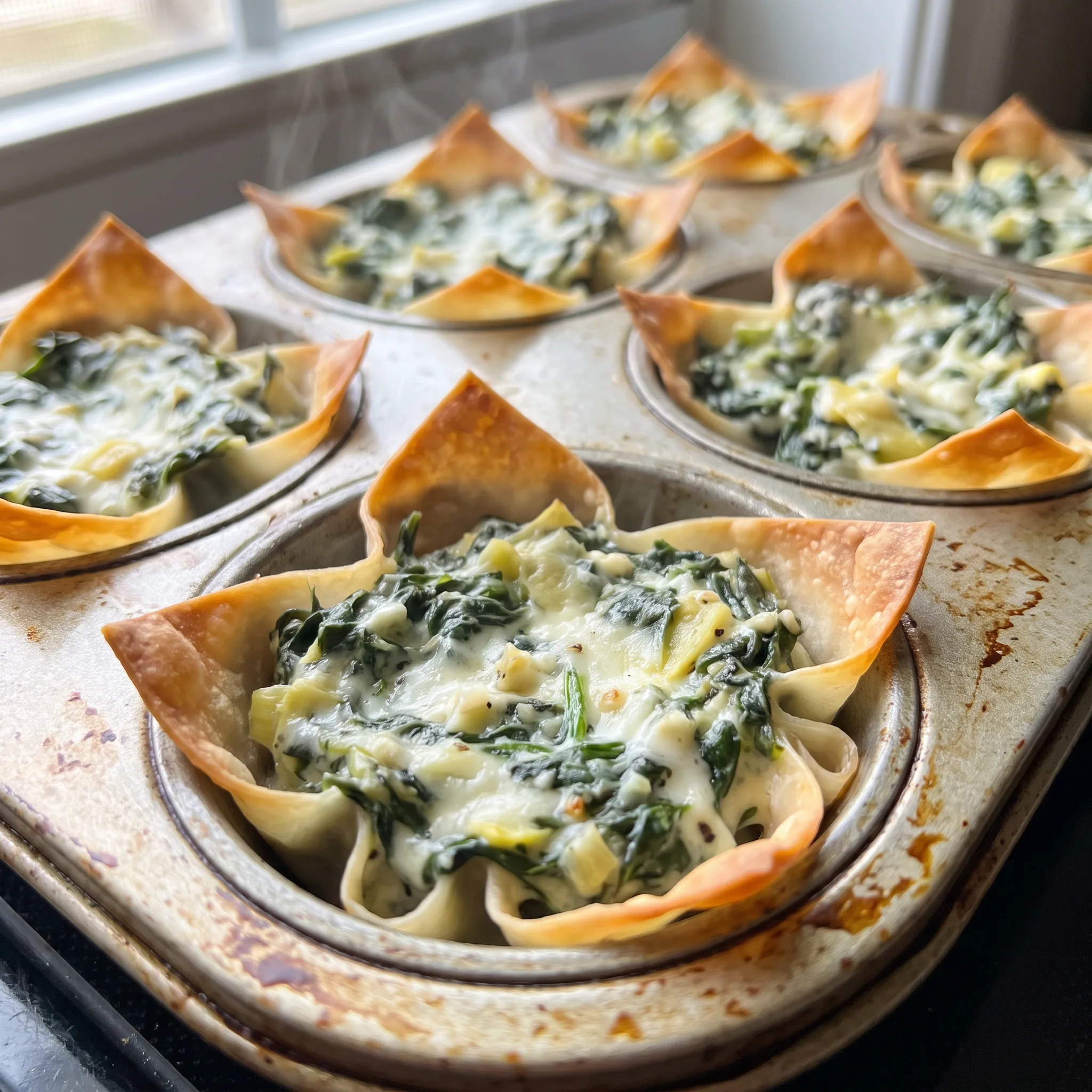
Spinach and Artichoke Wonton Cups
Ingredients
Method
- Set oven temperature to 350°F (175°C).
- Place one wonton wrapper into each cup of a muffin tin, pressing gently. Apply a light coating of cooking spray to each and bake for 5 minutes.
- Combine all remaining ingredients in a medium bowl and stir until uniformly blended.
- Distribute the spinach and artichoke mixture evenly among the wonton cups and return to the oven for about 10 minutes, or until the wontons turn golden brown and crisp.
- Allow to cool briefly, then carefully take them out of the muffin tin. Serve warm.
Storing and Serving: A Short Window, Then an Oven
These cups peak within 30 minutes of leaving the oven. The shells hold their snap for about that long, then the moisture in the filling starts working its way into the wrapper.
By the two-hour mark the bottoms have softened. If you can’t serve them right away, keep them in the muffin tin, uncovered, at room temperature, never wrapped or stacked, because trapped steam is what kills the crust. Leftovers keep in the fridge for up to 2 days in a single layer in a lidded container, with a paper towel under the lid to catch condensation.
Beyond that the dairy filling and the shells both decline fast. Don’t freeze the assembled cups; the wrappers go limp on thaw and the filling weeps.
Reheat on a sheet pan at 375°F for 5 to 7 minutes, which is the only way to bring back any crispness. A microwave gives you a soft, warm cup, so skip it. Eat them warm from that oven, not cooled.
Swap the Dairy, but Keep the Texture in Mind
Cream cheese: For a lighter option, use Greek yogurt (full-fat) or Neufchâtel. Start with the same 4 oz the recipe calls for.
For dairy-free, use a thick, unsweetened plant-based cream cheese, but check the label for added water: some brands are looser and will need a few extra minutes of draining with the spinach. Greek yogurt brings tang and less fat, so the filling will be softer and may weep a little; it still bakes up creamy but with a lighter body. Neufchâtel behaves much like cream cheese, just slightly less rich.
Dairy-free cream cheese can taste a bit coconutty or chalky depending on the brand, and the filling may not set as firmly, so expect a slightly looser center.
Sour cream: Replace with an equal amount of full-fat Greek yogurt, or for dairy-free, use a plant-based sour cream alternative. If using yogurt, start with 1/3 cup as written.
Greek yogurt is tangier and thicker, so the filling will have a sharper edge and a slightly denser texture. Plant-based sour cream often has a milder tang and may not thicken the same way, so the filling could be a touch runnier; you might need to drain the spinach even more thoroughly to compensate.
Mayonnaise: Use an equal amount of full-fat Greek yogurt or a vegan mayonnaise. For a tangier profile, try sour cream in its place, but keep the total amount the same.
Greek yogurt cuts richness and adds tang, making the filling lighter but also less stable when hot; it may release some liquid. Vegan mayo generally mimics regular mayo closely, though some brands are sweeter. Swapping in sour cream for mayo doubles down on tang and thickness, which can make the filling heavier and less spreadable.
Parmesan cheese: For a dairy-free version, use a aged plant-based Parmesan or nutritional yeast. Start with 1/2 cup of the plant-based option, but taste and adjust: some are saltier. Nutritional yeast: use 1/4 cup for a cheesy, nutty flavor, then add more if needed.
Plant-based Parmesan often doesn’t melt as smoothly and can be grainier, so the filling may have a slightly sandy texture and less binding. Nutritional yeast adds a savory, cheesy note but no melt or stretch, so the filling will be looser; you may need to reduce the sour cream or mayo by a tablespoon to keep it thick.
Tips
- Once the filling is mixed, fill and bake the cups right away. The mixture’s salt pulls water out of the spinach and artichokes over time, so a bowl left sitting for 20 minutes will be wetter than one spooned in immediately, and that extra liquid is what softens the wrapper where it touches the filling.
Frozen spinach holds a large amount of water that is released upon thawing, and jarred artichoke hearts carry additional liquid from their packing brine or oil. If these ingredients are not drained thoroughly, the excess moisture migrates into the wonton wrappers during the second bake, softening the crisp shell and diluting the creamy filling. The most effective way to remove this water is to squeeze or press the spinach, as simply letting it sit in a colander leaves much of the liquid trapped within the leaves.
Frequently Asked Questions
Can I make these spinach and artichoke wonton cups ahead of time?
They’re best assembled and baked close to serving, since the shells hold their snap for about 30 minutes out of the oven. If you want a head start, prep the filling a day ahead and keep it covered in the fridge, then press and bake the wrappers the day you serve. You can also press the wrappers into the tin and pre-bake them, then cool and hold them at room temperature, but fill and run the second bake just before guests arrive.
The filling itself thickens as it chills, so give it a stir and let it come closer to room temperature before spooning it in.
Why did my wonton cups turn out soggy?
Water is almost always the culprit, and the spinach is the first place to look. Thawed frozen spinach needs to be squeezed in a towel or pressed hard against a strainer until it clumps, not just left in a colander to drip. Artichoke hearts carry their own moisture, so pat them dry and chop them fine, since big pieces drag liquid into the cup.
If the filling still looks loose on the spoon, press the vegetables again. One more check: the cups sat too long before serving, and the filling had time to work into the wrapper.
How are these different from classic spinach and artichoke dip?
Classic dip is served from one bowl with bread or chips, and the texture stays uniformly soft all the way through. Here the same creamy filling goes into a wonton wrapper pressed into a muffin tin, so every portion has its own crisp shell around a warm center.
That means the contrast is built in: a clean snap first, then the soft spinach and artichoke filling. It also changes how they eat.
No scooping, no double dipping, and each cup is a single bite-sized portion that holds together on a plate.
