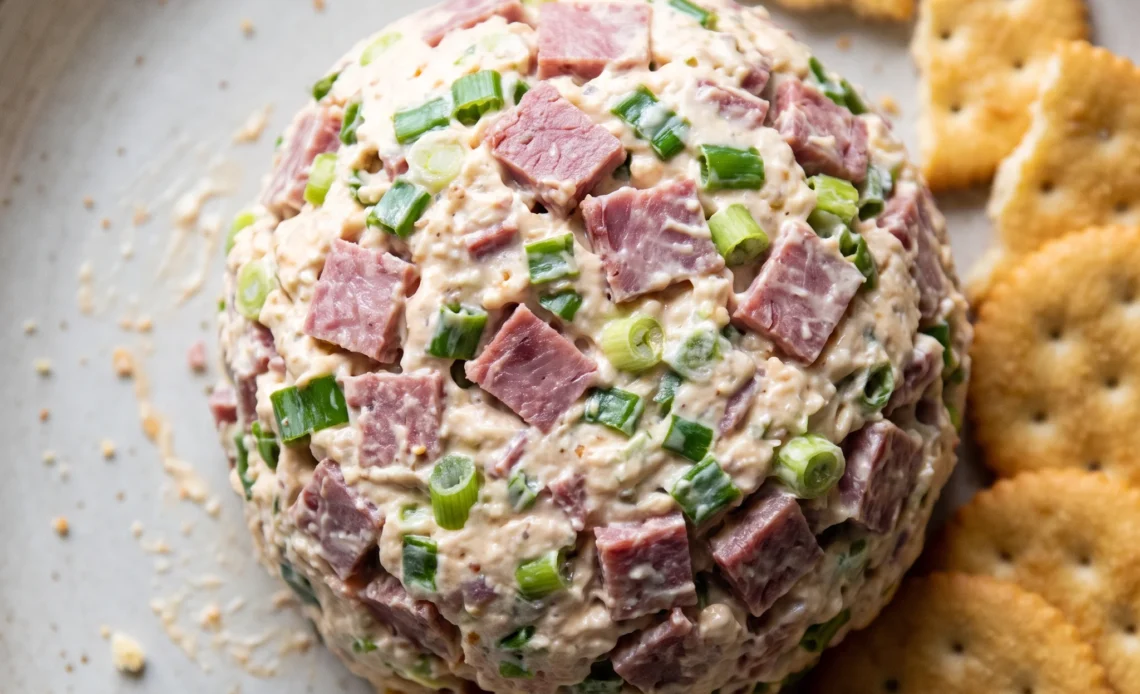
Cold, firm, and flecked with pink and green, a good chipped beef cheese ball looks like someone spent an afternoon on it. The reality is closer to five minutes of stirring.
That gap between effort and payoff is what makes this thing a fixture at gatherings where nobody wants to be in the kitchen. The difficulty isn’t in the mixing, it’s in restraint: chipped beef carries a lot of salt, and cream cheese carries a lot of fat, and each one can quietly undo the other if you get greedy. Then there’s moisture.
Wet beef, damp onions, cream cheese that’s still cool in the middle, and you’ll be chasing a mixture that won’t firm up no matter how long it sits. Get those two things right and you have a cheese ball that slices clean and tastes savory, not salty. Get them wrong and you’ll know it by the puddle on the tray.
This recipe uses a brief chill before shaping, which firms the cream cheese just enough to be handled without sticking, while a longer chill would make the ball too hard to spread straight from the fridge. The trade-off is between workability and structure: chilling the mixture in a lined bowl for 10 to 20 minutes lets the fat crystallize slightly, so the diced beef and green onion are held in a matrix that resists slumping. Skipping this rest leaves the mixture at room temperature, where the fat is too fluid to support the added ingredients, and the ball flattens or sheds pieces on the serving tray.
Balance Beef and Cream Cheese
Two 8-ounce blocks of cream cheese provide the bulk that lets this mixture firm up. Two packages of chipped beef bring salt and moisture. Get that ratio wrong and you end up with a wet, salty paste that never truly sets.
The beef has to be diced fine; bigger pieces leave weak spots so the ball won’t compact evenly. If you add the optional cheddar, you’re adding more fat and bulk, which softens the mix and makes shaping harder unless you account for it.
Taste the mixture at room temperature and it should seem slightly under-salted; chilling mutes your perception of salt, so what tastes balanced now will taste saltier later. A little restraint with the beef now pays off when you bite into a cold, firm ball and get a clean, savory hit instead of a salt bomb.
Why Chill Before Shaping
That brief rest in the refrigerator does more than firm things up. Cold fat traps the diced beef and green onion, so the ball holds together instead of shedding ingredients onto the tray. It also gives the garlic powder and Worcestershire sauce time to spread evenly, so no single bite tastes raw or sharp.
Pull the mixture out too soon and it’s too soft to handle without sticking to your hands; leave it in too long and it turns rigid and hard to spread. A short rest at room temperature after shaping gets it to the ideal spreadable texture. The result is a cheese ball that sits up proudly on the platter, not a puddle with crackers sinking in.
Pick the Right Chipped Beef
The style of chipped beef you buy changes the final cheese ball more than anything else. Jarred chipped beef often sits in brine, so drain it and pat it dry; otherwise you’re adding extra liquid that makes the mixture soggy. Packaged dried beef is saltier and firmer, so dice it finer to avoid a tough bite.
Deli-sliced beef is thicker and less salty, so you can leave slightly larger pieces without overwhelming the cream cheese. The type also affects how much Worcestershire sauce you need, since both add salt and umami. A drier, firmer beef gives you a cheese ball that slices cleanly and holds its shape; a wet, briny one leaves you with a loose, salty spread that never quite sets.
Texture and Visual Appeal
A bare cheese ball relies on the diced beef and green onion mixed throughout for its look, not an outer crust. If the mixture is too soft, the ball flattens and the surface looks greasy instead of smooth.
Rolling it in extra beef or nuts would add crunch but also more salt, which can unbalance the recipe. The serving tray and crackers are part of the texture experience.
Ritz crackers bring a buttery, salty crunch that contrasts the creamy ball. When you set it out, the ball should look neat and hold its shape, and each scoop with a cracker should give you a clean mix of creamy and chunky, not a sloppy smear.
What Matters in the Mix
Chipped beef: Jarred beef brings brine that makes the mixture wet, so drain and pat it dry before dicing.
Cream cheese: Two 8-ounce blocks need to be fully room temperature, soft enough that a thumb press leaves a dent.
Green onions: Dice only the stalks fine; larger pieces create weak spots where the ball cracks when shaped.
Worcestershire sauce: One tablespoon adds salt and umami, so taste the mix at room temperature before adding more.
Cheddar cheese: If you include the optional cup, expect a softer mix that needs a longer chill to firm up.
Reading the Mixture Before It Chills
The feel of the cream cheese at room temperature
Cold cream cheese stays lumpy no matter how hard you stir, and those lumps won’t disappear in the refrigerator. Press a block with your thumb: it should dent easily and feel like soft butter. If it’s still firm in the middle, let it sit out longer.
Room temperature means the mixture turns creamy in a minute or two, with no dry pockets of powder or streaks of Worcestershire.
Judging the dice on the beef
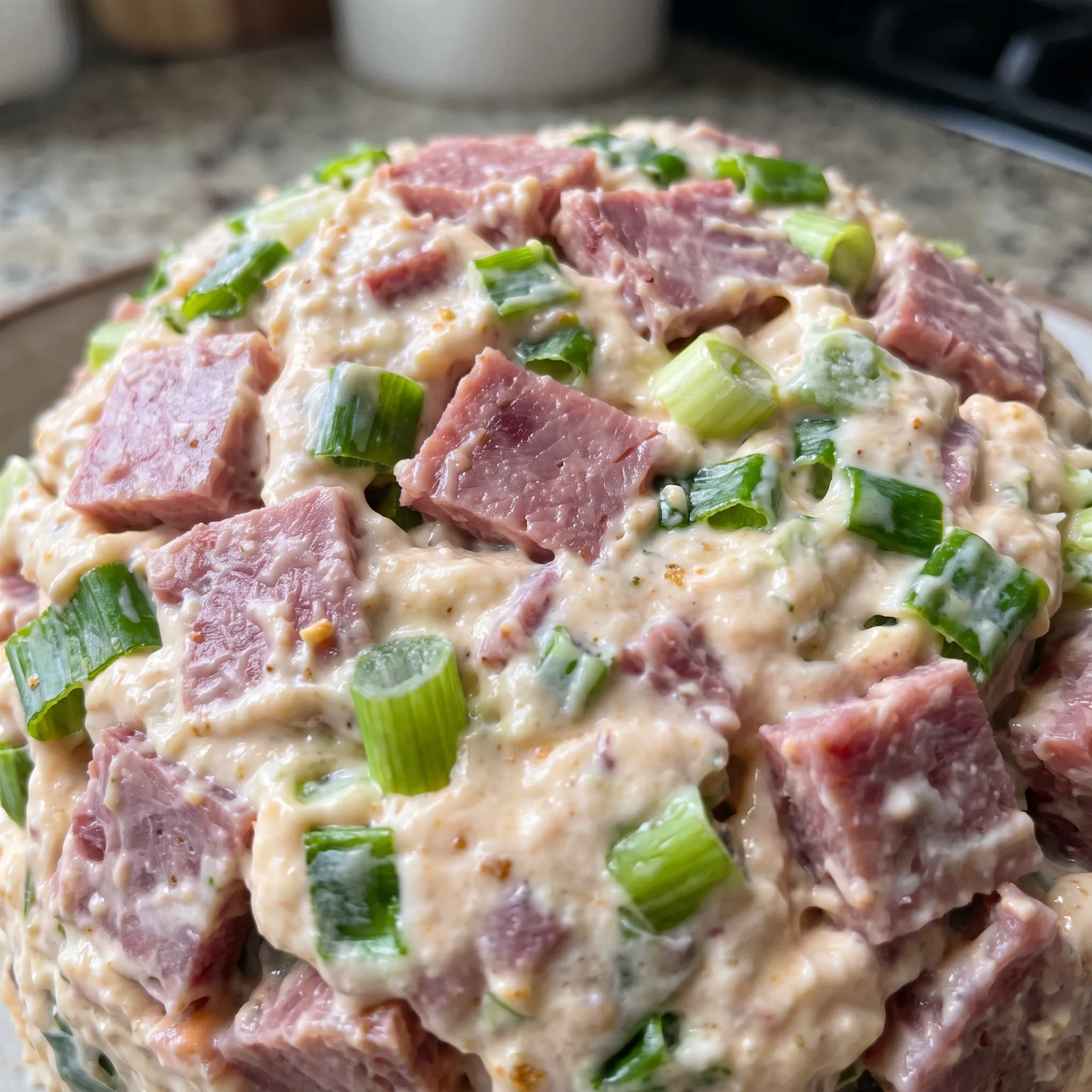
Chipped beef varies by style. Jarred beef is wet and briny; packaged dried beef is firm and salty; deli-sliced is thicker and milder. Whatever you have, dice it small enough that no piece is bigger than a peppercorn.
Large or uneven pieces create weak spots where the ball cracks when you shape it. If the beef is wet, pat it dry first; excess moisture makes the mixture loose and slow to firm.
Knowing when the mixture is fully combined
Stop mixing when the beef and green onions are evenly scattered and no white streaks of cream cheese remain. Overmixing isn’t a risk here, but undermixing leaves pockets of garlic powder or a puddle of Worcestershire. Scrape the bottom and sides once, then give it a final few turns.
The mixture should look uniform and hold a soft shape on the spoon.
The chill: firm enough to shape, not rock hard
After 10 to 20 minutes in the refrigerator, the mixture should feel firm but still indents when pressed. Too short and it sticks to your hands and slumps; too long and it’s stiff and crumbly, hard to form into a neat ball. If it’s too soft, chill another 5 minutes.
If it’s too firm, let it sit at room temperature for a few minutes before shaping.
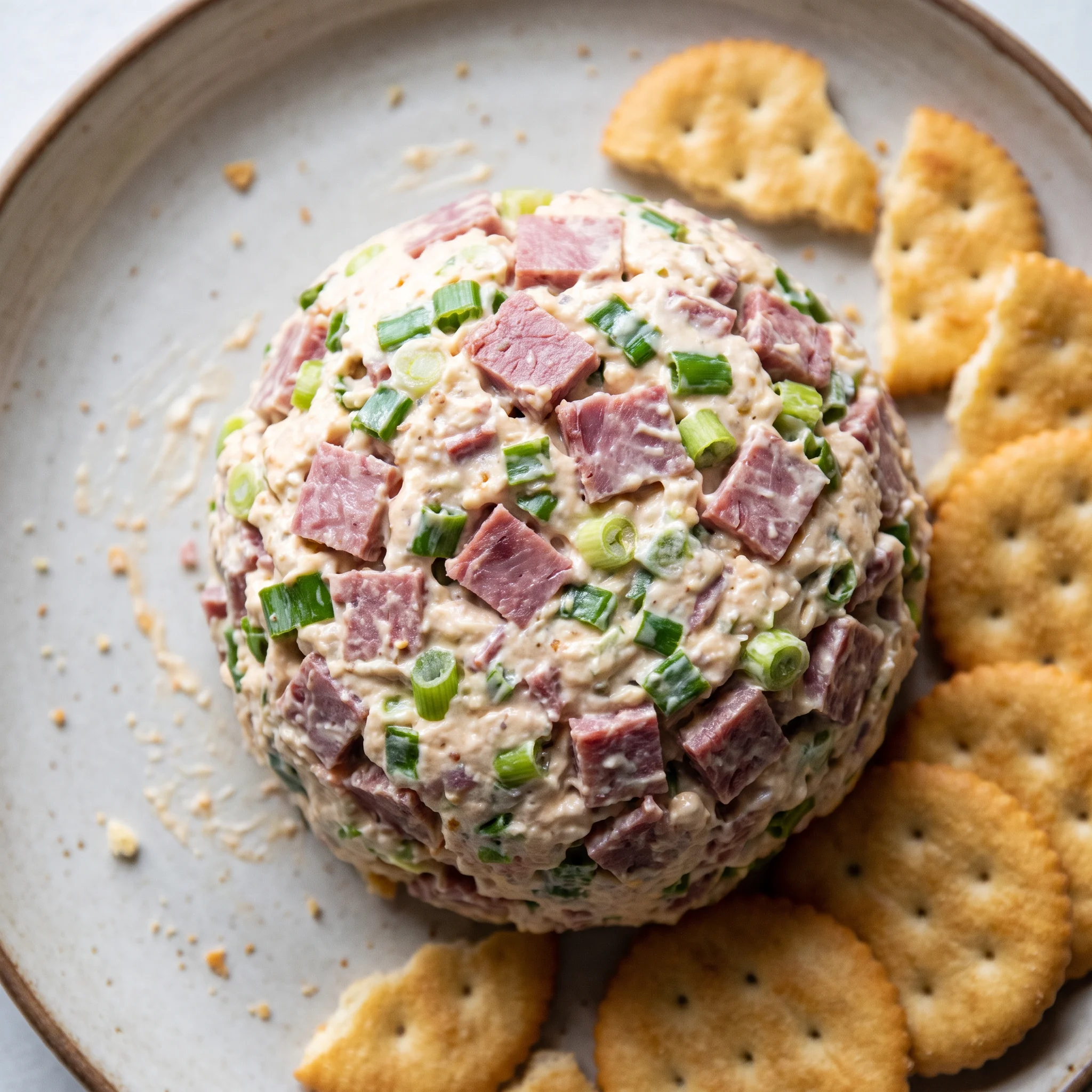
Chipped Beef Cheese Ball with Green Onion
Ingredients
Method
- Dice the green onions and chipped beef.
- In a large bowl, mix the softened cream cheese, garlic powder, and Worcestershire sauce until combined.
- Add the green onions and chipped beef; mix until creamy.
- Line a cereal bowl with plastic wrap and scoop the cheeseball mixture inside. Cover and refrigerate for 10–20 minutes.
- Shape into a ball and place on a serving tray with Ritz crackers.
- Enjoy!
When a Swap Helps and When It Ruins the Ball
Chipped beef: Deli-sliced beef or thin-sliced ham, diced to peppercorn size. Deli beef is thicker and less salty, so you can leave slightly larger pieces without overwhelming the cream cheese. Use the same amount the recipe calls for (two packages), then taste the mix at room temperature.
If it seems flat, add a pinch of salt. Ham brings a sweeter, milder note, so you’ll lose some of that salty punch.
Cream cheese: Whipped cream cheese. Don’t. Whipped cream cheese has air beaten in that never sets firm enough, and the ball slumps into a puddle no matter how long you chill it.
If you’re set on a lighter texture, stick with block cream cheese and accept the full-fat result.
Worcestershire sauce: Low-sodium soy sauce. Use the same 1 tablespoon, but expect a different flavor.
Soy sauce is saltier and less sweet, so the final ball tastes sharper. Start with half the amount, mix, and taste at room temperature before adding the rest.
Cream cheese (dairy-free): Dairy-free cream cheese block, such as Miyoko’s or Kite Hill. These soften and firm up differently, so the mixture may stay softer. Use the same two 8-ounce blocks, chill the full 20 minutes, and if it’s still too soft to shape, chill another 10 minutes.
The flavor will be slightly tangier.
Tips
- Pat the diced chipped beef and green onions dry on paper towels before they go into the bowl. Jarred beef and rinsed onions carry surface water that has nowhere to go once the cream cheese sets, so it beads on the tray as the ball sits out. Drying them takes a minute and keeps the shaped ball firm through the serving window.
Storage and Serving
This cheese ball is at its best within 30 minutes of coming out of the fridge. Any longer and the cream cheese softens enough that the ball slumps on the tray and the crackers start sinking in.
Set it out just before guests arrive, and plan to eat it within that window for clean slices and a firm bite. Leftovers keep in an airtight container in the refrigerator for up to 3 days.
After that, the diced beef and green onion release moisture, and the surface turns wet and soft. You can stir the leftovers into a spreadable texture for crackers, but it won’t reshape into a neat ball. Freezing isn’t recommended: the cream cheese separates and turns grainy when thawed, and the green onions go limp.
If you must, freeze only the plain cream cheese mixture before adding the beef and onions, then fold them in after thawing. For serving a stored portion, let it sit at room temperature for 10 minutes to take the chill off, then reshape quickly with damp hands if needed.

Frequently Asked Questions
Can I make this cheese ball ahead of time?
You can mix and chill the cheese ball up to 3 days in advance. The catch is the diced beef and green onion release moisture over time, so the surface gets wet and soft. If you’re making it ahead for a party, leave the beef and onions out until the day you serve, then fold them in, chill for the 10 to 20 minutes, and shape it fresh.
That way the texture stays firm and clean instead of slumping.
Why is my cheese ball too soft?
The most likely culprit is wet chipped beef. Jarred beef sits in brine, and if you don’t drain and pat it dry, that extra liquid loosens the whole mixture. Second, check your cream cheese: if it was still cool in the middle, it won’t blend smoothly and the ball won’t firm up evenly.
Also, if you added the optional cheddar, that extra fat softens the mix, so give it more time in the fridge. A properly chilled mixture should feel firm but still indent when pressed.
How is this different from a classic cheese ball?
A classic cheese ball usually gets rolled in nuts or extra beef on the outside, but this one keeps everything mixed in. That means the texture comes from the diced beef and green onion throughout, not a crust. The flavor is also more savory and salty from the chipped beef and Worcestershire, with no sweet or fruity notes.
And the method skips the outer coating step, so you shape it and serve it as is.
