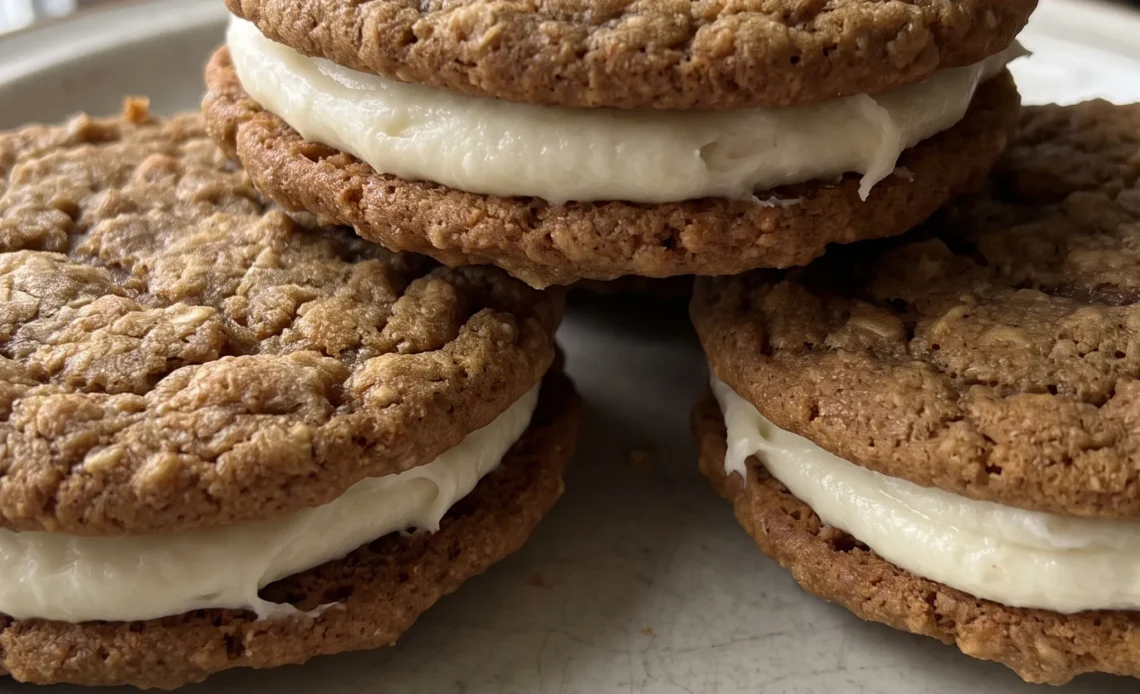
Gingerbread oatmeal cream pies live or die on the frosting, and that’s the part most bakers rush. A chewy spiced oatmeal cookie is forgiving; cream cheese frosting is not.
Get it too soft and the top cookie slides off the first time you pick one up, too stiff and it cracks the tender crumb you worked for. The tang is what makes the whole thing work, cutting the molasses so the second bite tastes as bright as the first. This is a soft cookie, closer to a whoopie pie than a crisp sandwich, and it wants a filling with real body.
Read the dough before it goes in, and taste the frosting as you build it. Both tell you more than any timer will.
How Do You Keep the Filling From Squishing Out?
Cream cheese straight from the tub, the spreadable kind, carries more water and less structure. For a sandwich cookie you want the brick, full fat, drained and firm. That’s what gives the frosting enough body to sit between two cookies without bulging when you press the top on.
Powdered sugar is your dial. Start with the smaller amount and check the texture after each addition.
You want a frosting that holds a soft peak when you lift the beaters, not one that ribbons off. If it’s too thin, the top cookie will slide off when you pick it up. Too thick and it tears the cookie.
The range of 1 1/2 to 2 1/2 cups lets you land in that window. A tablespoon of cream is there only if you’ve gone past stiff and need to loosen it. Add it half at a time, because a little goes far.
Why Is This Dough So Sticky?
Molasses brings water to the party. It also brings acid, which wakes up the baking soda and gives you lift and a browner crust.
But that water makes the dough tacky, more so than a standard oatmeal cookie. When you scoop it, it clings to the spoon.
You’ll want to roll with slightly damp hands or use a cookie scoop to drop the balls. If the dough gets too soft to handle, a short rest in the fridge firms it up. The molasses also darkens the cookie and keeps the center chewy once baked.
You’ll see the color turn a deep gingerbread brown in the oven, and the texture stays tender rather than crisp. That’s the trade-off for the flavor. Expect about 24 balls, and space them well; they spread.
The Flavor Math Behind Gingerbread and Oats
Ginger leads, but it can’t run the whole show. Cinnamon and nutmeg round it out, and cloves add a sharp edge that cuts through the sugar. Use too much cloves and your tongue goes numb; too little and the cookie tastes flat.
The oats are the quiet partner, giving a nutty, chewy counterpoint to the soft spice. Without them, the cookie would be one-note sweet.
That’s where the cream cheese comes in. Its tang is a reset button for your palate, so the next bite tastes as bright as the first. If you frost a warm cookie, the topping melts into the crumb and you lose that contrast.
Wait until they’re fully cool. Then the spice aroma stays put, and the frosting sits on top like it should.
The result is a cookie that tastes balanced, not just sweet.
Getting the Filling Ratio Right
One to two tablespoons of frosting per sandwich is the sweet spot. Any less and you get a skimpy bite; any more and it oozes out the sides when you press.
Dollop it in the center of the bottom cookie, then gently set the top cookie on and press just until the frosting reaches the edges. Don’t smash. The cookies are soft, and too much pressure cracks them.
They need to be completely cool, or the frosting will slide. Once assembled, the frosting slowly softens the cookies, and after a few hours they become tender and almost cake-like. That’s the classic cream pie texture.
If you’re stacking them, put a piece of parchment between layers. They’ll keep for a couple of days, and the flavor only gets better.
That’s when you know they’re ready.
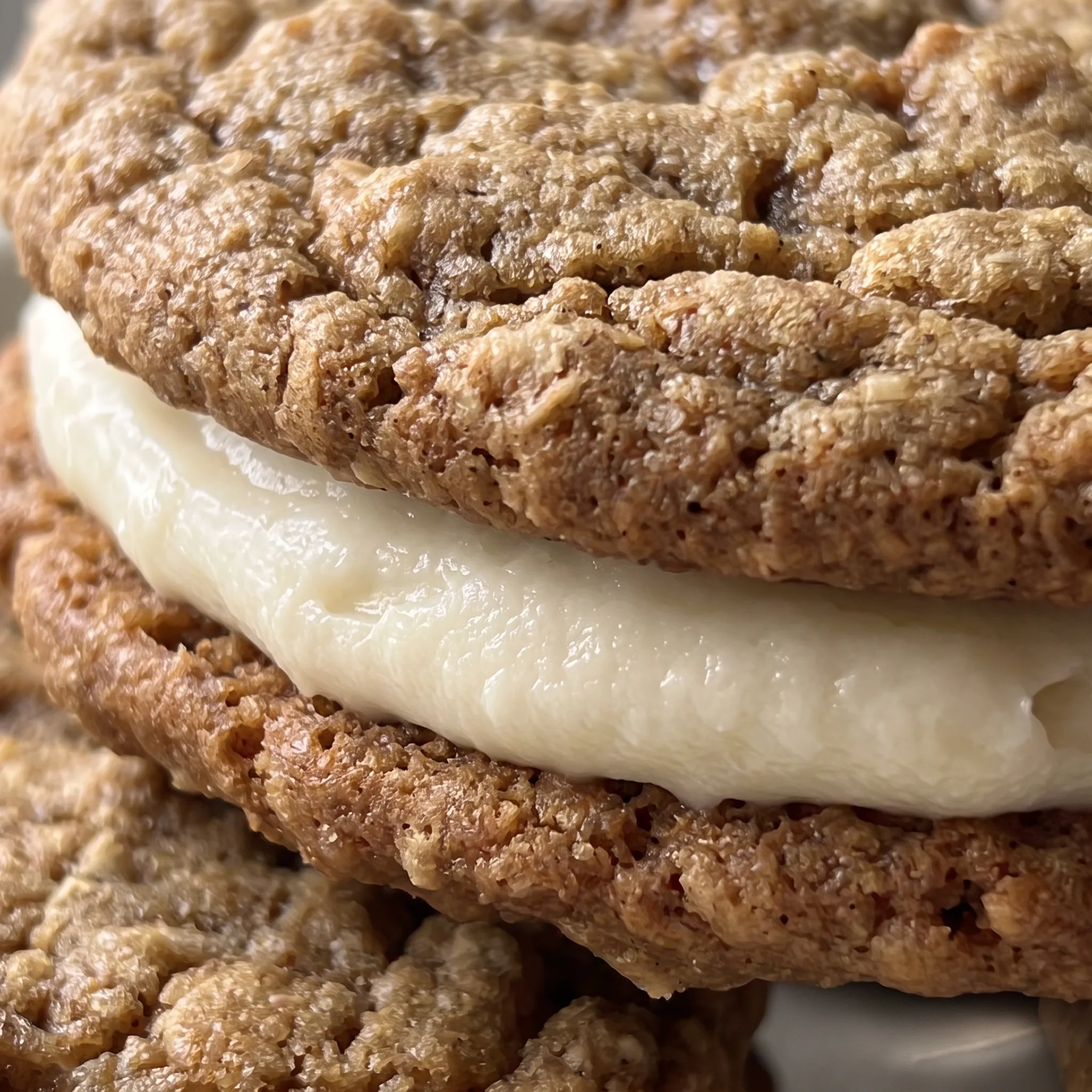
What to Look For Before You Start Baking
Molasses: Use unsulphured molasses, not blackstrap, which is bitter and too dark for these cookies.
Cream cheese: Buy the brick style, full fat, and let it sit out until it’s truly soft before you beat it.
Rolled oats: Quick or old-fashioned both work, but old-fashioned give a chewier bite that holds up under frosting.
Brown sugar: Dark brown sugar has more molasses, so it deepens the color and spice in the dough.
Ground cloves: A little goes far, so measure the 1/8 teaspoon carefully, as too much can numb your tongue.
When you beat the butter, cream cheese, and powdered sugar, the mixture should become thick enough that a spoon dragged through it leaves a clean track and the frosting mounds softly on the spoon. If it instead ribbons off the beaters or pools on the surface, the water content is still too high relative to the sugar and fat, and the frosting will ooze out under the weight of the top cookie. At that point, no amount of chilling will permanently fix it, the only correction is to beat in more powdered sugar, a few tablespoons at a time, until the track holds.
How to Read the Dough, the Bake, and the Fill as You Go
When the creamed butter and sugars are ready for the egg
Softened butter should give when you press it, not squish like melted. Beat it with both sugars until the mixture lightens and you can feel the grains dissolve when you rub a bit to the touch. A dull, gritty paste means keep going.
Under-creamed butter won’t hold air, so the cookies bake flat and tough. If the butter was too warm and the mixture looks greasy, chill the bowl for a few minutes and beat again.
Judging the dough’s tackiness before it hits the sheet
Molasses makes this dough wetter than a standard oatmeal cookie. Scoop a ball and watch how it holds. If it slumps off the spoon and spreads on the parchment before baking, it’s too soft.
A 15-minute rest in the fridge firms it without changing the flavor. Damp hands help if you’re rolling by hand. 5 tablespoons each, for about 24 total.
Pulling the cookies at the right moment
At 8 to 10 minutes, the tops should look set but still soft, with no wet shine in the cracks. The edges might be barely golden, but the centers will feel underdone if you press them. That’s correct; they firm up on the hot sheet.
Leave them on the cookie sheet to cool completely. Move them too soon and they’ll tear. Overbake by a minute or two and you lose the chew that makes these work.
Tasting the frosting for sweetness and body
Powdered sugar does two jobs: sweetens and thickens. After the first cup, taste. If it’s already as sweet as you want, stop.
The full 2 1/2 cups will make a stiff frosting that can crack a soft cookie when you press the top on. You want it to hold a soft peak but still spread easily.
If you’ve gone too far, a tablespoon of cream loosens it. Add half at a time; a little goes far.
Knowing when the sandwich is pressed enough
Set the top cookie on and press gently. The frosting should just reach the edges without bulging.
If it squishes out, you used too much or pressed too hard. The cookies are tender, so stop at the first sign of resistance. A sandwich that holds together when you pick it up is right.
If the frosting oozes, scrape the excess and press again with less force.
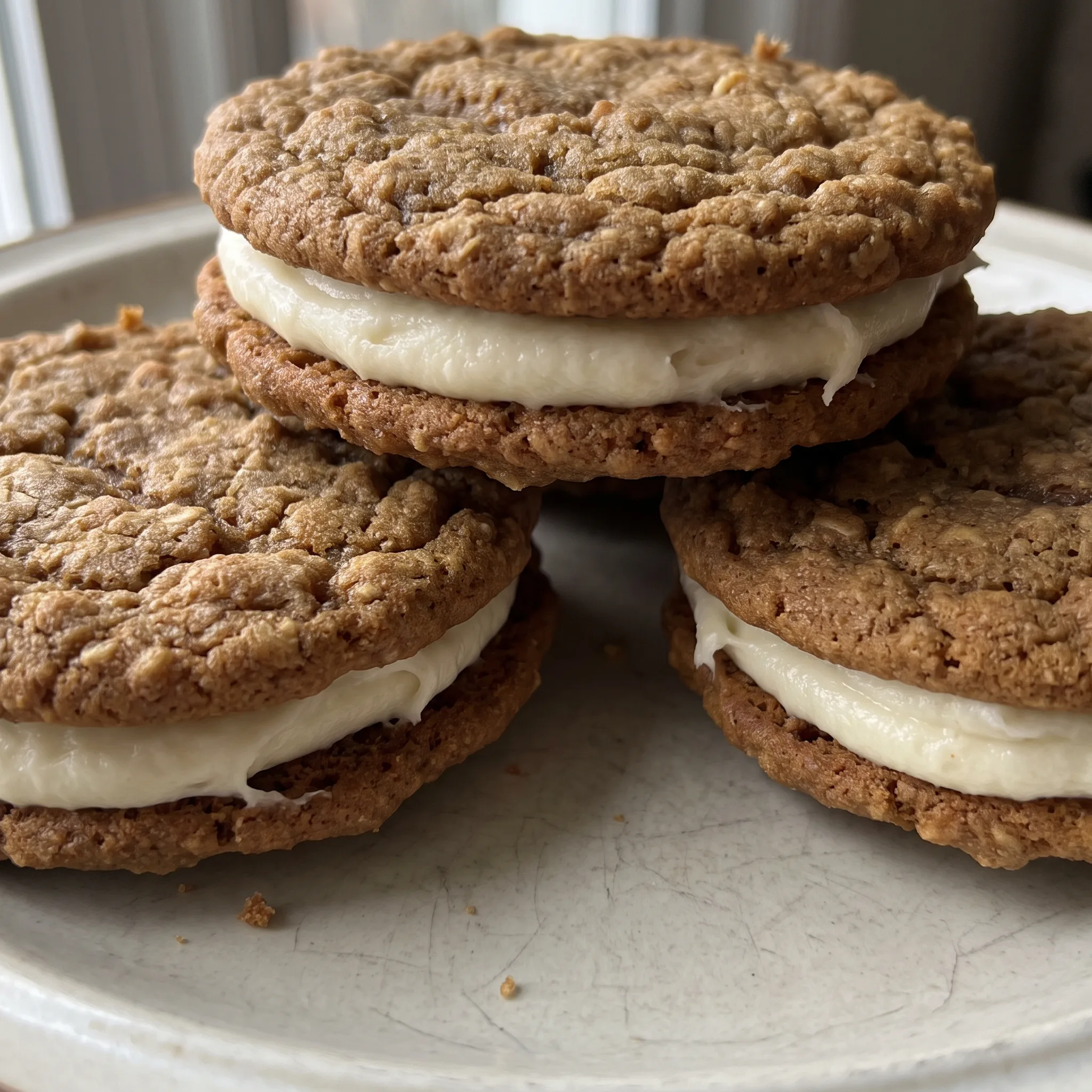
Gingerbread Oatmeal Cream Pies
Ingredients
Method
- Set oven to 350°F (175°C) and prepare cookie sheets by covering them with parchment paper.
- Combine flour, ginger, cinnamon, nutmeg, ground cloves, baking soda, and salt in a medium bowl by whisking. Leave aside.
- In a large bowl, cream together the butter, brown sugar, and granulated sugar by beating.
- Stir the molasses, vanilla, and egg into the butter mixture until fully incorporated.
- Incorporate the dry ingredients into the butter mixture. Mix gradually, beginning at low speed with the mixer.
- Fold in the oats.
- Using about 1 to 1.5 tablespoons of dough each, form balls. A cookie scoop is helpful. Arrange the dough balls on the lined cookie sheets with about 2 inches (5 cm) between them. Expect roughly 24 cookie dough balls.
- Place one sheet at a time in the center of the preheated oven. Bake for about 8-10 minutes, until the tops appear just set.
- Allow the cookies to cool on the cookie sheets.
- In a large bowl, beat the butter until creamy. Then incorporate the cream cheese.
- Add 1 cup powdered sugar, along with the vanilla and salt. Mix gently until combined.
- Beat in the remaining powdered sugar, about 1/2 cup at a time, until desired sweetness and thickness. For a thinner frosting, stir in 1 tablespoon of cream.
- Spread 1-2 tablespoons of frosting on the bottom of one completely cooled cookie, then top with a second cookie.
How Long Do Gingerbread Oatmeal Cream Pies Keep?
Eat these the day you fill them for the best contrast: crisp-edged cookies, cool tangy frosting. But the first 24 hours in an airtight container at room temperature are what you’re really after. The cream cheese pulls moisture from the cookies, and they soften into that tender, cake-like cream pie texture.
Past about 48 hours, the frosting starts to break down and the cookies go from tender to wet. So the window is day one for snap, day two for soft, and after that you’re eating a soggy cookie. Keep leftovers in a single layer, or stacked with parchment between, in an airtight container at room temperature.
Don’t refrigerate them; the chill firms the frosting and dries the crumb. The frosting itself doesn’t freeze well because the cream cheese separates. Freeze the unfilled cookies instead, up to two months, and fill them after thawing.
When You Can Swap in This Gingerbread Oatmeal Cream Pie (and When You Can’t)
Rolled oats: Quick oats in the same 1 1/3 cups. Quick oats are cut finer, so they drink up more moisture and soften faster.
The cookies bake up with a more uniform, less chewy crumb. You lose some of that nubby texture that stands up to the frosting.
If you want the classic contrast, stick with old-fashioned. Quick oats work in a pinch, but expect a softer bite.
Dark brown sugar: Light brown sugar, same 3/4 cup. Dark brown sugar carries more molasses, which deepens the color and spice. Light brown will still sweeten and add moisture, but the cookies come out paler and the gingerbread flavor is milder.
If you only have light, bump the molasses to 3 tablespoons to get closer. The texture stays similar, just less bold.
Whipping cream: Half-and-half, same 1 tablespoon if needed. Half-and-half has less fat, so it thins the frosting without adding much richness.
That’s fine if you just need to loosen a stiff batch. Use it the same way: a little at a time. The frosting will still set, but it might be slightly less silky.
For a sandwich cookie, the difference is minor.
Brick-style cream cheese: Don’t use spreadable cream cheese or margarine. Spreadable cream cheese has more water and less structure. It will make the frosting loose and prone to oozing out the sides when you press the cookies together.
Margarine lacks the butterfat that gives the frosting body, so it turns greasy and slack. Stick with the brick, full fat, and real butter for a filling that holds its shape.
Tips
- Pull the sheets when the centers still look a shade underdone and the cracks show no wet shine, then leave the cookies on the hot pan to finish. A fully browned top means a crisp cookie that snaps when you press the frosting between two of them.
- For the cookies that will become sandwiches, choose the ones with the flattest bottoms and save the domed or ragged ones for eating plain. A domed bottom rocks against the frosting and cracks under the top cookie’s weight, and you only need 24 halves out of roughly 24 cookies, so pick with that in mind.

Frequently Asked Questions
Can I make the cookie dough ahead of time and bake later?
Yes, you can hold the dough, and a rest actually helps it. The molasses makes this dough wetter and stickier than a standard oatmeal cookie, so a stint in the fridge firms it enough to scoop cleanly and keeps the balls from slumping before they hit the oven.
Cover the bowl tight so the surface doesn’t dry into a skin, and expect the dough to need a few minutes at room temperature before it’s scoopable again. The spice flavor doesn’t fade in that time, and the cookies bake up the same deep gingerbread brown.
Why did my cream cheese frosting turn runny?
The cream cheese is almost always the culprit, either the spreadable tub kind or a brick that was too warm when you beat it. Spreadable cream cheese carries more water and less body, so it never firms up no matter how long you whip it. If you used the brick but it sat out too long, the butter and cream cheese turned greasy and the frosting slid instead of holding.
Chill the bowl and beaters for a few minutes and beat again; if it stays slack, work in more powdered sugar a spoonful at a time until it holds a soft peak.
How do I store gingerbread oatmeal cream pies so they don’t get soggy?
Keep them in a single layer, or stacked with a piece of parchment between each one, in an airtight container at room temperature. The frosting pulls moisture from the cookies, and that’s what gives you the tender, cake-like cream pie texture after a few hours.
Don’t refrigerate them; the chill firms the frosting and dries the crumb. They’re best the day you fill them and still good the next day, but past about 48 hours the frosting breaks down and the cookies go from tender to wet.
Can I use quick oats instead of old-fashioned oats?
You can, and the cookies will still work. Quick oats are cut finer, so they drink up more moisture and soften faster, giving you a more uniform crumb with less of the nubby chew that stands up to the frosting.
Old-fashioned oats keep that chew and hold their texture better under the cream cheese. If quick oats are what you have, use them and expect a softer bite.
How are these different from classic oatmeal cream pies?
The cookie itself is a gingerbread first, oatmeal second. Ginger leads with cinnamon, nutmeg, and a sharp pinch of cloves, and the molasses darkens the dough and keeps the centers chewy.
That spice blend is what separates these from the plain vanilla-oat sandwich you grew up with. The cream cheese frosting adds a tang that resets your palate, so the next bite tastes as bright as the first rather than just sweet on sweet.
