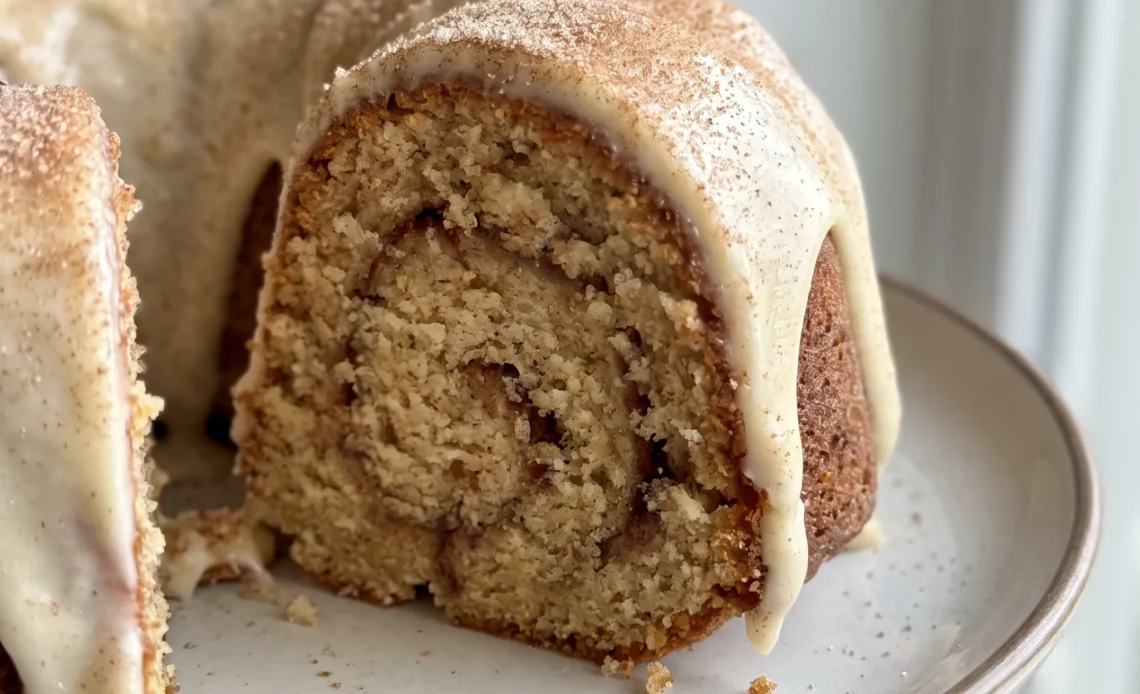
A snickerdoodle cookie gets its character from a short, hot bake and a roll through cinnamon sugar. This snickerdoodle bundt cake borrows that flavor but none of that structure, and the gap between the two is where most attempts go sideways. The swirl paste is the trouble spot: brown sugar and melted butter alone thin out under a long bake and drop toward the bottom of the pan, so flour goes in to give it enough body to hang where you put it.
Miss that and you slice into a plain cake with a sticky band underneath. The other quiet risk is the release.
A cake this heavy with filling needs to firm in the pan before it turns out, and the window is tighter than it looks.
Cinnamon Swirl That Stays Put
That swirl mixture isn’t a loose sprinkle of cinnamon sugar. Brown sugar, flour, cinnamon, and melted butter get stirred into a thick paste. The flour absorbs liquid and gives the swirl body, so it sets into distinct ribbons as the cake bakes instead of melting into a syrupy layer at the bottom.
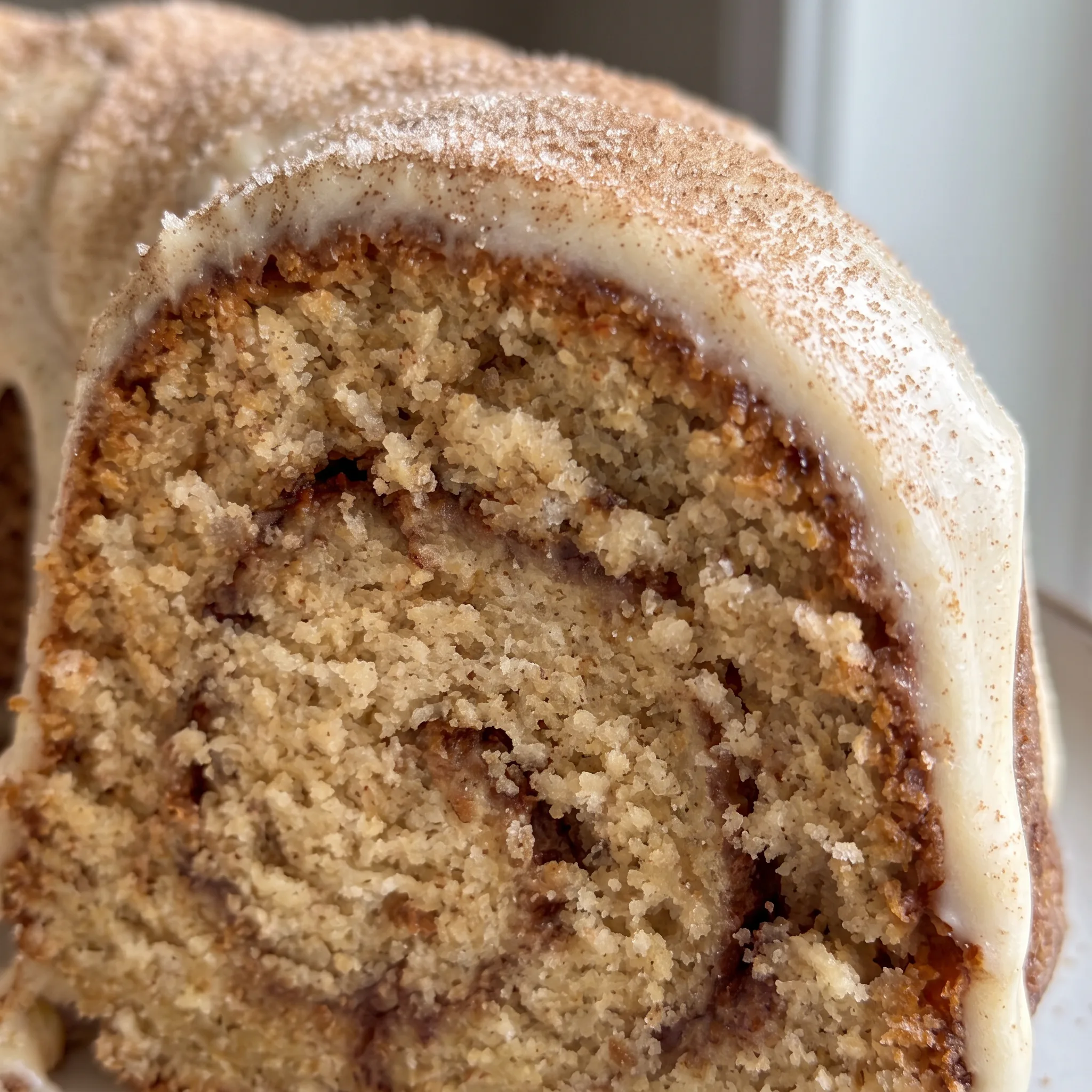
You drop it by spoonfuls over the batter and drag a toothpick through, which leaves streaks of filling suspended in the crumb. The result is a defined cinnamon core you can see in every slice, not a soggy or hollow center. When you cut in, the swirl holds its shape rather than bleeding into the cake.
Glaze and Sugar Work as a Team
The cream cheese glaze is built thick enough to pipe and hold a zigzag shape. Cream cheese, butter, powdered sugar, and vanilla go in with no added liquid, so it sets to a spreadable but pipeable consistency.
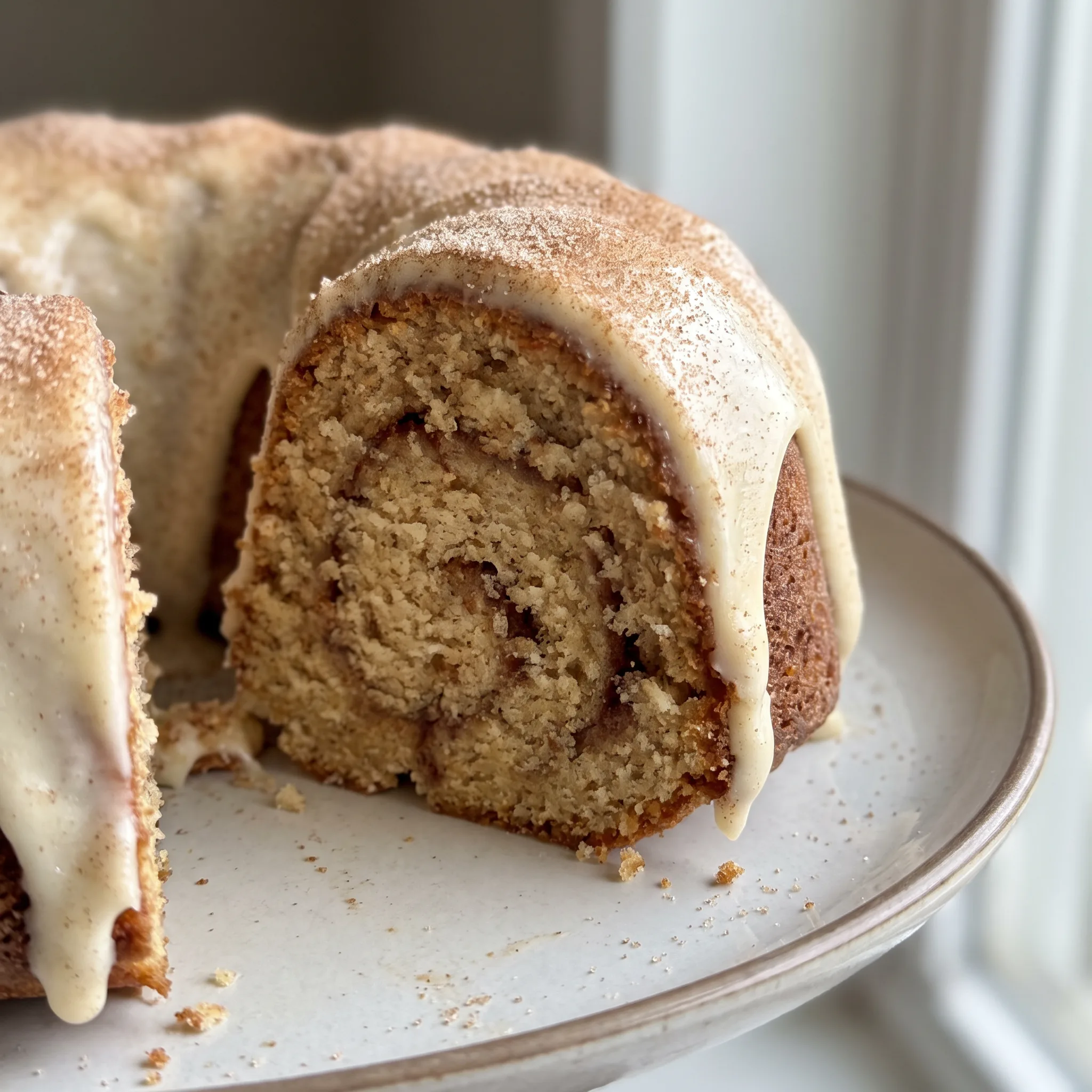
Pipe it in a zigzag pattern, and the ridges and valleys catch the cinnamon sugar. Sprinkle that sugar while the glaze is still wet; it sticks to the surface instead of sliding off.
Once set, the glaze also acts as a moisture barrier that keeps the cake fresh for days. You get a tangy, sweet finish with a crunch of cinnamon sugar on top.
Why a Bundt Pan Is Essential
A Bundt pan’s central tube and fluted walls are not just for looks. The tube allows heat to reach the center, so the cake bakes evenly despite its thickness and the heavy cinnamon swirl inside. The fluted design creates more surface area for the glaze and cinnamon sugar to cling to.
The pan’s shape supports the weight of the swirl and prevents the cake from collapsing. That’s why this recipe specifies a Bundt pan rather than a standard round or loaf pan. The result is a dense, moist cake with a defined cinnamon core and a generous coating of glaze and sugar.
The Rest That Makes the Release Clean
After baking, the cake needs a 15-minute rest in the pan. During that time, it continues to cook gently from residual heat, setting the center. The crumb firms up just enough so the cake can be inverted without breaking.
Turn it out too soon and it may crack or stick; leave it too long and it can steam and become soggy. This rest is separate from cooling completely on a rack. When you do invert it, the cake releases cleanly, holding its shape and ready for glaze.
Four Ingredients That Decide How This Cake Turns Out
Buttermilk: The 1 cup of buttermilk brings the tang and tender crumb, so use real cultured buttermilk, not a thin DIY substitute.
Brown sugar: Pack the 1/2 cup of brown sugar firmly, because loose sugar leaves the swirl grainy and less defined.
Cream cheese: The 8 oz of cream cheese must be fully softened, or the glaze will stay lumpy no matter how long you mix.
Sanding sugar: For the 1/3 cup sugar mixture, sanding sugar gives a bigger, crunchier top than granulated without dissolving into the glaze.
A cinnamon swirl made only from sugar, cinnamon, and melted butter stays fluid and heavy, so it sinks through the cake batter before the structure sets. Adding flour to the swirl mixture absorbs liquid and turns it into a thick paste that stays suspended in the batter. This is why the swirl remains a distinct ribbon instead of pooling at the bottom.
Reading the Cake at Three Points Where It Can Go Wrong
The batter’s thickness before it goes in the pan
After beating the cake mix with the eggs, oil, buttermilk, and vanilla, the batter should be thick and completely uniform. If it’s still lumpy, keep mixing. If it’s thin and pourable like pancake batter, something’s off: maybe the buttermilk was too much or the mix wasn’t measured right.
A thick batter holds the swirl in place. Thin batter lets the cinnamon mixture sink.
Fix thin batter by beating in a tablespoon or two of extra cake mix if you have it, or just accept a softer swirl. This is your last chance to adjust before the pan.
How the swirl mixture feels when you drop it in
The cinnamon swirl should be a thick, uniform paste, not a loose slurry. When you drop it by spoonfuls, it should hold its shape on the batter.
If it’s runny, add a tablespoon more flour. If it’s crumbly, add a teaspoon more melted butter.
The goal is a paste that drags through the batter without dissolving. Too thin and it bleeds into the cake, leaving no distinct ribbon.
Too thick and it won’t swirl. You want it to feel like soft cookie dough.
When the toothpick tells you to pull it
At 40 minutes, start checking. Insert a toothpick in the center.
You’re looking for a few moist crumbs, not wet batter. If it comes out clean, the cake is likely overbaked and will be dry. If it’s still wet, give it 2 to 3 more minutes and check again.
The total bake time is 40 to 45 minutes, so the window is narrow. The cake will also pull away from the pan sides slightly when done.
Trust the toothpick over the clock.
The glaze consistency before you pipe
The cream cheese glaze should be thick enough to hold a zigzag shape but still spreadable. After beating the cream cheese and butter, add the powdered sugar and vanilla. If the glaze is too thick to pipe, it will tear the cake.
If it’s too thin, it will run off. Add a tablespoon of milk if thick, or a tablespoon more powdered sugar if thin.
Stop mixing once it’s smooth; overbeating adds air and makes it grainy. You want it to ribbon off the beater.
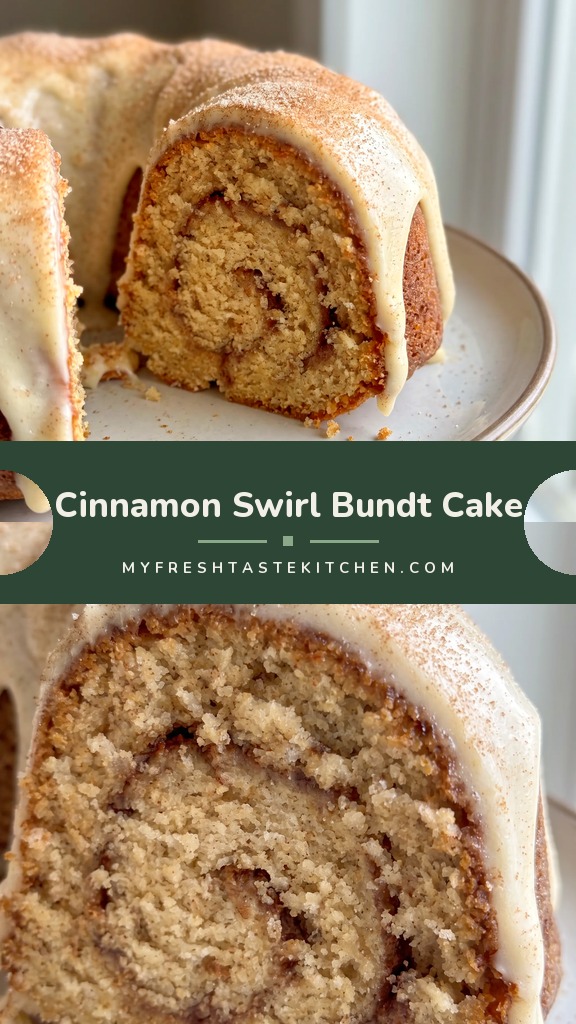
Snickerdoodle Bundt Cake with Cinnamon Swirl
Ingredients
Method
- Set the oven to 350°F (175°C) to preheat.
- In a large bowl, whisk together the vanilla cake mix, eggs, vegetable oil, buttermilk, and vanilla extract. Use a hand or stand mixer to beat until the batter is thick and completely uniform. Leave aside.
- In a small bowl, mix the brown sugar, all-purpose flour, cinnamon, and melted butter until the mixture is uniform.
- Coat a Bundt pan generously with nonstick cooking spray. Add half of the cake batter to the pan. Drop half of the cinnamon swirl mixture by spoonfuls onto the batter. Drag a toothpick or skewer through the batter to create swirls. Add the rest of the cake batter on top, then the remaining cinnamon swirl mixture, and swirl once more.
- Bake for 40–45 minutes, until a toothpick inserted in the center comes out with just a few crumbs and no wet batter. Take out of the oven and allow the cake to cool in the pan for at least 15 minutes.
- After 15 minutes, turn the cake out onto a serving plate and let it cool fully.
- In a bowl, use a hand mixer to beat the softened cream cheese and softened butter until smooth. Add the vanilla extract and powdered sugar, and keep mixing until the frosting reaches a spreadable consistency. If it is too thick, stir in a tablespoon of milk or microwave for 20 seconds.
- Put the cream cheese glaze into a piping bag or zipper bag, and snip a small triangle from the corner. Pipe in a zigzag pattern over the cake.
- While the glaze is still wet, combine the cinnamon and sugar in a small bowl and stir until evenly mixed. Sprinkle as much as you like over the cake. Serve, or keep in the refrigerator for up to 4 days.
Storage, Serving, and the Four-Day Window
This cake is at its best the day it’s made, once the glaze has set enough to hold its zigzag but the sugar still crunches. Eat it within a few hours of finishing for that contrast.
After that, refrigerate it covered for up to 4 days. Chilling firms the cream cheese glaze and sets the cinnamon sugar so it stays put instead of sliding, and the crumb stays moist but gets denser and slightly heavier as the days pass. For the best texture, pull slices out about 20 minutes before serving and let them come to room temperature; cold cake reads as tight and muted, and the glaze softens back to spreadable.
Sprinkle any fresh cinnamon sugar just before serving, not before storing, or it absorbs moisture and loses its crunch. Freeze only unglazed cake, well wrapped, for up to 2 months.
The glaze and sugar topping don’t survive freezing.
Tips
- When you drag the toothpick through, keep it shallow, staying in the top inch of batter and moving in a loose zigzag rather than a spiral. A deep stir pulls the paste down into the batter and folds it through the whole crumb, so it disappears instead of reading as ribbons in the slice.
- Drop the swirl paste in small spoonfuls spaced across the batter, then swirl once. If you dollop it in one thick band and stir, the paste clumps in the center and the outer slices come out plain; spaced dollops spread the cinnamon through every wedge as the batter rises around them.
Buttermilk, Oil, and Cake Mix Are the Three Levers You Can Pull
25 oz box of white or yellow cake mix works, but read the box. A mix that already includes pudding or lists a smaller volume of liquid on its own directions will change how thick the batter ends up.
25 oz and calls for water, oil, and eggs, use it as written here. The batter should still beat up thick and scoopable, not pourable.
A pudding-style mix can make the crumb tighter and a little gummy around the cinnamon ribbons. 25 oz box, the extra ounce of dry mix will thicken the batter slightly; add a splash of buttermilk a tablespoon at a time until it looks like the recipe’s thick, uniform batter.
Buttermilk: Use the same 1 cup of plain kefir, or 1 cup of whole milk with 1 tablespoon of lemon juice or white vinegar stirred in and left to sit 10 minutes. For a dairy-free version, 1 cup of unsweetened oat milk with the same 1 tablespoon of acid works, but expect a slightly less tangy cake.
Real cultured buttermilk gives the tender crumb and the slight tang that balances the cinnamon and cream cheese. Kefir lands close. The milk-and-acid version is thinner and less cultured, so the cake tastes a touch sweeter and the crumb is a hair softer.
Oat milk brings a faint oat flavor that reads through the vanilla, and the cake browns a little faster.
Vegetable oil: Melted coconut oil or a neutral oil like canola or grapeseed can go in at the same 1/2 cup. If you want to use melted butter, use 1/2 cup (1 stick) and let it cool slightly before it hits the eggs. Any neutral oil keeps the cake moist and lets the cinnamon swirl be the loudest flavor.
Coconut oil adds a faint coconut note that can pull against the snickerdoodle profile. Melted butter gives you more flavor but the cake firms up more as it cools, so it eats denser on day two. Don’t cut the oil to less than 1/2 cup to lighten the cake; the crumb turns dry and the Bundt can stick.
All-purpose flour in the cinnamon swirl: For a gluten-free cake, swap the boxed mix for a gluten-free vanilla cake mix and use 1/3 cup of a gluten-free all-purpose blend in the swirl. Start with the same 1/3 cup the recipe uses, then adjust by feel. The swirl relies on flour to thicken the brown sugar and butter into a paste that holds its shape.
A gluten-free blend often needs a little more liquid, so if the mixture looks crumbly rather than like soft cookie dough, add melted butter a teaspoon at a time. The baked cake will be more fragile at the swirl line, so let it rest the full 15 minutes in the pan before turning it out.
Frequently Asked Questions
Can I make this snickerdoodle Bundt cake ahead of time?
Bake it a day early and glaze it the day you plan to serve. The cake itself holds well covered in the fridge, and the crumb actually firms up overnight, which makes the swirl lines cleaner when you slice. Hold off on the cream cheese glaze and the cinnamon sugar until serving day, since the sugar pulls moisture from the glaze and loses its crunch within hours.
If you want to work even further ahead, freeze the unglazed cake, wrap it well, and thaw it before glazing.
Why did my cinnamon swirl sink to the bottom?
Most likely the swirl mixture was too loose. Brown sugar, flour, cinnamon, and melted butter should come together into a thick paste that holds a spoon impression, not a syrup that slides off the spoon. The other check is the batter underneath: if it poured like pancake batter rather than scooping thick, it couldn’t hold the swirl up and the filling drifted down during the bake.
A runny swirl usually means too much butter or underpacked brown sugar, so pack it firmly and add flour a spoonful at a time until the mixture feels like soft cookie dough.
How do I know when the cake is done without overbaking it?
Go by the toothpick, not the clock. At 40 minutes, insert one into the center: you want a few moist crumbs clinging to it and no wet batter, and the cake should have pulled away from the pan walls slightly. If it comes out clean with nothing on it, you’ve gone past the mark and the crumb will be dry.
If it’s still wet, give it another two or three minutes and check again; the window is narrow, so stay close.
How is this different from a classic snickerdoodle cookie?
Same cinnamon-sugar profile, completely different build. A cookie gets its tang from cream of tartar and its chew from a short, hot bake, while this cake leans on buttermilk for the tang and a long Bundt bake for a dense, moist crumb. The cinnamon here isn’t just a coating: it’s a brown sugar and butter paste swirled through the batter in ribbons, so you taste it in the middle of the slice, not only on the surface.
The cream cheese glaze and the sugar sprinkle on top finish it with the tang and crunch a cookie gets from its rolling sugar.
