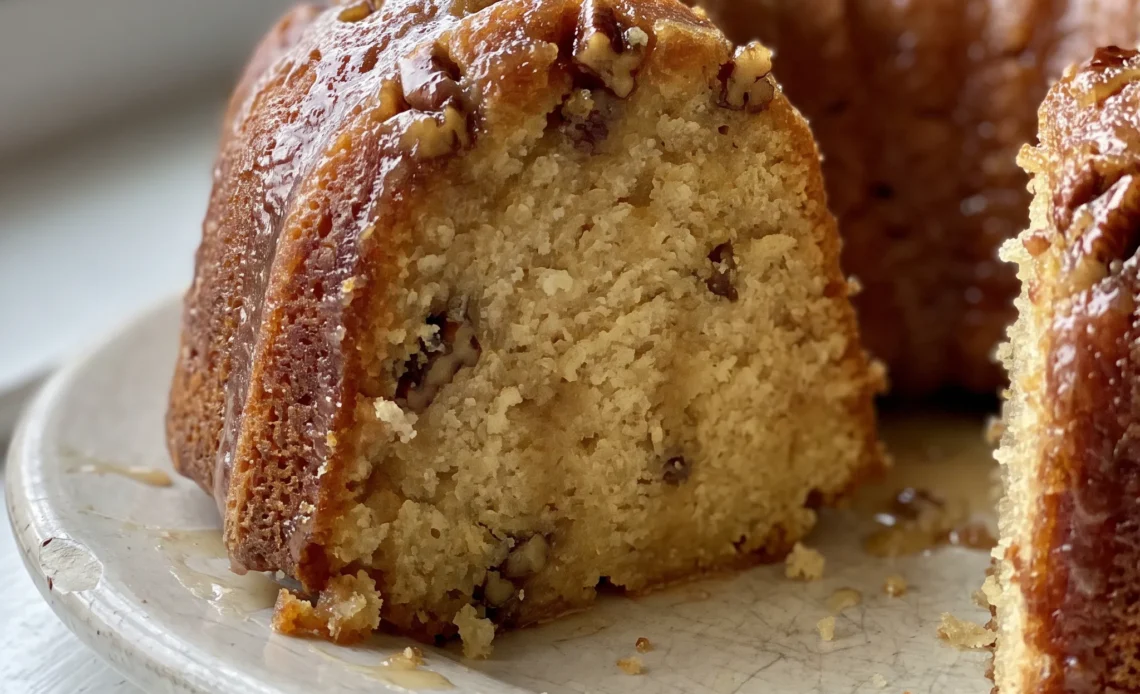
A rum cake that tastes better on day two than the day it’s baked is doing something right, and the long pole in the tent here isn’t the mixing. It’s the soak.
Getting the syrup to travel all the way through the crumb instead of puddling at the bottom takes a warm cake, a sauce thin enough to sink in, and a little patience about how much goes on at once. Rush that part and you get a wet base and a dry top half.
Get it right and this rum soaked bundt cake keeps for days, tasting more like itself each time you cut into it. The other thing? The crumb has to be sturdy enough to drink without collapsing, which is why the batter is built the way it is.
Two Rums, Two Jobs
Rum goes in twice, and it does something different each time. The half cup stirred into the batter bakes inside the crumb; the oven heat drives off most of the alcohol, so what’s left is a warm, faintly caramel undertone running through every bite.
The third cup in the sauce is whisked in after the pan comes off the heat, so it never cooks. That rum stays sharp and forward, and you taste it the moment the syrup hits your tongue.
Dark rum in the batter is the better pick. Its molasses edge sits deeper in the cake than a clear white rum would, and it holds up against the butter and vanilla instead of disappearing behind them. You won’t smell alcohol coming off the batter as it bakes, just sweetness and a little toasted sugar.
Once the sauce soaks in, the rum moves through the crumb itself, not just the surface. Cut a slice from the middle or the edge and the flavor reads the same. That consistency is what separates a soaked cake from one with a glaze sitting on top.
Pecans Form a Nutty Crust
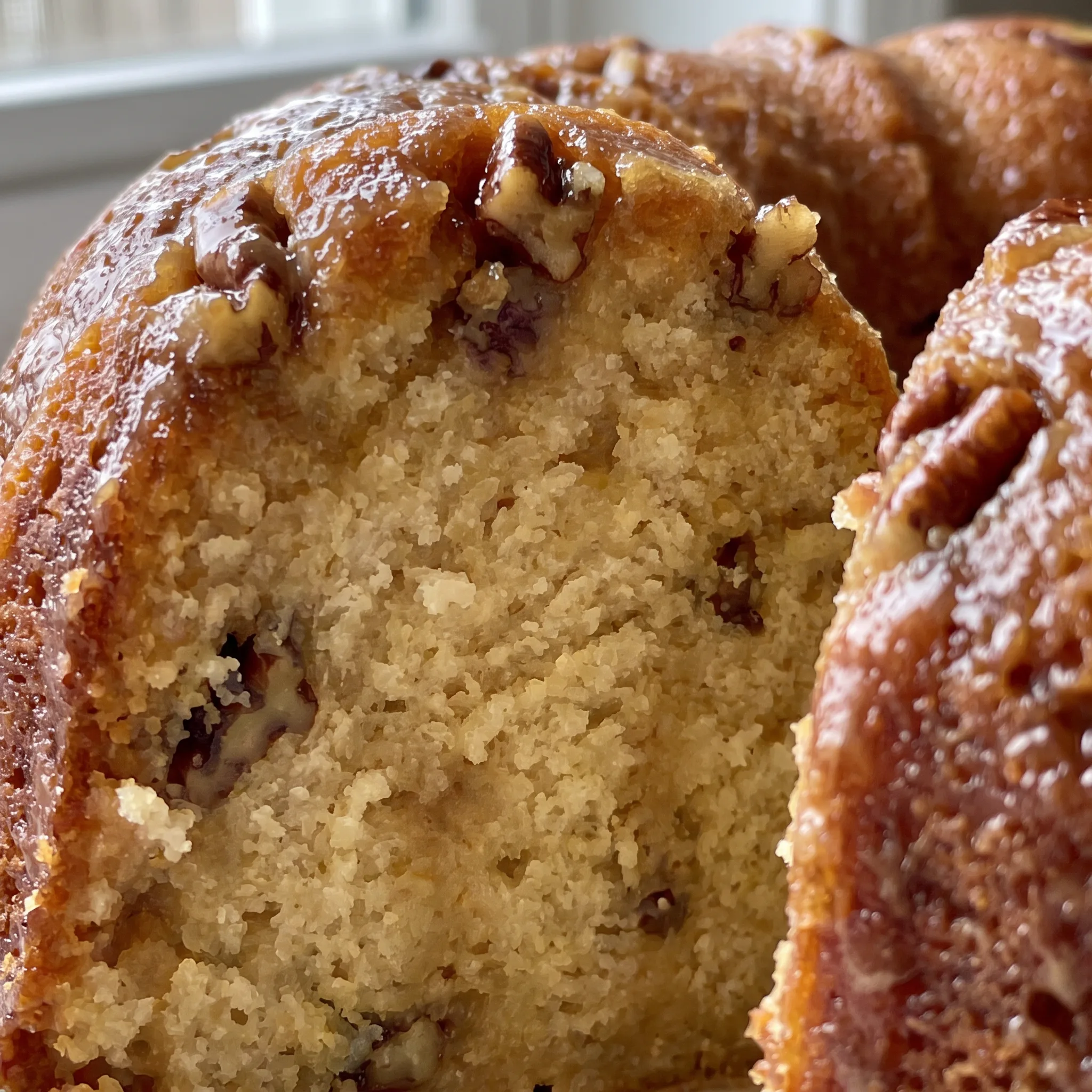
Scatter the pecans across the bottom of the pan and they become the top of the cake once you flip it. That inversion is the whole trick.
The nuts sit against the metal while the batter bakes around them, so they toast a second time in the oven and come out crisp rather than soft. A raw pecan tastes flat and slightly bitter; a few minutes in a hot oven before they go in the pan coaxes out the oils and turns that bitterness sweet and roasted.
They also earn their keep as a physical layer. The nuts keep the batter from touching the pan’s floor, which cuts down on sticking, and they fill the grooves of a decorative pan so the finished cake shows a nubby, golden surface instead of a smooth one.
Leave them out and the cake still works. It just loses the crunch and the visual texture that make a plain butter cake look like something you planned.
The Soak Is the Point
The sauce isn’t a glaze you drizzle and forget. It’s a syrup built to go into the cake. Boiling the butter, sugar, and water together dissolves the sugar into a liquid thin enough to travel; add the rum after the pan leaves the heat and it keeps its punch instead of cooking off.
Poke the cake all over and those holes become channels. The syrup seeps down into the crumb and stays there, so the texture turns damp and close rather than dry and crumbly.
Go in stages. Pour or brush a third to half of the sauce over the cake a little at a time, letting each pass disappear before the next. Flood it all at once and the bottom turns soggy while the top stays dry.
The rest goes in a pitcher at the table. Some people want a whisper of rum, some want a lot, and letting them pour their own means every slice lands where they want it.
Why the Pan Matters
A bundt pan is all curves and crevices, and every one of them has to be coated or the cake tears when it releases. Grease and flour reach into those folds better than a spray alone; a brushed-on pan release does the same job with less mess and no bald spots. Miss a groove and you’ll see it as a stuck patch on the finished cake.
Metal color changes things too. A dark pan absorbs more heat and browns the crust faster, so you may need to pull the cake a few minutes early or drop the oven temperature slightly.
A light pan runs slower, and the same batter can take the full time. Watch the cake, not the clock.
Let it rest in the pan before you invert. The crumb needs those minutes to firm up, and a cake that’s still hot will slump and crack. When the edges have pulled away and the pan feels warm rather than hot, it’s ready to turn out.
What to Buy and How to Prep It
Cake flour: Its fine mill and low protein keep the crumb tender, so grab a box labeled cake flour rather than reaching for all-purpose.
Rum: Dark rum carries molasses depth that stands up to the butter and vanilla, where a clear white rum fades into the background.
Pecans: Buy halves or pieces and chop them yourself so you control the size, since pre-chopped bags often hide stale, bitter nuts.
Buttermilk: Let it sit out until it loses its chill, because cold buttermilk can seize the softened butter and leave the batter looking curdled.
Butter: Softened means it dents under a finger but still holds its shape, and butter gone greasy or melted won’t cream with the sugar.
The butter rum sauce is a syrup, and the cake is a sponge. Poking holes and pouring all the sauce at once saturates the crumb beyond its capacity to hold, turning the cake into a wet, dense mass. The temptation is to use every drop for maximum flavor, but the cake can only absorb so much before it breaks down.
Where This Cake Can Go Wrong, and How to Catch It
Judging the egg whites: stiff but not dry
Stop whipping when the peaks stand straight and the surface looks glossy, not chalky. Overwhipped whites turn lumpy and won’t fold smoothly into the batter; they’ll leave streaks that deflate the cake.
If they look dry or grainy, they’re past their prime. You can’t fix them, so start over with clean beaters. The 1/4 cup of sugar goes in after the whites are frothy, about 2 minutes, and helps keep them stable.
Folding: when no white streaks remain and the batter still holds air
Fold gently with a rubber spatula, cutting down and lifting up, until you see no white streaks. Stop there. The moment you see uniform color, you’re done.
Keep going and you’ll knock out the air you just whipped in, and the cake bakes flat and tight. If you spot a few streaks after 10 folds, do two more and check again.
The bake: reading doneness before the toothpick
Start checking at 60 minutes. The cake is close when the top springs back to a light touch and the edges have pulled away from the pan by a hair.
A toothpick in the center should come out clean, but if the top still looks wet and jiggly, give it 5 more minutes and check again. Overbaking dries the crumb; underbaking means it collapses when you invert. Your pan’s size and color shift the window, so rely on these signs, not the clock.
The sauce: boiling long enough, then stopping
After the butter, sugar, and water melt together, let it come to a full boil and keep it there for 5 minutes, whisking. The syrup should thicken slightly and look glossy, not watery.
If it boils longer, it turns thick and candy-like and won’t soak in. Pull it off the heat before you add the rum; it will bubble up hard.
Stir the rum in off the heat so it stays sharp.
Soaking: how much sauce the cake will take
Poke holes all over the top and sides, then brush or spoon about a third to half of the sauce over the cake in several passes. Wait for each pass to disappear before adding more.
If the surface pools and stays wet, stop; the cake is saturated. The rest goes in a pitcher for serving.
Over-soaking makes the bottom soggy, while under-soaking leaves it dry. You can always add more at the table.
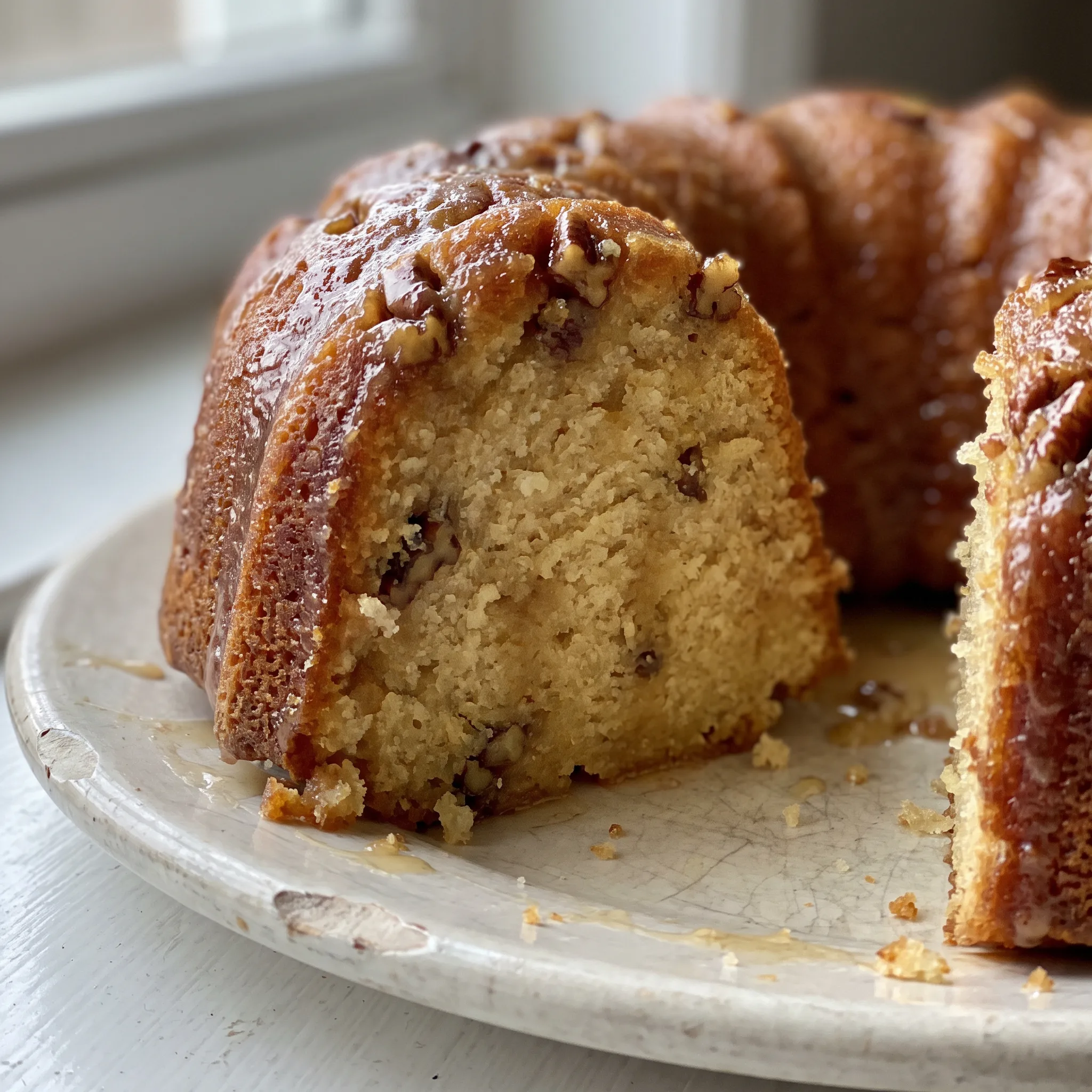
Rum Soaked Bundt Cake with Pecans
Ingredients
Method
- Set the oven to 350°F (175°C) to preheat.
- Distribute the chopped pecans evenly on a cookie sheet in one layer. Toast in the preheated oven for 8–10 minutes, until they turn golden and fragrant. Avoid burning the nuts. Take them out of the oven and lower the oven setting to 325°F (165°C).
- Thoroughly grease a bundt pan and coat with flour, covering all indentations, particularly the center. Or, apply pan release (cake goop) with a brush.
- Combine the cake flour, baking powder, and salt by whisking. Set aside.
- Using the whisk attachment of your mixer, whip the 3 egg whites in a large bowl. After they become frothy (about 2 minutes), incorporate 1/4 cup sugar and keep whipping until stiff peaks form (about 1 more minute). Set aside.
- In a large bowl, beat the butter with the remaining 1 1/2 cups sugar until light and fluffy. Blend in the oil and vanilla extract. Then beat in the 5 egg yolks.
- Sift in approximately 1/3 of the flour mixture. Using the mixer on low speed or a wire whisk, gently incorporate the flour mixture.
- Whisk in the milk. Cease mixing as soon as it is combined.
- Sift in about 1/3 more of the flour. Gently whisk it into the batter. Whisk in the rum.
- Sift in the remaining flour and whisk until the batter is smooth. Stop mixing as soon as everything is combined. Overmixing will lead to a dry cake.
- With a rubber spatula, gently fold the egg whites into the batter until no streaks of egg white remain.
- Scatter the toasted, chopped pecans into the bottom of the prepared bundt pan (if using). Pour the cake batter over top.
- Bake in the preheated oven for about 60–75 minutes, until an inserted toothpick comes out clean and the edges start to pull away from the pan. The bake time will vary depending on the size of your bundt pan and your oven.
- Transfer the pan to a wire rack and cool for at least 15 minutes. Carefully invert the pan to release the cake. If it appears stuck, gently tap on the sides of the pan to help release the cake.
- While the cake cools, prepare the sauce.
- In a medium saucepan over low heat, combine the butter, sugar, and water. Melt everything together while gently stirring.
- Bring to a boil. Boil for 5 minutes while whisking. Remove from the heat and carefully whisk in the rum. It can boil up as you add the rum, so be careful.
- Poke the top and sides of the cake with a toothpick or fork to create small holes.
- Pour or brush the rum sauce over the cake, a little at a time, to create multiple layers. Typically use about 1/3 to 1/2 of the sauce to soak the cake.
- Slice the cake using a sharp, thin knife. Serve with the remaining sauce, allowing each person to pour more sauce over their slice if desired. More sauce will lead to a stronger rum flavor.
What You Can Swap Without Wrecking the Soak
Cake flour: Make your own by measuring 2 1/2 cups all-purpose flour, removing 5 tablespoons, and whisking in 5 tablespoons cornstarch. The crumb comes out a touch less silky and slightly more sturdy, but it still soaks up the rum syrup without falling apart. Whisk the two together well so no cornstarch pockets remain.
Buttermilk: Stir 1 1/2 teaspoons lemon juice or white vinegar into 1/2 cup whole milk and let it sit for 5 to 10 minutes until it looks slightly thickened. The acidity still tenderizes the crumb and works with the baking powder. The tang is a little sharper than real buttermilk, but once the rum soaks in you won’t notice it.
Dark rum: Use the same amount of light or white rum, or if you want less alcohol, replace the rum in the sauce with 1/3 cup water plus 1 teaspoon rum extract. Light rum gives a cleaner, more neutral booze note that fades faster against the butter and vanilla. Rum extract in the sauce keeps the flavor but loses the sharp edge the real spirit brings.
Start with the same amount the recipe uses and adjust after tasting.
Butter, eggs, and oil: Leave these as written. There isn’t a swap that keeps the crumb and richness intact. Butter and oil together build the structure and keep the cake moist for days.
Egg yolks add fat and flavor, while whipped whites lift the batter. Replace any of them and the cake turns dry, dense, or won’t hold up to the soak.
Tips
- Measure your bundt pan’s capacity by filling it with water a cup at a time, then note the number. This batter makes about 8 to 9 cups, so a 10-cup pan takes it with room to rise while a 12-cup pan leaves the cake shallower and baking through several minutes sooner. If your pan holds less than 10 cups, fill it no more than three-quarters full, bake the excess in a small greased pan, and start checking the bundt at 55 minutes rather than 60.
Storage, Serving, and Timing the Soak
The sauce goes on while the cake is still warm, within about 30 minutes of inverting it. Warm crumb drinks the syrup; a cooled cake leaves it sitting on the surface. Serve the first slice once the cake has rested 15 minutes and the sauce has had a half hour to settle, but the best window is 24 to 48 hours out.
That’s when the rum has traveled evenly through the crumb and the texture turns damp and close. Wrap it tight at room temperature for up to four days.
Past that, refrigerate it, where it holds another week, though cold firms the crumb and mutes the rum, so bring slices to room temperature for an hour first. Freeze only the unsoaked cake, double wrapped, for two months; the sauce separates and weeps on thaw, so make it fresh and pour it over the warmed cake. Offer the reserved sauce at the table.
Frequently Asked Questions
Can I make rum cake ahead of time?
Yes, and it’s better that way. The cake peaks 24 to 48 hours after the sauce goes on, once the rum has spread evenly through the crumb and the texture has gone damp and close.
Wrap it tight and leave it at room temperature; the flavor deepens instead of fading. Make it a day or two before you need it, then slice and serve.
Why did my bundt cake stick to the pan?
A missed groove is the usual culprit. Those curves and crevices have to be coated all the way into the folds, and grease and flour or a brushed-on pan release reach them better than a spray alone.
Check the pan before the batter goes in: any spot that looks bare will grab the crust and tear it on the flip. The cake also needs its rest in the pan so the crumb firms up; turn it out while it’s still hot and it slumps and cracks.
How do I keep the cake from being too dry?
Stop mixing the moment the last of the flour disappears into the batter. Every extra stir develops the crumb and bakes up tight and dry, and the batter should look smooth with no dry pockets. The soak covers the rest: poke holes across the top and sides, then brush or spoon the warm sauce over in several passes, waiting for each one to disappear before adding more.
If the surface pools and stays wet, stop, because the cake has taken all it will hold. The reserved sauce at the table lets each person add more to their slice.
