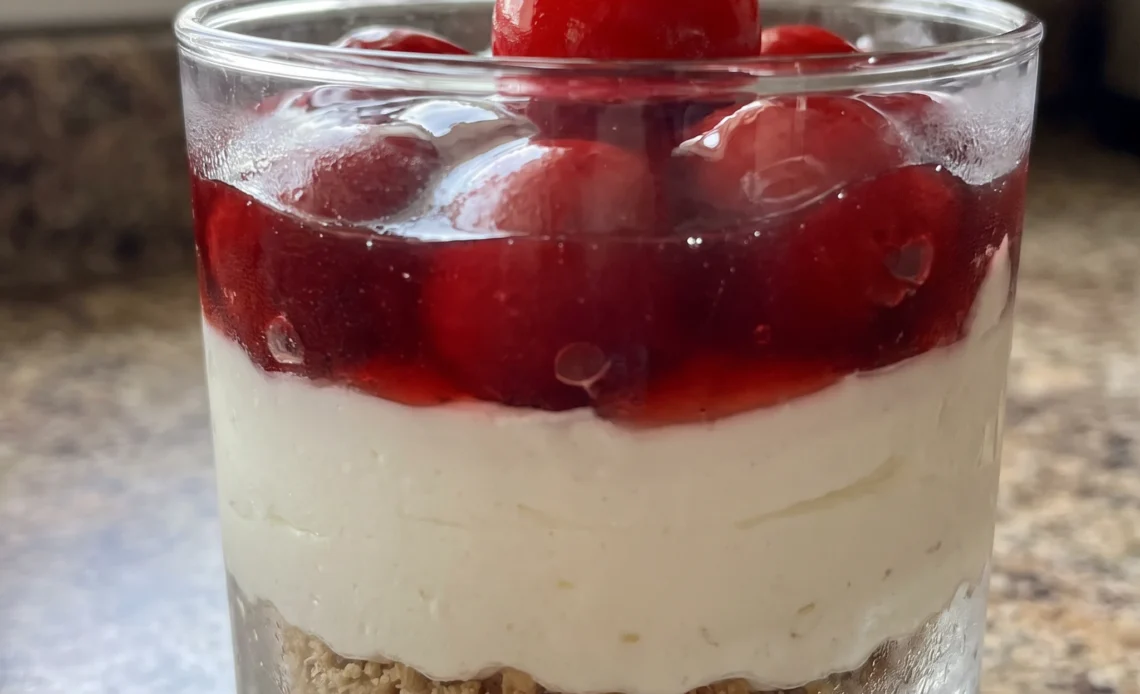
A baked cheesecake eats an afternoon and leaves the oven tied up for hours. These cherry cheesecake parfaits land on the table in a fraction of that, and the assembly is where they can go sideways. The cream base has a narrow window between too loose and broken, and if it slips past pipeable, the cherry filling sinks and the bands blur.
Crumbs that get pressed instead of left loose never soften the way they should. Even the gap you leave at the top of each cup decides whether the fruit sits or runs down the glass. Get those right and you have something you can build a day ahead, cold and neat, cherry stems standing up in every cup.
Get them wrong and you find out at the table.
Get the Cream Cheese Base Smooth Before Whipping
Lumps in the cream cheese won’t disappear once you start whipping. They just get smaller and more annoying.
So before any cream goes in, the cream cheese and sugar need to be beaten until they’re completely smooth. You can tell by rubbing a bit to the touch: if it feels gritty, keep going. The sugar should dissolve completely.
Once that’s done, add the heavy cream gradually, scraping the bowl as you go. Starting on low speed and increasing prevents splashing and helps everything combine evenly.
The goal is a mixture that’s thick, lump-free, and pipes. If you skip this step, you’ll end up with a parfait that’s smooth on top but has little pockets of cream cheese hiding underneath. That’s not what you want when you’re serving guests.
So take the extra minute to get it right. Your parfaits will look and taste better for it.
Measure the Crumbs for the Bottom Layer
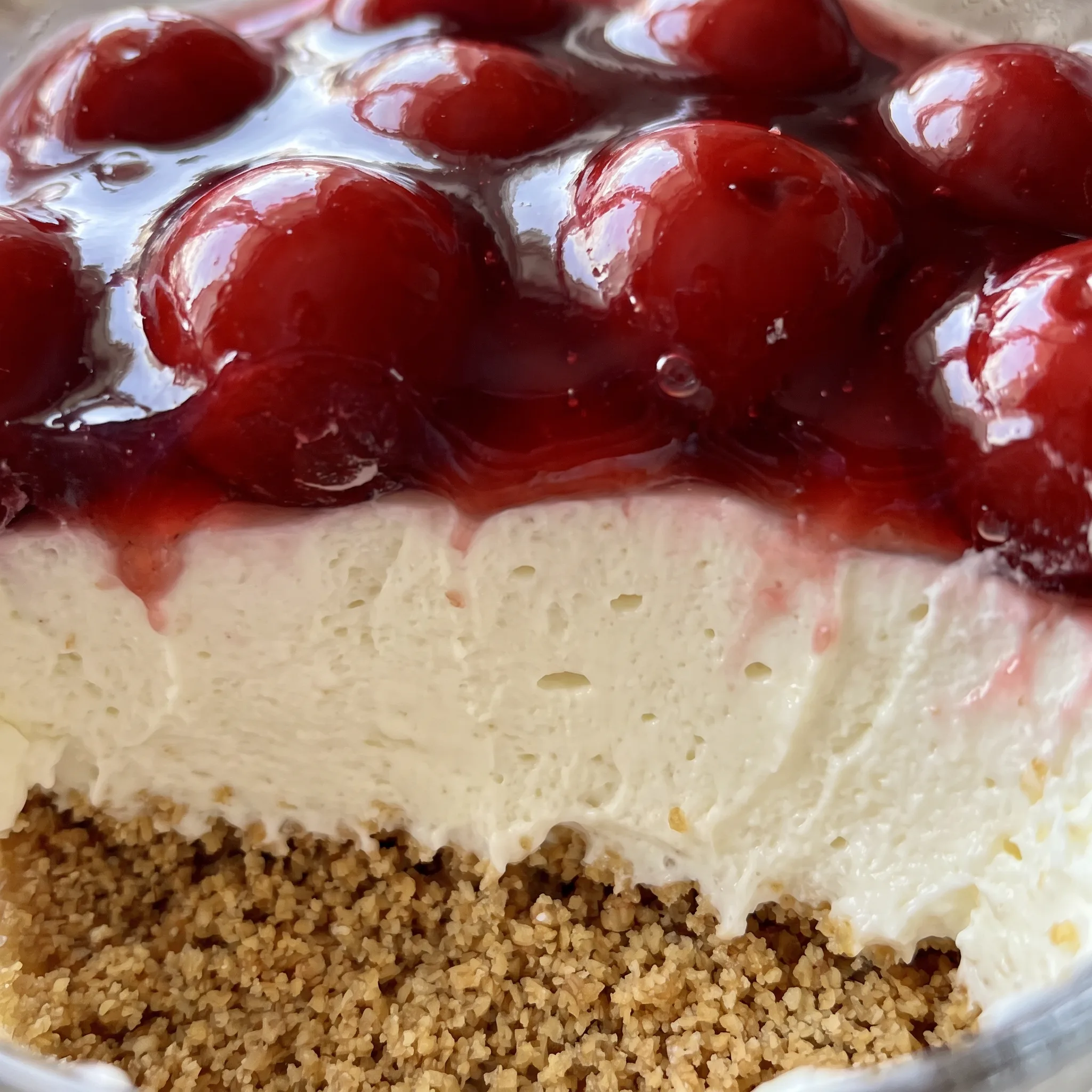
Two full tablespoons of finely ground graham cracker crumbs per cup is the right amount. Not a scatter, not a thick blanket. This layer sits at the bottom and does two jobs: it gives a bit of texture and it soaks up moisture from the cream and cherries.
Because the crumbs are loose, not pressed, they stay light and don’t turn into a brick. If you use too many, the parfait eats dry; too few, and the bottom feels hollow.
So measure each one. A small individual pack of graham crackers yields about the right amount for all 12 cups.
Pulse them until they’re fine, like sand. You don’t want big chunks that won’t soften. Once they’re in the cups, don’t pack them down.
Just level them gently. That way, when you dig in later, you get a little crumb with every spoonful. It’s a small detail, but it makes a difference.
Layer for Contrast in Every Spoonful
The order and amounts you layer aren’t random. You want each bite to have a bit of cream, a bit of cherry, and a bit of crumb.
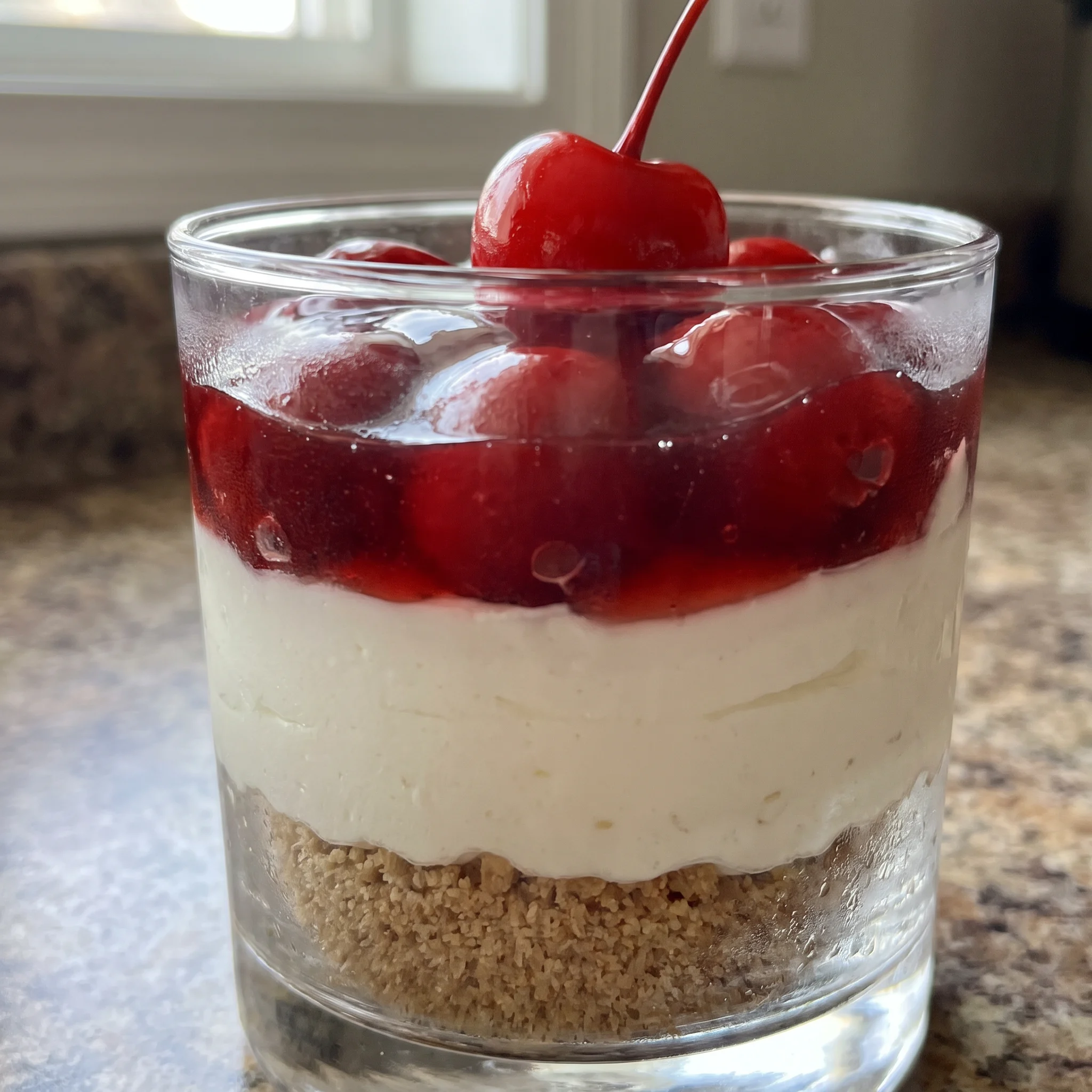
So pipe the cream mixture to about three-quarters full, leaving room for the cherry pie filling to come up to the rim. Spoon the filling over the cream; don’t stir it in. That way you get distinct bands of white and red.
The cherry on top, with its stem, is a nice touch: it tells you what’s inside and gives a fresh burst of fruit. When you push your spoon down, you should hit all the layers.
If the cream goes all the way to the top, the cherry filling will overflow when you add it. And if you mix the cherries into the cream, you lose that contrast.
So take a minute to layer carefully. The result is a parfait that looks as good as it tastes.
Chill for Set Layers and a Softer Crumb
An hour in the fridge does more than make these cold. It gives the cream time to firm up so the layers hold their shape when you serve them. The graham cracker crumbs also soften just a little, soaking up some moisture from the cream and cherries.
That’s what makes the bottom layer taste like a crust instead of dry dust. You can make these up to a day ahead, which is handy when you’re feeding a crowd.
Just keep them covered in the fridge. After a day, the crumbs might get too soft, so don’t push it beyond that. When you’re ready to serve, the parfaits should look neat, with the cherry sitting pretty on top.
The first spoonful will show you if the chill was long enough: the cream should hold its shape, not slump. If it slumps, give it more time.
What to Buy and Prep Before These Go in the Cups
Cream cheese: Buy full-fat blocks, not spreadable tub cream cheese, which is whipped with air and gums and won’t firm up the same way.
Heavy whipping cream: Check the label for 40% or at least 36% butterfat, since cartons labeled simply whipping cream sit lower and whip thin.
Graham crackers: One small individual pack of 6 pieces is exactly what 12 cups need, so a full sleeve leaves you with extra crumbs.
Cherry pie filling: The canned kind is thick and glossy with whole fruit, while homemade or runny fillings slide down through the cream instead of sitting on top.
Canned cherries with stems: Look for whole stemmed cherries packed in syrup, because the stems give everyone a handle and tell them what’s underneath.
Reading the Cream, the Crumbs, and the Cherry Layer as You Build These
Judging when the cream cheese has actually gone smooth
Cream cheese straight from the fridge stays in cold lumps no matter how long the mixer runs. Press a bit against the roof of your mouth.
Grit means undissolved sugar or a cold pocket; either one will show up later as a lump in the piped cream. Room-soft cheese and 1/4 cup of sugar beat smooth in a couple of minutes. If it still feels grainy after that, the cheese was too cold to start with.
Knowing when the whipped base is thick enough to pipe
The mixture goes from loose to pipeable fast, roughly a minute on high. Watch the beaters: the cream should leave a trail that holds its shape for a second before it sinks, and the bowl should feel heavy when you tilt it. Under-beaten, it slumps in the cup and the cherry filling bleeds down through it.
Over-beaten, it looks curdled and separates. Stop the second it holds a soft peak.
Judging the crumb layer by feel, not by eye
Two full tablespoons per cup looks like more than it is once it settles. Run a finger across the surface: it should feel like a loose, even bed of sand, not a packed crust and not a thin dusting.
Crumbs that are pressed down won’t soak up anything from the cream above, so the bottom stays dry and hard. Ground too coarse, they stay crunchy no matter how long the cups chill.
Reading the fill line before the cherries go on
The cream stops at about three-quarters full, and that gap is the whole game. Too high and the cherry filling has nowhere to sit; it domes over the rim and runs down the outside of the cup.
Too low and the parfait looks skimpy above the fruit. Hold the bag steady and pipe to the same line in every cup so all 12 read the same from the side. Then spoon the filling to the rim without stirring it down into the white.
Telling whether the hour of chilling did its job
Chill time is a texture test, not a clock. Press the side of a cup after an hour: the cream should feel set and resist slightly, and a spoon pulled through should leave a clean edge rather than a wet slump.
If the cream still slides, the layers will blur together when you dig in and the crumbs won’t have drawn any moisture. Give it more time in the fridge, not less.
No-Bake Cherry Cheesecake Parfaits
Ingredients
Method
- Pulse graham crackers in a food processor until finely ground; reserve crumbs.
- With softened cream cheese and sugar in a bowl, beat on high speed until smooth and no sugar granules remain.
- Pour in heavy cream while scraping down the bowl; blend until fully combined. Begin on low speed and steadily increase.
- Continue beating until the mixture is thick and lump-free, roughly 1 minute, scraping the bowl at least once.
- Place 2 full tbsp of the crushed graham cracker crumbs into each cup as the bottom layer.
- Transfer the cream mixture into a 16-inch pastry bag and pipe it into each cup until about 3/4 full.
- Spoon cherry pie filling over each cup until it reaches the rim.
- Place one canned cherry with stem on top of each parfait.
- Chill for at least 1 hour prior to serving; may be prepared up to 1 day in advance.
Where Swapping Helps and Where It Breaks the Layers
Graham crackers: Use the same 6-piece count of digestive biscuits, speculoos, or shortbread, pulsed to the same fine sand texture. Digestives bring a coarser crumb and a malty, slightly salty edge that plays well against the cherries.
Speculoos taste like gingerbread and will pull the whole parfait toward spice. Shortbread is richer and sweeter, so the bottom layer reads more like a cookie crust than a graham one. Gluten-free graham-style crackers work the same way; check that they grind fine, since some brands stay pebbly and won’t soften overnight.
Cream cheese: For a dairy-free version, use the same 8 ounces of a firm, block-style vegan cream cheese, not a spreadable tub. The block kind has enough body to hold the piped layers after chilling.
Tub-style vegan spreads are whipped with water and gums, so the cream base stays loose and the cherry filling sinks through it. Expect a slight coconut or cultured tang depending on the brand; taste the base before piping and adjust the sugar if it reads too sharp.
Heavy whipping cream: Keep the 2 cups of 40% cream. Do not replace it with whipped topping or a lower-fat cream. Whipped topping is already aerated and stabilized with a different set of ingredients.
When you beat it with the cream cheese and sugar, it won’t thicken into a pipeable base; it stays soft and the layers won’t hold their shape after the hour of chilling. Lower-fat cream whips thin for the same reason.
If you want less richness, cut the portion size rather than the cream.
Cherry pie filling: Substitute the same 21-ounce can of blueberry, apple, or mixed-berry pie filling, or a thick homemade fruit compote cooked down until it coats a spoon. The canned fillings are already thickened and glossy, so they sit on top of the cream instead of bleeding into it. A runny homemade compote will slide down through the white layers and blur the bands.
If you use homemade, cook it until a spoon dragged through leaves a clear trail, then cool it completely before spooning it over the cream.
Tips
- Before you load the pastry bag, lift a spoonful of the cream mixture and turn the spoon over. If the cream clings and holds a soft mound instead of sliding off in a sheet, it will hold the pipe line in the cup. If it runs off, keep beating in 15-second bursts, since a base that pours rather than mounds will spread flat under the weight of the 21 ounces of cherry pie filling and the red will sink into the white.
- If the cream base feels stiff or stiffens further while you fill 12 cups, add heavy cream a tablespoon at a time rather than beating longer. The base thickens as it sits, and over-beating past the pipeable stage makes it grainy, which shows against the dark cherry filling. A tablespoon of cream loosens it back to a smooth pipe without breaking the emulsion.
Storing and Serving the Parfaits
These parfaits are at their best within the first hour after the initial 60-minute chill. That’s your serving window: the cream is cold and set, the crumbs have softened just enough to taste like crust, and the cherry filling sits cleanly on top. After that, the crumbs keep drinking moisture from the cream and cherries, turning slack and pasty by the next day.
So if you’re making them ahead, assemble no more than 24 hours before serving, cover each cup tightly with plastic wrap, and refrigerate. The cherry on top goes on right before serving, not earlier, or it bleeds and looks tired. Don’t freeze assembled parfaits; the cream separates and weeps when thawed.
If you have leftovers, they’ll hold another day in the fridge, but the texture won’t be as sharp. Eat them cold, straight from the refrigerator, and don’t let them sit out at room temperature for more than 20 minutes before serving.
The most common mistake is adding the heavy cream before the cream cheese and sugar are completely smooth. Cold or insufficiently softened cream cheese, along with undissolved sugar, forms tiny solid pockets; once the cream is introduced, these pockets become diluted and are much harder to break down, leaving persistent lumps. This happens because the fat in the cream coats the lumps and prevents them from dissolving, even with prolonged beating.
Frequently Asked Questions
Can I make these cherry cheesecake parfaits ahead of time?
Assemble them no more than 24 hours before serving, cover each cup tightly with plastic wrap, and refrigerate. The cream needs the initial 60-minute chill to set, and the graham cracker crumbs will soften just enough to taste like crust. After a full day, though, those crumbs keep drinking moisture and turn slack, so the texture won’t be as sharp.
The stemmed cherry on top goes on right before serving, not earlier, or it bleeds and looks tired.
Why did my cheesecake parfait turn out lumpy?
Cold cream cheese is the usual culprit. It stays in cold lumps no matter how long the mixer runs, and those lumps survive into the piped cream. Let the blocks sit out until they press flat under a finger, then beat the cheese and sugar alone until a bit rubbed to the touch feels smooth, not gritty.
If the base still looks broken after the cream goes in, it was over-beaten, which is a different problem: stop the second the beaters leave a trail that holds for a second.
How do I keep the graham cracker layer from getting soggy?
Don’t pack the crumbs down. Two full tablespoons per cup should sit as a loose, even bed, and if you press them into a crust they can’t soak up anything from the cream above, so the bottom stays dry and hard instead. The cherry pie filling is the other half of the equation: use the canned kind, which is thick and glossy and sits on top of the cream.
A runny homemade compote slides down through the white layers, and that moisture is what turns the crumbs slack before their time.
What’s the difference between this no-bake cheesecake parfait and a classic cheesecake?
A classic cheesecake is baked, usually in a springform pan, and sliced into wedges with a dense, custardy crumb. These are built in individual cups: a loose graham layer on the bottom, a whipped cream cheese base piped to about three-quarters full, and cherry pie filling spooned on top to the rim.
The cream base gets its structure from 40% heavy whipping cream rather than eggs and oven heat, so the texture is lighter and the layers stay distinct. You serve them cold in the cup, and the cherry on top tells you what’s underneath.
