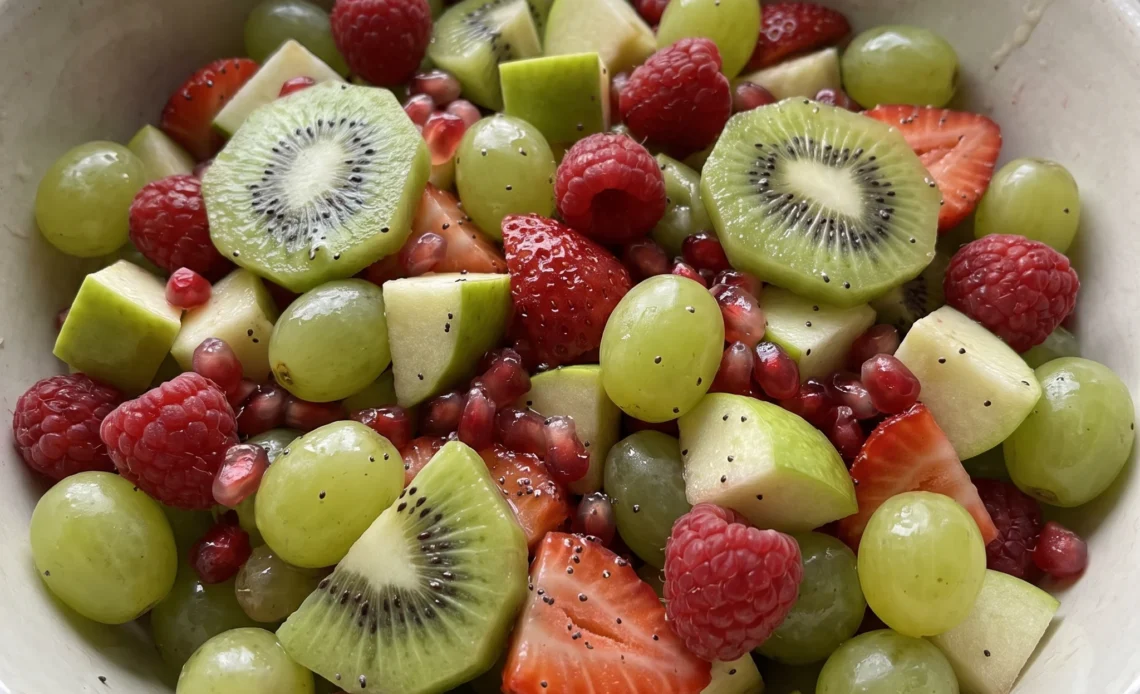
A Christmas fruit salad earns its place at the table by looking like the holiday without asking for a burner, an oven, or a free hand during the last hour of cooking. That part is easy.
The hard part is timing: dressed fruit starts losing its snap the moment it meets the honey and orange juice, and no amount of chilling brings it back. So the bowl you set down looking red and green and white was assembled in the last few minutes before the meal, even if every piece was cut that morning. Get that order right, and a christmas fruit salad tastes as bright as it looks.
Get it wrong, and you’re serving tinted fruit juice with a spoon. The margin for error is smaller than the ingredient list suggests.
Why the Dressing Stays Thin
Honey, orange juice, and poppy seeds, whisked together, nothing else. No oil, no cornstarch, no jam.
A thin dressing like this coats each piece of fruit lightly and then slides off, so what you taste first is the fruit itself. The poppy seeds aren’t there to thicken anything. They’re for the little crunch between your teeth and the specks of black against red and green.
Pour it on right before the bowl goes to the table. If the fruit sits in it, the salt and sugar in the dressing pull water out of the berries and grapes, and you end up with a pool of pink liquid at the bottom. Toss gently, just enough to give everything a shine.
Serve it while the fruit still tastes like fruit, not like syrup.
A Mix of Crisp and Soft
Green grapes and apples bring the crunch. They’re the backbone, tart and firm, and they don’t fall apart when you stir them with everything else. Kiwis add a tangy edge and that bright green that looks almost unnatural against the red.
Raspberries and strawberries go soft and sweet, almost jammy in spots, which is exactly why you want the grapes and apples in there. Pomegranate arils pop when you bite them, little bursts of juice, and they catch the light like ornaments. Each fruit does a different job.
The trick is to keep the soft ones from turning to paste, so you fold rather than stir. When you scoop a spoonful, you should get a little of everything: something crisp, something juicy, something tart, something sweet.
Chill the Parts, Not the Whole
The six hours in the fridge aren’t for the salad as a unit. They’re for the fruit and the dressing separately.
Cold firms up the grapes and apples, makes them snap, and takes the edge off a warm kitchen. The dressing needs that time too, so the honey dissolves completely into the orange juice and the poppy seeds spread evenly instead of clumping.
Keep them in separate bowls, covered. Then, when you’re ready to eat, pour and toss. If you combine them early, the fruit sits in liquid and starts to soften, and by hour three you’ve got a weepy bowl.
I’ve seen that happen at potlucks more than once. So hold off. The payoff is fruit that tastes like it was just cut, even though it’s been waiting since morning.
No Oven Required, Feeds a Crowd
Christmas dinner has enough moving parts. This salad doesn’t need a burner or an oven, so it stays out of the way while you roast, braise, or bake everything else. You can put it together hours ahead, stash the components in the fridge, and assemble at the last minute.
It serves twelve, which means it handles a big table without doubling. The colors do the holiday work on their own: red from the berries and pomegranate, green from the kiwi and grapes, white from the apple flesh.
No food coloring, no marshmallows, no whipped topping. Just fruit that looks like Christmas and tastes clean next to the heavier dishes. Set the bowl down and watch it disappear before the pie even comes out.
What to Look For and How to Prep It
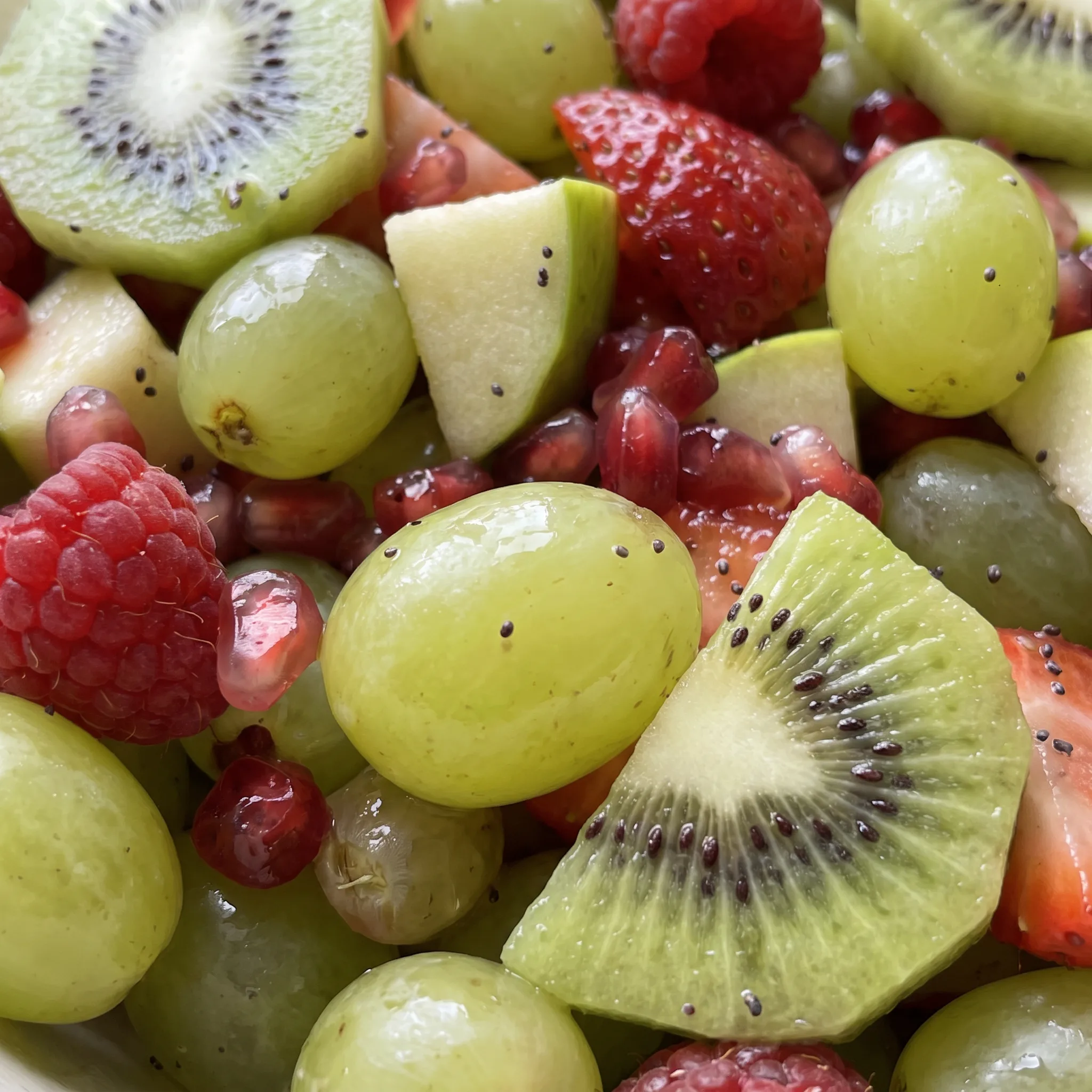
Green grapes: Choose firm, unblemished ones and slice in half lengthwise if large so they don’t roll off the spoon.
Kiwis: Ripe but still firm, so they slice cleanly instead of collapsing into green smears when you fold them in.
Apples: Crisp varieties like Honeycrisp or Granny Smith hold their shape and won’t brown as fast once sliced.
Pomegranate arils: Buy whole and seed it yourself, or pick refrigerated ready-to-eat arils, checking for any that look shriveled.
Judging the Fruit Salad Before It Hits the Table
Knowing When the Fruit Is Cut Small Enough to Stay Intact
Grapes, kiwi slices, apple slices, and strawberries all need to be bite-sized but sturdy. Cut them too thick and they won’t sit on a spoon together; too thin and they collapse under their own weight.
The raspberries and pomegranate arils are already the right size. Aim for pieces that hold their shape when you scoop, but still fit in one bite. If you’re unsure, err on the larger side.
The dressing won’t make them any smaller.
The Point Where Gentle Combining Becomes Crushing
You’re folding, not stirring. Use a wide, shallow bowl and a rubber spatula. Lift from the bottom and turn the fruit over itself, like you’re folding egg whites.
If you hear a wet squish, you’re pressing too hard. Raspberries and strawberries bruise first, and once they do, they bleed juice that turns everything pink. Stop as soon as the colors are mixed.
A few broken berries are fine. A bowl of jam is not.
Tasting the Dressing Before It Touches the Fruit
Whisk the honey, orange juice, and poppy seeds, then dip a spoon in. It should taste bright and just sweet, with a little crunch from the seeds. If the honey hasn’t fully dissolved, you’ll feel a slick, sticky streak on your tongue.
Keep whisking, or let it sit for a minute and whisk again. Too much honey and it coats the fruit like syrup. Too little and the orange juice tastes sour.
Adjust by a teaspoon at a time.
Recognizing When the Fruit Has Been Undercooled or Overcooled
After six hours in the fridge, the fruit should be cold all the way through, but not frozen. Grapes and apples will feel firm and snap when you bite them.
If they’re icy or frosty, they’ve been too close to the back wall. Let them sit on the counter for a few minutes before dressing. If they’re still warm from the kitchen, they’ll water down the dressing.
Cold fruit, cold dressing, then toss.
The Moment the Dressing Goes On and the Toss Stops
Pour the dressing over the fruit and fold just until every piece catches some shine. That’s three or four turns, no more.
The dressing should look like a light glaze, not a pool at the bottom. If you see liquid gathering, you’ve tossed too long or the fruit wasn’t drained well. Stop and serve.
The fruit will keep releasing juice, so any extra tossing now means a soggy bowl later. Serve it right after this.
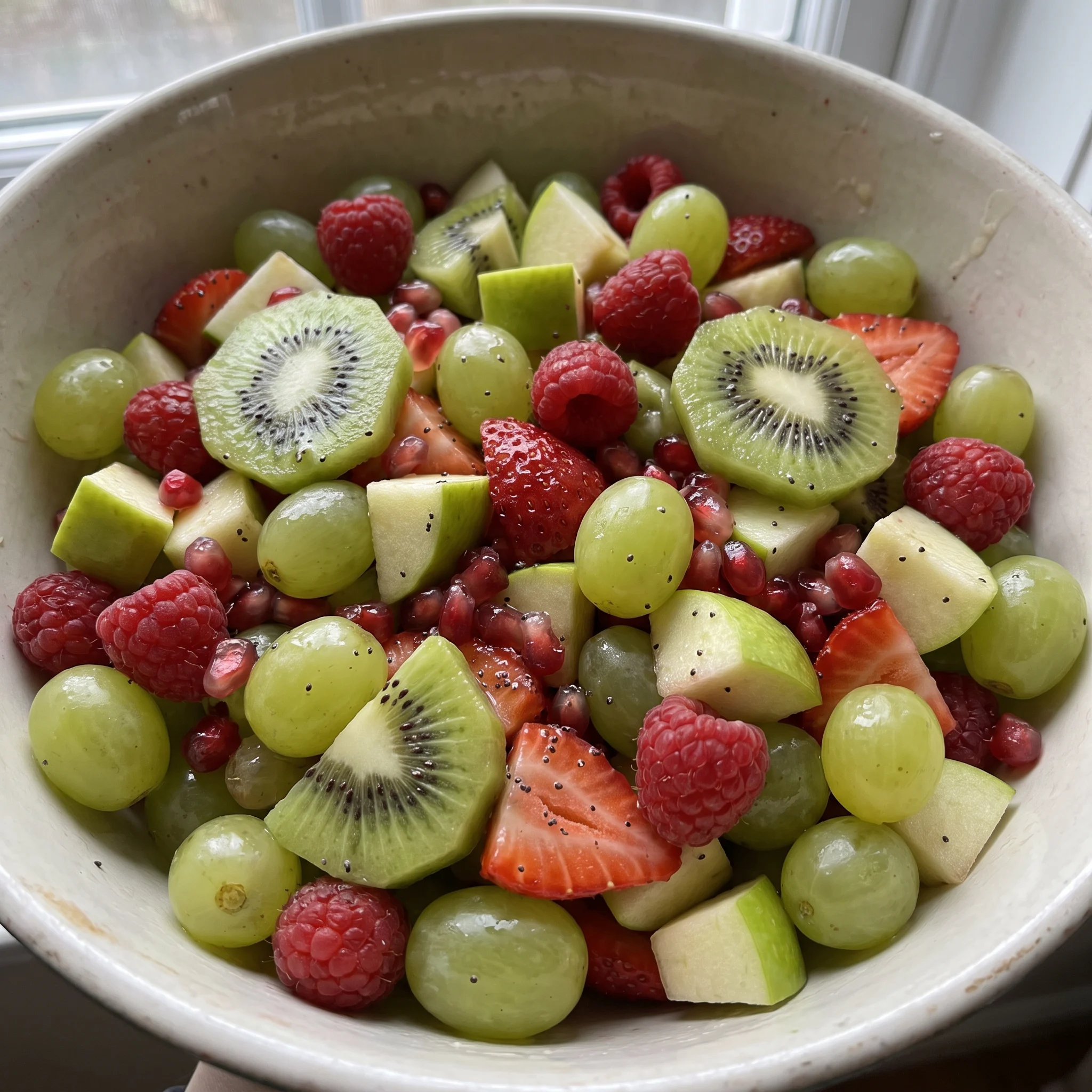
Christmas Fruit Salad with Pomegranate and Kiwi
Ingredients
Method
- In a large bowl, gently combine the green grapes, kiwis, apples, raspberries, strawberries, and pomegranate arils, taking care not to crush the fruit.
- In a small bowl, whisk together the honey, orange juice, and poppy seeds.
- When ready to serve, pour the dressing over the fruit and gently toss to combine.
- If not serving immediately, cover the fruit and dressing separately and refrigerate for up to 6 hours before serving.
When Swapping Fruit, Keep the Crunch and Color in Mind
Raspberries: Blackberries or halved seedless grapes if you need a sturdier berry. Blackberries bring a similar dark color and juicy pop but have a firmer texture, so they hold up better in the bowl and don’t bleed as quickly.
Halved grapes add more crunch and won’t turn soft, but you lose the tartness. If you keep raspberries, use them as is; if swapping, start with the same 2 cups and adjust after tasting.
Strawberries: More raspberries or chopped mango for a different sweetness. Extra raspberries double down on the tart, seedy texture and will make the salad pinker faster. Mango brings a soft, sweet flesh that contrasts with the crisp fruit, but it can turn stringy and will release more juice.
Use the same 2 cups for either swap, then check the balance of sweet and tart.
Pomegranate arils: Dried cranberries or chopped fresh cherries if you don’t want to seed a pomegranate. Dried cranberries give a chewy, tart burst but no juice, so the salad loses that wet pop. They also soak up dressing and can become sticky.
Fresh cherries are softer and sweeter, and they’ll stain the other fruit just as much. If using dried cranberries, start with 1 cup, the same amount as the arils, but you may want less because they’re more concentrated in flavor.
Honey: Maple syrup or agave nectar for a vegan option, or a different floral honey for flavor. Maple syrup is thinner and less sweet, so the dressing will taste more like orange juice and may need a touch more syrup after whisking. Agave is neutral and sweeter, so use slightly less than 2 tablespoons to avoid an overly sweet dressing.
A floral honey like orange blossom will intensify the citrus note, while a dark honey like buckwheat can overpower the fruit. Start with the same 2 tablespoons and adjust after tasting.
After the Toss: The Clock Starts
The bowl is at its best within an hour or two of the dressing going on. That is the whole serving window. Past two hours, the salt and sugar in the dressing have pulled enough water from the berries and grapes that you get a pink pool at the bottom and slack fruit on top.
Eat it, but know what you are eating.
The six hours in the card are for the fruit and dressing held separately, covered, in the fridge. That is your make-ahead. Once they are combined, the countdown is short.
Leftovers only hold if you kept them apart. Store fruit in one container, dressing in another, both covered, up to a day. Apples and berries brown and slump first.
If they were already tossed, they keep a day, no more, and they will be wetter than when they went in. Cold firms the grapes and apples back up, but it cannot undo a soak.
Freezing does not work here. Ice crystals break the berries and apples down.
Tips
- Pat the rinsed grapes, berries, and pomegranate arils dry with a towel before they go in the bowl. Surface water left on the fruit dilutes the thin honey-orange dressing and gives the salt and sugar in it a head start pulling juice out, so the pink pool at the bottom shows up sooner than it otherwise would.
When the dressing meets the fruit, the honey’s sugars create a high-solute environment outside the fruit cells. Water moves from inside the cells toward that concentrated solution, so the fruit softens and releases juice into the bowl. The first signal is a shallow pool of liquid forming at the bottom of the bowl and a slight sheen on the fruit; once the fruit pieces feel limp and the liquid is visible, the texture is already compromised and cannot be reversed.
Frequently Asked Questions
Can I make this Christmas fruit salad ahead of time?
Yes, but only in two parts. Combine the fruit in one bowl, whisk the dressing in a small jar, cover both, and refrigerate up to 6 hours.
The grapes and apples firm up nicely in that time, and the honey dissolves fully into the orange juice so the poppy seeds spread evenly instead of clumping. Pour and fold at the last minute. The salad as a single dressed unit is a different story, and that window is short.
How do I keep the fruit salad from getting watery?
The dressing is the culprit most of the time, not the fruit. Honey and orange juice pull water out of the berries and grapes within a couple of hours, so pour it on right before the bowl goes to the table and don’t toss more than three or four turns. If you’re still seeing a pink pool, check the fruit itself: raspberries and strawberries that sat out at room temperature before going into the bowl will release liquid faster than cold ones.
Dry the grapes and berries on a towel after rinsing, and don’t slice the apples more than a few hours ahead.
What can I use instead of poppy seeds?
Sesame seeds work, though they’re bigger and taste nuttier, so the dressing reads differently. Chia seeds will swell and thicken the dressing into something more like a glaze, which changes how it coats the fruit.
If crunch is what you’re after, leave the seeds out entirely and fold in a tablespoon of finely chopped toasted almonds at the last minute. The dressing still tastes bright either way; you just lose the little black specks against the red and green.
How long does Christmas fruit salad last in the fridge?
Keep the fruit and dressing in separate covered containers and they hold up to a day. Once they’re tossed together, you have about two hours before the salad is at its best, and leftovers past a day get progressively wetter and softer.
Apples and berries go first, browning and slumping before the grapes and kiwi do. Freezing doesn’t work here, since ice crystals break the berries and apples down. If you already tossed the whole thing, eat it within a day and expect more liquid at the bottom than when it went in.
Is this fruit salad the same as a traditional Christmas salad?
No. A lot of Christmas salads lean on marshmallows, whipped topping, or a cooked custard base, and this one has none of that. What’s here is fresh fruit with a thin honey and orange juice dressing, no dairy, no gelatin, no added sugar beyond the honey.
The red and green come from the fruit itself: raspberries, strawberries, pomegranate, kiwi, grapes. It sits next to the heavier dishes on the table rather than competing with them.
