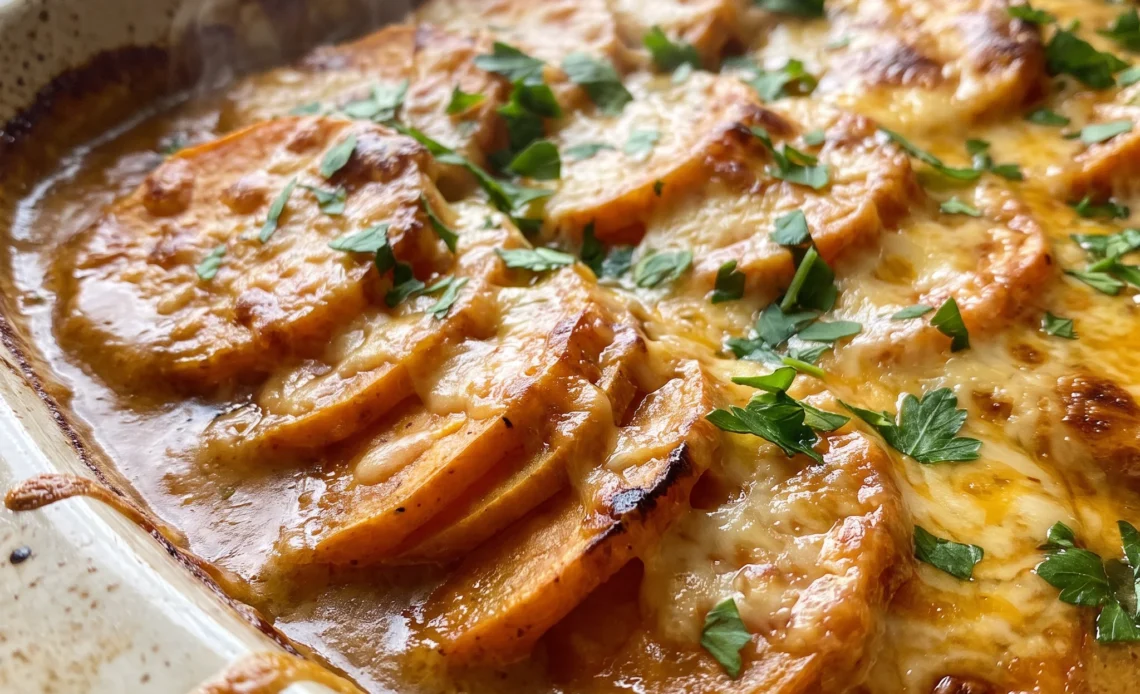
The magic of scalloped sweet potatoes hinges on one thing: the sauce reaching every slice. Don’t let the sweet potato’s natural sugar fool you; it caramelizes but also means the dish can skew cloying if the sauce doesn’t carry enough smoke and heat. That’s where the chipotle adobo earns its place, cutting through the sweetness with a warmth that builds, not overwhelms.
And the smoked gouda? It’s not just a swap; it’s a partner that echoes that smoky fire, making each bite savory and complex.
But the real trick is how you arrange those thin slices. Standing them in rows isn’t for looks. It creates little channels so the sauce can find its way down, coating every surface.
Skimp there, and you’ll have dry pockets hidden under a creamy top. Get it right, and this side dish turns into the kind of thing people ask about.
The 1/8-inch slices cook quickly, but they must be arranged with space so the sauce can flow between them and conduct heat evenly. If they are too snug, the sauce cannot reach all surfaces, and the center may remain firm even after the top is bubbling. The sauce’s thickness also matters: if it is too thick, it acts as an insulator rather than a heat conductor, slowing cooking.
Why slice them thin and stand them in rows?
Thin 1/8-inch slices are the key to sweet potatoes that cook through in the same time the sauce bubbles and thickens. Cut any thicker and the center stays firm while the edges soften, giving you uneven bites. The diagonal rows aren’t just for looks.
They create channels so the sauce can run down between each slice, coating every surface. If you layered them flat, the sauce would pool on top and the slices underneath would steam rather than soak up flavor.
Leaving a little space means each piece stays distinct and tender, not mushy. You want them to lean, not crowd, so the sauce reaches all the way through. The result is a dish where every forkful is creamy, seasoned, and uniform.
How does the sauce stay creamy and balanced?
The sauce starts with a roux: butter and flour cooked just until it forms a paste, then milk whisked in. That’s what gives it body without turning gluey. As it simmers, it thickens to a gravy-like consistency that coats a spoon but still pours.
Smoked gouda melts in smoothly, adding a smoky, nutty depth that plays off the sweet potatoes rather than overpowering them. Chipotle adobo brings the heat. Three tablespoons give a mild warmth; four push it to a noticeable kick.
You taste the smoke first, then the spice builds. Because you can sample the sauce before pouring it over, you’re in control of the balance.
It should taste slightly bold on its own, since the potatoes will mellow it as they bake.
What makes this a fresh take on a classic?
Classic scalloped potatoes rely on white spuds and a mild, creamy sauce. Here, sweet potatoes flip the script.
They bring natural sugar that caramelizes at the edges and a softer, almost silky texture once baked. Smoked gouda and chipotle adobo push the dish into a different territory altogether.
The gouda’s smokiness echoes the chipotle’s fire, so you get a layered, savory heat that contrasts with the potato’s sweetness. It’s not just a flavor swap; the whole character changes. The sauce clings differently to sweet potatoes, and the final bite has a sweet-smoky-spicy profile you won’t find in the original.
That combination makes it a standout next to roasted meats or as a vegetarian centerpiece.
Why top it with extra cheese and broil?
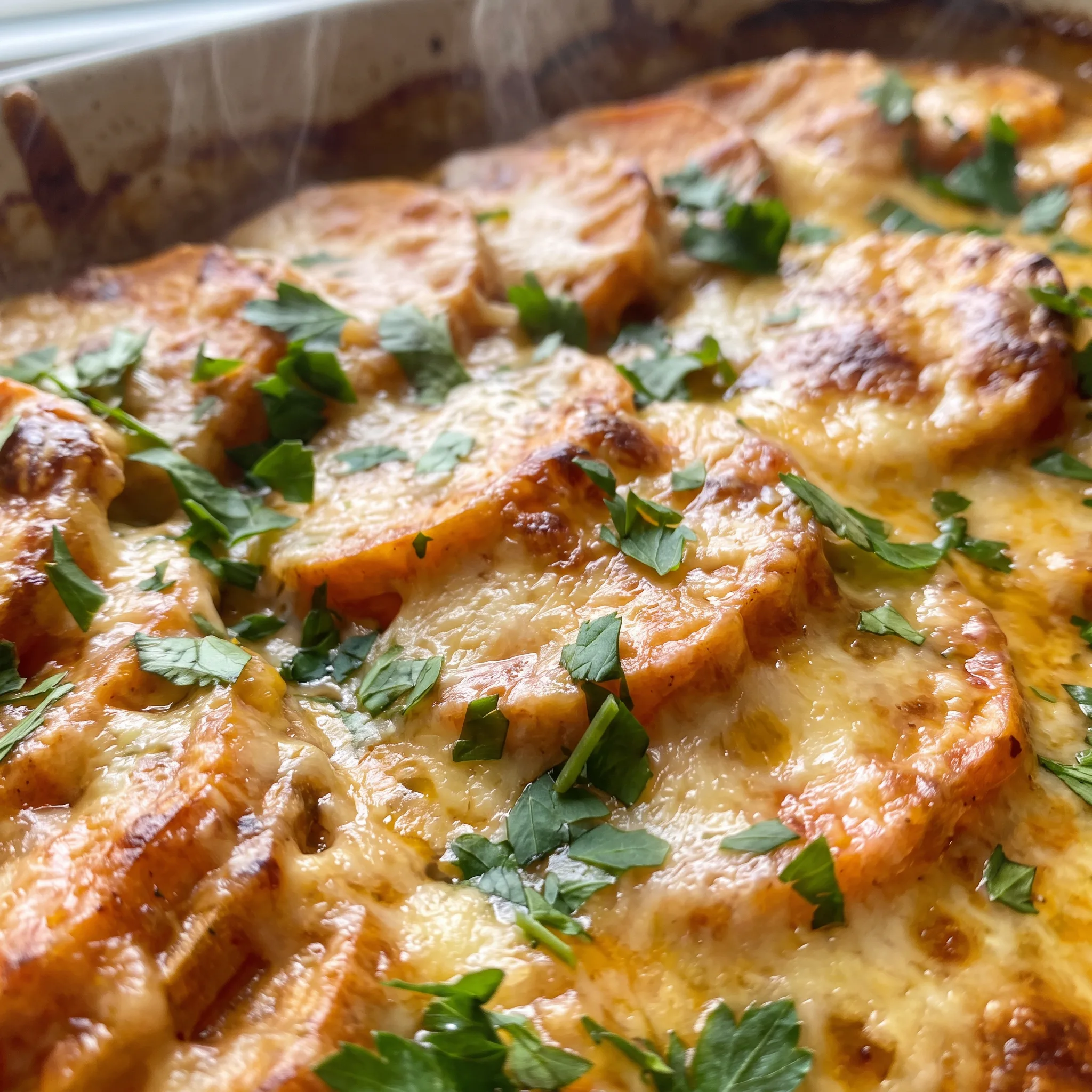
The reserved gouda and parmesan sprinkled on top before broiling create a crust you don’t get from the sauce alone. As the broiler heats, the cheese melts, bubbles, and browns in spots, adding a crisp, savory layer that contrasts with the creamy interior. Parmesan brings a sharp, salty edge that cuts through the richness.
The broiler works fast, so you watch it closely: one minute can be the difference between a golden finish and a burnt one. You’re looking for melted cheese with light browning, not a dark crust. That quick blast also reheats the surface, ensuring the topping is hot and gooey when it hits the table.
The parsley sprinkle at the end adds a fresh note that lifts the whole dish.
Choosing the right sweet potatoes and cheese matters
Sweet potatoes: Go for firm, evenly shaped ones so you can slice them uniformly at 1/8 inch.
Smoked gouda: Buy it in a block and shred it yourself; pre-shredded doesn’t melt as smoothly.
Adobo sauce: This is the liquid from the chipotle can, not the chiles themselves; it carries the heat.
Milk: Any fat level works, but whole milk gives a richer sauce that clings better.
Reading the dish as it comes together
When the sauce is thick enough
Watch for the sauce to coat the back of a spoon and leave a clear line when you drag a finger through it. That’s the gravy-like consistency the card means. If it’s too thin, it will pool at the bottom of the dish and leave the top slices dry.
Too thick and it won’t seep between the rows. Aim for a simmer that visibly bubbles but doesn’t spatter. If it tightens too much, whisk in extra milk a tablespoon at a time until it flows again.
Reading the bake time
The card says 45 minutes to 1 hour, so don’t set a timer and walk away. Start checking at 45 minutes by piercing the center slice with a fork. It should slide in with little resistance, and the sauce should be bubbling around the edges.
If the fork meets hard flesh, return it to the oven covered and check every 5 minutes. Underdone sweet potatoes will be crunchy and break the creamy illusion. Overdone and they’ll collapse into mush when you serve.
The broil: a minute between golden and burnt
Once the foil comes off and the extra cheese goes on, the broiler does its work fast. Watch constantly, literally don’t turn away.
You’re looking for the cheese to melt into a bubbly surface with light brown spots, not a dark crust. At 1 minute it might still be pale; at 2 it could be scorched. If the edges start to brown while the center lags, rotate the dish.
Burnt parmesan turns bitter and overpowers the sweet potato and chipotle.
Chipotle Gouda Scalloped Sweet Potatoes
Ingredients
Method
- Heat the oven to 375 degrees F (190 degrees C). Coat an 8×8 inch baking dish with nonstick spray or grease with butter or oil.
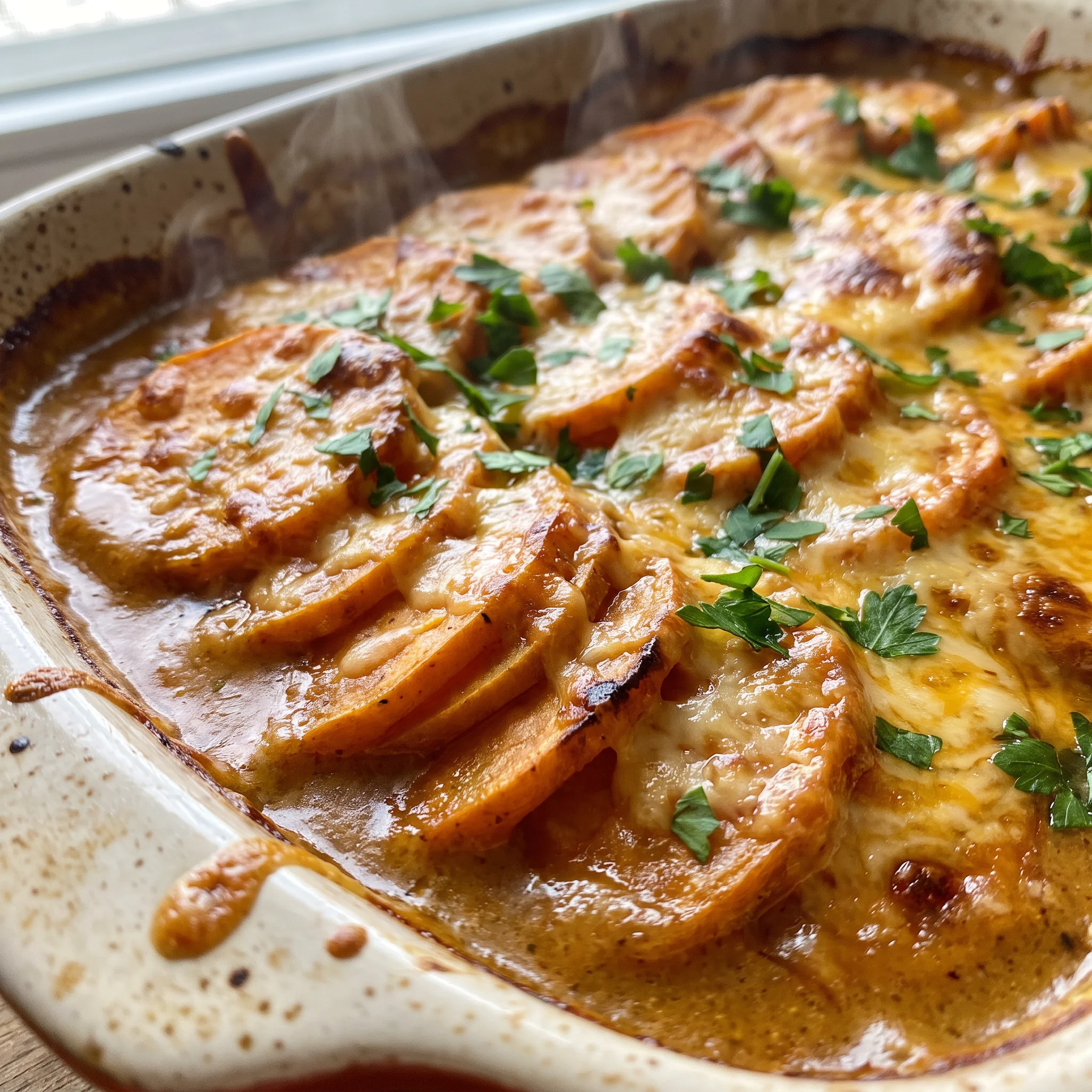
- Position the sweet potato slices in three compact diagonal rows as pictured. Ensure they aren’t too snug; leave some space so they lean slightly.
- In a saucepan, melt 3 tablespoons of butter over medium heat. Once melted, whisk in the flour and cook for 10-20 seconds until a paste forms. Gradually pour in 2 cups of milk while whisking continuously to remove lumps. Whisk energetically until smooth.
- Bring the mixture to a simmer and let it thicken for a few minutes, stirring occasionally, until it reaches a gravy-like consistency. If it becomes too thick, add a few extra tablespoons of milk. Taste and adjust salt if necessary.
- Remove from heat once thickened. Stir in 2 cups of shredded gouda (reserving 1/2 cup for later), garlic powder, and 3 tablespoons of the chipotle adobo sauce. Season with freshly ground salt and pepper to taste. After sampling, you may opt to add an extra tablespoon of adobo sauce for more heat—highly recommended!
- Evenly pour the sauce over the sweet potatoes, covering them fully. The sauce will become creamy during baking.
- Cover the dish with foil and bake for 45 minutes to 1 hour, until the sweet potatoes in the center are easily pierced with a fork.
- Once baked, remove the foil. Sprinkle the remaining 1/2 cup gouda and 1/4 cup parmesan over the top. Switch the oven to broil and cook on high for 1-2 minutes, watching closely to prevent burning, until the cheese is melted and lightly golden. Take out of the oven and finish with fresh chopped parsley. Serve and enjoy!
Storing and Serving Leftovers
Serve this dish within 30 minutes of pulling it from the oven. That’s when the sauce is creamiest and the top cheese is still molten. Let it rest for 5 to 10 minutes first, so the slices set enough to hold their shape when you scoop.
Leftovers keep in an airtight container in the fridge for up to 3 days. The sauce will thicken as it sits, so reheat gently.
In the oven, cover with foil and warm at 350°F for 15 to 20 minutes, adding a splash of milk if it looks dry. In the microwave, use 50% power in 30-second bursts, stirring once. The sweet potatoes will soften further, but the smoky heat stays.
Freezing isn’t kind to this dish. The dairy sauce separates and turns grainy, and the potato slices break down into a mushy texture. If you must freeze, do it with the sauce alone, then make fresh potatoes later.
The parsley garnish goes on right before serving, not during storage. It wilts and darkens, so add it fresh to each reheated portion.
Tips
- Before baking, press a few slices down gently so the sauce reaches the bottom of the dish; otherwise the bottom slices can stay dry if the sauce doesn’t seep through completely.
Swap the cheese, keep the smoke, watch the flour
Smoked gouda: Sharp cheddar, smoked cheddar, or a vegan smoked gouda alternative. Sharp cheddar melts just as smoothly and brings a tang that stands up to the sweet potatoes, but you lose the smoky depth. If you want that smoke back without gouda, use smoked cheddar or add a drop of liquid smoke to the sauce.
Vegan smoked gouda melts differently, it can turn grainy or seize if overheated, so stir it in off the heat and don’t let the sauce boil after. Pre-shredded cheese of any kind won’t melt as cleanly; buy blocks and shred them yourself.
Flour: Gluten-free 1:1 flour blend. A cup-for-cup gluten-free flour blend works here, but expect a slightly looser sauce.
The sauce might not thicken as firmly as with wheat flour, so let it simmer a minute longer before pouring. If it thins out during baking, that’s fine, the potatoes will still cook through, but the final dish will be a touch more saucy. Avoid coconut or almond flour; they won’t form a proper roux and can leave a gritty texture.
Milk: Unsweetened oat milk or cashew milk. For a dairy-free version, oat or cashew milk are the closest to whole milk in body.
They won’t curdle the way some acidic plant milks can, but they’re thinner, so the sauce may need an extra minute of simmering to reach that gravy-like coat. Skip almond milk, it’s too watery and the sauce won’t cling to the potatoes.
Adobo sauce: Chipotle powder mixed with a little water or extra hot sauce. If you don’t have canned chipotles, whisk 1 to 2 teaspoons of chipotle powder into the sauce along with an extra tablespoon of butter to replace the oil from the adobo.
This gives you the smoky heat without the tangy vinegar note. Start with less, chipotle powder is more concentrated, and taste the sauce before pouring. The goal is a mild warmth that builds, not a sauce that burns.
Frequently Asked Questions
Can I make this dish ahead of time and bake it later?
You can assemble the dish fully, cover it, and refrigerate for up to 3 days before baking. The sauce may thicken as it chills, so add a splash of milk if needed before putting it in the oven. When ready, bake covered at 375°F, checking for tenderness at the 45-minute mark and continuing as needed.
The extra chilling time might extend the bake slightly, so rely on the fork test rather than the clock.
How do I know when the sweet potatoes are fully cooked?
Pierce the center slice with a fork; it should slide in with little resistance and the sauce should be bubbling around the edges. If the fork meets hard flesh, return it to the oven covered and check every 5 minutes. Underdone sweet potatoes will be crunchy, while overdone ones collapse into mush, so aim for that tender-but-intact bite.
Can I use regular potatoes instead of sweet potatoes?
Yes, but the dish changes character. Regular potatoes are less sweet and firmer, so they’ll absorb the smoky chipotle sauce differently and may need a touch more salt.
Slice them to the same 1/8-inch thickness and follow the same bake time, but start checking at the 45-minute mark since some varieties cook faster. The result is a more savory, less caramelized take.
What can I serve with this dish?
This works as a hearty side to roasted chicken, pork, or steak, or as a vegetarian main with a crisp green salad. The sweet-smoky-spicy profile also pairs well with black beans and rice for a fuller plate. Keep sides simple so the dish remains the centerpiece.
How spicy is this dish? Can I adjust the heat?
With 3 tablespoons of adobo sauce, it’s a mild warmth; bumping to 4 tablespoons gives a noticeable kick. You control the heat by tasting the sauce before pouring, since the potatoes will mellow it during baking. Start with 3 tablespoons, and if you want more fire, stir in the extra tablespoon after sampling, just remember it’s easier to add than to take away.
