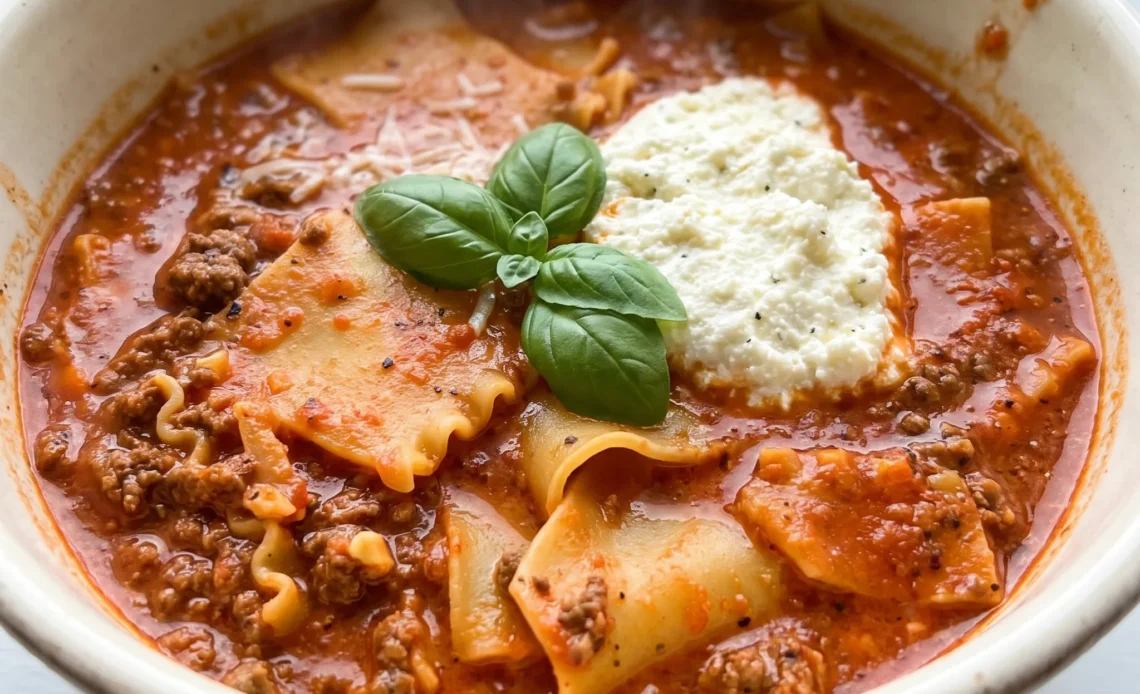
Lasagna soup is not a casserole in a bowl. It’s a weeknight detour that keeps the soul of the baked dish, rich tomato broth, beefy depth, a cool ricotta crown, without the layering, the baking, or the wait.
The trick is treating the parts with respect: noodles boiled separately so they stay al dente, a cheese topping that stays thick and cool against the hot broth, and a splash of cream to soften the tomato’s edge. When it comes together, you get all the comfort of lasagna in a spoonable form that’s ready before you’ve missed the oven. This is the lasagna soup that makes you wonder why you ever stacked the sheets.
Simmer the Broth, Cook Noodles Apart
Many soup recipes toss pasta right into the pot. Not here.
The tomato broth stays acidic, and pasta left soaking in it keeps cooking. Noodles turn soft and start to break down, and the broth clouds with starch.
So the soup base simmers by itself while the noodles boil in salted water. That keeps the noodles firm, with a clean bite. Adding them at the end, just before serving, means they don’t sit in the acid long enough to lose shape.
The result is a soup where the noodles stay distinct, each piece holding its own against the spoon.
The Topping Keeps Its Identity
Instead of cheese stirred into the pot, a spoonful of ricotta, mozzarella, and Parmesan sits on top of each bowl. The mixture stays cool and thick against the hot broth.
That contrast matters. Stirring it in would turn the soup milky and the cheese would lose its shape.
Here, each spoonful pulls up a bit of the creamy topping, then the broth. It works like the ricotta layer in a baked lasagna, giving you that same soft, salty bite in a soup. The topping gets seasoned with garlic salt, so it doesn’t need to blend into the broth to flavor the dish.
Cream and Cheese Mellow the Tomatoes
Crushed tomatoes give the soup a bright, sharp base. That acidity can dominate.
A splash of heavy cream and a cup of mozzarella stirred into the broth rounds it out. The cream adds body, making the soup feel richer on the tongue. The cheese melts into the liquid, softening the tomato tang.
The amounts are modest enough that the soup still tastes like tomatoes, not like a cream sauce. You can skip them if you want a leaner broth, but then you lose that slick, comforting mouthfeel that balances the rest.
Dried Herbs Carry the Long Simmer
This soup cooks for a while, and fresh herbs like basil lose their punch when simmered that long. So the recipe reaches for dried basil and oregano.
Dried herbs release flavor slowly, holding up to the heat without fading into the background. The crushed red pepper flakes add a gentle warmth that builds as the soup sits.
That trio gives the broth a familiar Italian-American taste, the kind you recognize from a pot of Sunday gravy. The herbs stay present, not just a whisper, even after twenty minutes on the stove.
What to Look For at the Store
Ground beef: 80/20 gives you enough fat for flavor without leaving the soup greasy.
Crushed tomatoes: Pass on fire-roasted; they’ll smoke out the herbs. Plain crushed is what you want.
Chicken stock: Low-sodium is the move, so you control the salt before it’s in the bowl.
Ricotta: Whole-milk ricotta stays creamy; part-skim can turn grainy when spooned over hot soup.
Reading the Soup as It Comes Together
The moment the meat goes from brown to burnt
During the browning, the sizzle should stay lively but not angry. If the pot starts to smoke or the meat sticks hard, the heat is too high. You want deep brown bits, not black ones.
Burnt spots will taste bitter in the broth. Ease off the burner if it’s scorching, and scrape up any fond with a wooden spoon while it’s still loose.
When the noodles are done but not overdone
Boil the lasagna pieces until they’re al dente, with a white core still visible when you bite one. They’ll soften a little more when added to the hot soup.
If they’re fully tender in the pot, they’ll break apart in the bowl. Taste one at the lower end of the package time, then drain and rinse briefly to stop the cooking.
Balancing the broth before the cheese goes in
After the soup simmers, taste it. The tomatoes should be bright but not sharp. If the acid bites back, stir in the cream.
If it tastes flat, add a pinch more salt. The mozzarella will add mildness, but it won’t fix an unbalanced broth.
Adjust now, while the soup is still just broth, so the final bowl tastes right.
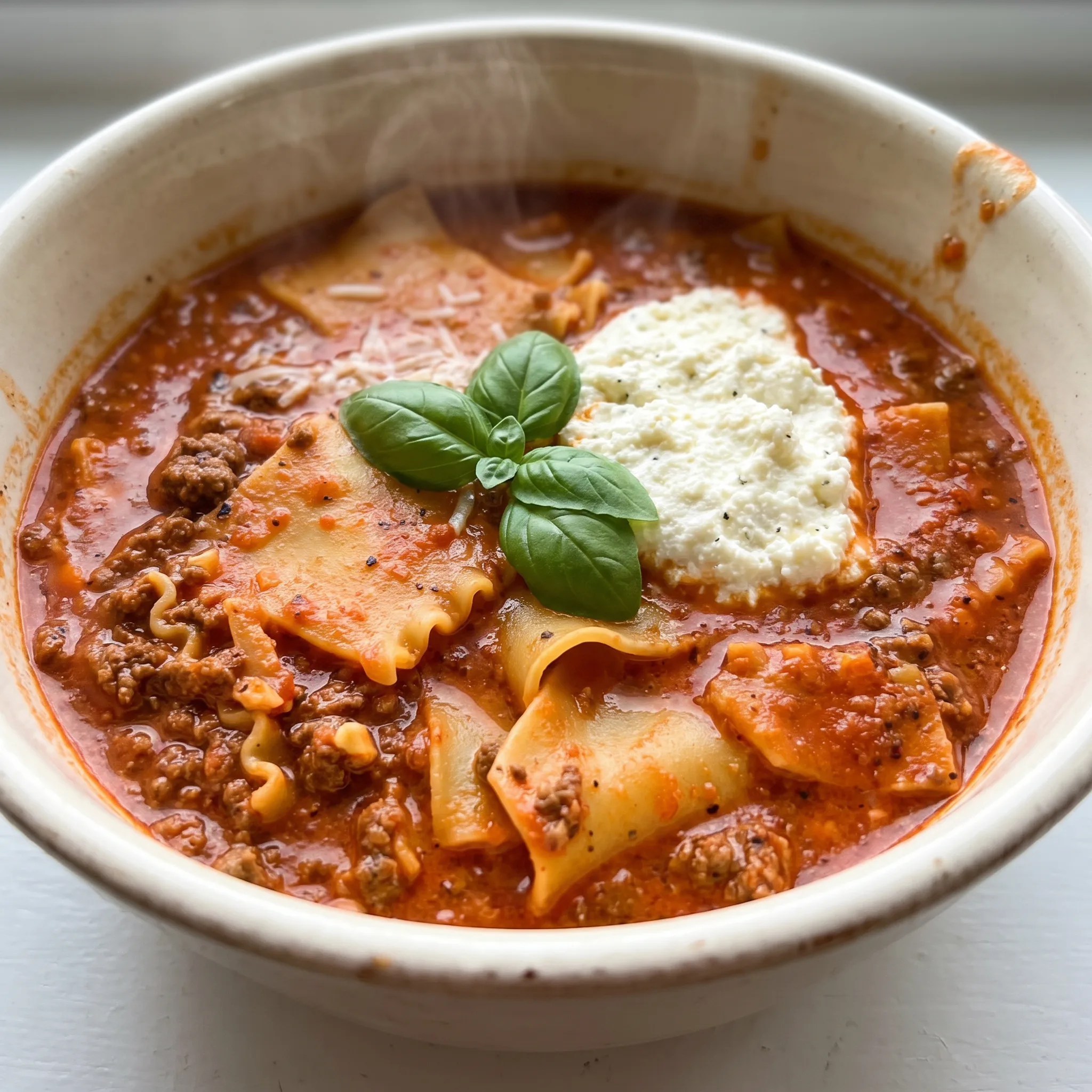
Lasagna Soup with Ricotta-Parmesan Topping
Ingredients
Method
- Set a large pot over medium-high heat and warm the olive oil. Sauté the onion until tender, roughly 5 minutes. Add the garlic and cook for another minute.
- Introduce the ground beef, breaking it up with a spoon. Sprinkle with salt and pepper. Brown the meat thoroughly, about 6-8 minutes.
- Lower the heat to medium-low. Pour in the crushed tomatoes and chicken broth, then season with basil, oregano, and chili flakes. Let it simmer while you handle the noodles.
- In the meantime, boil a large pot of salted water and cook the lasagna noodles per package directions. Drain and reserve.
- If using, mix in the heavy cream and 1 cup of mozzarella into the soup. Adjust seasoning to taste.
- In a separate bowl, blend the remaining mozzarella, ricotta, Parmesan, and garlic salt.
- Fold the cooked noodles into the soup. Portion the soup into bowls, then crown each with a generous spoonful of the cheese mixture. Optionally, garnish with fresh basil.
Swap the Meat, Keep the Cheese
Ground beef: Italian sausage (sweet or hot), or ground turkey. Italian sausage brings more fat and fennel, so the soup reads heartier and more seasoned. Use the same amount, but if you pick sausage links, squeeze the meat from the casings and brown it.
Ground turkey turns this leaner and a bit drier; you’ll want an extra drizzle of olive oil in the pot and maybe a pinch more salt to compensate.
Lasagna noodles: Other short pasta, like broken fettuccine, rigatoni, or shells. Any sturdy pasta works, but the size changes the bite.
Rigatoni or shells hold broth in their curves, so each spoonful gets more tomato. Little elbows or ditalini cook faster, so check them a minute early. The real move is to keep them boiled separately, still al dente, and stir them in at the end so they don’t turn to paste.
Ricotta and mozzarella: Don’t swap these out. The topping is the lasagna identity in this soup. Ricotta gives that cool, creamy contrast, and the mozzarella pulls into strings that mimic the baked dish.
If you swap in cottage cheese, it turns watery and curdy. If you skip the topping, you’re just eating tomato soup with noodles. If you need dairy-free, you’d have to change the whole character of the dish, not just one ingredient.
Chicken stock: Vegetable stock or beef stock. Vegetable stock keeps it lighter and lets the tomatoes shine, but you may need an extra pinch of salt. Beef stock deepens the meatiness, which works if you brown the beef well, but it can muddy the brightness of the tomatoes.
Both are fine; just pick based on whether you want the broth to sit back or stand up.
Tips
- Season the broth before adding the noodles, because the noodles absorb salt as they sit in the soup. Taste and add salt and pepper after the noodles are in, then adjust again before serving.
- When you add the noodles, stir gently to fold them in, then let the soup rest for a few minutes before ladling. This lets the noodles absorb some broth without overcooking, so they stay firm but flavorful.
Storing Leftovers: Keep Noodles Out of the Broth
The soup holds up well, but only if you store the noodles separately. Left sitting in the broth, they keep absorbing liquid and turn soft overnight.
So when you put away leftovers, fish out the noodles and keep them in their own container. The broth and any cheese stirred in can go in another. Both keep in the fridge for up to 3 days.
The broth freezes fine for up to 3 months, but the noodles don’t. They turn mushy when thawed. For frozen broth, thaw in the fridge, reheat gently, and boil fresh noodles to add.
The ricotta topping is best made fresh, but you can refrigerate it for a day. It doesn’t freeze well.
When you reheat a portion, bring the broth to a simmer, add the noodles just long enough to warm through, then ladle into a bowl and top with the cheese mixture. Eat it right away, while the noodles still have some bite and the topping is cool against the hot soup.
Watch the noodles as they cook; they should be al dente, firm to the bite but not hard. The moment they yield slightly to pressure, they are ready. If they are cooked until soft, they will continue to absorb broth and turn mushy when added to the soup.
The key is to undercook them slightly, as they will finish cooking in the hot soup.
Frequently Asked Questions
Can I make lasagna soup ahead of time?
Yes, but store the noodles separately from the broth. The broth and any cheese stirred in keep in the fridge for up to 3 days, and the broth freezes for up to 3 months.
Noodles left in the broth turn soft overnight, so keep them in their own container. The ricotta topping is best made fresh, but you can refrigerate it for a day.
How do I keep the noodles from getting too soft when reheating?
Keep the noodles out of the broth when storing, as they keep absorbing liquid and turn soft. When reheating, bring the broth to a simmer and add the noodles just long enough to warm through. Serve right away while the noodles still have some bite.
If you froze the broth, thaw it in the fridge, reheat gently, and boil fresh noodles to add.
What’s the difference between lasagna soup and regular lasagna?
Lasagna soup takes the same flavors, tomato broth, beef, basil, oregano, and a ricotta-mozzarella topping, but turns them into a spoonable dish. The noodles are broken into bite-sized chunks and boiled separately, so they stay firm in the broth. The cheese topping sits on each bowl, staying cool and thick against the hot soup, mimicking the ricotta layer in baked lasagna without the layering.
It’s a weeknight version that skips the baking and delivers the same taste in a bowl.
