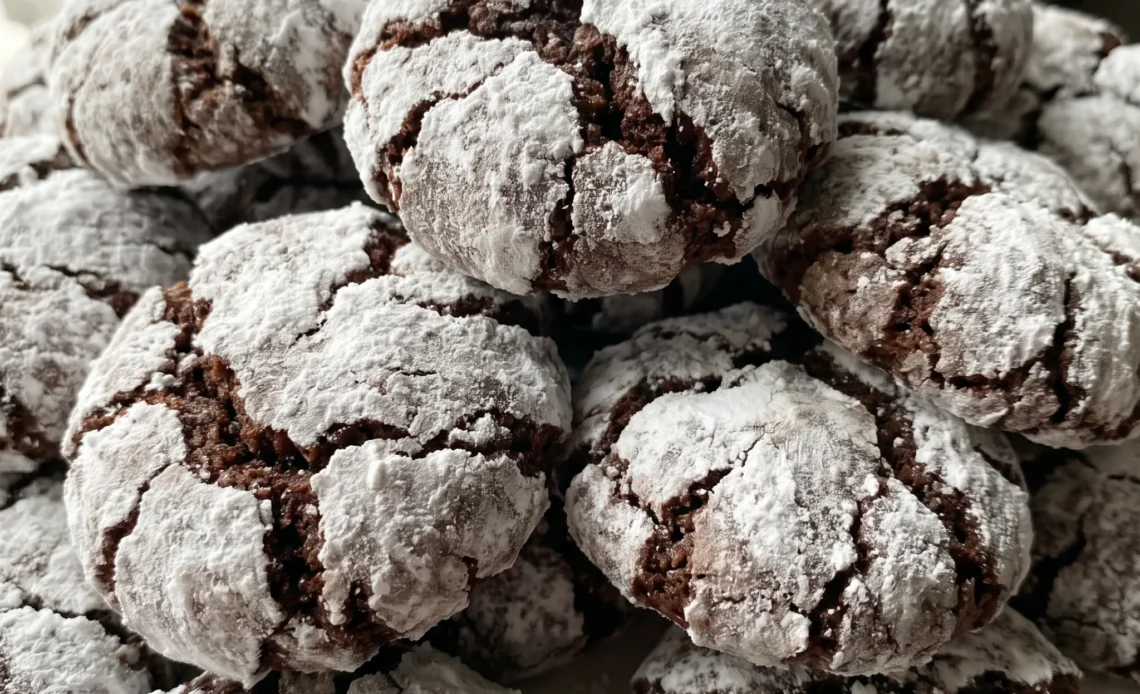
The most common letdown with chocolate crinkle cookies isn’t a flat, crisp disc or a dull, crack-less top, it’s a cookie that tastes more like cake than fudge. The fix isn’t more chocolate or a longer bake; it’s in the balance of fats and sugars, the right cocoa, and a dough that’s cold enough to hold its shape while the oven does its work.
When it all comes together, you get that iconic snowy shell that shatters into a web of dark cracks, revealing a center that’s soft, chewy, and intensely chocolatey. These are the chocolate crinkle cookies that turn a cookie swap into a quiet competition.
Chilling Makes the Dough Cooperate
Right after mixing, the dough is soft and sticky, almost like thick brownie batter. You can’t roll it into balls without it clinging to your fingers and smearing everywhere.
Chilling firms the fat and hydrates the flour, so the dough turns pliable and easy to shape. It also slows down spreading in the oven, which keeps the cookies thick and chewy instead of flat discs. While it rests, the flavors settle and deepen, so that short wait pays off in taste.
You’ll notice the dough feels firmer and less tacky after a spell in the fridge, a clear sign it’s ready.
Dutch Cocoa Sets the Crinkle
Dutch-processed cocoa is treated to neutralize its acidity, which changes how it reacts with baking powder. That lower acidity means the cookies spread more gently and rise evenly, creating the crackled top you’re after. Its darker, richer color makes the snowy powdered sugar coating pop with real contrast.
Flavor-wise, Dutch cocoa is smoother and less sharp than natural cocoa, so the chocolate tastes deep and mellow rather than bitter. You can see the difference in the dough itself: it’s darker and more fudgy-looking, a hint of the texture to come.
A Sugar Coat for That Cracked Top
Rolling the dough balls in powdered sugar just before baking is what gives these cookies their signature look. As the cookies spread in the oven, the sugar coating cracks and splits, revealing the dark dough underneath.
That crackle isn’t just visual: the sugar forms a thin, delicate crust that contrasts with the soft, tender center. It also adds a whisper of extra sweetness to the outside, balancing the cocoa’s bitterness.
When you bite into a warm cookie, you get that faint crunch first, then the fudgy interior. It’s a texture play that makes each bite interesting.
Two Sugars, One Cookie
Granulated sugar melts quickly and encourages spreading, which gives the cookies crisp edges. Brown sugar, with its molasses, pulls in moisture and keeps the centers soft and chewy. Together they balance each other out: the white sugar for structure and browning, the brown for tenderness and depth.
The result is a cookie that’s firm at the rim but gives way to a moist, almost brownie-like middle. You can also taste a faint caramel note from the molasses that rounds out the chocolate. That combination is why these crinkles have both a crackly exterior and a rich interior.
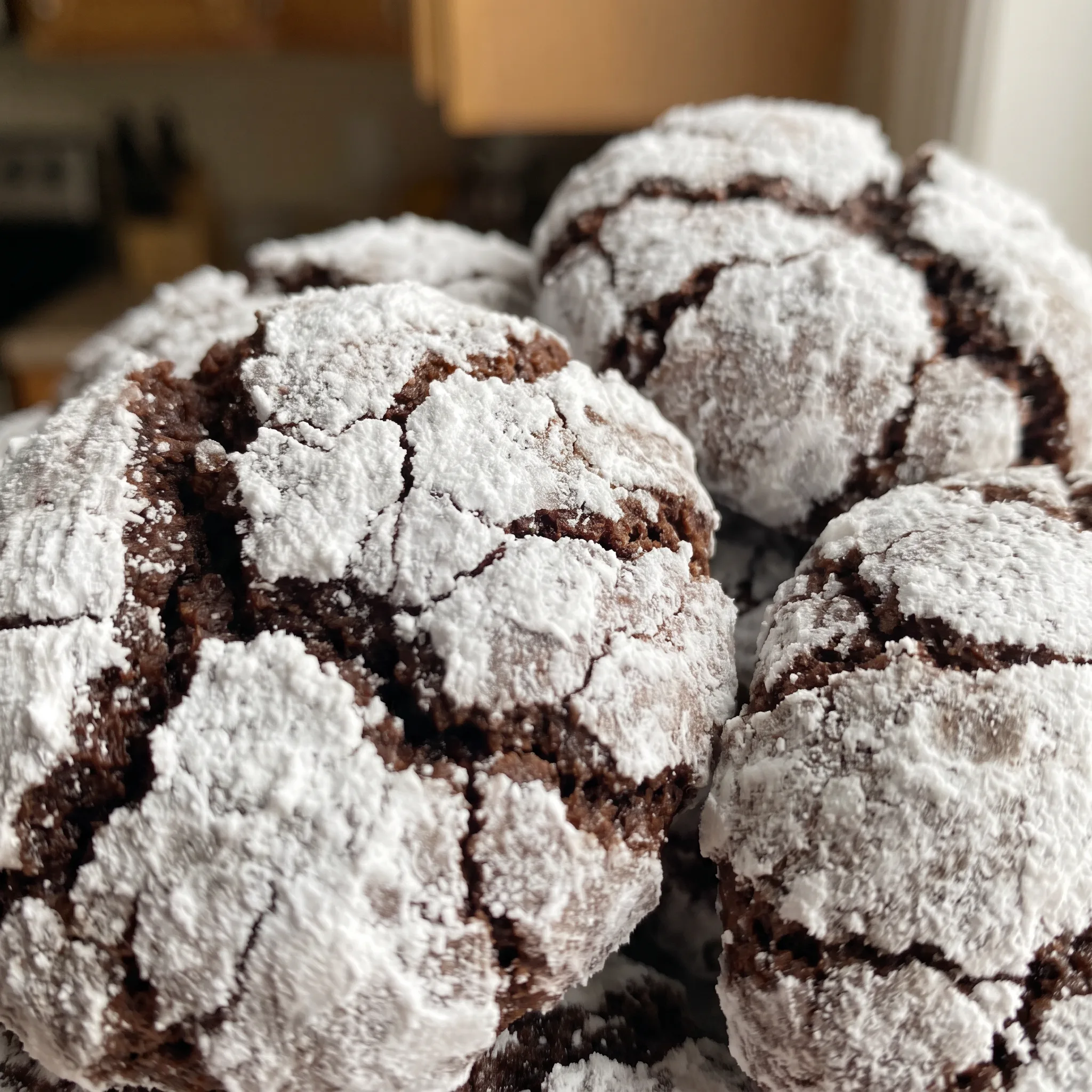
Ingredient Callouts for These Crinkles
Dutch-processed cocoa: Go for Dutch-processed, not natural; it’s darker and less acidic, which gives the right crinkle and mellow flavor.
Vegetable oil: Use a neutral oil like vegetable or canola; it keeps the cookies tender and lets the chocolate taste come through.
Brown sugar: Light or dark brown both work, but dark adds more molasses depth. Make sure it’s packed when you measure.
Powdered sugar: Sift it if it’s lumpy so the coating goes on even and cracks cleanly in the oven.
Reading the Dough’s Signals
When the dough is chilled enough to roll
After 45 minutes in the fridge, the dough should feel firm and only slightly tacky, not sticky. If it still clings to your hands, it needs more time, another 10 minutes usually does it. Chilling too little means the cookies spread into flat, crack-less discs.
Too long, and the dough becomes hard and cracks when you roll it, but that’s fine: let it sit at room temperature for 5 minutes.
Judging the right dough ball size
Using a 1 1/4-inch scoop gives you uniform cookies that bake evenly. If you roll them larger, they’ll spread less and need extra minutes in the oven, which can dry them out. Smaller balls bake too fast and might over-brown before the center sets.
Aim for a ball that fits comfortably in your palm, about the size of a walnut.
Coating the dough so the crinkle shows
Roll each ball generously in powdered sugar, pressing lightly so it adheres. A thin, uneven coating leads to a patchy crackle. If you see bare spots, roll again.
The sugar should form a complete white shell before baking, this is what cracks and gives you the signature look. Don’t skip this step or the cookies will look flat and dull.
Checking for doneness without overbaking
At 10 to 11 minutes, the cookies will look puffed and crackled, but the centers may still seem soft. That’s exactly right: they finish setting as they cool on the hot sheet. If you wait until they look fully firm, they’ll be dry and cakey.
The tops should be matte, not shiny, and the edges just set. Pull them out when the cracks look dry and the centers give slightly to a gentle touch.
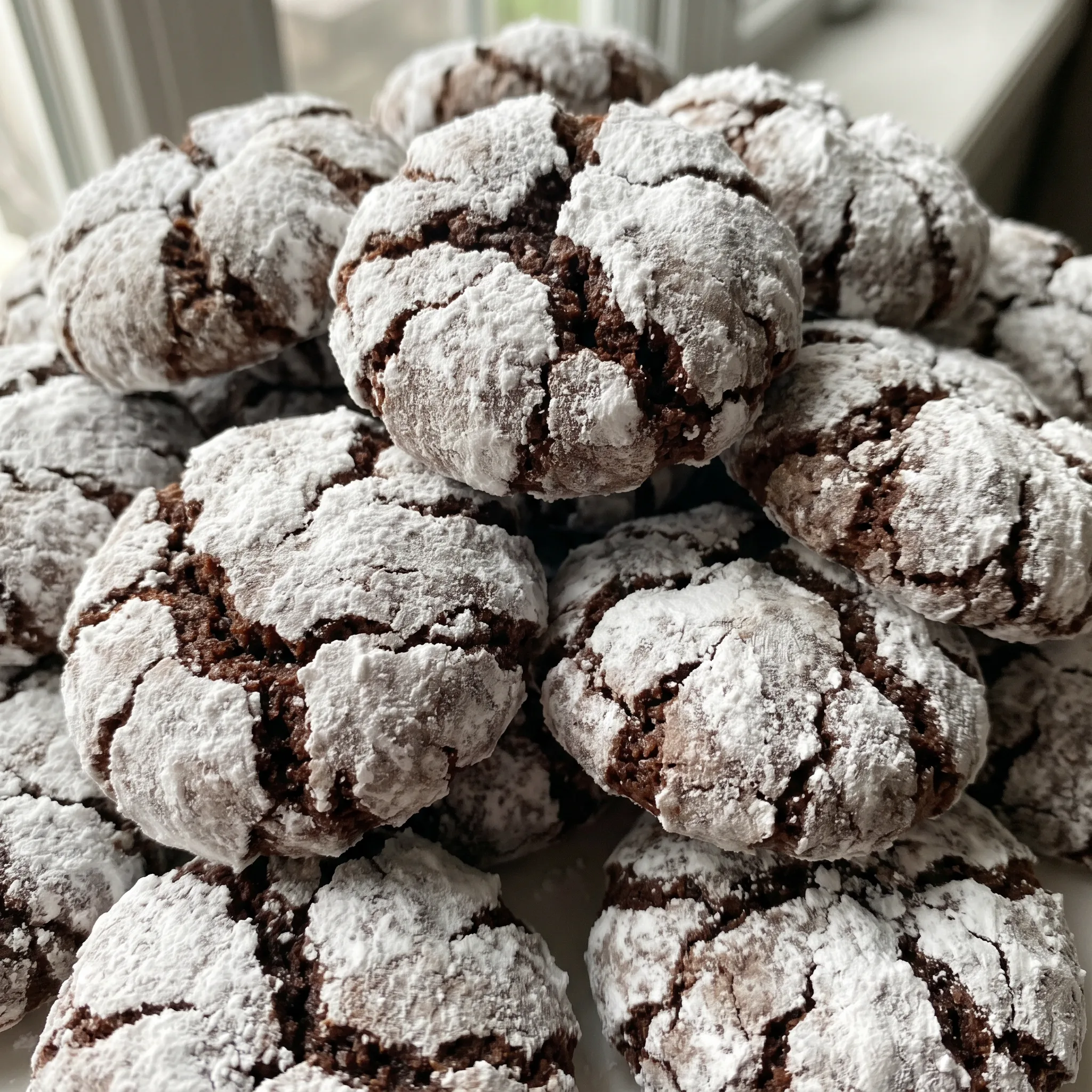
Chocolate Crinkle Cookies with Powdered Sugar
Ingredients
Method
- Heat the oven to 350°F (175°C). Put a silicone mat or parchment paper on a baking sheet.
- In a small bowl, mix together the flour, baking powder, and salt with a whisk.
- In a medium bowl, blend the cocoa powder, granulated sugar, brown sugar, and oil. Beat in the eggs one at a time, then mix in the vanilla.
- Slowly add the flour mixture to the chocolate mixture, stirring until just combined. Wrap the bowl with plastic wrap and chill for 30–45 minutes.
- Use a cookie scoop and your hands to shape the dough into balls of 1 1/4 inches. Coat each ball with powdered sugar and arrange on the baking sheet, leaving 2–2 1/2 inches between them.
- Bake for 10–11 minutes. Let the cookies sit on the baking sheet for 2 minutes before moving them to wire racks to finish cooling.
Swapping Smart in Chocolate Crinkle Cookies
Dutch-processed cocoa: Natural cocoa powder, same amount. The crinkle may not develop as dramatically, and the cookies will taste sharper and more acidic.
Dutch cocoa’s neutral pH lets the baking powder do its job evenly; natural cocoa’s acidity changes the rise and spread. You might end up with flatter cookies and a less pronounced crackle.
Vegetable oil: Another neutral oil like canola, safflower, or grapeseed, same amount. Any neutral oil keeps the dough tender and lets the chocolate flavor stay front and center. Butter, however, introduces water and milk solids that alter the texture, making the cookies denser and less fudgy.
If you try butter, expect a chewier, less crackly cookie.
All-purpose flour: Gluten-free 1-to-1 baking flour blend, same amount. Blends with xanthan gum give the closest texture, but the cookies may spread a bit more and the crinkle could be less defined. Chill the dough longer, up to 60 minutes, to help them hold their shape.
Natural cocoa is fine here, but Dutch keeps the intended look.
Keeping Crinkles Chewy
These cookies are best the day you bake them, when the edges are crisp and the centers are soft. Leftovers keep for up to 3 days in an airtight container at room temperature, but the texture shifts: the powdered sugar coating slowly absorbs moisture and loses its crackly contrast, and the cookies become more uniformly tender.
To revive them, warm a cookie in a 300°F oven for 3 to 4 minutes, which re-crisps the exterior without drying the middle. Avoid the fridge, which dries them out and makes the sugar coating tacky.
Unbaked dough balls freeze well for up to 3 months. Roll them in powdered sugar first, then freeze on a sheet pan until solid, and transfer to a zip-top bag. Bake from frozen, adding 2 to 3 minutes to the bake time.
Baked cookies don’t freeze as well; they lose their chew and turn crumbly when thawed.
For make-ahead, you can mix the dough and chill it up to 48 hours before baking. The longer chill lets the flavors deepen, but the dough will firm up more, so let it sit at room temperature for about 15 minutes before rolling. Serve these within a few days for the best texture, and if you’ve stored them, warm them briefly to bring back that crackly top.
Tips
- Use a cookie scoop to portion the dough, not just for size but to keep the powdered sugar coating even. A scoop gives you a consistent surface area, so each ball picks up the same amount of sugar, which helps the crinkle pattern develop uniformly across all cookies.
Without chilling, the dough is too soft and sticky to roll into neat balls without it clinging to your hands. Chilling firms the fat and hydrates the flour, which reduces stickiness and makes the dough pliable enough to shape. This recipe uses a 30 to 45 minute chill to achieve that consistency, which also helps the cookies hold their shape and spread evenly in the oven.
Frequently Asked Questions
Can I skip chilling the dough if I’m in a hurry?
No, you’ll regret it. The dough is too sticky to shape without chilling, and the cookies will spread into flat, crack-less discs. Even 30 minutes in the fridge makes a noticeable difference.
If you’re truly pressed, scoop the dough onto the baking sheet and chill it for 15 minutes before rolling in powdered sugar, but the texture won’t be as good.
Why did my cookies not crackle on top?
The most likely culprit is that you didn’t roll them in enough powdered sugar. The coating needs to be a complete, thick shell for the cracks to show.
If you see bare spots, the dough won’t have that contrast. Also, check that you used Dutch-processed cocoa, not natural, because the right cocoa is key to the crinkle.
Can I freeze the dough for later?
Yes, and it’s a great make-ahead option. Roll the dough balls in powdered sugar first, freeze them on a sheet pan until solid, then transfer to a zip-top bag. They’ll keep for up to 3 months.
When you’re ready, bake from frozen, adding 2 to 3 minutes to the usual time.
How do I know when the cookies are done baking?
Pull them out at 10 to 11 minutes when the tops look matte and the edges are set, but the centers still seem soft. They’ll finish setting as they cool on the hot sheet. If you wait until they look fully firm, they’ll be dry and cakey.
The cracks should look dry, and a gentle touch to the center should feel slightly soft.
