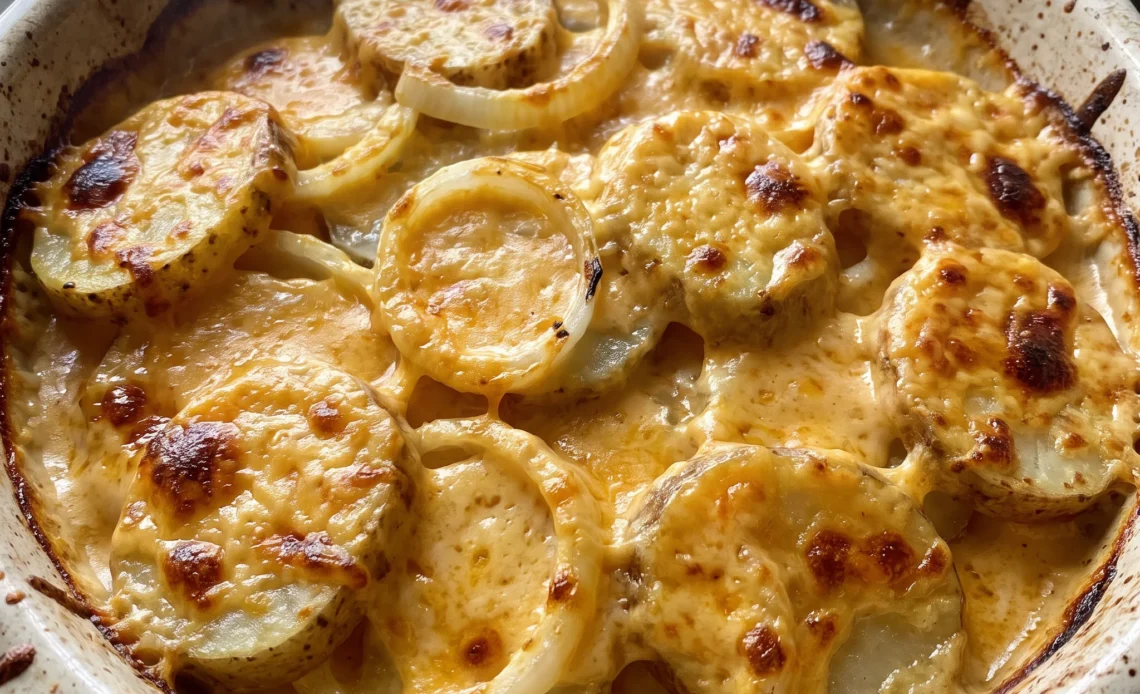
The top turns burnished and crisp, but the real payoff sits beneath that crust, where potato slices surrender into the sauce and turn almost custardy. That contrast is the whole draw of scalloped potatoes, and it’s easier to miss than you’d think. Too often they come out either soupy or dried out, with the cheese sauce never quite reaching the center of the dish.
The technique that makes the difference isn’t fussy, but it has a narrow window, and knowing what to look for at each stage keeps you on track. This version banks on a simple cheese sauce poured over layered russets and onion, then baked slowly until the fork slides in like butter. Get that sauce to the right consistency and treat the potatoes gently, and you’ll have a side that earns its place at any table.
When cheese is heated too quickly or to too high a temperature, its proteins denature and expel moisture, causing the sauce to curdle and become grainy. The cheese should be added after the sauce is removed from the heat or at a gentle simmer, and stirred just until melted to maintain a smooth emulsion.
Why Russet Potatoes?
Russets are the starchy workhorses of the potato world. They have more dry matter than waxy types, so they soak up the cheese sauce without turning to paste. Cut them into ¼-inch rounds and they cook evenly, keeping a tender bite even after a long, slow bake.
That thickness is a sweet spot: too thin and they’d disintegrate into the sauce, too thick and you’d be chewing raw potato. You want them to hold their shape just enough to give each forkful a little structure, while still letting the creamy sauce do its thing.
What Makes the Sauce Smooth?
A roux is your insurance policy against a lumpy, broken sauce. Cook the butter and flour together for a minute, and you’ll smell the raw flour toast into something nutty.
Then pour the milk in gradually, whisking all the while. If you dump it all at once, you’ll see clumps form that no amount of stirring can fix.
Once the sauce thickens, kill the heat and stir in the cheese. Off the burner, the cheese melts into a glossy ribbon without turning grainy, which happens when it gets too hot too fast.
Why Alternate the Layers?
Stacking the potatoes and onions in alternating rows does two things at once. It spreads the onion’s sweetness through every bite, so you don’t get a mouthful of raw onion at the bottom. And it keeps the potatoes from fusing into one solid mass.
As the sauce bubbles up between the layers, it carries the onion flavor along, so each slice tastes seasoned all the way through. You’ll see the layers settle as they bake, but the pattern holds, giving you a cross-section that’s evenly speckled with onion in every serving.
Covering the Dish
Foil traps steam inside the dish, and that steam is what turns a hard, starchy potato into something creamy. Without it, the top would brown and crust over before the center ever gets tender.
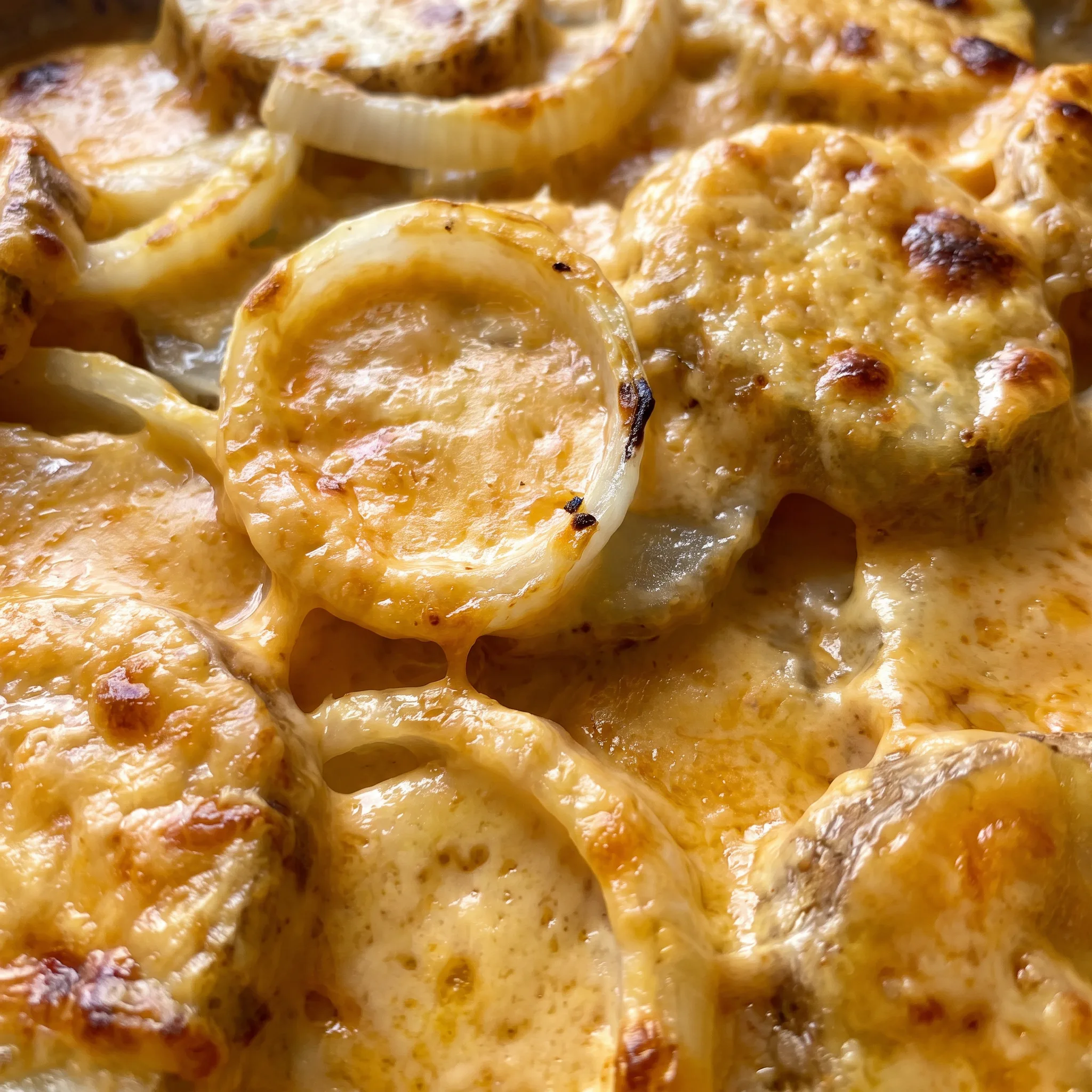
With the foil on, the potatoes simmer in their own moisture, cooking evenly from edge to center. Lift the foil near the end and you’ll see the sauce has thickened, the potatoes are glossy, and a fork slides through them with little resistance. That’s the cue you’re looking for.
Picking the Potatoes and Cheese
Russet potatoes: Buy firm, unblemished russets about 2 pounds total; skip any with green spots or sprouts.
Yellow onion: Use a medium yellow onion, about the size of your fist; it turns sweet as it bakes.
Whole milk: Bring the milk to room temperature first; cold milk can make the sauce seize or lump.
Mild cheddar: Shred the mild cheddar yourself from a block; pre-shredded often has anti-caking agents that turn the sauce gritty.
Reading the Sauce and the Potatoes
The Sauce Coats the Spoon, Not Just the Potatoes
When the sauce first bubbles, it looks thin, like milk. Keep stirring, and suddenly it turns glossy and coats the back of a spoon, leaving a clear trail when you drag a finger through. That’s the moment.
If you pour it too early, it’s watery and pools at the bottom; the potatoes won’t absorb it, and you’ll get bland, soupy layers. If you cook it too long, it seizes into a thick paste that won’t soak into the potatoes. Aim for that spoon-coating stage, right before it looks like thick gravy.
The Cheese Melt: Smooth, Not Grainy
Once the cheese hits the hot sauce, keep stirring. Within 30 to 60 seconds, it should disappear into a smooth, pale yellow ribbon. If you see small curds or a greasy sheen, you’ve overheated or stirred too lazily.
Off the heat, the residual warmth melts it without breaking the emulsion. If it does turn grainy, there’s no fix, but it’ll still bake into the potatoes, just with a slightly rougher texture.
You’re looking for a sauce that pours like heavy cream, not one that’s stiff.
Fork-Tender: The Real Test
At the 85-minute mark, lift the foil and poke a fork into the center of a potato slice. It should slide in with no resistance, and the fork should come out clean.
If it meets a hard core, the potatoes aren’t done, return the dish, covered, for another 5 minutes. Overcooking turns the slices into soft mush that collapses when you lift a serving. The sweet spot is when the fork enters like warm butter, but the potato still holds its shape on the tines.
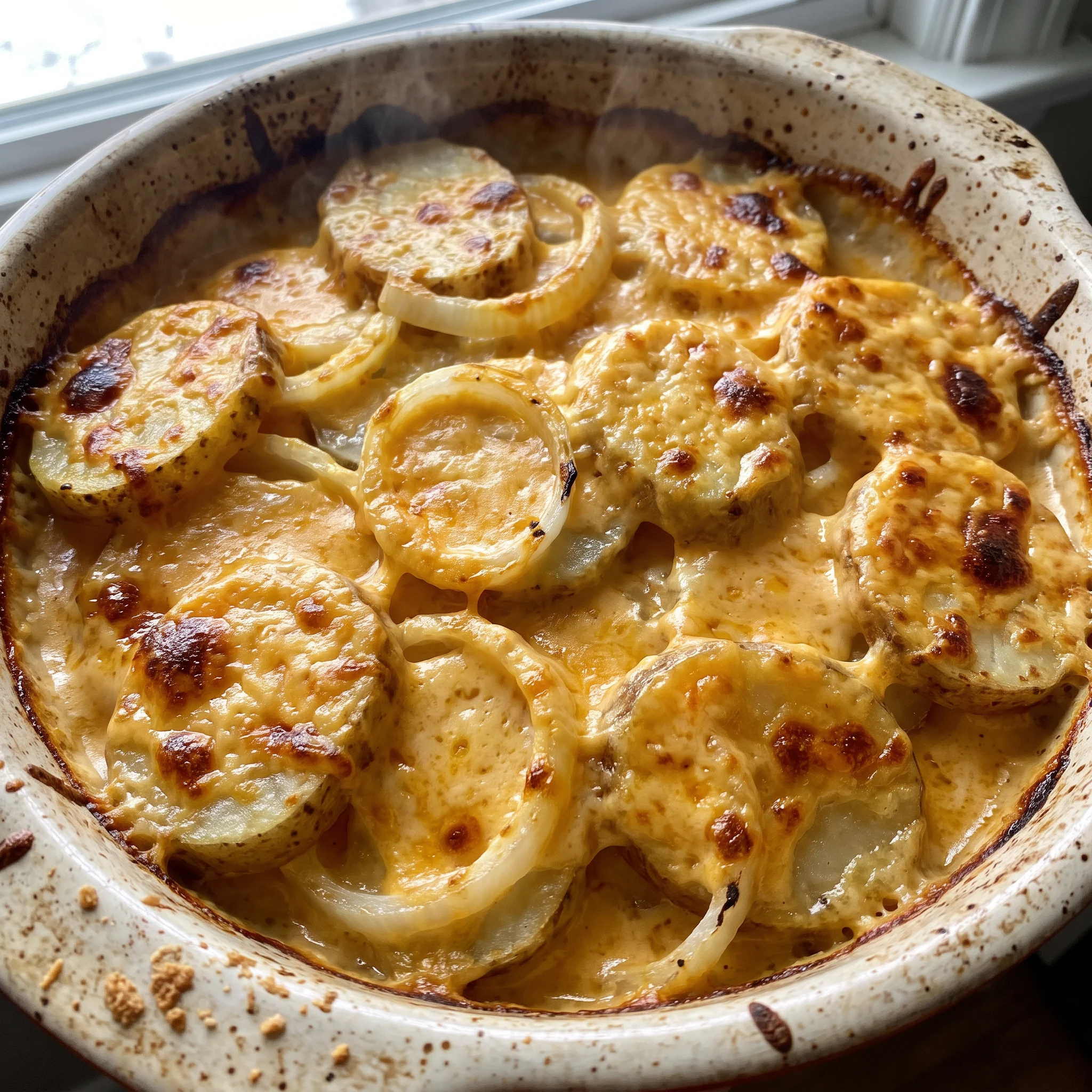
Cheesy Scalloped Potatoes with Cheddar
Ingredients
Method
- Warm the oven to 400°F (205°C). Coat an 8×8-inch baking dish with nonstick spray.
- Layer the potato slices and onion rings in the dish, alternating between potato and onion.
- In a medium saucepan over medium heat, melt the butter. Whisk in the flour and salt, and keep stirring for one minute. Pour in the milk and continue cooking until the mixture thickens.
- Add the cheese all at once, stirring until it’s fully melted and smooth, about 30 to 60 seconds.
- Pour the cheese sauce evenly over the potato-onion layers, then cover the dish with aluminum foil.
- Bake for 85 to 90 minutes, or until the potatoes are fork-tender.
- If you want a browned top, switch the oven to broil after baking and cook until the surface turns golden.
- Adjust seasoning with salt and pepper, then serve.
What You Can Swap Without Breaking the Sauce
Whole milk: 2% milk or half-and-half. Whole milk carries the sauce’s richness.
Drop to 2% and the sauce turns noticeably thinner, more like a broth; it won’t cling to the potatoes the same way. Half-and-half makes it heavier and glossier; you’ll get a sauce that coats a spoon like thick cream.
If you go low-fat or non-dairy, the sauce can curdle or separate when it hits the heat, so save those for another dish.
Mild cheddar cheese: Sharp cheddar, Gruyère, or Monterey Jack. Sharp cheddar brings a tang that cuts through the cream; use the same amount. Gruyère adds a nutty, savory depth and melts just as smoothly.
Monterey Jack is mild and creamy, but it won’t give the same golden color on top. Whatever you pick, shred it yourself from a block. Pre-shredded cheese has a powdery coating that stops it from melting into a slick sauce; you’ll see tiny flecks that never disappear, and the sauce turns slightly grainy.
All-purpose flour: Gluten-free all-purpose flour blend. A cup-for-cup gluten-free flour works in the roux, but it may thicken faster and turn gummy if you overcook. Stir the milk in slowly and watch for the sauce to coat the spoon about a minute sooner than usual.
The potatoes still bake up tender, but the sauce may be a touch less silky. If you need it, this is the swap that keeps the dish on the table.
Russet potatoes: Yukon Gold potatoes. Yukon Golds hold their shape better than russets, so you’ll get distinct slices instead of layers that meld into each other. They’re slightly waxy, so they won’t soak up as much sauce, leaving a bit more liquid in the dish.
The texture turns more like a potato gratin, firmer and less creamy. Try it if you prefer a cleaner bite, but don’t use red or new potatoes; they’re too waxy and won’t soften enough in the time this bakes.
Storage and Reheating
Scalloped potatoes are best eaten within 20 minutes of pulling them from the oven, while the sauce is still glossy and the layers hold their shape. If you broil the top for browning, do it right before serving; that golden crust turns soft as it sits, so don’t broil ahead.
Leftovers keep in the fridge for up to 3 days. The texture shifts as it chills: the sauce thickens and the potatoes firm up, so reheating is about bringing back moisture without making the bottom soggy. Skip the microwave, which turns the edges rubbery and leaves cold spots.
Instead, reheat in a 350°F oven, covered with foil, for 15 to 20 minutes, until the center is hot. The gentle heat lets the sauce re-emulsify and the potatoes soften without drying out.
Freezing isn’t kind to this dish. The dairy sauce separates when thawed, leaving a grainy, watery texture that no reheating can fix.
If you must freeze, do it before baking: assemble the dish, cover tightly, and freeze for up to a month. Thaw overnight in the fridge, then bake as directed, adding 10 to 15 minutes to the cook time. The result won’t be quite as creamy as fresh, but it’s a decent make-ahead for a busy week.
Tips
- During the last 10 minutes of baking, insert a fork through the foil into the center of the dish. If the fork meets resistance, keep the foil on and bake for another 5 minutes before checking again. This lets you test doneness without losing steam, which would slow cooking and dry out the top.
- If you decide to broil for a browned top, keep a close eye on the dish. The sauce and cheese can go from golden to burnt in under a minute, and the sugar in the onion can char quickly. Pull it out as soon as the surface is evenly browned, usually 1 to 2 minutes.
Frequently Asked Questions
Can I make scalloped potatoes ahead of time and bake later?
Yes, but only before baking. Assemble the dish, cover it tightly, and keep it in the fridge for up to a day; then bake as directed, adding 10 to 15 minutes to the cook time. The sauce will settle into the layers as it sits, so give it a gentle stir before covering if you want the top layer saucier.
Don’t bake it ahead and reheat, the sauce will turn grainy and the potatoes will lose their creamy bite.
Why are my scalloped potatoes watery?
The most likely culprit is that you poured the sauce before it thickened to the spoon-coating stage. Wait until it leaves a clear trail when you drag a finger across the back of a spoon. Another check: the potatoes themselves release moisture as they bake, so if you used waxy potatoes instead of russets, they hold more water and can’t soak up the sauce.
How do I know when the potatoes are done?
At the 85-minute mark, lift the foil and poke a fork into the center of a potato slice. It should slide in with no resistance, and the fork should come out clean. If it hits a hard core, return the dish covered for another 5 minutes and check again.
Look for a glossy sauce that’s thickened and a fork that enters like warm butter while the potato still holds its shape.
