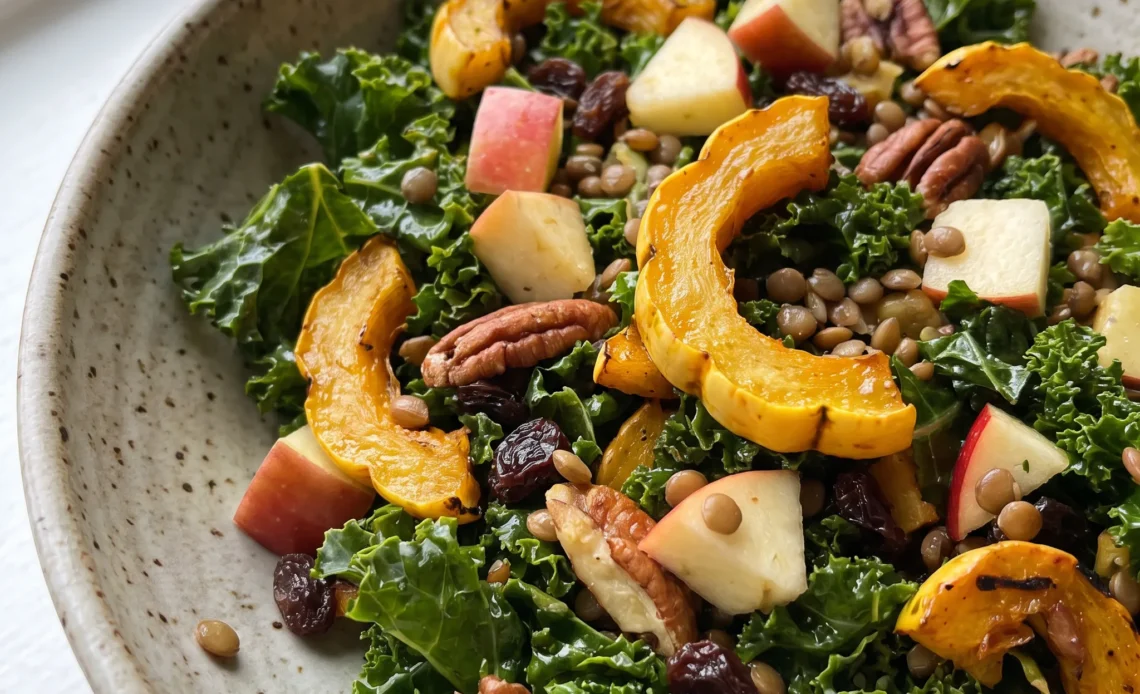
Making an autumn kale salad that actually satisfies comes down to one thing: treating the greens like they matter. Massage them with salt until they turn deep and silky, and they’ll hold up to whatever you pile on top. That sturdy base lets roasted squash go soft and caramelized, apples stay crisp, and lentils add their earthy chew without everything collapsing into one mushy heap.
The maple balsamic dressing does double duty, first coaxing the kale into submission, then tying every component together with a tangy sweetness. It’s a kale salad that understands texture is the whole point. You can swap the squash or the nuts, but the rhythm of softening the kale first and roasting the squash until its edges brown is what makes this bowl work.
Get that right, and the rest is just assembly.
Why does kale need a massage?
Raw curly kale can be tough and chewy, but a quick massage changes that. Once you’ve stripped the leaves from the stems, kneading them with a pinch of salt for a few minutes makes them tender and silky. You’ll see the leaves darken and wilt slightly, and they’ll shrink in volume.
That’s the texture breaking down enough to eat raw without feeling like you’re chewing on yard waste. The salt helps draw out moisture, which softens the leaves further.
This step turns a sturdy green into something pleasant to bite into, so it actually works as the base of a salad rather than a garnish you push aside.
What does roasting do for the squash?
Roasting delicata squash halves brings out its nutty sweetness and gives the edges a caramelized bite. Cut into half-moons and tossed with oil, salt, and pepper, the squash roasts until golden on both sides. The high heat drives off surface moisture, concentrating the natural sugars.
You’ll see the pieces brown and slightly shrivel at the edges, and the flesh turns creamy inside. That contrast between the crisp exterior and soft interior adds a warm, savory note that balances the earthy kale.
The squash doesn’t just sit in the salad; it becomes a flavorful component that ties the whole dish together. When you mix it in, those roasted bits stand out.
Why shake the dressing in a jar?
A jar with a tight lid is all you need to emulsify the dressing. Shaking vigorously blends everything into a uniform, slightly thick mixture that clings to the leaves rather than pooling at the bottom.
The action of shaking creates a temporary emulsion, so the oil and vinegar don’t separate right away. You’ll see it look creamy and cohesive after a good shake. Use half of it to coat the kale first, massaging it in so every leaf gets seasoned.
Then, after you’ve added the other toppings, drizzle the rest over the top and toss gently. That way, the dressing reaches every component without overdressing the greens.
How to build a salad with varied textures
A salad like this thrives on contrast. The roasted squash brings warmth and softness, while pecans add crunch. Lentils offer a hearty chew, apple gives fresh snap, and raisins contribute a sweet, chewy bite.
To layer them properly, start with the massaged kale already coated in half the dressing. That ensures the sturdy leaves are seasoned before anything else goes in.
Then add the cooled squash and the rest of the toppings over the top. Drizzle the remaining dressing and toss everything together.
Each piece gets a light coating, and you get a mix of textures in every forkful. The order matters because it lets the heavier items distribute evenly without crushing the lighter ones.
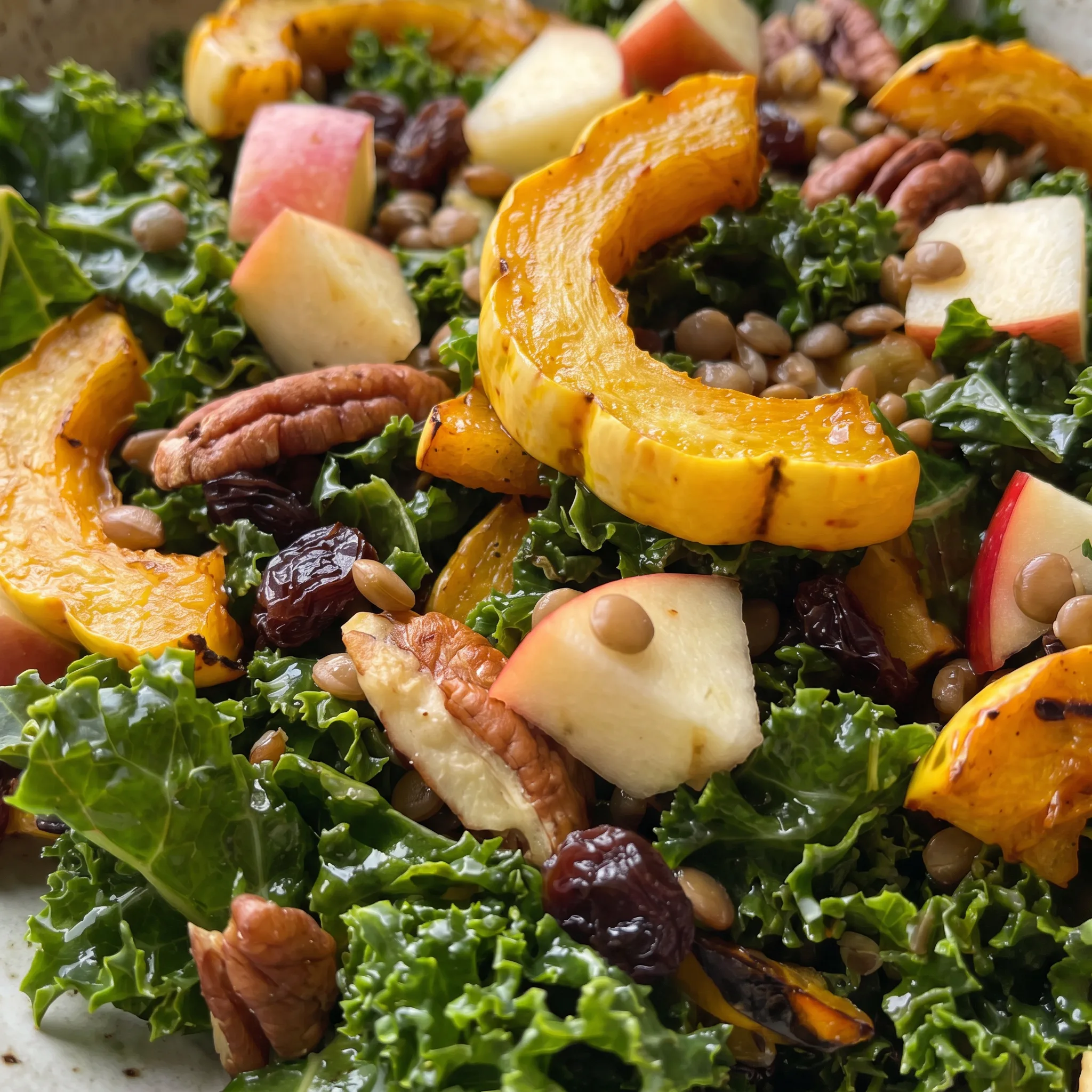
Choosing the Right Ingredients for This Salad
Curly kale: Look for leaves that are deep green and crisp, avoiding any yellowing or wilting.
Delicata squash: Pick one that feels heavy for its size with firm, unblemished skin; no need to peel.
Pecan halves: Use raw pecans so they toast evenly in the salad, adding crunch without bitterness.
Brown lentils: Cook them just until tender but still holding their shape; they should not be mushy.
Apple: Choose a crisp, tart variety like Honeycrisp or Granny Smith to balance the sweet dressing.
When you massage kale with salt, the salt draws out moisture and helps break down the pectin in the cell walls, making the leaves tender. You will feel the leaves shrink and become silky; if they still feel stiff and resist folding, you have not massaged enough. Stop only when the leaves are uniformly pliable and have reduced in volume by about a third.
Knowing when the kale is ready and the squash is done
Reading the kale’s color and feel
After two to three minutes of kneading, the leaves should look darker and slightly wilted, and the volume will have dropped noticeably. They should feel silky, not brittle or waxy. If they still resist your fingers, keep going for another minute, the salt draws out moisture, and you’ll feel the texture give way.
Stop when a leaf folds without cracking. Over-massaging turns it limp and watery, so watch for that sheen of released liquid on the bowl.
Checking the squash for golden edges
At the ten-minute mark, the squash should be browning on the bottom. Flip each piece; if it sticks, it’s not ready, give it another minute or two.
After the second roast, the edges should be caramelized and the flesh tender enough to pierce with a fork. If some pieces are still pale, they need more time; if they’re nearly black, they’re past the sweet spot. The contrast between crisp exterior and creamy interior is what you’re after.
Seeing the dressing emulsify
When you shake the jar, the dressing should look uniformly cloudy and slightly thickened, not separated into obvious oil and vinegar layers. It will cling to the kale rather than pool at the bottom.
If it separates while you’re tossing, that’s normal, give it another shake before drizzling the second half. A well-emulsified dressing coats every leaf evenly, so you get flavor in each bite instead of a hit of oil here and a tang there.
Feeling the right coat on the greens
After tossing the kale with half the dressing, each leaf should be glossy but not dripping. The dressing should cling, not slide off.
If it pools at the bottom, you’ve used too much, but you’ve only used half, so it should be fine. The leaves should look seasoned and slightly slick, which tells you they’ll hold up to the heavier toppings without getting soggy. If they look dry, add a little more dressing before the toppings go on.
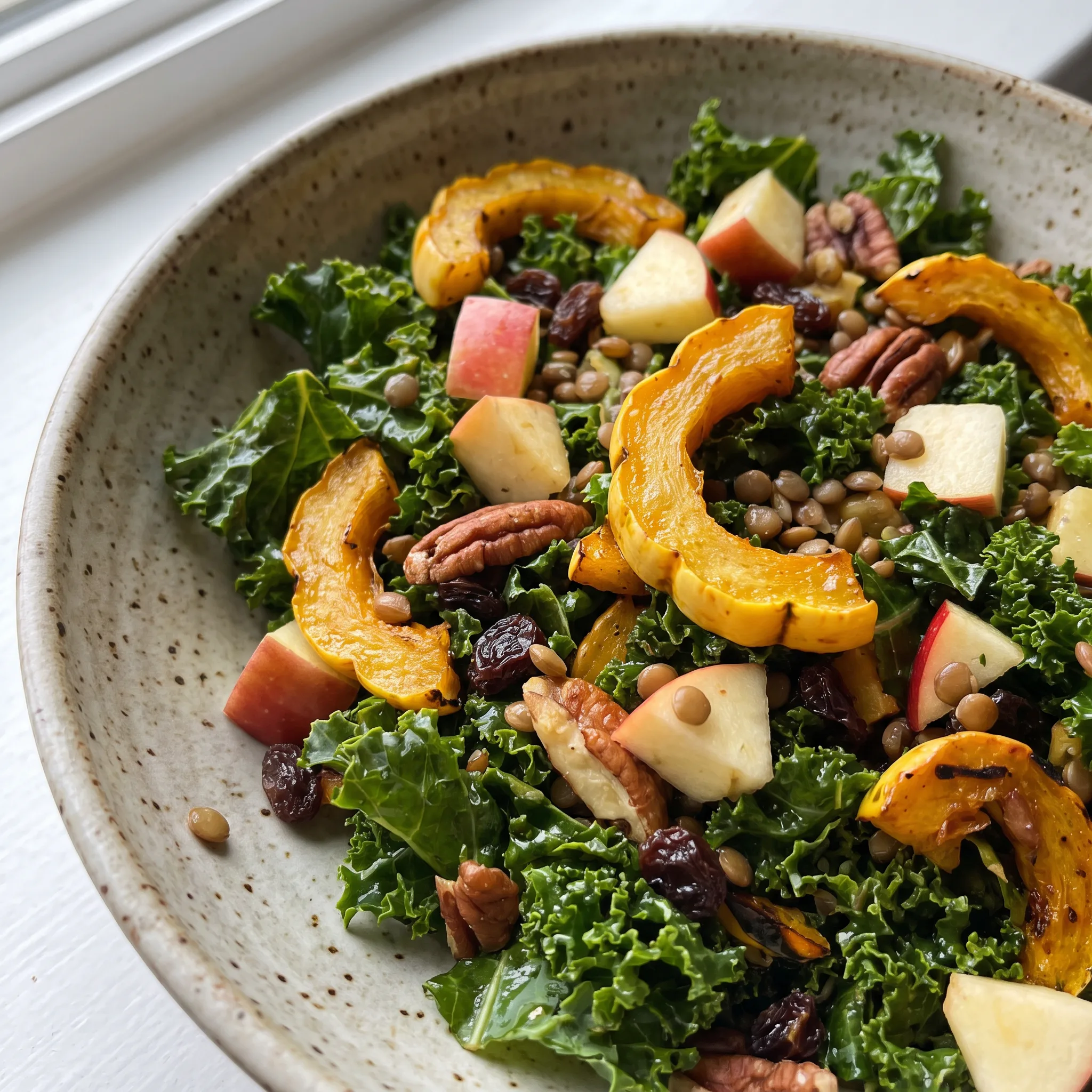
Kale Salad with Roasted Squash and Maple Balsamic
Ingredients
Method
- Place the de-stemmed kale into a large salad bowl. Dust with a pinch of sea salt and knead the leaves with your hands for 2-3 minutes until they soften. Put aside.
- Set the oven to 400°F (205°C). Rinse the squash, then split it lengthwise and scoop out the seeds. Cut into half-moons and put them in a bowl.
- Mix the squash pieces with oil, salt, and pepper. Spread them on a greased baking sheet with sides, making sure they are in a single layer.
- Roast for 10 minutes, then turn the pieces. Continue roasting for another 10-15 minutes until both sides are golden. Take out and let cool.
- Put all dressing components into a mason jar. Screw on the lid securely and shake vigorously until well blended.
- Pour half the dressing over the massaged kale in the salad bowl. Mix thoroughly to coat.
- Add the cooled squash and the remaining toppings: pecans, lentils, apple, and raisins.
- Drizzle the rest of the dressing over everything and toss to mix evenly. Plate and savor!
Storing and Serving This Autumn Kale Salad
This salad is at its best right after you toss it. The kale is tender, the squash is warm, the apples are crisp, and the pecans are crunchy.
Serve within 30 minutes of adding the dressing and toppings, because the kale will start to wilt and the apples will brown. If you’re making it ahead, keep the components separate: massage the kale and store it in a bag, roast the squash and keep it in a container, and mix the dressing in its jar. Chop the apple just before serving, then toss everything together.
Leftovers will keep for a day, but the apples lose their snap and the pecans soften. The kale will continue to wilt, and the dressing will make everything more limp. If you have leftovers, you can revive them with a few extra pecans and a fresh apple.
The squash and lentils freeze well on their own, but the dressed salad doesn’t hold up to freezing. Store leftovers in an airtight container in the fridge.
Let the salad sit at room temp for 10 minutes before serving if you like, but don’t wait longer than a day.
Swapping the Squash and Beyond
Delicata squash: Butternut squash. Butternut needs peeling, and its denser flesh roasts slower. Cut it smaller and add 5 to 10 minutes to the roast time.
The flavor lands close, but the texture turns softer and less caramelized at the edges.
Pecan halves: Walnuts or pumpkin seeds. Walnuts bring a similar crunch but a touch more bitterness.
Pumpkin seeds stay crunchier and lighter. Both work, but toast them first to keep them crisp against the dressing.
Brown lentils: Chickpeas or quinoa. Chickpeas add a firmer bite and more heft; quinoa turns lighter and fluffier. Both will change the salad’s balance, so start with the same amount the recipe uses and adjust to your taste.
Apple: Pear or fuyu persimmon. Pears soften quicker and read sweeter; fuyu persimmons stay crunchy but less tart. Choose based on what you want against the dressing, keeping the crispness matters more than the exact fruit.
Tips
- If your delicata squash is on the smaller side, roast it whole: slice it into rings instead of half-moons. The rings roast faster and more evenly, and they look striking in the salad. Just remember to remove the seeds before roasting.
- When you massage the kale, work in batches if your bunch is large. Kneading a huge pile at once can be tiring and uneven. Split it into two or three handfuls, massage each for a minute, then combine and toss with the dressing. This ensures every leaf gets tender.
Frequently Asked Questions
Can I make this salad ahead of time?
Yes, but keep everything separate until you’re ready to eat. Massage the kale and stash it in a bag, roast the squash and store it in a container, and shake the dressing in its jar. Chop the apple just before serving, then toss.
Leftovers will keep for a day, though the apples lose their snap and the pecans soften.
How do I keep the apples from browning?
The best fix is to dice the apple right before you toss the salad. If you’re prepping ahead, a quick toss in a little lemon juice helps, but it’ll change the flavor slightly. The recipe’s dressing is balsamic-based, so it’s acidic enough to slow browning once mixed in.
For a make-ahead situation, keep the apple whole until the last minute, that’s the simplest way.
Is this salad served warm or cold?
It’s best served warm, right after you toss it. The roasted squash is still warm, and the kale is tender from the massage. Letting it sit turns the apples brown and softens the pecans.
If you have leftovers, let them sit at room temp for 10 minutes before serving, but don’t wait longer than a day.
