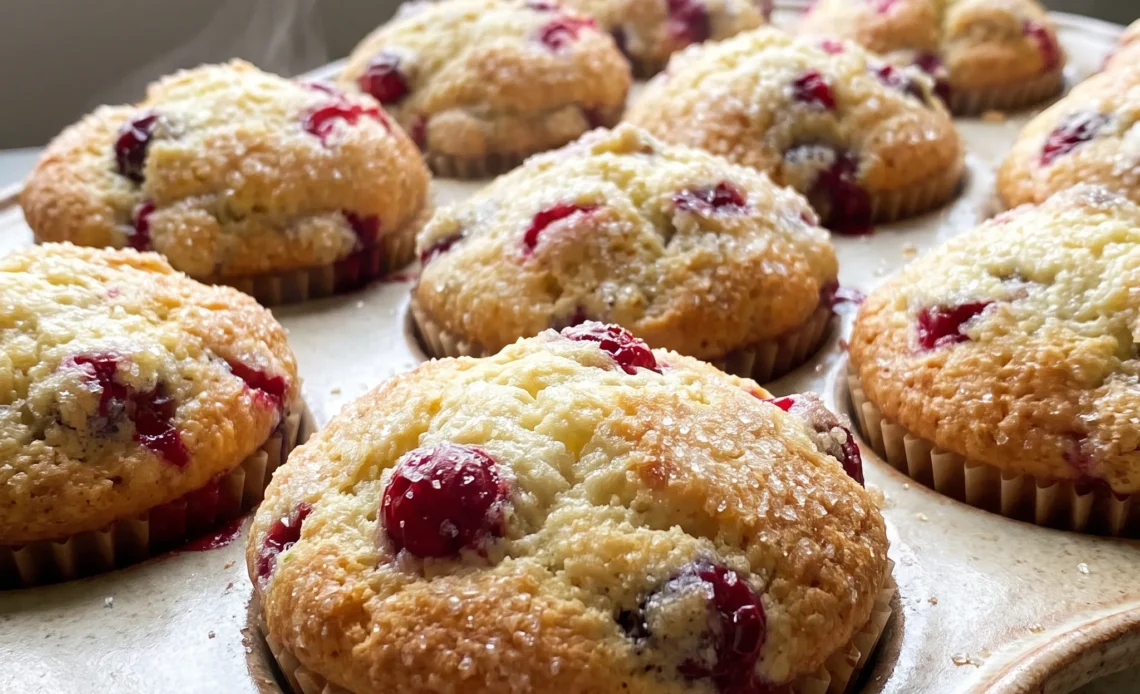
The trouble with most cranberry muffins is they’re one-note sweet, the berries lost in a sugar haze. You bite in expecting that sharp, tart pop and get a vague sweetness instead.
These are not those. There’s a real tug-of-war here: the almond extract steps up first with its nutty, almost cherry-like perfume, then the cranberries punch through with their bright acidity, and the tender, oil-rich crumb catches the whole thing.
Getting that balance right takes a gentle hand with the berries and a watchful eye on the oven, because a muffin that’s overmixed or overbaked turns tough and muted. But when the tops crack and the berries burst, you’ve got a breakfast that actually tastes like the fruit in its name. These cranberry muffins are worth the effort.
The Almond Backbone
Almond extract does more than flavor these muffins; it sets the tone. Tart cranberries need something to push against, and that something is a nutty, almost cherry-like perfume. A full teaspoon and a half is enough to make itself known without turning the crumb into a marzipan bar.
Vanilla would sit quietly in the background, sweet and warm, but almond extract steps forward. You taste it first, then the berries hit, then the sweetness of the muffin rounds it out. That sequence is the whole point.
The extract’s intensity holds up to the oven’s heat, where a lighter flavor might fade. If you’ve ever wondered why a cranberry muffin tastes flat, this is often the missing note.
Why Oil Wins Here
Oil is liquid at room temperature, and that’s the whole secret. Butter, once melted, can do the same job, but here oil is doing something else.
It coats the flour proteins so they form less gluten, which keeps the crumb tender. You can feel that tenderness in the way the muffin squishes slightly when you pull it apart.
The oil also stays liquid in the baked muffin, so each bite keeps a moistness that butter can’t match once it cools and firms up. In this batter, the oil blends right into the milk and eggs without any creaming step.
That means a smoother, more uniform crumb, no butter pockets. The result is a muffin that stays soft even the next day, if you have any left.
The Berry’s Own Moisture
Cranberries bring their own water to the party. Frozen ones are especially juicy, and they may bleed a little red into the batter, but that doesn’t hurt anything.
What matters is that each berry stays whole enough to burst in the oven, releasing that sharp juice that cuts the sweetness. If you stir too hard, you break the berries and the batter turns pink and streaks, which is fine but less pretty.
A gentle fold is all it takes. The berries’ tartness is the counterweight to the sugar, so you get a balanced bite, not a sugar bomb. And because they’re berries, not dried fruit, they don’t soak up the batter’s liquid, so the muffin stays moist where it should be.
A Crunch on Top
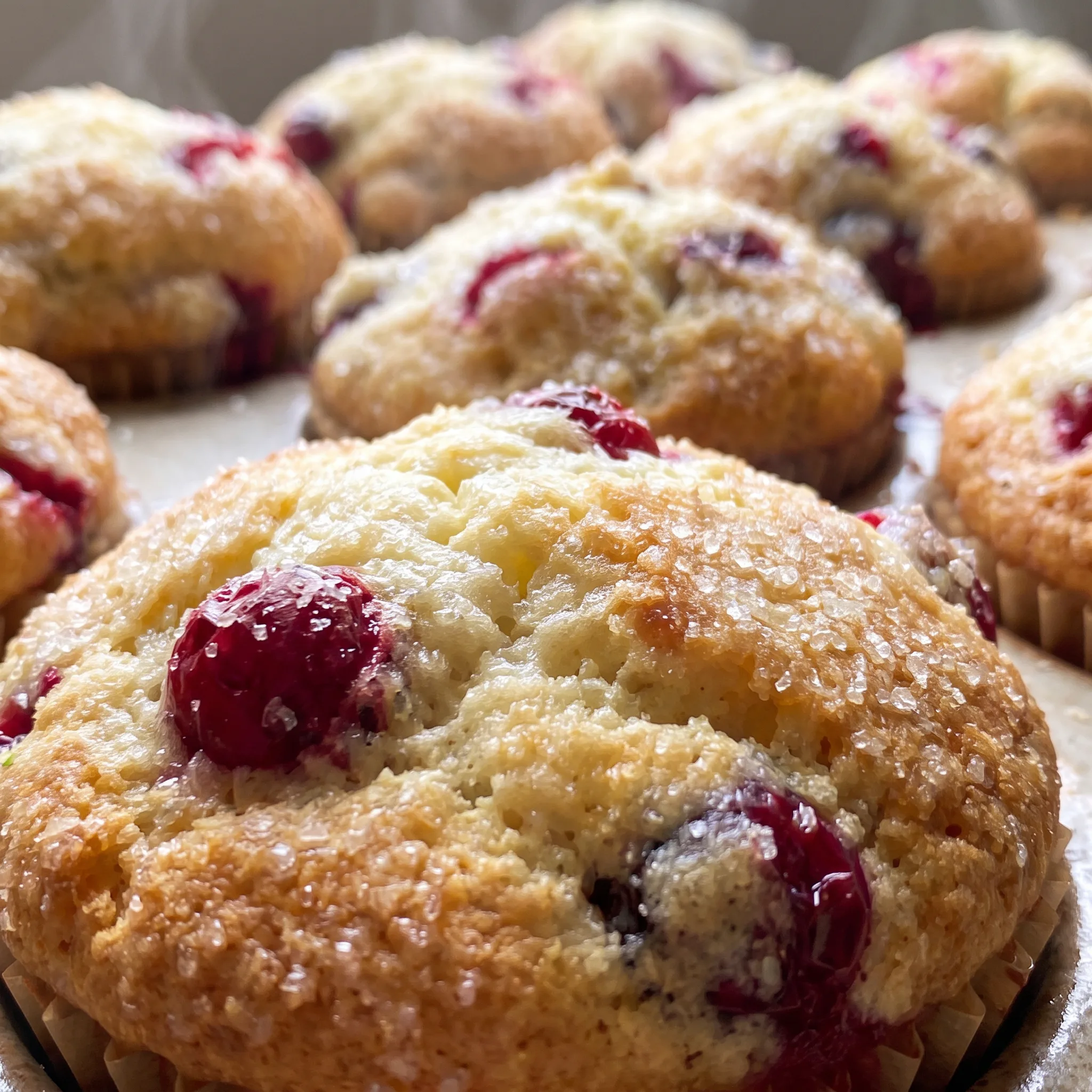
Sparkling sugar gives the muffin top a crackle that the soft crumb underneath doesn’t have. It’s a textural contrast you notice with the first bite. Those coarse crystals stay intact during baking, so you get little bursts of crunch against the tender dome.
The sparkle also catches the light, making the muffins look finished, like they came from a bakery. But it’s not essential.
If you skip it, the muffin is still good, just with a plain top. The sugar doesn’t change the flavor much, just adds a bit of sweetness and that pleasant resistance.
If you want the visual pop and the crunch, it’s worth the extra step. Otherwise, it’s a matter of what you’re in the mood for.
Shopping the Tart and the Sweet
Cranberries: Fresh or frozen both work; if frozen, no need to thaw, just fold them in frozen.
Almond extract: Stick with almond extract for that forward note; vanilla won’t give the same pop.
Vegetable oil: Any neutral oil works, just avoid ones with a heavy flavor that will clash.
Milk or half-and-half: Either is fine; half-and-half makes it a touch richer, but milk keeps it lighter.
Sparkling sugar: Skip if you don’t have it; the muffin still bakes up fine with a plain top.
Once flour is hydrated, mixing begins to form gluten networks. Overmixing, especially when folding in the cranberries, creates excessive gluten development, which results in a dense, tough texture instead of a tender, airy crumb. The recipe calls for gentle stirring to distribute the berries, but vigorous or prolonged mixing can easily overwork the batter.
Judging the Batter and the Bake
When the batter looks right
Whisk until the mixture is smooth, but stop as soon as it comes together. Overmixing develops gluten, which makes muffins tough and dense rather than tender.
The batter should be thick enough to hold a ribbon when you lift the whisk, but not stiff. If it looks lumpy after a few strokes, that’s fine; a few small lumps bake out.
But if you keep going until it’s silky, you’ve probably worked it too much.
Folding in the berries without bruising them
Cranberries are sturdy but can crack if stirred hard. A gentle fold with a spatula is enough to distribute them evenly.
You want each berry whole and coated in batter, not crushed into juice. If the batter turns pink, you’ve been too rough.
That won’t ruin the texture, but the color will streak and you’ll lose the distinct burst of tartness in each bite. Fold just until no dry flour remains and the berries are spread through, about a dozen turns.
Reading the muffin tops for doneness
At 25 minutes, the tops should be golden and spring back when you press a finger gently in the center. The edges will have pulled slightly from the pan. If the tops still look pale and wet, give them a couple more minutes, but check every 2 minutes after that.
Overbaking dries the crumb and toughens the edges. A toothpick inserted in the center should come out with a few moist crumbs, not wet batter. That’s the sign to pull them.
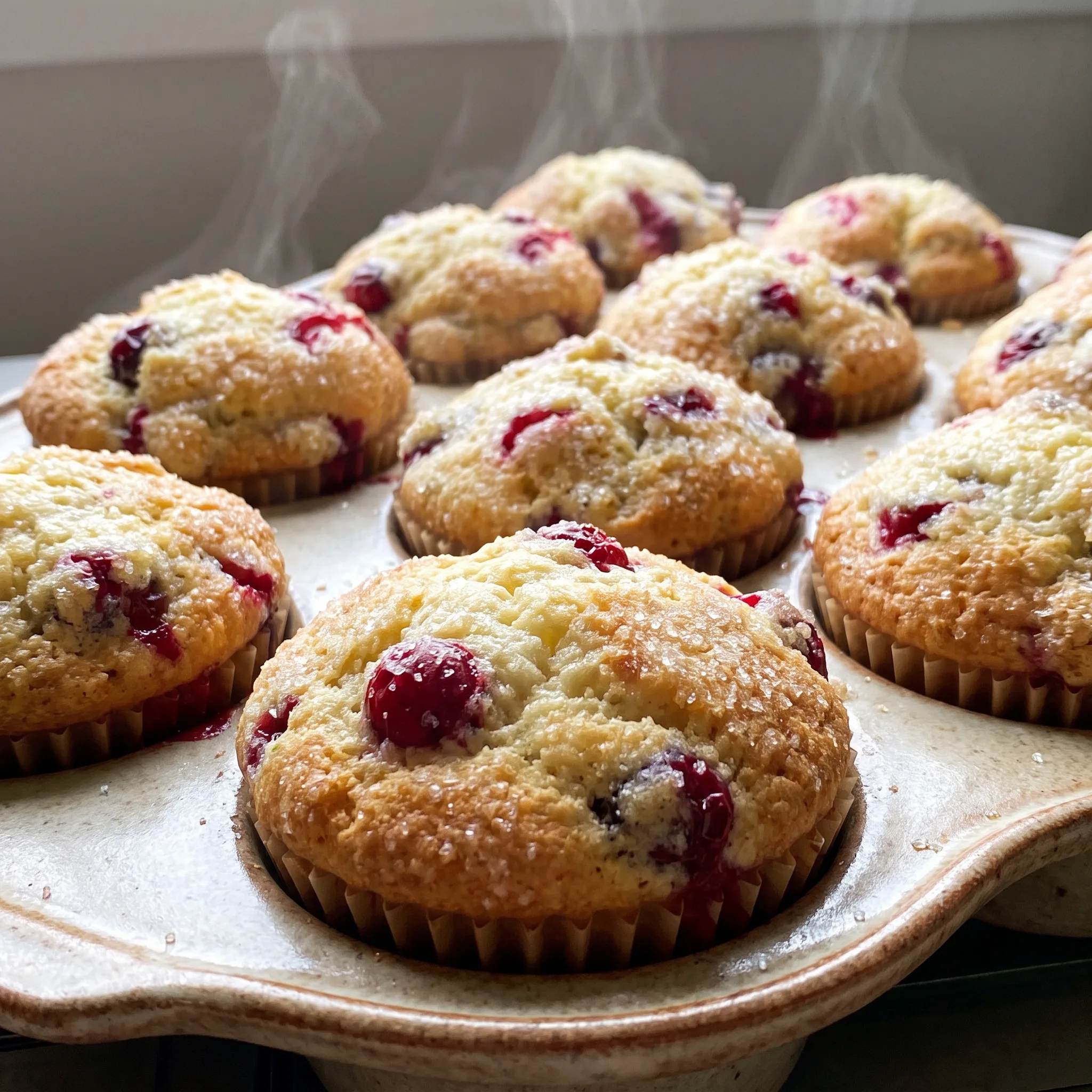
Fresh Cranberry Muffins
Ingredients
Method
- Heat oven to 350°F (175°C). Coat a 12-cup muffin tin with butter or insert paper liners.
- In a large bowl, mix flour, sugar, baking powder, baking soda, and salt with a whisk.
- Pour in vegetable oil, milk, eggs, and almond extract; whisk until the mixture is smooth.
- Gently stir in cranberries until just distributed.
- Spoon batter equally into the muffin cups. If desired, dust the tops with sparkling sugar.
- Bake for approximately 25 minutes, until the muffins have risen and their tops are just beginning to brown.
- Allow them to cool inside the muffin tin prior to removal.
Storage and Serving
These muffins are at their best within two days, when the crumb is still tender and the cranberries hold their shape. Store them in an airtight container at room temperature; they’ll keep for about three days.
After that, the tops soften and the berries lose their pop, though they’re still fine to eat. If you want to keep them longer, freeze the muffins in a zip-top bag for up to a month. Thaw at room temperature or warm them briefly in a microwave.
The sparkling sugar topping loses its crunch once stored, so if you’re making ahead, skip the sugar and sprinkle it on just before serving. Reheat a stored muffin for 10 to 15 seconds in the microwave to bring back some moisture, but don’t overdo it or the texture turns gummy. For the best texture, serve the muffins within a few hours of baking, while the tops are still crisp and the interior is moist.
Tips
- Before you start, drop a teaspoon of baking powder into a cup of hot water. If it fizzes vigorously, it’s still active; if it barely bubbles, it’s past its prime and your muffins won’t rise properly. This takes ten seconds and saves you from a flat batch.
Swapping Without Losing the Tart
Cranberries: Dried cranberries, rehydrated. Rehydrate 3/4 cup dried cranberries in hot water for 10 minutes, drain well, then use the same 2 cups the recipe calls for.
The texture will be softer and less likely to burst, so you lose some of that juicy pop. The tartness also fades; you’ll need to balance the sweetness, maybe cutting sugar by a tablespoon or two, but the almond extract still carries the flavor.
All-purpose flour: Gluten-free 1:1 blend. Use the same 2 cups. The crumb will be a bit more tender and may crumble more easily, especially when warm.
Make sure the blend contains xanthan gum or add 1/2 teaspoon of your own. Don’t overmix; gluten-free batters get gummy if worked too hard.
Milk or half-and-half: Non-dairy milk. Use the same 3/4 cup of plain, unsweetened almond or oat milk. The muffins will be slightly less rich and the crumb a touch more open, but the texture holds up.
Avoid sweetened or flavored milks; they’ll throw off the sugar balance.
Frequently Asked Questions
Can I use frozen cranberries without thawing them first?
Yes, fold them in straight from the freezer. Thawing first turns them soft and they’ll bleed more into the batter, streaking it pink. Frozen berries hold their shape better during the fold and burst in the oven the same way fresh ones do.
Just add a minute or two to the bake time if your batter seems cold.
Why did my muffins sink in the middle?
Most likely the batter was overmixed, which builds too much gluten and makes the crumb dense, so the center can’t hold its rise as it cools. Another possibility is opening the oven door too early, before the structure sets. Next time whisk just until smooth and keep the door closed until the 25-minute mark.
Can I make the batter ahead of time and bake later?
You can, but the muffins won’t rise as high because the baking powder starts working the moment it gets wet. If you need to prep ahead, fill the muffin tin and refrigerate it for up to a few hours, then bake straight from the fridge, adding a couple of minutes. The texture stays close to fresh, though the tops may be slightly less domed.
What’s the difference between these and regular cranberry orange muffins?
These skip the orange zest and juice entirely. The flavor comes from almond extract, which gives a nutty, cherry-like note that stands up to the tart cranberries without any citrus. The result is a muffin that tastes more of the berry itself, with a warmer, deeper background than the bright, zesty version.
