
Deli ham is a pale, damp slice you fold onto bread and forget. A honey baked ham is the opposite thing entirely: dark, sticky, edged in clove, the kind of centerpiece that makes people hover by the cutting board. It takes a slow oven and a bowl of pantry staples whisked together, nothing more exotic than that, but the results hinge on things that don’t show up in a shopping list.
How deep the knife goes when you score it. Whether the foil comes off too soon.
Whether the pan drippings have gone from watery to syrupy. Get those right and the glaze sets into a lacquered shell over meat that stays moist. Get them wrong and you’ve got burnt sugar and dry edges.
Read on for the whole thing.
Why Score the Ham in a Diamond Pattern?
Score marks aren’t just for show. Cutting through the surface opens up the meat so glaze can seep in, and the raised diamonds create edges that catch and hold the sticky mixture. Without them, glaze slides off in sheets, leaving bare patches that taste plain next to the glazed ones.
The depth matters too. Go shallow and the glaze sits on top, easy to wipe away. Cut a little deeper and each pocket acts like a tiny reservoir, so every bite of the carved slices carries some of that sweet-savory coating.
You’ll see the difference when you slice: the glaze follows the cuts, not just the outside.
Texture changes as well. The scored surface crisps and caramelizes in the oven, giving the ham a slightly crackly exterior that contrasts with the tender interior. It also makes the finished ham look intentional, with a pattern that guides your knife when carving.
A ham without scoring looks smooth and plain, and the glaze tends to pool at the bottom of the pan instead of clinging to the meat.
What Keeps the Glaze From Turning Cloying?
Honey and brown sugar alone would make a one-dimensional, sticky-sweet coating. Dijon mustard cuts through that, adding a sharp tang that wakes up your palate and keeps each bite from feeling heavy. You won’t taste mustard as a distinct flavor; it just balances the sweetness.
The spices work the same way. Cinnamon, cloves, and nutmeg bring warmth and a gentle bitterness that rounds out the sugar. Cloves in particular are potent, so a little goes far, and they leave a lingering warmth at the back of your throat.
Nutmeg adds a subtle earthy note that you might not pinpoint but would miss if it were gone.
Black pepper might seem out of place in a sweet glaze, but it adds a faint heat that lingers just long enough to keep things interesting. Together, these savory elements turn a potentially candy-like coating into something you can eat more than a slice of. The glaze should taste balanced on its own: sweet, yes, but with a savory edge that makes you want another bite.
The Two-Stage Bake That Makes the Glaze Shine
Covering the ham with foil for most of the bake is like putting a lid on a pot. It traps steam, keeping the exterior from drying out and the glaze from burning before the ham is heated through.
The ham is already cooked, so you’re really just warming it and letting the glaze set. Without that cover, the sugars in the honey and brown sugar would darken too fast, turning bitter and blackened before the center is hot.
Then you uncover for the final stretch. Now the glaze can do its thing: the moisture evaporates, the sugars concentrate, and the surface turns glossy and caramelized.
You’ll see it go from wet and shiny to sticky and darkened, with a few darker spots at the edges where the heat hits hardest. That’s exactly what you want.
Skip the covered phase and you risk a dry, tough exterior. Skip the uncovered phase and the glaze stays pale and runny, never developing that sticky, candy-like shell. The two stages together give you a moist interior and a lacquered finish.
Does Basting Really Make a Difference?
You already coated the ham before it went in, so why keep spooning glaze over it? Because that first coat sinks in and partly runs off. Basting adds fresh layers, building up a thicker, glossier surface.
Each pass adds another thin coat that sets as it heats, so by the end you’ve got a shell that’s deeply flavored and looks almost lacquered.
It also keeps the surface from drying out. The oven air pulls moisture from the meat, and a periodic splash of glaze replaces some of what’s lost. Without it, you’d get patchy results: some spots dark and sticky, others pale and leathery.
The ham would still be edible, but the presentation suffers and the flavor is uneven.
You’ll notice the difference in the pan juices, too. Basting mingles the glaze with the ham’s natural drippings, creating a richer sauce to spoon over slices. That said, don’t baste so often that you wash off the coating; every 30 minutes is enough to build layers without disturbing what’s already set.
Why Let the Ham Rest Before Carving?
Straight from the oven, the ham is hot and the juices are thin and eager to run. Cut into it right away and they’ll spill onto the cutting board, leaving the meat drier than it should be. A rest gives those juices time to settle back into the meat, so they stay put when you slice.
The texture changes too. Hot ham is soft and can shred under the knife. After resting, it firms up just enough to carve clean, even slices that hold together on the plate.
The temperature also evens out, so you don’t get steaming edges and a cooler center.
If you skip the rest, you’ll likely end up with a puddle of juice and slices that look ragged and taste less moist. The ham will still be warm after 15 minutes, but the difference in juiciness is noticeable. Use that time to make a pan sauce or set the table; the ham isn’t going anywhere.

What to Know Before You Buy the Ham and Build the Glaze
Fully cooked ham (8, 10 lb): Buy one that’s already cooked, not a fresh ham that needs a full bake; check the label for ‘fully cooked’ and avoid spiral-sliced if you want the glaze to stay on.
Honey: Any liquid honey works, but darker varieties like buckwheat bring a stronger flavor that can overpower the spices.
Brown sugar: Pack it firmly into the measuring cup; loose scoops leave you short and the glaze won’t set as thick.
Dijon mustard: Use smooth Dijon, not whole-grain or yellow; the sharpness balances the sweetness without adding texture.
Ground cloves: Cloves are strong, so measure carefully; a little extra can make the whole glaze taste medicinal.
Ground nutmeg: Freshly grated nutmeg has more oils and a brighter aroma than pre-ground, which fades over time.
The glaze is essentially a sugar syrup, and sugar begins to caramelize around 320°F (160°C) and burns above 350°F (175°C). While the ham is covered with foil, steam and moisture keep the surface temperature near the boiling point of water, preventing the sugars from exceeding that threshold. Once uncovered, the full 325°F oven air hits the glaze directly, and the sugars can quickly overcaramelize and turn bitter and black within minutes if not watched.
Reading the Ham at the Moments That Decide the Outcome
Judging how deep to cut the diamonds
Aim for cuts that go maybe a quarter inch into the fat cap, not down into the meat. Through the fat layer gives the glaze somewhere to sit and hold; slice into the pink and the ham dries along those lines and the diamonds fall apart when carved.
If the blade sinks with no resistance, you’ve gone too far. Stop there and don’t widen the cut.
Knowing when the glaze has caramelized enough
During the last 30 minutes uncovered, watch for the surface shifting from wet and reflective to tacky and uneven, with darker patches creeping in at the high ridges of the diamonds. That darker spotting is the sugar setting, not burning. If the whole surface goes matte and deep brown before the ham is heated through, tent the foil back on and pull the pan lower in the oven.
Reading the pan juices for doneness and sweetness
Glaze that runs off during the covered stage collects in the pan and thickens as water cooks away. Thin, watery drippings mean the ham still has time.
Syrupy drippings that coat a spoon mean the sugar has concentrated and the exterior is close to setting. If the pan liquid starts to smell sharp or bitter rather than sweet, the sugars are catching; add a splash of water and re-cover.
Telling when the ham is heated through
An 8 to 10 pound fully cooked ham needs the center warm, not cooked. Push an instant-read thermometer into the thickest part away from bone or fat and look for 130 to 140F. Below that, the slices will feel cool in the middle even when the surface is hot.
Above it, the meat tightens and releases moisture. Check at the 90 minute mark, then again as needed.
Judging the rest by the carving, not the clock
After 15 minutes the ham should feel firm under a press and the juices on the board should be a slow trickle, not a flood. Cut a test slice at the end: if it holds together and the surface stays glossy, it’s ready. If juice still pours out with the first cut, give it another 5 minutes before committing the knife.
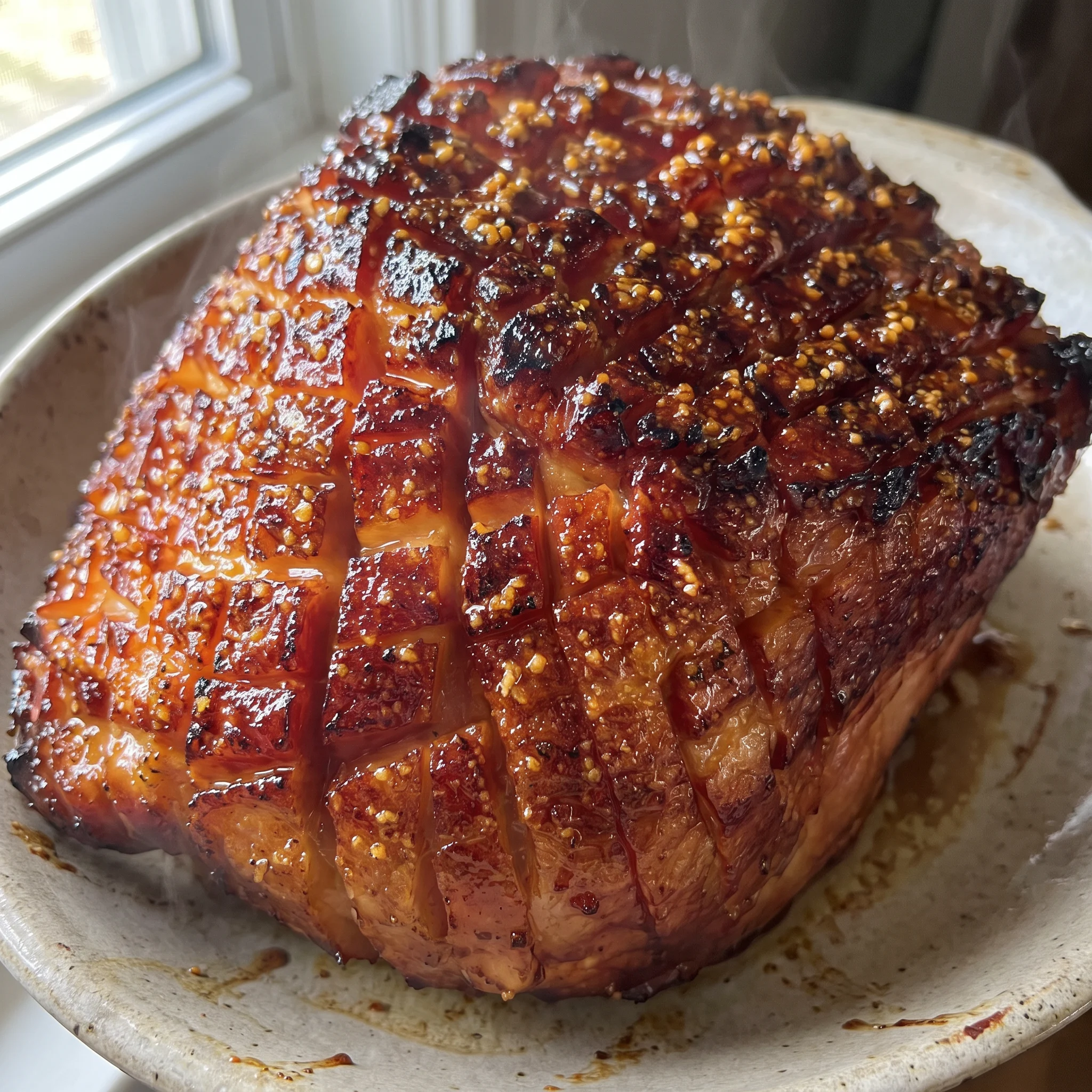
Honey Baked Ham with Brown Sugar Glaze
Ingredients
Method
- Set oven temperature to 325°F (165°C).
- Cut a diamond pattern into the ham’s surface.
- Combine honey, brown sugar, Dijon mustard, cinnamon, cloves, nutmeg, and black pepper in a bowl, whisking until smooth.
- Coat the ham with the glaze, pressing it into the scored cuts.
- Place the ham in a roasting pan and cover it loosely with foil.
- Roast for 1.5–2 hours, spooning glaze over every 30 minutes.
- During the final 30 minutes, uncover to let the glaze caramelize.
- Let the ham rest 15 minutes before carving and serving.
Where Swapping in This Honey Glaze Helps and Where It Backfires
Honey: Maple syrup, same 1 cup. The glaze will be thinner and taste less floral, with a maple note that steps on the cinnamon and cloves. Expect a runnier coating that drips off the ham during the covered stage, so you’ll need to baste more often or reduce the pan juices before serving.
The finished surface stays tacky rather than set, and the color is lighter.
Brown sugar: Granulated sugar plus 1 tablespoon molasses for the full 1 cup (220 g) packed. The molasses brings back some of the moisture and caramel depth, but the glaze won’t cling as well because granulated sugar dissolves into a thinner syrup. You’ll see more glaze pooling in the pan and less sticking to the scored diamonds.
The flavor is close, though the final lacquer is less glossy and a bit harder.
Dijon mustard: Yellow mustard, same 1 tablespoon. Yellow mustard is milder and more vinegar-forward, so it won’t cut the sweetness as sharply. The glaze tastes flatter, and without that tang the honey and brown sugar dominate.
You can add an extra teaspoon of cider vinegar to bring back some bite, but the texture stays the same.
Ground cinnamon, cloves, nutmeg, black pepper: Do not swap or adjust the amounts. These spices are balanced against each other and the sugar.
Cloves especially turn medicinal if increased, and cutting them leaves the glaze one-dimensional. If you’re missing one, omit it rather than substituting a different spice; the glaze will still work, just with a slightly different character. The black pepper is there for a faint heat, not to be tasted on its own.
Tips
- Buy a ham that leaves at least two inches of clearance on all sides of your roasting pan, because glaze you spoon over the top needs to run down and pool around the base, not spill onto the oven floor. A tight fit means the sides stay unglazed and the pan juices scorch against the hot metal, which turns the drippings you want for serving bitter.
Keeping Leftover Ham Moist and Serving It Warm
Carved ham dries fast once the cut faces hit air, and the glaze turns tacky and dull in the fridge. Eat it within 3 to 4 days for the best texture. Store slices in a shallow container with a few spoonfuls of pan juices or reserved glaze poured over, then press plastic wrap directly onto the surface.
That liquid is what keeps the lean edges from going leathery. Reheat gently, covered, at 300°F just until the center is warm, 10 to 15 minutes for a plate of slices, or in a skillet with a splash of juice over low heat. High heat tightens the meat and pushes out moisture.
The ham freezes acceptably, sliced and packed with its juices, for up to 2 months, though the glaze loses its gloss and the texture softens; thaw overnight in the fridge. Serve warm or at room temperature. If you want a fresh finish, warm a spoonful of glaze and brush it on just before the ham goes to the table, not before reheating.
Frequently Asked Questions
Can I make the honey glaze ahead of time?
Yes, and it’s one of the few things here that improves with a wait. Whisk the honey, brown sugar, mustard, cinnamon, cloves, nutmeg, and pepper together, cover, and refrigerate.
The sugar draws moisture out of the honey and the spices hydrate, so the mixture thickens and tastes rounder than when it’s freshly stirred. Take it out 20 to 30 minutes before you need it, because cold glaze clings in stiff clumps instead of spreading into the score marks.
Give it a quick whisk if anything has settled at the bottom.
Why did my glaze burn or become too dark?
The most common cause is the foil coming off too early or never going on at all. That first covered stretch is what keeps the sugars from darkening before the ham heats through, and once they’ve gone past amber into black, there’s no pulling them back. If you catch dark patches creeping across the whole surface rather than just the ridges, tent the foil back on and move the pan to a lower rack.
A second cause is a pan sitting too close to the top element, which hits the glaze with direct heat while the center is still cool. Dark spots at the tips of the diamonds are fine; a uniformly matte, deep-brown surface means the sugar has gone too far.
How do I know when the ham is fully heated through?
An instant-read thermometer pushed into the thickest part, away from bone and fat, should read 130 to 140F. The ham is already fully cooked, so you’re chasing warmth, not doneness.
Below that range, the slices taste cool in the middle even when the outside is hot; above it, the meat tightens and squeezes out moisture. Start checking around the 90 minute mark and again as needed. Syrupy pan drippings that coat a spoon are another sign you’re close.
What is the difference between this honey baked ham and a classic glazed ham?
This one leans on honey as the primary sweetener with brown sugar backing it up, plus cinnamon, cloves, and nutmeg for warmth and Dijon and black pepper to keep it from going flat. A classic glazed ham usually runs on brown sugar, mustard, and vinegar or pineapple, which gives a sharper, more acidic edge and a thinner coating.
The spice blend here reads sweeter and warmer, closer to a holiday spice profile, and the two-stage covered-then-uncovered bake builds a thicker, stickier shell. If you want the tangier old-school version, that’s a different recipe, not a tweak to this one.
