
Most muffin recipes start with butter and sugar, and this one doesn’t. The first move is pouring orange juice over dried cranberries and letting them sit, which is why the total runs longer than the bake suggests.
Skip it and you’ll taste the difference: the fruit stays tough and pulls moisture from the batter, so the last muffins in the tin bake tighter than the first. Soaking fixes texture, then goes further, because the juice carries the cranberry flavor back into the bowl with it. These cranberry orange muffins lean on oil and a single egg for a crumb that stays soft without going spongy, and the batter comes together with a whisk.
The real trouble is the finish. Pull them too late and they dry out within a day.
Dried cranberries are leathery and absorb liquid; soaking plumps them so they don’t steal moisture from the batter. The orange juice used for soaking is not discarded, it carries cranberry and orange flavor into the batter. Skipping the soak leaves hard, dry berries that stay tough after baking.
Why Soak Dried Cranberries for Muffins?
Dried cranberries start out leathery, almost like little raisin‑shaped pebbles. That texture comes from removed water, and if you fold them straight into a batter, they’ll pull moisture from the liquid around them.
The result is berries that stay tough and a batter that tightens up as it sits. A ten‑minute steep in orange juice turns them plump and soft, so they bake into chewy pockets instead of hard bits. The juice does double duty: it gives the berries back some liquid, and it takes on their sweet‑tart flavor, which then goes into the bowl.
When you pour the whole thing in, including the juice, you’re adding a cranberry‑infused orange base that tastes like it came from fresh fruit. Skip this step and you’ll notice the difference in every bite: the berries remain dry and the muffins seem to lack that deep fruit flavor.
Soaking is a small wait that pays off in texture and taste.
What Does Orange Zest Add to Muffins?
Orange juice brings acidity and liquid, but its most fragrant parts are fragile. Most of that bright, floral aroma bakes off in the oven, leaving only a mild tang behind. Zest is where the real perfume lives.
Those tiny bits of peel are packed with oils that don’t evaporate away at 375°F. When you grate the orange directly over the bowl, those oils land right in the batter, and their scent will hit you as you mix. After baking, the muffins carry a clean, concentrated orange note that you can smell before you even take a bite.
That’s why a recipe can call for both juice and zest: they do different jobs. The juice moistens and adds a background tartness; the zest delivers the unmistakable citrus punch.
If you only use juice, you’ll wonder where the orange went. With zest, it’s unmistakable.
How Oil and Egg Keep Muffins Tender
Muffins walk a line between cake and quick bread. Too much structure and they turn rubbery; too little and they crumble.
Vegetable oil helps because it coats the flour particles, slowing down the formation of long gluten strands. That means the crumb stays soft and breaks easily under your teeth. One egg is just enough to hold everything together without adding toughness.
The yolk brings a little richness, the white provides structure, but the amount is modest, so you don’t get a spongy texture. Meanwhile, the orange juice and oil together keep the batter loose and moist, even after twenty minutes in the oven. The muffins come out with a tender, even crumb that’s neither dry nor heavy.
That balance is deliberate: liquid fat for softness, a single egg for cohesion, and enough liquid to keep the crumb from feeling chalky.
Dried Cranberries vs. Fresh in Baking
Fresh cranberries pop and release juice when baked, which can make muffins soggy and tint the batter pink. Frozen ones are even wetter. Dried cranberries sidestep all that.
They’re shelf‑stable, intensely sweet‑tart, and they don’t bleed color or water into the batter. That means your muffins stay a warm golden brown, not a streaky red.
The trade‑off is their chew. Even after soaking, dried cranberries keep a dense, almost gummy bite that many people find satisfying. They won’t turn into soft, jammy pockets like fresh berries would.
Instead, they offer concentrated fruit flavor and a consistent texture in every muffin. That chewiness is a feature, not a flaw. If you’ve ever had a muffin where the fruit going soggy, you’ll appreciate how dried cranberries hold their shape.
They stay distinct, giving each bite a little tang and resistance. The soak brings back some plumpness, but the character remains firmly chewy.
What to Look For Before the Batter Comes Together
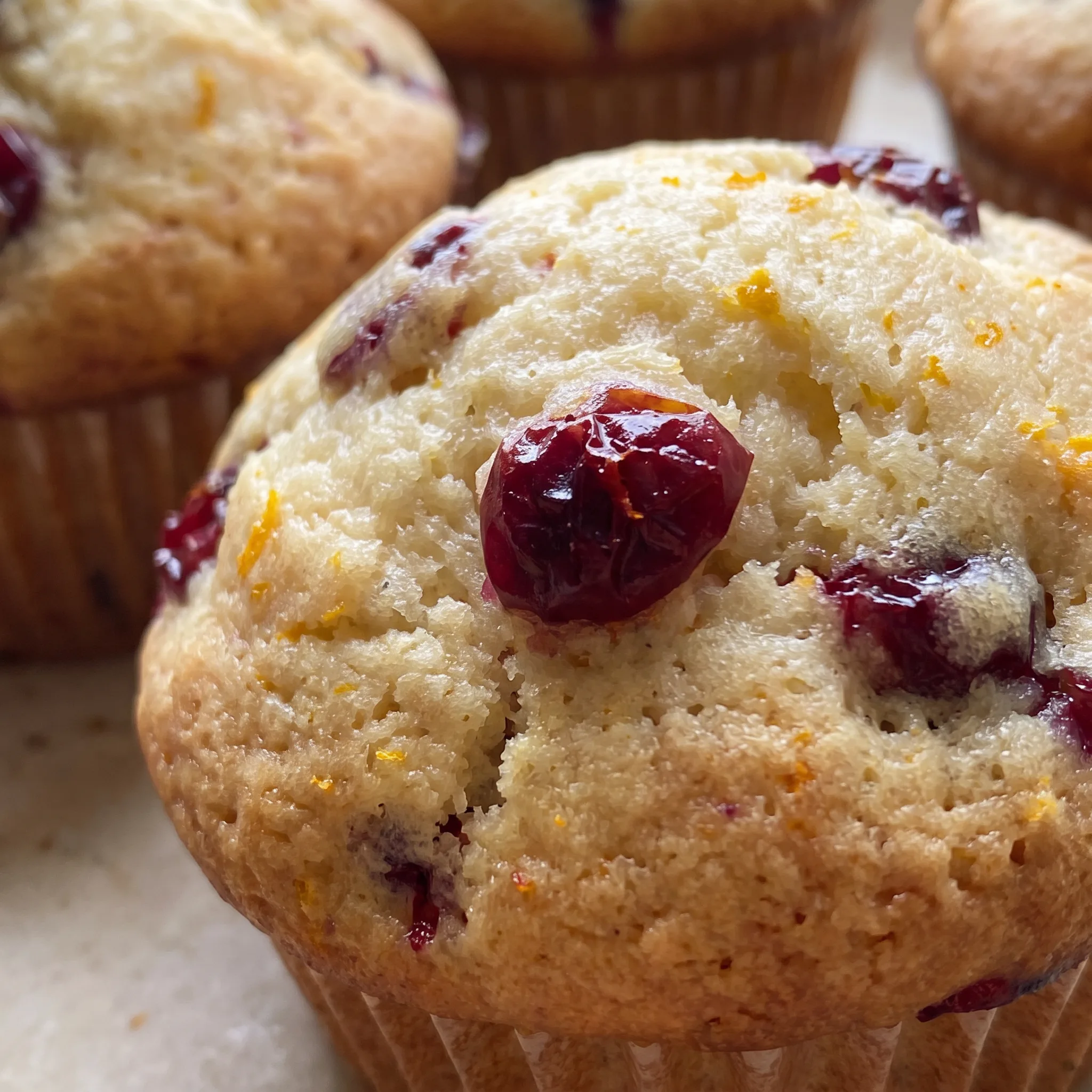
Dried cranberries: They should be plump and soft after steeping, not tough at the center, so squeeze one to check.
Orange juice: Use a juice with no added sugar; the sweet-tart flavor comes through better than a sugary blend.
Orange zest: Grate only the colored peel, avoiding the white pith underneath, which tastes bitter and won’t soften in the oven.
Vegetable oil: A neutral oil keeps the orange and cranberry flavors clear; olive oil would overpower them.
All-purpose flour: Stick with all-purpose for the structure these muffins need; whole wheat or bread flour would make them dense.
How to Tell When These Muffins Are Working
Judging whether the cranberries have soaked long enough
Ten minutes in the juice should leave each berry swollen and soft to the touch, not stiff in the middle. Squeeze one: if it gives easily, they’re ready. If the centers still feel firm, give them a few more minutes.
Under-soaked berries stay chewy and drink moisture from the batter as it sits, so the last muffins in the tin bake tighter than the first.
Reading the batter after the juice goes in
The steeped cranberries carry their orange juice into the bowl, and that liquid sets the batter’s consistency. It should fall off a spoon in a thick ribbon, not pour like pancake batter and not clump.
Too loose and the muffins spread flat over the liners; too stiff and they crown into dry peaks. A splash more juice or a spoonful of flour corrects either before the scoop goes in.
Knowing when the orange zest is doing its job
Grate only the colored peel, stopping before the white pith underneath. That white layer tastes bitter and no amount of baking hides it.
The zest should smell sharp and bright the second it hits the bowl, and that scent should still be there when you lean over the mixed batter. If it smells flat, the orange was pale or the zest sat too long.
The moment the muffins are done and not a minute more
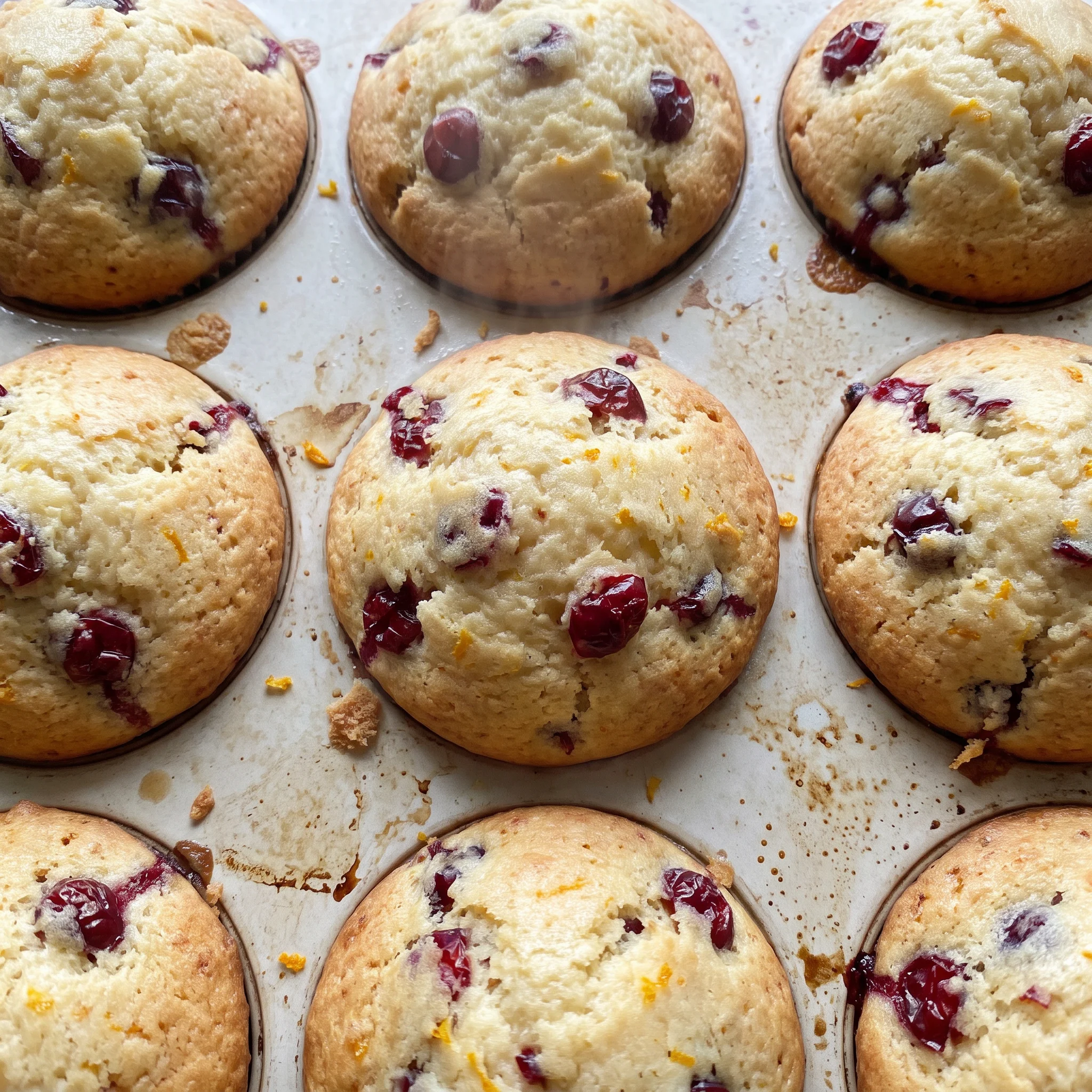
Eighteen to twenty minutes is a window, not a command. Pull them when the domes are set, spring back under a light press, and a toothpick in the center comes out with only a few moist crumbs. A clean toothpick means you waited too long; those muffins turn dry and tough within a day.
If the tops brown before the centers set, drop the heat and give them a couple more minutes.
Cranberry Orange Muffins with Orange Zest
Ingredients
Method
- Set oven temperature to 375°F (190°C).
- Let the dried cranberries steep in the orange juice for 10 minutes.
- In a large bowl, combine the flour, sugar, baking powder, baking soda, and salt by whisking.
- Introduce the egg, vegetable oil, orange zest, and the steeped cranberries along with their orange juice; whisk until the mixture is uniform.
- With an ice cream scoop, portion the batter into muffin liners, filling each 3/4 full.
- Bake for 18–20 minutes.
Substitutions for Cranberry Orange Muffins: What You Can Swap and What You Can’t
Orange juice: Replace with an equal amount of another citrus juice, like lemon or grapefruit, or use a pourable fruit juice such as apple or pineapple. You can also use water plus a teaspoon of orange extract, but start with the same 3/4 cup the recipe calls for and adjust after testing.
Citrus swaps keep the acidity but change the aroma; lemon will be sharper, grapefruit more bitter. Apple juice adds sweetness without tang, and the muffins will taste flatter.
Water plus extract gives orange scent but no acidity, so the crumb may be slightly less tender. The juice is both the soak liquid and the batter liquid, so any replacement changes hydration: if you use a thicker juice like pineapple, the batter may be stiffer and you might need a splash more liquid to get the right consistency.
Vegetable oil: Use the same amount of melted coconut oil, canola oil, or another neutral oil. For a butter swap, melt 5 tablespoons (70 g) unsalted butter and use that in place of the 1/3 cup oil.
Melted coconut oil works fine but will solidify if the batter sits in a cool room, so mix it in quickly. Butter brings flavor but also water, about 15% of its weight, so the batter will be slightly wetter and the muffins may brown faster.
Olive oil, even light, will taste strong against the orange and cranberry; save it for another recipe.
Granulated sugar: Swap in the same amount of light brown sugar, coconut sugar, or a granulated sugar substitute that measures cup for cup like monk fruit blend. For a less sweet muffin, reduce to 1/2 cup (100 g) and add 2 tablespoons of orange juice to keep the batter loose. Brown sugar adds moisture and a molasses note that pairs well with cranberry; the muffins will be a touch darker and softer.
Coconut sugar is less sweet and slightly gritty, so the tops may not crackle the same way. Sugar substitutes vary in sweetness and browning, so start with the same 3/4 cup and taste the batter before baking; if it’s not sweet enough, add a tablespoon more.
Cutting sugar without adding liquid makes a drier, denser muffin because sugar holds water and tenderizes.
Dried cranberries: Use the same weight (120 g) of dried cherries, raisins, or chopped dried apricots. Fresh or frozen cranberries are not a straight swap: if you use them, toss 1 cup (100 g) fresh or frozen berries with 1 tablespoon flour and fold them in at the end, skipping the soak and reducing the orange juice in the batter to 1/2 cup (120 ml). Other dried fruits soak up the juice similarly, but their flavors differ: cherries are sweeter, raisins more neutral.
Fresh or frozen cranberries release water and can turn the muffins soggy or streaky pink; the flour coating helps suspend them, and cutting the juice keeps the batter from getting too wet. The texture will be more jammy than chewy, and the bake time may need an extra minute or two.
Stick with dried if you want the consistent chew described in the recipe.
Storage and Serving: When to Eat and How to Keep Them
These muffins are at their best within a few hours of cooling. The orange zest is most aromatic then, and the crumb is tender.
After that, the zest fades and the texture firms. Store leftovers in an airtight container at room temperature for up to two days. The soaked cranberries stay chewy, but the muffins dry out over time.
To refresh, warm in a 300°F oven for 5 minutes. For longer storage, freeze baked muffins in a zip-top bag for up to two months.
Thaw at room temperature. The batter itself doesn’t hold well, so bake before freezing. Serve day-one muffins as is, or with a smear of butter.
No finishing touch is needed; the orange zest is already in the batter. If you want extra citrus, grate fresh zest over the top just before serving, but it’s optional.
Eat within two days for the best texture.
Tips
- Portion with a level ice cream scoop and stop each liner at three-quarters full, because this batter carries 3/4 cup of orange juice plus an egg, and that liquid load makes overfilled cups rise into domes that brown on top while the centers stay raw past 20 minutes. Twelve level scoops also keep the muffins the same size so they all finish inside the 18 to 20 minute window, instead of pulling some early and leaving others in for extra time.

Frequently Asked Questions
Can I make the batter ahead of time and bake the muffins later?
The batter doesn’t hold well, so bake it right after mixing. The orange juice is already working on the flour, and the baking powder and soda start reacting the moment they hit liquid. If you let it sit, you’ll lose lift and the muffins will bake up flat and tight.
Mix, scoop, and get them in the oven.
Why are my muffins dry or tough?
Check your flour first. If you scoop straight from the bag with the measuring cup, you can pack in a couple extra tablespoons, and that’s enough to dry out a batch. Fluff the flour, spoon it into the cup, and level it off.
The other likely cause is overmixing: whisk just until the streaks of flour disappear, because every extra stroke develops gluten and gives you a chewier, tougher crumb. If you’re weighing, 240 grams is the target.
How do I keep the dried cranberries from sinking to the bottom?
Those ten minutes in the orange juice do most of the work. Dry cranberries are light and porous; once they soak up juice, they get heavier and closer to the batter’s density, so they stay put instead of dropping. If you still see them clustering at the base, your batter is probably too thin.
Let it stand a minute, then scoop from the bottom of the bowl so the berries are evenly distributed.
What’s the difference between these muffins and classic cranberry orange muffins?
Classic versions usually call for fresh or frozen cranberries, which burst in the oven and can streak the batter pink. This recipe uses dried cranberries soaked in orange juice, so you get a chewier bite and a clean golden crumb. The orange flavor comes from both juice and zest, and the method skips the electric mixer entirely, so it comes together with a bowl and a whisk in less time.
