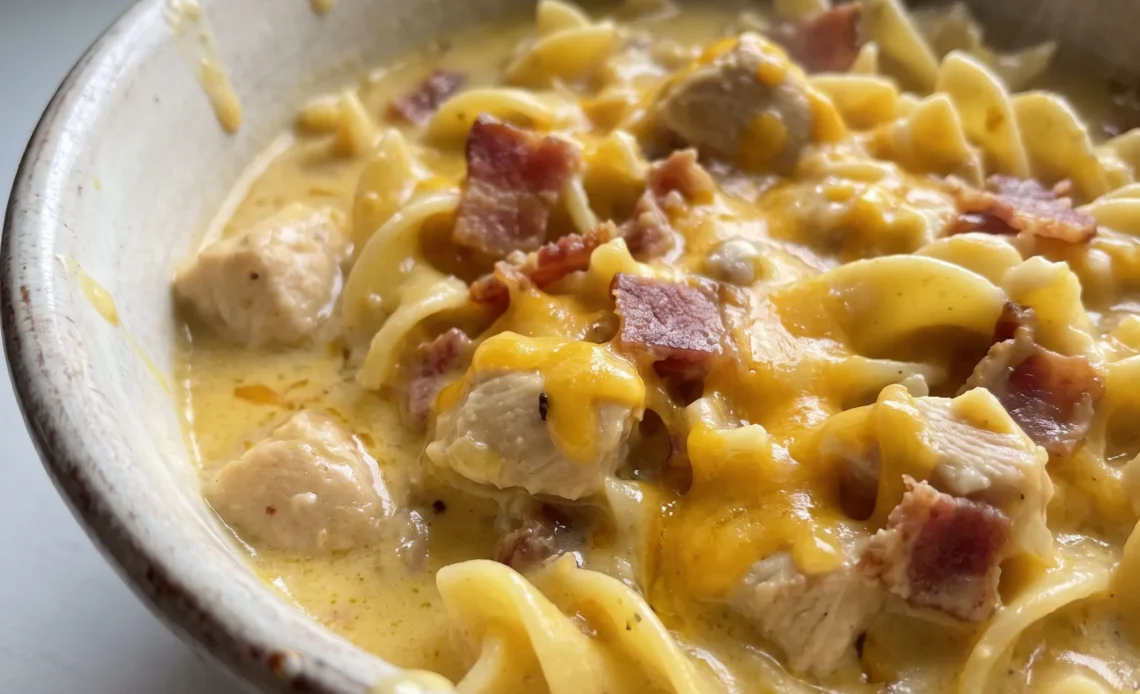
This isn’t a clear broth soup. It’s a creamy, tangy bowl of comfort that leans into indulgence, where ranch and cream cheese turn a familiar noodle soup into something richer.
The crack chicken noodle soup gets its character from that glossy, savory base, and the payoff is a texture that feels almost like a casserole in a bowl. You might find yourself reaching for a spoon before it’s even ladled out.
The trick is balancing that creaminess without letting it turn heavy, and this version walks that line well. It’s the kind of soup that satisfies a craving you didn’t know you had, especially when you want something more than the usual chicken noodle. Just know that the cream cheese and ranch are doing the heavy lifting here, and they do it.
The Rich, Tangy Base
Cream cheese and ranch dressing mix do more than just flavor this broth. As the cream cheese melts, it lends a silky body that coats the noodles without needing a roux.
You’ll see the liquid turn from thin to slightly glossy, a sign the fat is working. Ranch mix brings in those herbal, savory notes, dill, garlic, onion, that make each spoonful taste familiar.
No flour means the soup stays light, so if you’re using gluten-free noodles, you’re set. That’s the beauty: you get a hearty, tangy base without any extra steps.
Egg Noodles and the Broth
Egg noodles are the right pick here because they’re tender and absorbent. When they simmer in that creamy liquid, they swell slightly and drink up the flavor, giving you a cohesive bite. Their quick cooking means they finish right alongside the chicken, so everything lands at once.
The broad, flat shape is spoon-friendly, catching broth and bits of meat easily. You’ll notice the noodles soften as they go, turning supple without falling apart.
That’s the texture you want, soft but with a little chew left.
The Bite-Sized Chicken
Cutting the chicken into uniform chunks before cooking does two things. It ensures each piece reaches the same internal temperature at the same rate as the noodles, so nothing comes out dry or underdone.
More importantly, in a one-pot soup, you want every spoonful to have a balanced mix. A forkful of chicken and noodles should fit together, and pre-cut pieces make that.
Plus, you skip the post-cooking shred or chop, which would otherwise break up the creamy cohesion you’ve built.
Bacon’s Final Act
Bacon goes in last because it’s meant to stay crisp. Once stirred into the hot soup, it retains that smoky snap, a contrast to the soft noodles and creamy base. If it simmered longer, the pieces would turn limp and the flavor would fade into the background.
You want that salty punch to hit in distinct bites, not blend away. Crumbling it just before serving lets it scatter evenly without clumping. When you lift your spoon, you get a bit of crunch and a wave of smoke, that’s what makes this soup memorable.
Picking the Players That Carry the Pot
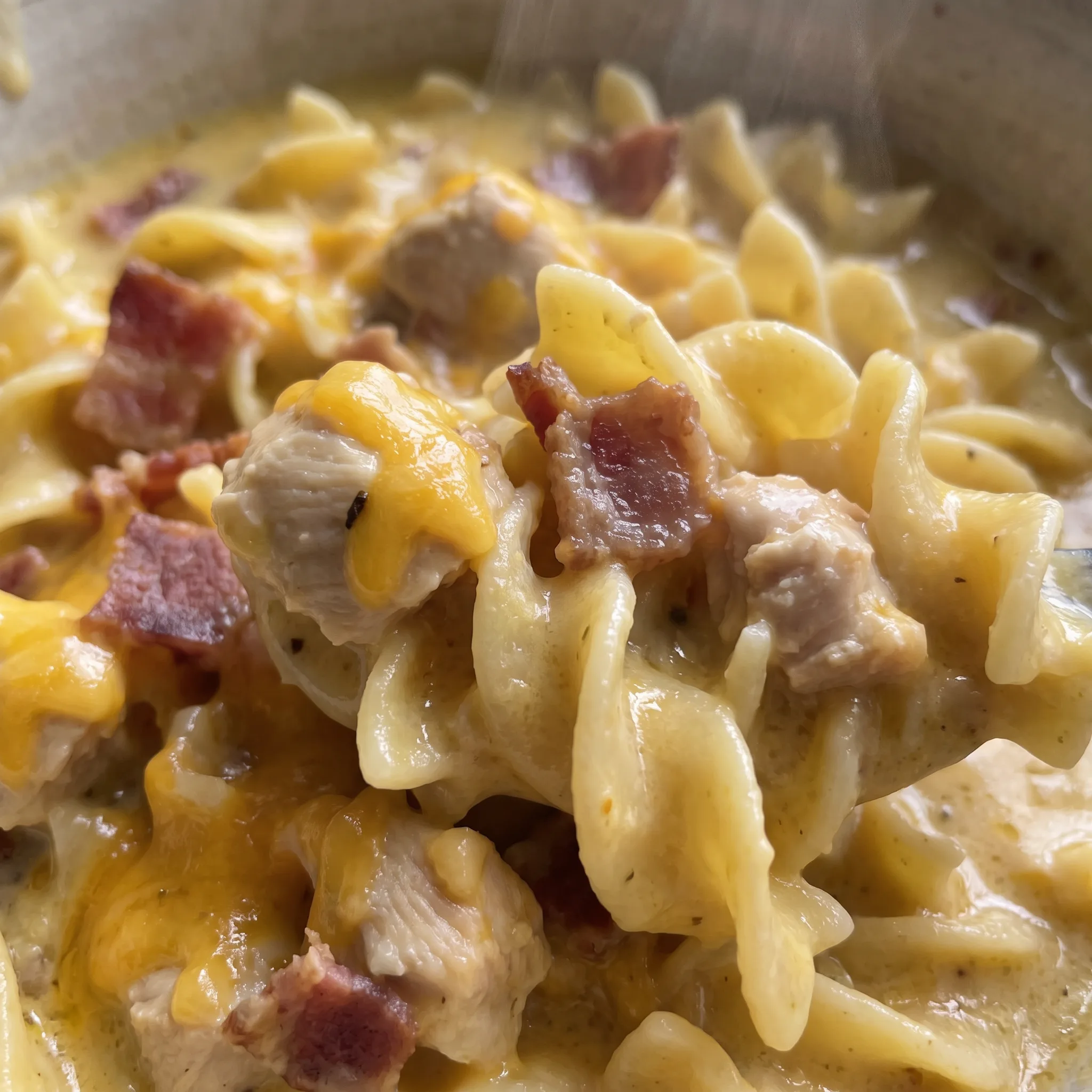
chicken breasts: Cut into bite-sized pieces before cooking so they cook through at the same rate as the noodles.
cream cheese: Use full-fat, softened cream cheese. It melts smoother and gives the broth a richer body.
ranch dressing mix: One packet is about 1 ounce. Look for a mix without added MSG if you prefer a cleaner flavor.
egg noodles: Wide egg noodles hold up best. They soak up the creamy broth without turning to a pasty mess.
bacon: Use thick-cut bacon, cooked until crisp, then crumbled. It stays crunchier in the soup.
cheddar cheese: Sharp cheddar adds more flavor, but mild works. Shred it yourself so it melts without clumping.
When cream cheese is added to a simmering liquid, the proteins can denature and coagulate if the heat is too high or if it’s not incorporated smoothly, leading to a grainy or curdled texture. The ranch dressing mix adds acidity, which can further destabilize the emulsion. Gentle heating and gradual melting help maintain a smooth, creamy sauce.
Reading the Soup as It Simmers
Watching for the Cream Cheese to Melt Smoothly
Before the liquid simmers, the cream cheese sits in chunks. As the pot heats, stir occasionally to help it dissolve.
You want a smooth, glossy broth with no white lumps floating. If the cream cheese doesn’t melt completely, the soup will have a grainy texture. Keep the heat at medium so it melts gently; high heat can cause it to separate.
A quick whisk usually smooths things out.
Timing the Noodles So They Don’t Overcook
Egg noodles cook fast, and the card says to follow the package time. But the noodles continue to soften off the heat, so pull them just when they’re tender but still have a slight bite.
If they go too long, they turn mushy and absorb too much broth, leaving the soup thick. Taste a noodle a minute before the package time runs out.
You can always cook a bit longer, but you can’t undo soft.
Checking That the Chicken Is Done and Tender
The chicken pieces are small, so they cook quickly in the simmering broth. To check, cut into the largest piece, it should be opaque throughout with no pink in the center.
The exact time depends on the size of your chunks, but with this recipe, it’s usually done around the same time as the noodles. If it’s not, give it an extra minute or two. Overcooking makes the chicken dry and chewy, so don’t let it boil.
Judging the Broth’s Thickness Before the Bacon Goes In
The broth should coat the back of a spoon but still be pourable. At first, it’s thin, but as the noodles release starch, it thickens.
If it looks too thin, let it simmer a few more minutes, uncovered, to reduce. If it’s too thick, splash in extra broth or water.
The right consistency means the soup isn’t watery, but it also isn’t pasty. Remember, the bacon and cheese at the end won’t change the texture much.
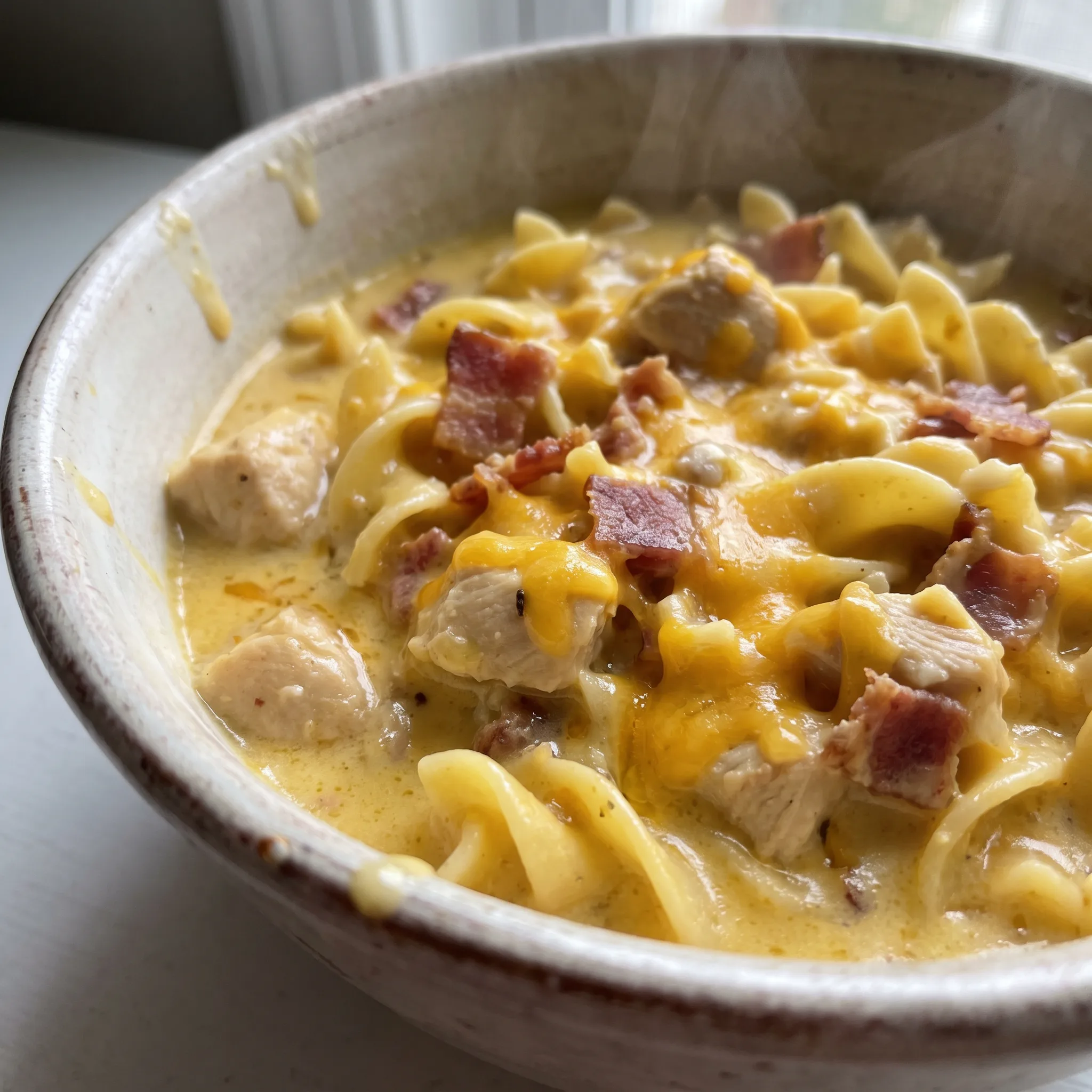
Crack Chicken Noodle Soup with Bacon and Ranch
Ingredients
Method
- In a large pot or Dutch oven, mix together the chicken, cream cheese, cream of chicken soup, ranch dressing mix, and chicken broth.
- Heat the mixture over medium heat until it reaches a simmer.
- Stir in the egg noodles and cook for the time indicated on the package, stirring from time to time, until the noodles are soft and the chicken is fully cooked.
- Fold in the crumbled bacon and the cheddar cheese if you are using it.
- Serve immediately while hot.
Storing and Reheating Leftovers
This soup is best eaten right after it’s made, while the noodles still have a little bite and the bacon stays crisp. If you have leftovers, let them cool to room temperature, then transfer to an airtight container and refrigerate. The sauce will thicken as it sits because the noodles keep absorbing liquid.
To reheat, add a splash of chicken broth or milk to loosen it back up. Warm it gently on the stove or in the microwave, stirring occasionally, until hot.
The noodles will soften further, and the bacon will lose its crunch, but the flavor stays good. For longer storage, you can freeze the soup, but expect the noodles to become quite soft once thawed, and the creamy base may separate slightly. Stir well while reheating to bring it back together.
Aim to eat refrigerated leftovers within a few days for the best texture.
Tips
- When you taste a noodle to check doneness, also cut into the largest chicken piece. Both should be ready around the same time, so one check covers two doneness cues.
Swap Smart, Keep the Creamy Soul
cream cheese: Greek yogurt (plain, full-fat or 2%). Greek yogurt adds tang and lightens the body, but it curdles if you let the soup boil hard. Stir it in off the heat or keep the pot at a bare simmer.
The broth won’t be as glossy, and the flavor leans sharper than the mellow cream cheese. Start with the same 8 ounces, taste, then add more if you want extra tang.
ranch dressing mix: Homemade blend: 1 teaspoon dried dill, 1 teaspoon garlic powder, 1 teaspoon onion powder, 1/2 teaspoon dried parsley, 1/4 teaspoon black pepper, and a pinch of salt. This gives a brighter, more herb-forward flavor without the preservatives or MSG. The packet mix has a finer grind, so it dissolves instantly; your blend needs a quick stir to disperse.
You’ll notice the dill and garlic come through more clearly, and the soup may taste slightly less salty. Adjust the salt at the end if needed.
egg noodles: Gluten-free wide noodles or rice noodles. Gluten-free pasta can turn mushy if you follow the same timing.
Cook it separately to al dente, then add it to the soup at the end so it doesn’t soak up too much broth. Rice noodles also work, but they’re slipperier and won’t drink up the creamy base the way egg noodles do. The soup will be lighter, not as thick, and the noodles won’t hold the sauce as well.
condensed cream of chicken soup: Do not swap. This is the important base.
The condensed soup provides the thick, savory body and the chicken flavor that ties everything together. Replacing it with homemade cream sauce or extra broth changes the texture entirely.
You’d need to add a roux or more cream cheese to get the same consistency, and the flavor would lose its familiar depth. Keep it as is for the soup to work.

Frequently Asked Questions
Can I make this soup ahead of time?
You can prep it ahead, but the noodles will keep soaking up broth and the bacon will lose its crunch. The soup is best right after cooking. If you must make it ahead, cook the noodles separately and add them when reheating.
Why is my soup too thick or too thin?
The most likely reason is the noodles: they absorb broth as they sit, so a soup that was just right can turn thick. If it’s too thin, let it simmer a few extra minutes uncovered to reduce. If it’s too thick, splash in extra broth or water.
How do I keep the noodles from getting mushy?
Pull the noodles off the heat when they still have a slight bite, a minute before the package time suggests. They’ll keep softening in the hot broth. If you’re reheating leftovers, add liquid and warm gently to avoid turning them to mush.
What’s the difference between this and classic chicken noodle soup?
Classic chicken noodle soup is broth-based and clear; this one is creamy and tangy. Cream cheese and ranch mix give it a silky body, and bacon adds a smoky crunch. It’s more of a one-pot casserole in soup form.
