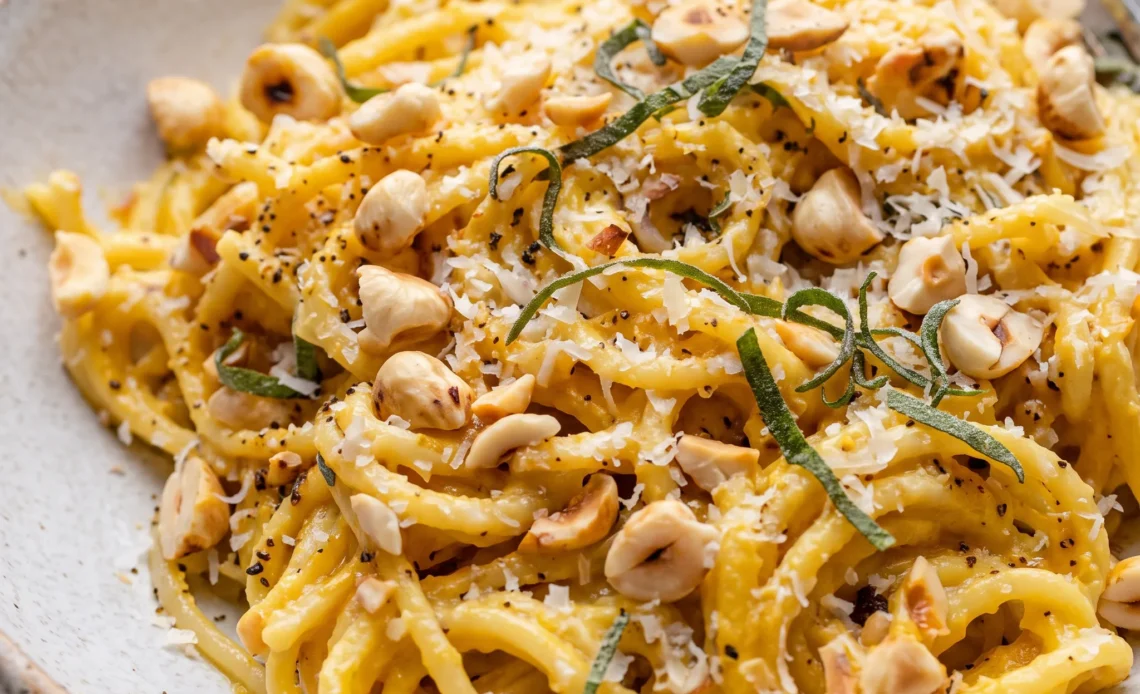
Some pastas lean on canned tomatoes or heavy cream, but this acorn squash pasta gets its body from a vegetable that most people only bother to roast as a side. That’s the sleight of hand: you’re not making a squash sauce and then hoping it tastes good, you’re roasting the squash until its sugars concentrate, then pureeing it into something that coats spaghetti like a slow-cooked ragù. The catch is the butter.
It goes from nutty to burnt in a matter of seconds, so you have to watch it like a hawk. But get it right, and you’ve got a dish where the sweet, the salty, and the earthy all hit at once.
Roast the Squash Flesh-Side Down for Sweetness
Roasting at 400°F caramelizes the squash’s natural sugars, deepening its flavor far beyond what steaming or boiling can achieve. Flesh-side down shields the cut surface from direct heat, preventing the flesh from drying out while promoting even tenderness throughout. The full roast time, 50 to 60 minutes, ensures the flesh is so soft that it practically falls apart, making it to scoop out and blend into a smooth puree.
You’ll notice the edges take on a rich, golden color, which translates into a more complex, almost nutty taste that pairs with the brown butter sauce.
Watch the Butter Turn Amber and Smell Nutty
Browning butter changes it from a simple fat into a deeply aromatic component that echoes the hazelnuts and complements the squash’s sweetness. The visual cue is unmistakable: the butter goes from yellow to a rich amber, and the aroma turns distinctly nutty. Salted butter plays a crucial role here, it balances the sweetness of the squash and maple, adding a savory edge that keeps the sauce from cloying.
But this transformation is fleeting; if you step away, the butter can go from amber to burnt in seconds, and that bitterness would ruin the entire sauce, overpowering the delicate flavors you’ve built.
Blend Until Silky for a Sauce That Clings
Combining the roasted squash with milk, or almond milk, and pureeing until silky yields a sauce that coats every strand of pasta. The milk provides the necessary liquid to achieve a creamy consistency, while the maple syrup, cinnamon, and nutmeg enhance the squash’s inherent sweetness without masking it.
The key is blending long enough to eliminate any fibrous bits, resulting in a smooth, silky texture that clings rather than slides off. You can adjust the thickness by adding more milk a splash at a time, aiming for a consistency that’s pourable but not thin, think heavy cream.
That silkiness is what makes the sauce feel rich on the palate, turning a simple weeknight dinner into something special.
Finish with Crunch, Fresh Herbs, and Salt
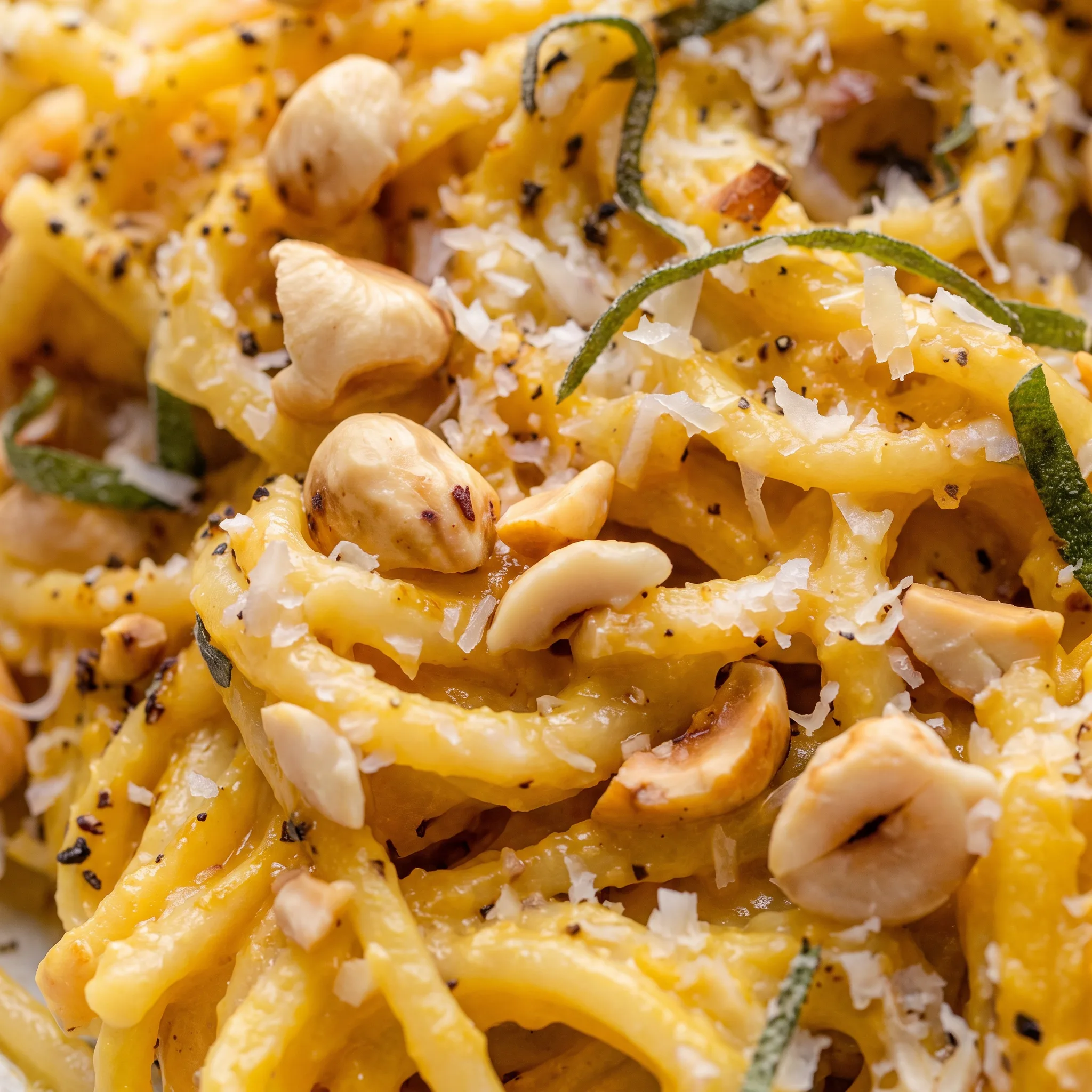
The final assembly brings together contrasting textures and flavors that make this dish balanced. Toasted hazelnuts add a satisfying crunch and a deep, roasted note that resonates with the brown butter.
Sage chiffonade contributes a fresh, peppery herbaceousness that cuts through the richness. Parmesan, shaved or grated, delivers saltiness and umami, providing a savory counterpoint to the sweet squash.
Each element plays a distinct role, and together they ensure the pasta doesn’t feel one-note. You’ll taste the sweet, the nutty, the salty, and the fresh in every bite, making it a complete and satisfying main course.
Three Ingredients That Make or Break the Sauce
Acorn squash: Pick one that feels heavy for its size and has dull, not shiny, skin. A dull rind means it’s fully ripe.
Salted butter: Use salted. The salt balances the sweet squash and maple, and it browns just as well as unsalted.
Hazelnuts: Buy raw, not roasted. Toasting them yourself in the skillet brings out their flavor without any burnt or off notes.
Reading the Squash, the Butter, and the Sauce
When the squash gives way without a fight
Pierce the thickest part of a half with a fork. It should slide in with almost no resistance, and the flesh should look translucent at the edges.
If the fork meets any firmness, give it another 5 to 10 minutes in the oven. Underdone squash won’t puree smoothly, leaving fibrous bits in the sauce.
Overdone is fine here, the flesh just gets sweeter and softer. That’s the moment you’re waiting for.
Catching the butter before it turns bitter
As the butter melts, it will crackle, foam, then go quiet. Keep stirring.
The color shifts from pale yellow to golden, then to amber at the bottom of the pan. That amber is your cue, and the nutty smell comes right with it. Pull it off the heat immediately.
If you wait for the whole butter to look brown, it’s already past, the milk solids darken faster than the liquid fat. Burnt butter tastes harsh and flat, and no amount of squash or sage will cover it.
Thinning the sauce to a coat, not a flood
The puree should pour off a spoon in a thick ribbon and leave a faint trail on the surface of the sauce when stirred. If it mounds like mashed potatoes, add milk a splash at a time and blend again. If it runs like water, you’ve added too much; simmer it gently for a minute or two to thicken.
The right consistency clings to pasta without pooling in the bottom of the bowl. You can feel it when you stir, it should move like heavy cream.
Seasoning against the sweetness
Taste the sauce before it meets the pasta. The maple and squash bring noticeable sweetness, so salt needs to push back. Add a generous pinch, stir, taste again.
You’re looking for the point where the salt brightens the sweetness instead of hiding it, and where black pepper adds a little warmth. Under-salted sauce tastes flat and sugary; over-salted tastes sharp and metallic. Keep adjusting until the flavors sit in balance, that’s when it’s ready.
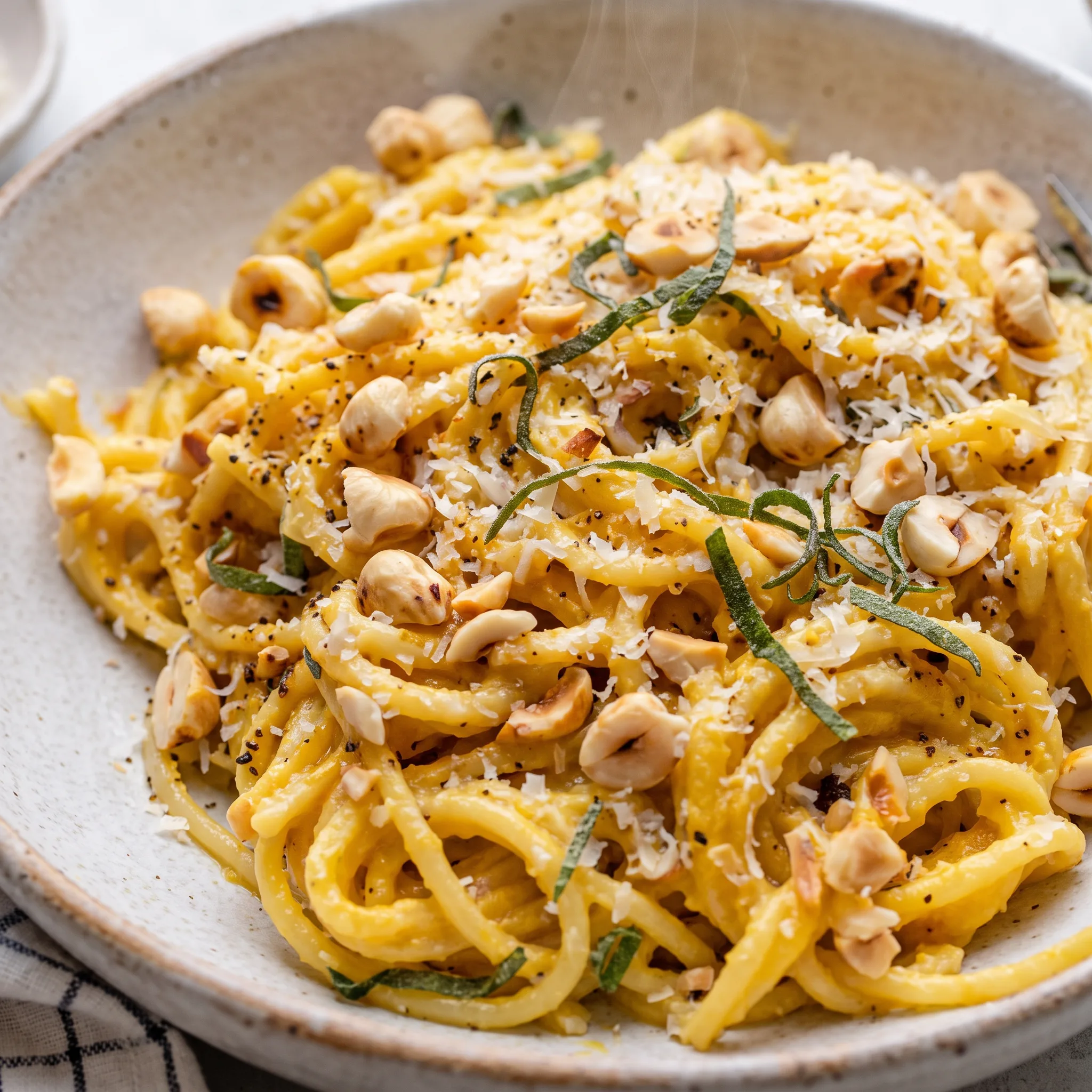
Brown Butter Acorn Squash Pasta with Hazelnuts
Ingredients
Method
- Set your oven to 400°F (200°C) and lay parchment paper on a large baking sheet.
- First, slice off the stem end of the acorn squash, removing about 1/4 to 1/2 inch. Stand the squash upright on a wooden cutting board, cut side down, ensuring it’s stable. Then halve it vertically with a sharp knife. Scoop out seeds with a spoon and discard. Arrange the halves flesh-side down on the prepared sheet. Roast for 50 minutes to 1 hour, until the squash is completely tender when pierced with a fork. Allow it to cool briefly before extracting the flesh.
- While the squash roasts, place a large skillet over medium-low heat. Add the hazelnuts and toast for 2-3 minutes, until golden and aromatic. Transfer to a plate and set aside.
- Put the cooked squash flesh into a high-powered blender or food processor. Add the milk, maple syrup, cinnamon, and nutmeg. Blend until silky, adding more milk as needed to achieve the desired consistency. Set aside.
- Using the same skillet, melt the butter over medium heat. Stir constantly as it melts, crackles, and then foams. After a few minutes, the butter will turn a rich amber color on the bottom, typically right when it foams. Continue whisking, then remove from heat as soon as it browns and smells nutty. Keep the butter in the pan but off the heat to cool slightly while you cook the pasta.
- Boil the spaghetti per package instructions. Drain and transfer to the skillet with the brown butter, tossing to coat evenly. Immediately pour in the acorn squash sauce and garlic powder, stirring until creamy. Season generously with salt and pepper, adjusting to taste. Finish with sage, toasted hazelnuts, and shaved parmesan, mixing in if preferred.
Swap the Pasta, Keep the Squash and Butter
Acorn squash: Butternut squash or delicata squash, seeded and roasted the same way. Butternut gives a similar sweetness and purees just as smooth, though it’s denser, so you might need an extra splash of milk.
Delicata is thinner-skinned and slightly less sweet, so the sauce will be a touch more savory. Don’t swap in pumpkin or watery types like zucchini; they’ll turn the sauce thin and stringy.
Spaghetti: Rigatoni, penne, or any sturdy short pasta; gluten-free pasta works fine. Short shapes catch the sauce in their ridges and holes, so each bite gets more of that squash coating. Long noodles are fine, but the sauce clings to short shapes better.
For gluten-free, choose a brand made from rice and quinoa; they hold up to the sauce without turning mushy. Avoid delicate shapes like angel hair, which will get lost under the thick sauce.
Salted butter: Unsalted butter plus a pinch of salt, or a high-fat plant butter for dairy-free. Salted butter brings seasoning that balances the sweet squash and maple. If you swap in unsalted, add a pinch of salt to the sauce at the end to make up for it.
For dairy-free, use a plant butter with at least 80% fat; it browns well and gives a similar nutty note, but the flavor won’t be as rich, so you might want to finish with a little more parmesan. Avoid margarine with water; it won’t brown properly and will make the sauce greasy.
Hazelnuts: Walnuts or pecans, chopped and toasted the same way. Walnuts have a similar earthy, oily richness and toast up nicely, though they’re a bit more bitter.
Pecans are sweeter and softer, so they’ll give less crunch. Both work, but if you’re skipping nuts entirely, use toasted pumpkin seeds for a different crunch that still echoes the fall flavors.
Store and Serve Leftover Brown Butter Acorn Squash Pasta
Eat this pasta right after finishing it. The sauce is at its creamiest, the hazelnuts are crunchy, and the sage is bright. If you wait, the nuts soften and the herbs fade, so serve it immediately.
Leftovers keep in an airtight container in the fridge for up to 3 days. The sauce will thicken as it sits, and the pasta will absorb liquid, so add a splash of milk when reheating to bring back that silky texture. Warm it gently on the stove or in the microwave, stirring often.
You can freeze the squash puree on its own for up to 3 months, but the assembled pasta doesn’t freeze well. The noodles turn soft and the sauce separates. Thaw the puree overnight in the fridge and heat it through before tossing with fresh pasta.
For the best texture, reheat only what you’ll eat, and add the hazelnuts, sage, and parmesan fresh after reheating, not before storing.
Tips
- When blending the squash sauce, add the milk in two stages: first just enough to get the blades moving, blend until completely smooth, then add more milk to reach the desired consistency. This prevents over-thinning and gives you better control over the final texture, since the puree thickens as it sits.
- Taste the sauce for salt before you add the parmesan, and then again after. Parmesan is salty, so if you season the sauce fully before adding it, the final dish can end up too salty. Hold back a little salt until after the parmesan is in, then adjust.
As butter melts, water boils off and the temperature climbs. The milk solids then brown rapidly, turning from amber to burnt in seconds. The nutty aroma signals the right moment; lingering too long produces a bitter, acrid taste that ruins the sauce.
Frequently Asked Questions
Can I make the squash sauce ahead of time?
Yes, the squash puree can be made up to 3 days ahead and kept in the fridge. When you’re ready to eat, warm it gently on the stove with a splash of milk to loosen it, then toss with freshly cooked pasta. The assembled pasta doesn’t freeze well, but the puree alone freezes for up to 3 months, just thaw overnight and reheat.
Why is my brown butter burning? How do I prevent that?
Brown butter burns when you walk away or let the heat stay high, the milk solids darken faster than the liquid fat, so the whole pan can go bitter in seconds. Keep the skillet over medium heat and stir constantly. Pull it off the heat the moment you see amber at the bottom and smell that nutty aroma, even if the butter still looks light in spots.
Can I use a different pasta shape?
Definitely. Spaghetti works, but short shapes like rigatoni or penne catch the sauce better in their ridges and holes, giving you more squash coating per bite. Gluten-free pasta made from rice and quinoa holds up well, but skip delicate shapes like angel hair, which get lost under the thick sauce.
How do I know when the acorn squash is fully roasted?
Pierce the thickest part of a half with a fork, it should slide in with almost no resistance, and the edges will look translucent. If you feel any firmness, give it another 5 to 10 minutes in the oven. Overdone is fine here; the flesh just gets sweeter and softer, which makes it puree smoother.
