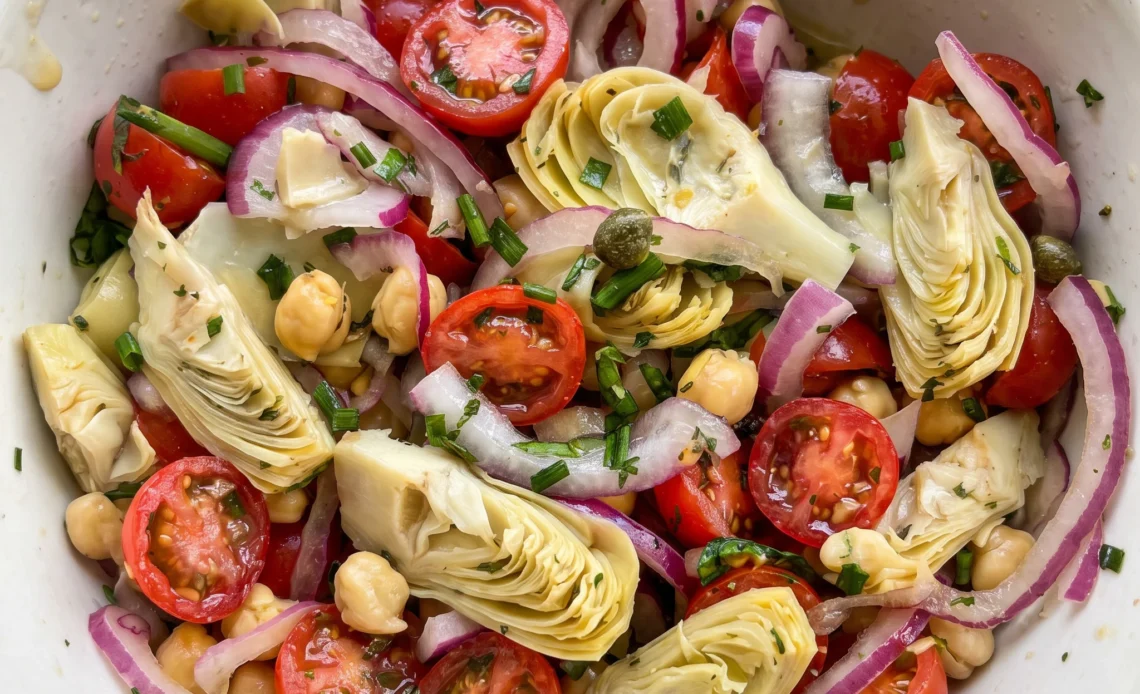
Watery chickpea salad almost always traces back to the can. Rinse those beans and they still wear a slick coat that the vinaigrette slides right off, and you find the evidence pooled at the bottom of the bowl an hour later.
Patting them until they feel matte instead of shiny is the difference between beans that taste seasoned through and beans sitting in a puddle. It’s a small thing that pays off because a tuscan chickpea salad like this one leans on pantry staples, which means the texture of what you pull from a jar or can is doing most of the work.
Get that surface dry and the dressing grabs hold, the onion settles down, and the whole bowl tightens into something worth the wait. Skip it and no amount of extra vinegar rescues you.
The most common mistake is not drying the chickpeas and vegetables thoroughly after draining and rinsing. Excess water on their surfaces prevents the oil-and-vinegar dressing from adhering, so instead of coating the ingredients, the dressing slides off and collects at the bottom. During chilling, this separated liquid makes the salad watery and dilutes the flavors.
Why This Comes Together in Two Minutes
Two minutes of prep sounds like a misprint until you account for what’s already done. The chickpeas in that can are fully cooked and ready after a rinse, so there’s no soaking or boiling to plan around.
Marinated artichoke hearts arrive seasoned and tender, needing nothing beyond a drain. Cherry tomatoes and red onion only get cut, no heat involved.
The herbs are the one bit of real knife work, and basil ribbons and chopped chives take a minute at most. Everything else gets measured and whisked. That’s the whole list.
What you’re buying with those two minutes is a salad that tastes like you spent longer, because the pantry did the slow part for you. Keep a can of chickpeas and a jar of artichokes on hand and this becomes a throw-together side for grilled meat or a lunch you can pack without thinking ahead.
Build a Vinaigrette That Clings, Not Drowns
Olive oil and red wine vinegar carry this dressing, with dried parsley, garlic powder, salt, and pepper stirred in. The ratio matters less than the texture: you want a thin coat, not a pool. Dried herbs need a few minutes in the liquid to soften and spread out, so they season every bite instead of landing in clumps.
Chickpeas and artichoke hearts are dense and absorbent, and they’ll drink up the vinaigrette as the salad sits. Serve it right away and you get a sharp, bright toss. Wait two hours and those same ingredients taste rounder, the vinegar less pointed, the garlic and herbs worked into the beans.
I’ve found that the chill does more for this salad than any tweak to the dressing itself. The vinaigrette isn’t the star here; it’s the thing that makes everything else taste like one dish instead of a pile of components.
The Chill That Makes It Better (and the One Thing That Ruins It)
Two hours in the fridge does something a quick toss can’t. The chickpeas and artichokes soak up the vinaigrette, the onion loses its raw edge, and the tomatoes give off just enough juice to tie everything together. The salad tastes fuller, less like separate ingredients and more like a finished dish.
There’s a catch, though: wet chickpeas. If they go in still slick from the can, that surface water dilutes the dressing and you end up with a watery pool at the bottom after chilling. Patting them dry first gives the vinaigrette something to grab onto, so the flavor stays on the beans instead of sliding off.
After the chill, serve it cold or let it sit out just long enough to take the fridge edge off. Either way, the texture should be creamy beans, tender artichokes, and crisp vegetables, not a soggy mix.
What Makes This Salad Taste Tuscan
Tuscan cooking leans on what’s already in the pantry: a can of beans, a jar of artichokes, good olive oil, a splash of vinegar. This salad follows that logic.
The combination of raw red onion, capers, and red wine vinegar gives a sharp, tangy bite that cuts through the creamy chickpeas and meaty artichokes. Cherry tomatoes bring sweetness, and fresh basil and chives add a green, aromatic note that tastes like summer. Nothing is cooked, so every ingredient keeps its own texture: the pop of a tomato, the slight resistance of a chickpea, the briney hit of a caper.
It’s hearty enough to serve as a main dish with crusty bread, or alongside grilled chicken or fish. The flavors are bold but familiar, the kind of thing you’d find on a Tuscan table where the food is simple and the ingredients do the talking.
What to Look For Before You Toss This Salad
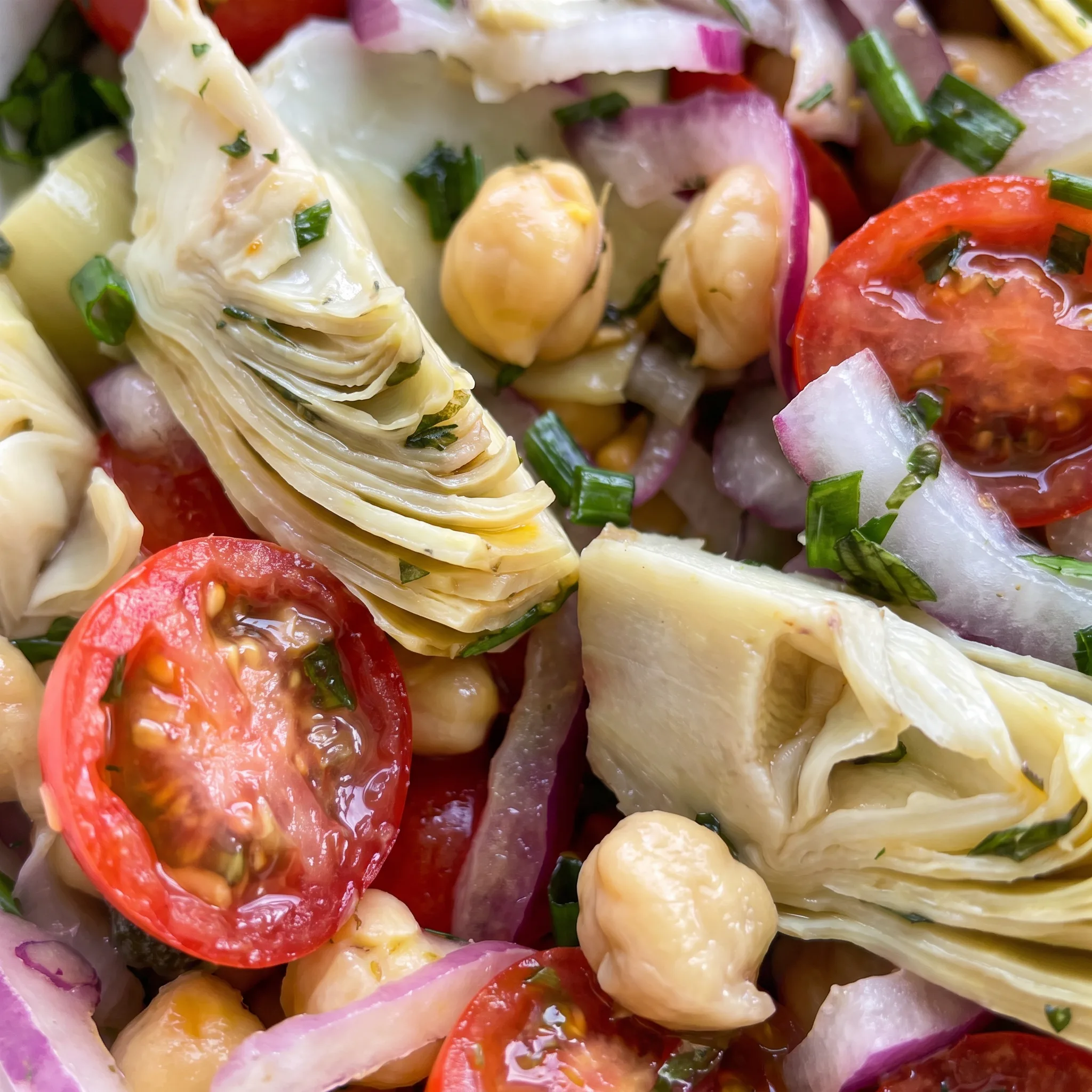
Marinated artichoke hearts: Drain them well, since the marinade they sit in adds its own oil and seasoning that can tip the dressing.
Canned chickpeas: Pat them dry after rinsing, because surface water slides the vinaigrette off and leaves a pool at the bottom.
Capers: They bring their own salt, and brands vary enough that the 1/4 to 1/2 tsp of salt depends on your taste.
Fresh basil: Slice it into thin ribbons just before assembling, since cut basil darkens and softens once it hits the dressing.
How to Judge This Salad at Every Turn
Getting the chickpeas dry enough that dressing sticks
Drained and rinsed chickpeas are still wet, and that water is the enemy of a clingy vinaigrette. After rinsing, spread them on a towel or paper towels and pat until the surface feels matte, not slick. If they still look shiny, the dressing will slide off and pool at the bottom.
Take the extra minute; it’s the difference between seasoned beans and watery salad.
Knowing when the vinaigrette is balanced before it hits the vegetables
Whisk the oil, vinegar, dried parsley, salt, garlic powder, and pepper in a small bowl. Dip a piece of chickpea or a tomato half into it and taste.
The vinegar should be sharp but not biting, the salt present but not aggressive. Dried herbs need a few minutes to soften, so if you taste immediately, the parsley may seem gritty or flat.
Let it sit while you finish prepping, then taste again. Adjust salt or vinegar now, because once it’s tossed with the salad, fixing the balance is harder.
Deciding whether to serve right away or chill, and for how long
The card offers both: serve immediately or chill for 1 to 2 hours. If you serve right away, expect a sharper, more separate taste, with the onion still assertive and the vinaigrette coating rather than absorbed. If you chill, the chickpeas and artichokes drink in the dressing, the onion mellows, and the tomatoes release juice that ties everything together.
Two hours is the sweet spot for that fuller flavor. Past that, the vegetables keep softening and the salad gets wetter. Check at the two-hour mark: the beans should taste seasoned all the way through, not just on the surface.
If they don’t, give it another 15 minutes and taste again.
Tasting for salt after the capers and artichokes have their say
Capers and marinated artichoke hearts bring their own salt, and they vary by brand. The recipe calls for 1/4 to 1/2 teaspoon of salt, but that range exists because you need to judge. After tossing, taste a spoonful that includes a caper, a piece of artichoke, and a chickpea.
If it tastes flat, add the remaining salt a pinch at a time. If it’s already savory enough, stop. Over-salting at this stage can’t be undone, and the capers will keep releasing salt as the salad sits.
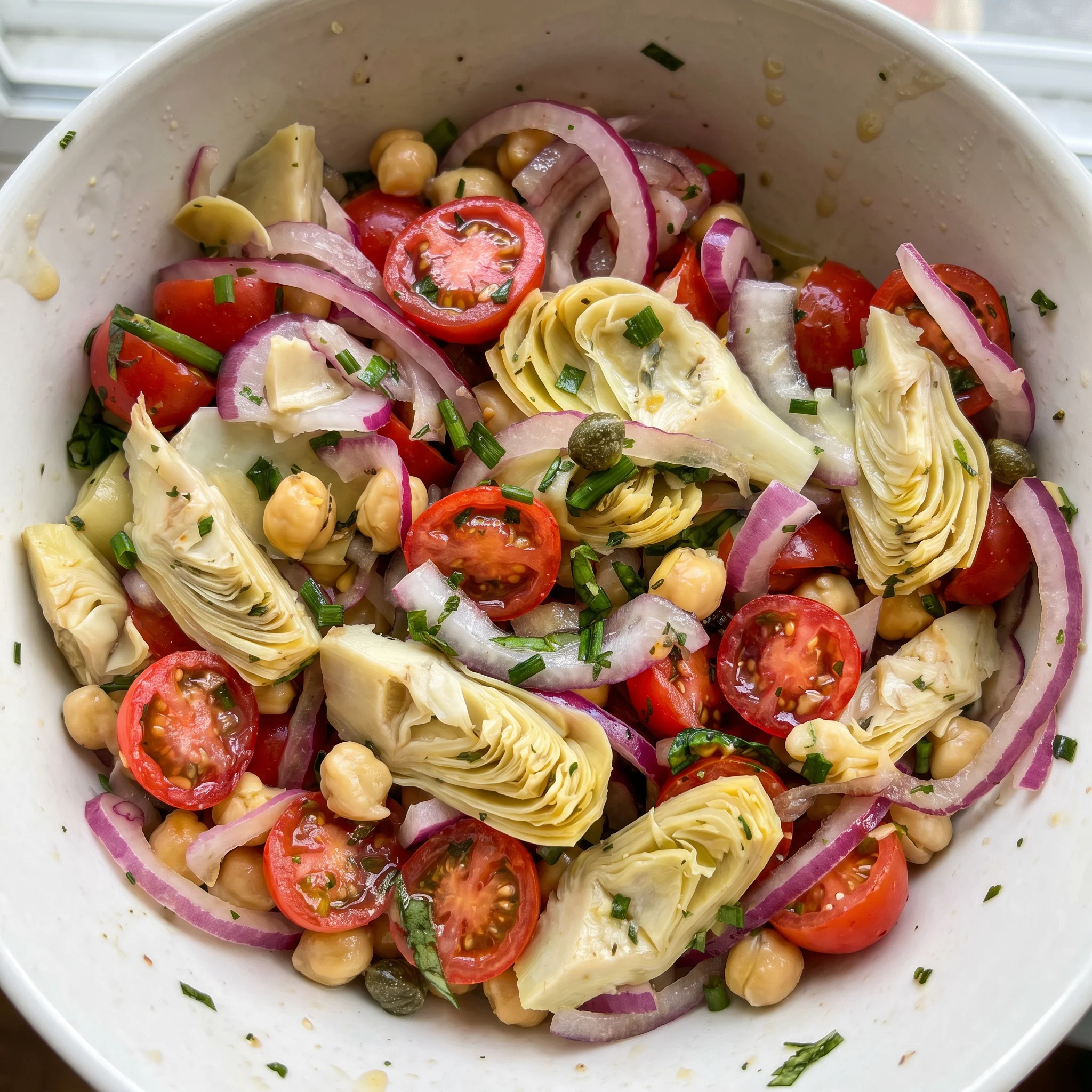
Tuscan Chickpea Artichoke Tomato Salad
Ingredients
Method
- Prepare the vegetables, herbs, and chickpeas: cut the cherry tomatoes in half, slice the red onion into thin pieces, chop the chives finely, and slice the basil into long thin ribbons. Drain the artichoke hearts from their liquid and set aside. Drain and rinse the canned chickpeas, then pat them dry before adding to the salad.
- Make the Tuscan vinaigrette: in a bowl, whisk together the olive oil, red wine vinegar, dried parsley, salt, garlic powder, and black pepper.
- Assemble: in a bowl, combine the chopped tomatoes, red onion, chives, basil, marinated artichoke hearts, chickpeas, capers, and vinaigrette. Mix until all the vegetables are coated.
- Serve immediately or chill for 1–2 hours for an even better flavor. Enjoy!
What Swaps Keep This Salad Tuscan and What Breaks It
Marinated artichoke hearts: Oil-packed or grilled artichoke hearts (same 12-oz jar, drained). Marinated bring tang and herbs to the dressing; oil-packed are blander and need a pinch more salt and a squeeze of lemon to wake them up.
Grilled add a smoky edge that pushes the salad away from Tuscan and toward grilled-vegetable territory, so use them only if you want that. Drain all three well; extra liquid waters down the vinaigrette.
Fresh basil and chives: Other tender herbs like parsley, dill, or mint, or a mix. Basil and chives give a green, aromatic lift that reads as summer.
Flat-leaf parsley keeps the Italian profile with a cleaner, grassier note. Dill pulls it toward Greek. Mint is bracing and can dominate, so use half the amount and taste.
Whatever you choose, add it just before serving; tender herbs darken and soften once they hit the dressing.
Canned chickpeas: Home-cooked chickpeas (same 1 1/2 cups cooked). Home-cooked beans are often firmer and less salty, so the salad may need the full 1/2 teaspoon salt after chilling. They also absorb dressing more slowly, so give them the full two hours to season through.
Red wine vinegar: White wine vinegar or lemon juice (same 2 tablespoons). Red wine vinegar brings a round, slightly sweet sharpness that pairs with the tomatoes and capers. White wine vinegar is cleaner and more neutral, so the salad tastes brighter but less deep.
Lemon juice is sharper and more floral; start with 1 1/2 tablespoons and add more if you want more bite.
Storage, Serving Window, and How Leftovers Hold
Eat this within the first hour for the crispest texture: tomatoes firm, chickpeas distinct, vinaigrette coating rather than soaked in. The two-hour chill is the flavor peak, not the eating deadline.
Past that, the salad keeps improving for about a day, then the tomatoes and artichokes keep releasing liquid and the dressing thins. Refrigerate in a sealed container for up to three days. Before serving leftovers cold, tip the container and pour off the pooled liquid, then taste and add a pinch of salt or a splash of vinegar, since the drained liquid carried seasoning with it.
Stir from the bottom to redistribute the dressing. Skip the freezer entirely: thawed tomatoes collapse and the chickpeas go grainy.
If you’re packing a portion for later, keep the basil out and stir it in just before eating, because cut basil darkens and softens in the fridge within hours.
Tips
- Before you add the chickpeas, eat one straight from the can. If it tastes bland and starchy, your dressing will need the full 1/2 teaspoon of salt to compensate. If it’s already salty, start with 1/4 teaspoon and add more at the end only if the finished salad tastes flat.
- After you drain the artichoke hearts, press one gently against the side of the bowl with a spoon. If it releases a lot of liquid, your salad will get watery as it chills, so pour off any extra that collects at the bottom before serving.

Frequently Asked Questions
Can I make this Tuscan chickpea artichoke tomato salad ahead of time?
Yes, and it actually improves up to a point. Assemble it and chill for up to two hours; the chickpeas and artichokes drink in the vinaigrette, the onion loses its raw bite, and the tomatoes release just enough juice to tie everything together. If you go longer, the salad keeps improving for about a day, then the vegetables keep softening and the dressing thins.
For a party, toss it two hours before serving and leave the basil out until the last minute.
Why did my chickpea salad become watery after chilling?
The most likely culprit is wet chickpeas going into the bowl. Surface water from the can slides the vinaigrette off the beans and ends up as a pool at the bottom after chilling.
Pat them dry until they feel matte, not slick, before you add them. A second check: if you drained the artichokes poorly, their marinade adds extra liquid that thins the dressing. Either way, tip the bowl and pour off the pooled liquid, then taste and add a pinch of salt or a splash of vinegar.
How is this salad different from a classic Tuscan panzanella?
Panzanella is built on stale bread soaking up tomato juice and dressing, so the texture is soft, wet, and starch-heavy. This salad skips the bread entirely and leans on chickpeas and artichoke hearts for substance, so you get creamy beans and tender artichokes instead of soggy croutons. The vinaigrette is similar in spirit, but here it clings to dense ingredients rather than soaking into bread.
You end up with a heartier, more protein-forward side that holds up better in the fridge.
