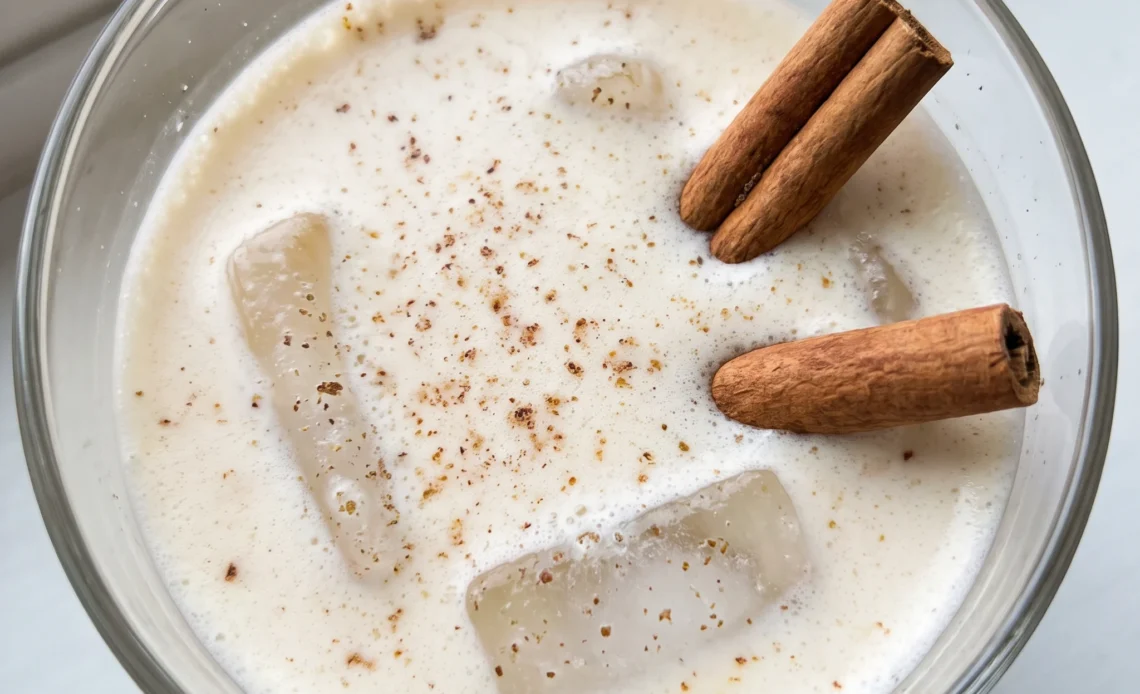
Most people overthink the dairy here and reach for cream out of habit. Eggnog already carries the sugar and the spice, so when you pour it in over ice, the coffee liqueur and the nutmeg start reading as one thing instead of two. The trouble is timing: mix it and walk away, and the whole thing separates in the glass, pale streaks under a dark layer, thinner than it looked a minute ago.
That’s the part worth knowing before you build one. A chilled carton and a cold glass buy you the window; a warm one burns through it. Get the eggnog white russian into the glass close to when you’ll drink it, and the texture holds the way it should.
Use Eggnog as the Dairy Base
A standard White Russian gets its body from cream, often with a splash of simple syrup to round out the bite of the vodka. Eggnog already carries sugar, dairy, and a blend of warm spices, so it takes over both jobs at once.
The drink stays rich without any extra sweetener or heavy cream. That matters because you taste the nutmeg and cinnamon in the eggnog against the coffee liqueur, and the two read as one flavor rather than a spiked milkshake. When I first mixed one, the spice in the eggnog was what made the coffee note seem intentional instead of just sweet.
The result is a holiday variation on a White Russian, not a different cocktail. The base is still vodka and coffee liqueur, and the eggnog simply changes the dairy.
It keeps the drink in the same family while shifting the accent toward the holidays.
Keep the Ratio at 1 to 1 to 3
Equal parts vodka and coffee liqueur keep the coffee note present without letting it dominate. Three parts eggnog give enough volume and richness to soften the alcohol.
That balance is what makes the drink taste like a cocktail rather than a dessert shot. Push the coffee liqueur higher and the sweetness turns cloying, coating your tongue before you finish the glass. Push the vodka higher and the drink turns harsh and thin, with the eggnog unable to carry it.
The 1:1:3 ratio is the structural reason the drink works. It keeps the spirit forward but not aggressive, and it gives the eggnog enough room to do its job. Measure by eye and you risk tipping the balance.
The ratio is the recipe’s spine, and it holds the drink together.
Stir Gently, Don’t Shake
Shaking would whip air into the eggnog and create a foamy top that feels wrong for this rich drink. Stirring preserves the silky texture and keeps the drink cold without over-diluting.
A gentle stir blends the spirits and eggnog without breaking the eggnog’s emulsion. The goal is a smooth, cold, unified drink, not a frothy one.
When you stir, you’re looking for an even color and no streaks of liquor left floating on top. The drink should look like a single liquid, not a swirl of separate parts.
That texture is why this cocktail feels like a sipping drink rather than something you knock back. A few turns of the spoon is all it takes.
Too much stirring and you’ll thin it out, so stop once it looks uniform.
A Garnish That Does Real Work
Ground nutmeg or cinnamon on top provides an aromatic hit before the first sip. That aroma reinforces the spice already present in the eggnog.
Without it, the drink can smell flat and taste sweeter than expected, because your nose isn’t picking up the warm notes that balance the sugar. The garnish is optional, but it’s a finishing touch that makes the eggnog flavor read as intentional.
A light dusting is enough to catch the scent. You don’t need a heavy layer, just enough to see a faint speckle across the surface.
When you bring the glass up, the spice hits first and sets up the first taste. It’s a small thing that makes the whole drink feel considered rather than just sweet.
What to Grab and What to Watch
Vodka: Any clean-tasting vodka works, but a harsh one cuts through the eggnog and coffee liqueur instead of blending in.
Coffee liqueur: Kahlúa is the standard, and its sweetness matters here because the eggnog brings sugar of its own.
Classic eggnog: Buy the refrigerated kind, not a shelf-stable carton, since the dairy and spice read fresher in the glass.
Ground nutmeg or cinnamon: Whole nutmeg grated fresh smells sharper than the pre-ground jar, and a small pinch is all the surface needs.
Eggnog is a thick, emulsified dairy base, and agitating it vigorously whips air into the mixture while accelerating ice melt. The added water dilutes the drink and can cause the emulsion to separate, turning a rich cocktail into a thin, watery one. Gentle stirring chills the drink and blends the spirits without introducing excess air or water.
Judging the Drink as You Build It
Reading the glass: when the ice is right
A rocks glass packed to the rim with ice gives the drink structure. Too few cubes and the spirits pool at the bottom, leaving the eggnog to sit on top in a slick.
Fill until the ice crowns the rim, then pour. The ice should look like a solid bed, not a few floats.
That bed is what keeps the layers from separating before you stir.
The pour order and what it tells you
Vodka and coffee liqueur go in over the ice first. They’re thin and heavy, so they sink and chill fast.
Eggnog goes last. It’s thick and will sit on top if you let it.
Seeing that separation is your cue: the drink isn’t blended yet. If the eggnog disappears on its own, your ice is too sparse or the glass too warm. The order isn’t fussiness; it’s a visual check.
Knowing when the stir is done
A gentle stir, a few turns, until the color turns even and no ribbons of dark liqueur or pale eggnog remain. Stop there.
Keep stirring and you knock air into the eggnog, thinning the body and building a foam you don’t want. The drink should look like one liquid, not a swirl. If you’ve gone too far, let it sit a moment; the foam will settle, though the texture won’t fully return.
The taste check before the garnish
Take a small sip before you dust anything on top. The coffee liqueur should be present but not candy-sweet, and the vodka shouldn’t bite at the back of your throat. If it’s too sweet, you’ve likely poured heavy on the liqueur; a splash more vodka can pull it back.
If it’s harsh, a little more eggnog rounds it. Adjust by feel, not by a fresh start.
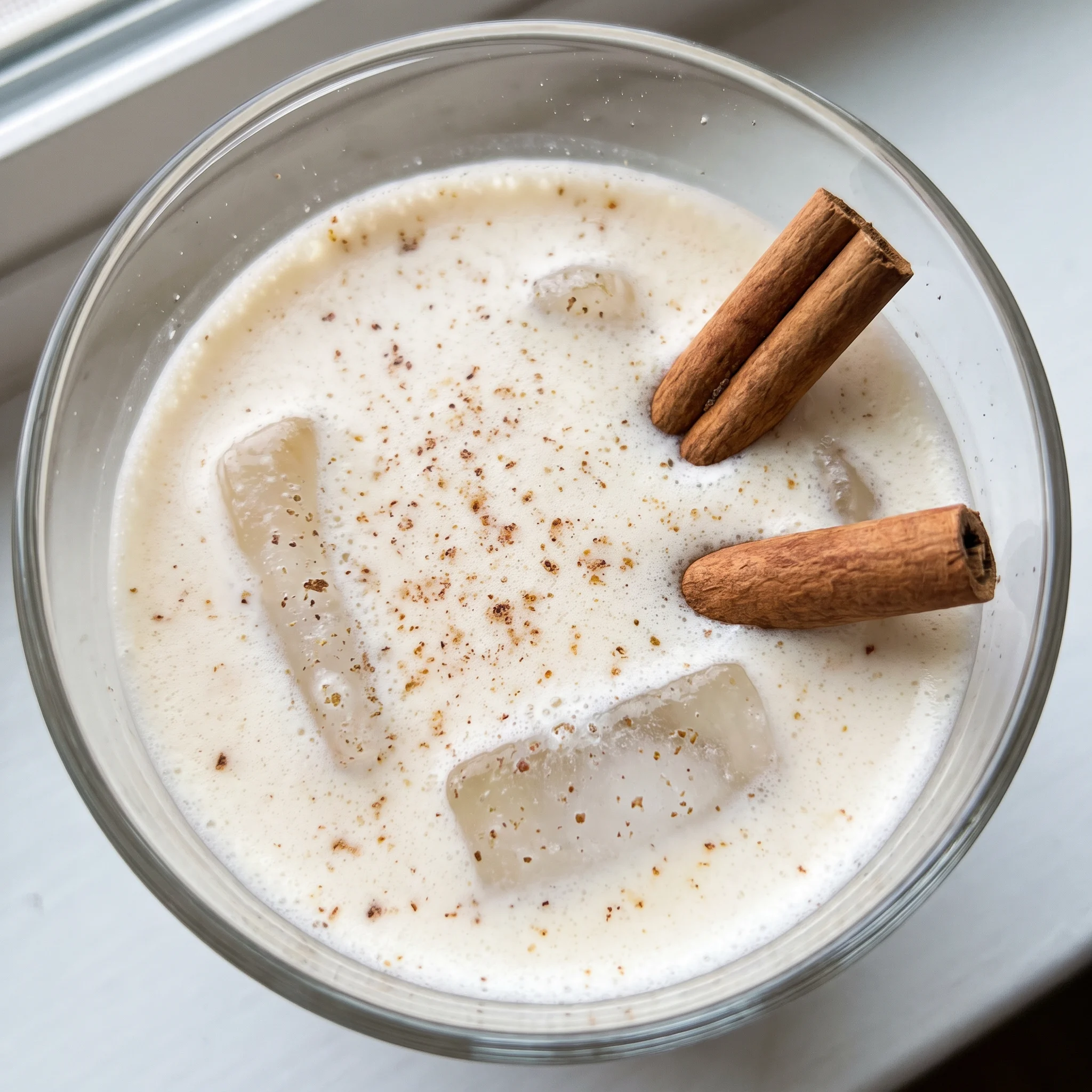
Eggnog White Russian Cocktail with Nutmeg
Ingredients
Method
- Place ice into a rocks glass until filled.
- Over the ice, pour the vodka and coffee liqueur.
- Introduce the eggnog and stir gently to blend.
- For a festive finish, sprinkle ground nutmeg or cinnamon as a garnish.
Storage and Serving: Build It Fresh, Stir It Hard
This drink has no make-ahead life worth planning around. Mixed eggnog separates within minutes: the dairy and sugar sink, the spirits rise, and the texture turns thin and watery where it sat.
Assemble each glass fresh, right before you hand it over, and drink it within about ten minutes of the stir. That window is when the eggnog still coats the ice and the spice reads clearly.
If you must pre-batch, keep the eggnog base and the spirits separate in the fridge, no more than a day for the dairy, and combine per glass. A pre-mixed batch needs a hard re-stir, not a gentle one, to force the emulsion back together, and even then it drinks thinner than a fresh pour.
Skip the freezer entirely; frozen eggnog breaks and never fully recovers. The nutmeg or cinnamon goes on last, at the glass, never on a stored portion, because the dust sinks and turns the surface speckled and dull.
Tips
- Chill the eggnog in the fridge until it is fully cold, not just cool from the store shelf, and put the rocks glass in the freezer for about ten minutes before you build the drink. With only 3 fl oz of eggnog and a glass packed with ice, the base has little cold mass to spare, so a warm carton or a room-temperature glass melts the ice fast and the drink goes thin and watery before you finish it.
- If you keep your vodka and coffee liqueur in the freezer, pour them straight from it. At 2 fl oz total against 3 fl oz of eggnog, the spirits are the coldest thing going into the glass, and pre-chilled liquor means the ice has to do less work, so the drink stays cold without over-diluting.
Swaps That Keep the Balance, Not Just the Flavor
Vodka: A clean white rum, silver tequila, or a light gin can replace the vodka. Start with the same 1 fl oz the recipe uses and adjust after tasting. Each brings its own character: rum adds a faint molasses note, tequila a vegetal edge, gin botanicals.
All can work, but they won’t disappear the way vodka does. If you want the eggnog and coffee liqueur to stay in front, stick with vodka. A harsh vodka will cut through rather than blend, so pick a smooth one if you keep it.
Kahlúa): Another coffee-flavored liqueur like Tia Maria or a local coffee liqueur. Use the same 1 fl oz to start, then taste.
The coffee note stays, but the sweetness shifts. Kahlúa is fairly sweet, and the eggnog already brings sugar. A drier coffee liqueur will make the drink less cloying; a sweeter one will push it toward dessert.
If you swap, pour a little less than the recipe calls for and add back if needed. Too much sweet liqueur coats your tongue and hides the spice.
Classic eggnog: For dairy-free, use a non-dairy nog (almond, oat, coconut, or soy). For a richer version, use a premium or homemade eggnog. Start with the same 3 fl oz, then adjust by taste.
Non-dairy nogs vary wildly in thickness and sweetness. A thin one will make the drink feel watery and the alcohol more prominent; a thick one might need a extra stir to blend. Coconut nog adds its own flavor that can fight the coffee.
Premium eggnog is richer, so you might want a splash less vodka to keep the balance. The goal is a drink that still tastes like a cocktail, not a thin or overly sweet mess.

Frequently Asked Questions
Can I make this eggnog White Russian ahead of time for a party?
Pre-batch the parts, not the drink. Keep the spirits in one jar and the eggnog in another in the fridge, then build each glass as guests arrive and stir.
Mixed and left sitting, the dairy sinks and the spirits rise, so what you pour an hour later is thin and watery where it stood. If you do combine a batch ahead, it needs a hard stir to pull it back together, and it still drinks thinner than a fresh pour.
Keep the nutmeg or cinnamon for the glass; dusted on a stored portion it sinks and leaves the surface speckled and dull.
Why did my eggnog White Russian curdle or look separated?
Most likely the eggnog sat too long after mixing. The dairy and sugar drop, the vodka and coffee liqueur rise, and you get pale streaks under a dark layer. That’s separation, and a hard stir brings it back, though the body stays thinner than a fresh build.
Cold matters too: eggnog straight from a warm shelf or a warm glass breaks faster, so keep it refrigerated until you pour. If the surface looks grainy rather than layered, check the eggnog’s date; older nog is already close to splitting before the alcohol hits it.
How is this different from a regular White Russian?
You’re swapping the cream for eggnog, and that one change does two jobs. Standard versions lean on cream plus a little simple syrup for body and roundness; eggnog arrives with sugar and warm spice already in it, so nothing else goes in the glass. The vodka and coffee liqueur stay exactly where they are, at equal parts, so the drink is still the same cocktail underneath.
What shifts is the finish: nutmeg and cinnamon come through against the coffee instead of a plain cream note. Texture runs a touch thicker too, which is why a gentle stir rather than a shake suits it.
