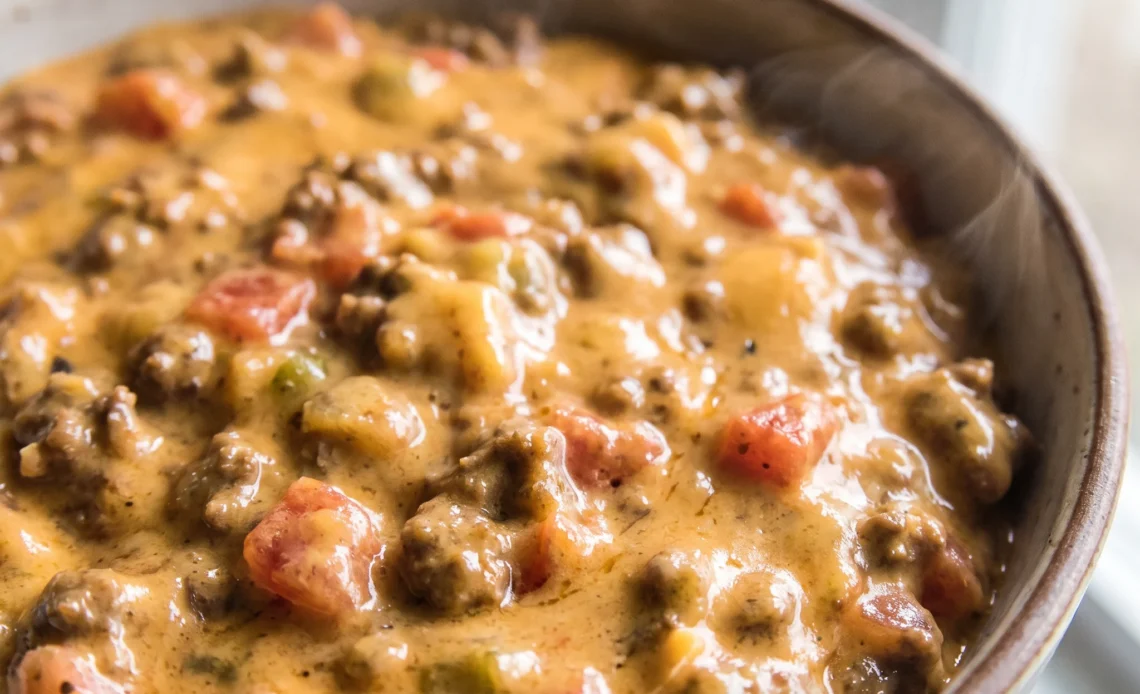
Getting the beef dry before it goes in matters more than anything else you do to a slow cooker taco cheese dip. Skip that, and the fat and water it carries will thin the cheese into something that slides off a chip.
The other trap is the tomatoes: drain them well, or the pot turns soupy. Do those two things and the appliance handles the rest, holding a glossy, scoopable dip on warm for hours while you’re anywhere but the kitchen.
The gentle heat is forgiving in a way a stove isn’t, though it won’t rescue you from a wet pan. Set it out and people will hover over it anyway.
Why Gentle Heat Keeps the Dip Smooth
Velveeta melts differently than cheddar or Monterey Jack. Those cheeses break into a greasy pool when they get too hot, with the fat separating and the solids turning grainy. Velveeta was built to melt into a uniform sauce, and the slow cooker’s low, indirect heat lets it do that without ever hitting a temperature that would scorch the bottom or cause the mixture to seize.
What you see after an hour or so is a smooth, glossy surface with no oil slick on top. A pot on the stove can get there too, but only if you stand over it and stir constantly, and even then the edges can catch. The slow cooker eliminates that risk.
Once the dip is done, setting the cooker to warm holds it at a serving temperature for hours, so the cheese stays fluid and dippable instead of firming up in a bowl.
The Tomatoes and Chiles, Drained
Canned diced tomatoes with green chiles carry a lot of liquid, and that liquid is mostly water. If it goes into the slow cooker, the cheese has nothing to bind to; the dip turns soupy and won’t coat a chip. Draining the cans leaves behind the tomato pieces and the chiles, which still deliver acidity, a little sweetness, and a mild heat.
The chiles themselves are already soft and won’t release much more moisture, so they add flavor without thinning the texture. You want the dip to be thick enough that a chip comes out loaded, not dripping.
Skipping the drain is the most common reason a taco dip ends up runny. A quick shake in a colander is enough; no need to press.
The tomato chunks should look slightly wet but not swimming.
Brown the Beef, Then Let It Dry
Ground beef releases fat and water as it cooks. If you dump it into the slow cooker straight from the skillet, those liquids dilute the cheese and make the dip greasy.
Discarding the fat is the first step. The second is simmering the seasoned beef until the added water cooks off completely.
That evaporation concentrates the taco seasoning, so the beef tastes more savory and less like a packet of powder. What you’re looking for is a dry, crumbly texture with no visible liquid in the pan. If you skip this, the dip will be loose and the seasoning will taste washed out.
The beef should be fully coated and glistening with its own fat, not sitting in a pool. That’s the point where it’s ready for the slow cooker.
From Stovetop Party Classic to Slow Cooker
On the stove, this dip is a high-attention dish. You melt the cheese over low heat, stir constantly, and serve it immediately, because it thickens as it cools.
The slow cooker changes that. The texture comes out slightly looser and more uniform, since the cheese never gets a chance to tighten up from a blast of direct heat. That makes it better for a party: you can set it on warm and leave it out for hours, and it stays scoopable.
For the cook, the work shifts to the front end. Brown the beef, drain the cans, cube the cheese, and the appliance handles the rest.
There’s no last-minute stirring or rushing to the table. You can focus on other food, or on your guests.
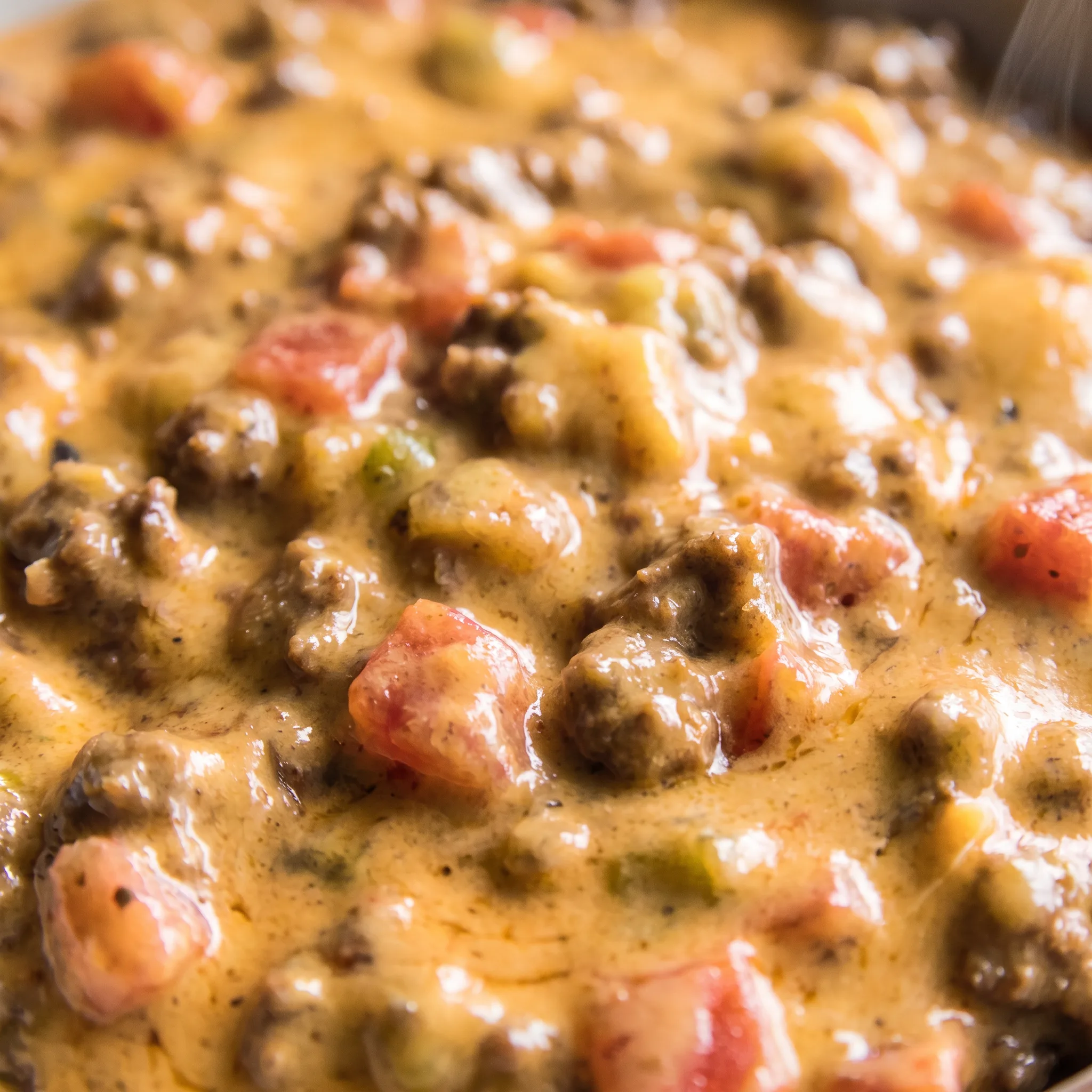
Three Ingredients That Decide Whether This Dip Coats a Chip
Velveeta: Buy the block and cube it yourself; the pre-shredded bags and pouches melt unevenly and can leave small lumps.
Diced tomatoes with green chiles: Drain the cans in a colander and shake once; the tomato chunks should look damp but not dripping when they go in.
Ground beef: Pick an 80/20 blend; leaner grinds dry out and turn pebbly before the seasoning has a chance to coat them.
Taco seasoning: One standard 1-ounce packet is the right amount for a pound of beef, so check the weight on the packet you grab.
How to Tell When the Dip Is Right
When the beef has actually dried out
After you add the taco seasoning and water, the pan will look like a thin sauce. That’s not done. Keep simmering until the liquid is gone and the beef starts to sizzle again in its own fat.
The meat should look crumbly and slightly glossy, not wet. If you pull it early, the extra water goes into the slow cooker and thins the cheese. You can’t fix it later without cooking the dip longer, which risks scorching.
So wait for the sizzle.
Judging the melt without stirring too soon
At the start, the Velveeta cubes sit on top and the mixture looks chunky. Resist the urge to stir every few minutes; each time you lift the lid, heat escapes and the melt slows down. After 45 minutes, give it one good stir from the bottom.
The cheese should be soft and starting to merge. If it’s still firm, close it up and check again in 15. The full melt takes 1 to 1½ hours, but the real signal is a smooth, uniform surface with no distinct cubes left.
The texture that tells you it’s thick enough
Once everything is melted, dip a chip. The dip should cling to it, not run off. If it’s thin, the likely culprit is undrained tomatoes or beef that wasn’t dry.
You can salvage it by leaving the lid off for 15 to 20 minutes on low, stirring occasionally. That evaporates some water. But don’t walk away; the edges can start to catch if the heat is too high.
The goal is a dip that coats a chip evenly, with just a little drip.
Holding it without letting it break
Switching to warm keeps the cheese fluid, but warm on some slow cookers still cycles the element on and off. If the dip sits for hours, check it now and then.
A skin can form on top, and the bottom can scorch if the heat spikes. Stir it every 30 to 45 minutes. If you see oil pooling at the edges, the dip has gotten too hot; stir it back in and turn the cooker off for a few minutes.
The texture should stay glossy and pourable.
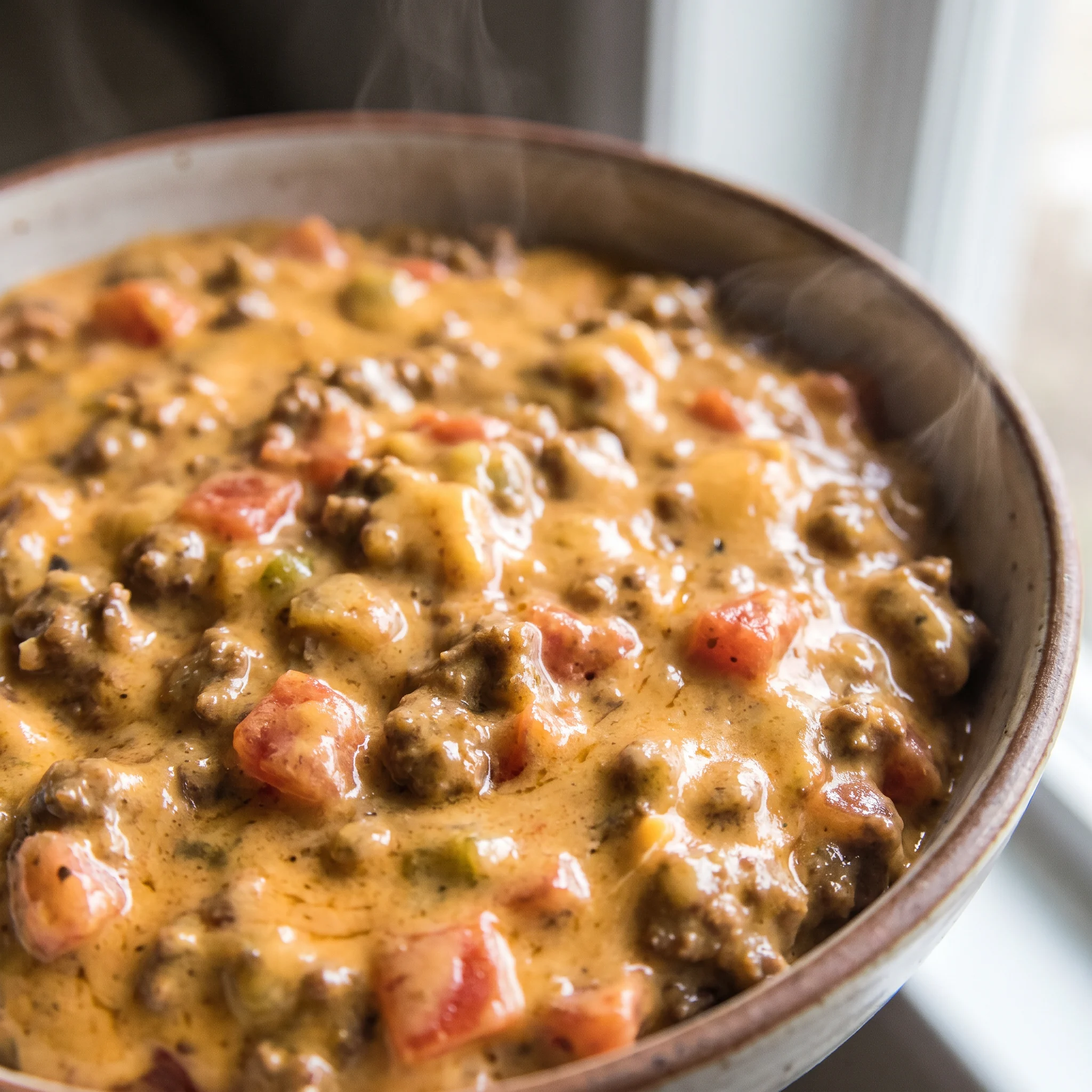
Slow Cooker Taco Cheese Dip with Velveeta
Ingredients
Method
- Coat the interior of the slow cooker using nonstick cooking spray.
- In a skillet over medium heat, brown the ground beef until no longer pink; discard any excess fat.
- Following the package directions, incorporate the taco seasoning and water; simmer until the liquid has completely evaporated, then take off the heat.
- Place the seasoned beef, cubed Velveeta, and drained diced tomatoes with green chiles into the prepared slow cooker.
- Stir everything together, then cook on low until the cheese has fully melted, approximately 1 to 1½ hours.
- Switch the slow cooker to warm for serving; offer with tortilla chips.
The Two Swaps That Work and the One That Ruins the Pot
Ground beef: Ground turkey or a plant-based crumble, measured out to the same one pound the recipe calls for. Turkey browns faster and gives up more water, so let it sizzle until the pan is dry before the seasoning goes in, or the dip turns loose.
A plant-based crumble won’t release fat, so the finished dip tastes leaner and the taco seasoning reads sharper; add a teaspoon of oil to the skillet if it starts to stick. Either way, use the same 1-ounce packet of taco seasoning.
Velveeta: Another melting-friendly processed cheese loaf, or a blend of 12 ounces mild cheddar and 4 ounces cream cheese. The processed loaf melts the same way and needs no adjustment. The cheddar and cream cheese blend will melt, but cheddar brings a sharper bite and the cream cheese adds tang; stir more often and expect a slightly thicker dip that firms up faster on warm.
Skip aged or hard cheeses like Parmesan or a dry Monterey Jack, which clump and separate instead of smoothing out.
Taco seasoning packet: A homemade blend of chili powder, cumin, garlic powder, onion powder, oregano, and salt. Start with the same amount the packet would add (about 2 tablespoons for a pound of beef) and taste after the beef has dried out; adjust salt and heat from there. A homemade blend often has less salt and no anti-caking agents, so the beef may need a pinch more salt at the end.
The flavor comes through brighter because there’s no starch to dull it.
Diced tomatoes with green chiles: No good swap. Fresh diced tomatoes or a can of plain diced tomatoes plus chopped fresh chiles. Fresh tomatoes carry far more water, and even after draining they’ll weep into the cheese as it heats.
The dip turns soupy and won’t coat a chip. If you must use them, seed and drain the tomatoes well, then leave the slow cooker lid off for the last 20 minutes to cook off some liquid, stirring often so the bottom doesn’t catch.
Tips
- Taste the taco seasoning before it hits the skillet. Brands range from mild to aggressively salty, and a full 1-ounce packet of a salty blend plus the Velveeta (already salty on its own) can push the finished dip past the point where a chip tastes right. If the powder tastes very salty on its finger, cut back to about three-quarters of the packet and add the rest after the beef has dried, tasting as you go.
- Taste one drained chile piece and one tomato chunk before they go in. Canned chiles vary from nearly sweet to genuinely hot depending on the brand and the pepper crop that year, and the drained pieces are the only heat source in the pot. If the chiles taste mild, you can add a pinch of cayenne or a minced fresh jalapeño at the same time as the cheese. If they taste hot, leave it alone and don’t add anything else with capsaicin. Once the Velveeta is in, you can’t dial the heat back down.
Storing and Reheating Taco Cheese Dip
This dip is at its best within the first two hours of melting, when the cheese is glossy and loose enough to coat a chip cleanly. Past that, and especially once it cools, the Velveeta firms up and the whole pot thickens into something closer to a spread than a dip. That’s the texture change you’re fighting, so plan to eat it hot and fresh.
If you’re holding it for a party, keep the slow cooker on warm and stir every 30 to 45 minutes; a splash of milk or water stirred in brings it back to a dippable state. Leftovers keep in an airtight container in the fridge for up to three days. Reheat gently on the stovetop or in the microwave, adding a tablespoon of liquid at a time until it loosens.
Don’t freeze this one: the dairy will separate and the texture won’t recover. Any finishing touch, like fresh cilantro or jalapeño, goes on right before serving, not during storage.
The recipe’s step 3 simmers the seasoned beef until the liquid has completely evaporated, which removes water that would otherwise dilute the final dip. If any liquid remains, it prevents the Velveeta from binding into a thick, scoopable texture and can cause the dip to separate. Evaporating the liquid also concentrates the taco seasoning on the beef, intensifying its flavor.
Frequently Asked Questions
Can I make this dip ahead of time and reheat it in the slow cooker?
You can assemble it ahead, but the texture won’t be the same as fresh. Cook the beef completely, drain the tomatoes, and cube the cheese, then refrigerate the components separately for up to a day. When you’re ready, combine them in the slow cooker and proceed with the 1 to 1½ hour melt on low.
Reheating the finished dip works, but it firms up and needs a splash of liquid to loosen again.
Why did my taco cheese dip turn out greasy?
The beef is almost always the culprit. If you didn’t drain the fat after browning and didn’t simmer the seasoned meat until dry, that liquid goes into the pot and separates as oil on top. A second check is the cheese: pre-shredded bags or pouches melt unevenly and can leave an oily sheen.
Stick with the block Velveeta, cut into cubes.
How does this slow cooker version compare to the classic stovetop taco dip?
The slow cooker version comes out looser and more uniform, because the gentle heat never tightens the cheese the way a direct flame can. That makes it better for a party: it stays scoopable on warm for hours without last-minute stirring. The trade-off is time.
You’re committing to 100 minutes total, most of it hands-off, versus a stovetop version you have to watch constantly and serve immediately.
