
Scale is what breaks a big pasta salad, not the ingredient list. Four pounds of rotini for a hundred people is manageable if you cook it in two passes, because a single pot that full cooks unevenly and the pieces at the bottom go soft before the ones on top lose their bite. The other trap is timing: pasta dressed cold keeps drinking, so the bowl that tastes right when you toss it can read dry hours later.
That gap between mixing and serving is where most of the work happens, and pasta salad for a crowd lives or dies in it. Get the first toss seasoned past what seems right, and the chill does the rest.
Rinse the Pasta Under Cold Water
Rinsing cooked rotini under cold water is not a shortcut; it is the step that keeps the salad from turning into a single sticky mass. The cold water stops the cooking instantly, so the pasta stays firm instead of softening further as it sits. It also washes away the loose starch on the surface.
If that starch stays, the Italian dressing slides off in patches instead of coating every piece. When you skip rinsing, the pasta keeps cooking from its own heat and ends up with no bite, and the dressing turns thick and gluey.
Cold pasta also won’t wilt the tomatoes or melt the mozzarella when you toss everything together. After four hours in the refrigerator, the pasta absorbs some dressing but still holds its shape.
You’ll notice each piece stays separate in the bowl, not clumped. That firm, distinct texture is what you want when you stir the salad just before serving.
Why 64 Ounces of Dressing for 4 Pounds of Pasta Is Not a Mistake
Pouring two full bottles of Italian dressing over four pounds of pasta looks excessive, but the pasta absorbs far more than you’d expect. Rotini is dry and porous; as the salad chills for at least four hours, each piece soaks up dressing like a sponge.
Without that generous volume, the salad tastes dry and chalky by the time you serve it. The dressing doesn’t just coat the pasta; it seasons every bite, so the full amount ensures flavor runs through the entire bowl, not just on the surface. Mixing the dressing with still-warm pasta would speed absorption, but this recipe rinses the pasta cold.
The large amount compensates for that, giving the pasta time to drink in what it needs. After chilling, the pasta should look glossy and taste seasoned all the way through.
If you cut back, you’ll end up with a salad that needs more dressing at the table.
Cut Vegetables and Cheese to Match the Pasta
The size of the tomatoes, peppers, and mozzarella cubes determines whether the salad eats well or turns into a wet, clumpy mess. Cherry tomatoes are halved, not diced. Dicing exposes more cut surfaces and releases watery juice that thins the dressing and makes the pasta soggy.
Halves keep their shape and their juice mostly inside. Mozzarella gets cut into small cubes, roughly the size of a piece of rotini, so it holds its shape when tossed and doesn’t clump into a single sticky lump. Bell peppers are chopped into bite-sized pieces that fit on a fork with the pasta; too large and they dominate, too small and they disappear.
Black olives are drained and sliced, otherwise their brine would water down the dressing and make everything taste sharply salty. When you stir the salad, these pieces should distribute evenly, not sink to the bottom. A spoonful should give you pasta, cheese, tomato, pepper, and olive in every bite.
Divide and Chill in Shallow Pans
A single deep bowl of pasta salad chills unevenly. The center stays warm for hours while the edges get cold, and that temperature gap is a food safety risk with cheese, cut tomatoes, and peppers sitting in the danger zone. Dividing the salad among two or more large foil pans spreads it into a shallower layer.
More surface area means the cold air reaches the middle quickly and evenly. That fast, uniform cooling keeps the perishable ingredients safe and preserves the texture of the pasta, which can turn soft if left warm too long. Cover the pans and refrigerate for at least four hours.
During that time the pasta absorbs dressing and the flavors settle. When you’re ready to serve, the salad should be uniformly cold, not cold at the edges and cool in the center. That even chill is what makes it safe and pleasant to eat.
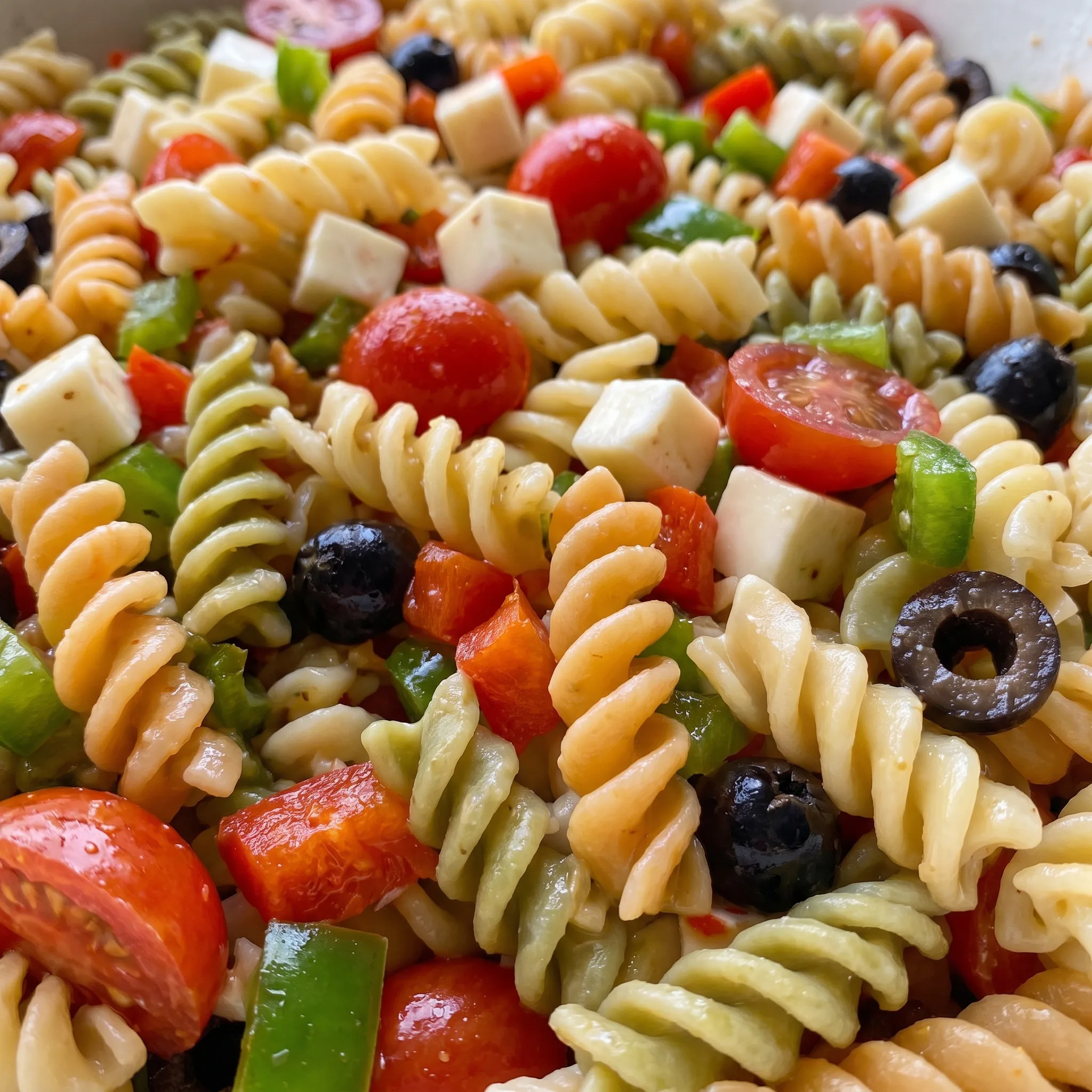
What to Buy and How to Prep It Before You Toss 100 Servings
Multi-colored rotini: Buy a brand that holds its spiral ridges after boiling, since smooth bargain pasta slides dressing off instead of catching it.
Italian dressing: Pick a bottled vinaigrette-style dressing, not a creamy one, because the oil and acid need to soak into cold pasta without breaking.
Mozzarella cheese: Buy a block and cube it yourself; pre-shredded or pre-cubed cheese is coated in starch that keeps it from clinging to the pasta.
Cherry tomatoes: Halve them and use them within a day or two of buying, since soft tomatoes bleed juice that thins the dressing.
Bell peppers: Choose firm, heavy peppers with tight skin, because wrinkled ones are already losing water and go limp in the bowl.
Sliced black olives: Drain them well and pat them dry, since olive brine left on the slices turns the whole salad sharply salty.
When pasta is cooked, its surface releases starch that forms a gelatinous layer as it cools. If that starch remains, it absorbs the Italian dressing over the 4-hour chill, swelling into a gluey film that makes the pasta stick together and dilutes the dressing’s flavor. Rinsing under cold water washes away this excess surface starch and stops cooking instantly, leaving the pasta firm and separate so the dressing coats each piece instead of being soaked up by loose starch.
Judging Pasta Salad for 100 by Feel, Not by Clock
Reading doneness in the first half of the pasta
Only half the pasta gets cooked at this point, so the pot is crowded and the water takes longer to come back. Pull a piece and bite it: it should give a little resistance at the center, not yield all the way through. If it’s already soft, the cold rinse won’t save it and the finished salad will eat flat.
Drain the moment that bite has a snap left.
Tasting the dressed pasta before the add-ins go in
Once the dressing, salt, and pepper are worked through half the pasta, taste a piece. It should be seasoned sharply, saltier and tangier than you’d want on its own.
The cheese, tomatoes, and peppers will dilute that intensity over four hours of chilling. If it tastes balanced now, the finished salad will taste washed out.
Add more salt or dressing before the vegetables go in, not after.
Knowing the salad is cold all the way through
Foil pans in a crowded refrigerator chill from the edges in. At the four hour mark, push a finger into the center of a pan: it should feel as cold as the rim, with no cool pocket left. If the middle still reads warm, spread the salad thinner across more pans and give it more time.
Warm centers are where the cheese and cut tomatoes turn first.
Deciding whether the salad needs more dressing before it goes out
After chilling, the pasta will have drunk most of what you poured on. Stir from the bottom, then look at the pasta in the spoon: if it’s matte and the pieces drag against each other, the dressing has been absorbed too far.
A splash more Italian dressing, tossed through, brings back the gloss. Taste again, because that addition changes the salt.
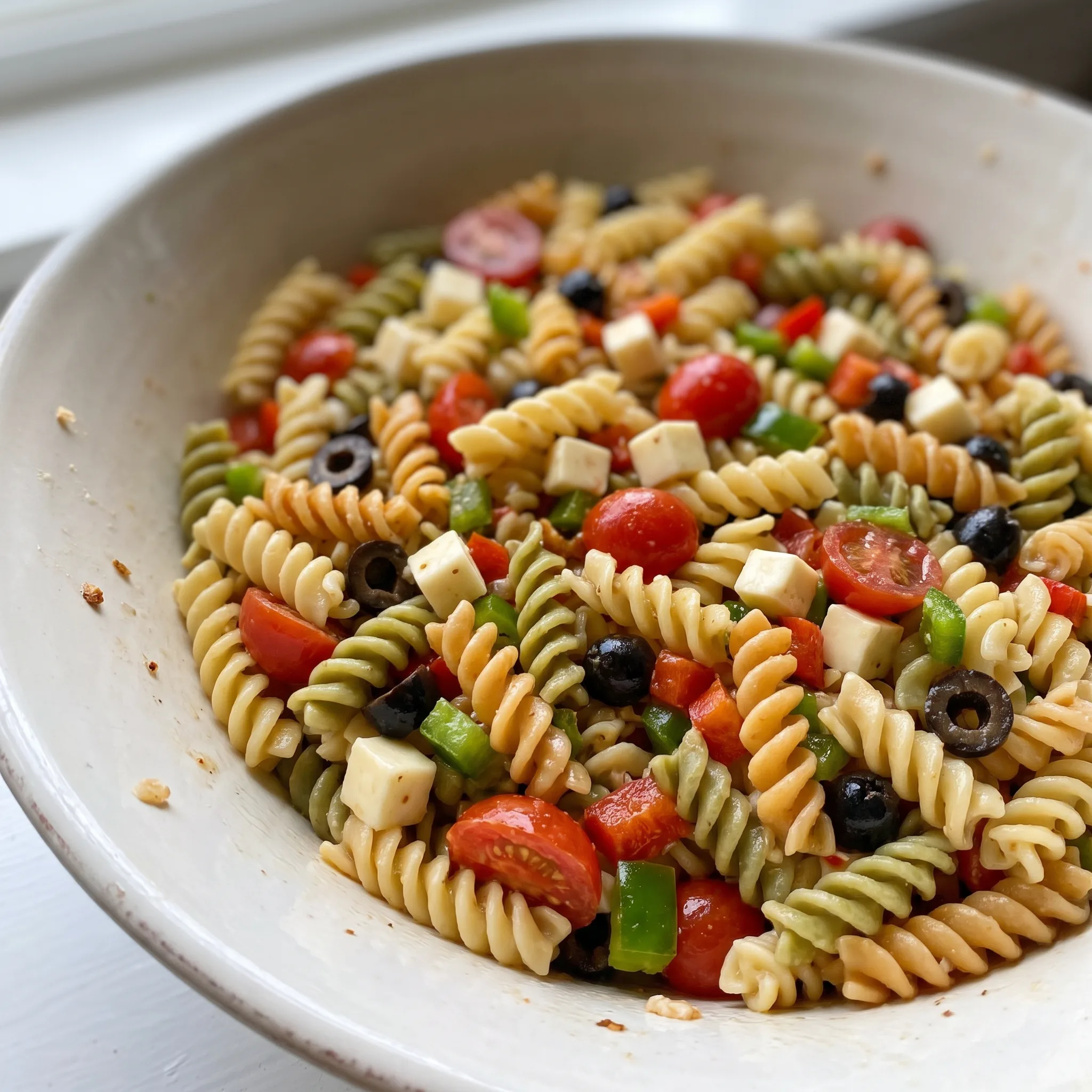
Colorful Rotini Pasta Salad with Mozzarella and Olives
Ingredients
Method
- Prepare half of the pasta by cooking, then draining and briefly rinsing under cold water.
- Transfer half of the cooked pasta into a very large bowl.
- Drizzle the Italian dressing over the pasta, season with salt and pepper, and mix thoroughly with a long-handled spoon.
- Incorporate the remaining ingredients and stir until well combined.
- Divide the mixture among 2 or more large foil pans. Cover with foil or plastic wrap and chill in the refrigerator until serving time.
Swaps That Hold Up in a Bowl That Sits for Four Hours
Italian dressing: A homemade vinaigrette or plain oil and vinegar, using the same 64 fl oz the recipe calls for. You control the salt and acid, which matters when the pasta drinks dressing for four hours. A basic three-to-one oil to vinegar ratio works, but taste it before pouring.
Too much vinegar and the tomatoes and mozzarella taste sour by serving time. Too little and the salad eats flat. Bottled dressing is already balanced and emulsified, so a homemade version needs a good whisk and another stir before you dress the pasta.
If you go with straight oil and vinegar, start with the full 64 fl oz the recipe uses, then adjust after the first toss. The pasta will still absorb plenty.
Mozzarella cheese: Cubed provolone, Monterey Jack, or a firm feta. Mozzarella is mild and soft, so it disappears into the background and lets the dressing and vegetables lead.
Provolone brings a sharper edge that can overpower the olives. Monterey Jack melts slightly against the cold pasta and turns creamy, which some crowds like and others don’t. Firm feta holds its shape but crumbles into small bits that sink to the bottom of the foil pan.
Stick with a block you cube yourself, roughly the size of a piece of rotini. Pre-cubed or shredded cheese is coated in starch that keeps it from clinging to the pasta, and you end up with bare noodles and clumps of cheese.
Multi-colored rotini pasta: Gluten-free rotini or another short, ridged shape like penne or fusilli. Gluten-free pasta is more fragile, especially after a cold rinse. Cook it a minute less than you think, because it keeps softening as it sits in dressing.
The ridges still catch dressing, but the pieces break apart more when you stir 100 servings. If you use regular penne or fusilli, the salad eats the same but the look changes: no tri-color, and the dressing hides in the tubes instead of coating the spirals. The recipe calls for 4 lb, so match that weight with whatever dry pasta you choose.
Don’t swap in a tiny shape like orzo or ditalini; they pack together and turn the salad into a dense scoop instead of a forkful.
Cherry tomatoes: Grape tomatoes, left whole or halved. Grape tomatoes are firmer and less watery, so they hold up better over four hours of chilling.
Leave them whole if they’re small; halve the larger ones so they don’t burst when someone bites into the salad. The trade-off is texture: whole grape tomatoes pop in the mouth, while halved cherry tomatoes release a little juice that mixes into the dressing.
Either way, don’t dice them and don’t substitute canned diced tomatoes. Those bring a watery, cooked flavor that thins the dressing and makes the pasta soggy. The recipe calls for 40 oz, so use that same weight and adjust after you taste the tossed salad.
Tips
- Taste the dressed pasta for salt and pepper as soon as the first toss is done, while it is still room temperature, and add more than tastes right. Cold food reads less salty and less peppery on the tongue, so a batch seasoned to taste at this stage will eat flat after four hours in the refrigerator. Figure on roughly an extra quarter teaspoon of salt and a pinch of pepper beyond what seems correct, then stir and taste again before the cheese, tomatoes, and peppers go in.
- Divide the salad into the foil pans before you finish adjusting, then taste a spoonful from each pan rather than from the mixing bowl. Dressing and salt settle toward the bottom of a very large bowl, so the last pan filled can be saltier than the first, and the batch will taste uneven once chilled and stirred at serving time. If one pan reads weak, add a splash of dressing and a pinch of salt to that pan alone and fold it through.
Storage and Serving for 100 Servings
Keep the salad in its covered foil pans in the refrigerator, where it holds four hours to two days. At four hours the rotini has drunk most of the dressing but still bites back; by day two the pasta has softened and the tomatoes have bled juice into the pan, thinning what’s left.
Stir from the bottom before each pan goes out. If the pasta looks matte and drags, toss in a splash more dressing and taste for salt.
Serve cold, straight from the fridge, and eat within two hours of setting the pans out; past that the cheese sweats and the peppers lose their snap. This batch doesn’t freeze.
The mozzarella turns grainy and watery when thawed, and the tomatoes collapse. If you must hold a portion longer, freeze only plain dressed pasta, then add fresh cheese, tomatoes, peppers, and olives after thawing.

Frequently Asked Questions
Can I make this pasta salad the day before serving?
Yes, and it’s the better way to do it. The pans can sit covered in the refrigerator from four hours up to two days, so assembling it the day before lands you right in the window where the rotini has absorbed dressing but still bites back. The catch is day two: the pasta softens further and the tomatoes bleed juice that thins what’s left in the pan, so stir from the bottom and taste before it goes out.
If the pasta looks matte and drags against the spoon, a splash more dressing brings the gloss back.
How do I keep the pasta salad from drying out after it’s chilled?
Start by keeping it covered in the foil pans, since an open pan loses moisture to the fridge air and the surface pasta goes matte first. Once it’s chilled, the usual culprit is absorption: four pounds of rotini drinks most of the 64 ounces of dressing, and what looked glossy going in reads dry four hours later. Stir from the bottom, then check the spoon; if the pieces drag instead of sliding, toss in a splash more dressing and taste again for salt.
Cherry tomatoes bleeding juice into the pan is the other cause, and that shows up as a watery pool under the pasta, so drain off any standing liquid before you add dressing.
What’s the difference between this pasta salad and a classic Italian pasta salad?
A classic Italian version leans on a light oil and vinegar dressing and a short list of vegetables, often with salami or pepperoncini doing the seasoning. This one goes heavier on the dressing, 64 ounces for four pounds of pasta, because the rotini chills cold and soaks up far more than pasta dressed warm at the table.
Mozzarella cubes and halved cherry tomatoes carry most of the flavor, and the tri-color rotini gives it a look you don’t get from plain penne. It eats richer and milder than the sharp, vinegar-forward classic, which is what makes it work for a crowd of 100.
