
The most common mistake with a christmas fruit wreath is building it an hour before guests arrive. Fresh fruit and herbs don’t hold; the ring goes slack, juice beads on the plate, and what looked crisp at the start reads tired by the time anyone reaches for it. This one’s assembled by hand, no oven, no frosting, nothing to bake.
The real difficulty isn’t technique, it’s timing and ripe fruit, and you can’t fake either. Grapes too soft and the whole thing slumps before you’ve finished the top. Build it close to the table and it stays sharp; get that window right and it’s the easiest festive centerpiece you’ll put out all season.
The most common mistake is treating raspberries as just another fruit layer, mixing them in with the grapes and kiwi. Because raspberries are hollow and delicate, any weight on top ruptures their cells, causing them to bleed juice and turn mushy. This not only ruins their texture but also makes the wreath soggy and shortens its visual appeal.
Herb Bed Under the Wreath
Mint and rosemary go down first for two practical reasons. A platter of loose fruit slides; a bed of springy herbs grips every grape bunch and kiwi chunk, so the circle you build stays a circle. You can feel the resistance when you nudge a cluster into place.
The second reason is scent. Rosemary’s piney edge and mint’s coolness warm up as the fruit sits, drifting through the gaps between grapes. That perfume does more for the first bite than any drizzle could.
Snip the long sprigs so nothing dangles past the plate edge; a tidy rim makes the shape read as intentional. You want the herbs to form a rough mat, not a haystack.
If a sprig sticks up through the fruit, trim it back. The bed should disappear under the wreath, felt more than seen.
Green Grape Clusters Build the Ring
Leave the green grapes in small bunches. Individual berries roll, and you’d spend ten minutes chasing them. A bunch has weight and friction; set one down and it stays.
Build the ring by nesting bunches side by side, pressing gently so they lock. Red grapes and kiwi go on next, but the green clusters set the shape. The visual split matters: dense green base, bright red and pale kiwi above, so the wreath reads as a finished thing, not a pile.
A large round plate or board gives you room to work the circle without crowding the edges. You can see the wreath take form as you go, a ring of green that holds its line even before the last grape goes on.
The grapes will look like they belong there, because they do.
Raspberries on Top, Last
Raspberries are fragile. Press them into the wreath early and the grapes and kiwi crush them into juice. Sprinkle them last, after the green bunches and kiwi are set, so they sit on top like small red jewels.
Their tartness cuts through the sweet grapes and mild kiwi, and that contrast is the reason they’re here. You’ll see the color pop against the green and the herbs.
A few will fall into gaps between grapes; that’s fine, they fill the ring. Don’t toss them with the other fruit in a bowl first.
The dish needs their whole shape. Once they’re on, serve it. They’ll start to bleed if they sit, and the wreath loses its crisp look.
The first handful you eat should taste bright, not sugary.
Fresh Fruit, No Cooking Required
Nothing here gets baked, chilled, or heated. The dish lives on the ripeness of what you bought. Grapes should be firm, not soft; a squishy grape will weep and the wreath slumps.
Kiwis need to be ripe but still hold a cut edge, and their moisture and acidity keep the grapes from tasting too sweet. Assemble it and eat it within the hour. As it sits, the herbs wilt and the fruit releases juice, pooling on the plate.
You’ll see the wreath lose its crisp outline. That’s not a flaw; it’s just what fresh fruit does. Serve it on the same platter you built it on, and let people pull clusters apart with their fingers.
A dish this simple depends on good fruit, nothing else.

What to Buy and How It Should Feel in Your Hand
Green grapes: Buy 2 cups still on small bunches, firm enough to snap when bitten, since a soft grape weeps and the ring slumps.
Kiwis: You need 3 ripe enough to eat but firm enough to hold a cut edge, because their moisture and acidity keep the grapes from tasting flat.
Raspberries: Get 1/2 cup of whole, dry berries with no dark wet spots, since any that have started to bleed won’t survive being sprinkled on last.
Mint and rosemary: Pick 7 or 8 sprigs of each with pliable stems and no dry, browning needles, so the bed grips the fruit instead of crumbling under it.
Reading the Wreath as You Build It
Judging the Herb Bed’s Thickness
Herbs go down first, but the depth matters. A bed thick enough to cushion a grape bunch will also prop up the edges, so the ring sits above the plate instead of spreading flat.
You want the herbs to form a rough mat, not a haystack. If the bed is too thin, the grapes will slide when you nudge them.
If a sprig sticks up through the fruit, trim it back. The bed should disappear under the wreath, felt more than seen.
Knowing When the Ring Holds Its Shape
The green grape clusters set the shape. Press them together gently: you should feel them lock, not squish. If they slide apart when you add the next bunch, the ring is too loose and the final wreath will look like a pile.
You can see the wreath take form as you go, a ring of green that holds its line even before the last grape goes on. Adjust by nesting clusters tighter before moving on.
Reading the Grapes for Freshness
Grapes should be firm, not soft. A squishy grape will weep and the wreath slumps. Feel a few: they should have a slight give but snap when bitten.
If they’re soft, the wreath will lose its crisp outline as juice pools. There’s no fixing that once assembled, so pick through and remove any that feel limp. The same goes for kiwis: ripe but still hold a cut edge.
Their moisture and acidity keep the grapes from tasting too sweet.
Judging When the Raspberries Go On
Raspberries are fragile. Press them into the wreath early and the grapes and kiwi crush them into juice.
They go on last, after the green bunches and kiwi are set, so they sit on top like small red jewels. You’ll see the color pop against the green and the herbs.
A few will fall into gaps between grapes; that’s fine, they fill the ring. Don’t toss them with the other fruit in a bowl first. The dish needs their whole shape.
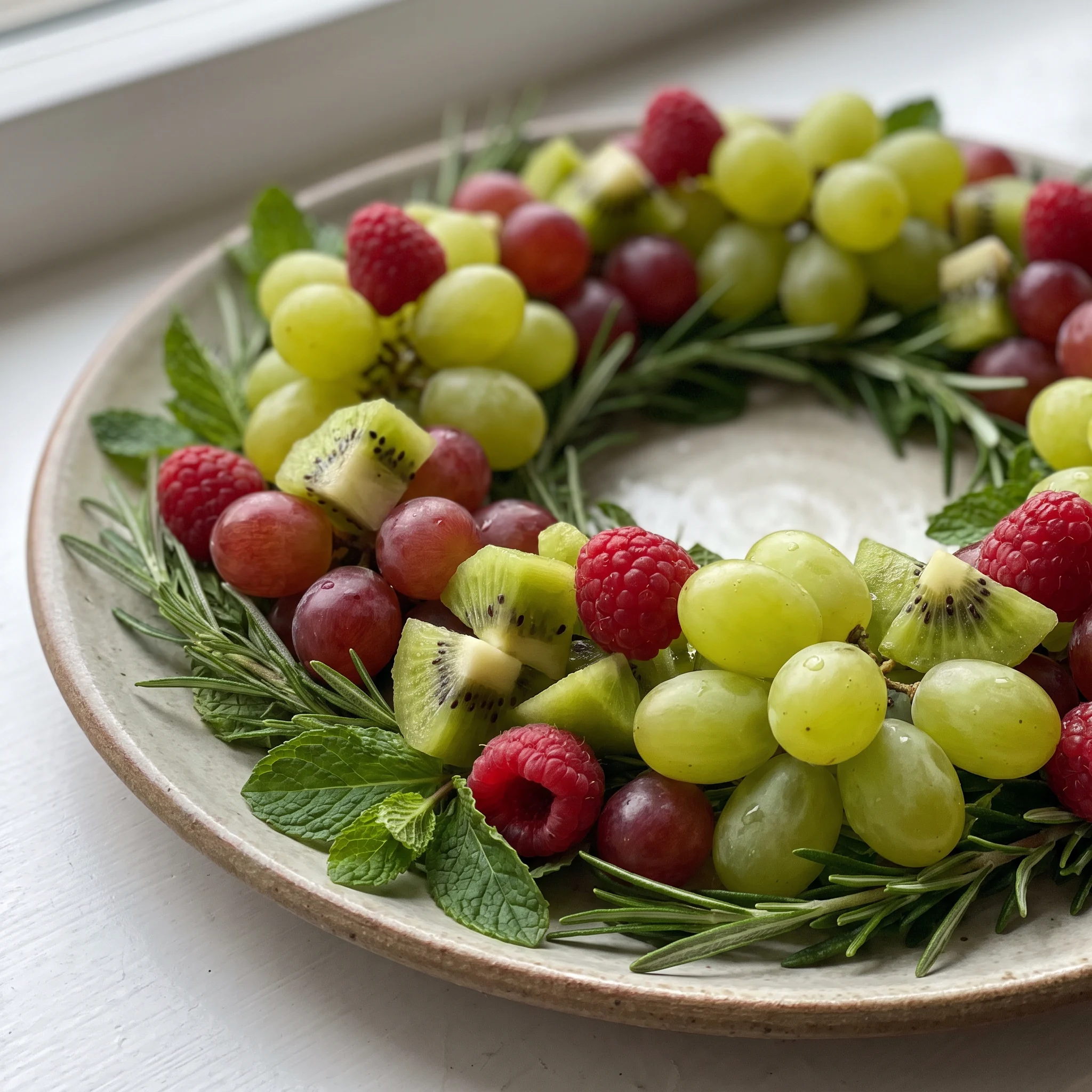
Christmas Fruit Wreath with Grapes and Kiwi
Ingredients
Method
- On a large round serving plate or board, lay out the mint and rosemary sprigs, cutting off any long ends.
- Using the green grapes, create a circular wreath shape atop the herbs, then add the kiwi and red grapes in layers.
- To finish, sprinkle the raspberries over the wreath.
Serving Window, Leftovers, and Why This Wreath Won’t Wait
This wreath is built to be eaten, not stored. Assemble it and serve within the hour.
Push past that and the mint and rosemary start to wilt under the fruit’s weight, and the cut kiwi and raspberries bleed juice that pools on the plate. The grapes soften and lose their snap. You’ll see the crisp outline of the ring go slack, and the herbs that read as a green mat turn dark and limp.
Eat it within an hour for the best texture. After that, the fruit weeps and the herbs fade.
If you must hold it briefly, keep it at room temperature, not the fridge; cold dulls the rosemary and mint and makes the grapes taste flat. Leftovers keep, loosely covered, for a few hours at most before the raspberries collapse and the kiwi turns grainy.
Don’t freeze it. There’s nothing here that survives a freezer. The raspberries go on last, right before serving, never earlier.
Tips
- Dry the peeled kiwi chunks on paper towels before they go on the wreath. Kiwi holds water and releases it as it sits, and a wet chunk slides across the grape bunches instead of nesting, so the ring drifts while you finish the top layer.
- Blot the grape bunches dry right after rinsing, then give them ten minutes on a towel before building. Water on the skins breaks the friction between bunches, and the green clusters are what lock the ring’s shape, so wet grapes mean the whole circle loosens as you add the kiwi and red grapes.
The Swaps That Work Here and the Ones That Don’t
Mint and rosemary: Any sturdy aromatic sprig you have: thyme, sage, or even a few bay leaves. Use the same 7 or 8 sprigs of each.
The herbs still form a bed that grips the fruit and scents the wreath. Thyme is smaller, so you may need a few extra sprigs to cover the plate.
Sage brings a savory note that can overpower the grapes if you use too much. Bay leaves are stiff and won’t lie flat, so they’re better tucked under the grapes than on top.
Green grapes: Any firm, seedless grape variety: red, black, or even cotton candy grapes. Use the same 2 cups, still in small bunches. The wreath’s green base disappears, but the shape holds.
Red grapes will blend with the red grapes already in the recipe, making the color less distinct. Cotton candy grapes are sweeter and softer, so they may weep sooner.
If you swap, keep the bunches small so they still nest together.
Raspberries: Blackberries, if they’re firm and dry. Use the same 1/2 cup, but leave them whole.
Blackberries are larger and less fragile, so they won’t bleed as quickly. Their flavor is tarter and more floral, which can clash with the kiwi.
They also have a seed that some find unpleasant. If you use them, place them on top last, just like raspberries, and serve immediately.
Kiwis: No good swap. Leave them alone. Kiwi provides a pale green contrast and a mild acidity that keeps the wreath from tasting flat.
Other fruits either add too much moisture (like melon) or don’t hold a cut edge (like banana). The wreath needs that firm, tart element.
If you must omit, add more green grapes, but the flavor will be sweeter and the texture more uniform.
Red grapes: No good swap. Leave them alone. Red grapes add a pop of color and a burst of sweetness that balances the tart raspberries and kiwi.
Swapping them for another fruit would change the moisture level and the visual contrast. If you can’t find red grapes, use more green grapes, but the wreath will look monochrome and taste less complex.

Frequently Asked Questions
Can I make this Christmas fruit wreath ahead of time?
No. The herbs wilt and the fruit weeps once it’s built, so it’s best assembled and served within the hour.
If you want a head start, you can rinse and dry the grapes, peel and chop the kiwis, and pick the mint and rosemary ahead, but keep each separate and don’t put the wreath together until right before serving. The raspberries especially need to go on last, right before it hits the table.
Any longer than an hour and you’ll see the ring go slack and juice pool.
How do I keep the fruit wreath from falling apart or rolling off the plate?
The herb bed does most of the work: a rough mat of mint and rosemary grips the grape bunches and stops them sliding. If your wreath still shifts, the green grape clusters are probably too loose. Press them together gently so they lock, then build the ring tight, bunch against bunch.
A large round plate with a rim also helps contain any stray berries. If a sprig sticks up through the fruit, trim it back so it doesn’t push the grapes out of line.
What’s the difference between this fruit wreath and a traditional Christmas wreath cake?
This one is all fresh fruit and herbs, no cake, no baking, no frosting. The only sweetness comes from the grapes and kiwis, with raspberries cutting through. A traditional wreath cake is baked and often decorated with icing and candied fruit.
Here, the shape comes from nesting grape bunches and layering kiwi, and the herbs underneath add scent rather than flavor. It’s a lighter, crunchier thing that you eat with your fingers, not slice.
How long can the fruit wreath sit out before serving?
Serve it within an hour of assembling. After that, the mint and rosemary wilt under the fruit’s weight, the cut kiwi and raspberries bleed, and the grapes lose their snap. Keep it at room temperature, not the fridge, because cold dulls the herbs and makes the grapes taste flat.
Leftovers can sit loosely covered for a few hours at most, but the raspberries will collapse and the kiwi turns grainy. Don’t freeze it.
