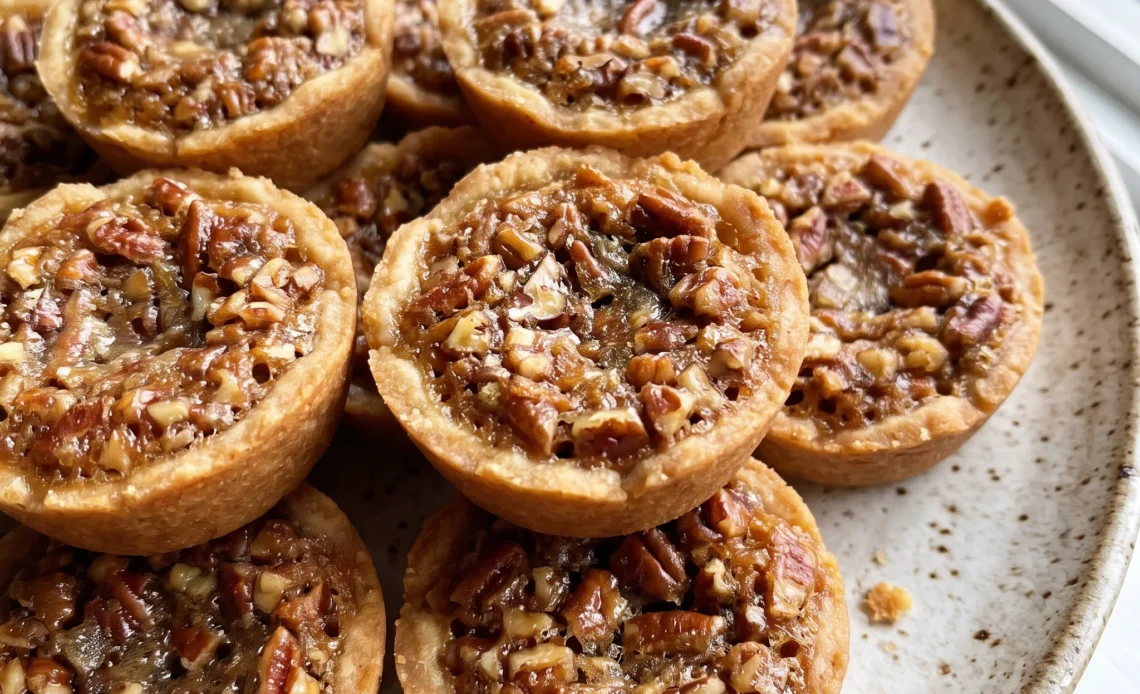
By the time the crust comes out of its first pass through the oven, the filling still needs to be ready and waiting, and that timing is where mini pecan pies get away from people. Press the shortbread too thin in spots and the cups tear on release. Rush the second bake and the custard never quite sets, even though the tops look done.
The recipe makes a batch big enough to feed a crowd, so the margin for error shows up across the whole pan. What you’re after is a snap at the edge and a soft center, a texture a fork-and-plate slice can’t match. None of that happens by accident, and a couple of small cues decide whether it happens at all.
The most common mistake with mini pecan pies is pouring the filling into a raw crust, because the crust looks ready as soon as it is pressed into the pan. The filling is mostly liquid, eggs, corn syrup, and sugar, and it will soak into the flour-and-butter base before the oven heat can set the crust, leaving the bottom dense and raw. Par-baking the crust first firms its structure so it can hold the wet filling without absorbing it.
Crust That Stays Crisp
A flaky pie crust would collapse under the wet filling of these mini pecan pies. Shortbread, made from flour, brown sugar, and butter, bakes into a firm, cookie-like shell that holds its shape and keeps the custard contained.
Cold butter gets cut into the dry ingredients until the mixture looks like coarse crumbs. Those crumbs press together into a sandy, cohesive layer that doesn’t turn soggy once the filling goes in.
The brown sugar brings a soft caramel note that echoes the pecans without competing. When you bite into a finished pie, the crust gives a clean snap before you reach the gooey center.
That textural contrast is the whole reason for choosing shortbread over pastry. The crust isn’t just a vessel; it’s a deliberate counterpoint to the rich filling.
Dark Corn Syrup Does the Heavy Lifting
Corn syrup isn’t just sweetener here. It’s the reason the filling sets smooth instead of grainy. Granulated sugar alone would crystallize as it cools, leaving a sandy texture.
Corn syrup interferes with that crystallization, so the custard stays glossy and uniform. Dark corn syrup brings a deeper, slightly molasses-like flavor that stands up to the toasted pecans.
Light corn syrup would work in a pinch, but the filling would taste flatter. The real balance comes from eggs, sugar, and syrup working together.
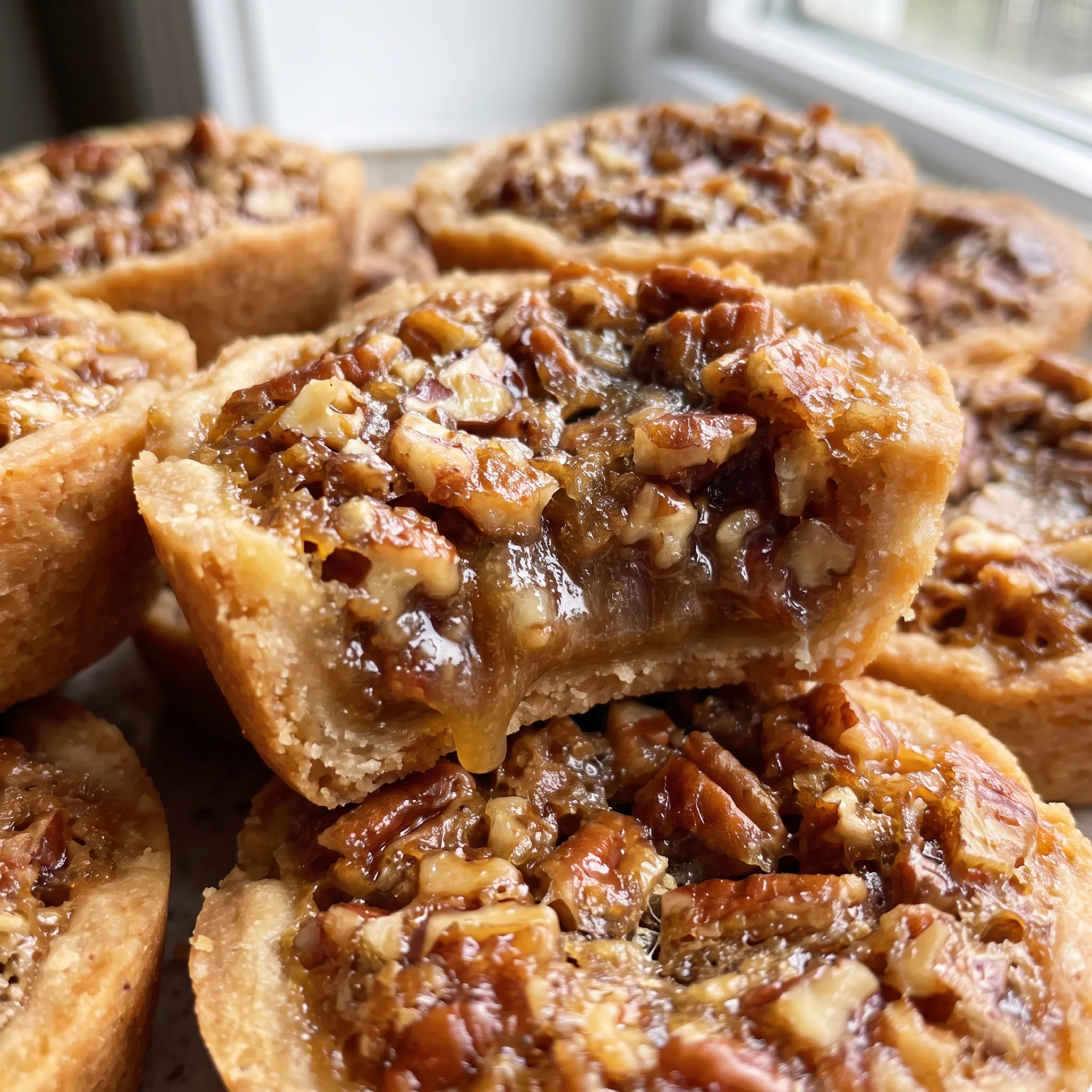
Eggs provide structure, sugar adds sweetness, and syrup keeps everything fluid until the bake sets it. The result is a filling that’s soft but sliceable, not runny. Each mini pie holds its shape when you lift it out of the pan.
That’s the texture you’re after: tender, gooey, but never loose.
Pecans, Chopped and Folded
Chopping the pecans ensures every mini pie gets an even share of nuts. Whole halves would cluster in some cups and leave others bare.
When you fold the chopped pieces into the filling, they stay suspended instead of floating to the top or sinking to the bottom. That even distribution means each bite has the same nutty crunch against the soft custard. As the pies bake, the pecans toast slightly, deepening their flavor and adding a textural contrast that keeps the filling from feeling one-note.
The pieces don’t need to be tiny; a rough chop leaves some larger bits for bite. Stir them in gently so they’re coated but not crushed.
Once baked, the nuts are tender but still distinct, giving each mini pie a satisfying chew.
Two-Stage Baking for a Clean Set
Baking happens in two stages for a reason. First, the crust goes into the oven alone to set its structure.
Without that initial bake, the wet filling would soak in and turn the shortbread soggy. Once the crust is partially baked, the filling goes on top.
Then the oven temperature drops for the second stage. A lower heat gently cooks the custard, allowing the eggs to set without curdling or cracking. High heat would make the filling puff and then fall, leaving a rubbery texture.
By baking slowly, the custard stays smooth and creamy while the crust finishes crisping. When you pull the pan out, the filling should have a slight jiggle in the center but not be liquid. As it cools, it firms up to a sliceable consistency.
That’s how you get a crisp bottom and a silky top in every mini pie.
What to Grab and What to Watch
Cold Butter: Straight from the fridge; warm butter smears into the flour and the crust bakes dense instead of snappy.
Dark Corn Syrup: Buy dark, not light; its molasses edge cuts the sweetness and gives the filling a deeper color.
Pecans: Chopped into rough, uneven bits, not fine dust, so each mini pie gets nutty crunch in every bite.
Eggs: Large eggs at room temperature beat smoother into the syrup, so the custard bakes up even.
Brown Sugar: Pack it firmly into the cup; loose brown sugar leaves the shortbread crust shy on caramel depth.
Reading the Dough, the Custard, and the Pull
When the crust crumbs are ready to press
Stop cutting when the butter pieces are no bigger than small peas and the mixture holds together when you squeeze a handful. If it’s still powdery, the baked crust will crumble instead of snap.
A few dry streaks are fine; they’ll hydrate as the butter warms. Overworking turns it into a paste that bakes tough. The texture should feel like damp sand, not cookie dough.
Judging the parbake: set but not colored
The crust goes in for 8 to 10 minutes. Pull it when the edges are barely golden and the surface looks dry, not shiny.
Underbaked, the filling will soak in and the bottom turns soggy. Overbaked, the crust tastes toasted and can burn on the second bake. If you’re unsure, err on the side of less color; the second stage will finish it.
The jiggle that tells you the custard is done
At 275°F, the filling sets slowly. After 30 minutes, the center should wobble like firm gelatin when you nudge the pan, not ripple like liquid. If it’s still liquid, give it 2 to 3 more minutes.
A clean knife inserted an inch from the edge comes out without wet custard. Overbaking past the jiggle stage leads to a rubbery, cracked top.
When the pies release cleanly from the pan
Cool on a wire rack until the pan is comfortable to touch, about 20 minutes. The filling firms as it cools, and the crust contracts slightly. If you try to lift them warm, the sides may stick and tear.
Run a thin knife around the edge only if a pie resists. A gentle twist of the pie with your fingers should free it.
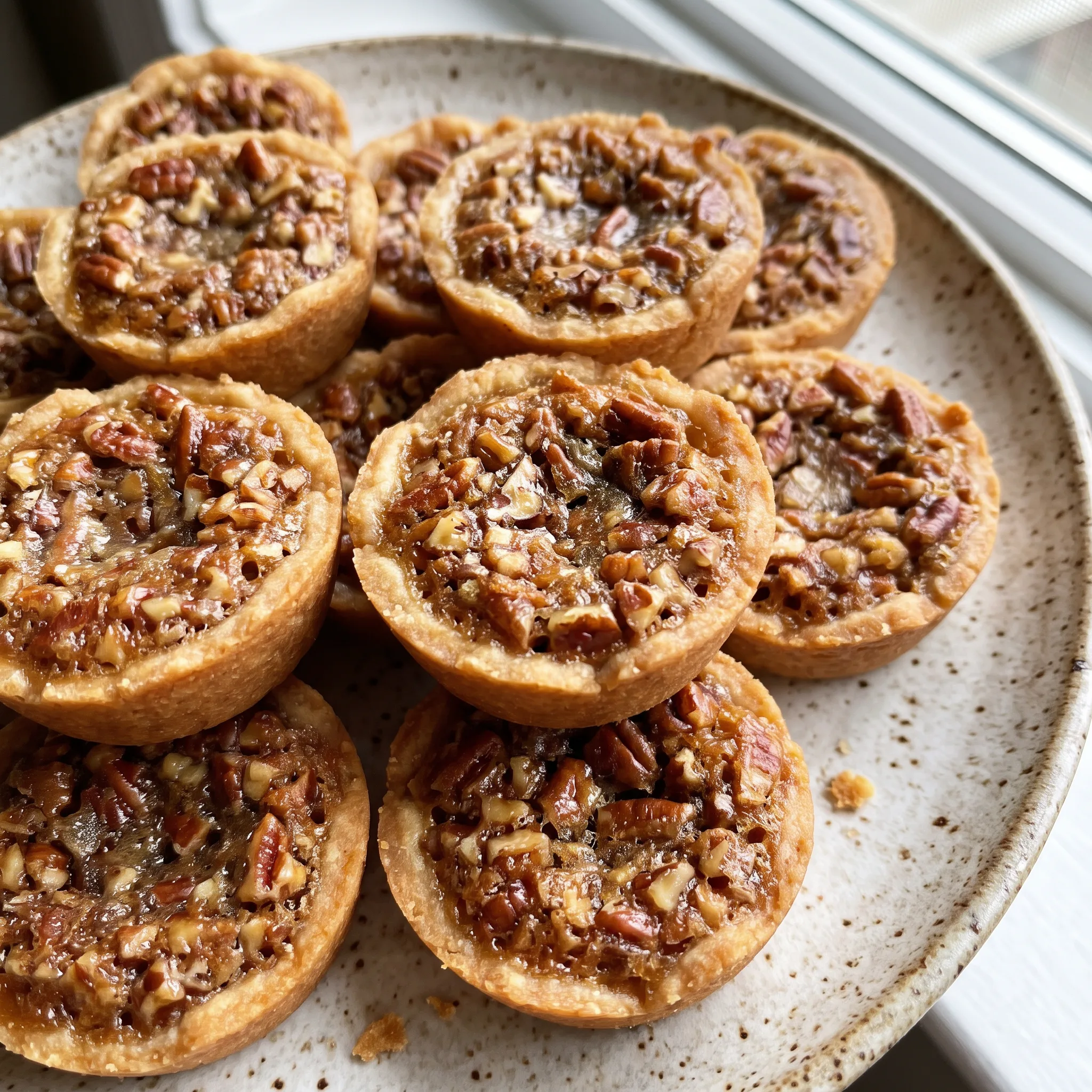
Mini Pecan Pies with Buttery Shortbread Crust
Ingredients
Method
- Heat oven to 350°F (175°C) and coat two 12-cup muffin tins with non-stick cooking spray.
- In a medium mixing bowl, blend flour with brown sugar.
- Cut in butter using a pastry cutter until the mixture looks like coarse crumbs.
- Firmly press the mixture into the prepared muffin pan and bake for 8-10 minutes, then take out of the oven.
- While the crust bakes, beat eggs, corn syrup, sugar, vanilla, and salt until thoroughly combined.
- Fold in pecans and distribute the pecan mixture over the crust.
- Lower temperature to 275°F (135°C) and bake for 30 minutes or until the filling sets.
- Cool on a wire rack.
Holding, Reheating, and the Serving Window
These mini pecan pies taste best within a few hours of cooling, while the shortbread still snaps and the custard stays gooey. After that, the crust pulls moisture from the filling and softens toward cake. It’s not a flaw, just a different texture, and the pies stay good longer if you accept it.
Keep them in a single layer in an airtight container at room temperature; stacked, they press and stick. Skip the fridge for day one, since cold firms the custard and dulls the pecans. Past two days, refrigerate and let them sit out 20 minutes before serving.
For a crowd of 22, reheat on a sheet pan at 300°F for 5 to 7 minutes to crisp the crust edges, no longer or the custard tightens. Freeze the baked, cooled pies up to two months, thaw overnight in the fridge, then warm. Add any final drizzle or whipped cream after warming, never before, so it doesn’t weep.
When a Swap Saves the Pie and When It Sinks It
Dark corn syrup: Light corn syrup, or an equal weight of honey or maple syrup. Light corn syrup keeps the filling fluid and glossy, but you lose the molasses edge, so the custard tastes sweeter and flatter against the pecans. Honey and maple syrup bring their own flavor, and both are thinner than corn syrup, so the filling may take an extra few minutes to set.
Use the same 1 cup (340 g) the recipe calls for, then judge the jiggle at 30 minutes and add time as needed.
Cold butter: Cold coconut oil (refined or unrefined), or cold vegan butter. Coconut oil cuts in like butter and bakes into a crust that snaps, but unrefined coconut oil leaves a coconut taste that fights the brown sugar.
Refined coconut oil stays neutral. Vegan butter works closer to dairy butter, though some brands are saltier, so the crust may taste seasoned. Keep the same 1 cup (227 g) and keep it cold from the fridge; warm coconut oil smears the same way warm butter does.
All-purpose flour: A 1:1 gluten-free flour blend. These blends vary in how much liquid they pull, and this dough has no added liquid to adjust. The crust often bakes up a little more tender and less snappy, and it can feel sandy when you press it into the cups.
Start with the same 2 cups (240 g), press firmly, and check the parbake at 8 minutes; if the edges look dry but pale, pull it early rather than chase color.
Brown sugar: Granulated sugar plus a tablespoon of molasses, or coconut sugar. Granulated sugar with molasses gets you back to brown sugar’s moisture and caramel depth, though the crust won’t be quite as soft. Coconut sugar is drier and less sweet, so the shortbread tastes a touch grainier and darker.
Pack either one the same way you’d pack brown sugar, using the full 1 cup (220 g).
Chopped pecans: Chopped walnuts, or a mix of pecans and walnuts. Walnuts are softer and a bit more bitter, so they won’t give the same clean crunch, but they hold up in the custard.
Chop them to the same rough, uneven bits and fold in the same 2 cups (200 g). The filling sets around them the same way.
Eggs: No good swap here; leave them alone. Eggs set the custard.
Flax or chia eggs won’t gel the same way, and the filling stays loose even after a long bake. If you need an egg-free version, this isn’t the recipe to adapt.
Tips
- Press the crumbs with the flat bottom of a small measuring cup or shot glass instead of your fingers, dipping it in flour first so it doesn’t stick. With 22 cups to fill, fingertips leave uneven thickness and thin spots that crack or tear when you lift the pies out; a flat press gives every cup the same dense, level floor and a clean release.
Frequently Asked Questions
Can I make mini pecan pies ahead of time?
Bake and cool them fully, then hold them in a single layer in an airtight container at room temperature for day one. Stacked pies press together and stick, so keep them flat. Past two days, refrigerate and let them sit out 20 minutes before serving, since cold firms the custard and dulls the pecans.
For longer, freeze the baked, cooled pies up to two months, thaw overnight in the fridge, then warm. Add whipped cream or a drizzle only after warming so it doesn’t weep.
Why did my mini pecan pies turn out runny?
The filling came out of the oven before the eggs set, which is the usual culprit. At 275°F the custard sets slowly, so a center that rippled like liquid at the 30 minute mark needed more time, not less.
You want a wobble like firm gelatin when you nudge the pan, and a knife inserted an inch from the edge should come out without wet custard. A secondary check is your syrup: if you poured by eye instead of weighing, an extra splash keeps the filling loose even after a full bake.
Finally, corn syrup doing its job means the custard stays fluid until the bake sets it, so a loose result almost always points back to the bake, not the ingredient.
How are mini pecan pies different from a classic pecan pie?
Scale changes the bake, and that’s the real difference. A full-size pie bakes in a deep dish with a thick core of custard that needs a long, gentle set, while these 22 minis are shallow enough that the filling sets in about half an hour at 275°F.
The crust is shortbread rather than pastry, so each little pie gives a clean snap before the gooey center instead of a flaky shatter. Portioning is the other shift: chopped pecans fold in so every cup gets an even share, where a whole pie can leave one slice nut-heavy and the next bare.
And you get 300 calories per serving with a built-in stopping point, which a slice from a 9-inch pie never offers.
