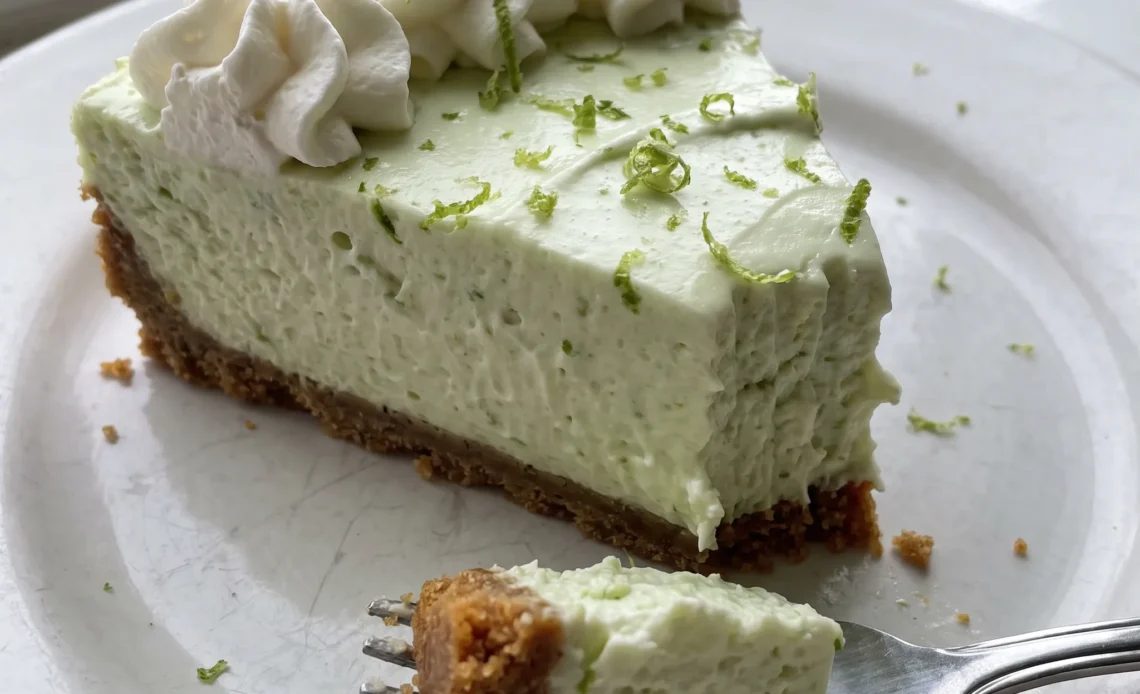
A no-bake key lime cheesecake isn’t a shortcut around baking; it’s a different set of problems. Skip the oven and the filling never gets heat to help it set, so everything rides on the chill and on how the cream cheese and whipped cream go together. Get the folding wrong and you end up with a dense block that tastes like straight cream cheese; over-chill and the crust has already started softening from below.
The lime is the other trap. What tastes balanced while the filling sits at room temperature will taste flat after a long stay in the fridge, and regular limes swing in acidity more than key limes do, so the fruit you bought decides how much correcting you’ll do. This key lime cheesecake slices clean when the ratios hold, with a tang that stays bright and a crust that comes off the springform in one piece.
Whipped cream at stiff peaks holds air in a fragile foam; folding it into the dense cream cheese mixture by hand preserves those bubbles, while an electric mixer on any speed shears the foam and deflates it. The recipe uses a spatula and gentle folding because the goal is a light, airy texture that sets softly, not a uniform batter.
Why Does a No-Bake Key Lime Cheesecake Set Without Eggs or Gelatin?
Full-fat cream cheese carries the structure here. Those 24 ounces of cream cheese form a dense, sliceable base because the fat content stays high; low-fat or whipped tub styles contain more water and stabilizers, so the filling stays soft and won’t cut cleanly.
Heavy whipping cream, at 3/4 cup, is whipped and folded in to lighten that base without thinning it. The ratio matters: too much whipped cream and the filling turns airy, closer to mousse, losing the firmness that makes a proper slice.
Too little and you get a heavy brick. Chilling is what sets everything.
Six hours in the refrigerator gives the cream cheese time to firm back up and the filling to solidify into one mass. Pull it at four hours and the center still slumps when sliced. The full chill also lets the lime flavor settle into the cream cheese instead of sitting sharp on top.
This one’s a no-bake style, but it relies on refrigeration, not heat, for its structure. A slice should hold its edge on the plate and feel dense but not gluey on the fork.
How Do Lime Juice and Zest Build Real Key Lime Flavor?
Key lime juice does the heavy lifting for tartness. That 1/4 cup brings a clean, sharp acidity that cuts straight through the richness of 24 ounces of cream cheese. Without enough acid, the filling tastes flat and sweet, more like vanilla pudding than cheesecake.
Bottled lime juice works in a pinch, but fresh juice from two limes has a brighter edge and a slight bitterness that balances the sugar. Zest is where the aroma lives.
The oils in the peel carry the perfumed, floral notes that juice alone can’t provide. One to two tablespoons, depending on how punchy you want it, gives the filling a lime scent you notice before the first bite.
Powdered sugar, not granulated, dissolves instantly into the cream cheese mixture. Granulated sugar leaves a faint grittiness on the tongue, especially in a no-bake filling where there’s no heat to dissolve it.
That 1 1/2 cups sweetens without masking the lime. Taste the filling before chilling: it should be tangy, not sour, with a clear lime finish.
The Crust Problem That Ruins Slices
A loose graham cracker crust is the most common reason a slice of key lime cheesecake falls apart on the plate. The crumb mixture must be pressed firmly into the pan, especially where the bottom meets the sides, so the buttered crumbs knit into a solid sheet.
Light pressure leaves gaps, and the filling seeps into those gaps during chilling, softening the crust from below. When you cut, the crust shears away from the filling instead of holding together.
Melted butter needs to be tossed evenly through all 2 1/2 cups of crumbs; dry patches won’t bind, and greasy patches make the crust tough. Press with the flat bottom of a measuring cup or your fingers until the surface feels compact and doesn’t shift when you nudge it. That firmness pays off at serving time: a clean wedge with a crust that stays put.
The crust should taste buttery and crisp, not sandy or soggy, and it should release from the springform without tearing.
What Folding Whipped Cream Does for Texture
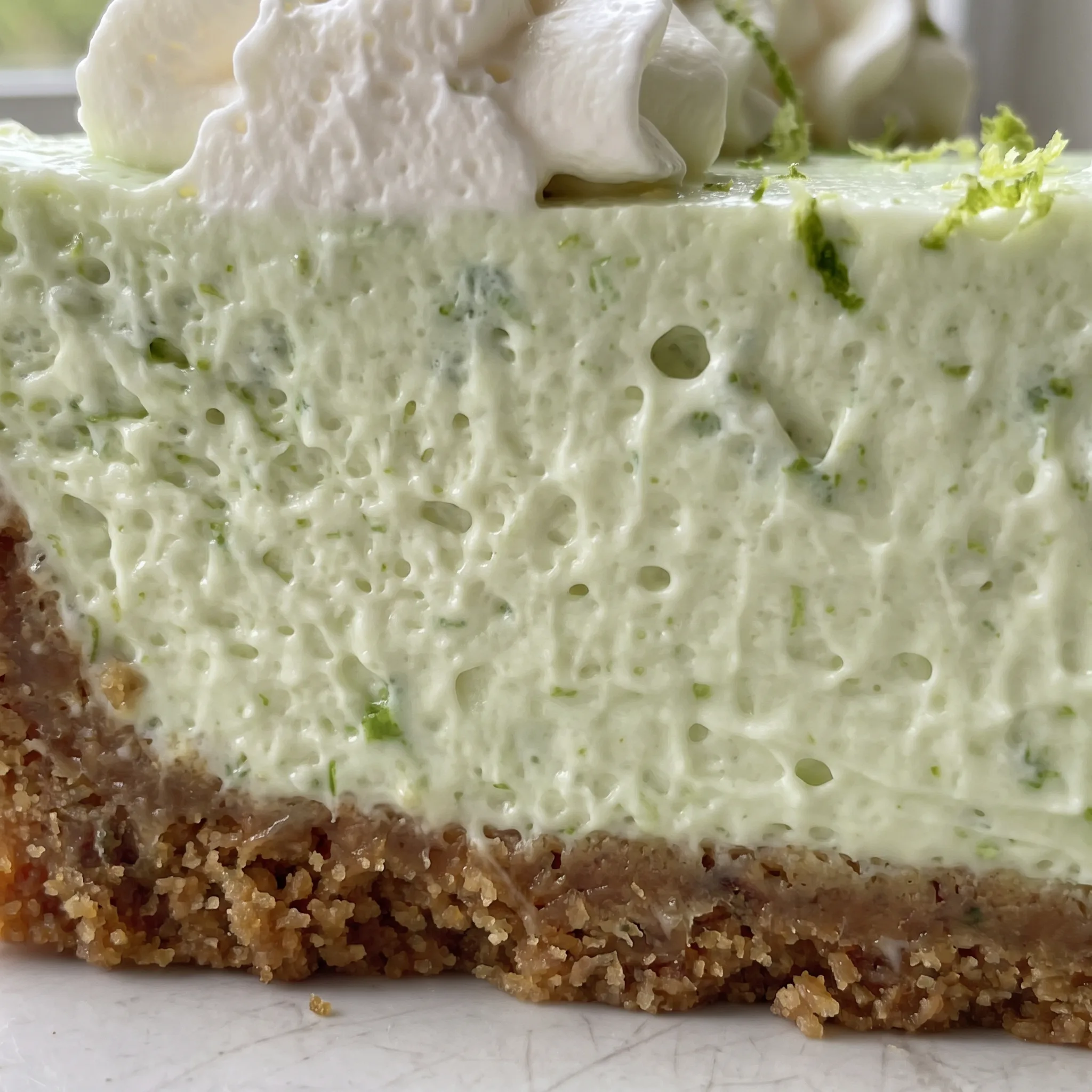
Whipped cream turns the dense cream cheese base into something you can eat without a glass of water nearby. A quarter cup of cold heavy cream, whipped to stiff peaks, gets folded in gently. Those air bubbles lighten the filling, so each forkful feels soft and creamy instead of pasty.
Overmix and the bubbles collapse. The filling turns dense and heavy, closer to straight cream cheese, and the texture becomes gluey. Stop folding as soon as you see no streaks of white; a few faint ribbons are fine.
The filling should look billowy and hold a soft mound on the spatula. Once it’s in the pan and chilled, that airy structure sets into a slice that’s rich but not cloying. If the filling tastes too tart after folding, a tablespoon more powdered sugar balances it without thinning.
The finished texture should be smooth and light, with a clean lime tang that lingers.
What to Look For in the Cream Cheese, Limes, and Cream
Full-fat cream cheese: Buy the block style and let it sit out until a finger leaves a dent, not warm.
Key lime or lime zest: Zest only the colored peel; the white pith underneath carries a bitter edge that lingers in the filling.
Heavy whipping cream: Check the carton for 30 to 35 percent fat; anything labeled light or half-and-half won’t whip to stiff peaks.
Key lime or lime juice: Squeeze it fresh and strain out seeds and pulp; bottled juice tastes flatter and dulls the filling’s sharpness.
Graham cracker crumbs: Crush whole crackers or buy crumbs that are fine and dry, not stale or clumped, so they press into an even sheet.
Judging the Filling Before It Ever Hits the Refrigerator
Tasting for the lime balance that chilling will mute
The filling tastes sharper now than it will after six hours cold, because cold dulls both sweetness and aroma. Aim for a tang that makes you blink, not wince. If it already tastes balanced at room temperature, it will taste flat once chilled.
Add lime juice a teaspoon at a time, not powdered sugar, unless the sourness is harsh rather than bright. The finish should be clean, not coating.
Reading the cream cheese for lumps before you add anything
Cold cream cheese or cream cheese beaten too fast will hold tiny lumps that powdered sugar can’t dissolve. Stop the mixer and press a bit to the touch. If it feels grainy, keep beating on low until it’s slick.
Lumps now become lumps in the slice, and no amount of folding or chilling will fix them. Room temperature means soft enough to dent with a finger, not warm.
Knowing when folding has gone one turn too far
The moment whipped cream disappears into the cream cheese, stop. Streaks of white are fine.
If you keep folding until the mixture looks uniform and glossy, you’ve knocked out the air, and the filling turns heavy and pasty. Better to leave a few faint ribbons than to chase a color. A spatula cut down the middle and turned, not stirred, is the test: the mound should hold its shape on the spatula, not spread.
Feeling the crust lock together before the filling goes in
Press the crumbs until the surface doesn’t shift when you nudge it. If it moves as one piece, you’re done.
If it crumbles at the edges, the butter isn’t evenly distributed. Pay attention where the bottom meets the sides; that seam is where filling seeps in and softens the crust later.
The crust should feel compact and slightly cool, not greasy or loose.
Judging set without cutting into the center
At five hours, the pan should feel cold and firm when you press the side with a flat palm. The center may still give slightly if you press with a fingertip, but it shouldn’t feel liquid underneath. If it does, give it another hour.
Slicing early means the first wedge slumps and the cut edges stay ragged. The full six hours lets the filling firm evenly from edge to center.
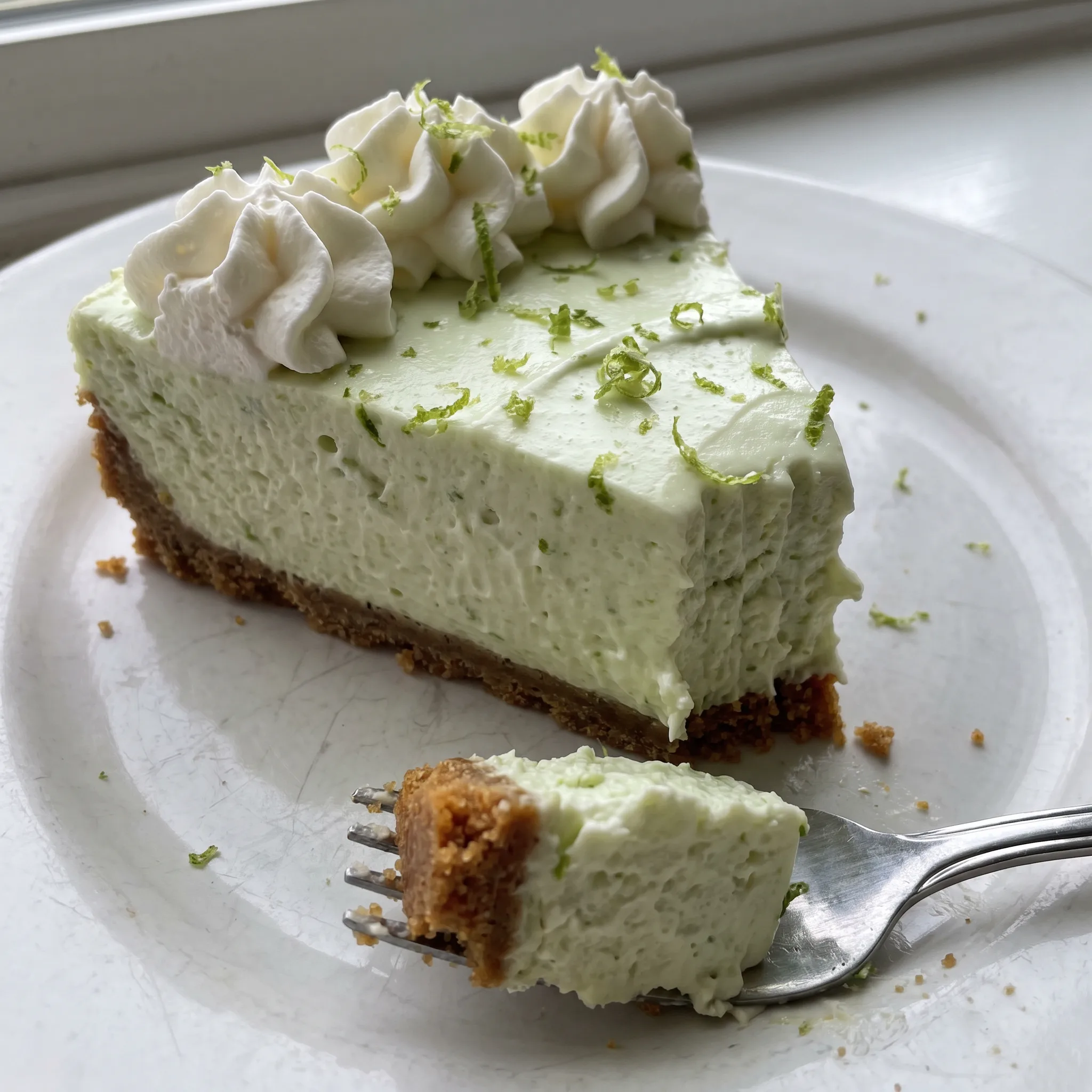
No-Bake Key Lime Cheesecake with Graham Cracker Crust
Ingredients
Method
- Mix graham cracker crumbs with melted butter. Firmly press this mixture into the bottom and about 1 inch up the sides of an 8-inch or 9-inch springform pan.
- Using an electric mixer, beat cream cheese in a large bowl until it becomes smooth.
- Beat in 1 1/2 cups powdered sugar, lime juice, lime zest, and vanilla until the mixture is smooth.
- In another bowl, whip the cream with an electric mixer until stiff peaks form. Gently fold the whipped cream into the cream cheese mixture, taking care not to deflate it. Taste and adjust sweetness if needed.
- Transfer to the prepared pan, cover, and refrigerate for at least 5-6 hours or until set. Slice and serve with sweetened whipped cream as desired.
How Long Does Key Lime Cheesecake Last in the Fridge?
Cover the pan tightly, or transfer slices to an airtight container, and refrigerate. The filling is dairy and cream, so it keeps about 3 days.
Day one is the peak: the filling is dense but soft, the crust still crisp. By day two the crust softens slightly and the lime flavor settles.
By day three the crust loses its snap. For the best texture, eat it within 24 hours of the six-hour chill. If you want to make it ahead, complete the recipe through the full chill, then store it covered up to 3 days.
Don’t freeze the assembled cheesecake; the whipped cream filling separates and weeps on thaw. Freeze only the crust, well wrapped, up to 2 months, and thaw before filling. For serving, slice cold.
It can sit out 20 minutes before serving; beyond that, the filling softens at the edges. Add sweetened whipped cream just before serving, not in advance, so it doesn’t weep onto the slice.
Tips
- After you fold in the whipped cream, pull a small spoonful and taste it cold, not at room temperature. The filling firms and the lime aroma fades once chilled, so a room-temperature taste reads sharper and sweeter than the finished slice will. Chill the spoonful in the freezer for two minutes, then taste. If it tastes flat, add zest, not juice, since zest carries the aroma that cold mutes; if it tastes harsh, add powdered sugar a tablespoon at a time. Regular limes vary in acidity more than key limes, so this taste is how you correct for the specific fruit you bought.
- Zest your limes before you juice them, and grate only the colored peel. Once a lime is squeezed, the softened peel is hard to zest cleanly and you risk dragging the white pith into the filling, which reads bitter after the six-hour chill. Two limes give you the 1/4 cup of juice and enough peel for 1 to 2 tablespoons of zest, so zest first, then cut and squeeze. If your limes are small and yield less than 1/4 cup, make up the difference with a second lime rather than bottled juice, which tastes flatter against the cream cheese.
If You Swap These, You’re Changing the Cheesecake, Not Just the Ingredient
Key limes: Regular (Persian) limes. Regular limes are bigger and their juice is slightly less acidic, so the filling won’t have that sharp, floral punch key limes bring. Use the same 1/4 cup of fresh juice and 1 to 2 tablespoons of zest.
Start with 1 tablespoon zest, taste, and add more if you want a bolder lime flavor. The texture sets the same, but the flavor leans more familiar and less perfumed.
Full-fat cream cheese (block style): Low-fat or whipped tub cream cheese. Tub styles contain more water and stabilizers, so the filling stays soft and won’t slice cleanly. If you use low-fat blocks, the cheesecake will still set but taste less rich and may weep slightly.
Whipped tub cream cheese will never firm up enough for a clean wedge, so avoid it entirely.
Heavy whipping cream: Half-and-half or light cream. Half-and-half won’t whip to stiff peaks, so folding it in will thin the filling instead of lightening it. The cheesecake may not set properly and will taste denser.
If you can’t find heavy cream, substitute an equal amount of full-fat coconut cream (chilled) and whip that, but expect a slight coconut flavor.
Graham cracker crumbs: Gluten-free graham crackers or digestive biscuits. Gluten-free crumbs often absorb butter differently, so start with the same 2 1/2 cups and add melted butter a tablespoon at a time until the mixture holds together when squeezed.
The crust may be slightly more fragile, so press it firmly and chill before adding filling. Digestive biscuits are less sweet, so the crust will taste more neutral against the lime.
Frequently Asked Questions
How long does key lime cheesecake need to chill before serving?
Six hours, and that number isn’t arbitrary. The filling goes into the pan loose and billowy from the folded whipped cream, and the refrigerator is what turns it into a sliceable mass.
At four hours the center still gives when you press it and the first wedge slumps. The full six lets the filling firm evenly from the rim to the middle, which is what makes a clean cut possible.
Can I make key lime cheesecake ahead of time?
Yes, and it’s one of the better desserts for it because the chilling is part of the recipe, not an extra step. Complete it through the full six-hour chill, then keep it covered in the fridge. Day one is the peak: dense filling, crisp crust.
By day three the crust has lost its snap, so if you want it at its best, serve it within a day of that first chill. Don’t freeze the assembled cheesecake.
Why is my key lime cheesecake not setting?
Check the cream cheese first. If it came from a tub rather than a block, it carries extra water and stabilizers that keep the filling soft no matter how long it chills.
Low-fat blocks will set but taste thinner and may weep. The other common cause is under-whipping the heavy cream: if it never reached stiff peaks, folding it in thins the base instead of lightening it.
Both problems show up the same way, a center that slumps when you cut.
What’s the difference between key lime cheesecake and regular cheesecake?
Regular cheesecake usually leans on eggs and often a bake to set its structure. This one gets there through full-fat cream cheese, whipped heavy cream folded in, and refrigeration, so the texture lands lighter and softer than a baked wedge. The flavor difference is the acid: a quarter cup of lime juice cuts through 24 ounces of cream cheese, and the zest adds a perfumed note you don’t get from vanilla.
It’s a sharper, brighter slice, not a sweeter one.
How do I get clean slices when serving key lime cheesecake?
Slice it cold, straight from the fridge. A warm blade drags through the filling and smears the edges, so wipe the knife clean between cuts.
The crust is where most slices fail: if the graham mixture wasn’t pressed firmly where the bottom meets the sides, the filling seeps in during chilling and the crust shears away instead of holding. Press the crumbs until the surface doesn’t shift when you nudge it, and the wedge releases in one piece.
Add any whipped cream garnish just before serving so it doesn’t weep onto the slice.
