
Watery Cajun chicken pasta almost always starts with too much liquid in the pot, and by the time you notice, the lid’s already locked. What makes this version worth cooking is that the pasta steams above a single cup of seasoned broth, then finishes in cream and Parmesan stirred in after the pressure drops. That order matters more than any spice blend.
The sauce comes out glossy and clinging, closer to something you’d simmer on a back burner for an hour, which is a strange thing to get from a dish this fast. There’s a real edge to the timing, too, and the difference between pasta with bite and pasta that slumps is shorter than most people expect.
Cook it once and you’ll feel where that line sits.
Why Only One Cup of Broth for Pressure Cooked Pasta?
A sealed Instant Pot traps every bit of steam, so the liquid you put in stays in the pot. For 8 ounces of dried penne or rotini, one cup of chicken broth is enough to cook the pasta through without leaving a soupy pool at the bottom. As the pasta cooks, it releases starch into that small amount of liquid, and that starch thickens the broth into something that clings to each piece.
After the pressure cycle, you stir in heavy cream and Parmesan off the heat. If you had added them before cooking, the high heat and pressure would cause the cream to separate and turn grainy, and the sauce would thin out instead of coating the pasta. The result is a glossy, full-bodied sauce that tastes rich but not heavy.
A quick stir after the cheese goes in tells you if the consistency is right: it should ribbon off a spoon, not run like water.
How Does Cajun Seasoning Build Flavor Without Turning Bitter?
Cajun seasoning often contains paprika, garlic powder, onion powder, cayenne, and herbs, and those ground spices can scorch quickly in a hot pan. Coating the chicken cubes with one tablespoon of the blend before they hit the oil gives the spices a protective layer of meat and moisture. As the chicken browns, the seasoning toasts gently and some of it dissolves into the oil, which then flavors the onions, garlic, and bell pepper when they go in next.
That seasoned oil becomes the base of the whole dish. Adding more cayenne at the end, after the pressure cooking and the cream, lets you fine-tune the heat without risking bitterness from burnt spices. Taste a piece of chicken after it browns: it should be fragrant and warmly spiced, not acrid.
If the pan smells sharp, your heat is too high.
Building the Pot in the Right Order
Chicken goes in first because it needs direct contact with the hot oil to brown and to leave behind a savory fond. The vegetables follow, softening in that same oil and picking up the toasted spice left by the chicken.
By the time you pour in the broth, the bottom of the pot holds a concentrated flavor base. Then the pasta goes on top, and you do not stir it in.
Leaving it undisturbed keeps the pasta above the liquid so it steams and cooks evenly, and it prevents any stray pieces from sticking to the pot and scorching. The broth below turns into a starchy, seasoned liquid that will become your sauce.
Once the pressure cycle ends, the cream and Parmesan go in. Stirring them in after cooking keeps them from curdling under high heat.
The final texture should be smooth and coating, with the pasta just tender but still holding its shape.
The Four Minute Rule for Penne and Rotini
Dried penne or rotini of standard thickness reaches al dente in an Instant Pot in four minutes under pressure. The pot comes up to pressure, then the timer counts down those four minutes, and the pasta absorbs liquid and heat the entire time. That duration is calibrated for eight ounces of pasta in one cup of broth.
If you leave it longer, the pasta takes on more water, the starch breaks down, and you end up with soft, swollen pieces that fall apart when you stir in the cream. The quick release stops the cooking immediately: steam rushes out, pressure drops, and the pasta stops softening right at that four minute mark.
Even after the lid comes off, the pasta keeps drinking up the sauce as it sits, so serve it soon after the cream and cheese go in. A piece should bend slightly before it breaks, not snap, and the sauce should coat it evenly.
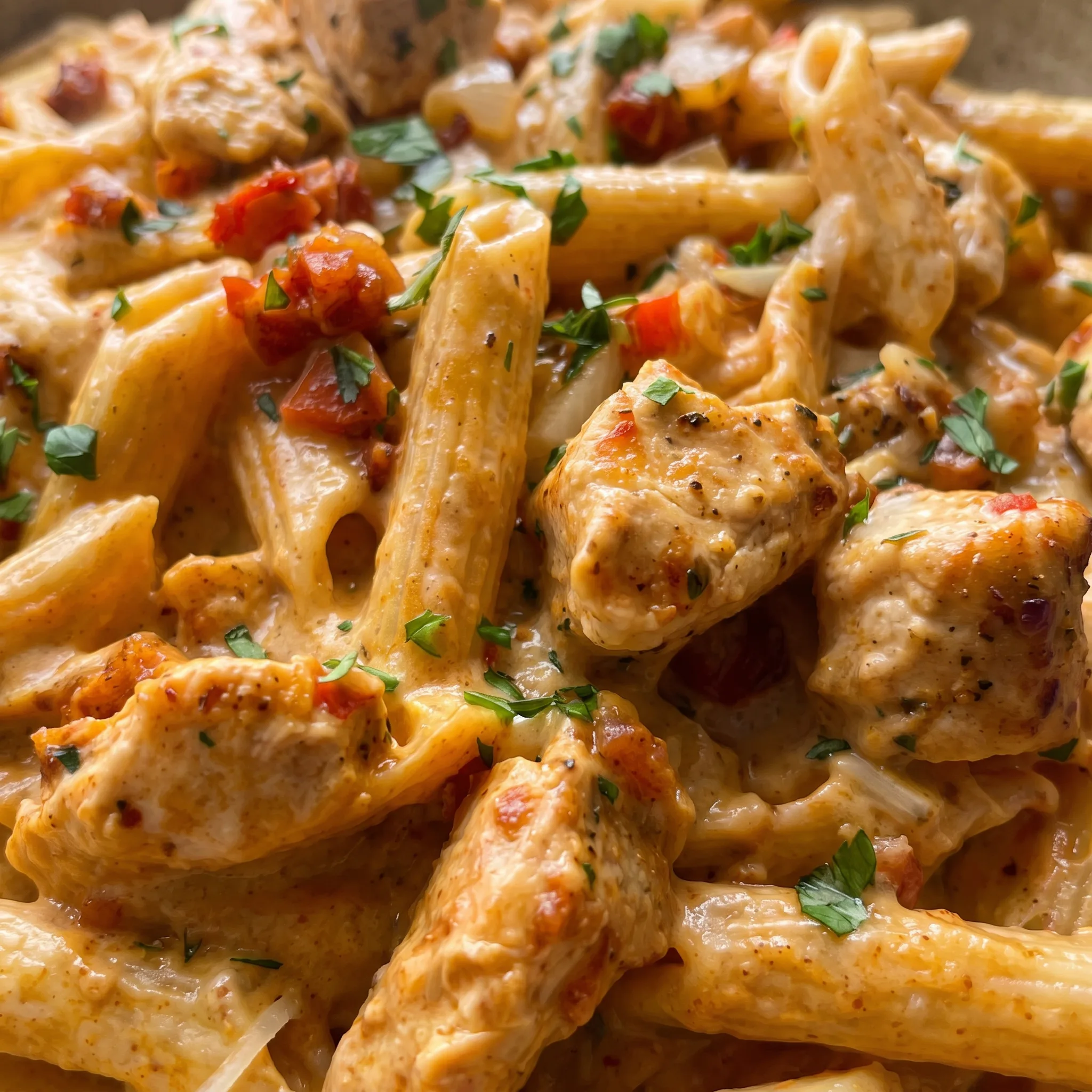
The Ingredients That Make or Break This Cajun Chicken Pasta
Chicken breast: Cut it into cubes yourself from a whole breast, since pre-cut chunks are often uneven and cook at different rates.
Cajun seasoning: Check the label for salt; many blends are salt-heavy, so taste before adding more salt to the chicken.
Pasta: Use standard penne or rotini, not thin or quick-cooking shapes, which will overcook in the pressure cycle.
Heavy cream: It must be heavy cream with at least 36% fat; lighter creams or half-and-half curdle when stirred into the hot pasta.
Parmesan cheese: Grate it fresh from a block; pre-shredded cheese is coated with starch and won’t melt into a smooth sauce.
Bell pepper: Dice it to the same size as the onion so it softens evenly during the short sauté.
Where You Have to Look, Smell, and Taste Instead of Just Following Steps
Knowing when the chicken is browned but not scorched
The chicken needs to take on color before the vegetables go in, but the Cajun spices can go from toasted to acrid in less than a minute. Watch the surface of the cubes: they should turn opaque and develop brown edges, and the oil should smell warm and spicy, not sharp or burnt.
If the spices darken too fast, pull the pot off the heat or lower the sauté setting before adding the onion. Once the spices scorch, the whole pot tastes bitter, and no amount of cream will fix it.
Judging the liquid level before the lid goes on
One cup of broth for eight ounces of pasta looks scant, and the urge is to add more. Don’t. The sealed pot keeps every drop, and extra liquid leaves you with a thin sauce that won’t coat the pasta.
Before locking the lid, tilt the pot: the broth should just reach the bottom layer of pasta, not float it. If the pasta is swimming, remove some liquid with a ladle.
Too little liquid and the pasta scorches; too much and the final stir-in of cream and cheese turns soupy.
Recognizing the right moment to release pressure
The four-minute timer is only half the story. As soon as the countdown ends, the pot must be quick-released. Waiting even a couple of minutes lets the pasta keep cooking in the residual steam, and it goes from al dente to soft and broken.
Listen for the hiss and watch the float valve drop. If you miss the window by more than a minute, the pasta will be past its best, and stirring in the cream will break it apart. There’s no way to reverse that, so stay nearby as the timer counts down.
Tasting for seasoning before the final stir
After the cream and Parmesan go in, the sauce tastes milder than you expect. The cheese brings salt, the cream brings richness, and the Cajun spice has mellowed under pressure.
Taste a piece of pasta with sauce before you add anything. If it needs salt, add it now; if it needs heat, cayenne goes in at this point. Adding salt earlier, before the cheese melts, can push the dish over.
The final sauce should taste balanced, with a slow warmth that builds, not a sharp burn.
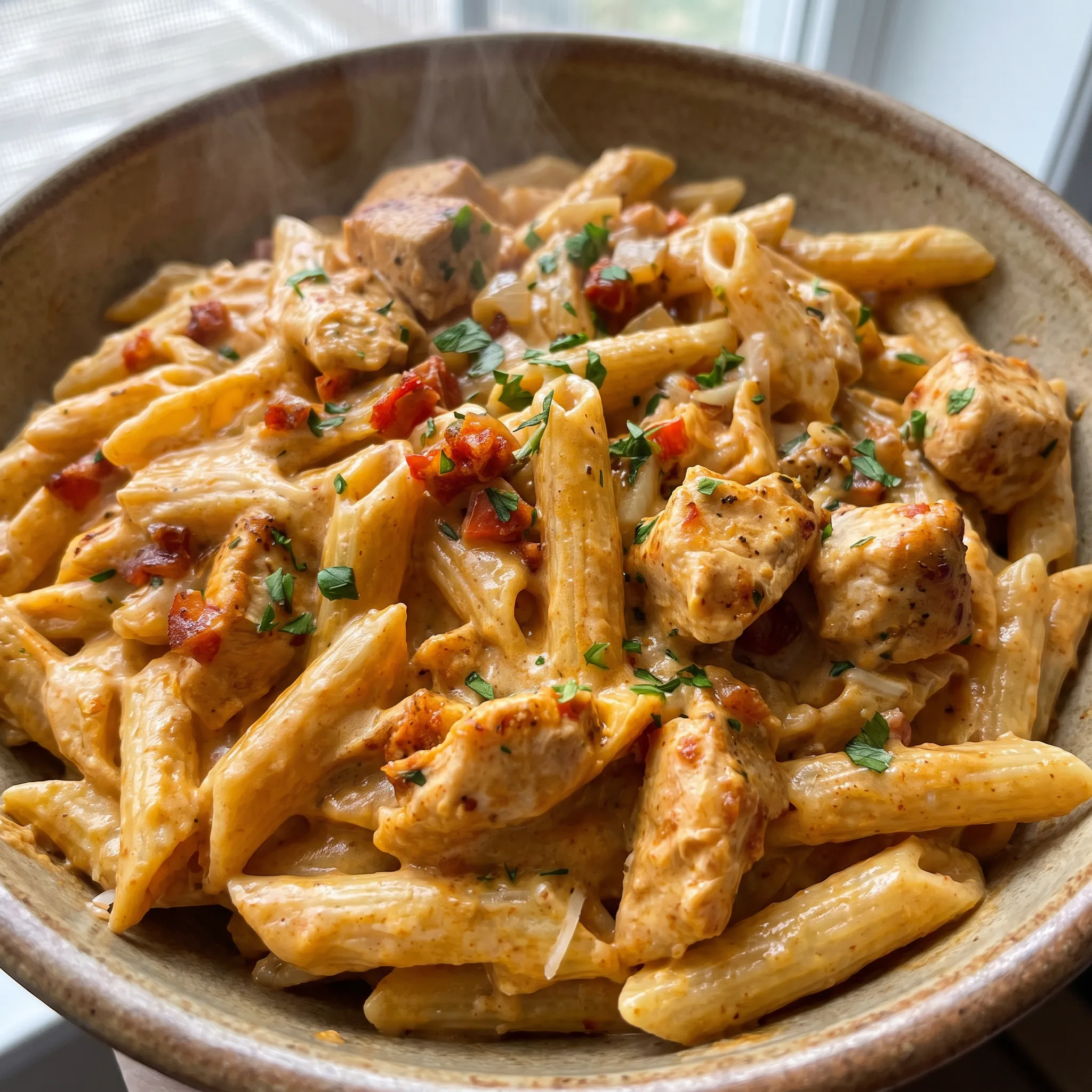
Cajun Chicken Pasta in the Instant Pot
Ingredients
Method
- Turn Instant Pot to Sauté setting and pour in olive oil. When oil is hot, put in chicken, sprinkle with Cajun seasoning, salt, and pepper. Cook until it gets browned.
- Put in onion, garlic, and bell pepper; sauté until tender and aromatic.
- Add chicken broth, then put in pasta and stir to mix.
- Secure lid, switch Instant Pot to Manual, and set timer to 4 minutes.
- After cooking finishes, do a quick release to allow steam to escape.
- Mix in heavy cream and Parmesan cheese until melted and smooth.
- Check seasoning and adjust; if you want more heat, add cayenne pepper.
- Serve hot, topped with fresh parsley.
What You Can Swap in Cajun Chicken Pasta Without Ruining the Sauce
Heavy cream: Half-and-half or whole milk, same volume as the recipe’s 1 cup. Both are thinner and carry less fat, so the sauce won’t cling to the pasta the way heavy cream does. It will taste lighter and runnier, more like a brothy pasta than a coating sauce.
If you go this route, stir it in off the heat and keep the pot on the lowest setting; too much heat and the milk proteins curdle into small grains. Whole milk gives you a slightly richer result than half-and-half because it has a bit more fat, but neither will thicken like cream.
Parmesan cheese: A block of Parmesan you grate yourself, same 1 cup grated, instead of pre-grated. Pre-grated cheese is tossed with starch to keep it from clumping, and that starch sits in your sauce.
Freshly grated from a block melts into the hot pasta without that powdery texture, and the flavor is sharper and saltier. You’ll need to grate it on the small holes of a box grater or a microplane; a coarse grate won’t melt as smoothly.
If you only have pre-grated, use it, but expect a slightly grainier sauce and add it a handful at a time, stirring until each addition disappears.
Penne or rotini: Fusilli or another short, sturdy shape of the same weight (8 oz). Fusilli’s spirals grab sauce the same way rotini does, and it holds up under pressure for the same four minutes.
Avoid thin or quick-cooking shapes like elbow macaroni or small shells; they’ll overcook and break apart when you stir in the cream. If you use a shape with more surface area, like campanelle, check at four minutes; it may be slightly softer but still fine.
Chicken breast: Boneless, skinless chicken thighs, cut into cubes. Thighs stay juicier and have a deeper flavor, but they release more fat into the pot.
That extra fat can make the final sauce a touch richer and less likely to thicken. You may want to spoon off some of the fat after sautéing the vegetables, before adding the broth. The cooking time stays the same at four minutes under pressure; thighs are forgiving, so they won’t dry out if you go a minute over.
Tips
- Buy chicken breasts that are labeled air-chilled rather than water-chilled if you can. Water-chilled breasts absorb the brine they sit in, so they throw off extra liquid in the sauté and the Cajun coating steams instead of browning. Air-chilled meat goes into the oil drier and takes color faster.
- Partially freeze the chicken for about 30 minutes before cubing. Firm meat holds a square edge under the knife, so you get uniform 3/4-inch cubes that brown at the same rate and cook evenly in the 4-minute pressure cycle. Pat the cubes dry with paper towels after cutting; surface moisture is what makes them gray and steamy rather than browned.
Serving Window and Leftover Care for Instant Pot Cajun Chicken Pasta
Serve this pasta as soon as the cream and Parmesan are stirred in. Within 15 minutes of that final stir is the best window: the sauce is loose enough to coat each piece, and the pasta still has bite. As it sits, the penne keeps drinking the cream sauce, so leftovers turn thick and sticky in the fridge.
Store in a sealed container for up to 3 days. To reheat, add a splash of chicken broth or water, cover, and warm gently on the stovetop or in short microwave bursts, stirring often. The liquid loosens the sauce without breaking the pasta.
Don’t freeze the assembled dish: the cream separates and the pasta goes soft and grainy. If you want to freeze a component, freeze the cooked Cajun chicken alone for up to 2 months, then make a fresh cream sauce and pasta. The parsley goes on right before serving, never earlier.
Cream and Parmesan can be added either before or after pressure cooking; adding them before exposes dairy proteins to intense heat that makes them coagulate and fat to separate, producing a grainy, thin sauce, while adding them after keeps the sauce smooth because the pasta has already absorbed the broth and the cheese melts into a stable emulsion. This recipe adds them after the pressure cycle, which prevents curdling and allows the starch released by the pasta to thicken the sauce properly.

Frequently Asked Questions
Can I make Instant Pot Cajun Chicken Pasta ahead of time?
Not as a full assembled dish. The sauce tightens as the penne keeps drinking it, so a pot made hours early sits thick and sticky rather than glossy. If you want a head start, cook the Cajun chicken alone, cool it, and refrigerate or freeze it, then build the pasta fresh when you’re ready to eat.
The parsley is the last thing on, right before serving, never earlier. Reheated leftovers need a splash of broth to loosen the sauce back to a coating consistency.
Why did my Instant Pot Cajun Chicken Pasta turn out watery?
Extra liquid is the usual culprit, and it’s the one thing you can’t undo once the lid is locked. A sealed pot keeps every drop you put in, so anything beyond that single cup of broth turns the final stir of cream and Parmesan into a thin pool instead of a sauce that clings.
The second check is your cream: half-and-half or whole milk carries less fat and won’t thicken the way heavy cream does, so the sauce stays loose no matter how long you stir. If it’s already watery after the cheese goes in, keep the pot on low and stir; the starch from the pasta will tighten it a little, but don’t expect a rescue.
How is Instant Pot Cajun Chicken Pasta different from the classic stovetop version?
The stovetop version cooks pasta in a separate pot of boiling water and builds the sauce in a skillet, so you control the pasta’s doneness by tasting it. Here the penne cooks in the seasoned broth itself, absorbing that liquid and releasing starch straight into what becomes the sauce, which is why a single cup is enough.
The trade-off is a narrower window: four minutes under pressure, then an immediate quick release, and the pasta keeps softening if you wait. Stovetop gives you more room to adjust; the Instant Pot gives you one pot and a sauce already built into the pasta.
