
A good gingerbread man bends before it breaks. The edges give slightly, the middle stays tender, and the smell coming off the tray is dark and warm, closer to coffee than candy. What most people picture instead is the boxed kind: flat, brittle, tasting faintly of cinnamon and nothing else.
The gap between those two comes down to molasses and patience, and the dough here leans on both. Getting gingerbread men cookies to keep that chew is a narrow business, since the difference between tender and snappy can hide in less than a minute of oven time. The dough itself is forgiving enough for a beginner, but it does not reward rushing, and the icing has a consistency that takes a scrap cookie to judge properly.
Make a batch, and the smell alone tells you which kind you’re getting.
Why a Long Rest Matters
Chilling the dough for a minimum of three hours is not just about firmness. During that rest, the flour has time to absorb the liquid from the molasses and egg, which makes the dough less sticky and easier to roll. More importantly, the spices, ginger, cinnamon, cloves, nutmeg, and allspice, need time to infuse the dough.
Right after mixing, the spices sit on the surface, but as the dough rests, their flavors spread and deepen. The molasses, too, becomes richer and less sharp.
When you bake after a proper chill, the cookies taste more cohesive and balanced. You’ll notice the difference in the first bite: the spices are warm and even, not harsh or separate. The dough also rolls out more smoothly, with less cracking at the edges.
So while it’s tempting to skip ahead, that three-hour wait (or overnight) is what gives these gingerbread men their signature flavor and workability.
The Spice Blend That Defines Gingerbread
Five warm spices come together here: ginger, cinnamon, cloves, nutmeg, and allspice. Each plays a role. Ginger delivers the peppery heat that’s the backbone of gingerbread.
Cinnamon adds sweetness and a woody warmth. Cloves bring a strong, almost medicinal depth, use too much and they overpower, but in this amount they round out the blend.
Nutmeg and allspice contribute subtle, complex notes that bridge the others. Together, they create a flavor that’s greater than any single spice. This combination is classic for a reason: it balances the dark, slightly bitter molasses and the caramel sweetness of brown sugar.
The molasses and brown sugar provide a deep, moist base, while the spices lift and brighten. Without the full blend, the cookies would taste flat or one-dimensional.
The result is a cookie that’s spicy, sweet, and fragrant, with a lingering warmth that’s unmistakably gingerbread.
Royal Icing Consistency and Corn Syrup
Getting the royal icing right is about texture. It needs to be thick enough to hold a piped line without spreading, yet fluid enough that the surface smooths out.
The visual cue is simple: when you lift the whisk and let a ribbon of icing fall back into the bowl, it should disappear into itself within one to three seconds. That’s the sweet spot. Corn syrup is the quiet helper here.
It adds a bit of elasticity so the icing doesn’t dry brittle, and it helps the icing harden to a smooth, matte finish. Without it, the icing can crack or stay tacky. Once piped, the icing needs time to dry completely, three to four hours at room temperature, so it sets firm.
If you store the cookies before that, the designs will smudge. When fully dried, the icing has a pleasant slight chew and seals in the cookie’s softness.
The Moment to Pull Them from the Oven
These cookies go from soft to disappointingly crunchy in a matter of a minute or two. The window is narrow.
You want to pull them when they look set around the edges but still slightly underdone in the center; the surface should no longer look wet, but it shouldn’t be firm to the touch. They’ll continue to firm up as they cool on the baking sheet, so erring on the side of underbaking is safer. A properly baked gingerbread man is chewy and tender, with a soft crumb that bends slightly before breaking.
Overbake, and you get a cookie that snaps and shatters, losing the molasses’s moisture. The color also deepens too much, and the spices turn bitter. So keep a close eye at the end, and trust the visual cues over the clock.
The reward is a cookie that stays soft for days.

What to Buy and What to Watch In These Ingredients
Molasses: Buy unsulphured, not blackstrap; blackstrap is bitter and dark enough to flatten the spice blend.
Salted butter: The salt in the butter is already counted, so buy a standard salted block rather than unsalted and adding your own.
Light brown sugar: Fresh, soft brown sugar packs into the cup without gapping; hardened lumps leave dry pockets in the dough.
Ground cloves: Cloves lose their punch fast, so smell the jar before measuring; a flat, dusty aroma means weak cookies.
Ground ginger: Ginger is the loudest spice here, and old jars taste like sawdust, so check that it still smells sharp.
Light corn syrup: This is the clear, mild syrup, not dark corn syrup, which brings a molasses flavor the icing does not need.
Judging the Dough, the Cut, and the Bake
Reading the dough’s tackiness after the chill
Cold dough should feel firm but not rock-hard. Press a thumb in: it should dent slightly and hold the shape. If it’s sticky and clings to your fingers, it needs more chill time; the flour hasn’t absorbed enough liquid.
If it’s crumbly and cracks when you press, it’s overchilled. Let it sit at room temperature for 10 to 15 minutes, just until it yields.
Rolling cold dough that’s too stiff leads to cracked edges and uneven thickness.
Rolling to an even quarter inch
A quarter inch is the difference between a cookie that bakes through and one that puffs unevenly. Use a ruler or a rolling pin with guides. If the dough is thicker in the middle, the centers will stay raw while the edges brown.
If it’s thinner, the cookies will crisp and lose their chew. Keep the surface and pin floured, but brush off excess with a pastry brush; too much flour makes the dough dry and the cookies tough.
If the dough starts to stick, slide a spatula underneath to loosen it, then continue.
Knowing when to pull them from the oven
The window is narrow. At 9 minutes, check: the edges should look set but the centers still soft, with no wet shine. If the centers are glossy, give them another minute.
At 11 minutes, they’re done; any longer and they’ll snap when cool. The cookies won’t brown much because of the molasses, so color isn’t a reliable cue.
Touch one gently: it should feel slightly underdone, like a soft pillow. They firm up on the pan as they cool.
Adjusting icing after the first pipe
The consistency you want is thick enough to hold a line but fluid enough to settle smooth. After mixing, lift the whisk and let a ribbon fall; it should disappear into the bowl within 1 to 3 seconds. If it sits on the surface, it’s too thick; whisk in water half a tablespoon at a time.
If it vanishes instantly, it’s too thin; whisk in powdered sugar two tablespoons at a time. Test on a scrap cookie before piping the rest.
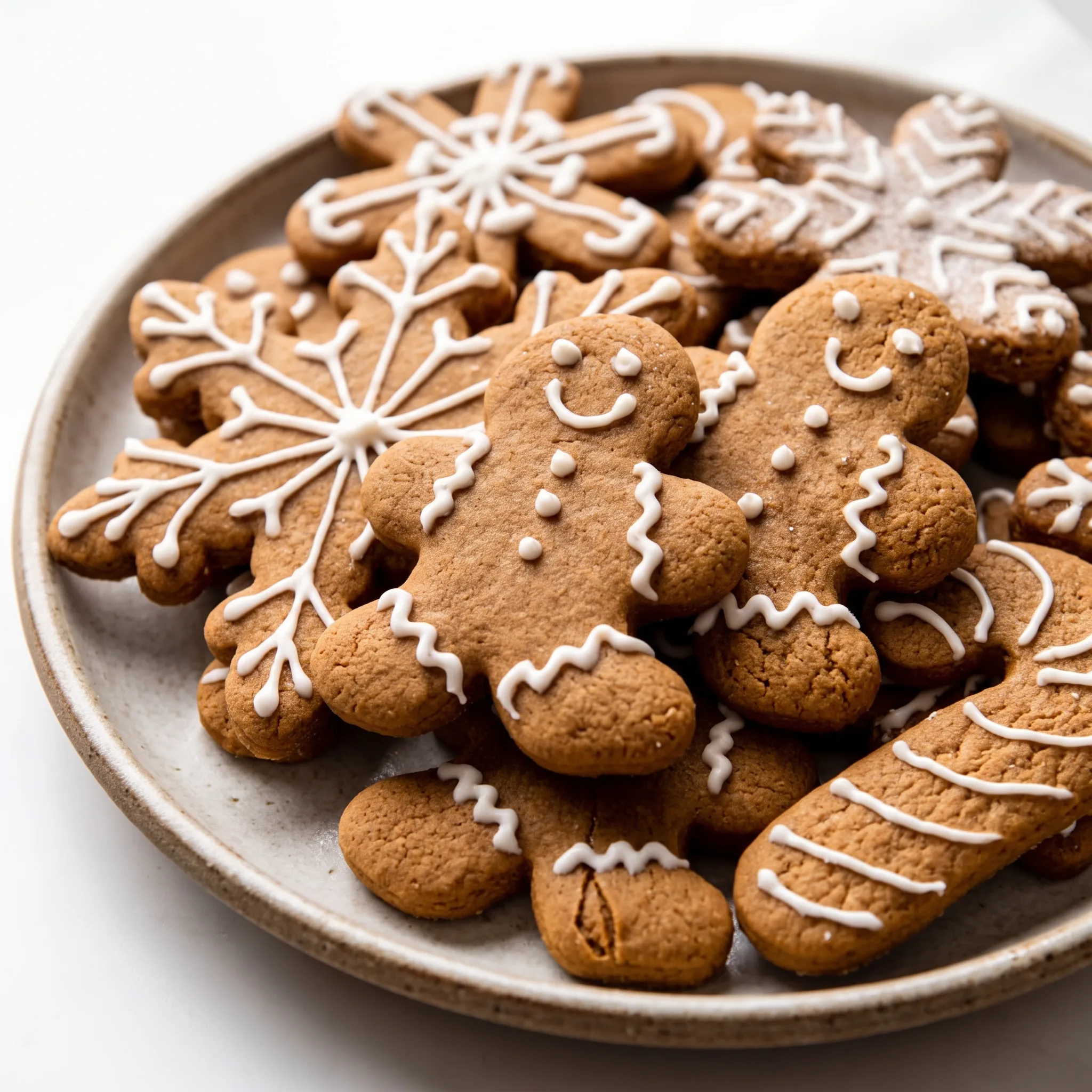
Soft Chewy Gingerbread Men Cookies
Ingredients
Method
- Using a stand mixer fitted with the paddle attachment, beat the butter and brown sugar together for 1-2 minutes until the mixture becomes creamy and smooth.
- Incorporate the molasses (a helpful tip: coat your measuring cup with cooking spray before measuring the molasses so it slides out effortlessly) and the egg, then mix again until combined, using a spatula to scrape down the bowl’s bottom and sides.
- Add the flour, salt, baking soda, and spices. Mix until no dry streaks remain.
- Turn the gingerbread cookie dough out onto a large sheet of plastic wrap and press it into a flat disc. Seal it tightly in the plastic wrap and refrigerate for at least 3 hours or up to overnight.
- Set the oven to 350°F (175°C) and prepare two baking sheets by lining them with parchment paper.
- On a surface dusted with flour, roll the gingerbread cookie dough to approximately 1/4″ thickness. I find it’s necessary to use plenty of flour to prevent sticking to the counter or rolling pin. Don’t worry if the cookies appear coated with flour; it will be absorbed as you continue rolling. Use cookie cutters to cut into your preferred shapes.
- Gently move the cookies to the prepared baking sheets, spacing them slightly apart. They don’t expand much, but they will rise a bit, so avoid letting them touch during baking.
- Bake for 9-11 minutes, just until they begin to set; be careful not to overbake, or they will lose their softness. Allow them to cool for 5-10 minutes on the pan, then transfer to wire racks to cool completely. Once cool, frost or decorate with royal icing.
- In a medium bowl, combine the powdered sugar, vanilla, corn syrup, a pinch of salt, and 2 tablespoons of the water, whisking until smooth. The icing should be thick but still drizzleable; when you let it fall back into the bowl, it should disappear into itself within 1-3 seconds. If it’s too thick, whisk in another 1/2 tablespoon of water at a time until you reach the right consistency. If you overshoot and it’s too runny, whisk in two additional tablespoons of powdered sugar at a time.
- If you like, divide the icing among small bowls and tint with food coloring, then transfer to piping bags fitted with small decorating tips.
- Pipe eyes, a mouth, buttons, or other designs onto the cooled gingerbread cookies, then leave them out for 3-4 hours so the icing can harden before storing in an airtight container for up to 7 days.
Storage and Serving: Keeping the Chew Intact
Eat these gingerbread men within the first two days for the softest chew. After that, the crumb tightens as the cookies lose moisture to the air, though the molasses and brown sugar keep them tender rather than crisp through day seven in an airtight container at room temperature.
Stack them only after the royal icing has dried completely, three to four hours at room temperature; fully hardened icing forms a shell that keeps cookies from pressing into each other and smearing. If the icing is still tacky, lay them in a single layer instead.
A slice of bread in the container releases moisture back into the cookies and slows the firming. For longer keeping, freeze baked, undecorated cookies in a zip-top bag for up to three months, then thaw at room temperature and ice. Iced cookies don’t freeze well; the icing weeps as it thaws.
Skip the fridge entirely, since cold air dries them out faster than the counter.
Swaps That Work in Gingerbread (and the Ones That Don’t)
Salted butter: Unsalted butter plus 3/4 teaspoon fine salt, or coconut oil (same weight, 227g) for dairy-free. Butter carries the flavor and gives the cookies their tender chew.
Unsalted butter works if you add the salt; without it, the dough tastes flat against all that molasses. Coconut oil makes a crisper, slightly drier cookie with a faint coconut note. If you go dairy-free, expect less spread and a snappier bite after cooling.
Molasses: Dark corn syrup or honey, same amount by weight (340g). Molasses is the signature flavor here; nothing else tastes like it.
Dark corn syrup keeps the color and moisture but loses the bitter edge and deep spice backbone, so the cookies taste sweeter and less complex. Honey brings its own floral note and browns faster, so watch the oven closely.
Both make a softer dough that may need a few extra minutes of chilling. Blackstrap molasses is not a swap: it’s bitter enough to flatten every spice in the blend.
All-purpose flour: A 1:1 gluten-free all-purpose blend (same weight, 705g). These cookies rely on gluten for structure, but the dough is soft enough that a good 1:1 blend usually works.
Expect a slightly grittier texture and a dough that’s more fragile to roll; chill it well and handle it gently. If the blend lacks xanthan gum, the cookies may crumble. Let them cool completely on the pan before moving them.
Light corn syrup (in the icing): Leave it out, or use glucose syrup or honey. Corn syrup gives the icing flexibility so it dries smooth and doesn’t crack. Skip it and the icing sets harder and more brittle; it may chip when you bite.
Honey works but adds flavor and a bit of color; glucose syrup is the closest match. If you omit it, add water a few drops at a time until the icing falls back on itself in 1 to 3 seconds.
Food coloring (optional): Gel, liquid, or natural colorings like beet powder or spirulina. Gel pastes give the most intense color without thinning the icing. Liquid colors work but may require extra powdered sugar to keep the consistency right.
Natural powders can add a faint earthy taste and may speckle the icing; they also vary in strength, so start with a small pinch and adjust.
Tips
- When you cut shapes, the scraps carry the most flour, so keep them separate and reroll them last. Scraps rolled back into the fresh dough make those cookies tougher and drier, because the flour you dusted on the first pass is now worked into the mass. Set scraps aside, press them together once, and roll that batch after the clean dough is used up.
- Dust with a mix of half flour and half powdered sugar if the cutouts keep sticking to the counter. Powdered sugar does not develop gluten the way flour does, so the coating that ends up on the cookies softens into the dough during baking instead of tightening the crumb. Plain flour works too, but a heavy hand with it is what makes gingerbread taste flat and dry.
Gingerbread dough with this much molasses and brown sugar sets quickly because the sugars begin to caramelize and the structure firms as soon as the internal temperature rises. The cookies will continue to cook from residual heat after they leave the oven, so they must be pulled when they still look slightly underdone in the center. Without this, the cookies become hard and crunchy instead of soft and chewy.

Frequently Asked Questions
Can I make the gingerbread dough ahead of time and bake it later?
Yes, and the dough handles it well. The card already builds in a rest of at least 3 hours, so pushing it to overnight in the fridge costs you nothing but time.
Press the dough flat into a disc before wrapping, since a thick block takes longer to firm up and won’t roll evenly when you pull it out cold. Then roll, cut, and bake as usual; you can also freeze the rolled, cut shapes on a sheet, then bag them and bake straight from frozen, adding a minute or two in the oven. Just don’t hold unbaked dough in the fridge for days, because it dries and cracks at the edges.
Why did my gingerbread men spread or lose their shape in the oven?
Warm dough is the usual culprit. If the dough sat out too long before baking, the butter softens and the cookies slump instead of holding their edges. Work in small batches, keep the rest of the dough in the fridge, and slide the cut shapes onto a cool sheet, not one that’s still warm from the last tray.
Overmixing after the flour goes in can also do it, since a slack, overworked dough spreads more. If your first tray came out puffy and blobby, chill the dough and the pan and give the next batch a try.
How do I know when the royal icing is the right consistency for piping?
Lift the whisk and let a ribbon of icing fall back into the bowl; it should vanish into the surface within about 1 to 3 seconds. That’s a line that holds its shape without spreading, yet smooths out where you want it flat.
If the ribbon sits on top and doesn’t sink, it’s too thick and will drag and break as you pipe. If it disappears instantly, it’s too thin and will bleed at the edges.
Test on a scrap cookie first, since a batch of icing is easier to adjust than a tray of finished gingerbread men.
