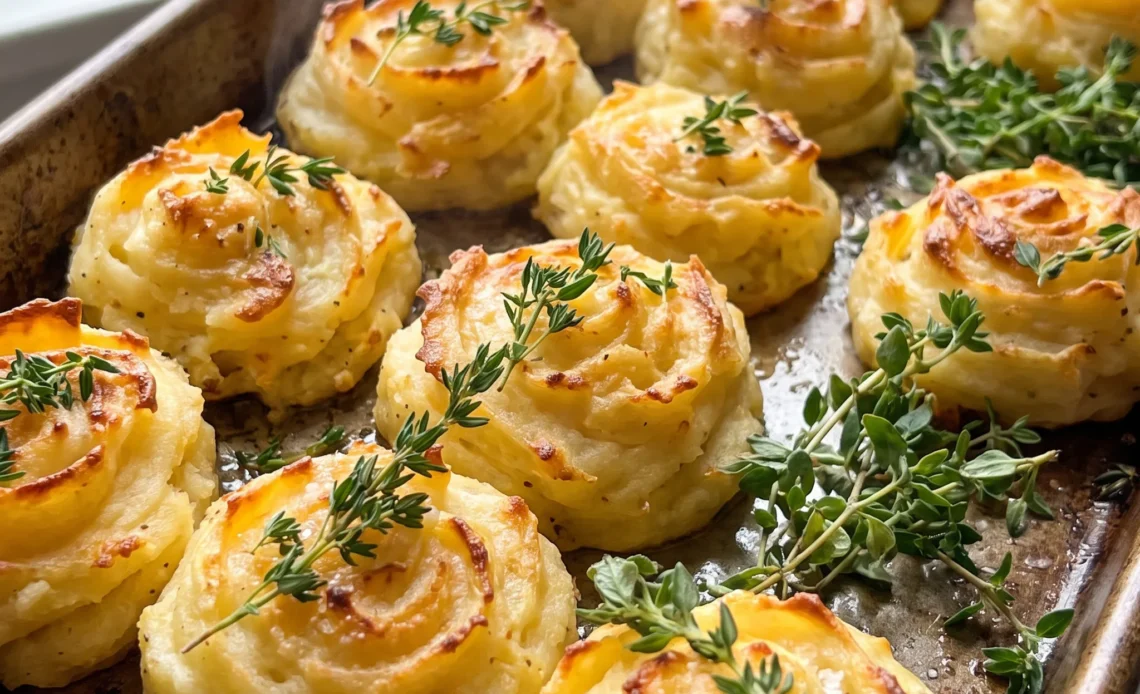
Mashed potatoes don’t stand up to anything but a spoon. Duchess potatoes take that same humble mash, work it through a star tip, and bake it into rosettes with crisp, lacy ridges and soft centers.
What separates a good batch from a slumped one rarely shows up in the recipe itself. The mash has to be dry and stiff enough to hold a piped edge before it ever sees the oven, and that margin is narrower than most people expect. Potatoes that seem fine in the pot can still pipe into soft mounds that spread at the base once the heat hits them.
Get the texture right and the oven does the rest of the work, turning those ridges deep gold while the insides stay light.
Choose the Right Potato and Start It Cold
You want a mash that pipes into clean ridges and holds them through a hot oven. Russets and Yukon golds do that because they cook up dry and fluffy, not gluey. Waxy potatoes stay dense and wet, and a rosette made from them slumps.
Peel and cut the potatoes into even chunks so every piece finishes at the same time. Drop them into a pot, cover with cold water, and salt it.
Starting cold pulls the starch out gradually, so the outside doesn’t soften before the middle is done. Boil them until a fork slides in with no resistance.
Drain them well, then put the pot back on low heat for a minute. That drives off surface water, which is the difference between a pipeable mixture and one that weeps on the tray. No step here is fussy, but skipping the drying stage shows up later as soft, spreading mounds.
Egg Yolks and Parmesan Give Structure
Mashed potatoes alone taste fine but won’t hold a piped shape; they need something to set them. Three yolks do that work.
They bind the mixture so the rosettes keep their edges in the oven, and they bring a richness that plain butter can’t match. Parmesan adds a sharp, nutty note and encourages a crisp, lacy crust where the ridges catch heat.
Keep the butter and cream modest, a quarter cup of each for two pounds of potatoes. Too much liquid and the mixture turns slack and won’t pipe; too little and it cracks as you squeeze the bag. Stir the yolks in last, after the butter, cream, cheese, salt, and pepper are fully mixed.
If the mash is still hot when the yolks go in, they can scramble and leave pale flecks. A warm, not steaming, base is what you want.
The finished mixture should look glossy and stiff enough to mound on a spoon.
Pipe Rosettes for Maximum Crisp Edges
A large star tip is what turns a plain mash into something with real presence. The open star channels cut ridges into the mixture as it comes out, and those ridges are where the oven does its best work: they brown first and turn crisp while the centers stay soft. Fit a piping bag with the largest star tip you own; a small one gives thin, fragile swirls that collapse.
Pipe onto a parchment-lined sheet so nothing sticks and you can slide the whole batch onto a platter later. Leave about an inch between mounds, because they spread slightly and need hot air to move around them. A crowded tray steams instead of roasts, and the edges stay pale.
Brush each rosette with the remaining melted butter. That coating helps the ridges color evenly and adds a faint toasted butter flavor at the tips.
The unbaked rosettes should look tall and defined, not slumped.
Bake Now or Later
This is a side that bends to your schedule. Pipe the rosettes onto parchment-lined sheets, cover them, and refrigerate for a few hours.
The mixture stiffens as it chills, which actually helps the swirls keep their shape in the oven. You can also freeze the piped mounds solid on the sheet, then bag them, and bake straight from frozen, adding a few minutes to account for the cold centers. That flexibility means the oven can be free for the main event.
Either way, the garnish goes on after baking. Chives and parsley lose their color and bite in the heat, and sea salt sprinkled beforehand dissolves into the butter instead of giving that little crunch. Scatter both over the hot rosettes just before they go to the table.
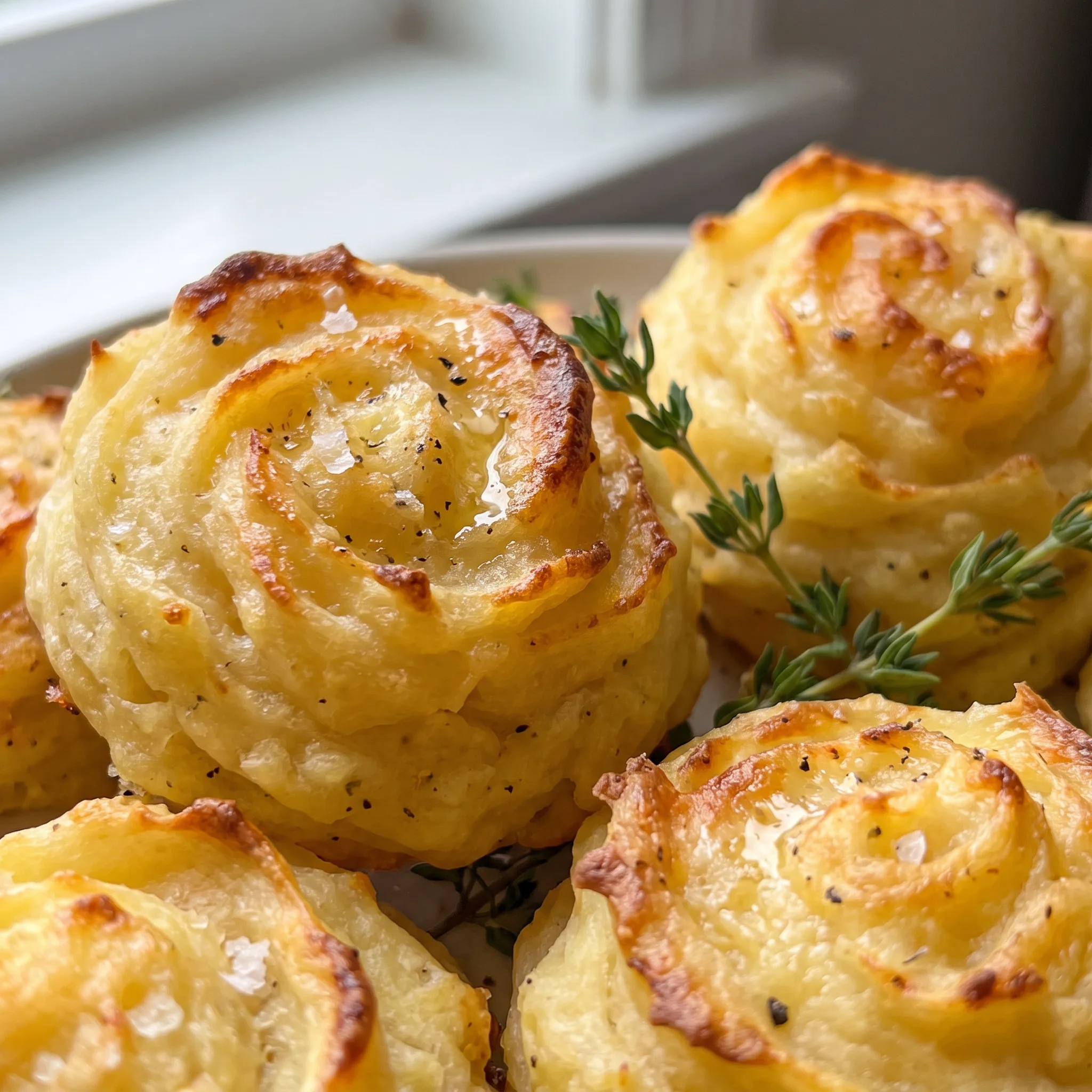
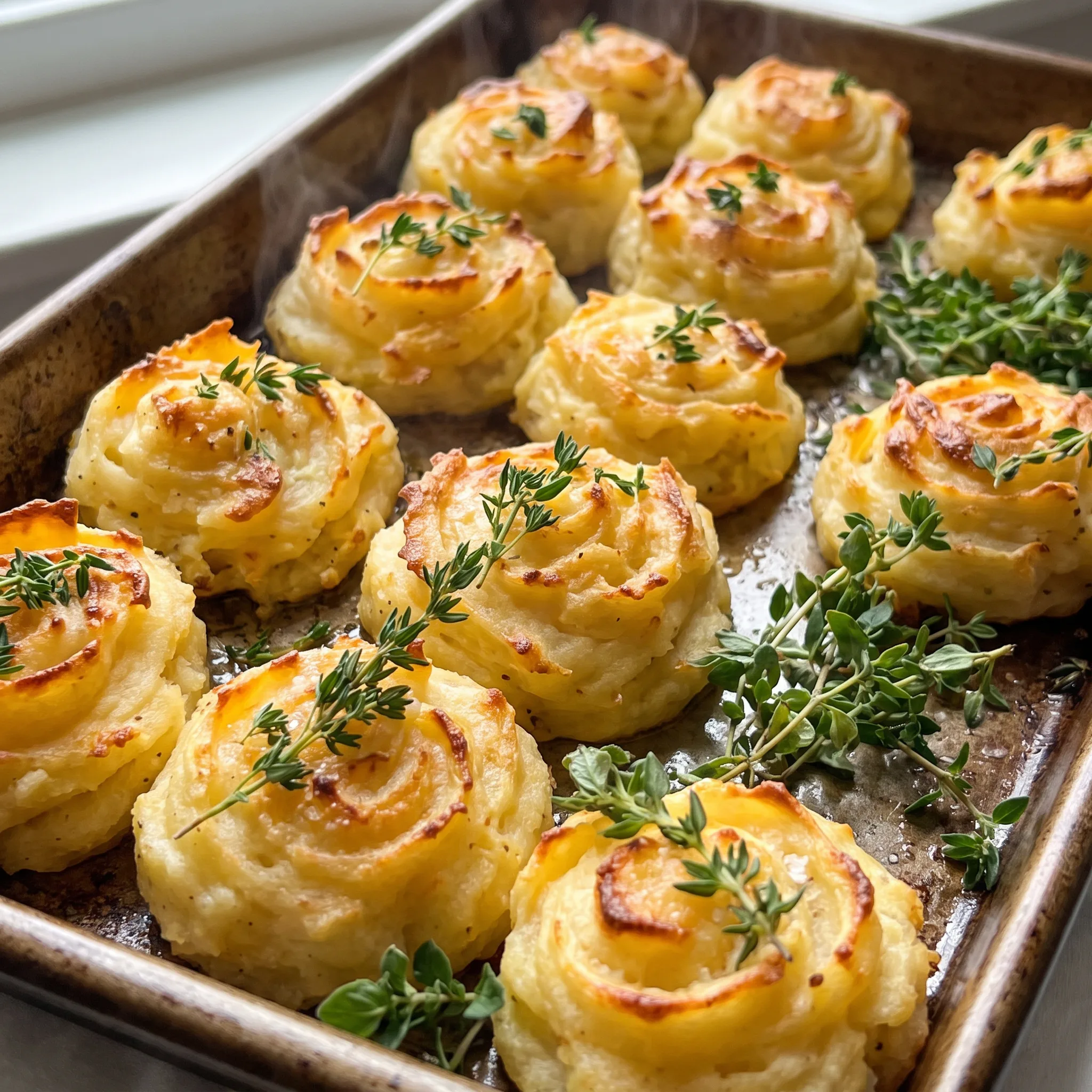
The outsides should be deeply golden at the ridges, the interiors light and fluffy. Serve them right away, while the contrast is still there.
The Ingredients That Make or Break Duchess Potatoes
Russet or Yukon gold potatoes: These are the only potatoes that mash dry and fluffy, not gluey, so the rosettes hold their shape.
Unsalted butter: You’ll use it in two stages: most mixed into the mash, the rest brushed on for even browning.
Heavy cream: Warm it slightly so it blends smoothly; cold cream can make the mash seize and turn stiff.
Parmesan cheese: Grate it finely yourself; pre-shredded cheese often has additives that keep it from melting smoothly.
Egg yolks: Three large yolks bind the mixture and add richness, but they’ll scramble if the potatoes are too hot.
How to Tell the Potatoes Are Ready to Pipe, and When to Stop Baking
Reading the mash after the yolks go in
Once the yolks are stirred in, the mash should look glossy and hold a soft peak when you lift the spoon. If it slides off in a wet sheet, it’s too loose; a tablespoon or two of instant potato flakes or a short rest in the fridge will tighten it.
If it looks dry and crumbly, a splash more warm cream brings it back. This is your last chance to adjust before piping.
Judging the pipe: when a rosette stands or slumps
As you pipe the first rosette, watch whether the ridges hold their shape or start to sag within a few seconds. A good rosette stands tall with sharp grooves; if it spreads at the base, the mixture is too warm or too wet. Stop, chill the bag for five minutes, and try again.
The rest will follow suit, so fix it before you fill the tray.
The color that tells you the ridges are crisp
In the oven, the tips of the ridges should turn a deep golden brown while the valleys stay pale. That contrast means the edges are crisping and the centers are still fluffy.
If the whole mound browns evenly, the oven is too hot or the rosettes are too small; if they stay pale past 20 minutes, they’ll dry out before they color. Pull them when the ridges are dark gold, not mahogany.
Duchess Potatoes with Parmesan and Chives
Ingredients
Method
- Peel and chop the potatoes. Transfer them to a large pot and cover with cold water. Add a generous pinch of salt and bring to a boil over medium-high heat. Cook for about 15-20 minutes until fork-tender.
- Preheat the oven to 425°F (220°C) and line a baking sheet with parchment paper.
- While the potatoes are cooking, melt the butter in a small bowl in the microwave. Warm the cream in a microwave-safe bowl. Set both aside.
- Drain the potatoes thoroughly and return them to the pot over low heat to help evaporate any excess moisture. Mash the potatoes using a potato ricer or masher until they are smooth and free of lumps.
- Add two tablespoons of the melted butter, the warm heavy cream, grated Parmesan (if using), salt, and pepper. Mix well, then stir in the egg yolks until well combined.
- Transfer the mashed potato mixture to a piping bag fitted with a large star tip (to create the swirls). Pipe the potatoes into small mounds (or rosettes) onto the baking sheet, spacing them about 1 inch apart.
- Brush the potato mounds with the remaining melted butter and bake for 15-20 minutes, or until the Duchess Potatoes are golden brown on the edges and slightly crispy.
- Remove from the oven and garnish with fresh chopped chives or parsley. Sprinkle the sea salt over the top, serve immediately, and enjoy.
Storage, Reheating, and the Short Serving Window
Duchess potatoes peak within about 15 minutes of leaving the oven. The ridges carry the crispness, and steam from the soft centers softens them from underneath. After half an hour the contrast is gone and the rosettes read as plain mashed potatoes in a prettier shape.
So garnish and eat them then.
Leftovers keep in the fridge for up to 3 days in a sealed container. Chilled, they firm up and the edges go leathery. Skip the microwave, which steams them into a wet, slack pile.
Reheat on a parchment-lined sheet at 425°F for 8 to 10 minutes, until the ridges re-crisp and the centers are hot. A brief broil at the end helps if the tops stay pale.
The piped, unbaked rosettes freeze well for up to 2 months; bake from frozen, adding a few minutes. Once baked, they don’t freeze well, so keep any extras in the fridge and reheat as above.
Hold the chives, parsley, and sea salt until the rosettes come out of the oven. Herbs wilt and the salt dissolves into the butter if they sit, and you lose the crunch.
Swap With Care: What Works and What Doesn’t in Duchess Potatoes
Russet or Yukon gold potatoes: Waxy potatoes like red or fingerling. They hold more water and mash dense.
The piped rosettes will slump and spread in the oven, and the centers turn gluey instead of fluffy. If you’re stuck with waxy potatoes, steam them instead of boiling and let them dry longer in the pot, but expect a softer set.
Egg yolks: Skip them entirely for an egg-free version. The mash loses its binder. The rosettes will not hold their shape; they’ll flatten into soft mounds and the texture will be more like plain mashed potatoes.
You could try a flax egg (1 tablespoon ground flax + 3 tablespoons water per yolk), but the structure still won’t be as strong.
Parmesan cheese: Nutritional yeast for a dairy-free option. You’ll get a savory, cheesy flavor without the dairy, but no melting or browning help. The tops won’t develop that crisp, lacy crust as readily.
Use the same amount as the Parmesan, and consider a light dusting of smoked paprika for color.
Heavy cream: Full-fat coconut milk or unsweetened oat cream. These plant-based options add richness, but they can be thinner. Start with the same 1/4 cup, and if the mash seems too wet, add a tablespoon of instant potato flakes to tighten it.
The flavor will be slightly different, but still good.
Tips
- Press a spoonful of the finished mash between two fingers before it goes into the bag. If your fingers come away with a wet film or the mash leaves a damp ring on the parchment, the batch carries too much water and the rosettes will slump at the base in the oven. Fold in a tablespoon of instant potato flakes and give it a minute to hydrate, then check again.
- Weigh the potatoes after peeling, not before. Two pounds of whole russets loses roughly a quarter of its weight to peel and trim, so if you go by the unpeeled weight you end up with closer to 1 1/2 pounds of actual potato against the full 1/4 cup cream, 1/4 cup butter, and three yolks. That ratio runs wet, and the extra liquid is what flattens the swirls. Peel first, then weigh out 907 g.
Potatoes boiled in water absorb moisture into their cells, and mashing traps that free water in the starch. That water dilutes the starch and any added fat, so the mixture stays soft and slack rather than holding a firm peak when piped. Returning the drained potatoes to low heat before mashing drives off surface and cellular moisture, concentrating the starch so the mash firms up and can support the egg yolks and butter without turning gluey.
Frequently Asked Questions
Can I make Duchess Potatoes ahead of time?
Yes, and the unbaked rosettes are the best version to hold. Pipe them onto parchment, cover, and refrigerate for a few hours; the chill actually helps the swirls keep their shape in the oven. For longer storage, freeze the piped mounds solid on the sheet, then bag them and bake straight from frozen, adding a few minutes for the cold centers.
The garnish goes on after baking, so hold the chives, parsley, and sea salt until they come out of the oven.
Why did my Duchess Potatoes turn out gummy?
The usual culprit is a mash that was too wet going into the bag. If the potatoes weren’t drained well and dried back in the pot, or if the cream went in cold and seized, the mixture turns slack and bakes up dense instead of fluffy.
A secondary check is the potato itself: waxy varieties hold more water and mash gluey, so the rosettes slump and the centers go heavy. To rescue a batch that’s already wet, a tablespoon or two of instant potato flakes or a short rest in the fridge will tighten it before piping.
How are Duchess Potatoes different from regular mashed potatoes?
Regular mashed potatoes are a soft spoonful; Duchess potatoes are that same mash plus egg yolks and Parmesan, piped through a star tip and baked until the ridges crisp. The yolks bind the mixture so the rosettes hold their edges, and the oven turns the ridges deep golden while the centers stay light. The result eats more like a crisp-edged, savory pastry than a pile of mash, which is why they’re served right away while that contrast is still there.
