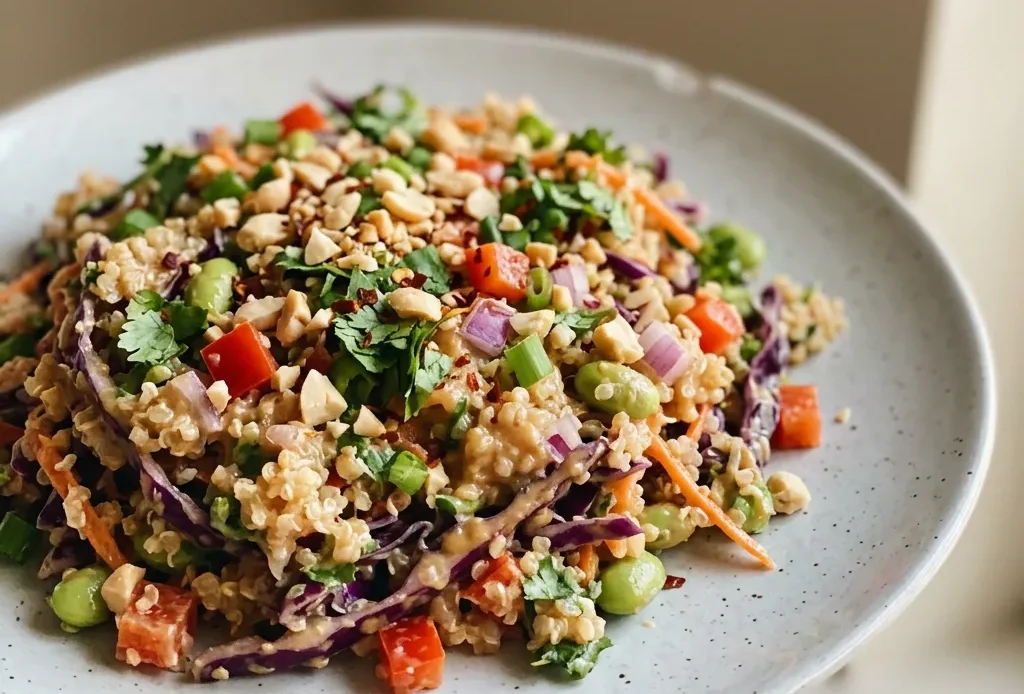
Cooling quinoa completely before mixing is the single make-or-break step here, skip it and the grains drink up the peanut dressing too fast, turning sticky instead of staying separate. That patience lets this vegan thai quinoa salad keep its light, fluffy texture while each curlicue still catches enough creamy coating. The payoff is a salad that actually improves as it sits, the flavors settling without the vegetables going limp.
Fluffy quinoa that soaks up dressing without going soggy
Cooked quinoa has a light, fluffy texture with tiny curlicues that catch dressing in a way rice or couscous can’t. Each grain stays separate when handled right. The trick is to let the cooked quinoa cool completely before mixing.
Warm quinoa absorbs liquid too eagerly and turns gummy, but cool grains drink up the peanut-soy dressing at their own pace, swelling just enough to carry bold flavor without collapsing. Fluff the cooled quinoa with a fork before you add it to the bowl; that breaks up any clumps and keeps the final salad airy. You’ll see the dressing cling to every nook while the quinoa holds its shape, never mushy even after an hour.
Crunchy vegetables and creamy dressing: a contrast that works
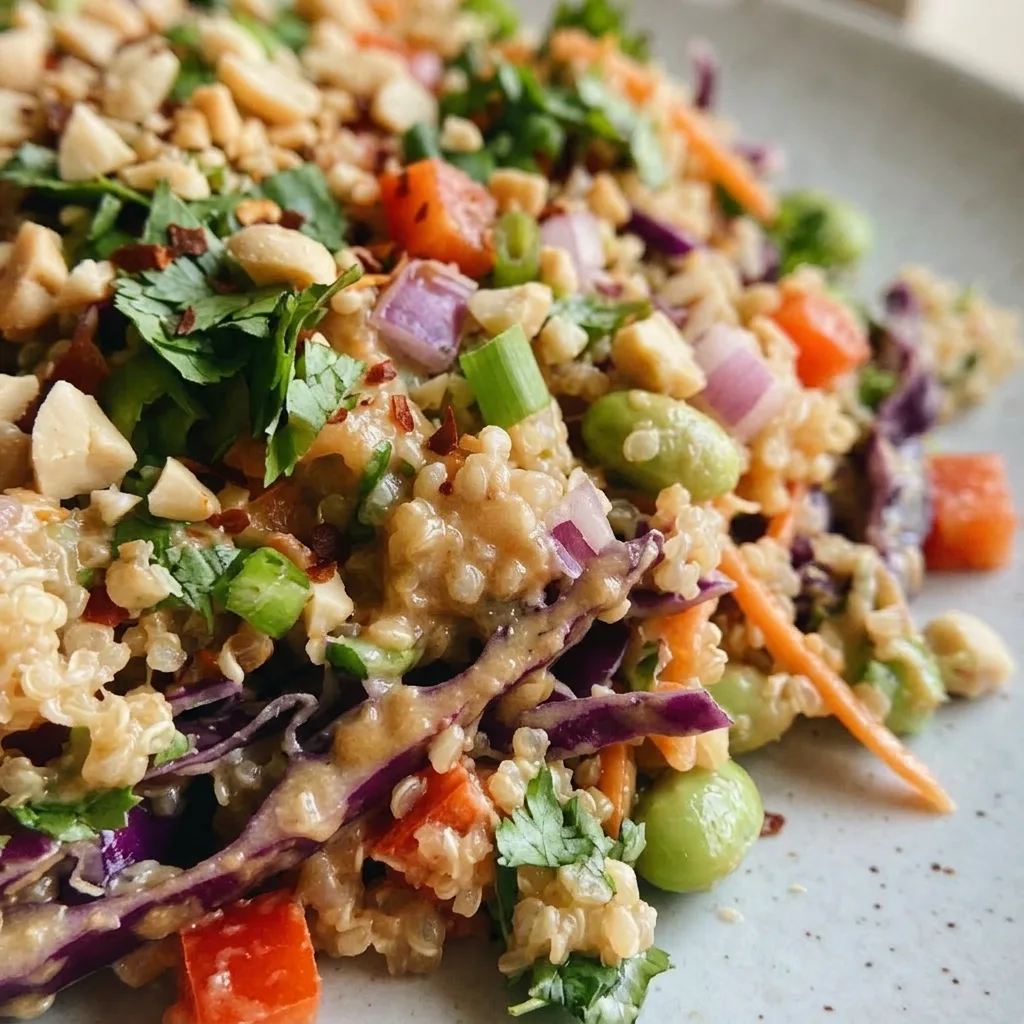
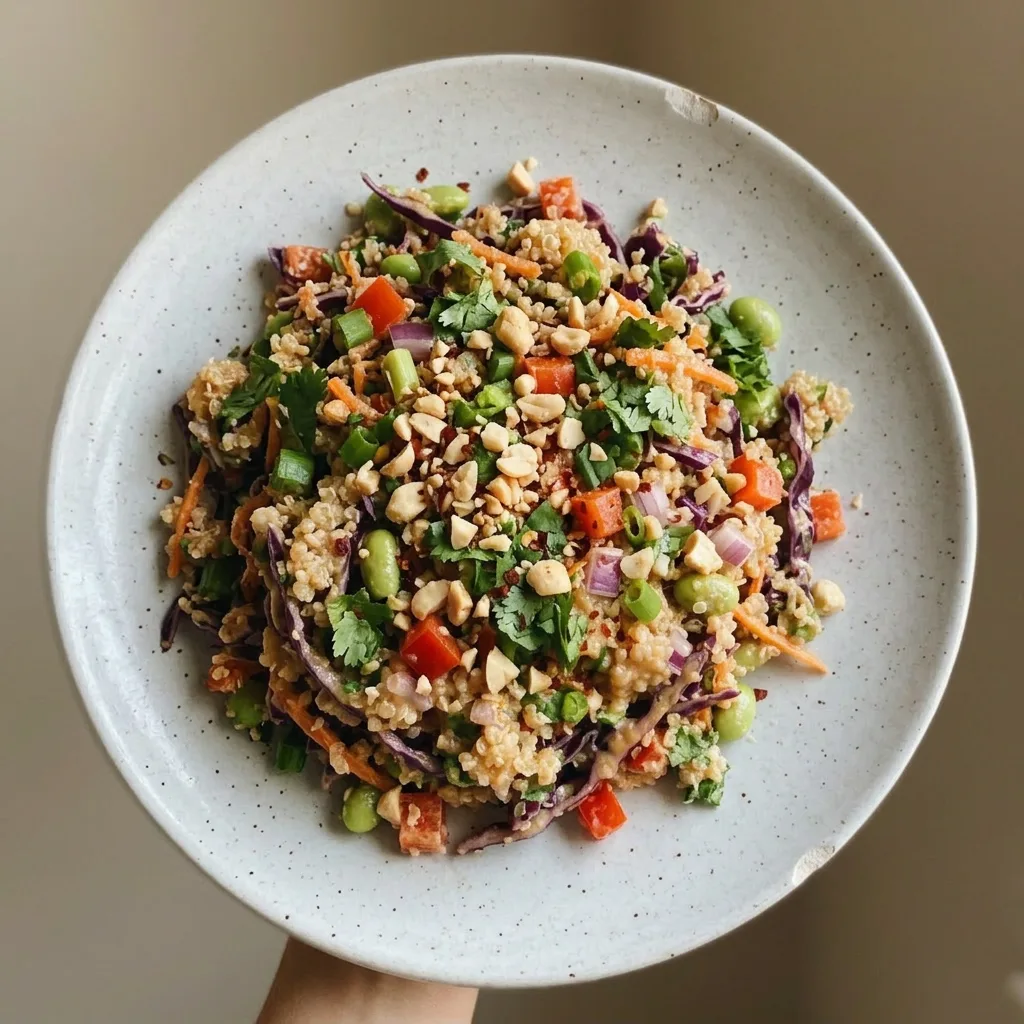
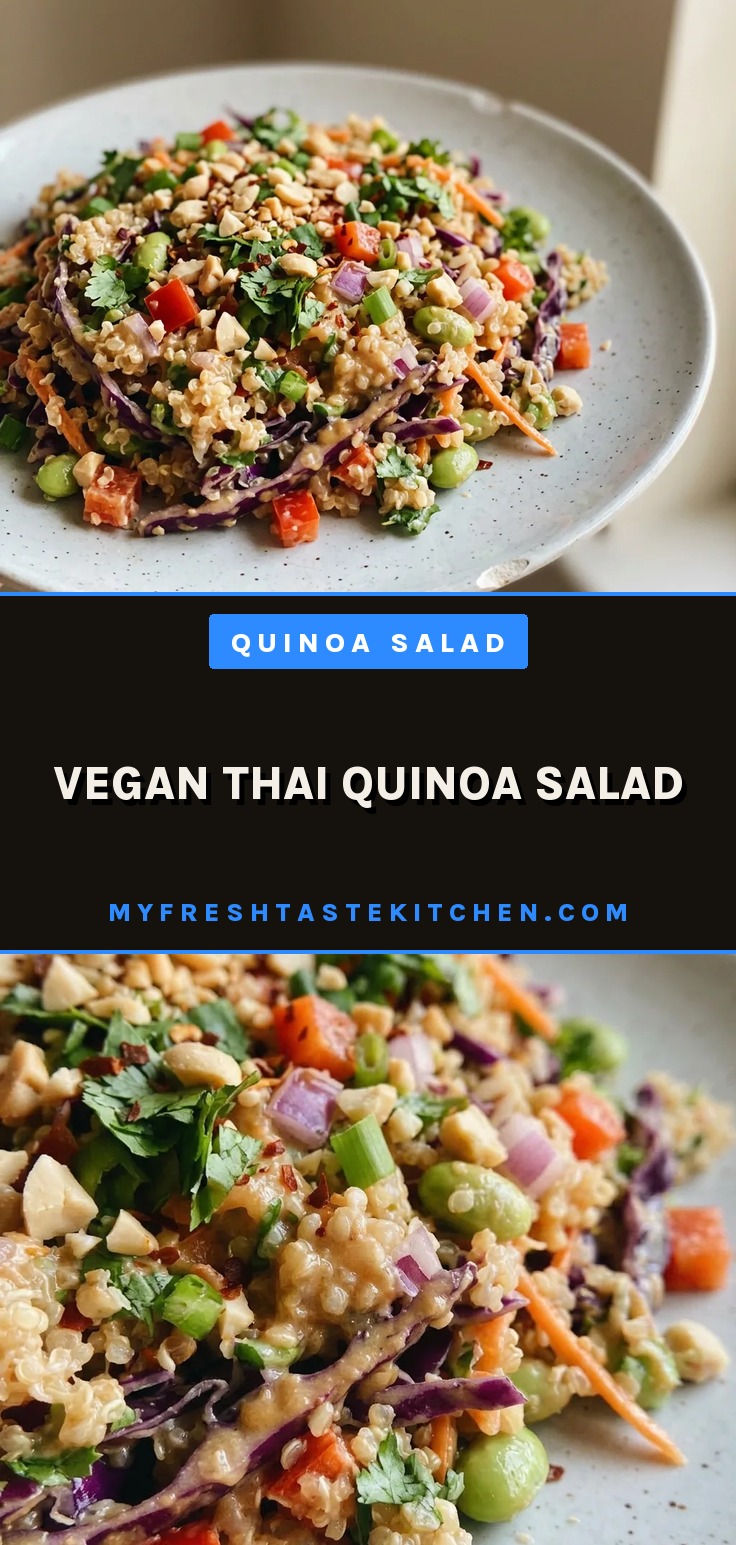
What makes this Thai quinoa salad satisfying to eat is the play between raw, crunchy vegetables and a rich, smooth dressing. Shredded cabbage, diced bell pepper, and carrots each offer a distinct snap that doesn’t wilt.
The dressing, whipped from peanut butter, soy sauce, ginger, and lime, coats every piece without seeping in and softening them. That’s because the dressing is thick enough to cling as a film, not soak through. You taste the peanut creaminess first, then the fresh crunch of each vegetable.
The edamame adds a tender pop, while chopped peanuts on top give an extra crackle. Bite after bite, the texture stays lively, never uniform or limp.
Better after a chill: why cold serving deepens the flavor
This salad is meant to be served cold or at room temperature, not hot off the stove. When you let it rest in the fridge for at least 30 minutes, the dressing has time to seep evenly into the quinoa and vegetables without making them soggy. The quinoa firms up slightly as it cools, so each grain feels more distinct.
More importantly, the flavors, soy, ginger, peanut, lime, settle and round out. Right after mixing, the dressing tastes sharp and separate; after chilling, it tastes integrated and deeper. Cold serving also keeps the vegetables crisp.
You’ll notice the difference: a bite from the just-mixed bowl is good, but one from the chilled bowl is better.
Prep: 15 min · Cook: 20 min · Total: 35 min · Servings: 6 · Calories: 300 kcal
Ingredients that matter
Quinoa: Rinse it before cooking to remove bitter saponins; even pre-rinsed brands benefit from a quick wash.
Peanut butter: Use a natural, no-stir peanut butter or almond butter; the kind with added sugar and oil makes the dressing grainy.
Red cabbage: Slice it as thin as you can; thick shreds stay tough and won’t absorb the dressing evenly.
Fresh ginger: Grate it on a microplane; chopped ginger leaves fibrous bits that ruin the smooth dressing.
Build the quinoa base with care
Cook and cool the quinoa
Cook 1 cup quinoa per package directions. Once done, spread it on a baking sheet to cool quickly, fluffing with a fork. You want it cool to the touch before mixing, or the dressing will turn it gummy.
Prep the vegetables while quinoa cools
Thinly slice red cabbage, a mandoline gives even shreds that stay crunchy. Dice bell pepper and onion small, shred carrots, and measure edamame. The vegetables should be dry; pat them if wet so the dressing clings.
Make the dressing smooth
Whisk peanut butter, ginger, garlic, soy sauce, maple syrup, rice vinegar, and lime juice. Start with 2 tablespoons warm water, adding more until the dressing runs off the whisk in a thick ribbon. It should coat a spoon, not pour like water.
Toss everything together
Combine cooled quinoa and all vegetables in a large bowl. Pour dressing over and toss with a spatula, lifting from the bottom. Every grain and veg should glisten evenly; if clumps remain, add a splash of water and toss again.
Vegan Thai Quinoa Salad
Ingredients
- 1 cup uncooked quinoa
- 1 1/2 cup finely sliced red cabbage
- 1 large red bell pepper diced
- 1/4 cup finely diced red onion
- 1 cup shredded carrots
- 1/2 cup edamame
- 1/2 cup chopped cilantro
- 1-2 green onions chopped
- 1/4 cup chopped peanuts for garnish
- 1/4 cup creamy peanut butter or almond butter
- 1-2 teaspoons freshly grated ginger
- 1 clove garlic finely minced
- 2 tablespoons low sodium soy sauce or tamari
- 1 tablespoon maple syrup or honey
- 1 tablespoon rice vinegar
- 2-4 tablespoons warm water
- Juice from 1/2 lime
Instructions
Cook quinoa:
Prepare quinoa following package directions.Prep vegetables:
While quinoa cooks, prep the vegetables: thinly slice the cabbage with a mandoline or chop finely.Cool quinoa:
Allow the cooked quinoa to cool, then transfer to a large mixing bowl.Add vegetables:
Add all vegetables to the bowl: red cabbage, red bell pepper, red onion, carrots, edamame, cilantro, and green onions.Whisk dressing:
For the dressing, whisk together peanut butter or almond butter, grated ginger, minced garlic, soy sauce or tamari, maple syrup or honey, rice vinegar, warm water (begin with 2 tablespoons, add more if needed), and lime juice until smooth.Toss salad:
Pour dressing over the salad and toss thoroughly to coat.Garnish salad:
Garnish with crushed red pepper flakes and chopped peanuts before serving.
Three swaps that change this salad in particular
Edamame: Shelled peas or chopped green beans. Peas give a sweeter, softer pop; green beans stay crunchier. Neither offers the same buttery bite as edamame, but both keep the protein bump.
Soy sauce: Tamari for gluten-free; coconut aminos for soy-free. Tamari is nearly identical in salt and umami, you won’t notice the swap. Coconut aminos are sweeter and less salty; start with the same amount, then add a pinch of salt if the dressing tastes flat.
Peanut butter: Almond butter or sunflower seed butter. Almond butter makes a thinner, nuttier dressing that still clings; sunflower butter turns the dressing gray-green and tastes faintly earthy. Either works, but the salad loses that bold peanut punch.
Storage and Serving
Serve the salad right after mixing for the brightest crunch, or chill at least 30 minutes for deeper flavor. The texture holds best within 24 hours. Store leftovers in an airtight container in the fridge for up to 3 days.
The quinoa and vegetables stay crunchy, but the dressing thickens as it sits. Before serving a stored portion, stir in a splash of water or lime juice to loosen it.
Freezing is not recommended; the vegetables would lose their crunch and the dressing may separate upon thawing. The chopped peanut garnish should be added just before serving to keep it crisp, not stirred in ahead.
Tips
- Toast the peanuts in a dry skillet over medium heat for 2 to 3 minutes until fragrant to enhance their nutty flavor and crunch.
- Use a microplane to grate the ginger; pre-minced ginger from a jar lacks the pungent punch and adds excess liquid.
I made this salad twice: once with warm quinoa that turned into a gluey mess, and once after letting it cool completely, the cold quinoa stayed fluffy and the dressing clung.
Frequently Asked Questions
Can I make this salad ahead of time?
Yes, you can assemble it up to 24 hours ahead. The quinoa and vegetables hold their texture well in the fridge, but the dressing thickens as it sits. Before serving, stir in a splash of water or lime juice to loosen it.
Add the chopped peanut garnish just before serving so it stays crunchy.
How do I keep the salad from getting soggy?
Start with fully cooled quinoa, warm quinoa absorbs the dressing too fast and turns gummy. Make sure the vegetables are dry before mixing; any moisture dilutes the dressing and softens the crunch. The dressing is thick enough to coat without soaking in, so as long as you toss just before serving or within 24 hours, the salad stays crisp.
Is this salad gluten-free?
Yes, if you use tamari instead of soy sauce. The quinoa, vegetables, and dressing ingredients are naturally gluten-free. Double-check your peanut butter and any other packaged items for cross-contamination if that’s a concern.
What makes this salad Thai-inspired?
The combination of peanut butter, soy sauce, ginger, garlic, lime, and cilantro mirrors the bold, savory-sweet- sour balance found in Thai peanut dressings. The use of crunchy fresh vegetables and a garnish of crushed peanuts also echoes the texture contrasts typical of Thai salads.