These aren’t dry, crumbly muffin tops that fall apart in your hand. Sausage breakfast muffins are a savory, portable meal that stays tender and moist thanks to a careful balance of eggs and Bisquick, enough lift to keep them light, but enough structure to hold the sausage and cheese without crumbling.
The trick is treating them like muffins, not a frittata in a cup: brown the sausage first, drain every drop of grease, and stir the batter just until combined. Overwork it and you’ll get a dense hockey puck.
Get it right and you’ve got a breakfast that works hot from the oven, cold from the fridge, or reheated a few days later.
Why does the ratio of eggs to Bisquick give a tender muffin instead of a dense frittata?
Four large eggs and one cup of Bisquick hit a sweet spot. The eggs bring moisture and structure, but they aren’t so many that the muffin turns into a custard or frittata.
Meanwhile Bisquick contains baking powder, which releases gas during baking. That lift creates a light crumb, not a heavy dense brick.
You’ll see the muffins dome slightly and feel a soft interior when you pull one apart. If you cut the eggs or added extra Bisquick, you’d get a drier, tighter texture. Here the balance lets the muffin hold its shape without turning tough.
Why brown the sausage first, and why drain the grease?
Browning the sausage over medium-high heat triggers browning reactions that deepen its savory flavor. Without that step, the meat would taste flat and pale. Once the sausage is cooked, you have to dump the rendered fat.
Leaving it in makes the batter greasy, and the muffins won’t hold their shape, they’d turn out heavy and slick. You can see the difference when you fold in the drained meat: the batter stays thick and even. After baking, each muffin releases from the pan cleanly and feels substantial, not greasy.
What makes sharp Cheddar the best cheese here?
Sharp Cheddar has enough punch to stand up to the savory sausage without getting lost. Its tang cuts through the richness of the eggs and meat, so every bite tastes balanced.
As it melts, it distributes evenly through the batter, you’ll notice small pockets of gooey cheese when you bite in. Milder cheeses like Monterey Jack would fade into the background, leaving the muffin one-dimensional.
Sharp Cheddar keeps the flavor forward and the texture pleasant, with a slight chewy pull.
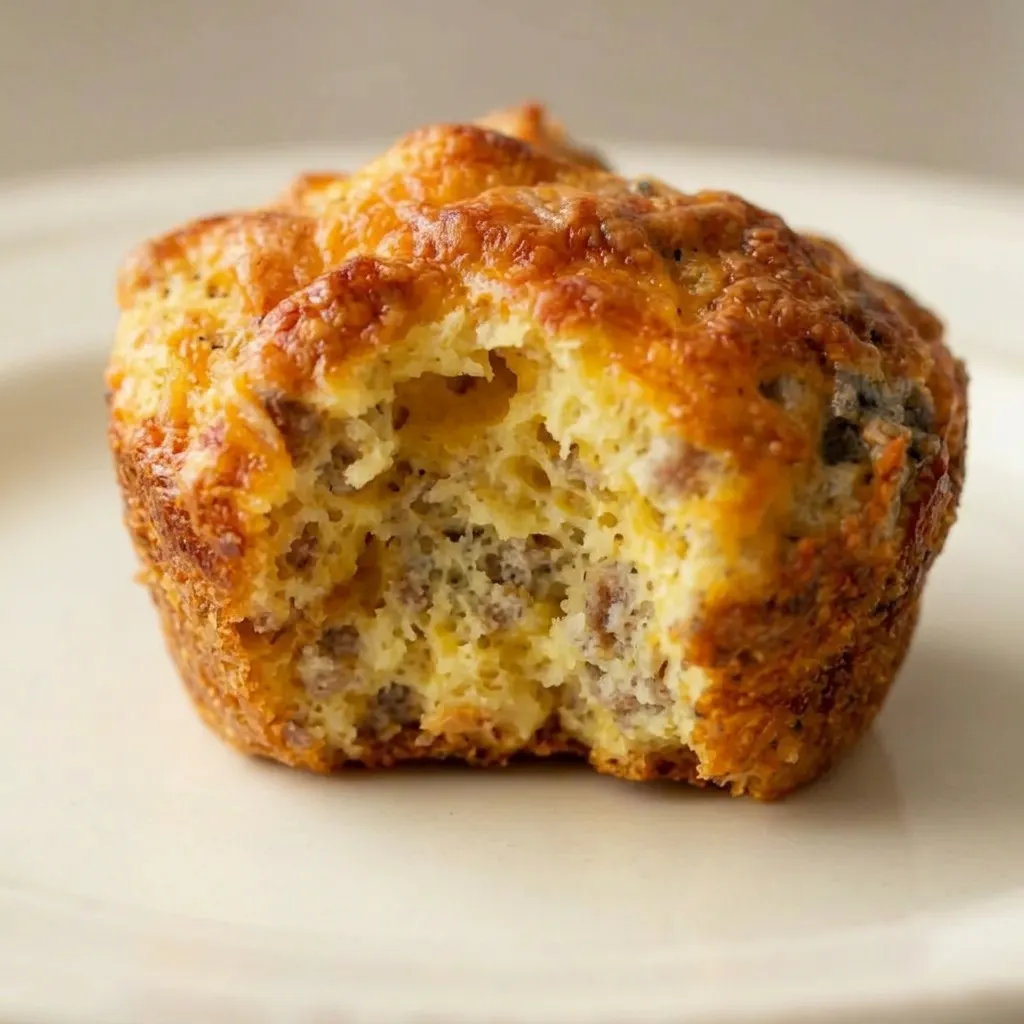
Prep: 10 min · Cook: 30 min · Total: 40 min · Servings: 12 · Calories: 210 kcal
What to look for when buying ingredients for these muffins
Breakfast sausage: Buy bulk sausage, not links or patties, so you can break it into small crumbles.
Sharp Cheddar cheese: Buy a block and shred it yourself; pre-shredded cheese has anti-caking powder that dulls the melt.
Bisquick baking mix: Use the original, not the buttermilk or gluten free versions; they change the texture.
Eggs: Large eggs are standard here; jumbo or extra large will throw off the moisture balance.
How to tell these muffins are baked through
Prep the pan
Spray a 12-cup muffin pan well. If you skip this, the cheese will glue the muffins to the metal, you’ll tear the tops when you try to lift them out.
Brown the sausage
Cook the sausage over medium-high heat, breaking it into small pieces. Stop when you see deep brown patches and no pink remains. Drain every drop of grease; the batter should look thick, not shiny.
Mix the batter
Whisk the eggs first, then stir in cheese, Bisquick, and cooled sausage. The batter will be lumpy and stiff, that’s fine. Stop mixing as soon as no dry flour patches remain; overmixing makes muffins tough.
Fill the cups
Spoon the batter into the cups, filling each about three-quarters full. Leave a little headroom: the muffins will rise and dome slightly. If you overfill, they’ll spill over and burn on the pan.
Bake and check
Bake at 350°F for 18 to 20 minutes. The tops should be golden brown and spring back when you press one gently. If a toothpick inserted in the center comes out clean (or with a few moist crumbs), they’re done.
Sausage Breakfast Muffins
Ingredients
Method
Preheat Oven and Prep Pan:
Heat the oven to 350°F (175°C). Coat a 12-cup muffin pan with non-stick spray; reserve.Brown the Sausage:
Brown the sausage in a skillet over medium-high heat, breaking it up, until fully cooked. Discard the grease and let the sausage cool a bit.Mix Egg Mixture:
In a large bowl, whisk the eggs lightly. Stir in the shredded cheese, Bisquick, and cooled sausage until combined.Fill Muffin Cups and Bake:
Spoon the mixture into the prepared muffin cups, filling each about ¾ full. Bake for 18-20 minutes, until tops are golden.
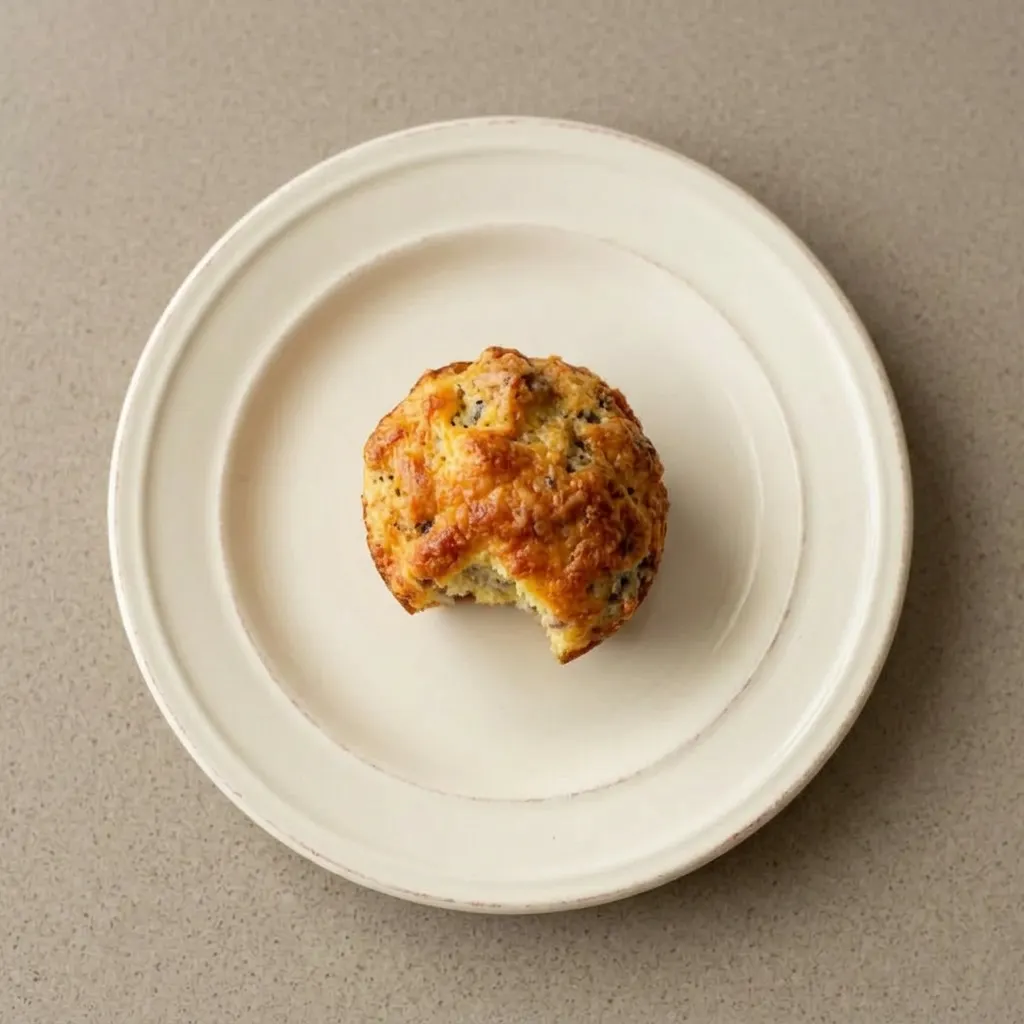
Swapping the sausage, cheese, or Bisquick without breaking the muffin
Breakfast sausage: Turkey or chicken breakfast sausage, or a spicy variety like hot Italian. Leaner poultry sausage makes a slightly drier, less rich muffin; compensate by adding a tablespoon of oil to the batter. Hot sausage adds heat without changing texture; brown and drain the same way.
Sharp Cheddar cheese: Pepper Jack, Gouda, or smoked Cheddar. Pepper Jack brings heat and melts similarly.
Gouda or smoked Cheddar give a different savory note but the same gooey melt. Avoid pre-shredded cheese, its anti-caking powder keeps the cheese from melting into the batter evenly.
Bisquick baking mix: Gluten-free Bisquick. Gluten-free Bisquick works cup-for-cup but yields a more crumbly, slightly grittier muffin that browns faster. Check doneness a minute or two early.
Do not use almond or coconut flour, they lack the leavening and structure needed.
Storage and Serving
These muffins keep well in an airtight container in the fridge for up to 5 days. The texture stays moist but not soggy; after day 3 the crumb firms slightly but remains tender. To reheat, split the muffin in half and toast cut side up in a toaster oven at 350°F for 5 to 7 minutes, or microwave on high for 30 seconds.
The toaster oven restores a crisp edge; microwaving softens the exterior. Eat within 30 seconds of reheating for the best texture. You can make the batter a day ahead and refrigerate it, but the muffins bake up puffier if you mix and bake immediately.
For longer storage, freeze the baked muffins in a single layer on a sheet pan, then transfer to a freezer bag. They keep for up to 3 months. Thaw in the fridge overnight or microwave from frozen for 60 to 90 seconds; reheat in a toaster oven to crisp the outside.
Tips
- Stir the batter just until no dry flour remains; overmixing develops gluten in the Bisquick, which makes the muffins tough and dense instead of tender.
Frequently Asked Questions
Can I make these muffins ahead of time and reheat them?
Yes. The muffins keep in the fridge for up to 5 days. Reheat in a toaster oven split side up at 350°F for 5 to 7 minutes to crisp the edges, or microwave on high for 30 seconds.
The toaster oven gives a better texture.
Why did my muffins turn out dense and not fluffy?
Dense muffins usually mean the batter was overmixed. Stir just until no dry Bisquick remains; the batter should be lumpy and stiff. Overworking the gluten makes the crumb tight.
Another cause: the sausage grease wasn’t fully drained, weighing down the batter.
Can I freeze these sausage breakfast muffins?
Yes. Freeze baked muffins in a single layer on a sheet pan, then transfer to a freezer bag for up to 3 months. Thaw in the fridge overnight or microwave from frozen for 60 to 90 seconds, then reheat in a toaster oven to crisp the outside.
