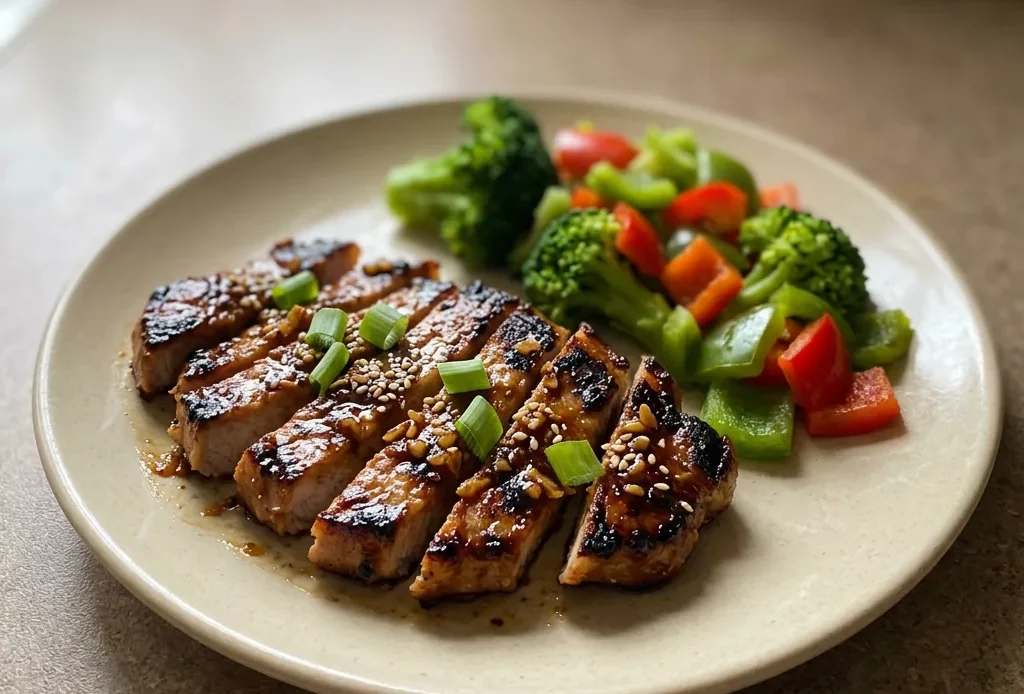
The trick to these Korean pork chops isn’t the marinade, it’s holding back half of it. Most recipes have you dump everything on the meat and call it done, but that diluted marinade from the raw pork won’t give you the bright, sticky finish you want. By reserving some, you get a concentrated glaze that hits fresh sweetness and heat right at the end, layered over the deep caramelized crust from the pan.
That double hit is what makes them taste like they came from a restaurant, even though the whole thing comes together fast enough for a weeknight. No long marinating, no fussy techniques, just a simple shift in timing that changes the result completely.
These are deliberately straightforward, and that’s exactly why they work.
The first time, I carved into the chops right off the heat and watched all the juices run out onto the cutting board. They came out dry and chewy.
Reserve half the marinade for finishing
Reserving half the marinade isn’t just about having extra sauce. That reserved portion never touches raw meat, so it stays safe to use as a finishing glaze after searing.
When you pour it over the cooked chops, it adds a fresh, bright hit of sweetness and spice that the pan-seared crust doesn’t provide. The marinade that sat with the raw pork picked up juices and diluted flavors; the reserved half remains concentrated. You get two distinct layers: the deeply caramelized sear from the initial marinade, and a glossy, punchy finish from the reserved one.
No risk, more flavor.
Thin boneless chops cook fast and stay tender
Thin boneless pork chops are a deliberate choice here. They cook through in the time it takes to get a good sear, usually about six minutes per side. Because they’re thin, the marinade penetrates quickly, so even a short soak infuses flavor all the way through.
Boneless means no uneven bones that could cause hot spots or make slicing awkward. The result is a chop that’s tender, not tough, and ready to eat without wrestling with a bone.
It’s a weeknight-friendly cut that delivers on speed and texture.
Soy, honey, chili balance into a sticky glaze
Soy sauce brings deep umami and salt that seasons the meat throughout. Honey adds sweetness that caramelizes in the pan, creating those browned edges you want. The sweet chili sauce contributes mild heat and a touch of tanginess from vinegar, which cuts through the richness of the pork.
Together they form a glaze that clings to the chop, not a thin watery sauce. You taste savory first, then a gentle sweetness, then a faint warmth at the back. It’s a straightforward balance that works with the pork without overwhelming it.
A short rest keeps the meat juicy
Take the chops off the heat and let them sit a few minutes before slicing. That pause lets the juices, which have been driven to the center during cooking, redistribute evenly throughout the meat. Now I always let them rest a few minutes before slicing, and the meat stays juicy.
If you cut right away, those juices run out onto the cutting board, leaving the pork dry. For thin chops, a short rest is enough; you don’t need to tent them or wait long. A few minutes, then slice, and each piece stays moist.
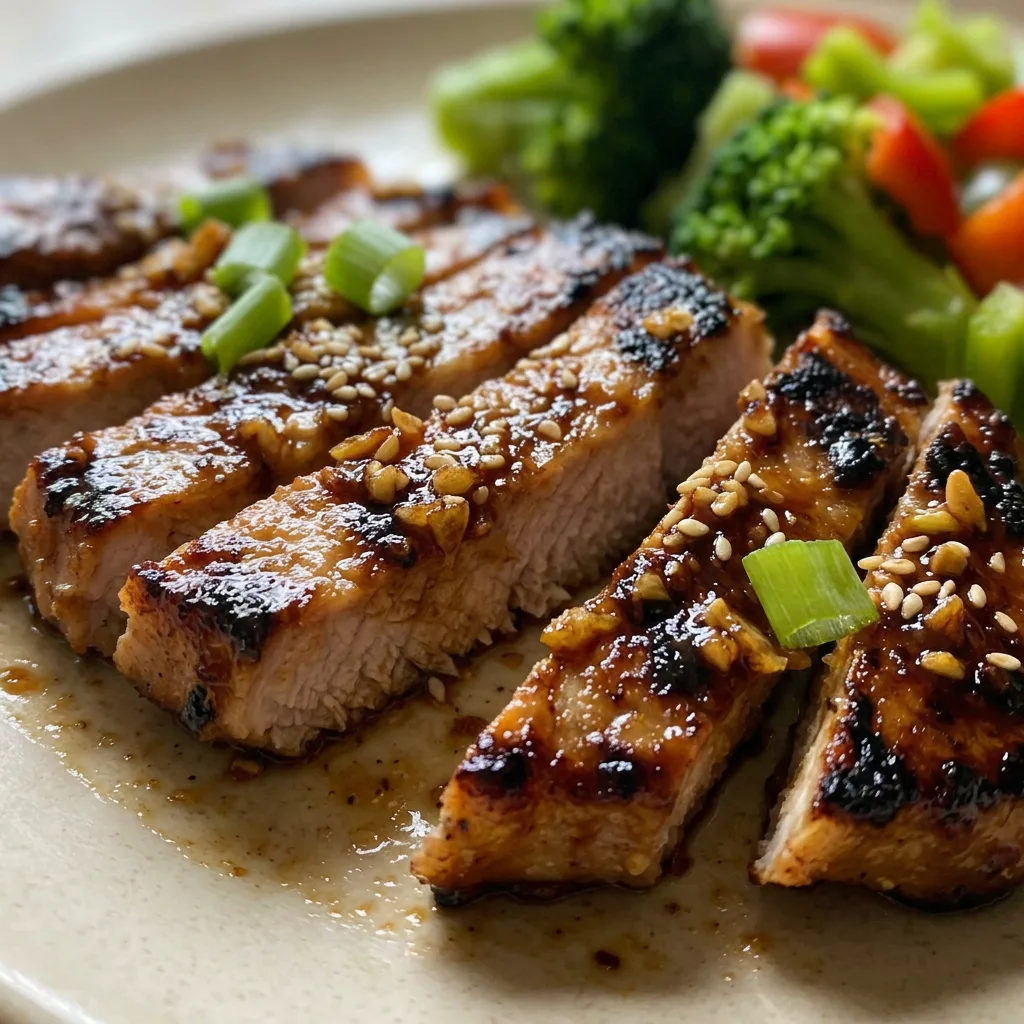
Prep: 10 min · Cook: 20 min · Total: 30 min · Servings: 4 · Calories: 320 kcal
Choosing the right pork chop
thin boneless pork chops: Thin cut means quick cooking and easy marinating; boneless avoids uneven heat and awkward slicing.
soy sauce: Regular soy sauce, not light or low sodium; you need the full salt and umami to balance the sweet chili.
honey: Liquid honey blends easiest into the marinade; crystallized honey won’t dissolve smoothly.
fresh ginger: Use fresh ginger, not powdered. Grate it on a microplane so no fibrous bits end up in the glaze.
sweet chili sauce: Pick a brand that’s thick and glossy, not watery; that consistency helps form the sticky glaze.
Sear then glaze for a double layer of flavor
Marinate and reserve
Whisk the marinade until honey dissolves. Submerge chops, then set half aside. That reserved portion stays bright and concentrated, it’ll be your finishing glaze.
Sear the chops
Heat oil in a large skillet over medium-high until it shimmers. Lay in chops without crowding. You want a vigorous sizzle, if it’s quiet, the pan’s not hot enough.
Flip and glaze
After about 6 minutes, the first side should be deep golden brown. Flip, pour reserved marinade over them. The liquid will bubble and thicken into a glossy coating.
Check doneness
Cook until an instant-read thermometer hits 160°F, roughly another 6 minutes. The glaze should be sticky, not burnt. If it starts darkening too fast, lower the heat.
Rest and slice
Transfer chops to a cutting board and let them sit a few minutes. Slice against the grain. The meat should feel firm but give slightly when pressed; juices should pool, not stream.
Make a quick pan sauce
Pour off excess fat, leaving the browned bits. Add a splash of stock or wine, scrape up the fond, and simmer until slightly syrupy. Spoon over the sliced pork.
Korean Pork Chops (Savory & Quick)
Ingredients
- 1/4 cup soy sauce
- 2 tablespoons honey
- 3 cloves garlic, minced
- 1 tablespoon sesame oil
- 1 tablespoon fresh ginger, grated
- 2 tablespoons sweet chili sauce
- 4 thin boneless pork chops (about 4 oz each)
- 2 tablespoons olive oil
- Fresh veggies (bell peppers or broccoli) for serving
- Splash of stock or wine for pan sauce
Instructions
Whisk marinade ingredients:
Combine soy sauce, honey, minced garlic, grated ginger, sesame oil, and sweet chili sauce in a medium bowl, whisking until fully incorporated.Coat pork chops:
Submerge the thin boneless pork chops in the marinade, coating them entirely. Set aside half of the marinade for later use.Sear marinated chops:
In a large skillet over medium-high heat, warm olive oil until it shimmers. Add the marinated pork chops and sear until golden brown, roughly 6 minutes.Cook with reserved marinade:
Turn the chops over, pour the reserved marinade on top, and continue cooking until the internal temperature hits 160°F (70°C), about another 6 minutes.Rest, slice, and serve:
Take the chops off the heat and let them rest for a few minutes. Slice and serve hot alongside fresh veggies, accompanied by a pan sauce made by deglazing the skillet with a splash of stock or wine.
Storing and Reheating Korean Pork Chops
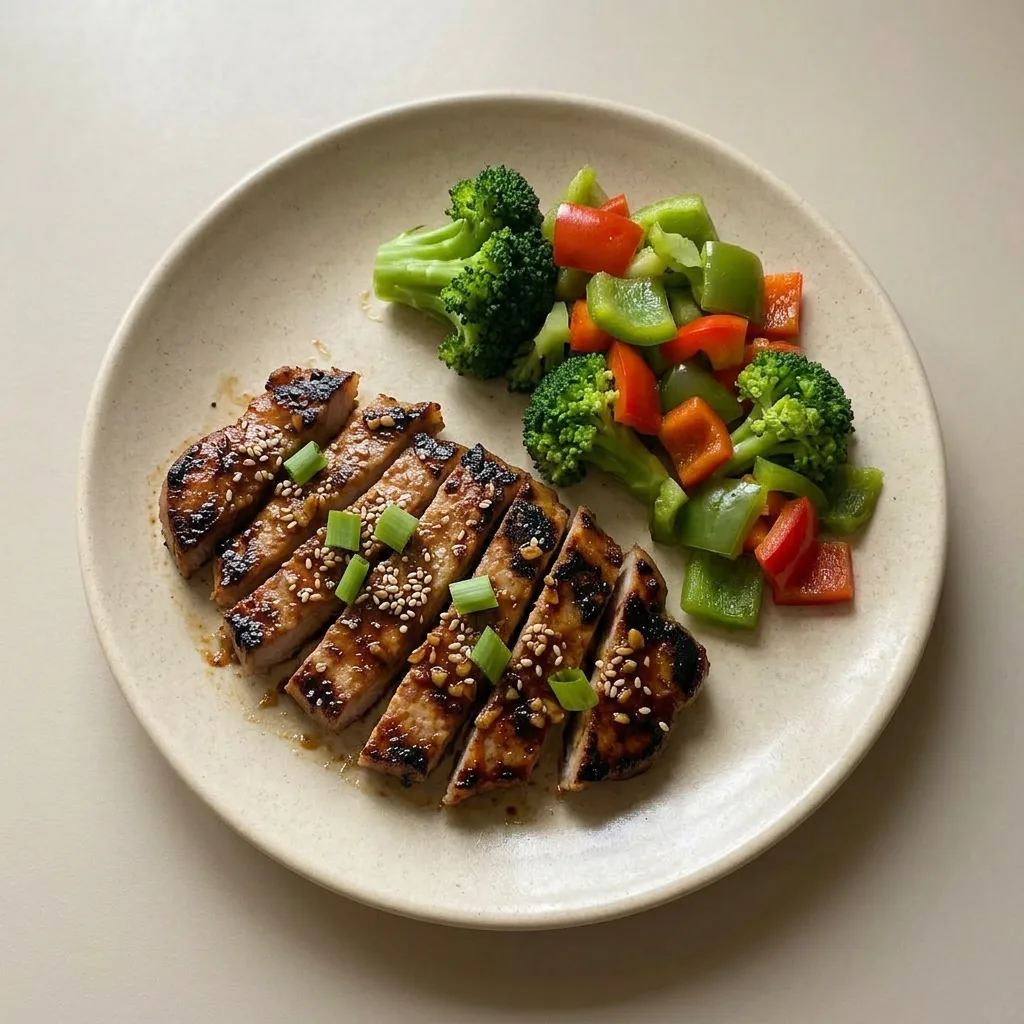
These chops are best served right after resting, while the glaze is still glossy and the meat is tender. Leftovers keep in the fridge in an airtight container for up to 3 days. The glaze thickens as it cools, so store the chops with any extra sauce spooned over them.
To reheat, place them in a covered skillet over low heat with a splash of water or stock, turning once, until just warmed through (about 4 minutes). Avoid high heat or microwaving, which will toughen the meat.
The pan sauce can be stored separately and reheated gently. Freezing is not recommended; the glaze can separate and the pork becomes dry upon thawing. For best texture, eat within a day or two.
What you can swap in these Korean pork chops
soy sauce: tamari or coconut aminos. Both work for gluten-free.
Tamari is nearly identical in salt and umami; you won’t taste a difference. Coconut aminos are noticeably sweeter and milder, so the marinade will lean sweeter and less savory.
Stick with the same 1/4 cup, then adjust salt at the end if needed.
honey: maple syrup or agave nectar. Maple syrup adds its own flavor, which works but shifts the profile toward something more like teriyaki pork chops.
Agave is neutral and equally sweet. Use the same 2 tablespoons. The glaze may be slightly thinner with either, but it still caramelizes fine.
sweet chili sauce: gochujang or sriracha plus sugar. Both change the heat character. Gochujang is thicker and fermented, so the glaze will be deeper, less sweet, more savory.
Mix 2 tablespoons gochujang with 1 teaspoon sugar to approximate sweetness. Sriracha with sugar (2 tablespoons sriracha + 1 tablespoon brown sugar) is closer to the original’s sweet heat but thinner; the glaze won’t get as sticky. Taste and adjust.
thin boneless pork chops: boneless chicken thighs or pork tenderloin medallions. Chicken thighs need similar thinness and cook time; they stay juicy the same way. Pork tenderloin medallions (pounded to 1/2-inch) work but cook faster, check temp after 4 minutes per side.
Don’t swap bone-in or thick chops; they won’t cook through in the same time and the marinade won’t penetrate evenly.
Tips
- Grate the ginger on a microplane, then press the pulp through a fine-mesh sieve to extract the juice and discard the fibrous solids. This gives you all the flavor without any stringy bits that would ruin the smooth glaze.

Frequently Asked Questions
Can I make the marinade ahead of time?
Yes, you can mix the marinade (minus the pork) up to 3 days ahead and keep it refrigerated. Just whisk it again before using, the honey might settle. But don’t marinate the pork longer than an hour or so; the thin chops will start to cure from the salt and turn mealy.
How do I know when the pork chops are done without a thermometer?
Slice into the thickest part after resting: the meat should be white all the way through with just a hint of pink near the bone (if bone-in), and juices should pool clear, not run pink. A thin chop that springs back when pressed in the center is likely done, but that’s less reliable than a cut-check.
Can I use bone-in pork chops instead of boneless?
You can, but the cooking time will be longer and less predictable because bone conducts heat differently. The glaze may burn on the exposed bone before the meat near it is done. Stick with thin boneless for the timing in the recipe; if you swap, pound the chops to even thickness and expect to add a few minutes.
What sides go best with these Korean pork chops?
Steamed rice soaks up the extra glaze, and a quick-pickled cucumber or kimchi cuts the sweetness. For a veg, stir-fried bok choy or broccoli with a splash of sesame oil keeps it light and fresh.