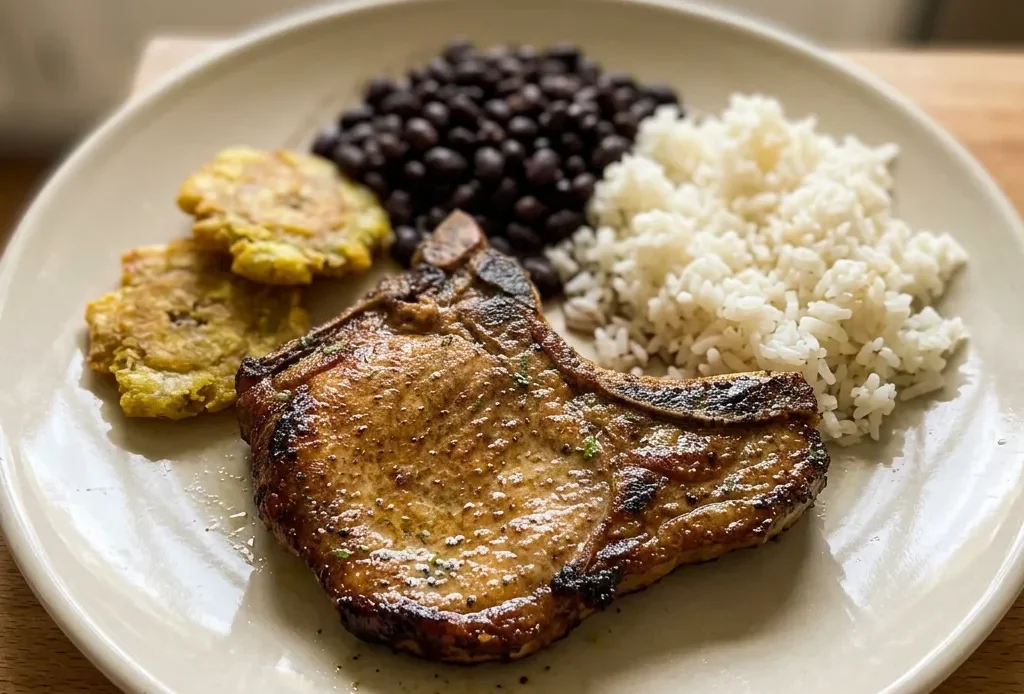
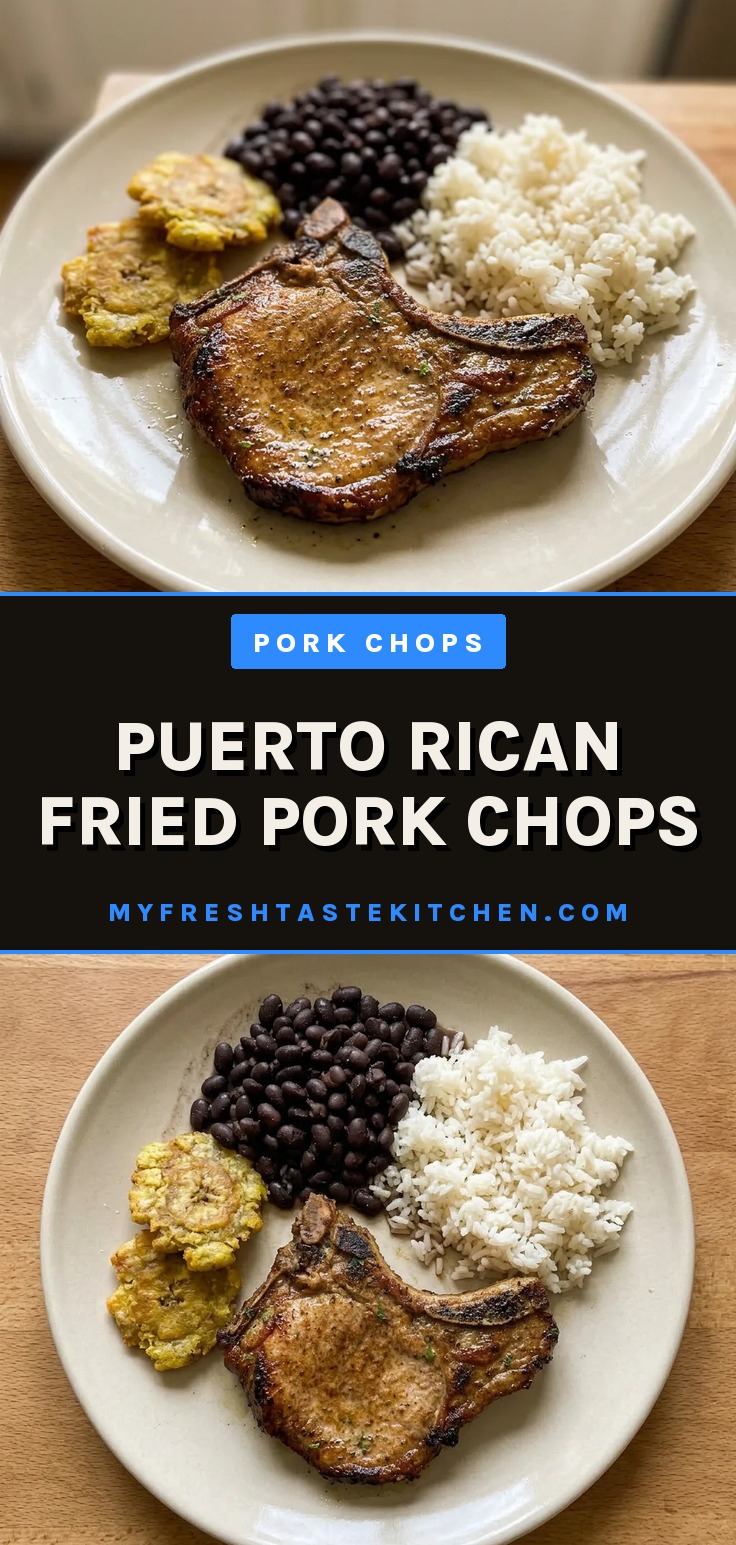
Four hours in a tangy adobo marinade is the important step that makes these Puerto Rican fried pork chops taste seasoned all the way to the bone, not just on the crust. The vinegar in that marinade does real work, tenderizing thick 2-inch chops so they stay juicy through a hot pan-fry. But the window is tight: leave them longer than 24 hours and the acid starts breaking down the meat too much, turning it soft.
Get the timing right and you get a deeply savory chop with a shatteringly crisp exterior, no breading required.
Why does marinating for 4 hours matter?
Adobo, garlic, oregano, olive oil, and vinegar work together to penetrate and tenderize these thick pork chops. The acid in vinegar helps break down proteins, while the marinade infuses the pork with traditional Puerto Rican flavors. Marinating for 4 to 24 hours ensures the seasoning reaches the center of 2-inch chops.
You’ll taste the difference: the meat is seasoned through, not just on the crust. Spanish pork chops rely on this step for authentic flavor.
How pan-frying builds a crispy crust
Pouring enough oil to come halfway up the chops is key. That depth lets the oil surround the meat, creating even browning and a crust that seals in moisture.
Medium heat prevents the seasoning from burning while the interior cooks through. The initial sear on both sides triggers the Maillard reaction, layering savory notes.
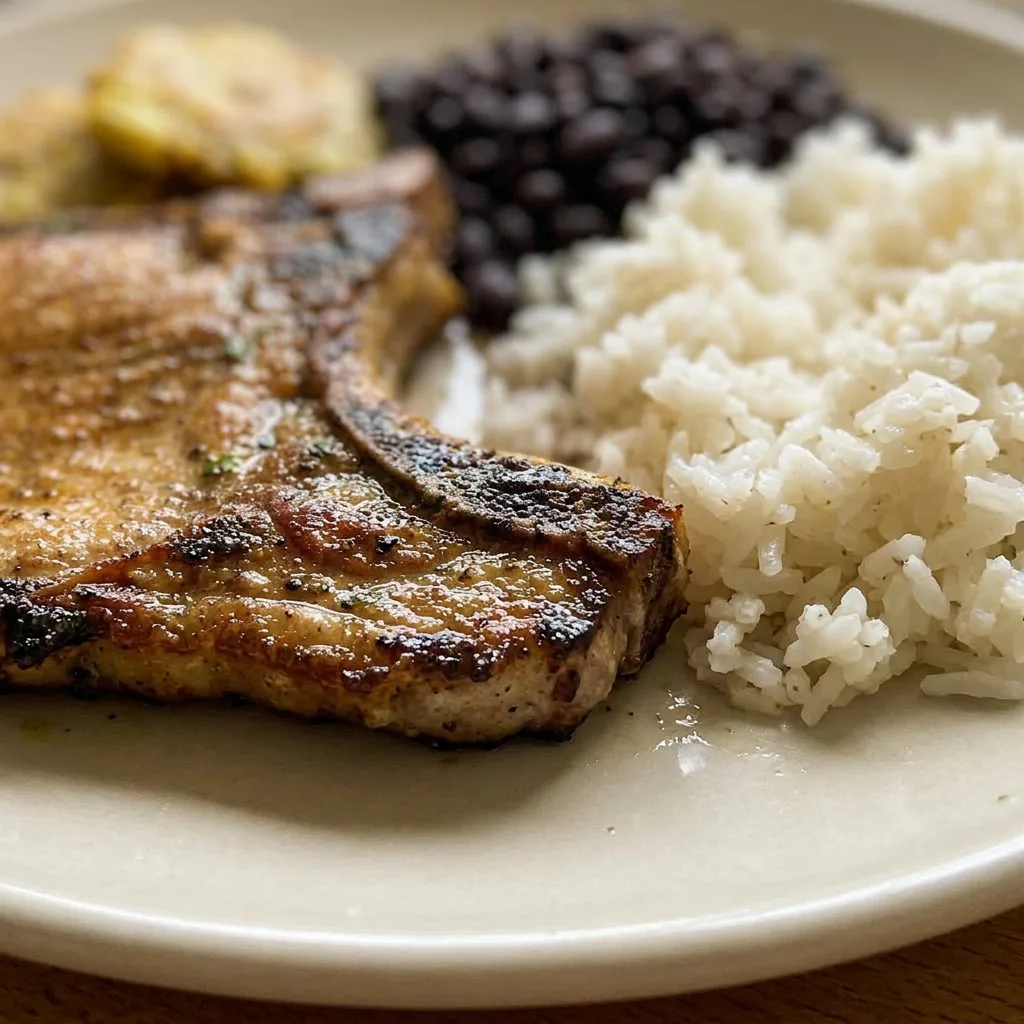
Fried pork chops get that golden, crunchy exterior this way. You’ll see the crust form and feel the contrast when you bite.
What does the 5-minute rest accomplish?
Resting allows juices to redistribute throughout the meat, preventing dryness when cut. The 5-minute rest is short enough to keep the chops hot but long enough for optimal texture. If you skip it, flavorful juices will pool on the plate instead of staying in the pork.
A quick rest makes the difference between a moist chop and a dry one. These pork chops stay juicy because you let them settle.
Prep: 10 min · Cook: 15 min · Total: 4 hr 25 min · Servings: 4 · Calories: 430 kcal
What to look for in the ingredients
Pork chops: Buy 2-inch thick bone-in chops for this recipe; thin chops overcook before the crust forms.
Adobo seasoning: Use a commercial blend with salt, garlic, and turmeric; it’s not the same as adobo sauce.
White vinegar: Standard distilled white vinegar works fine; skip flavored vinegars that throw off the marinade.
Frying oil: Choose a neutral oil with a high smoke point like canola or vegetable; olive oil burns here.
The steps that make Puerto Rican Fried Pork Chops come together
Mix the marinade
Stir adobo, garlic powder, oregano, oil, and vinegar in a small bowl until combined. You’ll smell the sharp vinegar and earthy oregano, that’s your cue it’s ready.
Marinate the chops
Coat each chop with the marinade, then seal in a bag or bowl. Refrigerate at least 4 hours; the longer, the deeper the seasoning. After 4 hours, the pork feels tacky from the vinegar’s work.
Heat the oil
Pour enough oil into a large skillet to come halfway up the chops. Heat over medium until a drop of water sizzles on contact. Too hot?
The oil smokes. Too cool?
The chops won’t sizzle.
Sear both sides
Lay the chops in the hot oil without crowding. Let them brown undisturbed for about 4 minutes per side. You’ll see a deep golden crust form and hear a steady sizzle, if it’s silent, the oil is too cool.
Cook through
Continue cooking 4 minutes per side until the center reaches 145°F. The crust should be crisp, not burnt. If the seasoning darkens too fast, lower the heat slightly.
Rest before serving
Transfer the chops to a plate and rest 5 minutes. You’ll see juices settle back into the meat. If you cut into one immediately, liquid pools on the plate, that’s lost moisture.
Puerto Rican Fried Pork Chops
Ingredients
- 1 tablespoon adobo seasoning
- 1 teaspoon garlic powder
- 1 teaspoon ground oregano
- 2 tablespoons olive oil
- 2 tablespoons white vinegar
- 4 pork chops (2-inch thick, approximately 2 lbs total)
- Oil (for frying)
Instructions
Mix marinade ingredients:
Mix together the adobo, garlic powder, and oregano in a small bowl. Pour in the olive oil and vinegar, then whisk until blended.Marinate pork chops:
Coat the pork chops with the marinade, then place them in a ziplock bag or a bowl covered with plastic wrap. Refrigerate for at least 4 hours, up to 24 hours.Fill pan with oil:
Pour enough oil into the pan to come halfway up the sides of the chops.Sear pork chops:
Warm the oil in a large skillet over medium heat. Add the pork chops and brown them on both sides.Cook until done:
After the initial sear, continue cooking the chops for about 4 minutes per side until fully cooked. The internal temperature at the center should reach 145°F (65°C).Rest and serve:
Allow the pork chops to rest for 5 minutes, then serve right away.
Storage and Serving
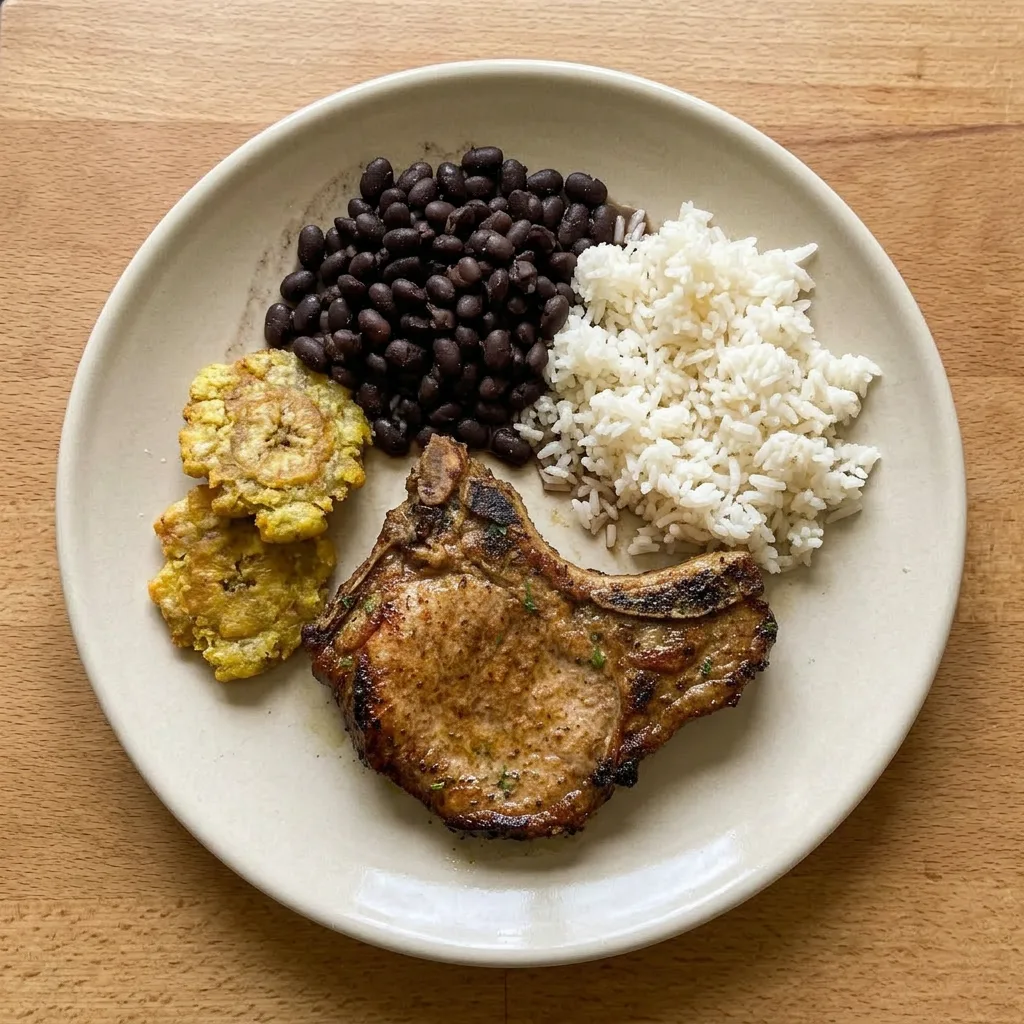
These pork chops are best eaten right after the 5-minute rest, when the crust is crisp and the meat is juiciest. If you have leftovers, store them in an airtight container in the fridge for up to 3 days. The crust will soften as moisture migrates from the meat, so to restore some crispness, reheat the chops in a skillet over medium heat with a splash of oil, flipping once, until warmed through and the exterior crisps up again.
Microwaving will make the coating soggy. For longer storage, you can freeze the cooked chops in a freezer bag for up to 2 months; thaw overnight in the fridge, then reheat in a skillet as above.
The texture won’t be quite as crisp as fresh, but the seasoning holds well. Avoid freezing the raw marinated chops beyond the 24-hour marinating window, as the acid can break down the meat too much.
Tips
- Let the marinated pork chops sit at room temperature for 15 minutes before frying. This prevents the cold meat from dropping the oil temperature too much, ensuring a more even sear and consistent cook time.
Don’t swap the adobo, but here’s what you can change
White vinegar: Apple cider vinegar. Same acidity, slightly fruitier edge. The marinade still tenderizes, but the final pork carries a mild sweet-tang note instead of sharp brightness.
Pork chops: Boneless chops or loin chops. Boneless cooks faster, check temp sooner. Loin chops are leaner, so they can dry out; reduce cook time by a minute per side and watch the crust.
Frying oil: Peanut oil or avocado oil. Both have high smoke points and neutral flavor, same as canola. Peanut oil adds a faint nuttiness; avocado oil is clean.
No change in crust or cooking time.
I once cranked the heat to hurry things along and ended up with blackened chops that were still raw inside. The bitter crust was a total waste of good pork.
Frequently Asked Questions
Can I marinate the pork chops for less than 4 hours if I’m short on time?
You can, but the seasoning won’t reach the center of the thick chops. After 2 hours, the outer layer will be flavorful, but the inside will taste plain.
The vinegar needs that full 4 hours to tenderize the meat evenly. If you’re in a rush, consider using thinner chops that cook faster and absorb flavor quicker.
How do I know when the pork chops are fully cooked without a thermometer?
Check by cutting into the thickest part near the bone, juices should run clear, not pink. The meat should feel firm to the touch but still spring back when pressed.
Another sign: the crust will be deep golden brown and the chops will have shrunk slightly from the bone. But a thermometer is more reliable for these 2-inch chops.
Can I make these pork chops ahead of time and reheat them?
Yes, but the crust will soften during storage. Cook them as directed, cool completely, then refrigerate in an airtight container for up to 3 days. To reheat, use a skillet over medium heat with a splash of oil to restore some crispness.
Microwaving will make the coating soggy, so avoid it.
What’s the difference between Puerto Rican fried pork chops and regular Southern fried pork chops?
Puerto Rican chops are marinated in adobo, garlic, oregano, olive oil, and vinegar, a wet marinade that penetrates the meat. Southern fried chops are typically dredged in seasoned flour or buttermilk and fried.
The marinade gives Puerto Rican chops a tangy, aromatic flavor all the way through, while Southern chops rely on a crispy coating for seasoning. The crust here comes from the marinade and oil alone, not a breading.