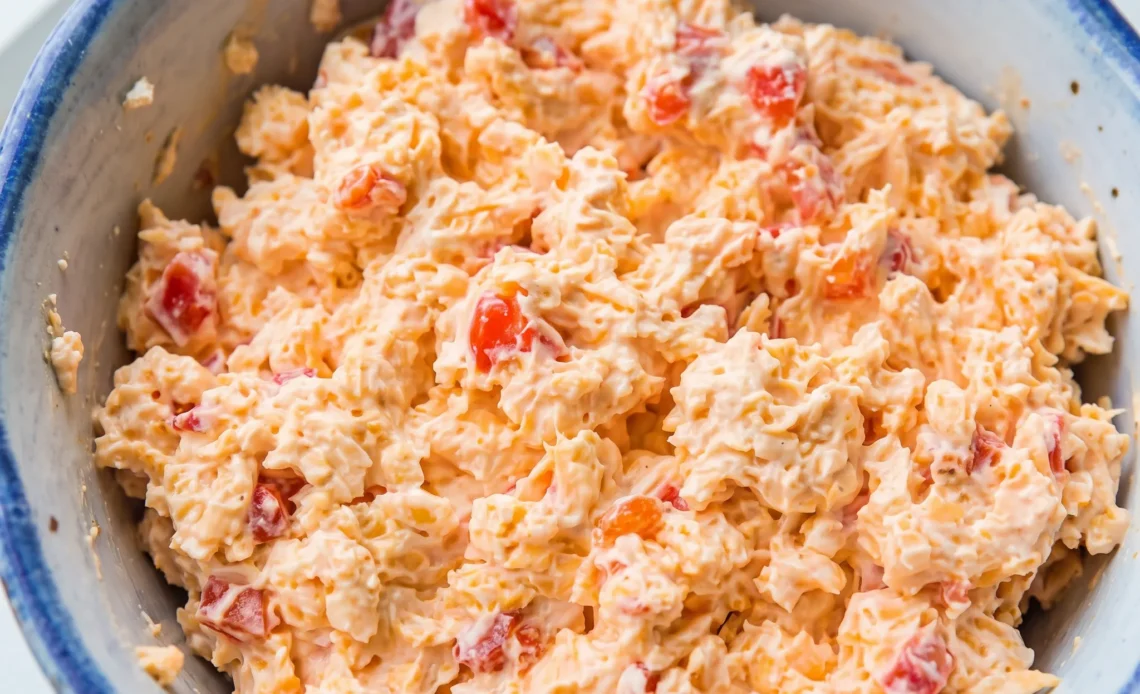
Ten minutes at the bowl, then hours in the fridge doing nothing. That’s the shape of this southern pimento cheese, and the waiting isn’t padding.
The tricky part is the cream cheese. Cold from the block, it whips into small curds that stay visible even after the cheddar goes in, and no amount of extra beating smooths them out without warming the bowl and costing you the set.
Soften it right and the rest is stirring. Grate the cheddar yourself too, since the bagged shreds are coated and taste flatter.
Get those two things right and you’ve got a spread with real tang that mounds on a cracker instead of tearing it, and enough body to slice clean on white bread. More than most people expect from a dip this quick.
Sharp Cheddar, Grated Fresh
Cheddar does the heavy lifting here. An aged sharp one brings tang and a bit of bite that keeps the cream cheese from tasting flat. That sharpness cuts through the richness, so each bite stays lively instead of heavy.
Bagged shredded cheddar seems like a shortcut, but those shreds are dusted with anti-caking agents, usually potato starch or cellulose, to keep them from clumping. They also tend to be younger, milder cheese. The coating dulls the flavor and gives the mixture a slightly grainy feel.
Grating a block yourself, right before it goes in, means the pieces are irregular and freshly cut, so they blend into the base without turning pasty. You’ll smell the difference as soon as the grater hits the block: a clean, pungent cheddar aroma that fills the kitchen. That’s the backbone of the spread.
Use a box grater or a food processor, but keep the cheese cold for cleaner shreds. The result is a pimento cheese with real character, one that tastes like cheese rather than a salty orange paste.
Cream Cheese and Mayo for a Scoopable Texture
Equal parts cream cheese and cheddar, 8 ounces each, set the structure. Cream cheese alone would be too dense and stiff, the kind that tears crackers when you try to spread it. Cheddar alone won’t hold together.
Together they create a base that’s thick enough to mound on a cracker but soft enough to swoop through with a knife. Mayonnaise, just 3 tablespoons, does two things: it adds a gentle tang and loosens the mixture so it spreads without dragging. Too little and you’re fighting the bowl; too much and it turns soupy, weeping onto the plate.
The fat in both dairy and mayo carries the flavor of the sharp cheddar and the pimentos, so every bite tastes complete. After a good stir, the texture should look like a thick, chunky dip. Scoop some up with a spoon and it should hold its shape for a second before settling.
That’s the consistency you want for sandwiches or a cracker platter. If it seems stiff right after mixing, a couple hours in the fridge will loosen it slightly as the flavors settle.
Pimentos Bring Sweetness and Color
Pimentos are sweet, mild peppers, not hot ones. They taste fruity and a little smoky, with just enough gentle heat to notice in the back of your throat.
That sweetness plays off the sharp cheddar and the tang of mayo, rounding out the flavor so it doesn’t taste only salty and rich. A third of a cup, diced, is enough to season the whole batch without turning it into a pepper spread.
Drain them well. Any liquid clinging to the peppers will seep into the cheese and make it runny, especially after a day in the fridge. Pat them dry or let them sit in a strainer while you grate the cheese.
The vivid red bits also give pimento cheese its unmistakable look, a creamy orange base dotted with scarlet. When you stir them in, they should stay in distinct pieces, not dissolve into the mix. That way each scoop has visible flecks and little bursts of sweetness.
If you can’t find jarred pimentos, roasted red peppers work, but they’re usually a bit more acidic and less sweet, so the balance shifts slightly.
Onion Powder, Garlic Powder, and a Pinch of Salt
Onion and garlic powders are the quiet support team. They bring a savory depth that rounds out the sharp cheddar and the sweet pimentos without calling attention to themselves.
You won’t taste garlic or onion as distinct flavors; instead, the spread just tastes fuller. Salt is kept to a quarter teaspoon because cheddar is already salty.
More would mask the cheese’s natural tang and make the whole thing taste flat. These seasonings dissolve into the cream cheese and mayo during mixing, so they distribute evenly. No pockets of raw powder, no uneven bites.
After the spread chills, the spices have had time to hydrate and blend, so the flavor is consistent from first scoop to last. If you’re watching sodium, you can leave the salt out entirely and still have a well-seasoned spread, thanks to the cheese.
But that quarter teaspoon does sharpen the overall taste. Give it a stir, taste a little on a cracker, and adjust only if needed. The goal is a balanced, savory background that lets the cheese and peppers lead.

Read the Label Before You Grate or Drain
Sharp cheddar: Buy a block you grate yourself, since bagged shreds carry a starch coating that dulls the tang and leaves a grainy feel.
Cream cheese: Full-fat bricks only; the whipped tub kind is already aerated and won’t give you the same body once the cheddar goes in.
Pimento peppers: Jarred diced pimentos packed in water, drained and patted dry, since any clinging liquid will weep out after a day in the fridge.
Mayonnaise: Real mayo, not salad dressing, which is sweeter and thinner and will slacken the spread past scoopable.
Garlic powder: Check the date; old powder tastes dusty and flat, and the half teaspoon here is doing quiet work you’ll notice if it’s stale.
Onion powder: Fresh, fine-ground powder dissolves cleanly into the cream cheese, while clumped or coarse granules leave uneven bites.
The most common mistake is not draining the pimento peppers thoroughly, which introduces free water into the mixture and prevents a stable emulsion. Also, using cream cheese straight from the refrigerator means it stays lumpy when whipped, so the mayonnaise and cheese never fully blend into a smooth, cohesive spread. The result is a loose, soupy dip that weeps liquid and won’t hold its shape on a cracker.
How to Read the Mixture at Every Stage
Knowing When the Cream Cheese Is Light Enough
Whip the cream cheese until it loses its blocky look and turns glossy, with soft peaks that slump when you lift the beaters. That airiness is what keeps the finished spread from eating like a brick. Stop before it warms and slackens, though.
If it starts to look wet or slides down the bowl, you’ve gone too far; a few minutes back in the fridge brings it to a scoopable state.
Judging the Cheddar for Even Distribution
Grate the cheddar cold, then add it in a few handfuls, pulsing just until no dry shreds remain. You want distinct little pebbles of cheese, not a paste. Overmix and the cheddar breaks down, turning the spread gluey; under-mix and you get pockets of plain cream cheese.
If it turns pasty, fold in a tablespoon more mayo to loosen it.
Reading the Pimentos for Excess Liquid
After draining, press the pimentos against the strainer or pat them dry. They should feel tacky, not wet. Any clinging liquid will weep into the cheese after a day in the fridge, leaving a puddle around the dip.
If you see moisture beading on the surface, stir the spread and pour off any standing liquid before serving.
Tasting for Salt and Balance Before Chilling
The spread should taste full and savory, with a tang from the cheddar and a sweet note from the pimentos. If the salt dominates, you’ve overdone it; add a spoonful more cream cheese to dilute. If it tastes flat, a pinch more salt or onion powder can wake it up.
Remember that chilling dulls flavors slightly, so season a touch boldly now.

Southern Pimento Cheese with Sharp Cheddar
Ingredients
Method
- Whip the softened cream cheese until it becomes light and airy.
- Incorporate the sharp cheddar cheese, diced pimento peppers, mayonnaise, salt, onion powder, and garlic powder. Whip again until everything is uniformly blended.
- Place in the refrigerator, covered, and let the pimento cheese chill for at least 1–2 hours, or until serving time.
- Keep any leftovers in an airtight container in the refrigerator for 4–5 days.
- Offer with crackers as an appetizer, or spread on white sandwich bread for lunch.
Storage and Serving: Keeping Pimento Cheese Spreadable
Airtight container, fridge, 4 to 5 days. The first two hours matter most: the spread firms as the cream cheese and cheddar set, and that’s when it slices cleanly on white bread.
Past day three it tightens further, so let a stored portion sit out 15 to 20 minutes before serving and stir it once. Cold dulls the sharp cheddar, so the flavor reads flatter straight from the fridge. Don’t freeze it.
The cream cheese and mayo separate on thaw, and the cheddar turns mealy. Serve crackers alongside rather than pressing them in, or the salt pulls moisture and the surface beads. If liquid pools, pour it off and stir.
Leftovers hold their best spreading texture through day three, then stay fine for sandwiches. No finishing touch goes on at the end; the spread is complete as mixed.
Which Ingredients Can Bend Without Breaking the Spread
Cream cheese: Neufchatel or a lower-fat brick can stand in for the full-fat 8 ounces, but only a brick, never the whipped tub stuff. You’ll lose some richness and the finished spread will taste a little tangier and set a touch softer. The body still holds on a cracker, just with less of that coating, creamy weight.
If the mixture feels slack after mixing, a spoonful more mayo won’t fix it; let it chill the full two hours and it firms up enough to scoop.
Mayonnaise: Greek yogurt or sour cream can replace the 3 tablespoons, though start with 2 and add more only if the mixture drags. Both bring tang, but yogurt is thinner and sour cream is heavier, so the spread shifts. Yogurt can leave it slightly looser and a bit sour next to the cheddar; sour cream reads richer and quieter.
Miracle Whip is the wrong move here. It’s sweeter and thinner than real mayo and slackens the whole batch past the point where it mounds on a cracker.
Pimento peppers: Roasted red peppers, drained and patted dry, can fill in for the ⅓ cup when the jarred pimentos aren’t around. They’re more acidic and less sweet, so the balance tips tart instead of round.
Dice them to the same small size so the flecks stay distinct. A pinch of sugar stirred in can bring back some of the sweetness pimentos carry, but taste first before adding anything.
Sharp cheddar: Leave it. This is the backbone, and mild cheddar, Monterey Jack, or a pre-shredded bag all flatten the spread.
A younger cheese loses the tang that cuts the cream cheese, and bagged shreds carry a starch coating that leaves a grainy feel and mutes the flavor. If dairy is off the table entirely, no cheddar substitute gets you there without turning the texture pasty or oddly sweet, so this isn’t a dish that converts well. Make it as written or pick a different spread.
Garlic and onion powders: Skip the swap and keep them as listed, ½ teaspoon garlic and ¼ teaspoon onion. Fresh garlic or onion would add moisture and a raw bite that doesn’t belong in a chilled spread, and the powders are doing quiet background work you’d only miss once they’re gone. The ¼ teaspoon salt is worth keeping too, though you can leave it out if you’re watching sodium and the cheddar still carries the seasoning.
Tips
- Let the cream cheese sit out until a fingertip pressed into the block leaves a clean dent with no resistance, about 60 to 90 minutes for an 8-ounce brick. Cold cream cheese whips into small curds that stay visible once the cheddar goes in, and no amount of extra beating smooths them out without warming the whole bowl past the point where it sets up firm in the fridge.
Frequently Asked Questions
How long does pimento cheese last in the fridge?
Four to five days in an airtight container, and the texture tells you where you are in that window. Through day three it still spreads in one clean swoop; after that it tightens and needs a stir and a short sit on the counter before it behaves.
If liquid beads on the surface, that’s the pimentos and mayo giving up moisture, so pour it off and stir it back together. Past day five the sharp cheddar flavor dulls and the whole thing reads flat, so use it or let it go.
Can I make pimento cheese ahead of time for a party?
Yes, and it’s better that way. The recipe already calls for two hours of chilling, so making it the day before just extends that rest, and the garlic and onion powders have more time to hydrate into the base. Keep it covered in the fridge until you’re ready to set it out, then give it 15 to 20 minutes at room temperature and one stir so it spreads without tearing the crackers.
Don’t park it on the table for the whole party; spoon out what you need and put the rest back, since a warm bowl goes slack and weepy.
Why is my pimento cheese runny and how can I fix it?
Wet pimentos are the usual culprit. If they went in straight from the jar without a press in the strainer or a pat dry, that liquid seeps out and pools around the dip within a day.
Stir the spread, pour off any standing liquid, and check the pimentos next time by how they feel: tacky, not slick. The second thing to check is the mayo, since three tablespoons is already at the edge of what the cream cheese and cheddar will hold, and a heavy hand there slackens the whole batch past scoopable.
If it’s still loose, an extra chill firms it up; adding more liquid won’t.
