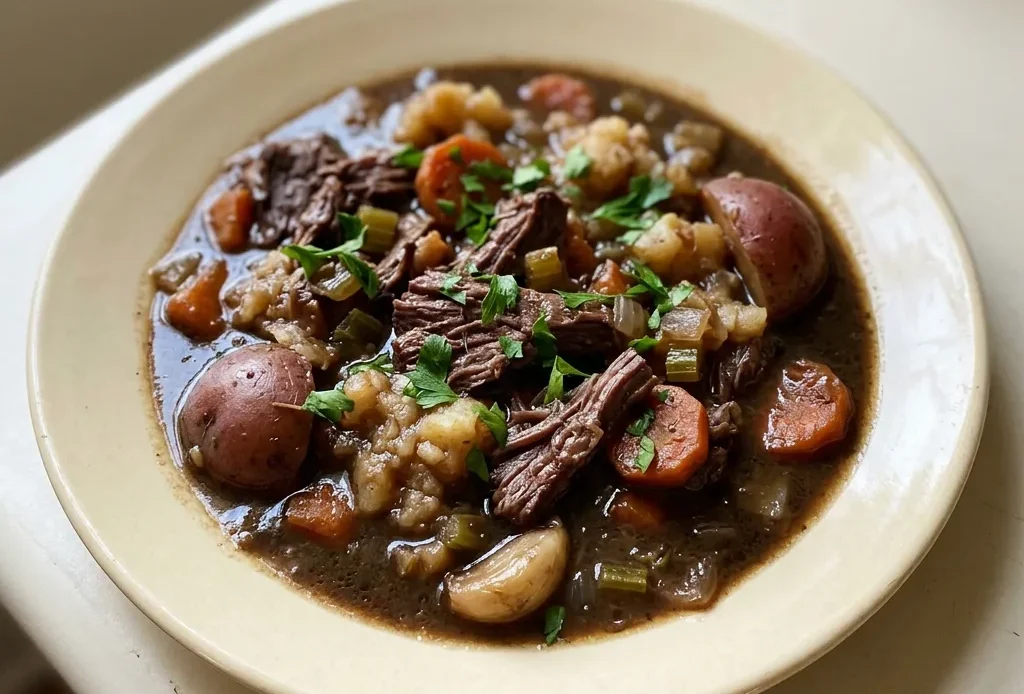
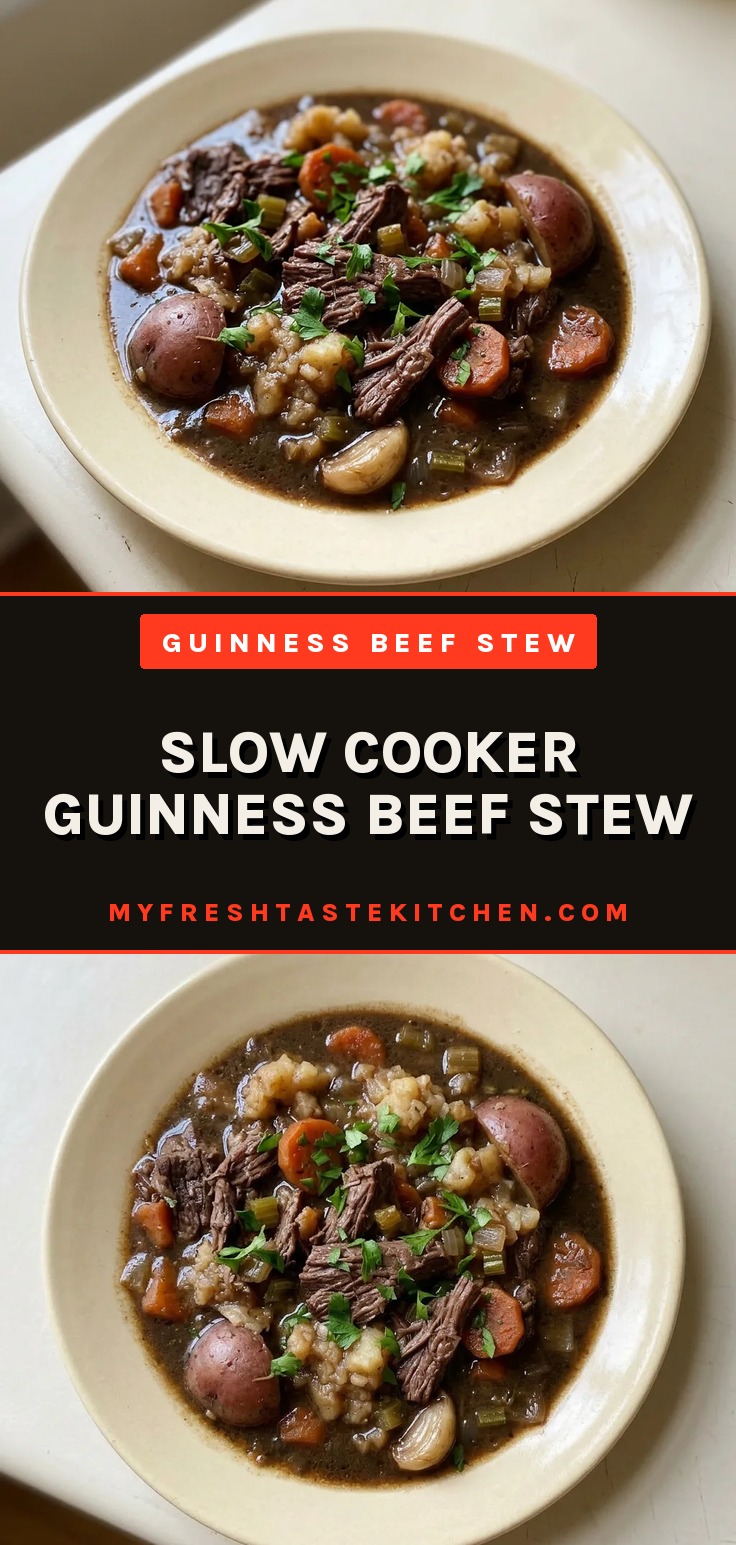
The first bite of this stew hits with a deep, roasty bitterness that gives way to tender beef and silky broth. That dark, glossy liquid clings to the meat and vegetables, proof that the flour coating did its work. It’s a slow cooker guinness beef stew that demands patience, the browning, the two forms of onion, the whole rosemary, but the payoff is a bowl where every spoonful tastes layered, not muddy.
Leftovers are even better, the stout mellowing overnight into something quietly complex.
Browning builds beefy depth
Skipping the browning step means missing out on the savory complexity that only high-heat searing delivers. The Maillard reaction creates browned crusts that taste deeply of roasted meat, not just boiled beef. When you deglaze the skillet with broth, you capture the fond, those caramelized bits stuck to the pan, which dissolve into the stew and add another layer of flavor.
Working in batches matters: crowding the pan drops the temperature and steams the meat instead of searing it. The result is a pale, gray exterior that lacks that rich, savory punch.
Brown in single layers, give each piece room, and you’ll see the difference in the final bowl. A slow cooker alone won’t create that depth; that’s where the stovetop earns its keep.
Guinness does more than color the broth
Three cups of Guinness might seem like a lot, but that’s what it takes to make the stew rich without being watery. The beer brings bitterness and roasted malt notes that mirror the beef’s own savoriness, not just a dark tint. During the long, gentle cooking, the carbonation helps break down connective tissue, leaving the meat tender.
You’ll taste a slight edge that balances the sweetness of carrots and potatoes. The alcohol mostly cooks off, but the character stays.
This isn’t a beer you’d swap for lager or ale, the stout’s dry roast is what complements the beef. The broth ends up silky, not thin, and the flavor deepens as it sits.
Two ways with onion and garlic
Dicing one onion and mincing the garlic, then sautéing them, gives an immediate savory base that hits your nose as soon as you lift the lid. But the quartered onion and whole garlic cloves do something else: they release their sugars and aromatics slowly over hours, building a background sweetness that never turns harsh.
You end up with two distinct layers, the upfront cooked-down savory bits and the soft, mellow whole pieces that you can eat or leave behind. That’s why the recipe calls for both. If you only used diced, the flavor would be too forward and one-note.
If you only used whole, you’d miss that initial punch. Together, they fill the middle ground.
Why coat the beef in flour
Coating the beef in flour before browning does double duty. First, the flour helps the surface brown more evenly, creating a thin crust that adds texture and flavor.
Second, as the stew cooks, that flour slowly releases starch into the broth, thickening it naturally without you having to make a separate slurry. The result is a silky, glossy liquid that clings to the meat and vegetables. A quarter cup is the right amount, too little and the broth stays thin, too much and it turns pasty.
You don’t need to dredge heavily; a light, even coating is all it takes. Watch the broth as it cooks: by the end, it will have a silky body that no added cornstarch can mimic.
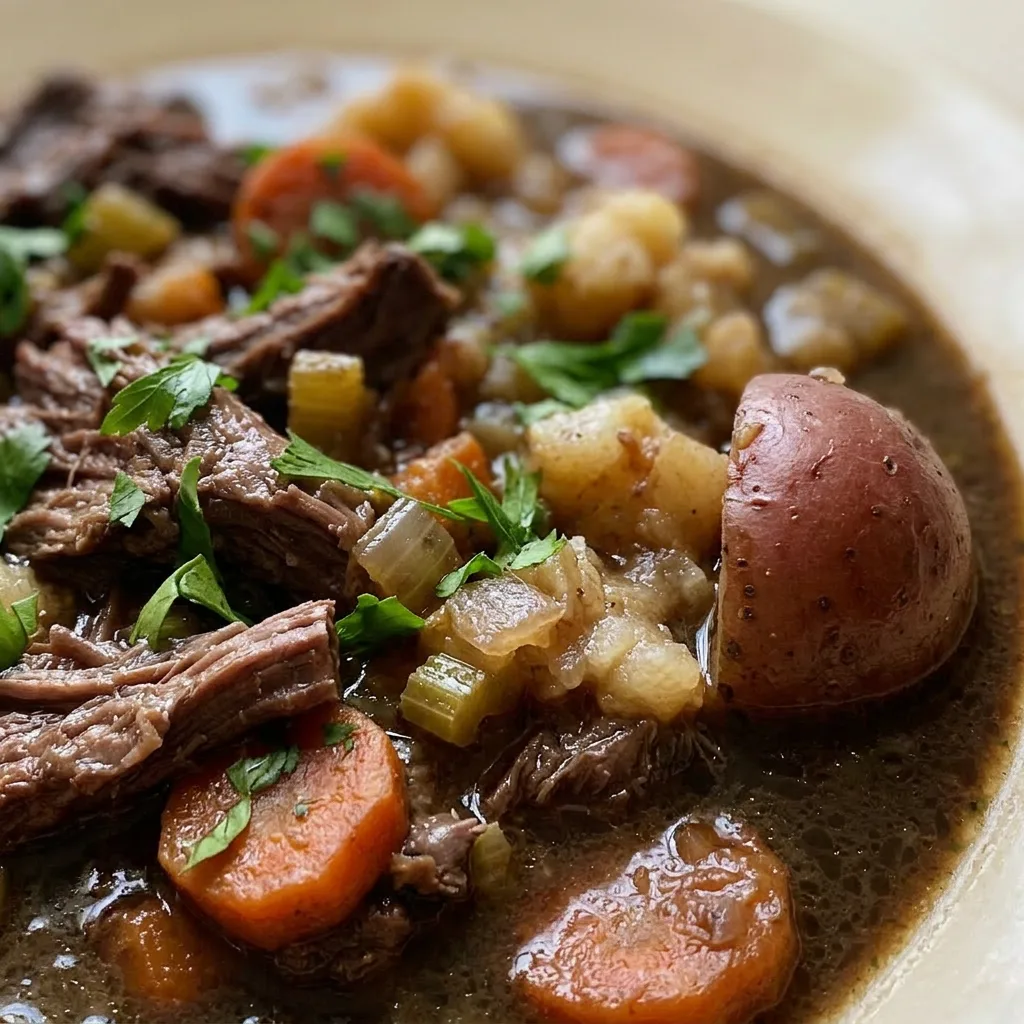
Prep: 30 min · Cook: 8 hr · Total: 8 hr 30 min · Servings: 6 · Calories: 460 kcal
A few ingredient picks that matter
Beef stew meat: Buy chuck or round, with good marbling for tenderness after 8 hours.
Guinness: Use Guinness Draught or Extra Stout; the dry roast flavor is key.
Onions and garlic: You need both diced and whole forms for two layers of flavor.
Red potatoes: Peel and halve small ones so they hold shape but soften through.
Fresh rosemary: Use a whole bunch tied with twine or just stems; strip leaves after cooking.
Browning the beef the right way
Season and coat the beef
Toss the cubes with salt, pepper, and flour. You want a thin, even dusting, if any patch looks dry, that’s fine. The flour should barely cling; shake off the excess.
Sear in batches
Heat oil in a skillet over medium-high. Add beef in a single layer, crowding makes it steam.
Each side should take 2 to 3 minutes; look for a deep brown crust, not just pale golden. If the pan smokes, turn the heat down slightly.
Deglaze the skillet
Pour a splash of broth into the hot pan and scrape up the browned bits with a wooden spoon. Those bits are concentrated flavor. Keep scraping until the liquid is dark and the pan bottom is clean.
Sauté the aromatics
Melt butter in the same skillet. Add the diced onion and minced garlic, stirring until the onion turns translucent and smells sweet, about 3 minutes. Don’t let the garlic brown, it turns bitter.
Layer everything in the slow cooker
Add the beef, deglazed liquid, sautéed aromatics, quartered onion, whole garlic cloves, Worcestershire, Guinness, bay leaves, rosemary, carrots, celery, and potatoes. Give a gentle stir to distribute.
Cook low and slow
Cover and cook on LOW for 8 hours or HIGH for 4 hours. The beef is ready when a fork slides in with no resistance. If the broth seems thin, don’t worry, the flour from the beef will thicken it over time.
Finish and serve
Fish out the bay leaves and rosemary stems, they’ve done their job. The whole garlic cloves will be soft and sweet; leave them in or mash them into the broth. Sprinkle fresh parsley on top before serving.
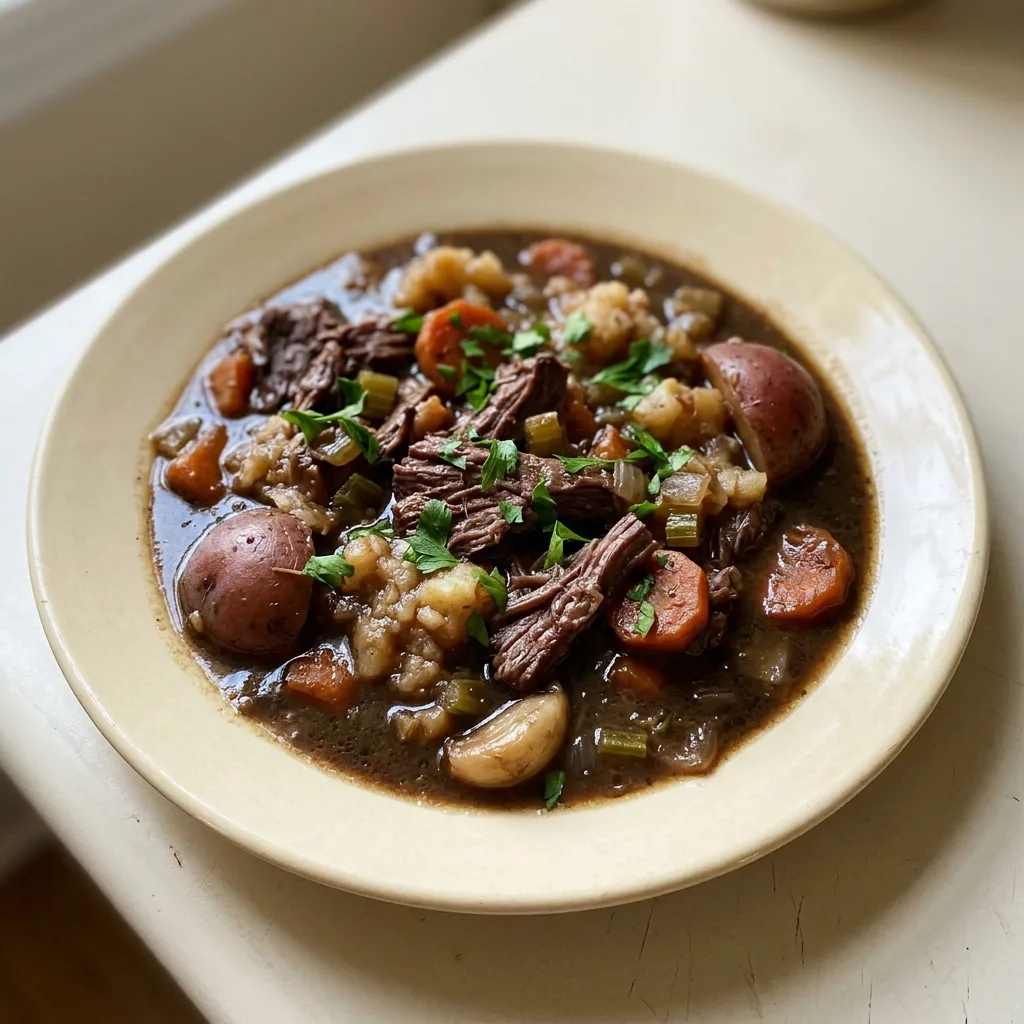
Slow Cooker Guinness Beef Stew
Ingredients
Method
Season and flour beef:
Season the beef cubes with salt and pepper, then coat with 1/4 cup flour (30g).Brown beef in batches:
Heat oil in a skillet over medium heat. Working in batches, brown the meat until golden on all sides. Set aside.Deglaze skillet with broth:
Pour a small amount of broth into the skillet and scrape up any browned bits. Reserve this deglazed liquid.Sauté onion and garlic:
Melt butter in the same skillet. Sauté the diced onion and minced garlic until softened.Cook in slow cooker:
Transfer all ingredients to a slow cooker: browned beef, deglazed liquid, sautéed onion and garlic, quartered onion, whole garlic cloves, Worcestershire sauce, Guinness, bay leaves, rosemary, carrots, celery, and potatoes. Cover and cook on HIGH for 4 hours or LOW for 8 hours, until beef is fork-tender.Garnish with parsley:
Sprinkle with fresh parsley and serve hot.
Stick with the Guinness, swap the meat or the flour
Beef stew meat: Lamb shoulder, cubed same size. Lamb has a stronger, gamier flavor that stands up to the stout.
It’s a direct swap, same cooking time. If you substitute mushrooms (portobello or cremini, halved or quartered), the stew becomes vegetarian but loses the meaty depth, you’ll need to double the Worcestershire or add a splash of soy sauce to compensate.
The texture will be softer, less fibrous.
All-purpose flour (for coating): Gluten-free all-purpose flour blend (with xanthan gum) or rice flour. The flour’s job is thickening and browning.
Gluten-free blends with xanthan gum mimic the starch release; rice flour browns well but yields a slightly thinner, less glossy broth. Use the same 1/4 cup.
If you skip the coating entirely, the meat will brown less evenly and the stew will be noticeably thinner, you’d need a cornstarch slurry at the end.
0). A stout’s roasted barley and bitterness are crucial; swapping to a lager or ale will make the stew taste flat and sweet. Non-alcoholic stout works, but the broth may be slightly thinner (alcohol helps break down collagen).
Avoid porters, they’re too sweet and cloying here. If you can’t get stout, use an equal amount of beef broth plus 1 tablespoon of molasses and 1 teaspoon of Worcestershire.
Butter: Olive oil or vegan butter (for dairy-free). Butter adds richness and helps sauté the aromatics. Olive oil (same 2 tablespoons) works fine, use a mild one.
Vegan butter mimics butter’s behavior in the pan. The flavor difference is subtle in the finished stew.
Skip margarine, which can leave a waxy feel.
Tips
- Test a potato with a fork about 30 minutes before the beef is done; if tender, remove them to a bowl and return to the stew just before serving, so they don’t disintegrate.
Storage and Serving
This stew thickens and deepens in flavor overnight, making it ideal for make-ahead meals. Cool completely before refrigerating in an airtight container for up to 5 days.
The broth will set into a soft gel; reheat gently on the stovetop or in the microwave, stirring occasionally. If the stew seems too thick after reheating, thin with a splash of beef broth.
For freezing, portion into freezer-safe containers and freeze for up to 3 months. Thaw overnight in the fridge before reheating.
The potatoes may soften slightly upon thawing but the beef stays tender. Serve the stew hot; add the fresh parsley garnish just before serving, not before storage, as it wilts quickly.
For the best texture, eat within 2 hours of finishing the final cook time.
Frequently Asked Questions
Can I cook this stew on high instead of low, and how does it affect the meat?
Yes, you can cook on HIGH for 4 hours instead of LOW for 8. The meat will still become fork-tender, but the connective tissue breaks down faster on high, so the beef may be slightly less silky than the low-and-slow version. The broth won’t deepen as much in flavor either, low heat gives time for the stout and aromatics to meld fully.
5 hours.
The stew seems thin after cooking; how can I thicken it without ruining the flavor?
First, check that you coated the beef in the full 1/4 cup flour, that’s the main thickener here. If the broth is still thin after 8 hours on low (or 4 on high), remove the lid and let it simmer on HIGH for 20 to 30 minutes uncovered; the evaporation concentrates the liquid and intensifies the taste.
Avoid adding cornstarch slurry unless absolutely necessary, it can dull the beer’s edge. If you do, mix 1 tablespoon cornstarch with 2 tablespoons cold water, stir in, and cook 10 minutes more.
Can I make this stew a day ahead, and does it taste better the next day?
Yes, making it a day ahead is ideal. The stew thickens and the flavors deepen overnight as the broth sets into a soft gel. Cool completely, refrigerate in an airtight container, then reheat gently on the stovetop, the beef stays tender and the stout’s bitterness rounds out.
Add the fresh parsley garnish just before serving, not before storing, since it wilts quickly. The stew keeps well for up to 5 days in the fridge.