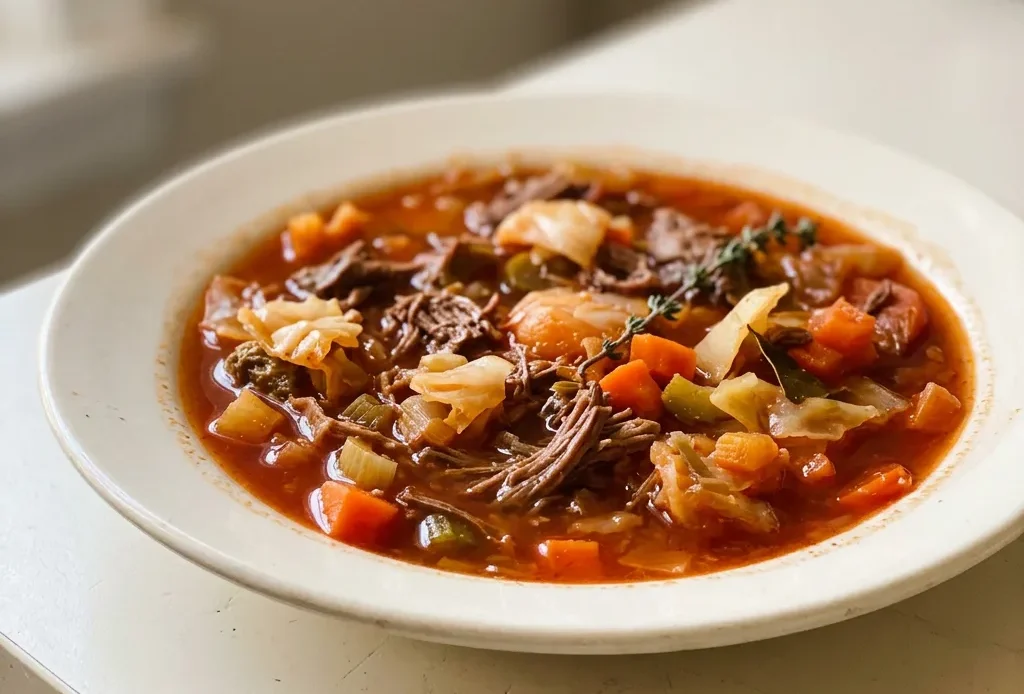
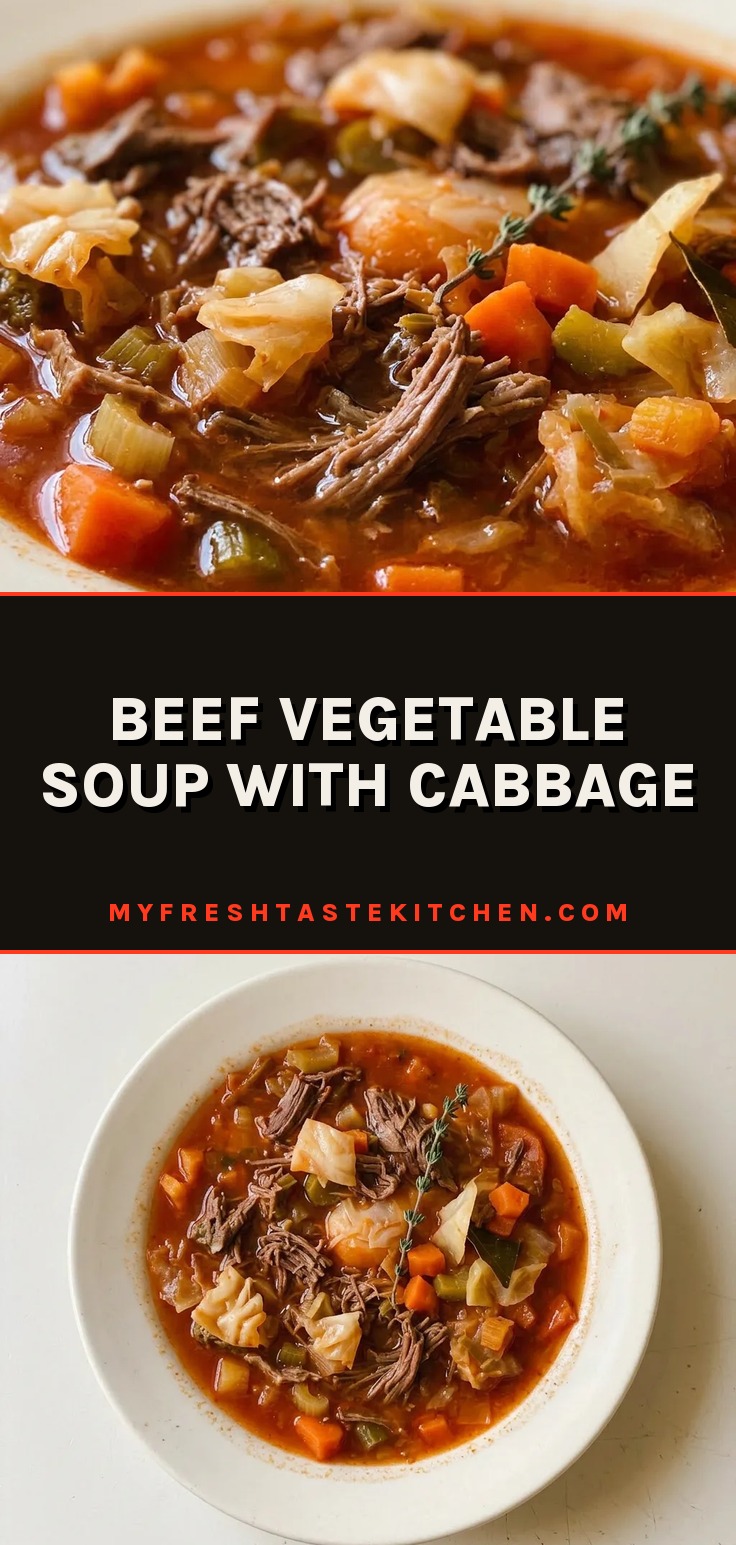
This isn’t a quick dump-and-stir soup. It’s a two-hour simmer that turns tough beef and a whole head of cabbage into something silky and deeply savory, the kind that tastes even better the next day. The trick is letting each ingredient do its own work first, browning the beef in chunks, deglazing the pot, then building the vegetable base separately, so the beef vegetable soup with cabbage doesn’t turn into a bowl of mush.
Why brown the beef in chunks before simmering?
Browning chunks of beef creates deep flavor through the Maillard reaction, those browned bits stuck to the pot are pure concentrate. Cutting the roast into 2, 3 inch pieces gives you enough surface area for browning without drying out the interior. The fond gets deglazed when you add tomato paste and the water-broth blend, scraping it up so that flavor dissolves into the liquid.
That base carries through the whole soup. Skip this step and the broth stays flat, more like boiled meat than a rich beef stock.
Why cook the beef and vegetables separately?
5 hours, to break down collagen into gelatin and become fork-tender. Vegetables would going soggy in that time.
By pulling the beef out after it’s tender and starting the vegetables fresh in the same pot, you keep carrots and celery with bite and color. That reserved beef broth gets poured back in, layering the same deep flavor into the vegetable base without sacrificing texture.
Why add cabbage at the end?
Cabbage starts as a massive mound, 10 cups raw, but wilts down to roughly half that volume as it cooks. Added to the simmering broth, it absorbs the beefy, tomatoey liquid while keeping a little crunch if you don’t overcook it. That big pile needs a large pot and a few stirs to incorporate evenly.
You’ll see it soften within minutes, turning from stiff shreds into tender ribbons that meld with the rest of the soup.
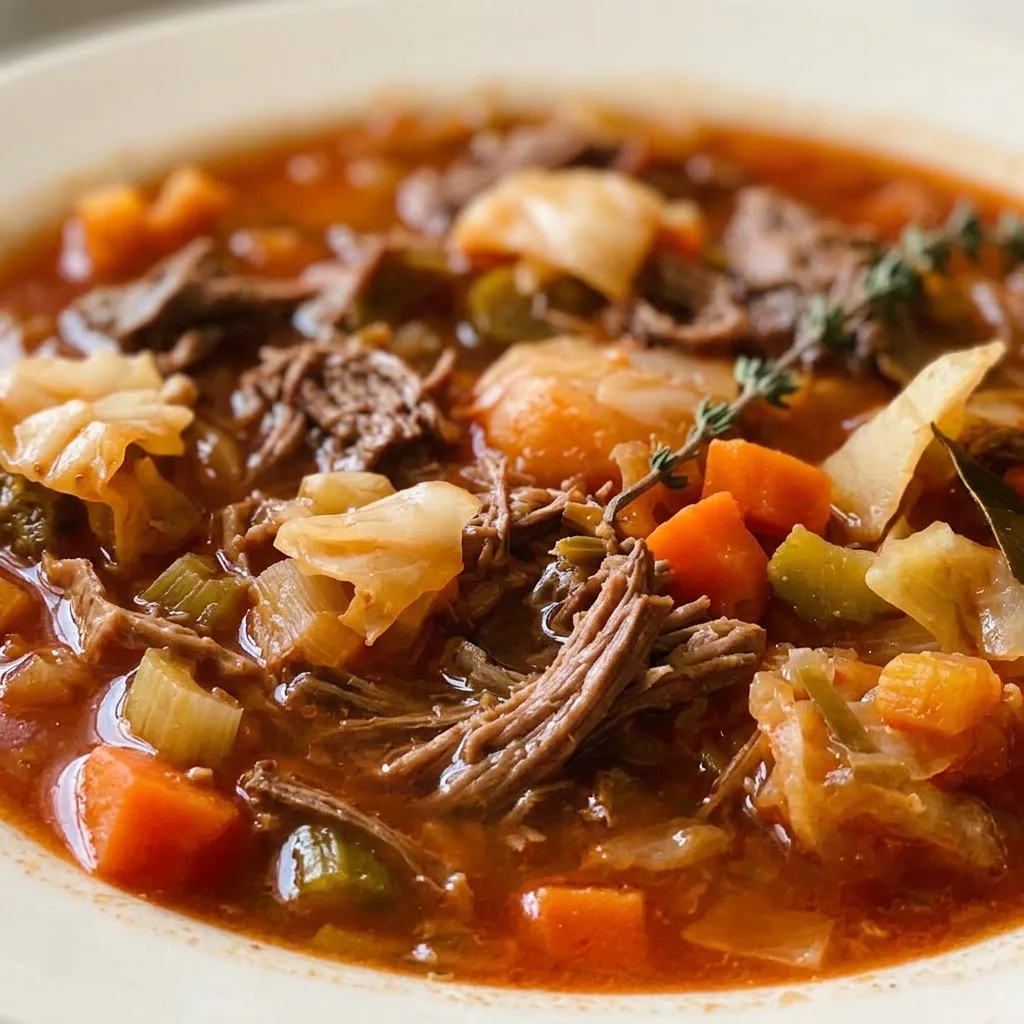
Prep: 20 min · Cook: 2 hr · Total: 2 hr 20 min · Servings: 8 · Calories: 420 kcal
Choosing and prepping the beef and vegetables
Roast beef: Look for a cut with visible fat marbling; it keeps the meat moist during the long simmer.
Cabbage: One medium head yields about 10 cups chopped; cut it into 1-inch strips for even cooking.
Leeks: Use only the white and light green parts; slice lengthwise and rinse well to remove grit.
Tomato sauce: Plain canned sauce works fine; avoid seasoned varieties that can throw off the flavor balance.
Build the broth while the beef browns
Brown the beef in batches
Heat oil over medium-high until it shimmers. Add beef chunks in a single layer, crowding drops the pan temperature and you’ll get gray meat instead of a deep brown crust.
Deglaze with tomato paste and liquid
After removing beef, stir tomato paste into the hot pot until it darkens, about 1 minute. Pour in the water-broth mix and scrape the fond loose; you should see the liquid turn mahogany as it lifts.
Simmer the beef until fork-tender
Return beef to pot, bring to a gentle bubble, then lower heat to maintain a lazy simmer. After 1.5 hours, test a piece, it should shred with a fork but not fall apart. If still tough, continue up to 2.5 hours.
Sauté the vegetables without crowding
In the same pot, cook leeks, celery, and carrots over medium-high until they soften and the onions turn translucent, about 4 to 5 minutes. You should hear a steady sizzle; if not, raise heat slightly.
Add cabbage last to keep texture
Stir in all the cabbage, it will mound high but wilt quickly. Cook just until the leaves turn bright green and soften, about 3 to 5 minutes, then stop. Overcooking makes it limp and waterlogged.
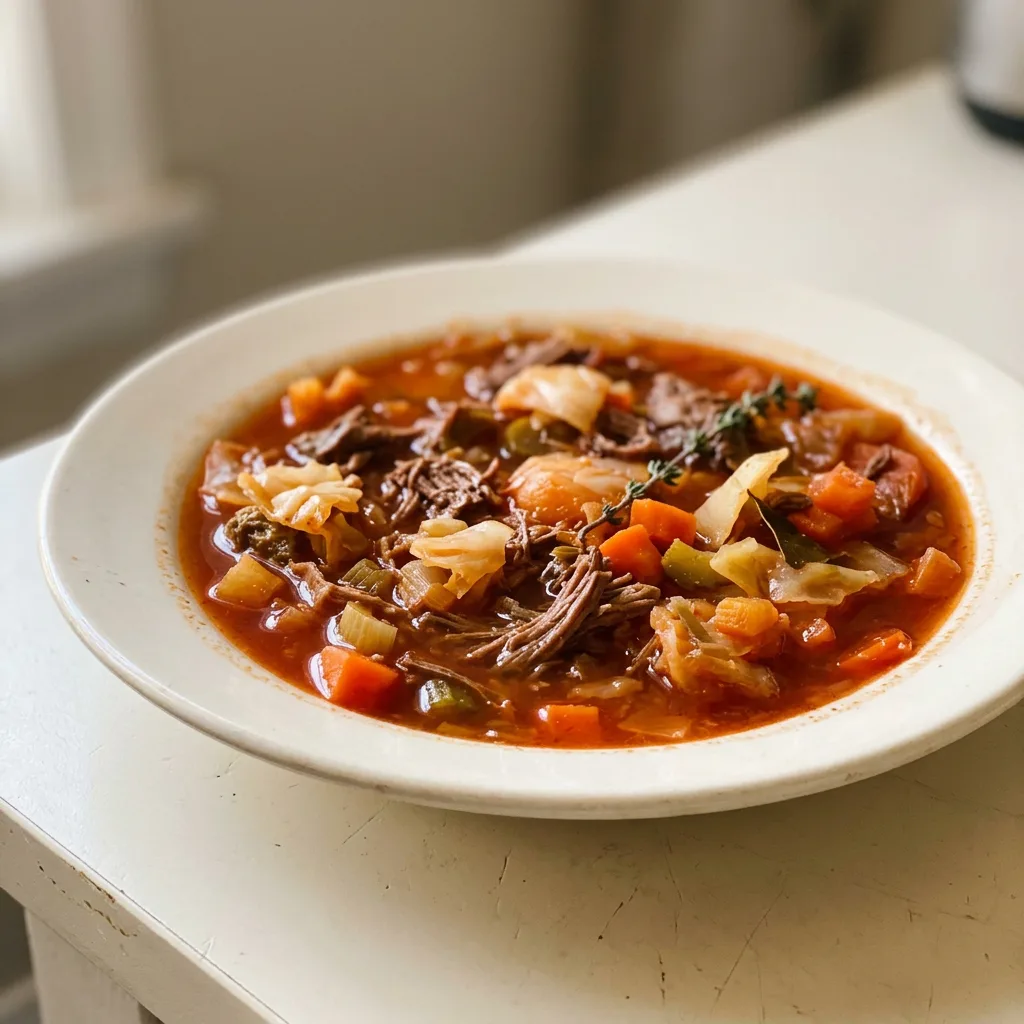
Beef Vegetable Soup with Cabbage
Ingredients
Method
Brown the Beef:
Heat 2 Tbsp olive oil in a large stockpot over medium-high. Cut the roast into 2-3 inch pieces; season generously with salt and pepper. Brown the beef pieces on all sides, using tongs to turn and hold them. Avoid overcrowding; brown in two batches if necessary.Simmer and Shred Beef:
Transfer the meat to a plate. Add 3 Tbsp tomato paste and 5-6 cups of a 1:1 water and lower-sodium beef broth blend to the pot. Scrape up any browned bits from the bottom. Return the beef to the pot. Simmer on medium heat for 1.5 to 2.5 hours, until fork-tender. Remove beef to a plate; once cool, shred. Set aside the cooking liquid.
Sauté Vegetables:
In the same stockpot, warm 1 Tbsp olive oil over medium-high. Add the chopped leeks, celery, carrots, 1 tsp thyme, and salt and pepper to taste. Sauté for 4-5 minutes until slightly softened. Add 4 minced garlic cloves and cook for 30 seconds more.Simmer Soup with Cabbage:
Pour in 15 oz tomato sauce and 7-8 cups lower-sodium beef broth (use reserved liquid if desired); stir. Add the chopped cabbage (about 10 cups), 1 Tbsp Worcestershire sauce, 3 bay leaves, and salt and pepper to taste. Bring to a boil, then reduce to a simmer. Return the shredded beef to the pot. Cook until cabbage is wilted. Adjust seasoning as needed.Serve with Bread:
Serve with crusty bread of your choice.
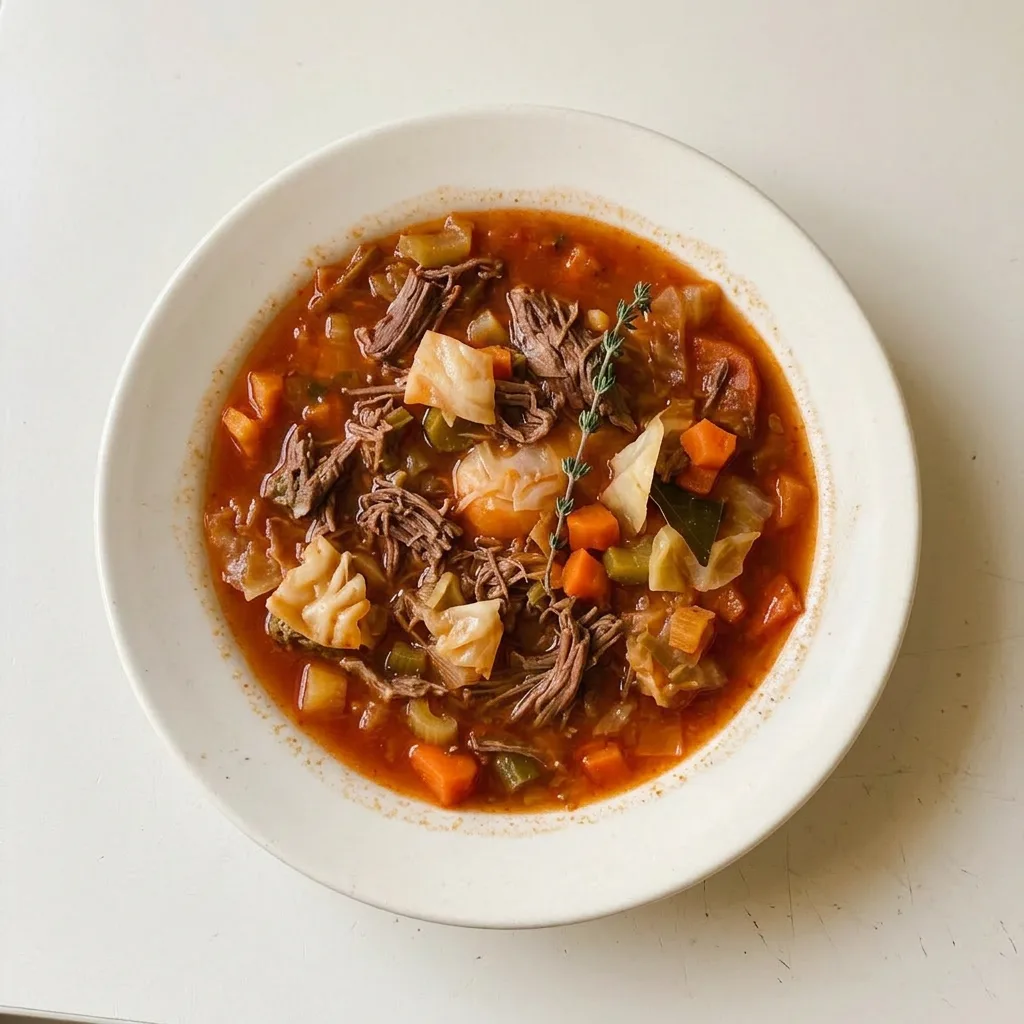
Swapping the beef and cabbage without losing the soup’s character
Beef roast: Chuck roast or brisket. Both cuts have similar fat and collagen, so they’ll tenderize the same way over the long simmer. Leaner cuts like sirloin or round will turn dry and stringy, avoid those.
Beef broth: Chicken broth or vegetable broth. The soup will be lighter and less beefy, but still savory.
Use 1/2 water to keep the broth from becoming too salty. The tomato paste and Worcestershire help make up for lost depth.
Green cabbage: Savoy cabbage or Napa cabbage. Savoy has crinkly leaves that soften faster, reduce simmer time by 2 to 3 minutes.
Napa is more delicate and will wilt quicker; add it 5 minutes before serving to keep some crunch. Both are milder, so the broth will stand out more.
Storage and Serving
This soup thickens as it sits, so leftovers will be heartier than the first bowl. Refrigerate in an airtight container for up to 3 days.
Beyond that, the cabbage softens further and loses its texture. Reheat gently on the stovetop or in the microwave, adding a splash of water or broth if it’s too thick.
The beef and cabbage base freezes well for up to 3 months; thaw overnight in the fridge. The soup is best eaten within 2 hours of cooking, but the flavors deepen overnight.
Serve with crusty bread. If you want the cabbage to stay firmer, add it fresh when reheating portions.
Tips
- Pat the beef chunks dry with paper towels before browning; moisture on the surface creates steam that prevents a deep crust.
- Use a heavy pot like a Dutch oven to maintain steady heat when browning; thin pots cool too quickly when you add the meat.
Frequently Asked Questions
Can I make this soup ahead of time and does it freeze well?
Yes, the soup keeps for up to 3 days in the fridge and freezes well for up to 3 months. The flavors deepen overnight, but the cabbage softens further, so if you want firmer cabbage, add it fresh when reheating portions. Thaw frozen soup overnight in the fridge and reheat gently on the stovetop, adding a splash of broth if it thickens.
How do I prevent the beef from becoming tough instead of tender?
Start with a well-marbled roast and cut it into 2, 3 inch chunks before browning, then simmer gently for 1.5 to 2.5 hours, you’ll know it’s ready when it shreds easily with a fork. Skipping the browning or cranking the heat too high during simmering can make the meat dry out instead of breaking down the collagen. If you use a lean cut like sirloin, it will turn stringy no matter what you do.
What’s the difference between this beef cabbage soup and a classic vegetable beef soup?
This soup uses a whole head of cabbage (about 10 cups) as the main vegetable, which wilts down into tender ribbons and soaks up the broth, giving it a distinct sweetness and texture. Classic vegetable beef soup typically relies on a mix of smaller-diced vegetables like potatoes, green beans, and corn, with cabbage as a minor player or absent. The tomato paste and Worcestershire sauce here build a deeper, slightly tangier base compared to a standard tomato-broth mix.
My soup turned out too watery; how can I thicken it without adding flour?
Simmer the soup uncovered for 10 to 15 minutes to let excess steam evaporate, which concentrates the broth naturally. You can also mash some of the cooked cabbage and carrots against the side of the pot with a spoon to release their starches and thicken the liquid. Avoid adding more raw cabbage at this point, it will release more water as it cooks, making the problem worse.
Can I use a different cut of beef if I don’t have roast with marbling?
Use chuck roast or brisket instead, both have enough fat and collagen to turn fork-tender after the long simmer. Lean cuts like sirloin or round will dry out and become tough because they lack the intramuscular fat needed for moisture. If you’re stuck with a lean cut, reduce the simmer time to 1 hour and slice the meat against the grain, but expect a drier texture.
