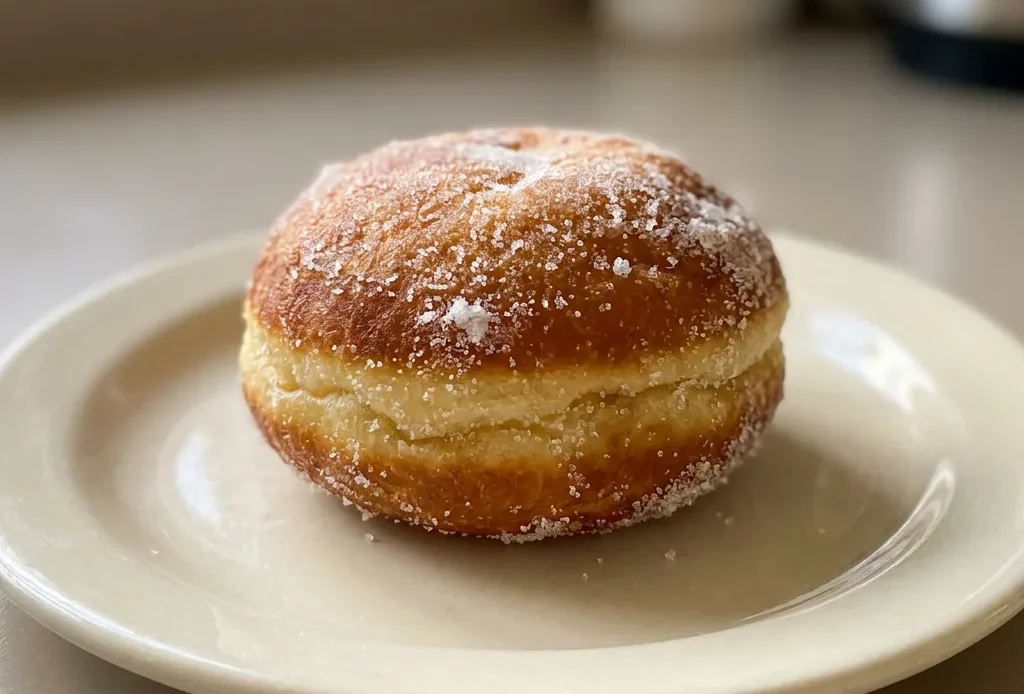
The first bite cracks through a sugar-dusted shell into something almost liquid, silky lemon cream that spills over your tongue. Bomboloni italian donuts live in that tension: a fragile, airy fryer puff against a filling that barely holds its shape.
Most recipes get one side right and let the other go slack. The dough tears when you pipe the cream, or the filling turns thick and pasty, or the whole thing collapses into a greasy knot. What you’re after is a dough that triples its volume twice and a cream set with cornstarch, not flour, so it stays glossy and light.
That contrast is the whole point, and it’s narrower than it looks.
Blend two flours for the right crumb
All-purpose flour brings tenderness; the dough feels soft and delicate. Bread flour adds strength, which matters when you pipe a heavy cream filling or drop the dough into hot oil.
Without the strong flour, the bomboloni might puff nicely but tear under pressure or absorb too much grease. With it, the structure holds together, giving a light bite that doesn’t collapse. The result?
Airy donuts with a resilient crumb.
Why cornstarch makes a better filling
Cornstarch thickens at a lower temperature than flour, so the egg yolks are less likely to scramble as you cook. The texture turns out silky, almost glossy, without any pasty mouthfeel. Flour would give a heavier, duller cream that masks the lemon zest and vanilla.
With cornstarch, the filling stays clean and stable, exactly what a bomboloni needs, rich but not heavy.
Triple the dough for that airy interior
A standard double rise won’t cut it here. When the dough triples, it packs in enough air to create the signature puffy, almost hollow crumb.
Underproofed dough fries up dense, like a bread roll. Overproofed dough goes slack and deflates in the oil.
Aim for a full triple: the dough looks jiggly and fills the bowl with a domed top. That’s your cue it’s ready.
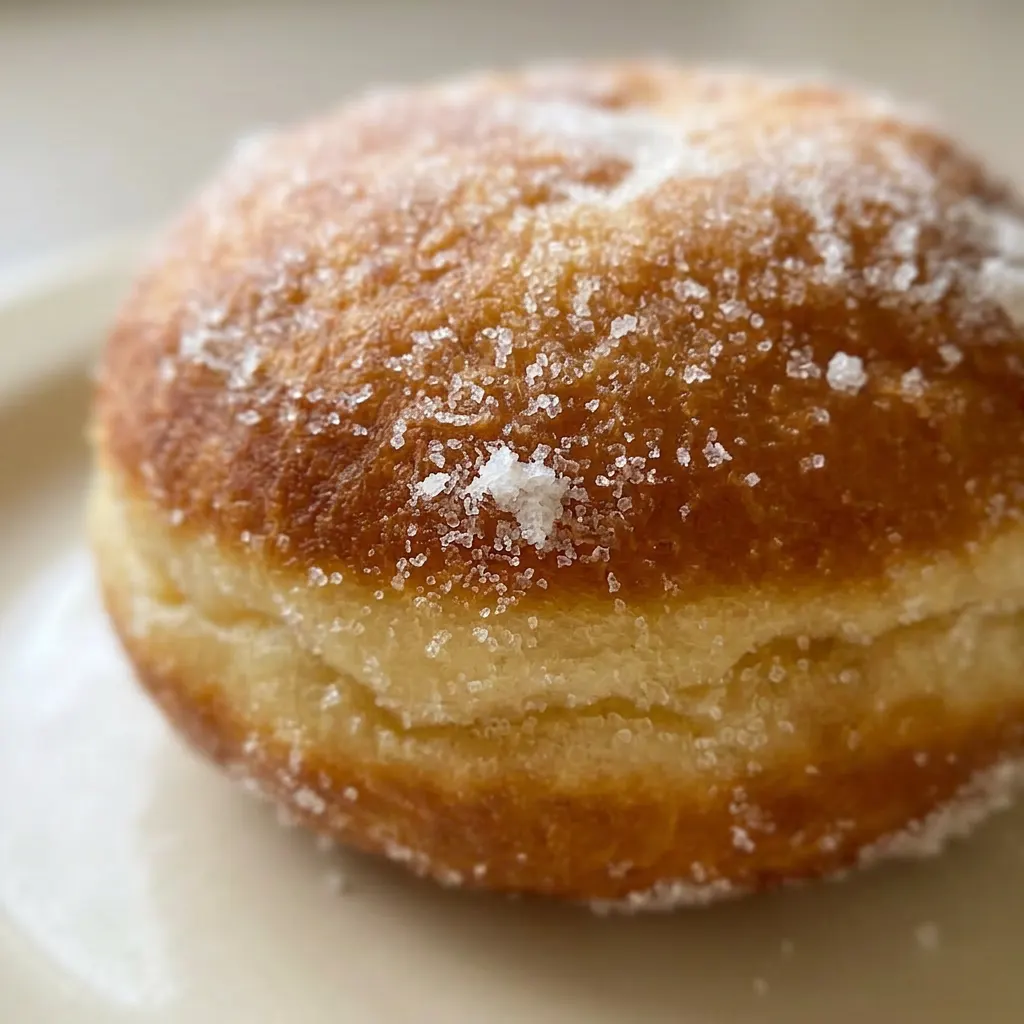
Prep: 3 hr · Cook: 1 hr · Total: 4 hr · Servings: 12 · Calories: 320 kcal
Key Ingredients for Bomboloni
All-purpose flour and bread flour: Use both; all-purpose for tenderness, bread flour for structure so the doughnut holds the cream.
Fast action yeast: Check the packet; some need activation in warm milk, others go straight into the dry mix.
Butter: Softened, not melted. Cubes scatter into the flour for even distribution during kneading.
Eggs: Room temperature so they blend smoothly into the dough without shocking the yeast.
Cornstarch: Thickens the pastry cream without making it heavy or pasty, keeps the filling silky.
Knead the dough until it’s smooth and slightly tacky
Mix dry ingredients
Stir flour, sugar, and yeast together. If your yeast needs activation, use a splash of the warm milk first, don’t add extra liquid. The rest goes in with the eggs.
Add wet ingredients and knead
Scatter softened butter over flour, add eggs, milk, vanilla, and salt. Knead on low for 10 minutes. The dough should feel smooth, elastic, and slightly tacky, not sticky or dry.
First rise until tripled
Form dough into a ball, place in oiled bowl, cover, and let rise 2 to 3 hours. It needs to triple, not just double. Look for a domed, jiggly surface that fills the bowl.
Shape and cut doughnuts
5-inch cutter. Re-roll scraps once.
The dough should feel light and airy, not dense. 5 hours until tripled again.
Fry at 337°F
Heat oil to 337°F. Lower doughnuts in on parchment squares, remove paper quickly.
Fry 2 minutes per side. The dough should puff immediately and turn golden. Overcrowding drops oil temp, making greasy doughnuts.
Fill with pastry cream
Once cooled, poke a hole with a knife and twist to form a pocket. Pipe in cream until you feel resistance. The filling should be silky and stable, not runny.
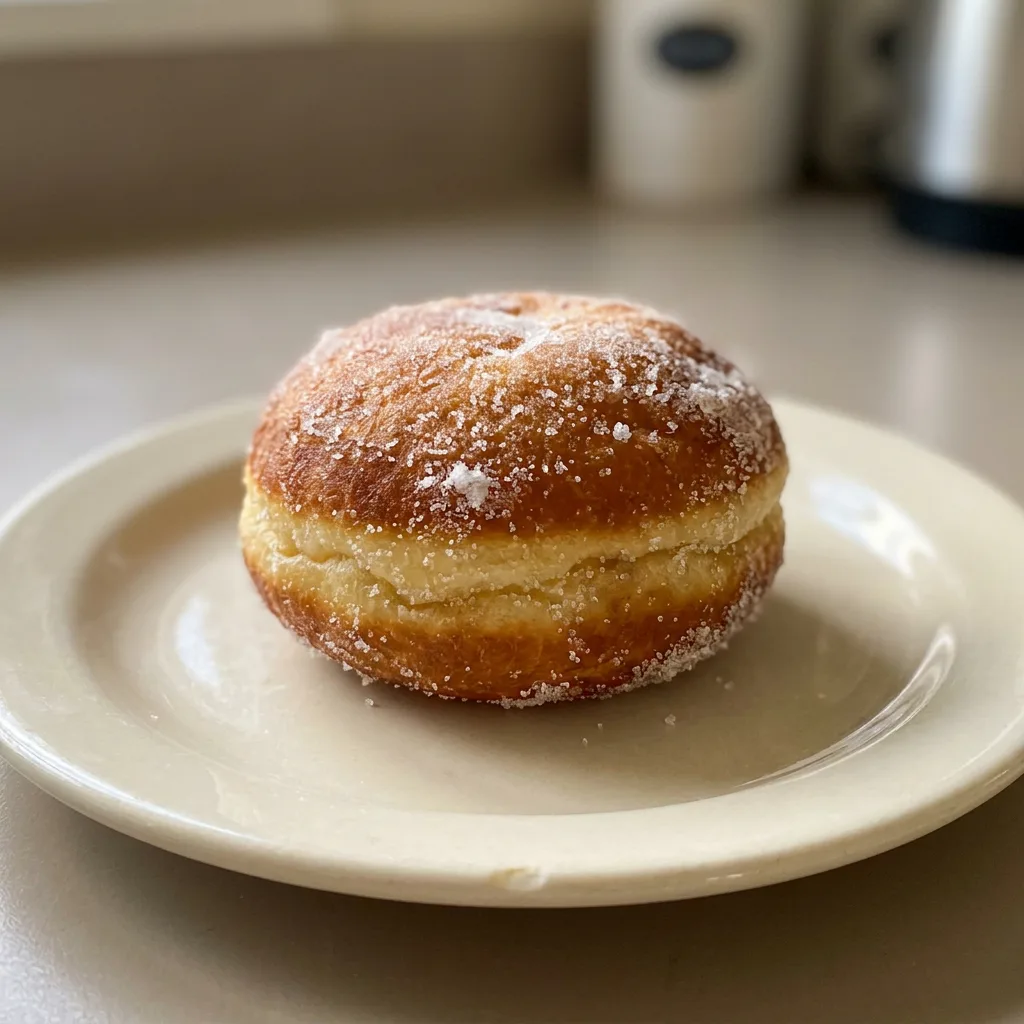
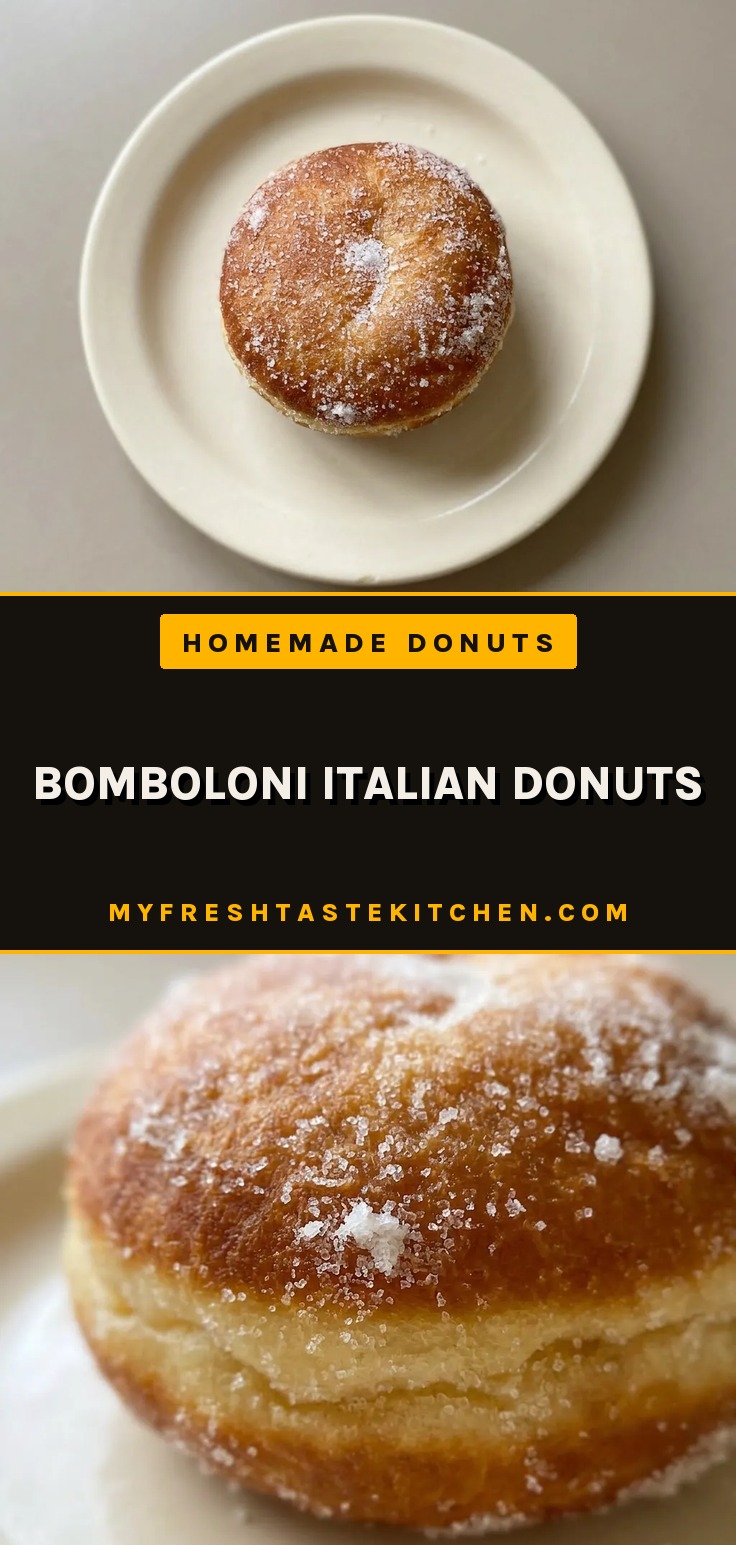
Bomboloni Italian Donuts
Ingredients
Method
Check yeast instructions:
Inspect the yeast package: certain yeasts can be incorporated directly with dry ingredients as described; others require activation in a small amount of warm liquid. If activation is needed, use a portion of the warm milk (do not add extra liquid).Mix dry ingredients:
In a mixing bowl, stir together the flour, sugar, and yeast until well blended.Add butter and eggs:
Scatter the softened butter cubes over the flour mixture. Add the eggs, room-temperature milk, vanilla paste, and salt.Knead dough 10 minutes:
Fit the dough hook and knead on low speed (KitchenAid speed 2) for 10 minutes. The dough should be smooth, elastic, and slightly tacky.Form dough ball:
Move the dough to a clean work surface (avoid additional flour). Form into a ball by kneading 2-3 times.First rise 2-3 hours:
Put the dough ball into a lightly oiled bowl, cover with plastic wrap, and let rise for 2-3 hours until tripled in volume.Deflate and knead:
Turn the risen dough onto a clean surface, gently press out gas, and knead a few times until smooth again.Roll dough rectangle:
Flatten the dough with your hands, then roll into a 1/2-inch (1.5 cm) thick rectangle.Cut out doughnuts:
Cut out round doughnuts using a 3.5-inch cookie cutter or glass. Re-knead and re-roll scraps to produce additional doughnuts.Proof doughnuts 1-1.5 hours:
Arrange cut doughnuts on a parchment-lined surface, loosely cover with plastic wrap, and proof for 1-1.5 hours until tripled in size.Prepare pastry cream:
While doughnuts proof, prepare the pastry cream (see below) and allow it to cool.Heat oil to 337°F:
Heat oil in a large deep pan to 337°F (170°C).Cut parchment squares:
Cut parchment into squares, one per doughnut.Lower doughnuts into oil:
Carefully lower doughnuts into hot oil with tongs, removing the parchment promptly. Fry in small batches to avoid overcrowding.Fry 2 minutes per side:
Fry 2 minutes per side, turning once. Drain on paper towels, then roll in sugar. Cool before filling.Create hole for filling:
To fill, create a small hole in the side of each doughnut with a knife, twisting to form a pocket.Pipe in pastry cream:
Load a piping bag with pastry cream and pipe into the doughnuts.
Serve or store:
Serve immediately, or store in a plastic container for up to 1-2 days.Whisk yolks and sugar:
For the pastry cream: In a large bowl, whisk egg yolks, sugar, vanilla paste, and lemon zest until uniform.Add cornstarch:
Whisk in cornstarch until smooth.Heat milk until hot:
Heat milk in a saucepan until hot, then remove from heat and let cool for 1 minute.Temper egg mixture:
Gradually pour the hot milk into the egg mixture, whisking constantly to prevent curdling.Cook cream until thick:
Pour the mixture back into the saucepan and cook over low heat, stirring continuously, until thick and creamy (10-15 minutes). Do not raise the heat or the eggs may curdle.Cool cream with plastic:
Once thickened, transfer to a clean bowl and press plastic wrap directly onto the surface to prevent a skin. Let cool completely.
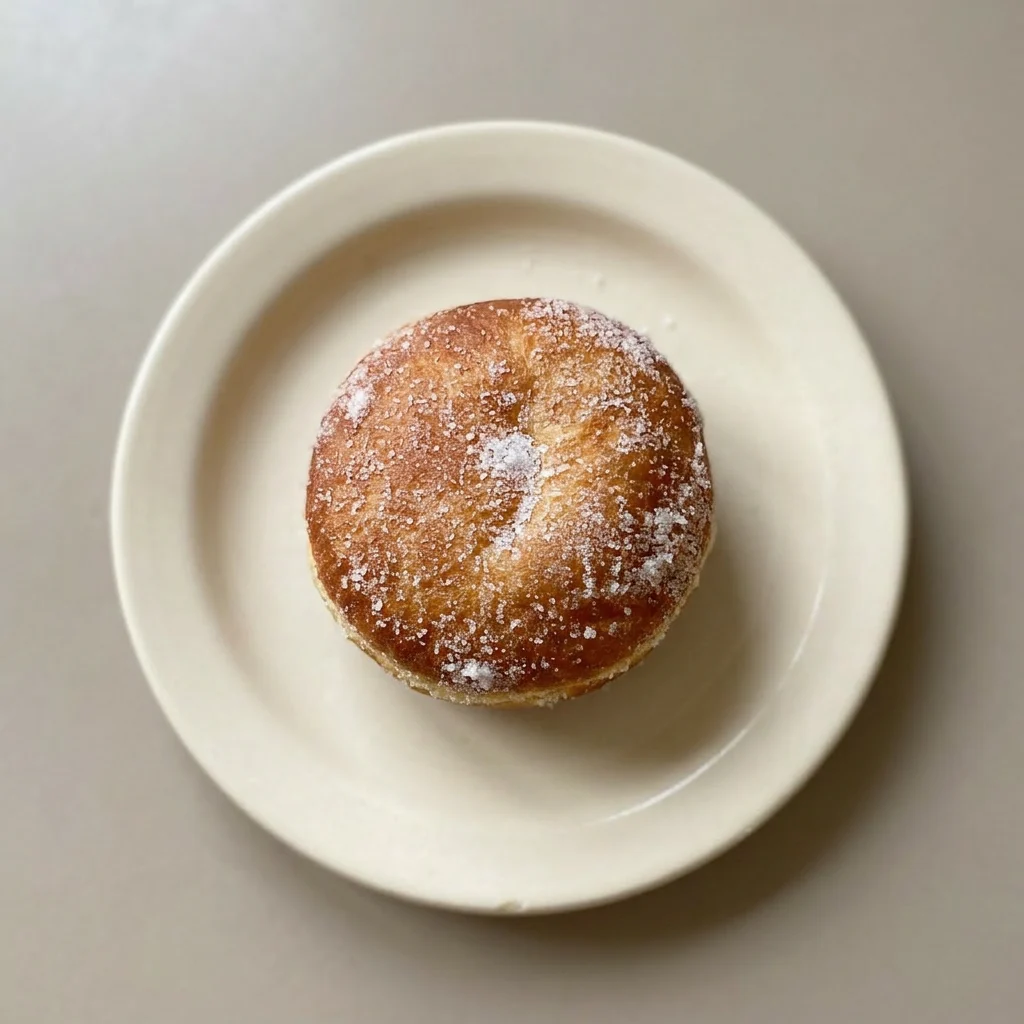
Swapping flours changes the dough’s strength
Bread flour: All-purpose flour (same weight, 2 1/4 cups / 280 g total all-purpose). The dough will feel softer and less elastic. Bomboloni may puff nicely but can tear when you pipe in the cream or collapse during frying.
You’ll get a tender donut that’s more delicate, less sturdy.
All-purpose flour: Bread flour (same weight, 2 cups / 280 g total bread flour). The dough becomes tougher and harder to knead. The crumb turns chewy rather than airy, and the donuts may not puff as much.
Stick to the blend for the right balance.
Butter: Vegan butter or margarine (same amount, softened). Works fine, but the dough may feel slightly less pliable. The flavor will be less rich.
Avoid coconut oil, it makes the dough greasy and harder to handle.
Fast action yeast: Active dry yeast (same weight, 7 g). Must be activated in warm milk first (use some of the recipe’s milk).
The rise might take a bit longer, but the result is the same. Check the packet instructions.
Tips
- If your yeast is the type that requires activation, use a small portion of the recipe’s warm milk (not extra) to proof it; adding extra liquid will throw off the dough hydration.
Storage and Serving
Bomboloni are at their best the day you fill them. The fried shell stays crisp just a few hours before the cream softens it.
For the best texture, serve within 2 to 3 hours of filling. Leftovers keep in a single layer in an airtight container at room temperature for up to 2 days. The pastry cream can be made ahead up to 3 days and refrigerated; bring it to room temperature before piping.
Do not refrigerate filled bomboloni. The fridge dries out the dough and firms the cream, ruining the soft bite. If you must hold them unfilled, store the fried, sugared doughnuts in a paper bag at room temperature for up to 1 day, then fill just before serving.
Freezing is not recommended. The doughnuts turn greasy and the cream weeps on thawing.
Frequently Asked Questions
Can I make the bomboloni dough ahead and refrigerate it overnight?
Not recommended. The dough needs to triple in volume twice, once after kneading and again after shaping, which refrigeration slows unpredictably.
Cold dough won’t proof to the airy, jiggly state you need, and it can become slack or deflate when brought to room temperature. Unfilled fried doughnuts keep one day in a paper bag; fill just before serving.
Why did my bomboloni come out greasy instead of light and airy?
Most likely the oil temperature dropped below 337°F when you added too many doughnuts at once. Overcrowding cools the oil so the dough absorbs fat instead of puffing immediately.
Check that the dough tripled on both rises, underproofed dough also fries dense and greasy. Fry in small batches and let the oil recover between batches.
What’s the difference between bomboloni and regular American donuts?
Bomboloni use a yeast-leavened egg dough enriched with butter and two types of flour for a tender but sturdy crumb, fried at a lower temperature (337°F) so they puff airy and hollow inside. They’re filled with a silky cornstarch-thickened pastry cream, not glazed or topped. American donuts often use a cake batter or a leaner yeast dough, are fried hotter, and rely on a glaze or icing for sweetness.
