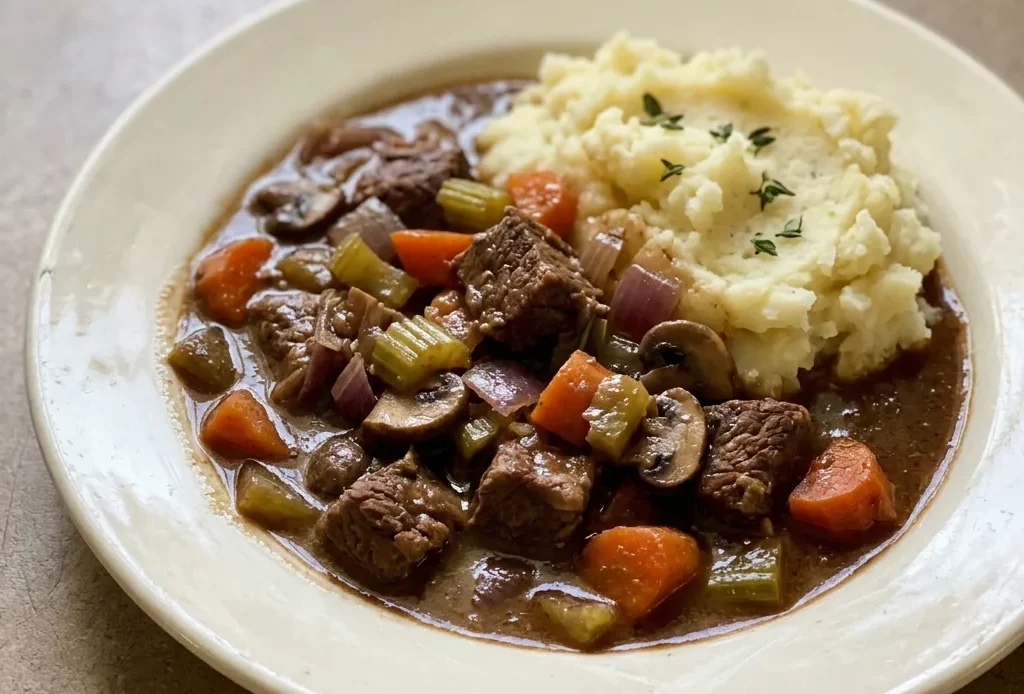
The single most common mistake people make with Guinness beef stew is rushing the browning. Crowd the pot and the meat steams instead of sears, leaving you with gray cubes instead of the deep, savory crust that builds the stew’s backbone. That browning, done in a single layer, no shortcuts, creates a layer of sticky fond on the pot bottom, which the beer then lifts into the broth.
It’s the difference between a good beef stew and one that keeps you coming back for another spoonful. The rest of this hearty dish, tender beef, sweet carrots, earthy mushrooms, relies on that foundation. A long, quiet simmer does the rest, changing humble ingredients into something deeply satisfying that tastes even better the next day.
Searing and Deglazing Build Foundation
Browning the beef in batches is important. Crowd the pan and the meat releases steam, turning gray instead of mahogany.
That brown crust is pure flavor. After the meat comes out, the pot holds a sticky layer of fond, concentrated beefiness stuck to the bottom.
Pour in the Guinness and scrape it up. The beer’s bitter edge and malty sweetness dissolve that fond into the liquid, giving the stew a depth no broth alone can match.
You taste it in every spoonful.
Butter and Flour for a Silky Thickener
Instead of whisking a flour slurry in later, coat the seared beef with butter and flour right in the pot. Cook it a few minutes, stirring.
The raw flour smell disappears, and the fat evenly disperses the starch. As the stew simmers, that coating swells and thickens the broth from within, leaving no raw-flour patches or gritty lumps. The result is a smooth, silky body that clings to the meat and vegetables.
Why the Long Simmer Matters
That tough chuck roast needs time. A low, covered simmer breaks down collagen into gelatin, turning chewy cubes into fork-tender bites. Meanwhile, the Guinness, herbs, tomato paste, and vegetables trade flavors: the beer mellows, the carrots sweeten, the rosemary and thyme infuse.
Covering the pot keeps steam in, so the liquid doesn’t reduce too fast, letting the beef cook through without drying out. After two hours, you get a stew where every component tastes like it belongs together.
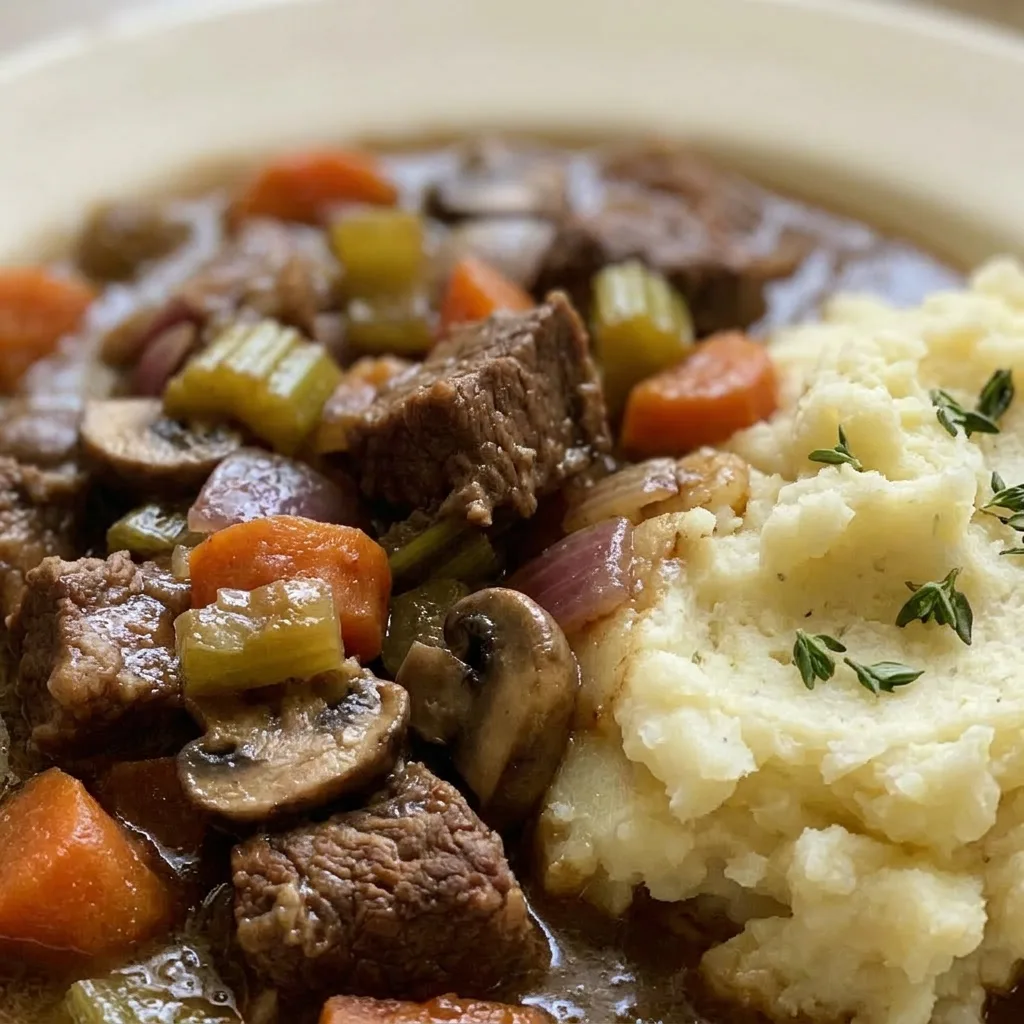
Prep: 15 min · Cook: 2 hr · Total: 2 hr 15 min · Servings: 6 · Calories: 560 kcal
Ingredient Picks That Matter
Beef stew meat or chuck roast: Chuck roast has more connective tissue that breaks down into gelatin, giving the stew body.
Baby bella mushrooms: Sliced baby bellas hold up better than more delicate mushrooms over a long simmer.
Guinness beer: Use a standard stout, not a nitro can; the bubbles help deglaze and the bitterness balances the stew.
Chicken bouillon cube: One cube adds savory depth without overpowering the beef; skip if your broth is already salty.
Brown sugar: A couple teaspoons tame the Guinness bitterness; adjust near the end if the stew tastes sharp.
The first time, I skipped the butter-and-flour coating and just stirred flour into the broth. Ended up with gluey blobs floating around.
The Order Matters: Sauté, Sear, Thicken, Simmer
Sauté the aromatics first
Cook the carrots, onion, celery, and mushrooms in oil over medium-high heat until they soften and take on a little color. That browning adds sweetness. If they steam instead, your heat is too low, crank it up.
Sear the beef in batches
Add remaining oil and brown the beef in a single layer per batch. If the pieces touch or steam, they’ll turn gray.
You want a deep brown crust on all sides. Set aside and scrape up any loose bits.
Make the roux right on the meat
Return all beef to the pot, add butter and flour, and stir for 2 to 3 minutes. The flour should coat every piece and cook until it smells nutty, not raw. If it clumps, stir faster.
Deglaze with Guinness
Pour in the beer and scrape the pot bottom with a wooden spoon. The fond should dissolve completely, leaving a dark, smooth liquid. If bits stick, keep scraping, they’re pure flavor.
Add seasonings and liquid
Stir in herbs, tomato paste, bouillon, garlic powder, brown sugar, salt, and pepper. Then pour in broth and water. Taste the liquid, it should be savory with a hint of sweetness and bitterness.
Return vegetables and simmer
Add the cooked veg back, bring to a boil, then reduce to a low simmer. Cover and cook for 2 hours.
The surface should barely bubble. If it boils, the meat toughens and liquid reduces too fast.
Taste and adjust halfway
After 1 hour, lift the lid and taste the broth. It should be rich and balanced.
Add more salt, pepper, or brown sugar if needed. The beef should be starting to yield but not yet tender.
Check for fork-tenderness
After 2 hours, poke a beef cube with a fork. It should slide in with little resistance.
If not, simmer 15 to 30 minutes more, checking every 10. The stew is done when the meat shreds easily.
Guinness Beef Stew
Ingredients
- 2 lbs beef stew meat or cubed beef chuck roast
- Salt and pepper to taste
- 2 tablespoons olive oil divided
- 1 large red onion chopped
- 2 cups chopped carrot
- 1 cup chopped celery
- 1 pint sliced baby bella mushrooms
- 2 tablespoons butter
- 1/4 cup flour
- 16 oz Guinness beer
- 1 large sprig rosemary
- 1 large sprig thyme
- 2-3 bay leaves
- 2 tablespoons tomato paste
- 1 chicken bouillon cube
- 1 teaspoon garlic powder
- 2-3 teaspoons brown sugar
- 1 teaspoon black pepper
- 1/4 teaspoon salt
- 4 cups low sodium beef broth
- 1 cup water
Instructions
Season beef pieces:
Pat the beef pieces dry with paper towels. Season with salt and pepper; set aside.Sauté vegetables:
In a Dutch oven or heavy-bottomed soup pot, heat 2 tablespoons olive oil over medium-high heat. Add carrots, onion, celery, and mushrooms; sauté until softened and just beginning to brown. Remove vegetables from pot and set aside.Sear beef batches:
Add remaining 2 tablespoons olive oil to the pot. Sear beef in batches until browned on all sides. Return all beef to the pot.Make flour roux:
Add butter and flour to the beef; stir to coat. Cook for 2-3 minutes, stirring frequently to prevent burning.Deglaze with beer:
Deglaze the pot with Guinness beer, scraping up any browned bits from the bottom.Add seasonings:
Add rosemary, thyme, bay leaves, tomato paste, chicken bouillon, garlic powder, 2 teaspoons brown sugar, 1 teaspoon black pepper, and 1/4 teaspoon salt. Stir to combine.Pour broth mixture:
Add beef broth and water; mix well. Return cooked vegetables to the pot.Simmer for hours:
Bring to a boil, then reduce heat to a simmer. Cover and let simmer for at least 2 hours, stirring occasionally.Adjust seasoning:
About halfway through, taste and adjust seasoning with additional salt, pepper, or brown sugar as needed.Serve over potatoes:
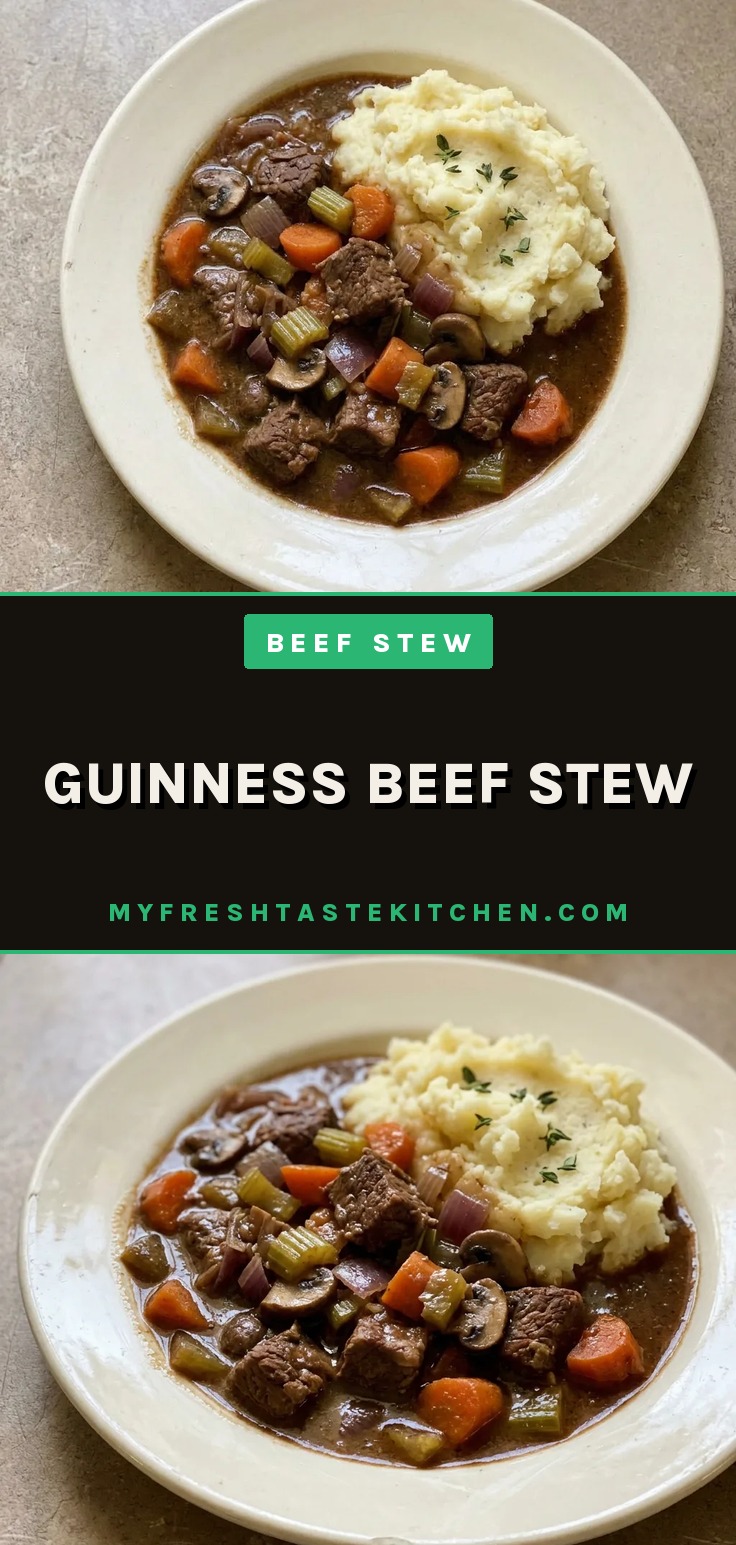
Once beef is tender, serve over mashed potatoes.
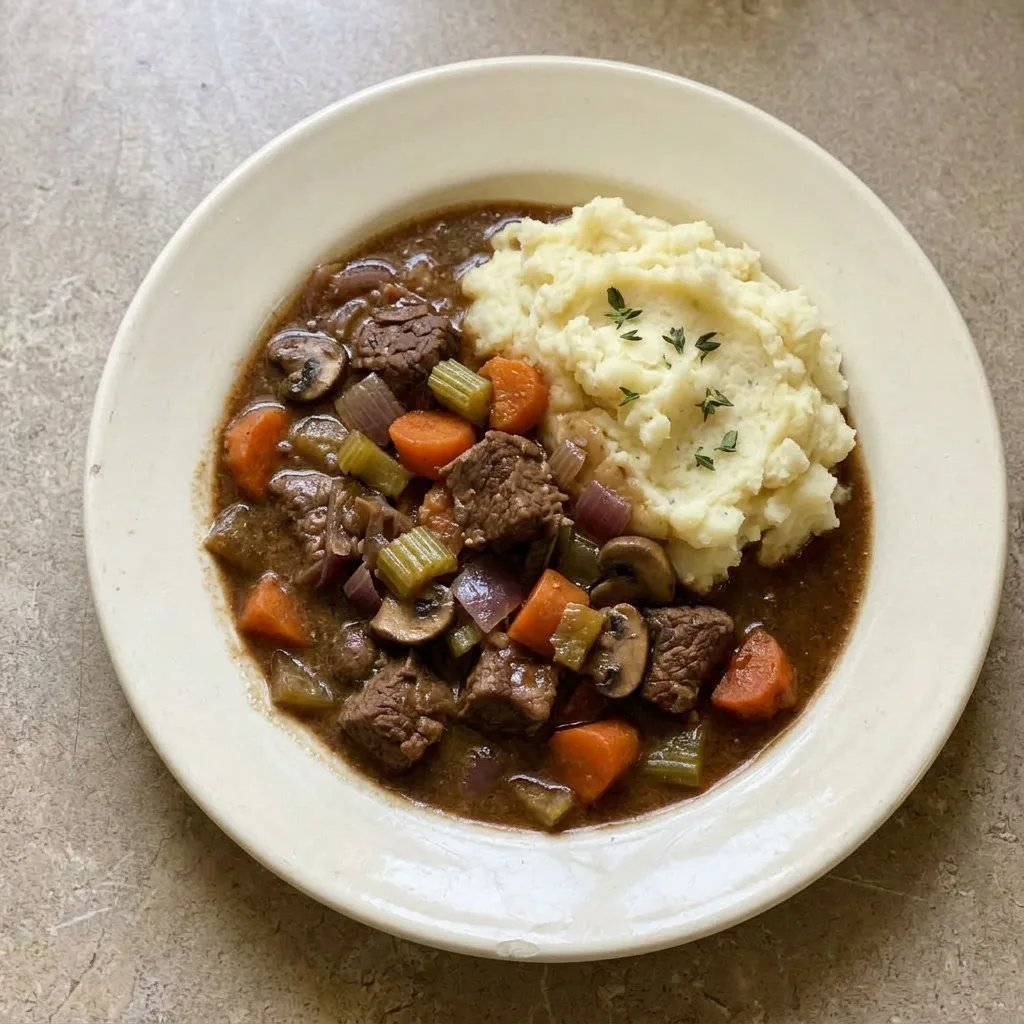
Storage and Serving
Let the stew cool completely before refrigerating. Transfer to an airtight container; it keeps for 3 to 4 days.
The flavor deepens overnight as the ingredients settle, so leftovers often taste better the next day. To reheat, warm gently on the stovetop over low heat, stirring occasionally.
Or microwave in short bursts, stirring between each. Avoid high heat, which can toughen the beef. The stew thickens as it sits; thin with a splash of broth or water when reheating if needed.
For longer storage, freeze in portions for up to 3 months. Thaw overnight in the fridge before reheating.
The vegetables soften further upon freezing and thawing, so the texture won’t be as firm, but the flavor remains. Serve the stew immediately after reheating for the best texture.
Tips
- Use a heavy-bottomed pot like a Dutch oven for even heat distribution, which prevents scorching during the long simmer and helps the roux cook without burning.
- Cut the beef into 1.5-inch cubes for consistent cooking; smaller pieces dry out, larger ones take too long to become tender.
Swap the Meat, Keep the Beer
Beef stew meat or chuck roast: Lamb shoulder or bison stew meat, same weight. Lamb brings a gamey richness that works with Guinness; bison is leaner and can dry out if simmered too long.
5-inch cubes and seared in batches. 5 hours.
Guinness beer: Do not substitute. The beer’s bitterness and malt sweetness are essential for balancing the rich broth.
Another stout may work, but light beers or ales will make the stew taste thin and flat. If you must go alcohol-free, use a non-alcoholic stout with similar body.
Butter and flour (for the roux): Gluten-free all-purpose flour blend (1:1 by weight) and butter or plant-based butter. The roux thickens the stew from the inside.
Gluten-free blends with xanthan gum work fine; the stew may be slightly less silky but still hearty. For dairy-free, use vegan butter or 2 tablespoons olive oil, but reduce oil elsewhere to keep fat balanced.
Chicken bouillon cube: Beef or vegetable bouillon, or 1 teaspoon soy sauce. Chicken bouillon adds savory depth without dominating. Beef bouillon will make the stew beefier; vegetable bouillon is milder.
Soy sauce adds umami and a hint of salt, add it with the broth and taste before adding extra salt.
Frequently Asked Questions
Can I make Guinness beef stew ahead of time?
Yes. Let the stew cool completely, then refrigerate in an airtight container for 3 to 4 days.
The flavor deepens overnight, so leftovers often taste better the next day. Reheat gently on the stovetop over low heat, stirring occasionally, or in short microwave bursts.
The stew thickens as it sits; thin with a splash of broth or water when reheating if needed.
Why is my stew bitter?
Most likely the Guinness bitterness wasn’t balanced. Taste the broth halfway through cooking, if it’s sharp, stir in another teaspoon of brown sugar. The recipe starts with 2 teaspoons; you can add up to 3 total.
Also check that you scraped all the fond during deglazing; burnt bits stuck to the pot can add bitterness.
How do I thicken the stew if it’s too thin?
The roux made on the beef should thicken the stew as it simmers, but if it’s still thin after 2 hours, simmer uncovered for 10 to 15 minutes to reduce the liquid. Stir occasionally to prevent sticking. If that’s not enough, mash a few of the cooked carrots against the pot side and stir them in, they release natural starch that thickens the broth.
Can I use a different cut of beef?
Yes, but stick with tough, collagen-rich cuts like chuck roast. Lean cuts like sirloin won’t break down into gelatin and can turn dry and chewy during the 2-hour simmer. If you use bison stew meat, check for tenderness at 1.5 hours since it’s leaner and may cook faster.
What’s the difference between this and traditional Irish stew?
Traditional Irish stew uses lamb or mutton, potatoes, and onions simmered in water or broth, no Guinness, no mushrooms, no roux. This version swaps lamb for beef, adds carrots, celery, and mushrooms, and uses Guinness and a butter-flour roux for a richer, thicker, more savory broth. The result is heartier and deeper in flavor.